Experts Matter. Find Yours.
Connect for media, speaking, professional opportunities & more.

GRANDSPLAINING...It's as Bad as it Sounds!
Summary: "Grandsplaining" is a playful term that captures the all-too-familiar situation where younger generations offer unsolicited advice to older family members, often in a manner that is as condescending as it is unhelpful. This behaviour can be perceived as disrespectful and potentially creates awkward communication barriers, emotional strain, and family tension. Rooted in ageist stereotypes, it can even undermine elders' self-esteem. Here, we explore alternatives to grandsplaining, including the radical concepts of genuinely listening, asking open-ended questions, demonstrating empathy, and avoiding assumptions. These suggestions aim to help adult children support their older family members—not merely swoop in with a "fix-it" attitude. The Disrespectful Impact of Condescending Advice on Seniors When I helped older Canadians navigate financing their retirements, I often witnessed what can only be described as "grandsplaining in the wild." Conversations between adult children and their elders usually felt less like dialogues and more like lectures—one-sided advice sessions that left everyone gritting their teeth. The younger relative, likely well-meaning, would offer suggestions like, “You should downsize and buy a condo,” “Sell and rent,” or, the pièce de resistance, “Move in with family!” Judging by the withering looks from their elders, it was clear this approach wasn’t winning any "Favorite Child" awards. The older family members often felt patronized, as though their decades of life experience had been conveniently forgotten. The advice was condescending, painfully obvious, and usually impractical or unwanted. The dynamic reminded me of the cringeworthy experience of being "mansplained." And that’s when it hit me: this is “grandsplaining.” Unfortunately, grandsplaining can turn retirement planning conversations into a crash course on how not to communicate! Fortunately, with a little effort (and much less lecturing), families can turn this ship around and build stronger, more respectful relationships. What is "Grandsplaining"? In an age where communication flows freely across digital platforms, I define "grandsplaining" as a colloquial expression to describe a situation where younger generations offer unsolicited advice to older individuals, often patronizing or condescendingly. Grandsplaining typically involves a younger person explaining something to an older individual in a way that belittles their experience or intelligence. The term combines "grand" (suggesting age or status) and "splaining" (a slang term for condescendingly explaining something). While the intention behind such advice may often be well-meaning, the delivery can be patronizing, reinforcing stereotypes about aging and competence. This behaviour can significantly undermine the dignity and autonomy of seniors, leading to feelings of frustration, resentment, and a sense of being marginalized. Understanding the nuances of grandsplaining sheds light on intergenerational dynamics in these conversations. We must find a better, more respectful, and effective way to communicate with our elders considering retiring. The phenomenon of grandsplaining can manifest in various contexts, not just financing retirement—whether it’s discussing technology, lifestyle choices, healthcare options, or even social norms. For instance, a grandchild might explain how to use a smartphone app to a grandparent, assuming that the older generation cannot understand it despite their own lifelong experience with technology in different forms. Communication Breakdown In an era where financial literacy and retirement planning are more crucial than ever, "grandsplaining" has become a significant barrier to effective communication between generations. Retirees often feel overwhelmed or dismissed when their relatives provide unsolicited advice, especially if it contradicts their wants or financial strategies. This can lead to a reluctance to engage in discussions about finances, creating a rift that undermines the potential for collaborative planning. When adult children dominate conversations with preconceived notions of financial management, it stifles the opportunity for seniors to express their feelings, share their knowledge, and collaborate on effective retirement strategies. The Generation Gap in Financial Understanding Adult children may rely on outdated financial paradigms that no longer apply to their elders' realities. The economic landscape has changed dramatically over the past few decades, with shifts in real estate markets, a lack of formal retirement plans, and longer life expectancies. This generational gap can lead to misguided advice that does not consider modern challenges such as retiring with debt, little or no pension income, or rising living costs. Emotional Strain and Family Tension When relatives impose their views, it can evoke frustration, resentment, or inadequacy in their elders. This dynamic can shift the conversation from one focused on financial empowerment to one steeped in emotional conflict and shame. Instead of fostering a supportive environment for discussing retirement goals, grandsplaining can create adversarial relationships where seniors feel belittled or pressured, further complicating an already sensitive topic. Erosion of Autonomy When relatives try to impose their methods or strategies, it can undermine the seniors’ independence, making them feel a lack of control over their finances. Financial decisions are deeply personal and often intertwined with individual circumstances, goals, and values. This loss of agency not only affects financial outcomes but can also impact the mental well-being of older adults, leading to feelings of incompetence or anxiety about their financial futures. The Context of Ageism The implications of ageism are particularly concerning in a rapidly changing world characterized by technological advancements and unprecedented changes in social norms. While younger generations may genuinely wish to assist their elders in navigating these changes, their actions can reinforce negative stereotypes rather than empower seniors. Grandsplaining highlights the generational divide, creating an "us versus them" mentality that hinders collaboration and mutual understanding. Grandsplaining is deeply intertwined with ageism, a pervasive societal attitude that discriminates against individuals based on their age. Ageism manifests in various forms, including stereotypes that depict older adults as technologically inept, resistant to change, or incapable of learning. These stereotypes can lead to the marginalization of seniors within families and communities. Not cool! When younger generations adopt a condescending tone, they inadvertently reinforce ageist stereotypes that portray older adults as out of touch or incapable. This affects individual relationships and perpetuates societal narratives devaluing older individuals' contributions and wisdom. The Impact on Relationships Grandsplaining can strain relationships between generations, fostering resentment and conflict. For many seniors, unsolicited advice can infringe on their autonomy, making them feel infantilized or disrespected. I've seen firsthand how parents can react defensively to younger family members and sometimes withdraw altogether from conversations. When assistance is delivered condescendingly, it can backfire. The resulting tension may prevent meaningful conversations about important topics, such as healthcare decisions or lifestyle changes, which are crucial for seniors' well-being. The Psychological Impact on Seniors Being on the receiving end of condescending advice can also lead to diminished self-esteem and increased feelings of inadequacy. Seniors may begin to internalize the belief that they are not capable of making sound decisions or understanding new concepts, which can further exacerbate issues related to aging, such as cognitive decline and depression. Encouraging Respectful Communication with Seniors Addressing the issue of grandsplaining requires a concerted effort from both younger and older generations to cultivate respectful communication. Here are several strategies to foster more positive intergenerational interactions: 1. Actively Listen: Younger people should prioritize active listening when engaging with seniors. This involves hearing what the older person says and validating their experiences and perspectives. Younger people can create a more respectful dialogue by acknowledging their knowledge and expertise. 2. Seek to Understand: Younger generations must approach conversations with empathy. To quote Stephen Covey's wise words, "Seek first to understand, then to be understood." Recognizing seniors' challenges, such as health issues or technological gaps, can foster a sense of compassion. This approach can help bridge the generational divide and promote more constructive conversations. 3. Avoid Assumptions: The tendency to assume that older adults are out of touch or incapable can lead to grandsplaining. Instead, younger individuals should avoid making assumptions about seniors’ knowledge or abilities. Asking questions like “What do you think about this?” or “How do you feel about that?” can empower seniors to share their insights and experiences. 4. Offer Support, Not Solutions: Ask questions like, “What does a successful retirement look like to you? How do you plan to finance your retirement? Do you want to stay in this home? Are you open to moving? If so, where? Do you have enough in savings? How can I support you in having an independent and dignified retirement”? 5. Understand the Bigger Picture: Don’t assume that the traditional strategies of downsizing, selling, renting, or moving in with family are reasonable solutions for your elder in today’s economic environment. These retirement strategies are problematic for today’s seniors. In most cases, downsizing only works financially if the retiree is willing to move to a smaller, more affordable community. Most seniors want to stay in their communities and not move away from family, friends, churches, or familiar shops and services. Selling, renting, or moving in with family requires the sale of their significant appreciating asset. Given today's longer life expectancies, it's not always a wise choice. 6. Humour: By skillfully using humour, you can turn potentially patronizing situations into moments of connection and shared joy, ensuring that conversations with elders remain meaningful, respectful and memorable. For example, you could start the conversation this way; "The last thing I want to do is give you advice. That would be ridiculous. You’re the wise sensei here—I’m just the clueless apprentice trying to save enough downpayment to buy a shoebox of a house." This approach humorously flips the script, poking fun at the presumptuousness of unsolicited advice while emphasizing the elder's experience and wisdom. People often feel judged or vulnerable when discussing finances or significant life changes. Humour shifts the dynamic, showing that you approach the conversation as an ally, not an adversary. For example: "Talking about budgets isn’t fun for anyone—I mean, who loves math? But it’s worth it if we can figure out how to turn this retirement conversation into the fourth of July rather than Labour Day!" This playful approach lowers barriers, making the discussion feel collaborative rather than critical. Laughter fosters connection. Sharing a laugh creates a sense of camaraderie, making it easier for people to open up about sensitive topics. When elders feel that you’re not judging them but partnering with them—and can make them smile—they’re far more likely to trust your intentions and take your advice seriously. Humour invites the other person to join the conversation, breaking the ice and encouraging them to share their thoughts. It sets a tone that the conversation is a dialogue, not a lecture. Example: "You’ve been making great financial decisions for decades. I’m here to ensure we don’t accidentally end up with a basement full of K-tel Veg-O-Matics… unless that’s the plan?" This allows them to laugh, respond, and engage while respecting their autonomy. A word of caution. Humour is only effective when paired with genuine respect and sensitivity. Pay attention to your elder's reactions and adapt if they seem uncomfortable or unamused. The goal is to build rapport, not to win laughs at their expense. Using humour skillfully, you can turn potentially patronizing situations into moments of connection and shared joy, ensuring that conversations with elders are respectful and memorable. Before You Go Before You Go Grandsplaining: the art of lovingly over-explaining to elders as though they’ve been napping since the Great Depression. While it often comes from a place of care, the unintended consequences can include derailed retirement conversations, strained family dinners, and a spike in eye-rolling from grandparents everywhere. Good financial planning thrives on clear communication, but grandsplaining tends to turn productive discussions into monologues that undermine elder autonomy and trigger emotional static. To create a more harmonious environment, families should swap their megaphones for listening ears and embrace a collaborative approach that respects seniors' wisdom and frames younger relatives’ financial theories as conversation starters, not TED Talks. After all, when it comes to navigating retirement planning, a little less "know-it-all" and a bit more "let’s figure it out together" can go a long way. Think of it as building a bridge, not a lecture podium—because nothing says "family unity" like tackling compound interest together! Don't Retire---Re-Wire! Sue



AI Everywhere: Where Artificial Intelligence and Health Care Intersect
Imagine a world where AI doesn’t just support health care providers, but anticipates their next move — detecting diseases faster than human eyes, analyzing patterns and patient data that humans might overlook and revolutionizing health care decision making at every level. Driven by data, AI can identify which patients are most likely to have repeated emergency department visits or thrive from personalized medicine. With the power of robotics enhanced by AI, people with medical needs can gain more independence, managing daily tasks such as taking medication, monitoring their health and receiving personalized care, all from the comfort of their own homes. And this is just the beginning. “AI is transforming – and is going to continue transforming – every industry, especially health care,” said Bharat Rao, a notable figure in the fields of health care, technology and AI. Rao himself has made significant contributions to artificial intelligence, machine learning and data analytics, particularly in health care innovation. His current start-up, CareNostics, uses AI technology to identify patients at increased risk for chronic disease. “We take this for granted,” he said, “but it’s like what I used to see on Star Trek as a kid. The opportunities are limitless.” Rao was a keynote speaker at ChristianaCare’s inaugural Innovation Summit, a two-day conference at ChristianaCare’s Newark campus in Delaware, in fall 2024. During panel discussions and keynotes, more than 200 attendees heard about current and future health tech from national innovators and thought leaders, as well as technical advice for inventors who want to patent ideas and protect intellectual property in a world where “AI Is Everywhere,” the conference’s theme. Speakers emphasized that it’s not just technologists, but also researchers, clinicians and other health care professionals who play an essential role in implementing AI-based health care solutions. “There’s no AI without HI, which is human intelligence,” said Catherine Burch, MS, CXA, CUA, vice president of innovation at ChristianaCare. “You want to help shape the future, not wait for it to shape you.” How AI helps improve patient care “AI is incredibly good at reducing noise in images,” said speaker David Lloyd, a technical leader at Amazon, who discussed the use of AI in radiology. “It can detect anomalies, and it can automate radiologist reports, which saves time for radiologists.” Data informatics is another example of the power of AI to help health professionals determine which patients are at an increased risk for falls, malnutrition or recurrent asthma attacks, enabling them to optimize patient health and prevent hospitalizations. “Some patients with asthma go to the ER repeatedly because their treatment plan isn’t working,” said speaker Vikram Anand, head of data at CareNostics. When patients have uncontrolled asthma, data-rich platforms like CareNostics can provide treating physicians with guidelines and other support to improve patient care, which may lead to evidence-based medication changes or other therapies, he said. Using robots as part of the health care team in patient homes may sound like science fiction, but speakers discussed the current evolution of consumer robotics, like Amazon’s Astro. Astro follows patients around their home, interacts with them and supports their care. When ChristianaCare tested Astro’s impact on HomeHealth patients, they found that it reduced feelings of isolation by 60%. “Astro is like Alexa on wheels,” said speaker Pam Szczerba, PT, MPT, CPHQ, director of ChristianaCare’s HomeHealth quality, education and risk management, who studied patients’ experiences with Astro. “People like interacting with Alexa, but they can only interact in the room they’re in. Astro’s mobility lets it go to the patient.” Based on early successes, health professionals are assessing robots as an extension of clinicians in the home. Early results show that patients with robots show improved activation with their care plans. This may lead to more widespread distribution of household robots to newly diagnosed patients to help prevent disease complications, avoidable emergency department visits and re-hospitalizations. How AI helps ease provider burden Speakers also discussed the potential of AI to improve health care delivery and patient outcomes by handling more administrative work for health professionals. “We can reduce some of the redundancy of work to free up time for people to be creative,” said speaker Terrance Bowman, managing director at Code Differently, a company that educates and prepares people to work in technology-driven workplaces. “AI should be taking the ‘administrivia’ – administrative trivial tasks – out of your life,” said speaker Nate Gach, director of innovation at Independence Blue Cross. “When you want folks to do the creative part of the job that takes brain power, have ChatGPT respond to easy emails.” Other examples shared included the power of AI to record meetings, create summaries and send participants automated meeting minutes. Benefits can be seen across industries. Specific to health care, eliminating the need for note-taking during visits enables more personalized and attentive provider-patient interaction. With the evolution of ambient speech apps, clinicians are no longer just dictating notes into the electronic health record. Now AI is listening to the conversation and creating the notes and associated recommendations. “The physician is no longer spending ‘pajama time’ doing catch-up work, at home late into the evening,” said speaker Tyler Flatt, a director and leading expert in AI and digital transformation at Microsoft. “Especially as we’re dealing with burnout, it’s better for patient and physician satisfaction.” AI may also help caregivers uncover details that they hadn’t noticed, helping them diagnosis patients with subtle symptoms. “We feed a large quantity of data and have it suggest commonalities about patients,” said speaker Matthew Mauriello, assistant professor of computer and information sciences at the University of Delaware. “Some things are very insightful, but humans miss them.” AI has also been used for patient engagement, including chatbots that can assist with tasks like scheduling clinical appointments or acknowledging patient questions. “One of the things AI is great at is natural language understanding,” said David Lloyd. “You can alleviate a lot of the burden if you have something that can talk to your patients, especially if it’s an administrative task.” Creating new health innovations “The key is to think of something you’ve done that’s original and non-obvious,” said Rao, who holds more than 60 patents in AI. “The process of writing about it will help you flesh it out.” Turning breakthrough ideas into game changers is just the start — protecting these innovations is what ensures they shape the future, rather than fade into the past. “Keeping it secret and internal to your organization until you know what you want to do with it is important,” Greg Bernabeo, partner at FisherBroyles, LLP, said. “Otherwise, the opportunity is lost, and you can’t get the genie back in the bottle.” Benefits of non-obvious thinking People who pursue “non-obvious” ideas are often on the cutting edge of technology in and out of health care, said keynote speaker, Ben DuPont, while discussing innovative ideas with Randy Gaboriault, MS, MBA, senior vice president and chief digital and information officer at ChristianaCare. “Amazon was not founded by a book retailer; Airbnb was not founded by somebody who was in hospitality,” said DuPont, author, entrepreneur, and co-founder and partner at Chartline Capital Partners venture capital fund. “Before Uber, the founders were running around Paris and they couldn’t get a taxi.” Innovative ideas often arise when people consider non-obvious points of view while thinking about solutions, DuPont said. Non-experts have the ability to cut through the clutter and find the frustration, which can lead to innovative solutions, which DuPont explores in his book “Non-Obvious Thinking: How to See What Others Miss.” Health providers, for example, may discover ideas when they move out of their comfort zones. “If you want to be a better doctor, go do something that has nothing to do with medicine,” he said. “Innovation happens at the collision of seemingly unrelated disciplines.” Diversity in the workplace is necessary, “but it’s not just diversity in the way people look: It’s diversity in how people think,” DuPont said. “There are people that think in dramatic and different ways. We need those people around the table. They might say: ‘If we just move this little thing over here’ … and it starts an avalanche that changes the world.” Involving the future generation During the Innovation Summit, students with an interest in STEM (science, technology, engineering, and mathematics) from St. Mark’s High School in Wilmington, Delaware, competed against one another at ChristianaCare’s inaugural HealthSpark ChallengeTM. Twenty-six high school juniors and seniors were divided into five teams, then challenged to brainstorm ideas for solutions to address the negative mental health effects of social media on teenagers. Each team created a concept poster and pitched their ideas to Summit attendees. The attendees then voted for their favorite solution. The winning solution, Editing Identifiers, is designed to help minimize negative feelings about body image among teens. The solution would use AI technology to identify altered photos on social media. The goal would be to show teens that photos of “perfect” people aren’t real and alleviate the feelings of body dysmorphia. Looking forward Summit speakers highlighted many ways that AI is already incorporated into health care, as well as ways that health tech, AI, and robotics may improve care for patients in the coming years. “We are just scratching the surface,” Rao said. “It’s like laparoscopic surgery – years ago, it was considered experimental or dangerous. Today, surgery is commonly done laparoscopically, with better outcomes and less infection. AI can help identify care gaps and get the right treatment to the right patient. It’s going to be good for the patient.” In a rapidly evolving landscape, the integration of AI into health care not only enhances patient care but also creates opportunities for innovation and collaboration, said ChristianaCare’s Gaboriault. “As AI continues to advance, the health care industry stands on the brink of a revolution, one where the possibilities are as vast as the data that fuels them.”




Villanova Professor Investigates Impacts of Hurricanes on Florida Coast
In October 2024, during the height of hurricane season, Hurricanes Milton and Helene swept across the southeastern United States. Their impact on Florida was severe, with damages totaling tens of billions of dollars. While communities in affected states continue to rebuild, a team of researchers mobilized to assess the damage caused in the hopes of better understanding the impacts of hurricane activity in the future. Jonathan Hubler, PhD, assistant professor of civil and environmental engineering at Villanova University, along with Villanova civil engineering graduate student Sarah Burghardt, traveled to Florida with a joint team from the Nearshore Extreme Events Reconnaissance (NEER) Association and the Geotechnical Extreme Events Reconnaissance (GEER) Association to investigate the immediate aftereffects of Hurricanes Milton and Helene. The National Science Foundation-sponsored trip gathered natural hazards research experts and practitioners from across the country, who quickly jumped at the opportunity to examine the impacts of two tropical storms that occurred in quick succession of each other. A few main areas of study were identified by the team so they could hit the ground running once they touched down in Florida. The researchers wanted to focus primarily on the effects of storm surge, waves, sediment erosion and deposition, and debris transport and accumulation from both hurricanes through pre-storm, during-storm, and post-storm data collection. Over 750 miles were covered across just a few days as data was surveyed and collected from Cedar Key, Horseshoe Beach, Venice, Port Charlotte, Port St. Lucie, Vero Beach and other coastal towns. “This was a unique opportunity for our team of scientists because our team collected data before the storms so we will be able to analyze the direct impacts of the storms utilizing the post-storm data that we collected,” said Dr. Hubler. “Although the destruction was difficult to witness firsthand, we are hopeful that our findings will help to mitigate the impact of these major storms in the future.” The data set collected from these storm sites is expected to improve the understanding, prediction, and mitigation of erosion as well as assess the performance of different shoreline protection systems during severe tropical storm events. Findings from the trip will be shared publicly through the NSF’s Natural Hazards Engineering Research Infrastructure (NHERI) DesignSafe-CI, a nationwide network tailored for data sharing among the natural hazards engineering research community. Local Florida communities will also be notified of relevant findings to increase awareness and understanding of risk assessments when preparing for tropical storm events. “It was a productive few days spent in Florida as we collected a significant amount of data and covered a lot of ground in a short span of time. I’m grateful to have been included on this research team and that I had the chance to bring one of my students along. This real-world experience in the field will help further her learning as she completes her studies,” said Dr. Hubler. Dr. Hubler traveled with the NEER and GEER team again in November for another data collection effort. Although the 2024 hurricane season has come to a close, researchers like Dr. Hubler continue to study their impact year-round to discover new mitigation strategies for next year’s season.


Is all screen time bad? Experts weigh in on healthy habits for kids and teens.
With the winter holiday season upon us, many children and adolescents will be home from school for break. As with any extended periods of time outside of school, screen time for children will become a topic of discussion for families. "For academic benefits of screens, it isn't only about the screen 'time,' but about the type of activities youth are doing on screens," said Teya Rutherford, associate professor at the University of Delaware. "There is huge variance in the quality of engagement with online games, etc." During the holiday season, children and adolescents have way more time to fall down the rabbit hole of social media and general web surfing. The American Psychological Association recently released guidelines to help parents coach their teens to have healthier relationships with viewing videos online. Some of the findings include limiting screen time, monitoring content and teaching children and adolescents about misinformation. "This finding is in line with the literature on parental monitoring – in that, if parents monitor their adolescents’ use of social media, then outcomes (i.e., academic achievement) are often better for the adolescent, than for the adolescent whose parent does not engage in such monitoring behaviors," said Mellissa Gordon, associate professor at the University of Delaware. Rutherford can speak about creating engaging online environments, the science behind learning in online environments, motivating students to learn in STEM contexts and self-regulated learning. Gordon conducts research on the social mechanisms that influence adolescent and young adult development. In a 2023 Youth and Society study, she found that as middle schoolers’ social media use increased, their academic performance suffered. Both can be contacted by emailing mediarelations@udel.edu.


Georgia Southern cuts ribbon for Jack and Ruth Ann Hill Convocation Center
Georgia Southern University officials cut a ceremonial ribbon to open the Jack and Ruth Ann Hill Convocation Center, affectionately known as “The Hill,” in a celebration on Dec. 4. At 95,000 square feet, it is the largest event venue space between Savannah and Macon and serves as the signature building on the University’s south campus, fronting Veterans Memorial Parkway (US 301 Bypass). “It’s more than a building; it’s a place of opportunity,” said Georgia Southern President Kyle Marrero. “Inside ‘The Hill,’ our students will learn, our athletes will compete and our community will come together. From classrooms to research labs, from strength and conditioning spaces to media rooms, every inch of this facility is designed with our future in mind.” The exterior of the Jack and Ruth Ann Hill Convocation Center, which evokes the image of a soaring eagle’s wings, illustrates the University’s commitment to supporting students as they soar beyond. Inside the center, there is approximately 8,000 square feet of new space for a Waters College of Health Professions sports psychology lab, a satellite research lab, faculty offices, a conference room and classrooms. The community will be afforded space for community activities and access to a new strength and conditioning area for research and other programs. The arena, which will serve as the new home court for Georgia Southern Eagles NCAA basketball games, provides more than 5,500 in seating capacity, a 50% increase over Hanner Fieldhouse. The arena has chairback seats along both sidelines and behind one baseline, and allows future opportunities to add additional programming to the building, such as more premium seating, suites and club areas. “It is an honor to officially welcome all of Eagle Nation to the gorgeous Jack and Ruth Ann Hill Convocation Center with today’s ribbon-cutting ceremony,” Georgia Southern Director of Athletics Chris Davis told the crowd. “We look forward to christening the facility with women’s and men’s basketball games on Thursday and Saturday, respectively. I especially want to thank Gov. Kemp, the Georgia General Assembly, Dr. Kyle Marrero, the University leadership and our generous donors for this unprecedented opportunity to elevate the stature of our basketball programs with this outstanding facility that will provide an exciting venue to watch the Eagles soar on the court. Hail Southern!” The center also houses the men’s and women’s basketball program and includes spaces for coaches’ offices, locker rooms, laundry/training room, equipment room, strength and conditioning space, fueling station, media room, visiting team locker room and a media green room. Senior Grace Drawdy, who is a multimedia journalism major, member of the swimming and diving team and president of the Georgia Southern Student-Athlete Advisory Committee, is grateful for this contribution. “If I could describe my time here at Georgia Southern, both individually and as a student-athlete, the one word I would use is transformational,” said Drawdy. “Through the opportunities and resources provided to me by Georgia Southern, I have transformed from a young girl who was unsure of her future to a confident woman who is poised for success wherever she may go. I’ve also had the pleasure of watching the University transform while I’ve been here. And what I’m most excited for is the transformation of our athletic training and physical therapy programs. “This space will enhance athletic training and sports psychology for students within the major, but also the student-athletes who access these services every single day. I’m so thankful to be a part of the ribbon-cutting ceremony today, but I’m even more thankful to be a part of a University that continually helps me grow and be successful as a student, as an athlete, and most importantly, as a person.” The new Hall of Fame for Eagle Athletics is located in the building’s concourse. The seating capacity for the events space is more than 5,900 (including nearly 970 seats on the floor). Event-level space also includes a ticketing office, security command center, a Coca-Cola micro market featuring checkout-free technology, and four dividable classrooms that can convert into additional flexible spaces. Marrero thanked the partners who helped to make this impressive $64.4 million two-story complex a reality. “We express our deepest gratitude to Gov. Brian Kemp, the Georgia General Assembly, with the best legislative delegation in the state of Georgia, led by the Speaker of the House Jon Burns, the Board of Regents, and University System of Georgia leadership under Chancellor Sonny Perdue. Your vision and willingness made this project a reality.” He also thanked the University Foundation Board, the Athletic Foundation Board and donors for their generous gifts and unwavering support of such a meaningful addition to the institution. The building is named for Jack Hill (‘66), who was the longest-serving Georgia senator when he died in April 2020. He was a senator for 30 years, serving as chairman of several crucial committees, including Appropriations, which has broad jurisdiction over legislation involving budgeting and spending state and federal funds. With Hill’s support, Georgia Southern reached new heights as an institution serving the southeast region and the state of Georgia. Hill was instrumental in helping the University expand its programs and build several new state-of-the-art facilities, including the Engineering and Research Building, which opened for classes in January 2021. Hill’s wife of 48 years, Ruth Ann, focused her life on public education and retired as principal of Reidsville Elementary School. She was a Triple Eagle, earning degrees from Georgia Southern in 1973, 1990 and 1991. “We’re here to celebrate the great legacy of two individuals who made a difference,” Ga. Rep. Jon Burns enthusiastically shared with the audience. “They were both faithful public servants, because they cared more about their neighbors than they did about themselves. That was very clear. This University and this state could not be what it will be and what it is without the contributions and the foresight of people like Jack Hill. What he endowed this University with was an opportunity for a better life, for a better education for all Georgians and all people who wanted to attend this University. His fingerprints are all over this place. We all know that with the buildings, with the opportunities for these students, for these young people, they’re boundless. Because of the foresight and the work of Jack and Ruth in this place, we are privileged to sit here. Today was a dream of Senator Hill.” Marrero also reflected on the outstanding legacy of Jack and Ruth Ann Hill. “As Senator Hill once said, ‘The power of education is the ability to produce knowledge, character and skill in a way that is beneficial to society,’” Marrero shared.” His legacy embodies that ideal. Today is a celebration of what we’ve achieved together, but it’s also a look to the future. “The Hill” stands as a symbol of our University’s growth and commitment to providing exceptional opportunities for our students and community. “So, today, let us cut this ribbon and open the doors to a new era at Georgia Southern,” he concluded. “Together, we will continue to honor the legacy of Jack and Ruth Ann Hill while building a brighter future for Eagle Nation.” Construction for the Jack and Ruth Ann Hill Convocation Center began in early 2023 and finished late 2024. The program manager for the project is BDR Partners; the architect/engineer is LS3P-AECOM; the site/civil engineer is Hussey, Gay, Bell; the mechanical engineer is Dulohery Weeks; the general contractor is Whiting-Turner. Additional partners are GSFIC and Board of Regents USG. If you're interested in learning more about Georgia Southern University then let us help - simply contact Georgia Southern's Director of Communications Jennifer Wise at jwise@georgiasouthern.edu to arrange an interview today.


Georgia Southern welcomes Georgia state leaders on Wexford Campus in Ireland
Georgia Southern University’s Wexford Campus in Ireland has been invigorating educational, civic, business and trade opportunities between Ireland’s southeast region and the state of Georgia since its establishment in 2022. The bicultural partnership has drawn the attention of state leaders in Georgia, prompting a recent visit to the international campus where Georgia Southern and its Irish partners welcomed the delegation. “We hosted legislators and leaders of industrial development and enterprise organizations,” said Howard Keeley, Ph.D., director of Georgia Southern’s Center for Irish Research and Teaching (CIRT). “These Georgia stakeholders believe that what Georgia Southern is doing in Ireland is important. One of the major concepts behind the Wexford Campus is that it’s a true campus, not just a study-abroad venue. So we’re pursuing several streams of activity. One is teaching and another is research. Another one is economic development, which includes internships and community engagement. We want to be in the community; therefore, to have leading constituents from a variety of industries in Georgia was very gratifying.” Among the attendees were U.S. Congressman Earl L. “Buddy” Carter; Georgia Department of Economic Development Commissioner Pat Wilson and five members of his senior staff, as well senior officials from electrical utilities, including Georgia Power; Trip Tollison, CEO of Savannah Economic Development Authority; Teresa MacCartney, chief operating officer for the University System of Georgia; and Georgia Rep. James Burchett (‘04), along with 10 additional members of the Georgia House of Representatives. “The main thing we wanted to do is show them what the student experience is like,” said Keeley. “We care about our students, and, using philanthropic funds, we’ve invested in a beautiful set of buildings, including one, built in 1886, that will house 50 students at a time. Each year, our goal is full capacity over six minimesters for a total of 300 Georgia Southern students. Historically a religious convent, that structure should open in spring 2026, after extensive remodeling. Many Georgia Southern students, including construction management and interior design majors, are gaining valuable professional skills by contributing to the endeavor.” The Wexford Campus already features the Learning Center, a historic administrative complex constructed in 1812 that has been transformed into a contemporary, high-tech educational space where students learn from local and international experts. They also present their research to peers and visiting Georgia Southern alumni while participating in high-impact experiential learning within the region. Visiting delegates were pleased to learn about the Honors College Global Scholars Program, which hosts 24 Honors College students who, taking an interdisciplinary approach, explore two themes for six weeks each spring in Ireland. This year, a prominent topic of study was sustainability in agriculture. One of Georgia Southern’s European research partners, South East Technological University Ireland, helped guide the students as they compared sustainability challenges along the coasts of Georgia and southeastern Ireland. The students drew on various research efforts, including important knowledge generated by Georgia Southern’s Institute for Water and Health. Similar integrated concepts also inform the summer and fall offerings. In 2024, they included two undergraduate global business courses, as well as the first Europe-based course from the MBA program at Georgia Southern’s Parker College of Business. One focus for the MBA students was Rosslare Europort, just south of Georgia Southern’s Wexford Campus, which has become Ireland’s fastest-growing port as multiple new direct routes to continental Europe have opened in response to Brexit. At a workshop facilitated by a top Rosslare Europort official, the MBA students explored international trade, logistics and supply chain management and the European regulatory environment. Spanning undergraduate, graduate and doctoral levels, the Wexford Campus has also provided courses in accounting, philosophy, sociology, geography, environmental biology, tourism and public health, among other disciplines. Shadowing Irish experts, population health science students from the Waters College of Health Professions focused on designing and delivering preventative-health programs, a critical matter in both Ireland and Georgia. “One of the metrics we use to measure success in Ireland is asking what makes it worthwhile for students to complete the course in Ireland as opposed to staying in the United States,” posed Keeley. “The bottom line is that we’re trying to provide a range of courses that look like Georgia Southern and that meet the degree needs, but also the employment needs in the state of Georgia. We’re always looking at how we can make our students more competitive, deepen their knowledge and give them as much hands-on experience as possible. This is really one of the things that we hope is a differentiator for us.” Notably, annual scholarships are available for the Honors College Global Scholars Program, Department of Political Science and International Studies students and Irish Studies students thanks to generous donations from alumni. In addition, philanthropic support has provided $1,000 to each participating student to offset the cost of transatlantic air travel. “The Wexford Campus’ directives exemplify Georgia Southern’s mission of providing holistic educational opportunities for our students to excel and grow,” said Annalee Ashley, Ed.D., Georgia Southern Vice President for External Affairs, Communications, and Strategic Initiatives, who participated in the trip. “Employers value global consciousness and intercultural skills when hiring, and our students who study abroad can enhance their skills, intellect and hireability in the marketplace. We are proud to serve Georgia and the entire southeastern region in this unique way, and to be supported by the state of Georgia as the University moves toward an R1 designation.” Beyond the campus, the group explored Johnstown Castle, an environmental and agricultural research center and heritage venue, as well as the Dunbrody Emigration Experience Center, whose newest permanent exhibition, Savannah Landing, is based on research by Georgia Southern students. The work highlights more than 170 years of historical ties that connect Savannah and Wexford, where hundreds boarded ships and crossed the Atlantic Ocean to arrive in Georgia’s coastal city in the mid-19th century. The centerpiece project, which was celebrated by the Irish prime minister at a ribbon-cutting in August, was made possible by $832,000 in research-grant funding, secured by the Dunbrody Center and Georgia Southern’s Center for Irish Research and Teaching. “Our guests got to experience history and understand the unique story that connects County Wexford to Savannah and, by extension, the state of Georgia,” noted Keeley. “Furthermore, they were able to see more than three-quarters of a million dollars of investment in Georgia Southern student work. That was super exciting.” The legislative group also met with Georgia Southern’s Irish partners, who shared what this relationship means to the people of Wexford and its hinterland, Southeast Ireland. “We invited all the players onto the field to strategically advance themes of education, economic development, and civic and cultural engagement,” said Keeley. “I believe they concluded that Ireland is a fit. It boasts a thriving economy that is modern, global and innovative. It’s the youngest economy in Europe in terms of workforce, and Ireland is one of the biggest investors in the U.S. economy.” Georgia Southern leadership and local Irish legislators, including four members of the Irish House of Representatives, Senator Malcolm Byrne and members of Wexford County Council, hosted Georgia’s VIPs with open arms. “They wanted to rally around us in the way that a family will rally around you,” said Keeley. “They couldn’t have done more. They totally rolled up their sleeves. It was a complete partnership hosting, and we were able to demonstrate that our network is so solid.” Wexford County Council leader Pip Breen shared opportunities for deeper connections with the Georgia delegation through the Irish nonprofit TradeBridge. Established in 2018, the entity facilitates trade and investment between the southeastern regions of Ireland and Georgia by developing new export markets and job creation opportunities. The trade corridor opens doors for southeastern Irish companies to establish a supportive base in southeastern Georgia, while also creating similar coordinates for companies based in southeastern Georgia to enter the European Union marketplace. Keeley, who was awarded the Presidential Distinguished Service Award for the Irish Abroad from the Government of Ireland in 2023, is a board member. “Georgia Southern’s footprint in southeastern Ireland is an important one for students and for the state of Georgia,” said Ga. Rep. Burchett. “The strides they are making not only allow students to participate in research in engineering, coastal sustainability, history and other important areas of study, but they also directly drive trade and investment opportunities between the southeastern regions of Georgia and Ireland. This was an amazing visit and we value our friendships within the Irish community.” Following the event, Burchett returned the hospitality with an invitation for Wexford County Council members to be recognized in person on the floor of the Georgia General Assembly in March 2025. “They very enthusiastically accepted the invitation,” Keeley shared. “I think when you’re involved in education, when you’re doing business and when you’re building out opportunities, the most important single thing is friendship and like-mindedness. You cannot achieve anything otherwise. There has to be this human-to-human connection. There has to be genuine mutual respect and mutual affection, and that was just in spades.” Georgia Southern’s Wexford Campus was featured on the national Irish TV program, “Nationwide.” You can see it here: Looking to know more, then let us help. Howard Keeley, director of Georgia Southern’s Center for Irish Research and Teaching, is available to speak with media. Simply click on his icon now to arrange an interview today.


13 Georgia Southern faculty ranked among world’s top 2% of scientists
Thirteen distinguished faculty members from Georgia Southern University were ranked among the world’s top 2% of scientists. This list, published annually by Elsevier and Stanford University, recognizes the world’s top scientific researchers. The featured faculty are conducting cutting-edge research in disciplines ranging from glass science to cybercrime prevention. Georgia Southern’s research enterprise has grown tremendously in the last few years, even setting an institutional record for total research expenditures of over $43 million in FY ‘24. Bolstered by an unwavering commitment to discovery, creativity and innovation, the University is on track to achieve R1 status, the highest level of research activity, in the next three to four years. Vice President for Research and Economic Development David Weindorf, Ph.D., P.G. is among the faculty recognized and is humbled to be included. He sees his colleagues’ inclusion as indicative of an already prosperous research culture with ample opportunities for growth. “I am incredibly honored and humbled to work alongside some of the best and brightest at Georgia Southern,” said Weindorf. “I’m delighted our diligent efforts have resulted in such esteemed and well-deserved recognition. While I am grateful to be included in this list, I want to thank all those faculty who inspire me every day and continue to push us forward as we strive to elevate our University and the larger community.” The list and bios of the 13 Georgia Southern scientists are included in the attached release below: If you're interested in learning more or a reporter looking to speak with any of the scientists listed - simply contact Georgia Southern's Director of Communications Jennifer Wise at jwise@georgiasouthern.edu to arrange an interview today.

Georgia Southern achieves record enrollment post-consolidation
Georgia Southern University has set several enrollment records according to official Fall 2024 enrollment data, verified by the University System of Georgia. The University continues to experience growth across various areas including enrollment on the Armstrong Campus in Savannah, online classes, dual enrollment, and graduate program enrollment, among others. The University’s official Fall 2024 total enrollment is 27,506, a 5.4% increase over Fall 2023, and the highest enrollment the University has recorded post-consolidation. “This record enrollment highlights the strength of our academic programs and the commitment of our faculty and staff to Georgia Southern’s mission of preparing career-ready graduates to meet the talent and workforce needs of a growing region,” said Georgia Southern President Kyle Marrero. Records set this year include: Total number of dual enrolled students (new and returning) – this year there are 1,550 enrolled, an increase of 492 students (46.5%) from last fall. New dual enrolled students – this year there are 1,063 enrolled, an increase of 290 students (37.5%) from last fall. The previous record was 773 in Fall 2023. Total number of graduate students (new and returning) – this year there are 3,888 enrolled, an increase of 135 students (3.6%) from last fall. The previous record was 3,753 in Fall 2023. Honors College students – this year there are 340 beginning freshmen enrolled, up from 302 (12.6%) last fall. Masters degree students – this year there are 2,883 enrolled, an increase of 125 students (4.5%) from last fall. The previous record was 2,758 in Fall 2023. Doctoral students – this year there are 705 enrolled, an increase of 17 students (2.5%) from 2023. The previous record was 688 in 2023. Out-of-state students (new and returning) – this year 3,674 students are enrolled, an increase of 805 students (28.1%) from last fall. The previous record was 2,869 in Fall 2023. International students – this year there are 671 international students enrolled, an increase of 59 students (9.6%) from the previous records in 2016 and 2017. Here’s how some of Georgia Southern’s numbers break out in the last 5 years: “This post-consolidation record enrollment reflects our commitment to expanding access to a Georgia Southern education and underscores the unwavering support we provide our students to help them persist, retain and graduate,” said Executive Vice President for Enrollment, Marketing and Student Success Alejandra C. Sosa Pieroni, Ed.D. If you're interested in learning more about Georgia Southern University and all the amazing things happening on campus then let us help - simply contact Georgia Southern's Director of Communications Jennifer Wise at jwise@georgiasouthern.edu to arrange an interview today.

Turning on the tap for a drink of clean water may seem like part of an everyday routine for many. Yet, for countless communities—even here in the U.S.—this simple act remains a daily challenge, with each glass or clean drop of water far from guaranteed. One Georgia Southern University professor is working to change that. Thirty percent of the Navajo Nation population lacks access to clean drinking water. Lewis Stetson Rowles, Ph.D., assistant professor in the Department of Civil Engineering and Construction in the Allen E. Paulson College of Engineering and Computing at Georgia Southern University, is working to increase access to clean water for this community and beyond by engaging with locals to understand how materials used in traditional cultural practices can be transformed into life-changing solutions. “My first trip to the Navajo Nation as an undergraduate student was a really eye opening experience for me,” Rowles said. “To realize that there were people within the U.S., in our own backyard, who lacked clean water is what inspired my whole career in research and education.” Establishing trust was an important challenge to overcome for Rowles and his fellow researcher and mentor Navid Saleh, Ph.D., professor of environmental and water resources engineering at the University of Texas at Austin. “Years of uranium mining left the mineral-rich area and the connection with the Navajo community polluted,” Rowles said. “It has been a decade-long effort to build community relationships, understand the issues and develop potential solutions specific to the needs of the Navajo Nation.” Finding solutions specific to local needs and cultures is key to their implementation and success according to Rowles. “We have to work with communities to truly understand the issues and collaboratively develop functional solutions because locals are the people who understand the problems the best,” Rowles said. “I don’t believe that there’s a one-size-fits-all solution. For technologies to really be sustainable, we need to understand if they’re going to work in a specific location, which means we need to develop community-specific solutions.” Working with the community is important for more than just understanding the issue at hand. When thinking about big-ticket issues, like clean water, Rowles said that it’s easy to fall into the trap of thinking about large-scale, infrastructure-based solutions. But some of the most immediately effective and impactful solutions happen on a much more intimate level. “Centralized distribution systems take a long time to build, they’re also very costly,” Rowles said. “The need for clean water is dire in many communities, so point-of-use technologies are great because they can be adopted quickly. They also bring power to the people in a way, because technologies can be developed with local materials, like we’re doing here with clay and pinyon resins for ceramic filters. This can create immediate solutions to water contamination issues.” Rowles, who specializes in environmental engineering, worked with members of the Navajo community to discover how the process of creating traditional pottery can help solve the problem of clean drinking water at a local level for families. Deanna Tso, a third-generation Navajo potter, has been integral to this process to ensure that the novel solutions don’t detract from traditional practices. “If you’ve ever climbed a pine tree and gotten sap stuck on your hands, you know it’s very sticky,” Rowles said. “The Navajo people have been using this sap for centuries to waterproof pottery and baskets. Meanwhile, one of the biggest limitations to the use of silver nanoparticles for water treatment is the immobilization of those particles. We used this local resin to coat the nanoparticles, keeping them in place and extending the lifetime of the filters while still allowing them to kill bacteria. It also acts as a really unique barrier that prevents silver poisoning by stopping the silver from interacting with other compounds that would inhibit the dissolution of silver nanoparticles into silver ions which kill bacteria.” By working together to integrate new technologies into existing traditions, Rowles and his partners are one step closer to changing the lives of many in the Navajo Nation. Their hope is that this knowledge will be used to expand access to potable water to more parts of the world. “While we started working with Deanna on a very specific pine tree sap, the more we’ve researched, we’ve seen there are similar pine and conifer trees throughout the continent, even into Mexico, that have been used by indigenous groups for centuries,” Rowles said. “This means that this research has much broader applications across the world, particularly in areas that lack centralized water treatment systems where people go and collect water from distant sources or wells, bring it back to their house, and then treat it at the household level.” The extension of this knowledge begins by sharing it, which is precisely what Rowles’ team has done over the last year. They published their research Integrating Navajo Pottery Techniques To Improve Silver Nanoparticle-Enabled Ceramic Water Filters for Disinfection in October 2023 and shortly thereafter began working with PBS NOVA. Their work will now be shared as part of a documentary series highlighting engineers working to positively change the world. “The Navajo Nation is just one area impacted by lack of access to clean water,” Rowles said. “Around 1.5 million people across the U.S. lack indoor plumbing and many more rely on wells and septic systems that are often aging or failing, leading to sanitation concerns. There are a lot of great organizations and a lot of great research working to address sanitation issues abroad, but I hope this research can open people’s eyes to the fact that this is a local problem, too. Don’t take it for granted that you’re able to turn on the tap and have safe, clean water, because that is not true for a lot of Americans and for much of the world.” You can continue exploring Rowles’ research on an episode of PBS NOVA—Building Stuff: Change It! and by watching the Innovations in Water Treatment with Navid Saleh from Building Stuff: Change It! Twitch episode of Building Stuff with NOVA. If you're interested in learning more or a reporter looking to speak with Stetson Rowles - simply contact Georgia Southern's Director of Communications Jennifer Wise at jwise@georgiasouthern.edu to arrange an interview today.
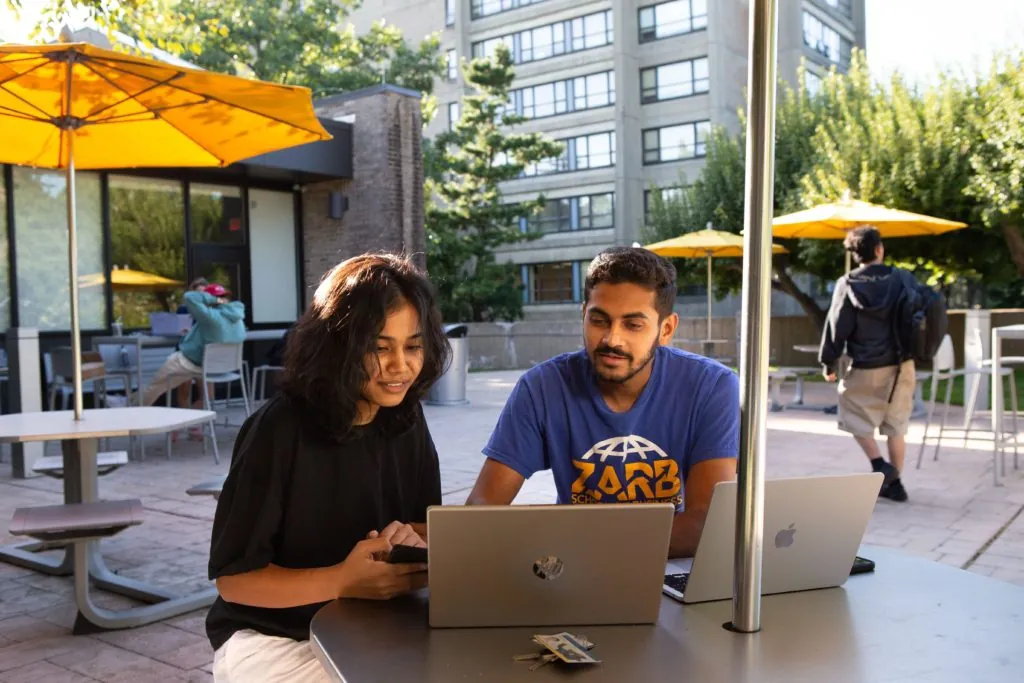
Success Over Sacrifice: How Zarb’s Online MBA Program Is Changing The Grad School Experience
Dean Janet Lenaghan, Zarb School of Business, published a piece in Poets&Quants highlighting Zarb’s Online MBA program. She details the program’s concentrations, leadership development resources, and global learning opportunities, emphasizing its value in balancing career, education, and personal life. The article also showcases testimonials from alumni and explains the program’s strong reputation for helping students advance in their careers.