
Experts Matter. Find Yours.
Connect for media, speaking, professional opportunities & more.

University of Delaware experts share insights and strategies for navigating the upcoming school year
The College of Education and Human Development in the University of Delaware has a number of stories and experts for the upcoming school year. Stories Bridging the language gap: How AWE software fosters inclusivity for English Language Learners and Non-English Language Learners alike Creating a mindful classroom: Tips for teachers on how to have a peaceful transition into the 2024-2025 school year Empowering Black and Latinx Boys in Their Postsecondary Journeys: The Role of School Communities UD assistant professor Eric Layland shares new research on LGBTQ+ developmental milestones and supporting LGBTQ+ youth University of Delaware assistant professor explores the tensions between hopes and expectations in vocational planning for autistic young adults Experts Allison Karpyn – an associate professor who can speak to topics related to hunger, obesity, school food, supermarket access, and food insecurity. She has spoken extensively about food in schools and can offer context to those subjects. Roderick Carey – an assistant professor whose current interdisciplinary research serves to make sense of the school experiences of black and Latino adolescent boys and young men in urban contexts. He can also talk about teacher education as it relates to men in the field/the impact of male teachers. To contact Karpyn or Carey, click their profiles. More experts... If you would like to pursue any of these stories or speak to any of the following experts, they are all willing and excited to chat. Contact mediarelations@udel.edu to speak to them. Eric Layland – an assistant professor who can speak about LGBTQ+ student experiences from a research perspective. His work bridges LGBTQ+ developmental research to community impact through developmentally-informed, affirmative interventions. Sarah Mallory – an assistant professor who specializes in special education with a special focus on autism and other intellectual and developmental disabilities. She also works within the Center for Disabilities Studies. Sarah Curtiss – an assistant professor who specializes in special education with a special focus on autistic youth. Brittany Zakszeski – an assistant professor and nationally certified school psychologist, licensed psychologist and behavior analyst. She focuses on student and teacher mental health and can comment on what concealed weapons carried by teachers can do for the mental wellbeing of both students and teachers. Lauren Bailes – an associate professor who focuses on the ways in which organizational, social-cognitive, and leadership theory unite to promote the success of school leaders and K-12 students. Bryan VanGronigen – an assistant professor who specializes in organizational resilience and change management in K-12 schools with specific interest areas in efforts to improve schools, the preparation and professional development of educational leaders and educational policy analyses. Lynsey Gibbons – an associate professor specializing in mathematics education, in teacher professional learning and school partnerships across content areas. Contact mediarelations@udel.edu to speak to these experts or for more information on the stories above.


Bridging the language gap: How AWE software fosters inclusivity for ELs and Non-ELs alike
When ChatGPT burst onto the scene in November 2022, many educators and parents worried that new writing tools powered by artificial intelligence (AI) would help their students bypass important learning opportunities. Instead, as University of Delaware associate professor Joshua Wilson has shown, AI-powered writing and evaluation tools have actually helped students develop their writing skills and have supported teachers in providing meaningful feedback. Now, in a recent study published in Learning and Instruction, Wilson and his co-authors turn their attention to elementary English learners (EL), investigating how this growing population of students interacts with and benefits from automated writing evaluation (AWE) software. AWE is a class of educational technology tools that use natural language processing and AI to provide students with automated formative feedback that supports improvements in writing quality. They found that AWE technologies are equally beneficial for ELs as they are for non-ELs. Study participants accessed writing feedback to a similar extent, achieved equal gains in writing quality, focused on consistent dimensions of writing when revising and endorsed the AWE system to similar degrees, regardless of their language status. “As AI-based feedback applications become increasingly prevalent, it’s critical that researchers examine the consequences of implementing those tools in authentic educational settings, with a particular focus on equity,” said Wilson. Wilson’s study focuses on MI Write, an AWE system designed to improve the teaching and learning of writing by providing students with automated feedback and writing scores. To investigate interaction with the AWE software, Wilson and his co-authors looked at three dimensions of engagement: behavioral, or the actions students take in response to feedback; cognitive, or the thinking and revision strategies that students use in response to feedback; and affective, or how students feel about and perceive feedback. Across all three dimensions, Wilson and his co-authors found similar levels of engagement across all students. They also found that the overall improvements in student writing over the course of the school year was not related to language status. But, even in light of these positive findings, Wilson emphasizes that it’s important to view AWE as a teaching tool rather than as a replacement for classroom teaching. For more on Wilson's research or to speak to him about AI in the classroom, click on his profile and reach out to him.

Those last days of summer: How to entertain your kids before the break ends
Are you one of the parents who is panicked at the prospect of entertaining your children for those final weeks of the summer? Did you miss the day camp sign ups early in the summer? University of Delaware expert Roberta Golinkoff has you covered. Golinkoff is an education professor in the fields of education and psychology with over 30 years of experience in childhood education. She is currently Unidel H. Rodney Sharp Chair and Professor in UD's School of Education as well as a member of the Departments of Psychological and Brain Sciences and Linguistics and Cognitive Science. She also directs the Child’s Play, Learning, and Development laboratory. She gives tips on how to keep kids entertained throughout the summer, particularly this last month of summer. Work with others in your neighborhood in the same boat to create an at home day camp. What happens at day camps can be duplicated at home. Consider how they work. Peers get together under the supervision of a young adult and engage in outdoor activities such as foot races and ball games and indoor activities such as arts and crafts. Camps are hotbeds for playful learning – the way that children learn best. Camps unwittingly nurture communication between peers and adults, collaboration in helping your team, and creative thinking of all types – during craft activities but much more. Making a tentative agenda for kids with other parents in the same boat will be invaluable. But there is no room for a rigid schedule! Time has to be flexible. During the regular year when parents are rushing hither and yon, there is little time to stop and let the action continue. But the summer changes all that. Discoveries like hungry turtles in a nearby pond can be a delight for children. Even if you can’t find a teen helper or another parent to trade off with, you can engage your children in many activities they will love. Limited screen time can be beneficial. There is nothing wrong with playing with apps or watching television as long as parents make sure the content is appropriate for the age of their children. There are shows that amuse children and that they can learn from – Sesame Street and Reading Rainbow are prime examples. And parents can build on these shows by asking children to design the next episode, “What would happen if Peppa Pig couldn’t find a playmate?” or draw pictures showing the characters at the beach! A new website called Stories with Clever Hedgehog and designed in Ukrainian for Ukrainian children suffering from the war is also available in English. Designed by developmental psychologists – including Golinkoff herself – has numerous activities such as games, songs, art, fun facts for children to enjoy. But media that takes place indoors should just be used as cool down periods and even then only briefly, or on rainy days. Luxurious breezes, sunshine, and physical activities are what summer is meant for. Boredom is ok. Boredom is not a bad thing and can be a time for reflection and inner growth. Ask children to think about what they want to do next and make a plan for the rest of the day. Ask children to come up with a brand new activity that other kids would like. Media is not a great solution to boredom anyway but developing strategies to consider boredom a plus can be. Golinkoff is available to give more tips. She also welcomes reporters to visit her lab to see what she and her group are working on. Contact her by clicking on her profile.


In the ever-evolving landscape of American politics, the concept of an open convention stands as a pivotal event that can reshape the trajectory of a presidential election. This topic is particularly newsworthy because it signifies a departure from the traditional, predetermined nominating processes, opening up a dynamic and potentially unpredictable political battleground. Understanding an open convention is crucial for the public as it underscores the democratic principles of debate, decision-making, and party unity, or lack thereof. The implications of an open convention extend to voter engagement, party strategies, and the broader political discourse. Key story angles for journalists could include: Historical Context and Precedents: Exploring past instances of open conventions in American history, their outcomes, and how they have influenced subsequent elections. Mechanics and Process: Detailing how an open convention operates, the rules and procedures involved, and the roles of delegates and party officials. Political Strategy and Maneuvering: Analyzing the strategies employed by candidates and their campaigns during an open convention, including coalition-building, negotiations, and power plays. Impact on Voter Perception: Investigating how an open convention affects public opinion, voter trust, and engagement with the political process. Potential Outcomes and Scenarios: Examining the possible scenarios that can emerge from an open convention, including contested nominations, brokered deals, and unexpected candidacies. Expert Insights and Analysis: Featuring commentary and analysis from political scientists, historians, and party insiders on the significance and implications of an open convention. By focusing on the intricacies and potential ramifications of an open convention, journalists can provide the public with a comprehensive understanding of this critical aspect of the American political system, offering diverse and compelling angles for coverage. Connect with an expert if you need to know more about Open Conventions: To search our full list of experts visit www.expertfile.com Photo credit: PBS Learning Media


Can the Olympics Help Americans Forget Politics (at Least for 16 Days)?
Americans are divided on a multitude of different issues, but could the Olympic Games unite the country – at least for the duration of an Olympiad? A Baylor University sports marketing and branding expert says yes, the Olympics can help bring people together even when it’s hard for them to agree about anything else. In his latest Forbes Sports Money column, Baylor University sports marketing and branding expert Kirk Wakefield, Ph.D., executive director of the Curb Center for Sales Strategy in Sports and Entertainment (S3E) program at Baylor’s Hankamer School of Business, analyzed a July 8 national population poll that asked Americans questions about politics but also included the Steen Happiness Index (SHI). The 20-item happiness index provides a series of statements for participants to read and choose the one from each group that describes their state at that moment. Happiness items focus on three types of happy lives: the pleasant life (experiencing and savoring pleasures), the engaged life (losing the self in engaging activities) and the meaningful life (participating in meaningful activities). Are people happier when watching the Olympics? “Happy people follow the Olympics and people who follow the Olympics are happy people,” Wakefield wrote. The higher people scored on the happiness index, the more likely they are to: Watch at least some of the Olympics (49.75%) Root for the U.S. to win (31.8%) Follow the results of the Olympics (28.1%) Read stories about athletes in the Olympics (19.6%) Will talk with others about the Olympics events (18.7%) “Controlling for age, gender, income, education, race and marital status, Americans who follow the Olympics in one, two, or three of these ways are somewhat more happy people (+4% on the SHI). But those who follow the Olympics in four or all five of these ways are significantly happier people (+10% on the SHI),” Wakefield wrote. Who is happiest when the Olympics are on? The happiest? Those would be the Americans who love to talk about the Olympics with others while also cheering for U.S. athletes to win. In fact, they are about 14% happier than those who don’t follow the Olympics, according to the SHI. “Perhaps best of all, people of all political leaning and presidential preferences are equally likely to follow the Olympics. No matter the party, people can party together in unity following the Olympics,” Wakefield wrote. “Maybe we can’t forget politics. But we can give it a break to watch the Olympics.” ABOUT KIRK WAKEFIELD, PH.D. Kirk Wakefield, Ph.D., is The Edwin W. Streetman Professor of Retail Marketing at Baylor University, where he is the Executive Director of the Curb Center for Sales Strategy in Sports and Entertainment (S3E) program in the Hankamer School of Business. The author of Team Sports Marketing and founder of Wakefield Research Partners, Wakefield has conducted fan research on partnerships, pricing, promotions, sportscape, service, and anything else that explains why fans do what they do in nearly every venue in sports, including the NBA, NFL, MLB, MLS, NHL and NASCAR. His scholarly works appear in a breadth of journals: Journal of Marketing, Journal of Consumer Research, Journal of the Academy of Marketing Science, Journal of Service Research, Journal of Retailing, Journal of Advertising, Journal of Advertising Research and Journal of Sport Management, among others. Wakefield is a regular contributor to Sports Money on Forbes.com. ABOUT THE CURB CENTER FOR SALES STRATEGY IN SPORTS AND ENTERTAINMENT (S3E) The Center for Sales Strategy in Sports and Entertainment (S3E) at Baylor University is the only program in the U.S. focused on generating revenue for sports. S3E graduates have career opportunities in sales, digital marketing or business analytics for major league teams, university athletics, corporations and agencies. Baylor is the only university combining learning with practice in partnership with the Athletics Department to prepare graduates for careers in the business of sports. The S3E program is unique in vision, values, mission and culture to transform the business of sports and entertainment. Consistent with the Christian mission and purpose of Baylor University, we prepare passionate servant leaders to positively influence lives in places people go to play or watch others play.


Global Technology Outage Raises Concerns About Ease of Future Cybersecurity Attacks
The world came to a standstill after a technology outage reported Thursday evening grounded airplanes, disconnected hospitals and shut down banks across the globe. A faulty software update was to blame, not cybercriminals, but Florida Tech assistant professor TJ O’Connor said the outage’s cascading effect points to larger concerns about our society’s reliance on the internet. The outage, which affected users’ ability to access Microsoft 365 applications, was traced back to a defect found in a software update from cybersecurity company CrowdStrike. CrowdStrike quickly released a statement confirming that the outage was “not a security incident or cyberattack.” The outage was nonetheless damaging, kicking institutions offline. Issues remained more than a day later. “Once those services go down, there’s this massive cascading effect,” O’Conner said. “If bank processing doesn’t work, then aviation doesn’t work. If aviation doesn’t work, shipping doesn’t work.” Ultimately, O’Connor explained, the biggest concern isn’t the glitch in the system; it’s the number of systems that broke because CrowdStrike wasn’t working. “I think what we’ll see a lot of people learn from this CrowdStrike incident is…that if they want to take the internet down in the future, all they have to do is hit one target,” O’Connor said. “It makes the threat landscape a lot smaller to attack for an adversary.” Over the course of several hours, a blue Microsoft error screen taunted companies worldwide. Airlines including Delta, American and Frontier grounded all flights. Several television news outlets, including the United Kingdom’s Sky News, were unable to hold live broadcasts. Some of the biggest concerns lie in the hospital industry, where planning, evaluation and continuous monitoring are essential, O’Connor noted. “[Hospitals] are constantly processing so much data, and for them to go out for a couple of hours means that decisions aren’t being made on an automated basis,” O’Connor said. “We’ve kicked over so much of our decision making to automated systems that we can’t let those networks fail.” According to the United Kingdom’s National Health Service (NHS), the outage disrupted its appointment and patient record system. Mass General Brigham in Boston, Massachusetts was also one of several U.S. hospitals that cancelled non-urgent surgeries, procedures, and medical visits because of the disruption. 911 outages were also reported in several states, including Phoenix, Arizona, whose computerized dispatch center was affected, the police department posted on social media. In Portland, Oregon, Mayor Ted Wheeler issued a citywide state of emergency due to the outage’s impact on city servers, computers and emergency communications. Although CrowdStrike confirmed the incident was not malicious, O’Connor said it raises questions about overall reliance on the internet to make decisions, as well as ineffectiveness in securing it. “We continually have these wake-up moments where something happens, it’s large scale, it’s a news blip, and then we forget about it… but our adversaries don’t,” O’Connor said. “Unfortunately, the attack infrastructure and the ability to attack is getting easier and easier.” O’Connor also expects future network attacks to get worse, calling the unstable global environment a “national-level issue to address.” While large-scale attacks and outages are mostly out the individuals’ control, O’Connor said, people can take action to protect themselves from personal cybersecurity attacks by using multi-factor authentication as much as possible. Looking to know more? Dr. TJ O’Connor’s research is focused on cybersecurity education, wireless protocols, software-defined radio and machine learning. If you're looking to connect with Dr. O'Connor - simply click on his icon now to arrange an interview today.


It Has to Matter Who Wins: Futurecasting the MLB All-Star Game
Globe Life Field in Arlington, home of the 2023 World Series champion Texas Rangers, will play host to the 94th edition of the Major League Baseball All-Star Game on July 16, marking the second time in franchise history the Rangers will host the Midsummer Classic. MLB’s All-Star game – which matches up the best players from the American League and National League as selected by fans, managers and players – is considered one of best all-star contests among professional sports, said Kirk Wakefield, Ph.D., executive director of the Curb Center for Sales Strategy in Sports and Entertainment (S3E) program at Baylor University’s Hankamer School of Business. However, the game faces continued headwinds, Wakefield said, ranging from lagging viewership to fan voting to a game that is more an exhibition than a meaningful game. Wakefield Weighs In: Five Thoughts on MLB's All-Star Game Is the MLB All-Star game the best All-Star contest of all major leagues? Wakefield: Yes, it’s the only one where players seem to try their best. The NBA and NFL – who have practically given up – have declining viewership since 2011. Unfortunately, MLB All-Star game is on the same downhill skid. (According to Statista, viewership has declined from 22 million in 1993 to seven million in 2023.) The reason why is it doesn’t really matter who wins. If the players don’t care who wins, neither will fans. Further, fans aren’t particularly a fan of only one league so that it really matters if one league has bragging rights. That was less the case years ago before interleague play. How could viewership improve in any of the All-Star games? Wakefield: It has to matter who wins. MLB tried this with home field advantage for the World Series. They gave that up. The current approach in baseball is truly an exhibition because every player gets to play, so it’s like three players at every position playing three innings. That’s not how a manager would play it if trying to win. And it’s not like it used to be when the starters (who were more likely to be the best at their positions) played longer. One suggestion I’ve heard is to make the payoff big enough for the winners so that the players gave it their best. Get a sponsor to put up the money so the winners each make seven figures and could be the players and managers will play more like a team trying to win. Does Monday’s prelude, the hugely popular Homerun Derby, enhance Tuesday’s game? Wakefield: The Homerun Derby is popular because fans do follow individual players. It matters more who wins. That said, the HR derby’s viewership has still lagged. Bottom line: Fans are loyal to teams more than to leagues or individual players. Fan voting… Need we say more? Wakefield: Major market teams with huge fan bases will dominate, but what about the Kansas City Royals, who at one point in the season were on pace for the biggest year-over-year improvement in wins and losses? Given the way fan voting has become essentially a promotion game to get more fans to vote more often, it’s hardly representative of anything other than largest markets with the best promoters. The good news is that the MLB All-Star game will be quite the occasion in Arlington, Texas, with a bevy of game-related activities and events July 13-16. Wakefield: Arlington is an optimal location central to the U.S. with plenty of space to blow out the occasion. It’s like the Texas State Fair came to baseball, where all the rides and attractions are baseball-happy. ABOUT KIRK WAKEFIELD, PH.D. Kirk Wakefield, Ph.D., is The Edwin W. Streetman Professor of Retail Marketing at Baylor University, where he is the Executive Director of the Curb Center for Sales Strategy in Sports and Entertainment (S3E) program in the Hankamer School of Business at Baylor University. The author of Team Sports Marketing and founder of Wakefield Research Partners, Wakefield has conducted fan research on partnerships, pricing, promotions, sportscape, service, and anything else that explains why fans do what they do in nearly every venue in sports, including the NBA, NFL, MLB, MLS, NHL and NASCAR. His scholarly works appear in a breadth of journals: Journal of Marketing, Journal of Consumer Research, Journal of the Academy of Marketing Science, Journal of Service Research, Journal of Retailing, Journal of Advertising, Journal of Advertising Research and Journal of Sport Management, among others. Wakefield is a regular contributor to Sports Money on Forbes.com. ABOUT THE CURB CENTER FOR SALES STRATEGY IN SPORTS AND ENTERTAINMENT (S3E) The Center for Sales Strategy in Sports and Entertainment (S3E) at Baylor University is the only program in the U.S. focused on generating revenue for sports. S3E graduates have career opportunities in sales, digital marketing or business analytics for major league teams, university athletics, corporations and agencies. Baylor is the only university combining learning with practice in partnership with the Athletics Department to prepare graduates for careers in the business of sports. The S3E program is unique in vision, values, mission and culture to transform the business of sports and entertainment. Consistent with the Christian mission and purpose of Baylor University, we prepare passionate servant leaders to positively influence lives in places people go to play or watch others play.

Higher education, biotech and innovation - will the future be part of the 2024 campaign?
As the RNC brings national attention to Milwaukee, discussions are expected to cover pivotal topics such as biotechnology, innovation, and higher education. And as the Republican National Convention 2024 begins, journalists from across the nation and the world will converge on Milwaukee, not only to cover the political spectacle but also to dig deeper on the key issues that may decide the election. To help visiting journalists navigate and understand these issues and how and where the Republican policies are taking on these topics our MSOE experts are available to offer insights. Dr. Wujie Zhang, Dr. Jung Lee, Dr. Eric Baumgartner, Dr. Candela Marini, and Dr. John Walz are leading voices nationally on these important subjects and are ready to assist with any stories during the convention. Dr. John Walz President Expertise: Thought leadership on higher education, relevancy and value of higher ed View Profile “Engineering is not a very diverse field,” Walz said. “I want to continue to push those boundaries and make our programs open, to see more and more under-represented students come here and succeed here, and do well here.” MSOE president John Walz works to make 'hidden gem' not so hidden. Milwaukee Journal Sentinel May 17, 2023 Dr. Wujie Zhang Professor, Chemical and Biomolecular Engineering Expertise: Biomaterials; Regenerative Medicine and Tissue Engineering; Micro/Nano-technology; Drug Delivery; Stem Cell Research; Cancer Treatment; Cryobiology; Food Science and Engineering (Fluent in Chinese and English) View Profile “We accidentally noticed that we can make the hydrogel particle red blood cell shaped,” he explains. “We started then to make artificial red blood cells to mimic pretty much all aspects of red blood cells.” You're Somebody's Type MKE Lifestyle January 24, 2020 Dr. Jung Lee Professor, Chemical and Biomolecular Engineering Expertise: Bioinformatics, drug design and molecular modeling. View Profile Dr. Eric Baumgartner Executive Vice President of Academics Expertise: Thought leadership on higher education, relevancy and value of higher ed, role of A.I. in future degrees and workforce development. View Profile MSOE serves as an educational resource to Wisconsin companies is building an A.I.-ready workforce. In 2018 MSOE was the first in the nation to launch a B.S. in Computer Science with a sole focus on A.I. and machine learning. Wisconsin Governor’s Task Force on Workforce and Artificial Intelligence December, 2023 Dr. Candela Marini Assistant Professor Expertise: Latin American Studies and Visual Culture View Profile “Contrary to stereotypical images of Native Americans trying to stop ‘progress’ by fighting against mines and pipelines projects, the Menominees’ sustainable forestry stands out as a clear example of resource management that actually thinks about, and works for, the future,” said Marini. The MSOE Mindset visits the Menominee Indian Reservation MSOE Online April 11, 2019 . . . Media Relations Contact To schedule an interview or for more information, please contact: JoEllen Burdue Senior Director of Communications and Media Relations Phone: (414) 839-0906 Email: burdue@msoe.edu . . . About Milwaukee School of Engineering (MSOE) Milwaukee School of Engineering is the university of choice for those seeking an inclusive community of experiential learners driven to solve the complex challenges of today and tomorrow. The independent, non-profit university has about 2,800 students and was founded in 1903. MSOE offers bachelor's and master's degrees in engineering, business and nursing. Faculty are student-focused experts who bring real-world experience into the classroom. This approach to learning makes students ready now as well as prepared for the future. Longstanding partnerships with business and industry leaders enable students to learn alongside professional mentors, and challenge them to go beyond what's possible. MSOE graduates are leaders of character, responsible professionals, passionate learners and value creators.





Water, resources and infrastructure
Across America we're seeing flooding, drought, epic storms and reservoirs running dry. Water, how it is controlled and regulated is an emerging topic. And for the next four years, with the unknown impacts of climate change - water will be on a lot of people's minds. And as the Republican National Convention 2024 begins, journalists from across the nation and the world will converge on Milwaukee, not only to cover the political spectacle but also to dig deeper on the key issues that may decide the election. To help visiting journalists navigate and understand the depth of Milwaukee's heritage and modern vibrancy, our MSOE experts are available to offer insights. Professor William Gonwa has worked in the fields of wastewater collection, storm water management, and flood protection since 1984. His research focuses on the water resources area of civil engineering including collection systems and stormwater management. He received his doctorate from Marquette University, his masters from the University of Kentucky, and his bachelors from the University of Wisconsin-Madison, all in civil and environmental engineering. . . . Dr. William Gonwa Professor, Civil Engineering Expertise: Water Resources, Sewers, Storm Water, Civil Engineering education View Profile One may hear of news reports of large events and notice that they appear to occur more frequently than they might expect (i.e. a 100-year storm is reported in the news in the Detroit region more often than once every 100 years). A casual observer not well versed in what these rainfall statistics mean might be tempted to blame this on climate change, but the dynamic described here is not the result of just climate change. It is the result of the large size of the city of Detroit and the fact that rainfall frequencies are published for a point rainfall, not regions. This regional rainfall effect will occur in any metropolitan area with a large geographic extent. Why properly characterizing large storms is critical for stormwater professionals Stormwater Solutions June 07, 2024 . . . For further information and to arrange interviews with our experts, please contact: JoEllen Burdue Senior Director of Communications and Media Relations Phone: (414) 839-0906 Email: burdue@msoe.edu . . . About Milwaukee School of Engineering (MSOE) Milwaukee School of Engineering is the university of choice for those seeking an inclusive community of experiential learners driven to solve the complex challenges of today and tomorrow. The independent, non-profit university has about 2,800 students and was founded in 1903. MSOE offers bachelor's and master's degrees in engineering, business and nursing. Faculty are student-focused experts who bring real-world experience into the classroom. This approach to learning makes students ready now as well as prepared for the future. Longstanding partnerships with business and industry leaders enable students to learn alongside professional mentors, and challenge them to go beyond what's possible. MSOE graduates are leaders of character, responsible professionals, passionate learners and value creators.

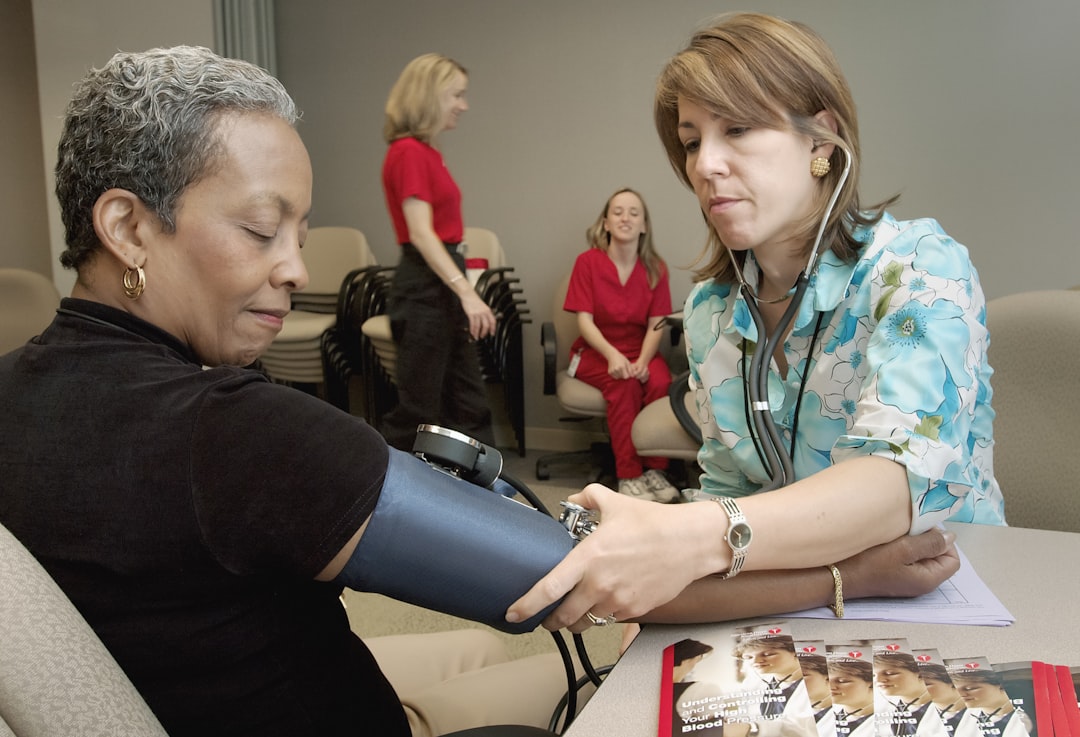
The pandemic and who reacted better has been debate fodder for the campaigns of Donald Trump and Joe Biden already this election. The pandemic, preparing for the next one is just one of several key public health issues that America is dealing with. Opioids, obesity and nutrition are just a few others. And as the Republican National Convention 2024 begins, journalists from across the nation and the world will converge on Milwaukee, not only to cover the political spectacle but also to dig deeper on the key issues that may decide the election. To help visiting journalists navigate and understand the depth of Milwaukee's heritage and modern vibrancy, our MSOE experts are available to offer insights. Robin Gates is a nurse executive with a wide range of experience in community home, health and hospice, organ and tissue donation, managing primary care clinics, and clinical trials involving medical devices and pharmaceuticals. She has also worked as a nurse educator for health care organizations and higher education. . . . Robin Gates Assistant Professor, Nursing Expertise: Population health expert: understanding and addressing the diverse factors that influence health outcomes across different populations. View Profile “Leadership experience in various health care environments provides my ability to empower the next generations of nurses to understand the medical system for nursing practice wholistically,” said Gates. “Nurses are change agents. We are a pivotal part of a multidisciplinary team. I emphasize to nursing students their role in the community, corporations, hospitals, clinics, telehealth, home care and hospice, insurance, government and so on.” MSOE Online February 25, 2022 . . . For further information and to arrange interviews with our experts, please contact: JoEllen Burdue Senior Director of Communications and Media Relations Phone: (414) 839-0906 Email: burdue@msoe.edu . . . About Milwaukee School of Engineering (MSOE) Milwaukee School of Engineering is the university of choice for those seeking an inclusive community of experiential learners driven to solve the complex challenges of today and tomorrow. The independent, non-profit university has about 2,800 students and was founded in 1903. MSOE offers bachelor's and master's degrees in engineering, business and nursing. Faculty are student-focused experts who bring real-world experience into the classroom. This approach to learning makes students ready now as well as prepared for the future. Longstanding partnerships with business and industry leaders enable students to learn alongside professional mentors, and challenge them to go beyond what's possible. MSOE graduates are leaders of character, responsible professionals, passionate learners and value creators.
