Experts Matter. Find Yours.
Connect for media, speaking, professional opportunities & more.

Expert Q&A: What is Soft Diplomacy and how does it impact classrooms?
"Right now, storytelling is critical. Language learning is highly personal, and it’s the person-to-person relationships that grease the wheels," says Cheryl Ernst, director of the English Language Institute at the University of Delaware. She recently published English Language Programs as Facilitators of Soft Diplomacy in Innovations in Star Scholars Press. Here's how she's discussing this important topic. Q: What is the focus of this research, and why is it important? Ernst: ELI and other English language programs provide the ideal space for communication development, cross cultural appreciation, gaining life skills, and raising awareness about people beyond the media. Post pandemic, we’re hearing across campus how individuals feel less connected, and in English language classrooms, connection is critical. Language is only learned through production and practice since it’s a skill that needs to be honed. In language, there is no such thing as perfect. In our classrooms, English is the common goal, and everyone comes to that space at their own levels and overflowing with imperfection. Our students learn to use their vulnerability as a tool. They learn the value of a growth mindset living in a culture that is different from their own, and with that comes an appreciation for difference, respect for others, trust, human-to-human communication. Q: What inspired this research? Ernst: More than 30 years of observation, conversations, experiences, and personal relationships. There was no term to describe the skills English language programs teach beyond grammar (what’s perceived, anyway). Terms like personal diplomacy, person-to-person diplomacy, civic diplomacy, and the like happens all the time and oversimplifies what we do. In my readings, I started to see overlaps between soft power and diplomacy, which led to the concept of Soft Diplomacy. Then what distinguishes Soft Diplomacy from other more common monikers are the variety of skills that happen organically in our classrooms that we rarely acknowledge and students may not recognize. Q: What are some key findings or developments? Ernst: Institutionally, ELPs can do better highlighting the skills beyond English that we teach organically or deliberately. Q: How could this work potentially impact the field or the wider public? Ernst: Respecting ELPs for the space they provide and the skills they offer. It’s not “just English,” rather is learning to communicate in a common language and with people from around the globe. I’d like people to realize that relationships are foundational, that there are common values across nations and that differences are not bad. What version of English is “correct” British or American dialects (the New York? Wisconsin? Alabama? Iowa?). Q: What are the next steps or upcoming milestones in your research? Ernst: A former student and I have launched a podcast series called Soft Diplomacy in Action that focuses on personal stories from those who work in international education. We’ve interviewed an ELI associate professor from Morocco, the UD coordinator of the Mandela Fellows program, a professor who sees (and lives) the diplomatic value of sports, and a retired English language professional. We’re looking forward to continuing these conversations with individuals from a variety of disciplines that also work in this space but through different lenses. ABOUT CHERYL ERNST Cheryl Ernst is the director of the English Language Institute at the University of Delaware where she and her colleagues and students practice Soft Diplomacy every day. Her professional areas of interest include program administration and international marketing, teacher training and working with international teaching assistants, curriculum design, and advanced level academic English (graduate levels). To speak with Ernst her work and the importance of Soft Diplomacy, reach out to MediaRelations@udel.edu.


Reading for pleasure in free fall: New study finds 40% drop over two decades
A sweeping new study from the University of Florida and University College London has found that daily reading for pleasure in the United States has declined by more than 40% over the last 20 years — raising urgent questions about the cultural, educational and health consequences of a nation reading less. Published today in the journal iScience, the study analyzed data from over 236,000 Americans who participated in the American Time Use Survey between 2003 and 2023. The findings suggest a fundamental cultural shift: fewer people are carving out time in their day to read for enjoyment. “This is not just a small dip — it’s a sustained, steady decline of about 3% per year,” said Jill Sonke, Ph.D., director of research initiatives at the UF Center for Arts in Medicine and co-director of the EpiArts Lab, a National Endowment for the Arts research lab at UF in partnership with University College London. “It’s significant, and it’s deeply concerning.” Who’s reading and who isn’t The decline wasn’t evenly spread across the population. Researchers found steeper drops among Black Americans than white Americans, people with lower income or educational attainment, and those in rural (versus metropolitan) areas — highlighting deepening disparities in reading access and habits. “While people with higher education levels and women are still more likely to read, even among these groups, we’re seeing shifts,” said Jessica Bone, Ph.D., senior research fellow in statistics and epidemiology at University College London. “And among those who do read, the time spent reading has increased slightly, which may suggest a polarization, where some people are reading more while many have stopped reading altogether.” The researchers also noted some more promising findings, including that reading with children did not change over the last 20 years. However, reading with children was a lot less common than reading for pleasure, which is concerning given that this activity is tied to early literacy development, academic success and family bonding, Bone said. Why it matters Reading for pleasure has long been recognized not just as a tool for education, but as a means of supporting mental health, empathy, creativity and lifelong learning. The EpiArts Lab, which uses large data sets to examine links between the arts and health, has previously identified clear associations between creative engagement and well-being. “Reading has historically been a low-barrier, high-impact way to engage creatively and improve quality of life,” Sonke said. “When we lose one of the simplest tools in our public health toolkit, it’s a serious loss.” The American Time Use Survey offers a unique window into these trends. “We’re working with incredibly detailed data about how people spend their days,” Bone said. “And because it’s a representative sample of U.S. residents in private households, we can look not just at the national trend, but at how it plays out across different communities.” Why are Americans reading less? While causes were not part of the study, the researchers point to multiple potential factors, including the rise of digital media, growing economic pressures, shrinking leisure time and uneven access to books and libraries. “Our digital culture is certainly part of the story,” Sonke said. “But there are also structural issues — limited access to reading materials, economic insecurity and a national decline in leisure time. If you’re working multiple jobs or dealing with transportation barriers in a rural area, a trip to the library may just not be feasible.” What can be done? The study’s authors say that interventions could help slow or reverse the trend, but they need to be strategic. “Reading with children is one of the most promising avenues,” said Daisy Fancourt, Ph.D., a professor of psychology and epidemiology at University College London and co-director of the EpiArts Lab. “It supports not only language and literacy, but empathy, social bonding, emotional development and school readiness.” Bone added that creating more community-centered reading opportunities could also help: “Ideally, we’d make local libraries more accessible and attractive, encourage book groups, and make reading a more social and supported activity — not just something done in isolation.” The study underscores the importance of valuing and protecting access to the arts — not only as a matter of culture, but as a matter of public health. “Reading has always been one of the more accessible ways to support well-being,” Fancourt said. “To see this kind of decline is concerning because the research is clear: reading is a vital health-enhancing behavior for every group within society, with benefits across the life-course.”


AI in the classroom: What parents need to know
As students return to classrooms, Maya Israel, professor of educational technology and computer science education at the University of Florida, shares insights on best practices for AI use for students in K-12. She also serves as the director of CSEveryone Center for Computer Science Education at UF, a program created to boost teachers’ capabilities around computer science and AI in education. Israel also leads the Florida K-12 Education Task Force, a group committed to empowering educators, students, families and administrators by harnessing the transformative potential of AI in K-12 classrooms, prioritizing safety, privacy, access and fairness. How are K–12 students using AI in classrooms? There is a wide range of approaches that students are using AI in classrooms. It depends on several factors including district policies, student age and the teacher’s instructional goals. Some districts restrict AI to only teacher use, such as creating custom reading passages for younger students. Others allow older students to use tools to check grammar, create visuals or run science simulations. Even then, skilled teachers frame AI as one tool, not a replacement for student thinking and effort. What are examples of age-appropriate tools that enhance learning? AI tools can be used to either enhance or erode learner agency and critical thinking. It is up to the educators to consider how these tools can be used appropriately. It is critical to use AI tools in a manner that supports learning, creativity and problem solving rather than bypass critical thinking. For example, Canva lets students create infographics, posters and videos to show understanding. Google’s Teachable Machine helps students learn AI concepts by training their own image-recognition models. These types of AI-augmented tools work best when they are embedded into activities such as project-based learning, where AI supports learning and critical thinking. How do teachers ensure AI supports core skills? While AI can be incredibly helpful in supporting learning, it should not be a shortcut that allows students to bypass learning. Teachers should design learning opportunities that integrate AI in a manner that encourages critical thinking. For example, if students are using AI to support their mathematical understanding, teachers should ask them to explain their reasoning, engage in discussions and attempt to solve problems in different ways. Teachers can ask students questions like, “Does that answer make sense based on what you know?” or “Why do you think [said AI tool] made that suggestion?” This type of reflection reinforces the message that learning does not happen through getting fast answers. Learning happens through exploration, productive struggle and collaboration. Many parents worry that using AI might make students too dependent on technology. How do educators address that concern? This is a very valid concern. Over-reliance on AI can erode independence and critical thinking, that’s why teachers should be intentional in how they use AI for teaching and learning. Educators can address this concern by communicating with parents their policies and approaches to using AI with students. This approach can include providing clear expectations of when AI is used, designing assignments that require critical thinking, personal reflection and reasoning and teaching students the metacognitive skills to self-assess how and when to use AI so that it is used to support learning rather than as a crutch. How do schools ensure that students still develop original thinking and creativity when using AI for assignments or projects? In the age of AI, there is the need to be even more intentional designing learning experiences where students engage in creative and critical thinking. One of the best practices that have shown to support this is the use of project-based learning, where students must create, iterate and evaluate ideas based on feedback from their peers and teachers. AI can help students gather ideas or organize research, but the students must ask the questions, synthesize information and produce original ideas. Assessment and rubrics should emphasize skills such as reasoning, process and creativity rather than just focusing on the final product. That way, although AI can play a role in instruction, the goal is to design instructional activities that move beyond what the AI can do. How do educators help students understand when it’s appropriate to use AI in their schoolwork? In the age of AI, educators should help students develop the skills to be original thinkers who can use AI thoughtfully and responsibly. Educators can help students understand when to use AI in their school work by directly embedding AI literacy into their instruction. AI literacy includes having discussions about the capabilities and limitations of AI, ethical considerations and the importance of students’ agency and original thoughts. Additionally, clear guidelines and policies help students navigate some of the gray areas of AI usage. What guidance should parents give at home? There are several key messages that parents should give their children about the use of AI. The most important message is that even though AI is powerful, it does not replace their judgement, creativity or empathy. Even though AI can provide fast answers, it is important for students to learn the skills themselves. Another key message is to know the rules about AI in the classroom. Parents should speak with their students about the mental health implications of over-reliance on AI. When students turn to AI-augmented tools for every answer or idea, they can gradually lose confidence in their own problem-solving abilities. Instead, students should learn how to use AI in ways that strengthen their skills and build independence.


VCU College of Engineering receives $600,000 for AI-driven cybersecurity research
To advance AI-enabled cybersecurity research, the National Science Foundation (NSF) presented Kemal Akkaya, Ph.D., professor and chair of the Department of Computer Science, with a $600,000 grant through the organization’s Cybersecurity Innovation for Cyberinfrastructure program. Akkaya’s three-year project will explore how large language models (LLMs) can automate packet labeling for intrusion detection systems. “From transportation and healthcare to finance, improving the accuracy of machine learning algorithms used to defend the networks that underpin these sectors’ cyberinfrastructure is critical for protecting them from cyberattacks. Strengthening these defenses helps ensure the reliability and security of the essential services people rely on every day,” said Akkaya. Intrusion detection systems monitor network traffic to identify suspicious or malicious activity. These systems rely on machine learning models trained on large volumes of accurately labeled data. Producing those datasets, however, is time intensive and often requires expert cybersecurity knowledge. As digital systems increasingly power transportation, health care, finance and communication, the volume and sophistication of cyber attacks continue to grow. At the same time, artificial intelligence is reshaping how both attackers and defenders operate. Improving how quickly and accurately security systems can be trained is critical to protecting the infrastructure that supports daily life. Akkaya’s project will investigate how generative AI can help address this challenge. The team will fine tune open-source large language models using network data, threat signatures and expert annotations. Model accuracy will be strengthened through retrieval-augmented refinement, ensemble modeling and human-in-the-loop verification. Labeled datasets will be released in stages to support the development and evaluation of cybersecurity models. Using data from AmLight, an international research and education network operated by Florida International University (FIU), the project includes collaboration with researchers from FIU. The award strengthens VCU’s growing leadership in AI-enabled cybersecurity research and provides hands-on research training for graduate students. Resulting datasets from this work will support machine learning education for undergraduate students.



My MBA at 69: Q1 Results Are In. And Nobody Is More Surprised Than Me
When I wrote my first post about starting an MBA at 69, I was running on caffeine, stubbornness, and a mild identity crisis. I was drowning in software platforms, APA formatting, and the humbling reality that open-book quizzes could still make me sweat. Fast forward to today. I am now 25% complete. Even typing that makes me sit up straighter. More surprising? I am maintaining an A average. Yes. An A. Let that land for a moment. Before anyone faints, let me be clear. I am not retiring my original mantra. "Even C's Get Degrees" still lives on a sticky note in my brain. I repeat it whenever the ego starts strutting around like it owns the place. The goal was never perfection. The goal was sustainable progress and full nights of sleep. The A average is delightful. The mantra is protective. My dog Dottie approves of both. She now perches on the back of the couch while I work, casting supervisory glances in my direction like a very small, very opinionated board member. We are in a much better place emotionally. The household has stabilized. What I did not anticipate was how much this experience would reveal about me. Lesson #1: Experience Is the Assignment Nobody Grades The content is strong. The business frameworks and systems I am learning are elegant. But the real gift has been realizing that my decades of experience give depth to everything I read. When the textbook discusses competitive positioning or industry cycles, I do not see abstract diagrams. I see real businesses. I hear boardroom conversations. I remember decisions that worked beautifully — and others that required creative explanations and, occasionally, some very careful walking back. The theories have texture because I have lived them. This MBA is not separate from my work. It is sharpening it. Every case study filters through the same question: How does this apply to retirees? I cannot turn that lens off. Frankly, I would not want to. At the same time, not every concept survives intact outside the classroom. We are taught that firms must choose clearly between cost leadership and differentiation. Tidy in theory. Messier in practice, where most organizations stumble through imperfect hybrids while real-world pressures refuse to behave according to the textbook. I learn the models thoroughly. I cite them properly. I demonstrate mastery. And yes, after nearly losing my mind over whether a journal article published in 2019 requires a DOI or a retrieved-from URL, I can now format an APA 7th edition reference in my sleep. Whether I want to is another conversation entirely. But maturity lets me see where the models bend. Lesson #2: Selective Excellence Is Not Laziness. It's Wisdom. One of the biggest lessons this term has been prioritization. At 29, I wanted to prove myself. At 69, I want to improve myself. Earlier in life I would have tried to ace everything equally. Today, I allocate energy strategically. Marketing excites me. Strategy energizes me. Organizational behaviour feels like coming home. Those subjects get my full intellectual investment. Accounting gets solid, disciplined, B-minus effort. I say that proudly. Retirement is also selective excellence. You do not need to be good at everything anymore. You get to double down on what lights you up. Coursework. Careers. Life. All of it. But growth is not without discomfort. Lesson #3: The Classroom Has No Hallways Anymore My program is entirely virtual. No hallway conversations. No accidental coffee chats that turn into the best part of your week. Everything happens on screens, and group projects test my patience more than any midterm ever could. I even considered removing my photo from my profile to avoid immediate age assumptions. Then I took a breath and remembered who I am. If someone sees my age and quietly categorizes me as someone's grandmother, so be it. They have never met Aunt Equity when she puts her purse down. For the record: I do not own a purse. In one recent group assignment, a teammate gently pointed out that I had used an em dash in a formal case report. A rookie mistake, apparently. Instead of bristling, I thanked them for the compliment. If I am still making rookie mistakes, I am still capable of growth. That exchange meant more to me than the grade. Lesson #4: The Advantage of Having Nothing Left to Prove Age has given me something powerful: detachment. I am not chasing internships. I am not competing for promotions. I am here because I want to be here, and that freedom changes everything. I can question thoughtfully. I can log off at a reasonable hour. I can engage with students young enough to be my grandchildren without an ounce of ego about it. Mostly. And still, whenever I feel the ego creeping back in about that A average, I whisper: "Even C's Get Degrees." It works every time. Lesson #5: Curiosity Does Not Come With an Expiry Date The deeper curriculum of this MBA has little to do with GPA. It has taught me that humility sharpens thinking. That curiosity does not expire. That stretching intellectually at 69 feels remarkably similar to climbing toward Everest Base Camp at 60. You question your sanity. You adapt. You keep moving. When I look at my latest grades, I do not feel relief. I feel possibility. If I can adapt to new technology, academic writing standards, and Zoom calls at 7 AM, then reinvention is not reserved for youth. It is available to anyone willing to risk being a beginner again. Are You Putting Your Experience To Work? If you are over 60 and thinking about taking a course, writing a book, starting a business, or learning something that scares you a little — here is the truth: Your experience is not a liability. It is leverage. Your decades are not dead weight. They are the whole point. And if you are willing to risk being a beginner again, reinvention will meet you exactly where you are. I am 25% done. Seventy is approaching. The mantra still stands. Remember, even C's Get Degrees. But when you bring seven decades of lived experience into the classroom, the curve has a way of bending in your favour. Now, if you will excuse me, Dottie has just planted herself directly on my laptop and is staring at me with the quiet authority of someone who has already read the syllabus on Google Scholar. Eighteen courses to go. Multiple pots of extra-strong coffee. A carefully curated cocktail of patience, tolerance, and self-care. The honeymoon is officially over. What lies ahead is a full marathon: War and Peace-length reading lists, spreadsheets that test the limits of human endurance, and enough group projects to make a grown woman question everything she knows about herself. Dottie remains unbothered. She has seen me do hard things. She knows I finish what I start. She also knows the whining, complaining, and pleading will eventually stop. (insert slow, world-weary head shake from a very wise ten-pound dog who has heard it all before). Don’t Retire… ReWire! Sue Want to become an expert on serving the Senior Demographic? Message me to be notified about the upcoming opportunity to earn you “Equity Advocate Designation” — mastering solution-based advising that transforms how you work with Canada’s fastest-growing client segment. Email hello@retirewithequity.ca to be added.



Solving for X: Expert highlights importance of algebra in middle and high school
Math educators agree that Algebra is a critical course for middle and high schoolers, often serving as a gateway to more advanced math courses and influencing students’ academic trajectories in STEM pathways. Yet, many students struggle in this important course. Since May 2025, University of Delaware Associate Professor Erica Litke has partnered with the University of Pennsylvania Graduate School of Education and the School District of Philadelphia in a $5 million, three-year initiative to improve algebra teaching in the district. The project offers algebra teachers professional development through a year-long fellowship. With expertise in improving instructional quality in math and supporting algebra teaching, Litke leads the design and delivery of the professional development with Penn GSE experts. Close to 80 teachers participated in the first cohort of the fellowship, which includes a four-day summer institute. Litke’s research in math education has connected instructional quality to broader policy issues in education and focused on teacher knowledge and professional development. “The focus on algebra content and key features of algebra teaching that support students in learning algebra content helps teachers translate their learning from the fellowship directly into their teaching practice,” said Litke. “Being able to translate my research findings into usable knowledge for teachers and contribute to the design of this kind of comprehensive professional learning has been really exciting.” Litke can speak to her role in the Algebra Fellowship project, the importance of Algebra 1 in the trajectory of students’ STEM education and strategies for supporting teaching learning at the school and district levels. ABOUT ERICA LITKE Erica Litke is an associate professor specializing in mathematics education in the School of Education at the University of Delaware. Her research focuses on understanding and improving instructional quality in mathematics for students in the elementary and secondary grades. Her research has described and analyzed instructional practice in mathematics using observation instruments, connected instructional quality in mathematics to broader policy-related issues in education, and focused on teacher knowledge and professional development. She has appeared in The Philadelphia Inquirer, Daily Pennsylvanian and other publications. To speak with Litke or to learn more, email mediarelations@udel.edu.

Seniors and AI: What Could Possibly Go Wrong?
Let’s be honest: we’ve weathered every tech wave they’ve thrown our way. Rotary phones. Dial-up internet. The BlackBerry. And somehow, we’ve made it to AI. The robots know more about our shopping habits than our spouses do—and honestly, they’re better listeners. We’ve Survived Every Tech Wave. AI Is Just the Next One. Remember when the internet first emerged, and everyone claimed it would never take off? Shopping online was considered silly ("Who would buy shoes without trying them on?"), And email sounded like something only NASA engineers would use. Fast forward a few decades, and now you can't even renew a driver's licence without the internet. So much for "it'll never last." It all began innocently enough. The first cordless phone was freedom on a frequency—you could step outside, yell "Can you hear me now?" and feel unstoppable. Then came remote controls, launching the golden era of couch-based cardio: jumping up every five minutes to find the one that actually worked. (Still missing: one VCR remote, circa 1987.) Next came AOL. "You've got mail!" was our first digital dopamine hit. Then the BlackBerry arrived—part phone, part pager, part fashion statement. It was heavy, expensive, and glorious. Until, like a hot potato, we all dropped it for the iPhone—sleeker, lighter, and small enough to fit in yoga pants. The iPod Nano followed. Goodbye radios, hello playlists! From there came Google, streaming, apps, and clouds (the digital kind, not the ones that ruin golf). And now… drumroll, please… Artificial Intelligence. The "It'll Never Last" File: Greatest Misses Edition We've encountered the skeptics before: • The Internet: "No one will use it." • Online Shopping: "People won't buy shoes sight unseen." • Email: "Who needs digital letters?" • Voice Assistants: "Talking to a speaker will freak people out." • AI: "It's just hype—like the Segway for brains." Well, the Segway is still technically around, but you're not riding one to the golf course. Meanwhile, AI is everywhere—and yes, seniors are joining the party. AI: The Latest "Fad" That Isn't If you think AI is a passing craze, you probably also dismissed online shopping and email. (Confession: I once thought, "Who would ever enter their credit card number online?") But AI isn't a gadget—it's the next era. As permanent as gravity, and just as invisible until it knocks something over. Use of generative AI among older adults throughout North America is growing. A Leger Research study revealed that 1 in 3 Canadians 55+ have tried an AI tool. We can ignore it, "poo-poo" it, or embrace it. But always remember: Resisting progress will not slow it down one byte. Why This Time Is Different Here's the twist: today's seniors aren't like our parents' generation. We're Boomers with bandwidth. We were the first to type with our thumbs, track our steps before it was trendy, and FaceTime the grandkids instead of mailing Polaroids. We've earned our tech credentials. Now it's time to flex them in the AI era. Seniors Meet AI: A Beautiful Disaster AI promised to make life easier. Instead, for many seniors, it's like adopting a mischievous grandchild who never listens and occasionally orders you twelve pineapples by accident. Let's be honest—we've all had those moments. Voice Assistants: The Frenemies "Alexa, play Staying Alive." "Calling 911. You appear to be in distress." "Siri, remind me to take my pill at 8." "Texting Phil at 8." "Hey Siri, stop listening." Silence. "Hey Siri, play jazz music." Still silence. (Give it a minute… you'll get it.) These so-called "assistants" are like toddlers with Wi-Fi—they only hear half of what you say, and always the half that causes chaos. The Sitcom Nobody Asked For Seniors using AI might just be the world's best sitcom waiting to happen: • Episode 1: ChatGPT Writes My Will (and Leaves Everything to Wi-Fi) • Episode 2: Siri Joins My Book Club and Never Stops Talking • Episode 3: I Asked Alexa to Play Jazz, and She Ordered a Jacuzzi Coming soon to streaming services everywhere—as soon as we find the remote. Texting While Senior: A New Dialect Emerges If you think AI is confusing, try texting with seniors. Somewhere between autocorrect and abbreviations, a new language has evolved—part English, part comedy special: BTW – Bring The Wheelchair ROFL... CGU – Rolling On The Floor Laughing... Can't Get Up LOL – Living On Lipitor BYOT – Bring Your Own Teeth TGIF – Thank Goodness It's Four (Early Bird Special) FWB – Friend With Beta-Blockers TTYL – Talk To You Louder LMDO – Laughing My Dentures Out GOML – Get Off My Lawn Honestly, AI could spend years decoding that list and still ask, "Did you mean BYOB?" "But What About Privacy?" (Spoiler: That Ship Has Sailed) Ah yes, the Privacy Protectors—those well-meaning friends who whisper, "Don't use AI, they're stealing your identity!" Spoiler alert: that ship already sailed. Siri and Alexa have been eavesdropping for years. Google knows where you've been, what you've read, and that you googled "how to delete Google history." Uber keeps a record of every trip you've ever taken—yes, even that midnight McDonald's run—and there's no "forget" button. Most of us have already traded privacy for utility. And honestly? It's not always a bad deal. I'm happy to share a few megabytes of data if Apple can tell me where I parked in the underground garage with seventeen identical "P2" levels. That's not a conspiracy—that's a lifesaver. AI saves time, surfaces better options we didn't know existed, and delivers instant answers. No more hunting for the manual to your smoke detector—just snap a photo, and AI tells you exactly which button to push (and which one to avoid). We're not losing control; we're gaining convenience. And at this stage of life, that's worth more than a few anonymous data points. Ways Seniors Can Actually Use AI (and Enjoy It) AI tools are making daily life easier for older adults in practical, accessible ways. Here's how you can put them to work: The “Start Here” Ladder: Build Your AI Confidence One Rung at a Time Nobody learns to swim by jumping into the deep end. AI is the same. The trick isn’t to master everything at once—it’s to start somewhere low-stakes, build a little confidence, and move up when you’re ready. Here’s a simple progression that works: Level 1: Voice Assistants Risk Level: Minimal Fun Level: Surprisingly High ------------------- Start here if you haven’t already. Ask Alexa or Siri to set a timer, play music, check the weather, or settle a dinner-table argument. No typing required. Level 2: AI Chat Tools Risk Level: Low (with privacy settings activated) Usefulness Level: Eye-Opening ------------------- This is the “brilliant friend who knows everything” rung. Tools like ChatGPT or Google Gemini are free to use and can answer any question—no judgment, no wait times, no office hours. Try drafting a birthday message. Ask it to explain a medical term your doctor used. Get it to suggest a one-week meal plan. You type, it answers. Think of it as Google, but one that actually understands your question. A Note of Caution (Read This): Before you type anything personal into an AI app, go into the app’s privacy settings and switch off chat history/training so you don’t expose personal information. ChatGPT users can navigate to Settings > Data Controls and turn off "Improve the model for everyone". This prevents your conversations from being used to train future models. For extra privacy, disable "Chat History & Training," turn off memory features, or use the temporary chat feature. Level 3: Health and Wellness Wearables Risk Level: Low Payoff : Potentially Life-Saving ------------------- An Apple Watch or Fitbit isn’t simply a fancy step counter. These devices now detect irregular heart rhythms, monitor blood oxygen levels, track sleep quality, and—crucially—detect falls and automatically alert emergency contacts. For anyone living independently, that last feature alone makes it a worthwhile investment. You don’t need to know exactly how it works; just wear it. Level 4: Smart Home Tools Risk Level: Medium Payoff: You’ll Wonder How You Managed ------------------- Smart thermostats, video doorbells, voice-controlled lighting—these are AI tools you set up once and forget. The real win here is independence. Being able to control your home environment with your voice, check who’s at the door from your phone, or have the heat adjust automatically before you wake up: these aren’t luxuries. For many of us, they’re what make staying in our own homes longer a real and practical option. Level 5: AI-Assisted Financial Tools Risk Level: Higher. Stakes Level: Real. So Tread Carefully and Deliberately ------------------- This level is for when you’re comfortable and curious—not before. AI can now help you understand tax documents, summarize financial statements, compare mortgage products, and even flag unusual account activity. These tools are genuinely powerful. But they work best alongside a trusted human advisor, not instead of one. Think of AI as the research assistant who preps the questions. Your financial advisor is still the one who answers them. The key is this: you don’t have to climb the whole ladder today. Pick one level. Try it for a week. Laugh when it goes sideways. Then decide if you want to go higher. Writing & Editing: Draft emails, thank-you notes, or letters with the right tone—ChatGPT handles over 1 million daily health-related queries from seniors, including help preparing questions for doctor visits Travel Planning: Find flights, plan itineraries, and even pack your suitcase virtually Financial Education: Ask about investments or taxes—AI explains without the jargon Health & Fitness: Wearable devices like Apple Watch and Fitbit track exercise, monitor heart rate, detect falls, and can notify help if you're in an accident Smart Home Control: Voice-activated systems can adjust temperature, turn lights on and off, unlock doors, and control security—all with simple voice commands Cooking: "AI, make a meal with tuna, yogurt, and hope" Entertainment: Jokes, playlists, stories, or party ideas Learning: Teach yourself a language, an instrument, or how to fix the Wi-Fi (again) Want to get started? OATS published "AI for Older Adults," a comprehensive guide covering health, finance, and lifestyle applications specifically for seniors. It's available at oats.org. The Serious Bit: AI and Your Portfolio Here’s where I put on my serious hat for a moment. The U.S. stock market is currently top-heavy with AI darlings—Nvidia, Microsoft, Alphabet, and Meta. Great companies. Exciting times. But retirement portfolios are not the place for a single-themed bet. If your retirement savings are overloaded with AI stocks, a correction could make your portfolio look like your Fitbit step count on a February long weekend. Diversify. Always. Love tech. Just don’t go steady with it. For more on this topic, check out Part 1 of my post: The Retirees' Guide to Market Volatility: Building Your Financial Safety Net Embrace AI, Don't Fear It AI is here to stay. Think of it as your digital assistant, not your replacement. Our generation has lived through it all: dial-up, disco, dot-com booms, and Bitcoin. If anyone can handle the rise of the machines, it's us. We figured out VCRs (eventually), navigated online banking, and mastered Zoom backgrounds (some better than others). And no, blurred does not count as a background. So fire up your curiosity. Try ChatGPT to plan your next vacation, use Google Gemini to get thoughtful answers to complex questions, or tell Alexa to crack a joke. (She's still learning… but she's improving.) We’ve adapted before. We’ll adapt again. That’s actually what we do. One baffling software update at a time. And here’s what no algorithm will ever replicate: Us. Our humour. Our resilience. The comedy gold of a pocket-dial to our X at 1am. The triumph of finding our reading glasses—while wearing them. AI is smart. But we’re wiser. And that still counts for a lot. So, here's the deal: AI can predict the stock market, diagnose your rash, and write a sonnet in seventeen seconds. But It still can't find your car keys, remember why it walked into the kitchen, or laugh until it snorts at its own joke. We've survived disco, dial-up, the dot-com crash, and that one Zoom call where someone didn't realize their camera was on in the bathroom. We will absolutely survive this, too. AI isn’t here to replace us; it’s here to keep up with us. And frankly, after decades of dealing with actual humans, a very smart, endlessly patient, never-hangry assistant sounds like an upgrade. So, when the robots eventually do take over, they'll need someone to tell them to slow down, dress properly, and call their mother. That's where we come in. Same as it ever was. One baffling software update at a time. Need more guidance? Here are some helpful resources: • AARP's 2025 Tech Trends Report – Research on how older adults are using technology • Bethesda Health Group's AI Guide for Seniors – Practical everyday applications • Ultimate Senior Resource: Top 10 AI Tools – Detailed reviews of the best AI tools for older adults Don't Retire...ReWire! Sue Want more of this? Subscribe for weekly doses of retirement reality—no golf-cart clichés, no sunset stock photos, just straight talk about staying Hip, Fit & Financially Free.
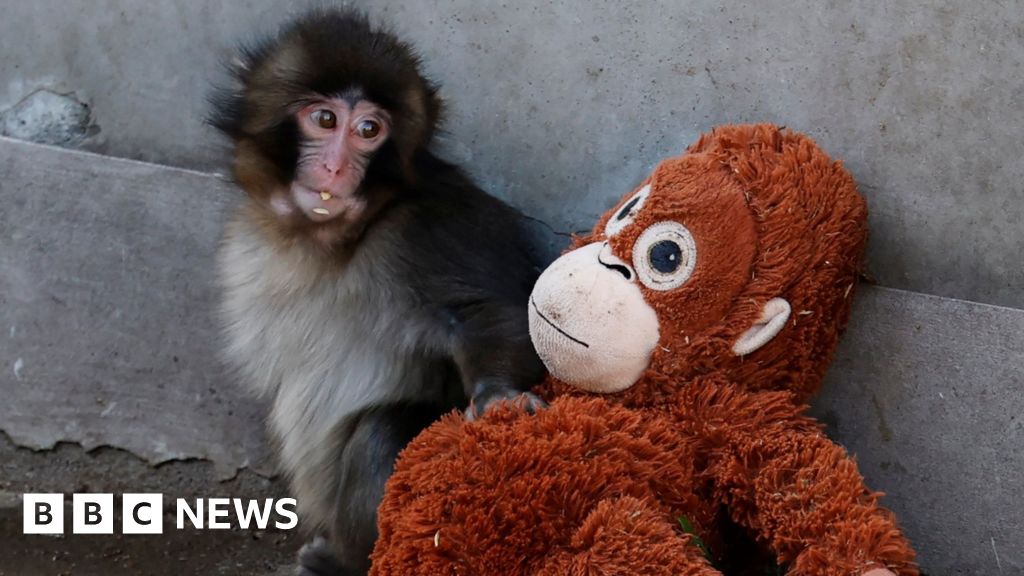
Expert Q and A: Understanding "Punch," The Baby Monkey That Captured The World's Heart
A tiny Japanese macaque named Punch has unexpectedly become one of the internet’s most talked-about animals. Born at a zoo in Japan and rejected by his mother shortly after birth, the young monkey was hand-raised by staff and given a stuffed toy for comfort—an image that quickly ricocheted across social media worldwide. Videos showing Punch tentatively approaching other macaques, sometimes being pushed away or corrected as he tried to socialize, struck an emotional chord. What began as a local zoo update rapidly turned into international headlines, with audiences from North America to Europe weighing in on what they saw as loneliness, resilience and the universal need for belonging. But experts say the story is more nuanced than a viral clip suggests. The interactions that many viewers interpreted as bullying are, in fact, typical components of macaque social development, part of how young primates learn boundaries, hierarchy and group norms. While Punch’s early maternal separation makes his integration more delicate, gradual acceptance into the troop is a positive sign. As internet users continue to share and comment, the moment has sparked broader conversations about animal emotion, anthropomorphism and the realities of wildlife behavior in managed care settings. Florida Tech's Catherine Talbot offered insight into the complexities of animal behavior. Catherine F. Talbot is an assistant professor in the School of Psychology at Florida Tech and co-director of the Animal Cognitive Research Center at Brevard Zoo. Her overarching research goal has been to study the ultimate (evolutionary) and proximate (behavioral, biological, and developmental) mechanisms underlying sociality. Q: Is it normal for mother macaques to abandon their babies, or is this an unusual occurrence? What circumstances can cause this to happen? It’s not necessarily normal, but also not that uncommon in primates, unfortunately. It’s more common in first time mothers that are inexperienced and sometimes lower ranking mothers. A number of factors can increase the likelihood of abandonment including stress on the mother and unfavorable conditions such as limited resources. Q: How does abandonment affect development in young macaques? Early maternal contact is critical for normal behavioral and emotional development. Infants rely on their mothers for nutrition, warmth, protection and learning how to navigate social dynamics. When infants do not have their mothers during critical developmental periods like infancy, in the short term, they tend to have elevated stress responses and difficulty with emotional regulation. In the long-term, it depends on whether the infant is able to form other types of attachment. In the worst-case scenario, they may have increased aggression, abnormal and/or self-injurious behavior, digestive issues and may lack social skills. But primates are resilient, and with social support and gradual integration into a troop, Punch can form new attachments, learn socially appropriate behavior and ultimately live a fairly normal monkey life. Q: Is it obvious to the rest of the troop when a young macaque has no mother? How does this affect integration? Japanese macaques have really complex social worlds, so they are really in tune with the relationships they have with one another and recognize the relationships between other individuals. That can certainly make it more difficult for Punch to be accepted back into the troop – he needs to find some friends and possibly even a surrogate parent. With social support, he should be able to recover from the absence of a mother. It’s really great to see that the care staff stepped in to support Punch as he begins to recovery from the stress of this experience. It’s even more important that Punch is around other monkeys of the same species so that he can continue to learn from them and respond appropriately to social communication cues. I’m thrilled to see that Punch is now making friends. Q: Punch is obviously attached to his stuffed orangutan. We can understand how this happens from our own human experience, but can you explain, on a biological level, how he bonded with this stuffed animal? Primates, including humans, are neurobiologically wired to form strong social bonds with a caregiver very early in life. In many primate species, infants are born highly dependent on their mother. Punch’s attachment to the stuffed orangutan reflects this need for attachment. That physical touch – warmth, softness, graspable limbs, a stable physical presence – can partially activate those same calming biological pathways, including the release of oxytocin which regulates stress and promotes feelings of safety. Without activation in those pathways, Punch would likely experience stronger feelings of separation or loneliness and ultimately social withdrawal. These biological pathways are crucial to proper social and emotional development of any primate species. Any way we can help mitigate those effects for Punch is crucial for successful integration back into his troop. Q: How does sociality among Japanese macaques compare to that of similar species? Japanese macaques live in large multi-male, multi-female social groups that can range from roughly 50 to 150 individuals. Like many macaques species, they form stable, female-bonded societies. Females remain in their natal group (or the group they were born into) for life, inherit their mother’s rank, and form strong kin- based alliances whereas males emigrate to a new group at adolescence. Their societies are organized around matrilines or extended female family lines in which rank is very important. They have strong dominance hierarchies and generally high levels of aggression, but levels of aggression and tolerance can vary a good amount from group to group. Entire matrilines can outrank others, which dictates access to food, grooming partners, and coalitions. Within a single troop, you often see multiple matrilines with long-standing dominance competitions. I sometimes compare it to a Romeo and Juliet-style Montague and Capulet dynamic, where beneath the surface of daily grooming and foraging is a complex political landscape structured by kinship and status. Q: What behaviors can Punch expect from the rest of the monkeys as he continues to integrate with the troop? What behaviors can the troop expect to see from him? As Punch continues to integrate into his troop, I would expect to see some social testing by other members of the group to see how Punch responds- they may use mild aggression like open mouth threats or direct stares (which arethreatening is macaques), brief chases, and displacement from resources like food/resting spots. These will help clarify Punch’s rank and help form and maintain a stable hierarchy. Therefore, I hope to see Punch make at least a few strong social bonds (friends), to help defend him against more intense aggression. As long as he makes a few friends, he should begin to receive more affiliative behavior. Integration is usually gradual as these bonds form and strengthen and these skills develop. I would expect to see more play and grooming with conspecifics and less reliance on his stuffed orangutan as real social bonds start to form. Grooming is especially important for forming and maintaining social bonds and there are already videos showing Punch receiving some grooming from older monkeys, which bodes well for him. He also needs to respond in socially appropriate ways, like grooming others and showing submission to higher ranking individuals. Essentially, he needs to understand and follow the rules of Japanese macaque society. Q: What message do you have as people continue to root for Punch? It's uplifting to see how much support Punch has gained across the world. And while Punch is clearly adorable and so vulnerable that you just want to love him and give him (or other monkeys like him) a home, it’s important to remember that more than anything else, he needs to live with other monkeys so that he can live a life that is true to his species and nature. Unfortunately, many people still have monkeys as pets. The illegal wildlife trade is a multi-billion-dollar industry, ranking as the fourth largest illegal trade after drugs, arms, and human trafficking. Within the United States, it is estimated that there are more than 15,000 nonhuman primates living in unsuitable conditions. Primates are intelligent, sentient beings that need complex communities and relationships to thrive. There currently is no federal legislation that protects primates from private ownership, but the Captive Primate Safety Act (H.R.3199/ S.1594) has been proposed to prohibit the private possession of nonhuman primates and the sale or transportation of nonhuman primates for the wild pet trade. If you're interested in connecting with Catherine and learning more about animal behavior, let us help. Contact Adam Lowenstein, Assistant Vice President for External Affairs at Florida Institute of Technology, at adam@fit.edu to arrange an interview today.


Rethinking AI in the classroom: A literacy-first approach to generative technology
As schools nationwide navigate the rapid rise of generative artificial intelligence, educators are searching for guidance that goes beyond fear, hype or quick fixes. Rachel Karchmer-Klein, associate professor of literacy education at the University of Delaware, is helping lead that conversation. Her latest book, Putting AI to Work in Disciplinary Literacy: Shifting Mindsets and Guiding Classroom Instruction, offers research-based strategies for integrating AI into secondary classrooms without sacrificing critical thinking or deep learning. Here is how she is approaching the complex topic. Q: Your new book focuses on AI in disciplinary literacy. What is the central message? Karchmer-Klein: Rather than positioning AI as a shortcut or replacement for student thinking, the book emphasizes a literacy-first approach that helps students critically evaluate, interrogate, and apply AI-generated information. This is important because schools and universities are grappling with rapid AI adoption, often without clear guidance grounded in learning theory, literacy research, or classroom practice. Q: What inspired this research? Karchmer-Klein: The book grew directly out of my work with preservice teachers, practicing educators, and school leaders who were asking practical but complex questions about AI: How do we use it responsibly? How do we prevent over-reliance? How do we teach students to question what AI produces? I also saw a gap between public conversations about AI which often focused on fear or efficiency and what teachers actually need: research-informed strategies that support deep learning. My long-standing research in digital literacies provided a natural foundation for addressing these questions. Q: What are some of the key findings from your work? Karchmer-Klein: AI is most effective when it is embedded within strong instructional design and disciplinary literacy practices, not treated as a stand-alone tool. The research and classroom examples illustrate that AI can support student learning when it is used to prompt reasoning, reveal misconceptions, provide feedback for revision, and encourage multiple perspectives. Another important development is the emphasis on teaching students to evaluate AI outputs critically by recognizing bias, inaccuracies, and limitations, rather than assuming correctness. Q: How could this work impact schools, teacher education programs and the broader public? Karchmer-Klein: For educators, this work provides concrete, evidence-based literacy strategies coupled with AI in ways that strengthen, not dilute, student thinking. For teacher education programs and school districts, it offers a research-based framework for professional development and policy conversations around AI use. More broadly, the work speaks to a public concern about how emerging technologies are shaping learning, helping to reframe AI as something that requires human judgment, ethical consideration, and strong literacy skills to use well. ABOUT RACHEL KARCHMER-KLEIN Rachel Karchmer-Klein is an associate professor in the School of Education at the University of Delaware where she teaches courses in literacy and educational technology at the undergraduate, graduate, and doctoral levels. She is a former elementary classroom teacher and reading specialist. Her research investigates relationships among literacy skills, digital tools, and teacher preparation, with particular emphasis on technology-infused instructional design. To speak with Karchmer-Klein further about AI in literacy education, critical evaluation of AI-generated content and teacher preparation in the era of generative AI, reach out to MediaRelations@udel.edu.

Young magmas on the moon came from much shallower depths than previously thought, new study finds
New research on the rocks collected by China's Chang'e 5 mission is rewriting our understanding of how the moon cooled. Stephen Elardo, Ph.D., an assistant professor of Geological Sciences with the University of Florida, has found that lava on the near side of the moon likely came from a much shallower depth than previously thought, contradicting previous theories on how the moon produced lavas through time. These samples of basalt, an igneous rock made up of rapidly cooled lava, were collected from the near side of the moon by the Chang’e 5 mission and are the youngest samples collected on any lunar mission, making them an invaluable resource for those studying the geological history of the moon. In order to get an estimate of how deep within the moon the Chang’e 5 lava came from, the team conducted high-pressure and high-temperature experiments on a synthetic lava with an identical composition. Previous work from Chinese scientists has determined that the lava erupted about 2 billion years ago and remote sensing from orbit has showed it erupted in an area with very high abundances of potassium, thorium and uranium on the surface, all of which are radioactive and produce heat. Scientists believe that, in large amounts, these elements generate enough heat to keep the moon hot near the surface, slowing the cooling process over time. “Using our experimental results and thermal evolution calculations, we put together a simple model showing that an enrichment in radioactive elements would have kept the Moon's upper mantle hundreds of degrees hotter than it would have been otherwise, even at 2 billion years ago,” explained Elardo. These findings contradict the previous theory that the temperature of the moon’s outer portions was too low to support melting of the shallow interior by that time and may challenge the hypothesis about how the moon cooled. Prior to this study, the generally-accepted theory was that the moon cooled from the top down. It was presumed that the mantle closer to the surface cooled first as the surface of the moon gradually lost heat to space, and that younger lavas like the one collected by Chang’e 5 must have come from the deep mantle where the moon would still be hot. This theory was backed by data from seismometers placed during the Apollo moon landings, but these findings suggest that there were still pockets of shallow mantle hot enough to partially melt even late into the moon’s cooling process. “Lunar magmatism, which is the record of volcanic activity on the moon, gives us a direct window into the composition of the Moon's mantle, which is where magmas ultimately come from,” said Elardo. “We don't have any direct samples of the Moon's mantle like we do for Earth, so our window into the composition of the mantle comes indirectly from its lavas.” Establishing a detailed timeline of the moon’s evolution represents a critical step towards understanding how other celestial bodies form and grow. Processes like cooling and geological layer formation are key steps in the “life cycles” of other moons and small planets. As our closest neighbor in the solar system, the moon offers us our best chance of learning about these processes. “My hope is that this study will lead to more work in lunar geodynamics, which is a field that uses complex computer simulations to model how planetary interiors move, flow, and cool through time,” said Elardo. “This is an area, at least for the moon, where there's a lot of uncertainty, and my hope is that this study helps to give that community another important data point for future models.”