
Experts Matter. Find Yours.
Connect for media, speaking, professional opportunities & more.
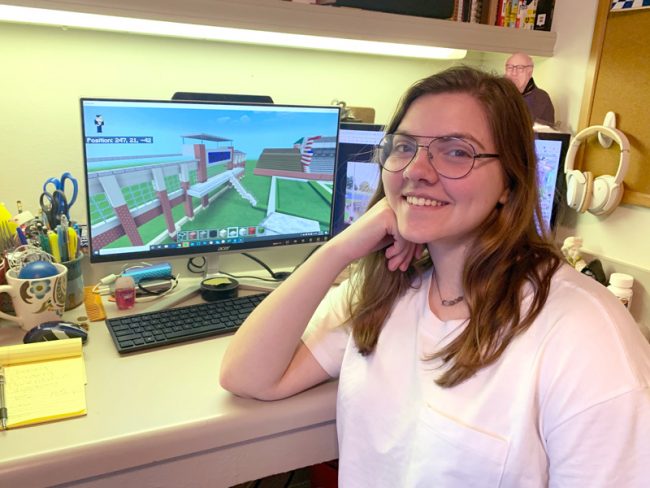
No graduation – no problem. See how one Georgia Southern senior took care of her ceremony online
For many, this spring was to be a milestone commemorating many years of hard work and dedication. Graduating from university is the official step into adulthood and the achievement of academic excellence. But this year is different. COVID-19 is either restricting celebrations or cancelling them outright. For some students, it is a disappointing moment. Others, like Rebecca Hooper, a senior marketing major at Georgia Southern University, saw an opportunity to innovate. On Tuesday, March 17, during spring break, Georgia Southern announced the cancellation of its in-person Spring 2020 Commencement ceremonies for Statesboro and Savannah. Since that time, the University has announced an online ceremony for graduates on May 8 and 9 and hopes to be able to hold a rescheduled in-person ceremony on or before commencement in December. As the news broke, Hooper and her friend were playing Minecraft, a sandbox video game which allows users to create digital worlds where they can build as many landscapes and structures as they like. As they played the game and chatted online, Hooper had what seemed like a crazy idea. “I was like, ‘Wouldn’t it be cool if we built the stadium?’ I just said it as a joke at first, but then the next day rolled around and I started on it. And then it kept on going and going and I couldn’t stop,” she said. Two days later (and more than eight hours of digital construction), Hooper had created Glenn Bryant Field and the home side of the stadium. She also built a commencement stage complete with a jumbotron that said, “Hail Southern! One More Time!” Knowing that no ceremony would be complete without Freedom’s Flight, Hooper added “Freedom” on the stage. However, the closest thing she could find to the University’s bald eagle mascot was a green parrot, who let out a little squawk and bobbed up and down. Hooper posted a flythrough of the stadium on Twitter, with a comment that said, “GSU said no graduation in Paulson. I said Minecraft graduation in Paulson #HailSouthern.” The response was immediate and overwhelming. Hooper has big plans for her virtual stadium. She’s planning on doing some online tours through Twitch, a video game playthrough app. She’s also invited her friends to help her finish building the stadium, complete with Bishop Fieldhouse, press boxes, sky boxes, and the large parking lot where she hopes to invite people to build their own virtual tailgating structures. If you are journalist and would like to know more about this story - simply reach out to Georgia Southern Director of Communications Jennifer Wise at jwise@georgiasouthern.edu to arrange an interview.


As the global pandemic touches almost all parts of the United States – it is essential that the public receives only accurate and definitive information from credible and expert sources as news, media and information reaches million of people across the country. An invisible enemy is killing thousands and forcing people worldwide to cower behind closed doors. Unfounded conspiracy theories and miracle “cures” abound on social media. Politicians and pundits send mixed messages about how to protect yourself. Who you gonna call? - Bedford Gazette, April 14 As the coronavirus rampages, the public increasingly is turning to experts in academia and government -- the educated, experienced “elites” that many Americans had tuned out. The Coronavirus 2019 (COVID-19) situation is certainly new to all of us. As guidance from the CDC changes and instructional methods transition, there are experts at Georgia Southern who can help to answer questions such as: How should we best address this pandemic as a nation? How should we best address this pandemic individually? What does it mean to “flatten the curve?" What is the economic impact of COVID-19? How do you best manage employees virtually? Why are grocery stores having trouble keeping inventory on their shelves? Should we prepare for a lapse in groceries and goods? What contributes to the fear and panic in disasters and pandemics? What do educators, parents and students need to know to prepare for online learning in the K-12 and college settings? If you are a reporter covering COVID-19, let the team of experts from Georgia Southern help with your coverage. Public Health: Atin Adhikari, Ph.D. Associate Professor of Environmental Health Sciences, Department of Biostatistics, Epidemiology and Environmental Health Sciences, Jiann-Ping Hsu College of Public Health Dr. Adhikari brings over 15 years of extensive research experience on aerosols, airborne microorganisms, other air pollutants, and related respiratory disorders. His current research areas include environmental air quality, exposure assessment, occupational health and safety, environmental microbiology, and respiratory health. Before joining JPHCOPH, Dr. Adhikari was also involved (Co-I) with two DoD-DTRA and U.S. Office of Naval Research funded projects on inactivation of hazardous microorganisms. Chun Hai (Isaac) Fung, Ph.D. Associate Professor, Department of Biostatistics, Epidemiology and Environmental Health Sciences, Jiann-Ping Hsu College of Public Health Dr. Isaac Chun-Hai Fung is a digital health expert and an infectious disease epidemiologist. He analyses social media data for public health surveillance and health communication and uses digital technologies for public health interventions. He investigates the transmission of communicable diseases with a focus on respiratory infections and environmentally transmitted infections. He applied a variety of methods, from classical statistical methods to machine learning and mathematical modeling, to address public health problems and to provide solutions to policy-makers. He is especially interested in assisting public health agencies in their responses to public health emergencies. He is currently a guest researcher with the Health Economics and Modeling Unit, Division of Preparedness and Emerging Infections, National Center for Emerging and Zoonotic Infectious Diseases, Centers for Disease Control and Prevention (CDC). Examples of his recent projects include: Surveillance of unplanned school closures through social media platforms, Analysis of social media posts pertinent to public health emergencies, such as Ebola, MERS and Zika. Jessica Schwind, Ph.D. Assistant Professor, Department of Biostatistics, Epidemiology, and Environmental Health Sciences, Jiann-Ping Hsu College of Public Health Dr. Jessica Smith Schwind is an epidemiologist and program evaluator. She joined the Department of Biostatistics, Epidemiology and Environmental Health Sciences at JPHCOPH in August 2017. Her current research interests include disease surveillance, capacity building and risk communication for the prevention and/or early recognition of outbreaks with a focus on: best practices for operationalizing the ‘One Health’ approach, understanding and improving capacity building efforts and priorities for increasing health surveillance, and improving early warning systems for disease detection and response by bridging the gap between global digital databases and local health information. Schwind also conducts SoTL research on innovative online/onsite teaching and evaluation with a focus on immersive and service-learning practices. Pandemics, panic and the public: Amy Ballagh, Ed.D. Associate Vice President of Enrollment Management Featured in the Washington Post : Jessica Schwind, Ph.D. Assistant Professor, Department of Biostatistics, Epidemiology, and Environmental Health Sciences, Jiann-Ping Hsu College of Public Health Dr. Jessica Smith Schwind is an epidemiologist and program evaluator. She joined the Department of Biostatistics, Epidemiology and Environmental Health Sciences at JPHCOPH in August 2017. Her current research interests include disease surveillance, capacity building and risk communication for the prevention and/or early recognition of outbreaks with a focus on: best practices for operationalizing the ‘One Health’ approach, understanding and improving capacity building efforts and priorities for increasing health surveillance, and improving early warning systems for disease detection and response by bridging the gap between global digital databases and local health information. Schwind also conducts SoTL research on innovative online/onsite teaching and evaluation with a focus on immersive and service-learning practices. Jodi Caldwell, Ph.D. Executive Director of the Georgia Southern University Counseling Center On a national level, Dr. Caldwell is currently serving her second elected term to the Directorate Board of the Commission for Counseling and Psychological Services of the American College Personnel Association and is a certified Red Cross Disaster Mental Health Responder. COVID-19 and logistics, the economy and the workforce: Alan Mackelprang, Ph.D. Associate Professor, Department of Logistics & Supply Chain Management Currently the director of the Ph.D. in Logistics and Supply Chain Management program, his research interests include examining interdependencies among supply chain partners, JIT/Lean production, manufacturing flexibility as well as supply chain integration. Scott Ellis, Ph.D. Associate Professor, Department of Logistics & Supply Chain Management Scott Ellis’ research interests center on the study of purchasing and supply management processes and functions. He has published in Journal of Operations Management and Journal of Supply Chain Management, among others. Richard McGrath, Ph.D. Professor, Parker College of Business Richard McGrath researches immigration, consumer survey methodology, and applied microeconomics. He is a long time expert on the economy in Savannah and the Coastal Empire. Michael Toma, Ph.D. Fuller E. Callaway Professor of Economics Michael Toma is a professor and lead analyst for the Center for Business Analytics and Economic Research, a student- and faculty-staffed applied research group focused on the Savannah-area economy that works with many local partners on special initiatives, customized applied business research and impact studies. Based on Toma's analytics, the Center publishes the quarterly Coastal Empire Economic Monitor, a closely watched economic report. Toma's community ties are also strong in the area. He serves on the Board of Directors for United Way of the Coastal Empire and on the organization's Executive Committee as chair of the Community Investments Committee. David Sikora, Ph.D. Assistant professor of management David Sikora’s research interests include strategic human resource management and the business impact of employee management practices. He has published his research in such journals as the Journal of Applied Psychology, Leadership Quarterly, Human Resources Management Review, International Journal of Selection and Assessment, and International Journal of Human Resources Development and Management. Prior to his academic career, David had extensive corporate experience in human resources and marketing including serving as human resources vice president at Cigna Corporation and director of human resources product management at Gevity HR, Incorporated. Steven Charlier, Ph.D. Associate Professor, Department of Management Charlier’s research interests are focused on the modern work environment, and include virtual teams, e-learning, leadership in a virtual world, and management education. His work has been published in several leading international academic journals, including The Leadership Quarterly, Human Resource Management, Journal of Organizational Behavior, Academy of Management Learning & Education, and Human Resource Management Review. Online teaching and learning: Charles Hodges, Ph.D. Professor, Department of Leadership, Technology and Human Development Hodges is a tenured professor of instructional technology at Georgia Southern with over 20 years of online teaching experience. As an active researcher in online teaching and learning, Hodges presents regularly at the national and international levels. He currently serves as the editor-in-chief of the journal and he is a long-time member of the Association for Educational Communications and Technologies, a professional organization for Educational Technology scholars and practitioners. Featured in the Inside Higher Ed article (published 3/11/20): Jeffrey Tysinger, Ph.D. and Dawn Tysinger, Ph.D. Professors, Department of Leadership, Technology and Human Development The Tysingers are one of very few individuals who are actively researching in the area of crisis preparedness in K-12 online learning Professors, Department of Leadership, Technology and Human Development The Tysingers are one of very few individuals who are actively researching in the area of crisis preparedness in K-12 online learning: o https://digitalcommons.georgiasouthern.edu/nyar/vol2/iss1/4/ o https://dl.acm.org/doi/10.5555/2811036.2811057 o https://eric.ed.gov/?q=Tysinger&id=EJ1147626 o https://eric.ed.gov/?q=Tysinger&id=ED595756 Dawn Tysinger, NCSP, serves as professor and program director for the nationally-recognized, National Association of School Psychologists-Approved Education Specialist program in school psychology at Georgia Southern University. Tysinger has contributed to her field through active participation in NASP, publications in school psychology journals, and presentations at the local, state, regional, national, and international levels. She currently serves on the NASP program review board for school psychology programs and as a member of the editorial boards of Journal of School Psychology, Psychology in the Schools, Trainers’ Forum: Journal of the Trainers of School Psychologists, National Youth-At-Risk Journal and Journal of Online Learning Research. Jeff Tysinger, NCSP, is a professor of school psychology at Georgia Southern University. He has been the president of the Kansas Association of School Psychologists (KASP), editor of the KASP Newsletter, KASP Futures committee member, KASP NCSP committee member, member of National Association of School Psychologists (NASP) since 1997, Nationally Certified School Psychologist since 1997, NASP Program Reviewer, NCSP Portfolio Reviewer, member of NCATE Board of Examiners, member of Georgia Association of School For parents at home with (k-12) children now distance learning: Chelda Smith Associate Professor, Department of Elementary and Special Education Smith’s master's thesis focused on parents as the first teachers of children and can speak to how parents can be empowered in that role. Her research agenda continues to focus on home and community assets, of which parents/caregivers are the primary influence and factor for positive outcomes. Lastly, as a parent of both a middle schooler and a toddler, Smith is navigating the process of being a primary educator in the home in real-time. Each expert is available to speak with media – simply contact Melanie Simon at 912.313.3245 to arrange an interview today.

Photos and videos of empty grocery store shelves where toilet paper, paper towels, hand sanitizer and more would typically be stocked have circulated after people responded to COVID-19 fears with panic buying, or bulk buying. Some stores are enforcing quantity limits on certain items and asking people to leave stock for the next person, explaining that their supply chain has not been disrupted. During a time of stress and uncertainty, how do we ease our fears and avoid a counter-productive and potentially selfish bulk-buying response? Baylor University’s Jim Roberts, Ph.D., The Ben H. Williams Professor of Marketing in the Hankamer School of Business, is an internationally recognized expert on consumer behavior and the effects of consumerism and technology on individual happiness. During a brief Q&A, he gave insight to how panic buying content on social media can actually reinforce fear and gave advice on reducing anxiety. Q: Do you see a connection here between consumerism and safety or perceived safety? A: Yes, we call it mortality salience. When we are reminded of our own mortality, we search out products that give us comfort. We naturally buy more when we are threatened. We often seek comfort in our spending particularly in times like these. Some products have practical value, but a shopping cart full of toilet paper is addressing some deeper existential fears as well. Q: There have been a lot of photos floating around online of empty shelves in grocery stores. Is social media affecting panic buying? A: The media benefits from creating hysteria — more people watch and listen when they are frightened. There is something called the availability bias that can explain why we are so fearful. We view things that we have been recently exposed to as more prevalent than they really are. Q: How can people navigate social media during this time in a healthy way? A: Step away from it. Cut back on media exposure and distract yourself by trying to ease others’ burdens. If you turn off your TV and avoid social media you will reduce your anxiety level. Take the emphasis off yourself and you will reap psychological benefits. ABOUT JIM ROBERTS, PH.D. Jim Roberts, Ph.D., The Ben H. Williams Professor of Marketing in Baylor University’s Hankamer School of Business, is a nationally and internationally recognized expert on consumer behavior and has been quoted extensively in the media. He has appeared on CBS’ Early Show, ABC’s World News Tonight, ABC’s Good Morning America and NBC’s The Today Show. He has been quoted and/or featured in The New York Times, The Wall Street Journal, USA Today, National Public Radio, Cosmopolitan Magazine, Glamour and U.S. News and World Report, among many other newspapers, magazines, websites and television outlets. ABOUT BAYLOR UNIVERSITY Baylor University is a private Christian University and a nationally ranked research institution. The University provides a vibrant campus community for more than 18,000 students by blending interdisciplinary research with an international reputation for educational excellence and a faculty commitment to teaching and scholarship. Chartered in 1845 by the Republic of Texas through the efforts of Baptist pioneers, Baylor is the oldest continually operating University in Texas. Located in Waco, Baylor welcomes students from all 50 states and more than 90 countries to study a broad range of degrees among its 12 nationally recognized academic divisions. ABOUT HANKAMER SCHOOL OF BUSINESS AT BAYLOR UNIVERSITY At Baylor University’s Hankamer School of Business, integrity stands shoulder-to-shoulder with analytic and strategic strengths. The School’s top-ranked programs combine rigorous classroom learning, hands-on experience in the real world, a solid foundation in Christian values and a global outlook. Making up approximately 25 percent of the University’s total enrollment, undergraduate students choose from 16 major areas of study. Graduate students choose from full-time, executive or online MBA or other specialized master’s programs, and Ph.D. programs in Information Systems, Entrepreneurship or Health Services Research. The Business School also has campuses located in Austin and Dallas, Texas. Visit www.baylor.edu/business and follow on Twitter at twitter.com/Baylor_Business.


What fate awaits Florida’s tourism industry?
As the ripples from the COVID-19 pandemic stretch across all of America – popular attractions like Disney are closed, airlines are restricting travel and borders are being shut. All of this could amount to economic freefall for a state like Florida that relies on the more than 126 million tourists that visit the state each year injecting more than $40 billion annually into the economy. The coronavirus is hitting the economy in Central Florida hard, with several counties missing out on millions due to conventions and events being canceled. Orange County officials said the county has lost more than $280 million due to conventions being canceled amid fears of the coronavirus, and it could lose even more. Several Central Florida cities and counties have declared states of emergency. President Donald Trump declared a national emergency. Channel 9 spoke with financial advisers on the impacts the coronavirus could have on Central Florida. “Because we are highly reliant on tourism and leisure, we could see a potential financial slowdown in Central Florida. The scope and magnitude will be dependent on how long it takes to peak and level out. We are already seeing the effects with the closure of theme parks, cruises, flights, professional sports,” said Dale Crossley, a financial adviser. March 13 – ABC News At the moment, it seems there is no end in sight and for the hotels, theme parks and countless other destinations and small business that rely on tourists to stay afloat, there’s concern about who will be left standing once life returns to normal, or at least a new normal. There are a lot of questions that remain: How long can the marquee destinations like Disney and Universal Resorts remain closed? Are there any substantial bailouts or government assistance to be expected? Once travel resumes, what will it take to assure visitors of their safety? And, can we expect incentives from industry or the government to lure people, and their wallets back to the Sunshine State and what will they look like? If you are a journalist looking to cover this angle of the COVID-19 pandemic – then let us help. Peter Ricci is a clinical associate professor and director of the Department of Marketing and Hospitality Management in FAU’s College of Business. He is a hospitality industry veteran with more than 20 years of managerial experience in segments including food service, lodging, incentive travel, and destination marketing. Peter is available to speak with media about this topic – simply click on his icon to arrange an interview.



Baylor University Marketing Professor Jim Roberts, Ph.D., has been studying consumer behavior and spending habits for decades. He is recognized internationally for his research and commentary on the subject. He said the consumer response during the current coronavirus pandemic -- evidenced by the frequent image of empty shelves of essentials -- is concerning and advises shoppers to refocus their actions on the good of the community. “This crisis is an ethical litmus test. I strongly suggest that people not horde essentials, but that they buy only enough for the near future. I am deeply disappointed when I see shoppers with carts full of water, Purell, toilet paper, etc. Essentially, they are saying, ‘Every man for himself,’ instead of, ‘What can we do to survive this crisis together?’ Working with each other always leads to better results. The Golden Rule should dictate at times like these as well as every day of our lives.” ABOUT JIM ROBERTS, PH.D. Jim Roberts, Ph.D., The Ben H. Williams Professor of Marketing in Baylor University’s Hankamer School of Business, is a nationally and internationally recognized expert on consumer behavior and has been quoted extensively in the media. He has appeared on CBS’ Early Show, ABC’s World News Tonight, ABC’s Good Morning America and NBC’s The Today Show. He has been quoted and/or featured in The New York Times, The Wall Street Journal, USA Today, National Public Radio, Cosmopolitan Magazine, Glamour and U.S. News and World Report, among many other newspapers, magazines, websites and television outlets.

Jon Quinn, lecturer in marketing at the Indiana University Kelley School of Business, who has served in senior marketing positions in the financial and food services industries, explains why many Americans may be unnecessarily hoarding supplies and seeking comfort through retail shopping. “The pandemic and the constant reporting of it is creating a significant threat and disruption to consumers’ perceived control over their daily lives, similar to a hurricane. This leads to a reduced feeling of security and well-being, driving us downward in our hierarchy of needs. When this happens, we rely more on our instinctive behaviors of self-preservation. We cease thinking logically and think and act more impulsively or even primitively. “As consumers, we have been conditioned to address problems and challenges by consumption-based solutions. We need to restore some sense of control and security, so we look for consumption-based solutions. In cases such as coming natural disasters or a pandemic, those solutions are everyday staples and items specific to protecting ourselves from the specific threat.” What should we do? -- “In a situation like this, retailers have to act with the greater good of society in mind. However, acting in such a way is also in their own best interest in the long-term. Putting quantity limits on products that are being purchased out of panic is the right thing to do, but retailers need to do a better job at explaining why. They can do this through social media, point-of-purchase and public relations. “This is an opportunity for retailers to build or fortify trust and loyalty and they can do that through dependability – avoiding stock outages as much as possible – as well as open and timely communication (explaining unit purchase limits) and accurately managing customer expectations (if they are out of stock, when will the items be back in stock). “Consumers should resist the natural and conditioned impulses and think logically. The greater the proportion of society that is protected, the greater the likelihood the spread will be contained and the greater the likelihood you and those close to you can remain healthy. Consumption will not make you safer. “Consumers will respond better if the media identified society-benefitting behaviors and demonstrated them by how these behaviors will benefit them personally. I have not seen such a message widely disseminated – but it needs to be.” Quinn can be reached at 614-390-1287 (m), 812-855-4671 (o) and jonquinn@iu.edu.


Baylor Sports Marketing Expert Discusses NBA, NCAA Coronavirus Decisions
On Wednesday, the NBA took the unprecedented step to suspend its season following the revelation that one of its players tested positive for coronavirus. In addition, the NCAA announced that the March Madness basketball tournaments will be played, but without fans present. Baylor University’s Dr. Kirk Wakefield is a nationally recognized expert on sports marketing, sports psychology and fan/consumer response. He has conducted research on the sports retail market – including the NBA and all major national organizations – for more than 20 years. In this brief Q&A, he shares his thoughts about these two decisions. Q: This was an unprecedented action by the NBA to suspend the season due to coronavirus. What does this mean for the teams? A: We’ve had work stoppage before with labor lockouts. Fans were angry then, but the majority won’t be now. Most won’t blame the league or the teams. We might see even more passion for the teams as fans are anxious for play to resume. Q: Based on your understanding of the decision-making process, does this seem to be an action that was done thoughtfully? A: It was carefully considered. No one wants to be the one who could have prevented a catastrophe and didn’t take prudent steps. Just like after lockout years, the leagues will recover. Q: The NCAA tournament will be played – but without fans. What does this mean for college sports teams and the NCAA? A: Obviously, viewership will increase – which is good for sponsors with heavy broadcast and digital assets. Sponsors and venues/teams who are reliant on gate revenue will be hit the hardest. ABOUT KIRK WAKEFIELD, PH.D. Kirk Wakefield, Ph.D., is the Edwin W. Streetman Professor of Retail Marketing and executive director of Sports Sponsorship & Sales at Baylor Unviersity's Hankamer School of Business. His research on retailing covers more than two decades and focuses primarily on sports psychology, team sports marketing, entertainment marketing, and fan and consumer response to pricing and promotional tools. He has conducted fan research in almost every venue in sports including the NBA, NFL, MLB, MLS, NHL and NASCAR. ABOUT BAYLOR UNIVERSITY Baylor University is a private Christian University and a nationally ranked research institution. The University provides a vibrant campus community for more than 18,000 students by blending interdisciplinary research with an international reputation for educational excellence and a faculty commitment to teaching and scholarship. Chartered in 1845 by the Republic of Texas through the efforts of Baptist pioneers, Baylor is the oldest continually operating University in Texas. Located in Waco, Baylor welcomes students from all 50 states and more than 90 countries to study a broad range of degrees among its 12 nationally recognized academic divisions. ABOUT HANKAMER SCHOOL OF BUSINESS AT BAYLOR UNIVERSITY At Baylor University’s Hankamer School of Business, integrity stands shoulder-to-shoulder with analytic and strategic strengths. The School’s top-ranked programs combine rigorous classroom learning, hands-on experience in the real world, a solid foundation in Christian values and a global outlook. Making up approximately 25 percent of the University’s total enrollment, undergraduate students choose from 16 major areas of study. Graduate students choose from full-time, executive or online MBA or other specialized master’s programs, and Ph.D. programs in Information Systems, Entrepreneurship or Health Services Research. The Business School also has campuses located in Austin and Dallas, Texas. Visit www.baylor.edu/business and follow on Twitter at twitter.com/Baylor_Business.

FAU Experts Available to Speak on Coronavirus and its Impact Worldwide
Coronavirus has now earned global attention and Florida Atlantic University experts are available to speak with media about the impact of coronavirus on areas related to this worldwide epidemic, including hospitality, tourism, employment sick leave, and politics. If you are a journalist covering the progress of this virus and how it is impacting various sectors and segments of society – then let us help with your stories, questions and ongoing coverage. LeaAnne DeRigne, Ph.D., MSW, associate professor in FAU’s Phyllis and Harvey Sandler School of Social Work LeaAnne DeRigne is an expert on paid sick leave and its impact on the health and financial security of individuals, families and public health in general. Her recent research on the importance of paid sick leave benefits has received wide press coverage,and has been cited around the country by policy makers, lobbyists, and advocates pushing cities and states to mandate sick leave coverage. Key findings from the study, which are representative of the nation, showed that regardless of income, age, race, occupation, full-time or part-time work status, health status or health insurance coverage, workers without paid sick leave were three times more likely to delay medical care than were workers with paid sick leave. She also conducts research on other workplace benefits such as flexible work, vacation time and pensions. Peter Ricci, clinical associate professor and director of the Department of Marketing and Hospitality Management in FAU’s College of Business Peter Ricci is a hospitality industry veteran with more than 20 years of managerial experience in segments including food service, lodging, incentive travel, and destination marketing. While filling the role of hotel general manager for almost a decade, Ricci served as a part-time educator before entering academia full time as both a clinical associate professor and administrator. Kevin Wagner, Ph.D., professor and chair of FAU’s Department of Political Science in the Dorothy F. Schmidt College of Arts and Letters Kevin Wagner’s research and teaching interests include presidential and judicial politics, political behavior and legislative behavior. He is also a research fellow of the FAU Business and Economics Polling Initiative (BEPI). Wagner has lectured extensively on American politics and has served as an expert in many leading newspapers including the New York Times, Boston Globe, New York Newsday, the Dallas Morning News, and the Miami Herald. He has been featured as the political analyst for CBS 12 in West Palm Beach and on national television including NBC’s “Today.” All of the experts listed above are ready and available to speak with media. To arrange an interview simply click on an expert’s profile or email Lisa Metcalf at lmetcalf@fau.edu.


United Nations’ Sustainable Development Goals fall behind initial hopes, lacks needed funding
In 2000, United Nations member states adopted eight Millennium Development Goals (MDGs), which featured a number of ambitious global initiatives, such as eradicating extreme poverty and hunger, and achieving universal primary education in all countries around the world. As these goals were extremely aspirational, most were far from met by the target date. However, by 2015 significant progress was made in a few areas, such as increased official development assistance (foreign aid), reduced trade barriers for developing country exports, and new debt-reduction strategies for some of the heaviest indebted countries. By the target date of the MDGs, the most notable outcome was the number of people living in extreme poverty around the world had been reduced by 50% since 1990. To keep the sustainable development agenda moving forward, at the end of 2015, the United Nations member states adopted 17 new Sustainable Development Goals (SDGs) to be met by 2030. Since the adoption of the SDGs in 2015, some progress has been on two of the SDGs: eliminating preventable deaths among newborns and children under the age of 5, and getting children into primary schools. These are both important initiatives and progress should be celebrated, says Matt Bluem, assistant dean of graduate programs and MBA director of Saint Mary's University of Minnesota's School of Business and Technology. Unfortunately, progress on the other 15 goals has not kept pace. With just 10 years until the target date for meeting all 17 SDGs, it is becoming increasingly clear that most of these goals will not be met. According to the UN, the biggest challenge in meeting the SDGs is funding. An additional $2-3 trillion is needed to help meet funding requirements. A recent report by the Brookings Institution states that sub-Saharan Africa alone would need hundreds of billions of dollars in additional financial support every year in order to meet the SDGs by the target date of 2030, Bluem says. U.N. Secretary-General António Guterres has argued that public investment by governments is not enough, insisting that private industry is going to need to get involved. To meet the aggressive SDGs, the private and public sectors will need to work together to bring about the investment and policy change. In order to encourage governments and the private sector to put the resources and effort necessary into meeting the SDGs, it is imperative to let world leaders know that goals such as the SDGs are important to the international citizenry, Bluem says. Are you a journalist covering this topic and interested in an interview? That’s where we can help. Matt Bluem, Ph.D., assistant dean of graduate programs and MBA director, has taught business and marketing courses at Saint Mary’s University of Minnesota since 2008. Prior to Saint Mary’s, he worked in both the banking and the nonprofit sectors, most recently with a non-governmental organization (NGO) with operations in more than a dozen countries. Bluem is an expert in political and economic development and is available to speak with media. To arrange an interview with him, simply click below to access his contact information.


Curious about who’s cashing in on Superbowl Sunday? Let our experts help!
The big day is almost here! Fans around the world are getting squares ready, chili cooked, and prop-bets placed. Superbowl Sunday is America’s biggest day for television and sports. This year, it will be all eyes on the Kansas City Chiefs and San Francisco 49ers as they land in Miami to prep and promote for Sunday’s kickoff. There’s big money to be made this week, and a lot of it is going around, according to CNBC – last year was a windfall and most expect this year to be even bigger. Super Bowl ad spots are the most expensive on commercial TV in the U.S. by far, with a 30-second slot costing $5.25 million. That works out at roughly $175,000 per second. Last year, the winners of the Super Bowl made an estimated $112,000 each, while their opponents made $56,000 each. Referees, meanwhile, make between $4,000 and $10,000 a game, according to an estimate by CBS, and their annual salary is about $201,000. Stores are set to make $14.8 billion in sales around the game, with most of that money spent on food and drink to consume while watching, according to a survey carried out by Prosper Insights & Analytics for the National Retail Federation last week. That equates to $81.30 per person, up from last year’s $81.17. Are you a journalist covering this Sunday’s big game? If you have questions about the marketing or economics of the Superbowl, the let our experts help with your stories and coverage. Professor Andrew Wonders joined the faculty of the School of Business Administration at Cedarville University in 2013 following a 13-year career in the sport industry. He is an expert in the areas of major sporting events and the business of sports. If you are looking to arrange an interview with Professor Wonders – simply click on his icon to arrange a time.

