
Experts Matter. Find Yours.
Connect for media, speaking, professional opportunities & more.

How to Blend Different Approaches to Peer Learning
Learn about how Dr. Karen Finlay and the team at Hamilton Health Sciences have implemented meaningful peer learning in a safe environment to improve patient care, quality and collaboration in a constructive environment. Learn more here: https://realtimemedical.com/software-solutions/ See more Customer Stories: https://realtimemedical.com/about-realtime-medical/what-customers-are-saying/ #radiology #peerlearning #diagnosticimaging


West Grove Campus Awarded $2.5M Grant from Chester County for Capital Improvement Projects
Funds earmarked for information technology, medical equipment and facility upgrades The ChristianaCare West Grove campus has received a $2.5 million American Rescue Fund Plan Act (ARPA) grant from the Chester County Government for capital improvement projects related to information technology, medical equipment and facility renovation. ChristianaCare finalized the purchase of its West Grove campus (formerly Jennersville Hospital) from Tower Health in June 2022. The hospital has been closed since Dec. 31, 2021. “We are enormously grateful to the Chester County Commissioners for this generous grant,” said Douglas Azar, MHA, ChristianaCare senior vice president, Strategic Clinical Integration. “Our assessment and inventory of the facility indicate that while it contains some usable equipment, including hospital beds and some imaging and diagnostic equipment, there is a lot of work to be done in many key areas. For example, the building currently contains no information technology infrastructure and no laboratory equipment. This funding will provide much-needed help as we build out these critical areas,” he said. “This grant is a tremendous resource as we plan next steps for the West Grove campus,” said Heather Farley, M.D., MHCDS, FACEP, ChristianaCare’s co-lead for the campus development strategy. “Ensuring that the facility has the very best technology and medical equipment will enable us to provide expert care to our neighbors in southern Chester County for many years to come.” The Chester County Commissioners approved ARPA grants to 73 groups and organizations totaling close to $40 million last month, following recommendations by six independent review teams. The teams, comprised of county residents and county government staff, developed a system that followed ARPA guidelines to review proposals and address priorities for funding. “These funds represent a substantial investment in much-needed local programs and services including support for public health,” said County Commissioners’ Chair Marian Moskowitz. “Being able to financially assist ChristianaCare as they work toward bringing hospital services back to southern Chester County firmly met ARPA guidelines and was very important to us.” (From left) Bettina Tweardy Riveros, Chief Health Equity Officer and Senior Vice President, Government Affairs and Community Engagement at ChristianaCare, Marian Moskowitz, Chair of the Board of Commissioners of Chester County, Michelle Kichline, Chester County Commissioner, Heather Farley, M.D., MHCDS, FACEP, ChristianaCare’s co-lead for the campus development strategy and Douglas Azar, MHA, ChristianaCare senior vice president, Strategic Clinical Integration Commissioner Josh Maxwell added that “when ChristianaCare stepped up to take over Jennersville Hospital and bring health care services back to the county, we pledged to support them in those efforts in ways that we, as county government, can. The ARPA program has provided us with the opportunity to fulfill that pledge, with funding that might otherwise be cost-prohibitive.” ChristianaCare is reimagining health care at the West Grove campus and is taking a phased approach to the opening of services. The first phase will be to re-establish emergency services. Subsequent phases are still under consideration. Due to required facility upgrades and plan development, it is unlikely that any services will open within the next 12 months. Since June, Azar, Farley and others at ChristianaCare have participated in meetings and listening sessions with community leaders and small groups to gain input into planning for services at the campus. They have met with local and state government officials, school officials, chambers of commerce, nonprofit organizations, emergency responders, faith leaders and employers in the area. Commissioner Michelle Kichline noted the correlation between ChristianaCare’s focus on meeting community needs and the county’s focus on community involvement in the ARPA grant review process. “Having county residents involved in reviewing and recommending our ARPA applications has been exciting and rewarding,” she said. “They know their local communities best and evaluated and selected projects that address needs across the county. “We know that ChristianaCare is doing the same and see the $2.5 million ARPA grant as a smart investment in restoring crucial health care services to our residents.” The West Grove campus represents a significant expansion and commitment of ChristianaCare to provide health services to communities in southern Chester County. Since 2020, ChristianaCare has added three primary care practices located in Jennersville, West Grove and Kennett Square. Combined, these three practices are now the “medical home” for 22,000 residents in these communities.


Research suggests nutrition education should be on the curriculum of all medical students as well as other healthcare professionals Association for Nutrition develops new curriculum ready for medical students Aston University is one of the pioneers in delivering and embedding nutrition education as part of its medical school undergraduate programme. All healthcare professionals should study a curriculum of nutrition education during their studies in order to help better support public health – new paper suggests. Nutritional researchers from Aston University, with colleagues from other universities and leading nutritional groups, worked with the Association of Nutrition (AfN) to help develop a curriculum that can be rolled out amongst all undergraduate medical school students with potential for modules to be taught to other healthcare professional courses. The paper jointly published in the British Journal for Nutrition and BMJ Nutrition, Prevention and Health examined the development of a new curriculum aimed at undergraduate medical students and made recommendations on its roll out nationally, with a view to it subsequently being implemented into other healthcare courses. The AfN Undergraduate Curriculum in Nutrition for medical doctors has been designed to be presented to medical students as an integral part of their general undergraduate training, making it clear how nutrition interrelates with the study of other systems and contributes to an inclusive understanding of health and disease. Dr Duane Mellor, clinical dietitian and senior lecturer at Aston Medical School at Aston University and co-author on the paper, said: “At present, lifestyle related health problems from living with obesity, through to high blood pressure, type 2 diabetes, heart disease and several cancers can all be linked to diet across our communities. Whereas in hospitals around a third of patients coming in can be undernourished. “Nutrition and food play a key role to both keeping us healthy and helping to manage disease, which is why it is imperative we educate our future doctors and other health professionals about the role of nutrition in patient care.” The paper sets out not only the need for nutrition education and the gaps, but how it can be included as part of what is already a very busy and content heavy curriculum. It builds on areas of the curriculum where nutrition could even be used to help teach concepts such as epidemiology. It highlights how historically medical education along with the education of many health professionals not specialising in nutrition often have only a few hours of teaching on the subject. Dr Glenys Jones, deputy chief executive at the Association for Nutrition, who led the curriculum development project and is co-author on the recent paper, said: “Nutrition is a key and modifiable determinant of health and wellbeing, therefore it is essential our future medical and healthcare professionals are equipped to be able to identify when nutrition could be involved in a patient’s condition in order for this to form part of their care. “The curriculum is not designed to turn our doctors into nutritionists or dietitians, but to give them the knowledge and skills to be able to think about whether nutrition could be playing a role and having the confidence and knowledge of who, when and how to refer on to suitable nutrition professionals when this is needed.” Aston University is a pioneer in the key area of nutrition education of the future healthcare workforce. As one of few UK universities with a dietitian or nutritionist as part of the teaching team within its medical school, these skills are now being developed to benefit the training of other health professionals. Dr Mellor added: “As one of a few dietitians and nutritionists embedded into the teaching team at Aston Medical School, we have been able to integrate nutrition across our curriculum. “It is great to be able to highlight how nutrition links to the basic science areas such as biochemistry through to how you can encourage a patient to think about changing their diet in clinical skills". Aston University has also started to explore with the Association for Nutrition the potential need for nutrition education in other professions. From this an outline of a core curriculum for nutrition for a range of health professionals is in development. Dr Mellor also plans to work with colleagues to further develop nutrition teaching at Aston University, thus helping students across subjects such as optometry and pharmacy to gain a better understanding of nutrition and how it impacts on their areas of expertise. For more information about Aston Medical School please visit our website.


Winner of the 2022 Rosalind Franklin Essay Prize announced
Aston Medical School students compete for prestigious prize in essay writing competition Prize launched in honour of the renowned chemist, Rosalind Franklin This year’s theme is ‘Are there limits to freedom of expression in a medical school?’ The winner of this year’s Aston Medical School Rosalind Franklin Essay Prize has been announced as Shoheb Hassan, a 3rd year medical student. The annual essay writing competition is held in memory of the pioneering chemist Rosalind Franklin who was a chemist and X-ray crystallographer. Rosalind’s work was central to the understanding of the molecular structures of DNA: RNA, viruses, coal and graphite. The theme of this year’s competition was ‘Are there limits to freedom of expression in a medical school?’ The essays submitted were a reflective and personal perspective on freedom of expression within a medical school. This year’s winner Shoheb Hassan said: “I am so pleased and honoured to be awarded first prize. I sincerely enjoyed reflecting on the topic about freedom of expression in a medical school. I express my gratitude to Dr Daniel Franklin for this opportunity and I hope that upcoming students will benefit from their reflections just as much as I did.” Aston Medical School's Rosalind Franklin Essay Prize was conceived and funded by Dr Daniel Franklin in 2020. Daniel is a nephew of Rosalind Franklin and an alumnus of Aston University, graduating twice: once in 1981 with a PhD and again in 2013, when he was awarded an honorary degree. The judging panel included Daniel and staff from Aston Medical School. Daniel, who has been executive editor of The Economist since 2003, said: "Once again, the quality of the essays produced by Aston Medical School students was truly impressive and reflects their ability to reflect deeply and imaginatively about matters of medical education." The winning essay receives a prize of £750 and the runner up is awarded £250. For more information about Aston Medical School please visit our website.
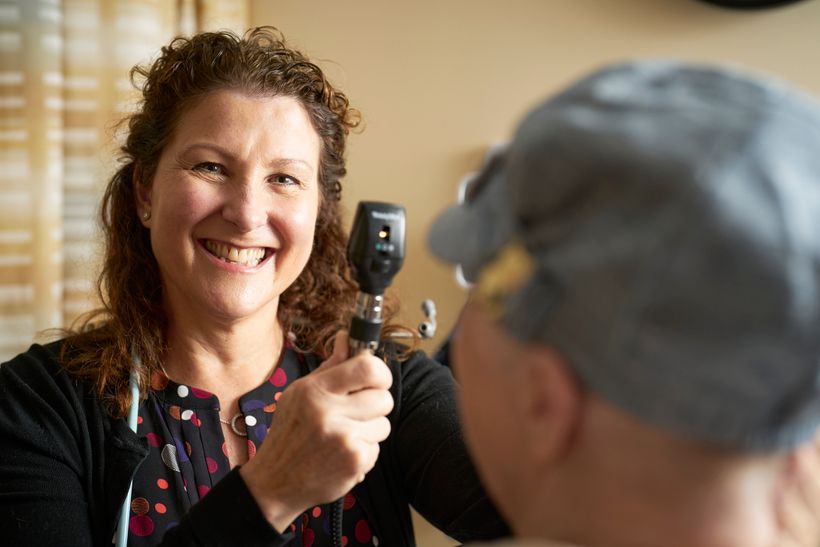
Adding Onsite Primary Care Practice in Cancer Center Earns National Innovator Award
ChristianaCare’s Helen F. Graham Cancer Center & Research Institute is the recipient of The Association of Community Cancer Center’s (ACCC) 2022 Innovator Award for its person-centered model of care that embeds a primary care provider in the cancer center for patients undergoing treatment who do not have a primary care provider. The Graham Cancer Center is among the first cancer programs in the nation to offer a program of this kind to its patients. “Earning the prestigious ACCC Innovator Award for our primary care practice is an accomplishment that belongs to our entire cancer care team which has worked long and hard to develop this unique program designed to improve our patients’ long-term health,” said Nicholas J. Petrelli, M.D., Bank of America endowed medical director of the Helen F. Graham Cancer Center & Research Institute. Patients diagnosed with cancer frequently have one or more concurrent chronic diseases, including heart disease, high blood pressure, COPD and diabetes. Cancer treatment can make these chronic medical problems worse, so it is important for patients to continue to see a primary care provider during their treatment, which can also help eliminate unnecessary emergency department visits. The new Primary Care Practice builds on the success of the Graham Cancer Center’s Oncology Express Unit, a program that offers urgent care to cancer patients in distress during treatment. “We conducted an informal survey that found as many as 15 percent of our patients did not have their own primary care provider,” said Cancer Program Clinical Director Cindy Waddington, MSN, RN, AOCN. “Having a primary care provider onsite working closely with the entire cancer care team helps ensure that essential patient care beyond cancer treatment is not delayed,” Waddington said. Patients are referred to the practice by their oncologists for any non-cancer health concerns. Since opening in January 2021, the program has received referrals to care for 234 patients. “Primary care in oncology has been a long-standing challenge for cancer patients and cancer programs,” said Family Nurse Practitioner Debra Delaney, RN, MSN, ACNS-BC, FNP-BC, who provides primary care services at the Graham Cancer Center. “Thankfully, we’ve been able to solve that challenge by addressing the whole person and promoting healthy living for the long-term.” Delaney helps patients manage their chronic medical conditions by monitoring their labs, refilling prescriptions and coordinating and communicating about any referrals they many need. “Following their cancer treatment, we help our patients transition to another practice, so they can continue to receive care for their primary care needs,” she said. The ACCC featured the program on its BuzzBlog. According to the ACCC, Innovator Award winners demonstrate the ability to advance the goals of improving access, quality and value in cancer care delivery, while also providing replicable solutions for other cancer programs and practices.


MEDIA RELEASE: Ten travel tips Manitobans should consider before flying this summer
Winnipeg MB, July 13, 2022 – CAA Manitoba (CAA MB) has compiled a list of ten things that Manitobans should be aware of if they are considering travelling this summer – both inside and outside the country. “Those who are considering booking a trip should make sure they understand the scope of what travel looks like at the moment,” said Susan Postma, regional manager, CAA Manitoba. “The checklist for planning a trip has changed and we want to help people navigate this new environment. “Airports are experiencing delays with varying degrees of impact, and Manitobans should be prepared.” Through consultation with its top travel agents, CAA MB has identified ten key considerations that potential travelers may not be aware of. Anyone who is considering travel in the current environment should remember that travel requirements and regulations are continually changing. Expect itinerary changes. CAA Manitoba travel agents say our Members are experiencing schedule changes for flights. Subscribe to the airline’s text message service to be immediately notified of any changes, and book connecting flights with more time in between than you normally would if available. A travel agent is also a valuable resource if this happens. Consider packing a carryon instead of checking luggage. Potential baggage delays mean that your luggage may not arrive with you, or take extra time to be unloaded off the plane. If you bring a carryon, make sure it fits the size requirements for all the airlines you are flying on, and with any tour operators. When using a carryon to travel, you still need to follow the 3-1-1 rule: three ounces of liquid, gel, aerosol, cream or paste that fit in one quart-sized resealable bag. If you are checking luggage, make sure your carryon has your hygiene essentials, any medications and perhaps a change of clothing. It will take longer to get through airport security. The old standby of being at the airport one hour before takeoff for domestic flights and two hours before international flights no longer apply. CAA Manitoba currently recommends a minimum of two hours before domestic flight departures and three hours for international flights. While waiting in line, take off your jacket, belt, and empty your pockets so you’re ready to quickly place your belongings in the scanner. Make sure all your documentation is in order before you book. Your passport should still be valid six months after your travel date, as this is required in several countries. Passports themselves are taking longer than usual to renew, so it should be done several months before you travel. Each destination has varying documentation requirements, so make sure you fully understand what information you need to have ready and in what format. Buy travel insurance and understand what is covered. Make sure you have $5 million in coverage for emergency medical situations and that illness related to COVID-19 is included. Understand your entitlements for situations like denied boarding in the event of a positive test, trip cancellation or delays, what luggage is covered and what isn’t. Car rentals need to be booked months in advance. High demand as well as a shortage of vehicles means a shortage of rental cars. Some rental agencies, particularly on the east and west coasts, are not allowing vehicles to be rented in one city and left in another. A travel agent can help you navigate this. Be patient, be kind. Around the globe, airlines are dealing with staff shortages and luggage handling back-ups. Keep in mind that the staff at the airports are there to help you, and that things may take longer than usual. COVID-19 is still a major consideration. Confirm the COVID-19 situation at destination prior to booking. Understand the risk level associated with travel to a particular destination by checking the Government of Canada Travel Advice and Advisories website. Individual travel advisories remain on a country-by-country basis. It is important that Manitobans understand the ongoing uncertainty associated with international travel, whether that be related to the continued community transmission of COVID-19, or state of health care systems in destinations hit hard by the pandemic. Stay connected. It is important to have access to trusted, up-to-date information while travelling so you can monitor changing conditions and requirements and adapt accordingly. Bookmark the Global Affairs Canada website prior to departure and check it regularly while abroad. It is also a good idea to sign up for Registration of Canadians Abroad and stay in touch with a family or friend that has knowledge of your travel plans. Find these and more information at caamanitoba.com/travel. Confirm change and cancellation flexibility with your travel service provider. Many airlines and hotels have been providing more flexibility when it comes to refunds and changes to bookings. Make sure you understand any key dates related to cancellation and changes and whether you are entitled to a refund or a future travel voucher or credit at the time of booking.



MEDIA RELEASE: Ten things Manitobans need to know prior to booking travel abroad
Winnipeg, MB, October, 26, 2021 – CAA Manitoba (CAA MB) has compiled a list of ten things that Manitobans should be aware of if they are considering travelling abroad. “Now that the Canadian government is no longer advising against non-essential travel due to COVID-19, those who are considering booking a trip should make sure they understand the scope of what travel looks like at the moment,” said Kaitlynn Furse, director, corporate communications, CAA Club Group. “The checklist for planning a trip has changed and we want to help people navigate this new environment.” Through consultation with its top travel agents, CAA MB has identified ten key considerations that potential travellers may not be aware of. Anyone who is considering travel in the current environment should make sure they have looked into the following and remember that travel requirements and regulations are continually changing. 1. Confirm the COVID-19 situation at destination prior to booking. Understand the risk level associated with travel to a particular destination by checking the Government of Canada Travel Advice and Advisories website. While the Global Affairs Canada Level 3 Travel Advisory to avoid all non-essential travel has been lifted, individual travel advisories do remain on a country-by-country basis. It is important that Canadians understand the ongoing uncertainty associated with international travel, whether that be related to the continued community transmission of COVID-19, or state of health care systems in destinations hit hard by the pandemic. 2. Understand the type, timing, cost and accessibility of required COVID testing. Every country has different requirements when it comes to the COVID tests that are needed prior to travel, and every country has different testing capacities once you are there. There are also requirements in order to return to Canada. Make sure you understand the difference between molecular PCR and rapid antigen tests, in what time period tests must be taken, the associated costs and locations where these tests are available. 3. Confirm change and cancellation flexibility with your travel service provider. Many airlines and hotels have been providing more flexibility when it comes to refunds and changes to bookings. Make sure you understand any key dates related to cancellation and changes and whether you are entitled to a refund or a future travel voucher or credit at the time of booking. 4. Buy travel insurance and understand what is covered. Make sure you have $5 million in coverage for emergency medical situations and that illness related to COVID-19 is included. Understand your entitlements for things like denied boarding in the event of a positive test and coverage related to isolation expenses. 5. Prepare required travel documentation and the format it must be presented in, for both Canada and your destination. Canadians returning home should have all required documentation loaded onto the ArriveCAN App or website. Each destination has varying requirements, so make sure you fully understand what information you need to have ready and in what format. Make sure you also take into consideration connections and any requirements in the connecting destination due to lay over or delays. 6. Take note of local public health rules prior to departure. Many destinations have measures in place such as curfews and quarantine requirements. You should also understand what the regulations are if you happen to test positive for COVID-19 in the country you are visiting. 7. Be aware of changes between booking and departure. Make sure you reconfirm all the details that were researched prior to booking, to ensure they are still accurate prior to departure. What was true when a trip was booked may not be the case by the time you are ready to travel. 8. Double check all research with the appropriate embassy or consulate. Travel at this time is complex and many factors can change quickly, so ensuring you have the most up to date and accurate information is essential. 9. Plan for extra time. From disembarkment and customs to retrieving luggage and exiting the airport, most things on the travel journey are taking longer than during preCOVID travel times. Also note the check-in and baggage drop off deadline for your flight as it may require you to arrive earlier than anticipated. 10. Stay connected. Fully unplugging while travelling is likely a thing of the past. It is important to have access to trusted, up-to-date information while travelling so you can monitor changing conditions and requirements and adapt accordingly. Bookmark the Global Affairs Canada website prior to departure and check it regularly while abroad. It is also a good idea to sign up for Registration of Canadians Abroad and stay in touch with a family or friend that has knowledge of your travel plans.


ChristianaCare Spins Out CorriXR Therapeutics, New Gene Editing Start-Up
Commercial biotechnology venture will harness the power of gene editing to revolutionize patient care with faster, more accurate diagnoses ChristianaCare today announced it has spun out its first commercial biotechnology private start-up company, named CorriXR Therapeutics. CorriXR Therapeutics (pronounced Cor-ix-er; from Galician meaning to correct or edit) will use CRISPR gene editing technology to develop new, clinically relevant oncologic therapeutics in areas of unmet medical need, starting with squamous cell carcinoma of the lung. Its close relationship with ChristianaCare and the ChristianaCare Gene Editing Institute uniquely positions it to research and develop innovative, patient-centered therapies. The new start-up company has been boosted with $5 million in seed financing from ChristianaCare and Brookhaven Bio. “We are excited to spin out CorriXR Therapeutics, which has an enormous opportunity to use the incredible power of gene editing to revolutionize patient care by delivering faster and more accurate diagnoses, targeting treatments and preventing genetic disorders,” said Janice Nevin, M.D., MPH, ChristianaCare president and CEO. The company has developed unique CRISPR/Cas biomolecular tools that disable the genome of a tumor cell but not the genome of a healthy cell, which enables target selectivity. CorriXR Therapeutics will license technology from the Gene Editing Institute and work closely with its scientific researchers and clinical oncologists at the Helen F. Graham Cancer Center & Research Institute. The Gene Editing Institute’s integrated bench-to-bedside approach connects leading-edge science to patient care. “CorriXR Therapeutics is the next phase of the Gene Editing Institute’s evolution and impact as an incubator for groundbreaking technology in a patient-first approach to research,” said Eric Kmiec, Ph.D., chief executive officer of CorriXR Therapeutics. “The novel way we are using CRISPR-directed gene editing technology in solid tumors, beginning with a hard-to-treat form of lung cancer, has enormous promise as a treatment option to improve the lives of people with life-threatening disease.” The CorriXR Therapeutics team includes experienced biotechnology executives and world-renowned scientists and clinicians. The executive team is led by Eric Kmiec, Ph.D., chief executive officer, and Brian Longstreet, chief operating officer. Kmiec is also the executive director and chief scientific officer of ChristianaCare’s Gene Editing Institute. He is widely recognized for his pioneering work in the fields of molecular medicine and gene editing, having discovered many of the molecular activities that regulate the efficiency of human gene editing. Longstreet, a graduate of the University of Pennsylvania’s Wharton School of Business, is a seasoned pharma and biotechnology industry veteran with over 30 years’ experience, beginning at Schering-Plough and then Merck & Co. Recently, he has helped to build start-up biotechnology companies. Earlier this year, ChristianaCare restructured its Gene Editing Institute into a wholly owned subsidiary, which positions it to advance research to develop therapies using CRISPR gene editing technology and to fast-track discoveries for commercial application. The new structure also enables it to expand its educational outreach using its CRISPR in a Box™ educational toolkit and to develop its analytic software program, DECODR™. The Gene Editing Institute originated in ChristianaCare’s Helen F. Graham Cancer Center & Research Institute in 2015.


Physical models of a patient’s brain help researchers treat neurological disorders and diseases
Brain phantoms are a creative solution for a challenging question: How do you tune an electromagnetic field to a patient without testing on the actual patient? Transcranial magnetic stimulation (TMS) is an application of electromagnetic research with the potential to change the way we treat migraines, depression, obsessive compulsive disorder and even conditions like schizophrenia and Parkinson’s disease. Ravi Hadimani, Ph.D., associate professor of mechanical and nuclear engineering, leads a team of researchers who seek to use TMS to excite or inhibit brain neurons to alter specific brain functions and treat these conditions. This team includes faculty from VCU Health, including Mark Baron, M.D., professor of neurology and Kathryn Holloway, M.D., professor of neurosurgery, as well as outside collaborators like Joan Camprodon, M.D., associate professor of psychiatry at Harvard Medical School. “The brain phantom is a first step,” says Hadimani, “Our ultimate goal is to 3D print a brain fabricated with biomaterial scaffolds and printed neurons that produce a stimulation response similar to neurons in our brain. This model would behave more realistically than current brain phantoms. Our future work involves collaborating with researchers who are able to print lab-grown neurons on biomaterial scaffolds or researchers who directly fabricate artificial neurons onto any scaffold.” Coils used in TMS are responsible for generating the electromagnetic field used in treatment. Individual coils are designed to treat specific diseases, but additional settings like current strength, number of pulses and coil direction are unique to each patient. Refining these settings on the actual patient is not feasible. Computer modeling is also inefficient because creating head models and running simulations from MRI scans of the brain’s complex structure are not spontaneous. Hadimani and his team developed the brain phantom as a novel solution to this problem. In 2018, the first model was created by Hamzah Magsood, one of Hadimani’s Ph.D. students. The brain phantom is a physical model of a patient’s brain designed to specifications obtained from MRI scans. Materials used in brain phantom construction are designed to replicate the electrical conductivity and electromagnetic permeability of different brain sectors. The result is a representation that, when connected to electrodes, provides instantaneous feedback to researchers calibrating TMS coils. Elements of material science, electromagnetics and mechanical prototyping come together to create each brain phantom. The process starts with an MRI, which serves as a map for researchers designing the customized model. This is a careful process. Unlike other areas of the body with clear distinguishing features, like skin, muscle and bone, the brain has subtle differences between its many regions. Researchers must carefully distinguish between these areas to create an accurate brain phantom that will simulate a patient’s skin and skull as well as the brain’s gray and white matter. A composite material of polymer and carbon nanotubes that exhibits electric properties similar to the human brain is the foundation for the brain phantom. Additive manufacturing, more commonly known as 3D printing, is used to create shells for different brain regions based on the patient’s MRI. This shell becomes a mold for the polymer and carbon nanotube solution. Once the brain phantom takes shape within the mold, it is placed within a solution that dissolves the casing, leaving only the brain phantom behind. The conductive parts of the brain phantom are dark because of the carbon nanotubes and non-conductive parts are lighter in color. Electrodes are easily inserted into the brain phantom and provide feedback when an electromagnetic field from the TMS coil is applied. Adjustments to the strength, number of pulses of the field, and coil direction can then be made before applying the treatment to a patient. Having recently received a patent for the brain phantom, Hadimani and Wesley Lohr, a senior biomedical engineering undergraduate, formed Realistic Anatomical Model (RAM) Phantom. The pair have been awarded both the Commonwealth Commercialization Fund Award and the Commonwealth Cyber Initiative Dreams to Reality Incubator Grant. RAM Phantom’s goal is to market brain phantom technology to the growing neuromodulation market, which also includes transcranial direct current stimulation and deep brain stimulation. The company will also aid in the development of advanced brain models that more accurately simulate the properties of the human brain.


New center helps meet growing need for pediatric care in our community Families in northern Delaware and surrounding areas have a new option for pediatric care. Today ChristianaCare opened a new 14-bed Pediatric Care Center that provides 24/7 combined short-stay inpatient and emergency care for children and teens. The new center is located on the first floor of the Center for Women’s & Children’s Health on ChristianaCare’s Newark Campus. “This new facility is an exciting step in our continued journey to create the absolute best care for children and families in our community,” said David Paul, M.D., chair of the Department of Pediatrics. “The Pediatric Care Center will significantly improve access to care for children, enhance the patient experience and address the needs of families who want high-quality care in a child-friendly environment.” The 24-hour Pediatric Care Center will be able to evaluate and manage 90% of the pediatric cases currently seen in the Christiana Hospital Emergency Department. The center expects to care for an estimated 6,300 patients the first year, with volume projected to grow 5% each year. The Pediatric Care Center also provides expert care to children and adolescents with behavioral health emergency needs and appropriate referral sources for follow-up care. “Our new Pediatric Care Center makes it easier than ever for families and children to receive excellent care when they need it, in a special space designed just for them,” said Sharon Kurfuerst, Ed.D., OTR/L, FACHE, system chief operating officer at ChristianaCare and President, Union Hospital. “The center will care for the special needs of pediatric patients, making it convenient for them to receive dedicated, expert resources for hospital-based, non-trauma emergency and inpatient care all in one location.” The 8,400 square-foot facility provides 14 beds for emergency and short-stay inpatient and observation care. “We offer 24/7 pediatric emergency care 365 days a year,” said Megan Mickley, M.D., MBA, FAAP, FACEP, medical director, who is board certified in Pediatrics and Pediatric Emergency Medicine and fellowship-trained in Pediatric Emergency Medicine and Emergency Ultrasound. “The Pediatric Care Center team is a diverse, multidisciplinary group led by pediatric physicians trained in a variety of backgrounds, including emergency medicine and hospital medicine,” she said. “Our goals are not only to provide exceptional quality of care for children, but also to improve access to and expand pediatric care services for our neighbors. We look forward to being a trusted partner for pediatric care in our community.” About the Center for Women’s & Children’s Health The Center for Women’s & Children’s Health, which opened in a state-of-the-art facility in 2020 on ChristianaCare’s Newark campus, represents a new standard of care for our community. It is the region’s only National Community Center of Excellence in Women’s Health and offers innovative, patient-centered care for mothers, babies and families. The center provides private rooms for mothers and families after delivery and is one of the only hospitals in the United States to provide couplet care in the Neonatal Intensive Care Unit, keeping mother and baby together even if they both require medical care.