
Experts Matter. Find Yours.
Connect for media, speaking, professional opportunities & more.

The Battle Begins - How Long will Trump's Trade Wars Last Between China, Canada and Mexico?
It has begun. March 04 signaled the first day of what could be a long and drawn out trade war between America and it's two closest neighbors and trading partners - Canada and Mexico. President Trump also doubled the tariff he slapped last month on Chinese products to 20%. Markets are reeling, politicians are scrambling and the world is watching to see how the tariffs on Mexican and Canadian imports will affect consumers and the economy. In Canada, the reaction was swift. Businesses pulled American bourbon, wine and other imported spirits from store shelves along. Canada also threatened to turn off imported power that keeps the lights on and factories running in states like Michigan, Minnesota and New York. As well, Canadian Prime Minister, Justin Trudeau announced immediate retaliatory measures. Trudeau said Canada will not back down from a fight in the face of "completely bogus and completely unjustified" trade action that has the potential to ruin bilateral relations and prompt job losses, economic devastation and higher inflation on both sides of the border. Trudeau has already slapped tariffs on an initial tranche of $30 billion worth of American goods and promised $125 billion more will face levies in three weeks' time. He said more, non-tariff measures are coming if Trump doesn't immediately back down. Trudeau said Trump is doing something "very dumb" by attacking Canada like this, given there will be serious ramifications for American workers and consumers with higher prices on everything from food, car parts and fertilizers to pharmaceuticals and paper products. March 04 - CBC News Meanwhile, there have been some indicators that President Trump may be willing to negotiate. President Donald Trump will “probably” announce tariff compromise deals with Canada and Mexico soon, Commerce Secretary Howard Lutnick said Tuesday. The potential agreements would likely involve scaling back at least part of Trump’s brand new 25% tariffs on imports from Mexico and Canada, he added. Lutnick’s comments came minutes after the U.S. stock market limped to a close for a second day of sharp declines, spurred at least in part by investors’ fears that Trump’s aggressive policies will ignite a crippling trade war. After his remarks, U.S. stock futures tied to all three major averages rose. The compromises with Canada and Mexico will likely be revealed as soon as Wednesday, Lutnick said on “Fox Business.” March 04- CNBC News There's a lot of speculation out there - and lingering questions: What key American industries will benefit, which ones will suffer? When and will consumers see price hikes at the stores? Will there be a lasting negative impact felt on the American economy? What does this mean for the USMCA that was currently in place? If you're a journalist covering tariffs and the trade war - then let us help. William J. Luther, Ph.D., is an associate professor of economics at Florida Atlantic University, director of the American Institute for Economic Research’s Sound Money Project, and an adjunct scholar with the Cato Institute’s Center for Monetary and Financial Alternatives William is available to speak with media. Simply click on his icon now to arrange an interview today


Expert Spotlight: Suicide Prevention and Health Care Acccreditation
Recently, Michael Johnson, MA, CAP, CARF International Senior Managing Director of Behavioral Health joined Adam Chu, MPH, from the Suicide Prevention Resource Center, and Kasie Pickart, MPH, from Hope Network in an interesting panel discussion where they shared insights on implementing the Zero Suicide model and integrating CARF's comprehensive suicide prevention standards. The discussion highlighted these key elements: Introduction to Suicide Prevention Resource Center The center's mission is to advance suicide prevention across diverse populations using training, consultation, and resources. CARF accreditation standards: CARF's consultative approach emphasizes quality improvement through peer-surveyed standards. Alignment with the Zero Suicide framework, incorporating risk assessments, safety planning, and care transition protocols. Hope Network's implementation journey: Leveraged a SAMHSA grant to adopt Zero Suicide practices across 200+ Michigan locations. Aligned practices with CARF standards for comprehensive suicide prevention. Developed standardized tools and a suicide care pathway for consistent risk management. Outcomes and challenges: Improved training and organizational culture around suicide prevention. Challenges include ensuring cross-team communication and sustaining practices post-grant funding. View the webinar: The discussion concluded with insights into maintaining long-term quality improvement and the benefits of CARF accreditation for suicide prevention efforts. Michael Johnson is the CARF International Senior Managing Director of Behavioral Health. If you are looking to know more or connect with Michael, view his profile below to arrange an interview today.


Study: Intuitive introverts lead the most successful teams
An unwritten law of leadership states the loudest voices in the room are not always the wisest. Some of history’s most notable and successful leaders were known introverts who wrangled loads of information for sizable teams: Abraham Lincoln, Bill Gates and Oprah Winfrey, to name a few. New research from the University of Delaware found introverted leaders who rely on intuition to handle this large bundle of information lead the most successful teams. The research, co-authored by professor Dustin Sleesman, explored the concept of intuition and when it's helpful for leaders who are in charge of large teams. Sleesman and his co-authors from Michigan State University studied more than 3,000 U.S. Air Force captains at a military base in Alabama. As part of their leadership training, the captains participated in a team-based battlefield simulation, which gave the researchers an opportunity to observe and analyze their behavior. Sleesman and his co-authors accurately predicted that teams performed better when their leaders were armed with high amounts of information. But they made two interesting findings they didn't expect: • Introverted leaders led more successful teams when intuitively handling large amounts of information. • Intuitive leaders, in general, led more successful teams when they had to handle a lot of information. "Introverted people tend to be more reflective, more introspective, they tend to be more observational than extroverted leaders," Sleesman said. "So pairing intuition with introversion tended to be very effective for team performance." Sleesman, an associate professor of management in UD's Lerner College of Business & Economics, studies the psychology of decision-making, negotiation and conflict resolution, as well as team effectiveness. To set up an interview, click on the link below.


#Expert Opinion: 'Gun laws need an overhaul'
In the aftermath of last week's school shooting in Georgia, Jennifer Necci Dineen and Kerri M. Raissian from UConn’s ARMS Center contributed this compelling piece to The Atlanta Journal-Constitution. The entirety of the article is available here: On Sept. 4, the United States experienced its 45th school shooting of 2024, this time at Apalachee High School in Winder, Georgia. Barrow County Sheriff Jud Smith called the shooting “pure evil” and reported the suspected shooter would be tried as an adult. Since then, the shooter’s father has also been charged. A criminal justice response is vital, but it cannot be our only response. Gun laws need an overhaul. The failure to do so means that we will continue charging shooters and their families and attending the funerals of those senselessly killed. Laws are the role of government. Should elected officials fail to act (again), we think it is also fair to hold them responsible for the firearm violence killing our nation’s children. Georgia lawmakers have passed legislation to protect children in other ways. Georgia requires that children be at least 16 years old and to have held a learner’s permit for a year before they can drive: minors under 16 cannot be employed in dangerous or harmful jobs; and those under 17 cannot marry. These restrictions recognize that children’s prefrontal cortex, the part of their brain responsible for reasoning, impulse control and decision-making, is not yet fully formed. Yet, despite firearms being the leading cause of death for children in the United States, Georgia has minimal regulations governing children’s firearm access. There is no minimum age for purchasing or possessing rifles or shotguns, no permit required for carrying firearms in public (whether open or concealed) and no mandate for secure firearm storage (such as unloading, locking and storing ammunition separately). Details of the shooting in Winder continue to emerge, but let’s start with what we know. Reports indicate that the shooter and his father were questioned by the Jackson County Sheriff’s Office in May 2023 following multiple anonymous tips about online threats, including images of guns. The suspect’s father claimed that his child did not have unfettered access to the guns. The authorities did not have probable cause for an arrest, and so they left and the guns stayed. And, in fact, the father bought his son a new gun — an AR-15 — as a Christmas present. Perhaps more disturbing is that this kind of negligence and indifference is not an anomaly. A similar set of facts surround the Nashville Waffle House shooter and the Michigan Oxford High School Shooter. In both cases, parents ignored warning signs and helped their sons keep or procure firearms that were used in mass shootings. Moreover, almost three-quarters of guns used in gun-related incidents at schools come from the home or someone the shooter knows. It’s fair to ask: Where are the parents? However, we also want to know where are the elected officials charged with keeping us and our children safe when they are at school, the movies, a parade or otherwise living their lives? Laws mandating secure firearm storage, permitting, minimum age requirements and background checks have been proven to lower firearm homicide rates. Emergency risk protection orders, or red-flag laws, which temporarily prevent individuals deemed a danger to themselves or others from possessing or purchasing firearms, have also been effective in reducing firearm homicides. Georgia’s failure to implement such regulations, allowing a child with underdeveloped decision-making skills to access a gun, means the state shares the blame for the gun-related injuries and deaths at Apalachee High School. Georgia Gov. Brian Kemp is right. It’s not the time to “talk about safety and policy.” The time was years ago, but it’s never too late to do the right thing. Kerri Raissian is an associate professor in the School of Public Policy at the University of Connecticut; director of the University of Connecticut's UConn’s Center for Advancing Research, Methods, and Scholarship (ARMS) in Gun Violence Prevention; and co-director of the Institute for Collaboration on Health, Intervention, and Policy (InCHIP) Gun Violence Prevention Research Interest Group. Her research focuses on child and family policy, with an emphasis on understanding how policies affect fertility, family formation, and family violence. She is available to speak to media about this important topic - simply click on her icon now to arrange an interview today.


If You Hate University Rankings Here’s One You Might Like
If your university cares about fostering research and innovation and you haven’t heard of the PitchBook Startup Index, you might want to pay closer attention to this data. While it doesn't look like the PitchBook folks are aiming to be a big player in the world of academic rankings, their detailed tracking activity of startup investments, which includes deal size, school affiliation, and employees, gives us a window into how each institution is performing on startup activity. Why This Is a University Ranking We Can Trust It's Objective: These rankings are based on detailed startup data that PitchBook dutifully tracks as part of many paid services it provides for clients that include VC's, Private Equity Funds and government agencies. The investors who pay for access to the underlying data expect accuracy and there is a considerable amount of meta information available for tracking as startups raise money and hire employees. It's Simple: The PitchBook rankings are free of the typical complexity found in other rankings such as the US News & World Report. They simply use a few key metrics including the number of startup founders affiliated with new ventures created at each institution and how much investment capital they have raised. It's Revealing: Ranking this data as a Top 100 Index gives us a good comparative view of which Universities are doing a good job of creating an entrepreneurial environment that stimulates learning and research while attracting investment capital and creating high-value jobs. Universities Need to Tell the Story Behind this Data to Build Support for Their Research & Startups This data is followed closely by University Research and Tech Transfer Offices. However, it should also be actively used by other departments, such as University Marketing and Communications, Government Affairs, Enrolment and Fundraising/Development which need to build support with legislators, policymakers, funding agencies, donors, and corporate partners - and yes, new student prospects. The relevance and accuracy of these rankings make this an important opportunity for you to tell your story and engage these audiences. "Promoting stories about your startups provides the perfect opportunity to demonstrate the relevance of your programs and narrow the gap between "town and gown." It's an opportunity to show how your faculty experts and researchers are nurturing innovation through startups to improve the lives of people in your local community and beyond." Did Your University Make the List? If the answer is yes, congrats! We would be remiss if I didn't recognize our clients who made the Top 100. Take a bow University of Florida, Vanderbilt University, University of Massachusetts, Michigan State University, University of California, Irvine and Rensselaer Polytechnic. Now it's time to get to work. As someone who has worked closely with startups and Universities over the past two decades, I see the immense value they create. That's why I'm surprised whenever I see university marketing teams missing valuable opportunities for promoting their faculty and research through the lens of startup activities. The Benefits of Celebrating Startups Research on startups (Shenkoya, 2023) shows that key factors such as access to research funds, dedicated faculty, size of dedicated staff (academic and non-academic), access to practical entrepreneurship courses, and non-regular curriculum startup activities are key factors responsible for success of University startups. However, proper funding for these programs in a challenging environment requires that Universities more effectively communicate the value they are delivering. Here's where you can shine: Media: This is an obvious opportunity, especially with local outlets. It provides the perfect opportunity to demonstrate the relevance of your programs and narrow the gap between "town and gown." Show how these startups are looking to improve the lives of people in the community. Corporate Partners: Startups are a natural focal point for conversations with industry partners, especially when you can speak to key market sectors and breakthrough research that faculty are focused on. Speak to how you are giving them more direct access to a pool of talented graduates. Also, don't forget to speak to programs you may be running in the areas of internships, mentorship programs, sponsored research, and curriculum development. Don't forget that engaging in educational partnerships helps companies improve their CSR profile, which can enhance their public image and brand. Also, explore how partners can financially support needed infrastructure improvements on the campus with funding for new facilities or new equipment. Students: Giving startups an opportunity to tell their stories and celebrate their achievements is one of the best ways to demonstrate how you are aligning your educational and entrepreneurship programs with industry needs. And don't forget to include your corporate partners. As employers, they are in the best position to show how you are preparing students for next-generation jobs. Show students how they will get direct exposure to the industry through programs you may be running, such as co-op terms, internships, and mentorships, and startup events such as boot camps and pitch competitions. Government: The data clearly shows that startups create high-value jobs and contribute to GDP growth. But governments today need constant reassurance that the funds they put into education and research are generating impact. You have to show the relevance of your startups by outlining how they are solving big societal problems that matter to voters. How are your startups leading socio-economic transformation for local communities and competing effectively on a global stage? Tips for Telling Your Startup Stories Focus on People Humanize your story by speaking directly to how founders and their teams are approaching key market and societal challenges. Focus on important "origin story" elements such as their personal challenges or insights that led them to their first discovery. Focus on notable collaborations they formed. How were faculty members or alumni involved in helping with research and market development or industry relationships? Create a story arc. Give your audience an appreciation for how hard startups are and the amount of uncertainty and risk they face in developing new innovations. Startups are not an overnight success. People are even more inspired by non-linear journeys that show the grit and determination that founders need to bring to their startups. Focus on Programs Always be thinking about how founders and their stories can help boost student enrolment by connecting their origin stories to specific experiences they had on the campus. Ask them how specific courses and programs prepared them for their entrepreneurial journey. Also ask them what other experiences such as campus mentorship programs, hackathons or pitch competitions helped them achieve specific breakthroughs and milestones. Focus on Photos & Videos Startups provide a great opportunity to engage your audience visually. Go beyond boring headshots, monolithic campus buildings, and staged stock images. Instead, use imagery that shows people creating new and exciting things together. This is not a time to be shy about asking founders, faculty, and funders to get in the shot and be recognized for their contributions. While you may think photo ops are overly promotional, they often help your partners communicate back to their constituency the importance of supporting your work. Walk the campus to get behind the scenes and show lab facilities, technology prototypes, and in-field work. Partners Profile notable investors, faculty, foundations, government agencies, alumni and corporate partners who may have invested time, money and other resources that help validate the quality of the startups you are helping build. Remember, startups are like a barn-raising, that involves a larger community. Give these partners an opportunity to be visible part of the story and they will celebrate with you and amplify your message to reach a bigger, more engaged audience. Proof Show evidence that the startups you are supporting are making a difference. Use your startups as an opportunity to speak to the bigger picture of why your institution matters. Speak to how they are tackling bigger challenges in areas such as environment, healthcare, social justice, the economy, physical infrastructure, security, election integrity and social innovation. Also make sure to demonstrate measurable impact in key areas such as: Total Addressable Market Job creation Investment activities Industry Awards Partnerships Patents Customer /Revenue Milestones It's Your Time to Shine In an era where impact is increasingly measured by the ability to translate research into real-world applications, universities have a unique opportunity to show the value of their startup ecosystems. But you need to get the stories out beyond the campus. Use your momentum to build a compelling narrative that makes your startups the heroes of your institution's story.

#Expert Insight: Political Fandom
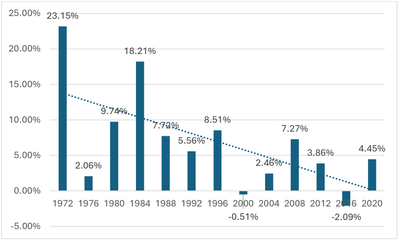
The 2024 Presidential campaign has been a roller coaster ride this summer. The upheavals are so fast and unprecedented that the reaction to each event often seems too muted. An assassination attempt and sudden pre-convention withdrawal? In a past generation, these events would be decisive, but in 2024, they seem like just the latest blip in the news cycle. The polls never seem to move more than a couple of points. In such an oddly volatile but also stable environment, our best bet to understanding what is going to transpire during the last 100 days of the election cycle is to look at data that gets to the heart of how voters view the candidates. My choice of fundamental data or essential metric is candidate fandom. Fandom is an unusual metric in politics, but it should be more common. Fandom is about passion for and loyalty to a cultural entity, be it a team, singer, university, or even politician. In fact, MAGA Trump supporters and Bernie Bros share many characteristics with Swifties and Lakers fans. Fans of all these things show up, spend, wear branded apparel, and fiercely defend the object of their fandom. The politicians who inspire fandom, such as AOC, Donald Trump, Barack Obama, and Marjorie Taylor Green, enjoy many advantages and are the celebrities of the political world. Fandom is critical in politics because fans are loyal, engaged, and resilient. Fans are not casual potential voters who may change preferences and are unlikely to make an effort to stand in line to vote. Fans are the voters who will show up rain or shine and who can’t be swayed. In 2024, a fan will interpret a conviction of their candidate as political “lawfare” rather than evidence of criminality. Also, in 2024, a fan will make excuses for signs of aging that would result in children taking a senior’s car keys. The flip side of fandom, anti-fandom, is also a powerful political force. Indeed, politics may be the cultural context in which anti-fandom has the most impact. Taylor Swift may have haters, but these anti-Swifties are not buying tickets to see Katy Perry in protest. But in politics, hatred of a candidate might be as powerful a tool for generating a vote as fandom. Joe Biden’s 2020 campaign was notoriously bad at drawing crowds, suggesting he inspired little passion. In contrast, Trump’s rallies looked like rabid sports crowds complete with matching hats. However, the hatred and fear of Donald Trump inspired sufficient anti-fandom to make Biden competitive. Of course, fandom doesn’t entirely decide elections. In most elections, there isn’t all that much fandom or passion. Beyond the presidency and senatorial contests, most candidates are barely known, and identity factors (race, gender, party affiliation) and candidate awareness are the determining factors. Even in presidential elections, get-out-the-vote efforts (ballot harvesting) and election regulations (voter suppression) combined with effective marketing to the few percent of swing (low information) voters are often the determining factors. Looking toward the future, fandom may be an increasingly salient political metric for multiple reasons. First, the last two decades have witnessed many candidates raised quickly from obscurity with somehow Hollywood-worthy origin stories (Barack Obama, AOC, JD Vance, etc.). In the modern media environment, candidates’ reputations (brands) are increasingly the product of marketing narratives rather than a lifetime of real-world accomplishments. In this new world of politics, fandom will be a critical metric. Second, with the increasing diversity of the American electorate, voting will be increasingly based on identity rather than ideology. Identity-based voting segments are likely to be driven by fandom (and anti-fandom) rather than policy. We see a form of this in 2024, as high inflation has barely made a dent in voters’ preferences for the two parties. A fragmented electorate comprised of racial and gender segments whose preferences are driven by fandom and anti-fandom will lead to increasingly negative campaigns featuring ads highlighting the threat of the non-preferred party’s candidates. When voters are focused on identity, negative advertising becomes the ideal method to use fear to create anti-fandom (hate) to motivate turnout. Kamala Harris versus Donald Trump Barring further disruptions, the matchup is set for the 2024 presidential contest (as of this writing, we do not know the Democratic VP). We do know the matchup between Donald Trump and Kamala Harris is a contest between polarizing figures. Donald Trump is a movement candidate who has redefined the Republican party. He inspires passionate fandom from his followers and amazing antipathy from major media and cultural outlets. Harris is also polarizing. In the immediate aftermath of Biden’s withdrawal, Harris received massive media and donor support. However, Harris has not demonstrated any significant national voter appeal, and her time as VP has generated ample blooper real material. My approach to assessing the race is to examine each candidate's fandom and anti-fandom. Fandom is the candidate’s core, resilient support, while anti-fandom is about antipathy. Fandom and anti-fandom are especially powerful metrics for a candidate because they are relatively fixed after a candidate gains high awareness. Once an individual identifies with the candidate (e.g., they are on the same team), an attack on the candidate is an attack on the individual. This means attack ads do not work because fans feel they are being attacked. Anti-fans are also important because they constrain a candidate’s support. A Trump anti-fan is unpersuadable by efforts from the Trump campaign because their identity is steeped in opposition to him. Fans and anti-fans are trapped in a cycle of confirmation bias where all information is processed to fit their fandom. I use data from the Next Generation Fandom Survey to assess candidate fandom and anti-fandom. The Next Generation Fandom Survey involves a nationwide sample of the U.S. population regarding fandom for sports and other cultural entities. In the 2024 edition, political figures such as Donald Trump, Joe Biden, Kamala Harris, and RFK Jr were included. The survey captured responses from 2053 subjects split evenly across the four primary generations (Gen Z, Millennials, Gen X, and Baby Boomers), and the sample is representative in terms of racial background. The survey does not focus on likely or registered voters, so the results reflect overall societal sentiments rather than the electorate's opinions. The critical survey question asks subjects to rate how much of a fan they are of a celebrity on a 1 to 7 scale. In the following discussion, individuals who rated their fandom a 6 or 7 on the 7-point scale are categorized as Fans, while those who rate their fandom a 1 or 2 are classified as Anti-Fans. Table 1 shows the Fandom and Anti-Fandom rates for the entire sample. Donald Trump has a 27% fandom rate compared to Harris's 21%. The fandom rate is crucial because it identifies the candidate's core support. It also indicates something important about the candidate’s potential likability. In terms of anti-fandom, Harris has a slightly higher Anti-Fandom rate. Anti-Fandom is also critical as it shows the percentage of people who hate a candidate. The data suggests that Americans find Harris to be more dislikable than Trump. Notably, the anti-fandom rates are significantly higher than the fandom rates. The American public has significant disdain for politicians. The high anti-fandom rates are both the product of past negative advertising and the cause of future negative campaign strategies. Table 1: Candidate Fandom and Anti-Fandom Table 2 reports fandom rates based of the two gender segments. Trump has a 7%-point advantage with men and a surprising 4% advantage with women. This is a stunning result as Trump is generally regarded as having weakness with female voters. However, this weakness shows up in the anti-fandom rates. In the male segment, Trump has a 5%-point advantage in anti-fandom (fewer anti-fans), but a 3% disadvantage in the female segment. This reveals that Trump is polarizing to women, and almost half of women find Trump to be highly dislikable. This finding is why the Harris campaign is likely to use advertising that casts Trump as misogynistic or a threat to women to motivate turnout by female voters. Table 2: Candidate Fandom by Gender Table 3 shows the fandom rates for the two younger demographic segments: Gen Z and Millennials. This Table also shows Trump’s relative performance versus Biden (in parentheses in the last column). Trump enjoys higher fandom and lower anti-fandom than Harris in both the Gen Z and Millennial segments. In terms of fandom, Trump is plus 6% in Gen Z and plus 11% with Millennials. Critically, Harris outperforms Biden. The Gen Z anti-fandom gap between Trump and Biden favored Trump by 6% points. However, this gap shrinks to just 1% point when Harris is the comparison. The data suggests that Harris is stronger with Gen Z than Biden. Table 3: Candidate Fandom in Younger Generations Table 4 reports the fandom rates based on a racial segmentation scheme. Specifically, the sample is divided into White and Non-White categories. This is a crude segmentation, but it illustrates some essential points. Trump enjoys a significant 14% positive fandom advantage in the White demographic. He also enjoys a 10-point edge in (lower) anti-fandom. The pattern essentially reverses in the Non-White segment, as Harris has a 10-point advantage in fandom and a 17-point edge in anti-fandom. Trump’s anti-fandom in the Non-White segment is critical to the campaign. Nearly half of this segment has antipathy or hate for Trump. This high anti-fandom suggests an opportunity for the Harris campaign to emphasize racial angles in their attacks on Trump. Table 4: Candidate Fandom by Race In addition to fandom and anti-fandom rates across demographic categories, insights can be gleaned by looking at segmentation variables that reflect cultural values or personality. Table 5 shows fandom and anti-fandom rates for Trump and Harris for segments defined by fandom for Taylor Swift (Swifties) and Baseball. The Swifties skew towards Harris. The implication is that young women engaged in popular culture have more positive fandom for Harris and more negativity toward Trump. This is unsurprising given the content of the popular culture and Swift’s personal liberalism. The Swiftie segment shows a much stronger skew for Harris than all but the Non-White segment. Examining the data at a cultural level is vital as it indicates that it isn’t necessarily youth or gender where Harris has an advantage but a combination of youth, gender, and a specific type of cultural engagement. The table also includes fandom rates for baseball fans. In the Baseball Fan segment, Trump enjoys an 8% point fandom advantage and a 7% anti-fandom advantage (lower anti-fandom). Like the case of the Swifties, the fandom rates of Baseball Fans reveal something about Trump’s core support. Baseball is a very traditional game with an older fan base, and traditionalism is probably the core value of Trump fans. Trump’s negative advertising is likely to focus on the threats to traditional values (i.e., Harris is a San Francisco liberal). Table 5: Candidate Fandom and Cultural Segments Commentary and Prediction Fandom is a powerful metric for predicting political success, but like most data points, it doesn’t tell the whole story. Fandom is a measure of unwavering core support while anti-fandom measures the group that will never support and is likely to show up to vote against a candidate. Examining fandom rates across multiple segments reveals that Harris’ core support is concentrated in specific cultural and racial segments. The analysis also suggests that Trump's core support is broader than is usually acknowledged and that his main problem is significant anti-fandom with women and minorities. Harris’ problem is a lack of love, while Trump’s is too much hate. Notably, I am not paying too much attention to the current wave of excitement and enthusiasm surrounding Harris. The recent enthusiasm is likely more a manifestation of the Democratic base’s hopes and a relentless media onslaught than an actual increase in passion for Harris. Maybe there will be a permanent shift upward in Harris’s fandom, but I don’t see any logic for why this would occur. Harris isn’t suddenly more likable or aspirational than she was last month. The argument that the American people are becoming more acquainted with her is dubious, given that she has been the Vice President or a major presidential candidate for almost five years. What are the implications for the upcoming election? Voting is not only about fandom or hate, so we must consider some additional factors. For instance, many potential voters lack passion and knowledge and are more prone to vote based on identity rather than ideology. If a region or demographic segment consistently votes for a party 75% of the time, that’s voting more based on fixed identities than current societal conditions. The American electorate has many of these types of fixed-preference voter segments. Furthermore, as the American electorate becomes more diverse, identity-based voting seems to be making presidential contests more predictable. The baseline seems to be that the Democratic candidate will win the popular vote by a few percentage points, and the Electoral College will come down to a few states, such as Michigan, Pennsylvania, and Wisconsin. Examining past electoral maps shows far more shifting of states across elections. Now, all but a handful of states are regarded as non-competitive. The Figure below shows the presidential popular vote margins for the last 50 years. It shows a trend towards smaller margins for the winning candidate, which is at least partly due to growing ethnic diversity and more fixed (at least in the near and medium terms) identity-based voting. Over the last 13 cycles, the margin of victory has dropped by about 1% every four years. Demographic change has also locked in a high baseline level of support for Democratic candidates. The last time a Republican won the popular vote was in 2004, with George Bush as the incumbent. Figure 1: Presidential Vote Margin 1972 to 2020 In addition to shrinking election margins, demographic change promises to change future campaign tones. The increasing relevance of fandom and anti-fandom, combined with the growing diversity of the electorate, will make 2024 an extremely negative campaign. The 2024 election will be determined by identity-based demographic trends and negative (anti-fandom) marketing campaigns. Demographics are destiny, and America is changing rapidly in ways that make it increasingly difficult for the Republicans to win the popular vote. It doesn’t matter if the Democrat is Harris, Newsom, Clinton, or Whitmer while the Republican is Rubio, Haley, Cruz, or Burgum. The baseline is probably 52% to 48%, D to R. Candidate fandom and anti-fandom probably shift the vote 2 or 3 percent in either direction. The correlation of demographic traits with voting behaviors creates incentives for campaign strategies that focus on identity. Republicans are eager to shift some percentage of Black or Hispanic voters to their cause because it simultaneously reduces the Democrats' base and grows Republican totals. In contrast, Democrats need to motivate marginal voters in the female, Black, and Hispanic segments to turn out. Fear-based appeals are the most effective tool for both parties' goals. Negative messaging is also prevalent because of the general view of politicians. Politicians tend to inspire more antipathy (anti-fandom) than admiration (fandom). The fandom data shows this, as both candidates have far more anti-fans than fans (this holds with other politicians) . The modern election calculus is, therefore, focused on aggressive negative ads that inspire marginal voters to take the initiative to vote against a hated candidate. Passion drives behavior, and it's far easier to drive fear and hatred of a candidate than to inspire passion and admiration. Considering the fandom data and the current electorate, I have two predictions. First, we will witness an incredibly nasty race. Harris’s best bet is to demonize Trump to motivate the anti-Trump voters to turn out. The American culture of 2024 includes constant repetition that many Democratic voting constituencies are marginalized and threatened. These segments are best motivated by using messages that cast the Republicans as the danger or oppressor. Women will fear losing reproductive rights, and African Americans will be primed with threats to voting rights. Trump will also employ negative messaging, but Trump’s adoption of a negative campaign comes from a slightly different motivation. Trump’s core support consists of conservatives who are frustrated by a lack of cultural power and representation. This group is looking for someone who will fight for their values. This desire for a “fighting advocate” explains much of Trump’s appeal, as his supporters are enthusiastic about his “mean tweets and nicknames.” There will also be fear-based advertising as Harris will be positioned as wanting to defund police and open the border. Second, Trump wins in a close contest. Comparing Trump’s and Harris’ fandom and anti-fandom suggests the Harris campaign faces an uphill challenge. Despite the current blitz of enthusiasm for Harris as a replacement for a failing Joe Biden, her “brand” has not shown an ability to stimulate passion, and her dislike levels exceed Trump's. It seems unlikely that she will be able to inspire fans. While Trump has a significant fanbase and weaknesses in terms of strong anti-fandom levels in minority and cultural segments, he probably beat Clinton in 2016 because her anti-fandom was equivalent to his. In contrast, he lost to Biden because Biden had less anti-fandom (in 2020). Kamala Harris seems more like Clinton than Biden, so look for a similar outcome as in 2016. The bottom-line prediction: An exceptionally negative campaign, with Trump’s greater baseline fandom and Harris’s charisma deficit leading to a narrow Trump victory. As in 2016,Trump wins the Electoral College while losing the popular vote. Addendum: Future Fandom Lesson The structure of the American electorate and the propensity of people to vote based on identity rather than ideology mean that negative campaigns are the standard in the near future. The essential observation is that demographic trends create an electorate that is more a collection of identity segments than a homogeneous population that varies in ideology. An increasingly diverse electorate likely means increasingly negative presidential campaigns as negative or fear-based appeals are especially effective when elections focus on threats to identity groups. The tragedy of this situation is that the negative messages of campaigns amplify racial division and acrimony. When the next election occurs, the electorate is even more polarized, and negative or fear-based appeals are again the most effective. Mike Lewis is an expert in the areas of analytics and marketing. This approach makes Professor Lewis a unique expert on fandom as his work addresses the complete process from success on the field to success at the box office and the campaign trail. Michael is available to speak with media - simply click on his icon now to arrange an interview today. Interested in following Future Fandom! Subscribe for free to receive new posts.



#ExpertSpotlight: Who is Vladimir Putin?
In the intricate arena of global politics, the life of Vladimir Putin stands as a pivotal narrative, encapsulating the rise of one of the most influential and controversial leaders of our time. This topic is not only newsworthy because of Putin's significant impact on international relations and global security but also due to the profound influence he wields over Russia’s political landscape and its socioeconomic dynamics. Understanding Putin’s life, leadership style, and strategic decisions offers critical insights into current geopolitical tensions, energy politics, and global governance. The biography of Vladimir Putin presents multiple angles that are of substantial interest to a broad audience, including: Early Life and Rise to Power: Exploring Putin's background, education, and career trajectory that led to his ascendancy in Russian politics. Leadership Style and Governance: Analyzing Putin's approach to leadership, his consolidation of power, and the mechanisms he uses to maintain political control. Domestic Policies and Economic Impact: Assessing the domestic policies implemented during Putin’s tenure, their impact on the Russian economy, and public opinion within Russia. Foreign Policy and Geopolitical Influence: Investigating Putin's foreign policy strategies, his influence on international relations, and key events such as the annexation of Crimea and involvement in Syria. Human Rights and Democratic Challenges: Examining issues related to human rights, freedom of speech, and the state of democracy under Putin’s rule. Energy Politics and Economic Leverage: Understanding Russia’s role in global energy markets, Putin's use of energy resources as a tool of political influence, and the economic implications for Europe and beyond. The life of Vladimir Putin offers journalists a rich tapestry of storylines that delve into the complexities of his leadership and its far-reaching consequences on both national and global stages. Connect with an Expert about Russia and Vladimir Putin: Glen Duerr, Ph.D. Professor of International Studies · Cedarville University Lynne Hartnett, PhD Associate Professor and Chair of History | College of Liberal Arts and Sciences · Villanova University Craig Albert, PhD Professor of Political Science and Graduate Director of the Master of Arts in Intelligence and Security Studies · Augusta University Stephen Dyson, Ph.D. Professor of Political Science · University of Connecticut Erica Frantz Assistant professor of political science · Michigan State University To search our full list of experts visit www.expertfile.com Photo credit: ANTIPOLYGON YOUTUBE

The Fast Food Wars are on! Let our experts explain the history behind the industry
In the contemporary culinary landscape, fast food stands as a pervasive and influential force, shaping not only our eating habits but also broader societal trends. This topic is newsworthy due to its significant impact on public health, economic structures, and cultural dynamics. The history of fast food offers a rich narrative that intersects with various pressing issues such as nutrition, labor practices, and globalization. Furthermore, the evolution of fast food reflects changes in consumer behavior, technological advancements in food production, and shifts in marketing strategies. Key areas for exploration include: The Rise of Fast Food Chains: Examining the origins and growth of iconic fast food brands and their role in transforming the food industry. Health Implications and Nutritional Debates: Analyzing the impact of fast food on public health, including discussions around obesity, dietary choices, and nutritional content. Economic Influence and Labor Practices: Investigating the economic contributions of the fast food industry, its employment practices, and the ongoing debates around wages and working conditions. Cultural Impact and Globalization: Exploring how fast food has influenced cultural identities, consumer behaviors, and the spread of Western food culture globally. Technological Innovations in Food Production: Looking at advancements in food technology that have enabled the mass production and distribution of fast food, from kitchen automation to supply chain logistics. Marketing and Consumer Psychology: Assessing the strategies used by fast food companies to attract and retain customers, including advertising techniques and menu innovations. The history of fast food offers journalists a multifaceted topic with numerous angles to explore, each revealing important insights into how this ubiquitous industry has shaped—and continues to shape—various aspects of modern life. Connect with an Expert about the history of Fast Food: Aidin Namin, Ph.D. Associate Professor of Marketing Analytics, College of Business Administration · Loyola Marymount University Melissa Melough Assistant Professor, Department of Health Behavior and Nutrition Sciences · University of Delaware Matthew McGranaghan Assistant Professor, Marketing · University of Delaware Anna McAlister Assistant Professor of Advertising and Public Relations · Michigan State University David Julian McClements Distinguished Professor of Food Science · University of Massachusetts Amherst To search our full list of experts visit www.expertfile.com Photo credit: Jonathan Borba

Need to know more about the importance of Miranda Rights? Our experts are here to help
The anniversary of the landmark Supreme Court decision in Miranda v. Arizona, which established the Miranda Rights, is a pivotal moment in American legal history. This ruling, which ensures that individuals are informed of their rights during an arrest, has profound implications for the criminal justice system, civil liberties, and police procedures. The importance of Miranda Rights remains a relevant and critical topic, especially in discussions about law enforcement practices and legal protections. Understanding the impact of this decision helps to illuminate broader issues of justice and rights in the United States. Key story angles include: Historical Context and Significance: Exploring the background of the Miranda v. Arizona case, its significance at the time, and its long-term effects on the criminal justice system. Impact on Law Enforcement: Analyzing how the Miranda ruling has changed police procedures, training, and accountability measures. Civil Liberties and Legal Protections: Investigating the role of Miranda Rights in protecting individual freedoms and ensuring fair treatment under the law. Contemporary Legal Challenges: Discussing ongoing legal debates and challenges related to Miranda Rights, including Supreme Court interpretations and potential reforms. Public Awareness and Education: Examining efforts to educate the public about their rights during interactions with law enforcement and the importance of knowing one's rights. Personal Stories and Case Studies: Sharing stories of individuals whose cases were affected by Miranda Rights, highlighting the human impact of this legal protection. These angles provide journalists with a comprehensive framework to explore the historical significance and enduring impact of Miranda Rights on the American legal landscape. Connect with an Expert about the importance of Miranda Rights: Christopher Smith Professor of Criminal Justice · Michigan State University Patricia Wilson, J.D. Associate Dean & Professor of Law · Baylor Law School Stephen Griffin W.R. Irby Chair and Rutledge C. Clement Jr. Professor in Constitutional Law · Tulane University Julian Ku Professor of Law and Interim Dean · Hofstra University Ganesh Sitaraman New York Alumni Chancellor's Chair in Law · Vanderbilt University To search our full list of experts visit www.expertfile.com Photo credit: Claire Anderson

Covering the legacy of Nelson Mandela - let our experts help with your questions and coverage
It was on this day in 1964 - Nelson Mandela is sentenced to life in prison in South Africa. Nelson Mandela's legacy as a champion of freedom, justice, and human rights continues to inspire people worldwide. His life and work are not only historically significant due to his role in ending apartheid in South Africa but also for his broader impact on global movements for equality and social justice. Mandela's relevance today is underscored by ongoing struggles against racism, oppression, and inequality. Reflecting on his contributions offers valuable lessons for current and future generations. Key story angles include: Mandela’s Life and Legacy: Exploring the key milestones of Mandela's life, including his activism, imprisonment, presidency, and post-presidential work. Impact on South African Society: Analyzing how Mandela's efforts to dismantle apartheid and promote reconciliation have shaped modern South Africa. Global Influence: Investigating Mandela's influence on international human rights movements, his role as a global symbol of resistance and peace, and his impact on world leaders. Continued Relevance in Social Justice Movements: Examining how Mandela’s principles and strategies are applied in contemporary struggles against racial injustice, inequality, and political oppression. Personal Stories and Tributes: Sharing personal narratives from those who worked with Mandela, were inspired by him, or were directly impacted by his legacy. Educational and Cultural Contributions: Discussing Mandela's contributions to education, culture, and the promotion of peace, and how his legacy is preserved and taught worldwide. These angles offer journalists a comprehensive framework to explore the historical significance and enduring impact of these pivotal figures and events. Connect with an Expert about the legacy and life of Nelson Mandela: Frederick W. Gooding, Jr. Dr. Ronald E. Moore Professor in Humanities · Texas Christian University David Walton Assistant Professor of History and Director of the Global Black Studies Program · Western Carolina University John Aerni-Flessner Assistant Professor of African History · Michigan State University Stephanie Bangarth Associate Professor, Department of History · King's University College, University of Western Ontario Richard A. Wilson, Ph.D. Gladstein Distinguished Chair of Human Rights and Board of Trustees Distinguished Professor · University of Connecticut To search our full list of experts visit www.expertfile.com Photo credit: Gregory Fullard