
Experts Matter. Find Yours.
Connect for media, speaking, professional opportunities & more.

Augusta University experts looking for clues to predict future cyber attacks
The threat of cyber attacks is a reality for every industry. Cybersecurity is top of mind after recent highly skilled and calculated attacks targeting the Colonial Pipeline in May and shutting down the world’s largest meat supplier earlier this month. With America’s energy and food supply chains making vulnerable targets, everyone from executives, lawmakers, security officials and the media are looking for answers. Augusta University’s Dr. Craig Albert and Dr. Lance Hunter explore the questions surrounding cybersecurity in a recently published study in The Cyber Defense Review. This project examines the political, economic and military factors associated with cyber attacks in an effort to understand which countries or groups are most likely to attack. Here’s an abstract of their piece: Factors that Motivate State-Sponsored Cyberattacks The study of the factors involved in the initiation of violent interstate conflicts has been well documented within international relations. However, scholars have yet to analyze the factors associated with the initiation of international state-sponsored cyberattacks due to the lack of available data. This study is a first attempt to address this limitation. This project examines the political, economic, and military factors associated with the initiation of state-sponsored cyberattacks from 2005–2012, using a unique dataset that incorporates author-collected political, economic, and military data, along with cyber data on known state-sponsored cyberattacks extracted from the Council on Foreign Relations (CFR) Cyber Operations Tracker Dataset. With this unique dataset, we seek to better understand those states most likely to cyberattack other states. The Cyber Defense Review, Spring 2021 The study was also referenced in Voice of America in a piece covering President Biden’s trip to the G-7 Summit in Britain. If you are a journalist looking to cover any aspect of cybersecurity and cyber attacks, Augusta University’s experts are world-renowned on the topic. Dr. Craig Albert is director of the Master of Arts in Intelligence and Security Studies at Augusta University. He is a leading expert on war, terrorism and American politics, and he testified before U.S. Congress regarding the threat from Chechnya following the deadly Boston Marathon bombing. Dr. Lance Hunter is an assistant professor of political science with a background in international relations. His research focuses on how terrorist attacks influence politics in democratic countries and how political decisions within countries affect conflicts worldwide. Both experts are available to speak with media about cyber attacks. Simply click on either expert’s icon to arrange an interview today.


Baylor Expert Shares Four Keys to Leadership from Ulysses S. Grant’s Reflections on Civil War
Near the end of his life, as he battled spiraling health and an empty bank account, former United States President – and iconic Civil War General – Ulysses S. Grant penned his memoirs and gave the world a glimpse into the mind of one of the nation’s most celebrated figures. The book, “Personal Memoirs of U.S. Grant,” was published in 1885 and has been pored over for more than 135 years. Peter Campbell, Ph.D., author, associate professor of political science at Baylor University and a nationally recognized scholar on military strategy and international security, recently wrote an essay about Grant and his memoirs for Classics of Strategy and Diplomacy. He said Grant’s personal reflections provide valuable insights into his view and practice of leadership, specifically as he led Union forces in the Civil War. Below, Campbell offers four keys to leadership that he found in Grant’s writings. 1. Know Yourself. Grant was a careful observer of himself. He was able to reflect on his experience, see where he had made errors and learn from them. In July 1861, moments before what Grant thought would be his first engagement as a commander in the Civil War, he was terrified. His heart was in his throat. When he and his forces crested a rise that they thought would reveal the enemy force, they saw that the enemy had fled. “My heart resumed its place,” Grant wrote. “It occurred to me at once that [the enemy] had been as much afraid of me as I had been of him. This was a view of the question I had never taken before; but it was one I never forgot afterwards.” Grant absorbed this lesson and it transformed him as a leader and planner. 2. Know Your Enemy. The great Chinese strategists counseled that commanders must know their enemies. Grant shows us what this looks like in practice. Rather than dwelling on his fears, those things that his opponent might do that would spell disaster, Grant put himself in the shoes of his adversary and asked himself: What would my gravest fears be, were I in his position? He then designed his plan of campaign to raise the specter of his enemy’s fears, knowing that this would compel the enemy to be blinded by fear and compel them to react. To be fair, this was easier for Grant because in the Civil War he was fighting against fellow graduates of West Point and veterans of the Mexican War, including Robert E. Lee. Grant was not in awe of Lee. “I had known [Lee] personally,” Grant wrote, “and knew that he was mortal; and it was just as well that I felt this.” This does not diminish, but rather reinforces, the importance on studying one’s adversary carefully in any kind of competition. 3. Know Your People. As Grant rose in the ranks of the Union Army, he was pulled away from the sound of the guns and the command of troops in battle. This is true in any organization – the higher one rises the further one gets from the ground truth, whether in an army or a Fortune 500 company. Grant recognized that to influence the battles he could no longer superintend, he had to select the right subordinates for the job and then give them the authority to exercise the initiative in their area of responsibility. This meant that Grant also had to be a careful observer of the strengths and weaknesses of his subordinates. Even a hero of the Battle of Gettysburg like Major General Gouverneur Warren was not spared Grant’s penetrating character assessments. Warren’s weakness, Grant wrote, was that he could not trust his subordinates to carry out his orders, which meant that he could not be give a large command. “[Warren’s] difficulty was constitutional and beyond his control,” Grant wrote. “He was an officer of superior ability, quick perception, and personal courage to accomplish anything that could be done with a small command.” When you know your people, you know where to place them where their strengths will reinforce success and their weaknesses will be least disastrous. 4. Unleash the Power of Humility. The most decisive virtue that Grant practiced was humility. As a leader he did not allow pride in his own designs to blind him to the wisdom of his subordinates. Late in the war, Grant wrote up a campaign plan for attacking the Shenandoah Valley, the key source of supply to the Confederacy. He brought the plan to General Philip Sheridan for execution. However, when he met with Sheridan, the cavalry officer presented Grant with his own plan. Grant wrote that Sheridan “was so clear and so positive in his views and so confident of success, I said nothing about [my campaign plan] and did not take it out of my pocket.” When you lead, don’t let pride get in the way of the best ideas bubbling up from your subordinates. ABOUT PETER CAMPBELL, PH.D. Peter Campbell, Ph.D., is an associate professor of political science in Baylor University’s College of Arts & Sciences. He is the author of two books: “Military Realism: The Logic and Limits of Force and Innovation in the U.S. Army” and “Farewell to the Marshal Statesman: The Decline of Military Experience Among Politicians and its Consequences.” Campbell studies international security, civil-military relations, strategy and national security decision-making, international relations scholarship and policy relevance, insurgency and counterinsurgency, the just war tradition, unconventional warfare and advanced military technology, military culture, and the effects of cyber capabilities on conflict escalation. ABOUT BAYLOR UNIVERSITY Baylor University is a private Christian University and a nationally ranked research institution. The University provides a vibrant campus community for more than 19,000 students by blending interdisciplinary research with an international reputation for educational excellence and a faculty commitment to teaching and scholarship. Chartered in 1845 by the Republic of Texas through the efforts of Baptist pioneers, Baylor is the oldest continually operating University in Texas. Located in Waco, Baylor welcomes students from all 50 states and more than 90 countries to study a broad range of degrees among its 12 nationally recognized academic divisions. ABOUT THE COLLEGE OF ARTS & SCIENCES AT BAYLOR UNIVERSITY The College of Arts & Sciences is Baylor University’s largest academic division, consisting of 25 academic departments and eight academic centers and institutes. The more than 5,000 courses taught in the College span topics from art and theatre to religion, philosophy, sociology and the natural sciences. Faculty conduct research around the world, and research on the undergraduate and graduate level is prevalent throughout all disciplines. Visit baylor.edu/artsandsciences.


UMW Professor Jason Davidson speaks to The Guardian about ‘Costs of War’ in Afghanistan
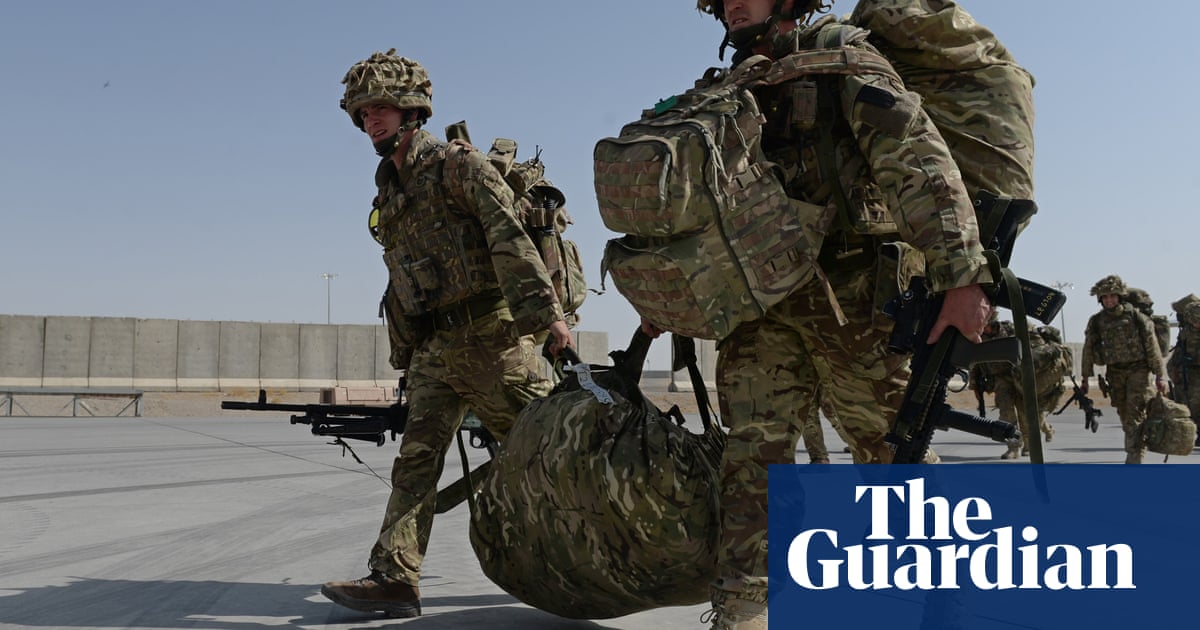
As America readies to end its military presence in Afghanistan, there’s been much reflection and examining of the role America and its NATO allies played in the war-torn country. A report released just this week shed some light and much-needed perspective on the topic. University of Mary Washington Professor of Political Science and International Affairs Jason Davidson, the study's author, was contacted by The Guardian to lend his expert opinion. “British and Canadian troops were more than twice as likely to get killed in Afghanistan as their US counterparts, according to a study that looks at the scale of the sacrifice made by Nato allies over the course of the 20-year war. The UK also gave more to Afghanistan than the US in the form of economic and humanitarian assistance as a percentage of GDP, the study published on Wednesday by the Costs of War project at Brown University in the US found. Although the US suffered by far the greatest number of fatalities in absolute terms compared with other members of the International Security Assistance Force (ISAF) – 2,316 American troops were killed between 2001 and 2017, the period of the study – Canadians and British soldiers sent to Afghanistan were more likely to die. The Costs of War report looks at fatalities as a percentage of national troop levels at peak deployment in Afghanistan. The US losses were 2.3% of its vast military presence. The UK lost 455 lives, which was 4.7% of its peak deployment level, while the 158 Canadians killed represented 5.4% of their total. The study refers to a grim joke told by American soldiers in Afghanistan that ISAF stood for “I Saw Americans Fight”, but points out in the case of the UK and Canada at least it was grossly unfair. “Americans do not fully understand, do not acknowledge, the sacrifices that allies made in Afghanistan,” said Jason Davidson, the author of the report, and professor of political science and international affairs at the University of Mary Washington. “It’s something that not only doesn’t get attention from those who are critics of the allies. It doesn’t even get the attention that it deserves from those who are generally cheerleaders for allies, like the current administration. I would like to see more American policymaker acknowledgment and discussion with the public of the costs that America’s allies have incurred in these wars.” May 12 - The Guardian There will be a lot of coverage in the lead up to America’s exit from Afghanistan, and if you are a reporter looking to cover that topic or the ‘Costs of War’ project, then let us help. Dr. Jason Davidson is a professor of Political Science and International Affairs and is also an expert in American Foreign and Security Policy, and International Security. If you’re looking to arrange an interview with Dr. Davidson, simply click on his icon now to arrange an interview today.



New CBS Sitcom "United States of Al" Taps Experience of Social Work Student and Veteran
On April 1, 2021, CBS premiered United States of Al - a new comedy from producer Chuck Lorre (Two and a Half Men, Big Bang Theory) about a Marine combat veteran struggling to readjust to civilian life and the interpreter who served with his unit in Afghanistan and has just arrived to start a new life in America. The show explores the relationship between these two men and how they help each other adjust to their new lives. So, what does a CBS sitcom have to do with the USC Suzanne Dworak-Peck School of Social Work? Enter Master of Social Work (MSW) student Josh Emerson, who landed in the right place at the right time through his field internship at No One Left Behind. No One Left Behind (NOLB) is an all-volunteer, national nonprofit organization that supports recipients of the Special Immigrant Visa (SIVs), and those pursuing an SIV. The founders of No One Left Behind believe the U.S. has a moral obligation to protect these interpreters, and their families, who served side-by-side with American soldiers. Emerson, a veteran of the U.S. Army who deployed to Iraq and Afghanistan, is very familiar with Iraqi and Afghan interpreters. “I went on missions with these interpreters, got to know them, built relationships with them,” he said. “I was so very happy to be able to work with them in this capacity. In addition to providing resources for SIV ambassadors living in the United States, NOLB advocates on behalf of the SIV population to the executive and legislative branches of government provides subject matter expertise to the media, and partners with U.S. businesses to provide opportunities for what they call “this next generation of Americans.” Alea Nadeem, MSW ’15, is a board member of NOLB and reached out to USC with a field internship opportunity for social workers to do macro-level clinical work in a nonprofit setting. Nadeem became Emerson’s field instructor. “What Josh has brought to No One Left Behind has never been brought to the board before,” Nadeem said. “They now see the value in social work.” Bringing the issue to a larger audience Chase Millsap, a consultant and writer on United States of Al, is a former board member of No One Left Behind. “I am still very supportive, impressed and proud of all the work the NOLB team does on a daily basis,” he said. A veteran of the U.S. Marine Corps and U.S. Army Special Forces, he holds a master’s degree from USC Sol Price School of Public Policy. "USC helped me to learn the tools about how to connect entertainment and policy,” Millsap said. “United States of Al is a perfect example of those two worlds coming together in a powerful (and funny) way.” Millsap’s idea was to bring the issues around SIVs into America's living rooms, in a way that would make them relatable. Emerson’s experience as a veteran, his clinical and project management skills obtained through his social work studies and his stellar ability to work one-on-one with SIV recipients and applicants allowed him to inform the show’s stories with a wide breadth of knowledge. Emerson joined James Miervaldis, chairman of the NOLB board, in helping the writers and actors on the show understand the SIV issues, the ways in which NOLB provides assistance and advocacy, and sharing funny stories of cultural differences between Afghans and Americans. Emerson and Miervaldis have also been able to include some of NOLB’s SIV ambassadors in the process, those with an SIV who have already established themselves in the U.S. and are contracted by NOLB to help others assimilate. “They’re talking to the exact people they're portraying,” Emerson said. Nadeem sees Emerson’s contribution to the show as another platform through which to educate. “There are a lot of different tentacles to social work, and it may not seem like the most obvious place in TV and film, but it is,” she said. The show itself touches on everything social workers value ― service, challenging social injustice, dignity and worth of a person, the importance of human relationships and integrity. “This just makes so much sense that a social worker would be involved in this show because that's what we're always trying to communicate to a larger audience,” Nadeem said. “Through this show, you can make a greater impact for these folks to sort of assimilate them to be American citizens, and then also have the whole world appreciate their culture and appreciate what they've done for our nation to keep U.S. service members safe.” A valued member of the team Emerson, a father of five who resides in New Hampshire, knew he wanted to work with veterans after leaving military service. He felt that an MSW was the most versatile degree for this and chose the USC Suzanne Dworak-Peck School of Social Work because of its military social work track. “I think to be a good social worker you need to have experience in life,” Emerson said. “To have seen some things, or been through some things, to understand the population you're dealing with and what they're going through.” When Emerson began his internship at NOLB in 2020, Miervaldis immediately began working with him to focus on SIVs who recently had come to the United States. The first case Miervaldis assigned to Emerson was an SIV family with two young children who needed emergency surgery at a specialty hospital in Washington D.C. “This SIV packed up his family, his pregnant wife and the two kids, used up all his money to take them by bus from Texas to D.C. in the middle of a pandemic and ended up in a bad part of town,” Miervaldis said. As the SIV’s assigned caseworker, Emerson established a relationship and trust with the SIV, helped him obtain safe housing and a job interview, and coordinated details for the children’s surgery with the hospital. “He’s gone and done everything,” Miervaldis said. “We are very proud of Josh’s initiative and empathy for a family in such need. No One Left Behind is the safety net for our allies.” Last year, NOLB helped over 600 families with visas and resettlement. “Josh has exceeded all our expectations and done so while communicating with clients who speak in broken English, Dari and Pashtu, struggling during a pandemic,” Miervaldis said. “His professionalism and empathy are great credits to USC. We would not be where we are today without him. That is not hyperbole.” Miervaldis hopes NOLB will have more social work interns from USC to continue Emerson’s work. For him, Emerson’s project management skills have been the greatest asset, creating a new process for how NOLB provides help for SIV families. “We told Josh, you're a pathfinder, you're a pioneer,” Miervaldis said. “We need to figure out very quickly what works, what doesn't work, and he took it and said, ‘okay, point me in the right direction.’ He’s very much valued as a member of the team.” From advocacy to TV No One Left Behind gets about 20 messages every day from Iraqi or Afghan interpreters who served with U.S. forces in their countries, and who now receive daily death threats from the Taliban. “They're not allowed to live in their homes or their neighborhoods anymore because they helped the U.S.,” Emerson said. “Now the U.S. is withdrawing from all these countries, and the Taliban and terrorist activities in general are picking up, and these people are getting pressured and killed. NOLB has over 300 cases of SIVs who have been killed waiting for their visas.” Emerson hopes that the added exposure from United States of Al will bring awareness particularly to service members about what these interpreters are experiencing and how they can help. One of the requirements for an SIV is a letter of recommendation from the U.S. service member with whom they served, and those have been the most difficult items for SIV applicants to secure. “I have been able to provide some input to what should be addressed in the show,” Emerson said. “It's interesting to see how advocacy on an issue can turn into something this large scale.” See more news from USC Suzanne Dworak-Peck here.


COVID-19 Pandemic Increasing Substance Use Among Veterans with PTSD
Nine months into the pandemic, everyone has been affected by COVID-19 in some way. However, one group that needs special attention and support is U.S. veterans who were already struggling with symptoms of posttraumatic stress disorder (PTSD). A recently conducted survey by Jordan Davis, assistant professor at the USC Suzanne Dworak-Peck School of Social Work, and Eric Pedersen, associate professor at Keck School of Medicine of USC, found evidence that veterans with PTSD prior to the pandemic were now managing their symptoms with more frequent alcohol and cannabis use. “The pandemic has not been easy on folks, especially for those that have PTSD or an alcohol use disorder (AUD),” said Davis, who also is associate director of the USC Center for Artificial Intelligence in Society (CAIS). “Some of the stories I’ve heard [from study participants] have been heart-wrenching.” An extraordinary resource of veterans not affiliated with VA services Davis and Pedersen lead several efforts examining substance use among veterans. They have assembled a survey group of about 1,200 military veterans, a percentage of whom struggle with PTSD symptoms but have not yet sought professional help via the Department of Veterans Affairs (VA) to improve their wellbeing. “We’ve decided to focus on the population of veterans who, for one reason or another, say they don’t need mental health care,” Davis said. Attitudes about care, transportation barriers or perceived stigma from others may deter them from seeking care for PTSD symptoms, and some self-medicate with alcohol, cannabis, cigarettes, or more rarely, methamphetamine or cocaine. Davis cited larger studies 1,2 that found only about half of the veterans who need some sort of mental health care receive it. Many studies of veterans recruit subjects from the VA who are likely already receiving care. The unique sample group that Davis and Pedersen have created may offer fresh insights into how to motivate these veterans outside the VA system to seek care and how best to deliver it. Tracking pandemic effects on mental health It all began with a one-time survey of young adult veterans to measure drinking habits and willingness to seek help. Pedersen and others had developed a brief intervention that had yielded some success reducing drinking in the short-term, but he knew that sustaining those reductions would be difficult unless the veterans agreed to more formal care. The one-off survey, conducted in February 2020, would set a baseline that could be used to inform the brief intervention content. Then COVID-19 cases began multiplying. Affected cities and states began to impose restrictions on public gatherings and more. Pedersen and Davis soon obtained additional funding from the Keck School of Medicine of USC COVID-19 Funding Program and the National Institute of Alcohol and Abuse to follow up with their sample group and see how these veterans were coping with the unprecedented health crisis. “The result is that we can follow up with these veterans from a pre-COVID-19 time period for the next several years, tracking their depression, anxiety and PTSD symptoms and substance use,” Pedersen said. The researchers aim to understand how the veterans are sleeping, what their stress levels are like, and how things have changed as the pandemic wears on. They hope to gain new insights about what motivates some to seek care and how that can be replicated. So far, the results point to some unfortunate, but not unexpected, news. “We’re finding that those veterans who were struggling with PTSD prior to the pandemic are actually doing worse in terms of their substance use behaviors, drinking and cannabis use, as well as their stressful reactions to the pandemic,” Pedersen said. Pedersen and Davis will continue to follow up with these veterans through at least February 2022, surveying them every three months to see how they are progressing. In addition to the survey, they also conduct in-depth qualitative interviews with a subset of the group to enrich their understanding of what their lives are like now and how things have changed for them. The interviews last about an hour, sometimes more. “We talk about the positive and negative things that have happened and what their expectations are for the future,” Davis said. The details are confidential, of course, but it is clear that the pandemic has upended people’s lives and livelihoods across the United States. The toll on those who were already experiencing mental health issues and addiction has been heavy, but Davis and Pedersen are hopeful that their insights and findings will lead to better treatment and outreach in the future. Reducing barriers to care One bright spot over the past nine months has been the quick embrace of telehealth. The VA was already leading the way to telehealth as a way to improve access to its services, and following the stay-at-home orders of the pandemic, telehealth has grown in acceptance and use. Now, online counseling sessions, Alcoholics Anonymous meetings, and medical visits are commonplace. Pedersen and Davis don’t see that changing even when face-to-face gatherings become the norm once again. It has been a promising start to the research, and Pedersen and Davis are even more excited about what the future may hold. They plan on submitting for more grants to continue to track the mental health and substance use of this group of hundreds of veterans with the goal of understanding what factors lead individuals to seek care. Down the road, they hope to use this longitudinal data to help identify profiles of people more or less likely to seek care. “Then we can tailor interventions to increase their willingness to seek care for a problem like a substance use disorder or PTSD,” Davis said. Recognizing patterns in substance use and when to seek care is very important in helping that part of the veteran population that is trying to deal with symptoms of depression, anxiety, PTSD, or substance abuse on their own. “We know that things are bad now and we can expect that there will be lingering effects for years to come,” said Pedersen. “What we hope is that these findings and our future work will help the VA and others create more effective programs and outreach to address the unique needs of veterans.” 1 Veterans Health Administration Office of Patient Care Services, Analysis of VA Health Care Utilization Among Operation Enduring Freedom, Operation Iraqi Freedom, and Operation New Dawn Veterans. Washington, DC: U.S. Department of Veterans Affairs, 2017. www.publichealth.va.gov/epidemiology/reports/oefoifond/health-care-utilization/. 2 Tanielian, Terri and Lisa H. Jaycox, eds., Invisible Wounds of War: Psychological and Cognitive Injuries, Their Consequences, and Services to Assist Recovery. Santa Monica, CA: RAND Corporation, 2008. www.rand.org/pubs/monographs/MG720.html.

ChristianaCare also ranks as No. 1 overall employer for diversity and inclusion in Delaware, No. 14 among U.S. health systems (WILMINGTON, Del. – April 23) magazine ranked ChristianaCare as one of the best employers for diversity and inclusion in the United States in its list of Best Employers for Diversity 2021. ChristianaCare also ranked as the No. 1 employer for diversity in Delaware and the No. 14 health system for diversity in the nation. ChristianaCare ranked 121st out of the 500 employers that were recognized. “At ChristianaCare, our mission is simple, but profound – we take care of people,” said Janice Nevin, M.D., MPH, president and CEO of ChristianaCare, which is Delaware’s largest private employer. “And caring for people means that we work together, guided by our values of love and excellence, to bring equity and inclusion to everyone we serve, including our own caregivers. We are committed to building a workforce that reflects the diverse communities we serve, as we aspire to deliver high-quality, accessible care and achieve health equity.” ChristianaCare has committed to being an anti-racism organization and works to ensure that commitment is reflected through the organization’s policies, programs, and practices. (Read more about ChristianaCare’s anti-racism commitment here.) ChristianaCare’s inclusion efforts also include the launch of 10 employee resource groups, which connect caregivers who have a common interest or bond with one another. Formed by employees across all demographics – such as disability, gender, race, military status, national origin, sexual orientation, etc. – these voluntary grassroots groups work to improve inclusion and diversity at ChristianaCare. More than 750 caregivers at ChristianaCare participate in employee resource groups. ChristianaCare also recently launched LeadershipDNA, a new leadership development program that is specifically targeted to underrepresented, diverse populations and is designed to foster professional and career development. “We are grateful for this recognition, which affirms that our organization is committed to taking on the meaningful work to help our caregivers be exceptional today and even better tomorrow,” said Pamela Ridgeway, chief diversity officer and vice president of Inclusion and Diversity at ChristianaCare. “The fact that our caregivers can see the value and feel the impact of our inclusion and diversity efforts illustrates the importance for us to continue to push onward.” Forbes’ Best Employers for Diversity were identified from an independent survey of more than 50,000 U.S. employees working for companies employing at least 1,000 people in their U.S. operations. The employees were asked to give their opinion on a series of statements surrounding the topic of age, gender equality, ethnicity, disability, LGBTQ+, and general diversity concerning their own employer. The survey also gave survey participants the chance to evaluate other employers in their respective industries that stand out with regard to diversity. Only the recommendations of minority groups were considered. Also factored in was diversity engagement amongst managers and diversity among leadership. About ChristianaCare Headquartered in Wilmington, Delaware, ChristianaCare is one of the country’s most dynamic health care organizations, centered on improving health outcomes, making high-quality care more accessible and lowering health care costs. ChristianaCare includes an extensive network of primary care and outpatient services, home health care, urgent care centers, three hospitals (1,299 beds), a freestanding emergency department, a Level I trauma center and a Level III neonatal intensive care unit, a comprehensive stroke center and regional centers of excellence in heart and vascular care, cancer care and women’s health. It also includes the pioneering Gene Editing Institute. ChristianaCare is nationally recognized as a great place to work, rated by Forbes as the 5th best health system to work for in the United States and by IDG Computerworld as one of the nation’s Best Places to Work in IT. ChristianaCare is rated by HealthGrades as one of America’s 50 Best Hospitals and continually ranked among the nation’s best by U.S. News & World Report, Newsweek and other national quality ratings. ChristianaCare is a nonprofit teaching health system with more than 260 residents and fellows. With the unique CareVio™ data-powered care coordination service and a focus on population health and value-based care, ChristianaCare is shaping the future of health care. ####


UMW’s foreign security expert Jason Davidson weighs in on America’s exit from Afghanistan
It is America’s longest war, and after 20 years on the ground, President Biden has announced it’s time to recall the troops and bring them home. As media looked to cover this breaking news, experts from the University of Mary Washington were there to answer the call and help with coverage that has been dominating headlines. “I think the Biden administration is trying to balance the president’s desire to get out and cut U.S. losses, but also the fact that the Taliban has not really complied with their side of the deal so far and they are unlikely to fully comply with a deal, period,” said Jason Davidson, a political scientist at the University of Mary Washington. President Donald Trump’s administration agreed more than a year ago to pull U.S. and NATO troops out of the country by the start of next month. The Taliban has warned of violence if that deadline is not met, but Biden administration officials are hopeful setting a firm withdrawal date a few months down the line will not result in reprisals. Trump’s plan spurred bipartisan objections in Washington when it was announced last year, with Republicans and Democrats denouncing a seemingly arbitrary deadline and predicting chaos if U.S. troops were withdrawn prematurely. Progress toward peace has been sporadic since then, with the Taliban continuing to engage in violence as negotiations stalled. April 13 - ABC News Exiting Afghanistan will be a process that will take time and garner lots of media coverage. And if you are a journalist covering this topic, then let our experts help. Dr. Jason Davidson is a professor of Political Science and International Affairs and is also an expert in American Foreign and Security Policy, and International Security. If you’re looking to arrange an interview with Dr. Davidson, simply click on his icon now to arrange an interview today.
Are America and Japan forming a strong western front when it comes to China?
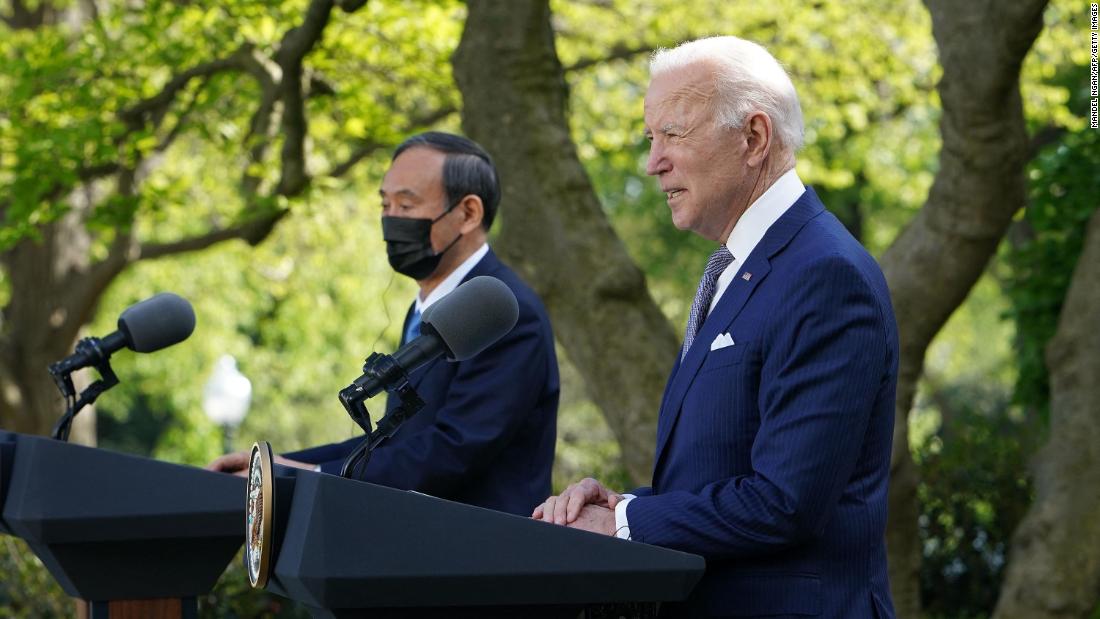
Friday saw President Joe Biden host a foreign leader for the first time since being elected, with Japan’s Prime Minister Yoshihide Suga coming to the White House to discuss Asian policies, primarily, concerns about China. Biden and Suga said they both aimed to tighten the relationship between the two countries during the daylong visit, and China was one of the biggest focuses of the day's meetings. "We committed to working together to take on the challenges from China and on issues like the East China Sea, the South China Sea, as well as North Korea, to ensure the future of a free and open Indo-Pacific," Biden said during remarks in the Rose Garden of the White House on Friday. Suga said he and Biden had "serious talks on China's influence over the peace and prosperity of the Indo-Pacific, and the world at large." "We agreed to oppose any attempts to change the status quo by force or coercion in the East and South China Seas and intimidation of others in the region," Suga said. "At the same time, we agreed on the necessity for each of us to engage in frank dialogue with China, and in so doing, to pursue stability of international relations, while upholding universal values." China sent 25 warplanes into Taiwan's air defense identification zone on Monday, which was the largest breach of that space since the island began regularly reporting such activity in September, Taiwan's Defense Ministry said. The fact that Suga was the first foreign leader to pay a visit to the White House showed the importance of the relationship between the two countries in promoting democracy in the region, Biden said earlier in the day. April 16 – CNN As China continues to flex its military and economic muscle in the region, the world is watching, and every move may have a global impact. If you are a journalist covering Asia and the political issues that are brewing in the region, then let us help with your coverage. Dr. Elizabeth Larus is an expert in the politics of China. She is available to speak to media, simply click on her icon to arrange an interview today.


Learning online honestly. Is cheating becoming part of the ‘new normal’ in education?
The emergence of COVID-19 has seen almost every segment of society and traditional institution in America have to pivot drastically to sustain and carry on, especially the educational system. And as students across America had to log on and learn remotely in the last year, occurrences of cheating are trending upwards. It’s a phenomenon that is getting a lot of attention and University of Mary Washington Psychology Professor David Rettinger, an expert on academic integrity, is getting a lot of calls from media about it. Roughly a year after college campuses were evacuated due to the COVID-19 pandemic, academic integrity remains an issue for students and professors alike. With professors struggling to curb rampant cheating during online exams and students wrestling with the often confusing and stressful realities of online learning, the college classroom has never been more tense… Teen Vogue has spoken with academics and students to learn more about what kind of cheating is happening during remote learning, and what they think should be done about it. University battles with help sites have peaked during the COVID-19 crisis, but the root of the problem has been years in the making. “I call it a game of whack-a-mole,” says David Rettinger, president emeritus of the International Center for Academic Integrity (ICAI) and director of academic integrity at the University of Mary Washington. New sites are constantly rising in popularity, he explains, making it harder for professors to prevent students from seeking answers online, especially now. March 04 – Teen Vogue And how even the most respected of institutions like West Point are handling these cases have also seen Rettinger’s expert perspective sought out to explain. “Expulsion flies in the face of everything we understand about the psychology of ethical and moral behavior,” Rettinger said. That’s partly because the section of the brain that makes you feel “icky” when you do something wrong isn’t fully developed until around age 23 to 26 — after college is over. Rettinger said rehabilitation seems in line with West Point’s mission — to instill the values of duty, honor and country. “That doesn't necessarily mean weeding people out who are imperfect, because we're all imperfect,” Rettinger said. “That means taking the best cadets we can and turning them into the best officers they can be, which means teaching them. And if there's no opportunity for redemption, what are we really teaching?” March 08 – NPR The concept of cheating and how schools are handling it is an emerging issue in America. And if you are a journalist looking to cover this subject, then let us help with your stories. Dr. David Rettinger is available to speak with media regarding this issue of cheating and academic integrity. Simply click on his icon now to arrange an interview today.

What’s next for Myanmar? Our expert can help if you are covering.
The troubled and fledgling democracy that existed in Myanmar has been overtaken by a military coup. The tiny South-Asian country is no stranger to military dictatorships and the uprisings occurring are the third time in recent history that the country has been in disarray. The reason for the interventions, as it’s being spun by the military, is to preserve the concepts of democracy with the promise of new elections on the horizon. “The Burmese military has long considered itself as the principle protector of the Myanmar nation, and they have treated internal critics and democratic reformers as enemies of the nation,” said Dr. Andrew Goss,” chair of the Department of History, Anthropology and Philosophy at Augusta University. “While the partial democratic reforms instigated by the military a decade ago gave many hope that Myanmar was changing, the election last year did not produce the results the military expected.” In his first televised address since the takeover, Min Aung Hlaing, a career military officer who is commander in chief of Myanmar's armed forces, repeated claims of fraud in November's election, and said the military will hold new elections and transfer power to the winner. He did not specify when those elections would take place, though the military had previously declared a year-long state of emergency. The military has imposed numerous restrictions on gatherings and activities in the country's largest cities of Yangon and Mandalay, effective Monday until further notice. Restrictions include an 8 p.m. to 4 a.m. curfew, as well as a ban on motorized processions and gatherings of more than five people. They are effective on a township-by-township basis. In his address, Min Aung Hlaing said an electoral commission did not properly investigate irregularities over voter lists or allow fair campaigning, according to the BBC, which notes that the commission did not find evidence to support claims of widespread fraud. He also promised that a reformed commission would oversee another election, and spoke of achieving a "true and disciplined democracy." But when those elections will happen and who will be able to seek office have yet to be explained. The situation has garnered international attention and condemnation – and if you are a journalist covering these ongoing developments in Myanmar, then let our experts help with your coverage. Dr. Andrew Goss is a renowned expert in Asian history and can speak to reporters covering the events taking place now. To arrange an interview with Dr. Goss, simply click on his name.
