
Experts Matter. Find Yours.
Connect for media, speaking, professional opportunities & more.

The killing of Iranian military leader Maj. Gen. Qassim Suleimani by an American ordered drone strike has put the world is on edge. As leaders call for calm, hundreds of thousands are protesting across the Middle East and war seems almost inevitable. As news broke of the attack late last week, media were scrambling to find experts to lend their perspective, opinions and expertise about what’s next. That’s where the University of Connecticut’s Director of Middle East Studies Jeremy Pressman was able to help. Pressman said it’s “too early to say” what kind of repercussions the killing of Iranian Maj. Gen. Qassim Suleimani will have in Iran, Iraq or in other countries like Saudi Arabia or Lebanon, in part because it’s not known yet how much planning went into the decision. “The Trump administration is an administration that, on foreign policy, has not demonstrated that it usually plans much in advance,” he said. “You want to have thought what ways Iran could respond, and how you are going to defend yourselves in those situations and respond to those situations.” January 03 – Middletown Press If you are a reporter covering this ongoing and progressing situation – the let our experts help with any of your questions or stories moving forward. Jeremy Pressman (MIT, PhD) studies international relations, the Arab-Israeli conflict, Middle East politics, and U.S. foreign policy. He is the Director of Middle East Studies at the University of Connecticut and is available to speak with media, simply click on his icon to arrange an interview today.



Myanmar Faces Allegations of Genocide
A United Nations report in September alleged Myanmar security forces had engaged in arson, rape and killings that forced more than 730,000 people to flee for Bangladesh. The countless Rohingya Muslims that remain in Myanmar face the threat of genocide. At a recent International Court of Justice hearing, Nobel Peace Prize laureate Aung San Suu Kyi defended her country's government against the allegations of genocide. Timothy Horner, a professor at Villanova's Center for Peace and Justice Education with a focus on genocide, said it is not new for leaders to defend their countries against charges of atrocity, even genocide. However, it is new to have that leader be a Nobel Prize winner. "Aung San Suu Kyi was given the award in 1999 while she was under house arrest in Myanmar," says Horner. "She was released in 2010 and rose to become the de facto leader of Myanmar since 2016. Her contention is that the West has been duped by 'fake news.' It is mystifying to many international observers to see her turn from an activist for democracy and open government to a nationalistic defender of the Myanmar military. But her willingness to represent Myanmar at the ICC [International Criminal Court] has only increased her already booming popularity within the country." "Since 2017, satellite imagery, video footage and numerous reports from the hundreds of thousands of Rohingya fleeing the country have catalogued a long list of structured ethnic violence, ethnic cleansing and perhaps even genocidal actions taken against this beleaguered ethnic Muslim group. These have allegedly been carried out by the Myanmar military in operations that have been widely supported not only by Myanmar civilians, but also by radical Buddhist monks who see in the Rohingya an existential threat to Myanmar's national security. "There have been deaths on both sides, but the dozens of deaths at the hands of the Rohingya are dwarfed by the tens of thousands of deaths that have come at the hands of the military and vigilante groups in the region. Nearly 750 thousand Rohingya have fled the country since 2017. Many are still stranded in camps on the border in Bangladesh. They have no recourse to the courts in Myanmar because they are not considered citizens by any government. The international community has seen this coming for a long time, but the presence of Suu Kyi has added an ironic twist to the proceeding." Horner says it's very hard to prove genocide—and that it will take time. "It will take years. Individual generals could be imprisoned. Architects as well. It is very hard to prove genocide. It's only been done a few times. Proving genocide is all about intention. You have to prove that the intention behind the actions is designed to destroy the group. Leaders have gotten better at hiding their tracks. But it's possible to work back from the action, but problematic. They have to eliminate every possible intention, leaving only genocide."

Turkey Launches Military Operation in Syria
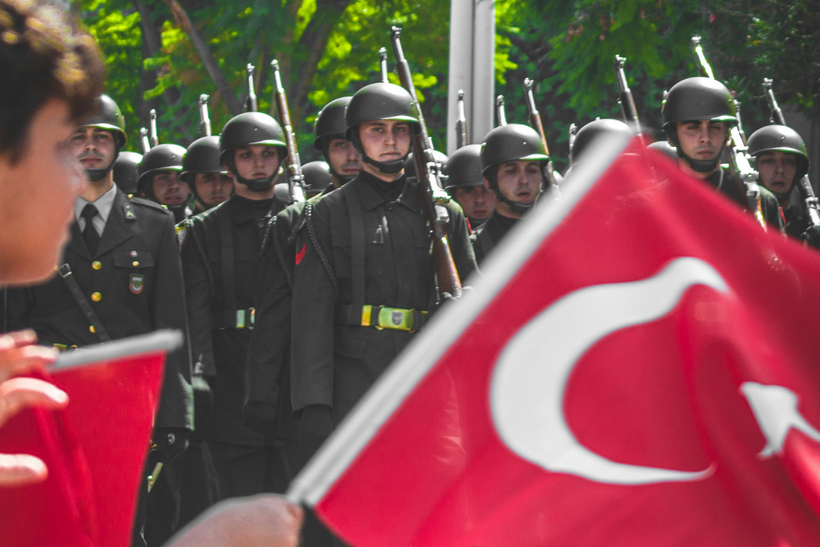
President Donald Trump made a surprising move by pulling troops back from the Syria-Turkey border. In response, Turkey launched a military operation in northern Syria on October 9. Samer Abboud, PhD, a professor of Global Interdisciplinary Studies, says he's interested in how the Turkish offensive against the Syrian Democratic Forces (SDF) will impact the Syrian regime's campaign to resume control over all of Syria. "The Turkish decision to intervene has been effectively sanctioned by the tripartite powers (Iran, Turkey and Russia) as was the Russian-led intervention into Idlib that began earlier this year," Dr. Abboud says. "The Turkish government and the Syrian regime have a common interest in eliminating the power of the SDF and the main Kurdish political party (the Democratic Union Party, or PYD) in Syria. This eliminates the threat of a Kurdish autonomous region along Turkey's borders as well as any threats to Syria's territorial integrity. Eliminating the power of the SDF and PYD is one of the few common goals of the Turkish and Syrian governments." Dr. Abboud is able to discuss issues concerning the Syrian geopolitical situation as it relates to the United States or Syria's neighbors.

The link between veterans coming home and racial violence in America. Our expert can explain.
There is a long history of white supremacist and white-power ideology developing out of the wars the United States has fought. In Bring the War Home: The White Power Movement and Paramilitary America (Harvard University Press, 2018), Kathleen Belew shows that, beginning in the 1970s, a small but committed number of Vietnam War veterans took the racist understanding of the Vietnamese and Asians more broadly that the U.S. military taught them and became instrumental in building the current white-power movement. These vets often did not initially know each other, but they eventually built a wide variety of organizations: the White Aryan Resistance, the latest, post-Civil Rights Era iteration of the Ku Klux Klan, various Christian Identity and white skinhead organizations, and the militia movement of the 1980s and 1990s. In his forthcoming book, Guarding the Empire: Soldier Strikebreakers on the Long Road to the Ludlow Massacre, Otterbein’s Dr. Anthony DeStefanis has found that the men who fought the Plains Indians in the late nineteenth century and who served in Cuba and the Philippines during the Spanish-American-Filipino War (1898-1902) came to understand Native Americans, Cubans, and Filipinos as formidable but racially inferior enemies. When these same men joined the National Guards in states across the country and were called out on strike duty during the late nineteenth and early twentieth century, they took what they learned on the Plains and overseas to create a racist rationale for breaking the labor strikes of a working class that was increasingly made up of southern and eastern European, Mexican, and Asian immigrants. Many of these same men also joined the Second Ku Klux Klan that emerged in the late 1910s and became a nationwide organization by expanding the targets of its hatred beyond African Americans to include Jews, Catholics, and immigrants. Racism is a many-headed hydra with multiple roots in experience at home and abroad. Some white southerners who were central in the project of creating and maintaining Jim Crow white supremacy were Confederate military veterans and it is clear that wars across the twentieth century – from Cuba and the Philippines to Vietnam – pushed some veterans into the white- power movement. Today, we know that white-power organizations concentrate on recruiting military veterans and we have seen a spike in support for these organizations among current members of the military. It’s no accident that some of these active troops and veterans served in the Iraq and Afghan Wars, where they faced a Muslim enemy with unfamiliar social and cultural practices, and who did not welcome the U.S. military presence with open arms. Clearly, we must reckon with what our wars overseas have brought back to the United States. If you are a reporter covering this topic – let the experts from Otterbein University help. Dr. Anthony DeStefanis is an associate professor of history at Otterbein University. He specializes in modern U.S. history with an emphasis on labor and the working class and immigration, race, and ethnicity. Dr. DeStefanis is available to speak with media regarding the history of racial violence in America – simply click on his icon to arrange an interview.

18 Years since 9/11 – Let an expert from Cedarville help with your coverage
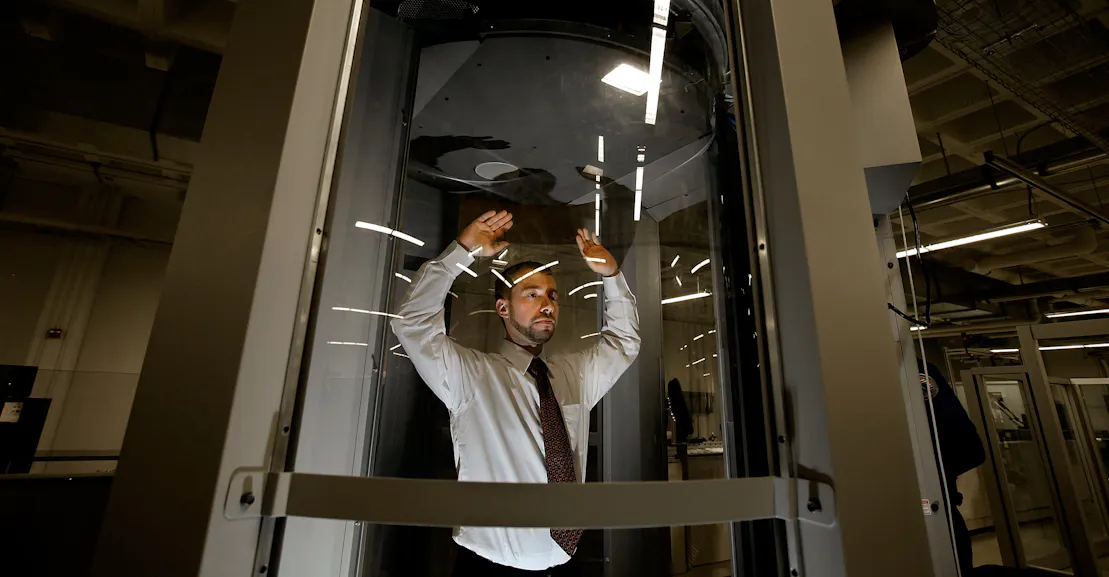
It’s been 18 years since the attacks of 9/11 and that moment still occupies how this country approaches security, the military and foreign affairs. Terrorism and attacks both home and abroad are still top of mind and Secretaries of Homeland Security Michael Chertoff, Janet Napolitano, and Jeh Johnson were recently called to testify in Washington about the state of America’s readiness against terror attacks in the near two decades since September 11, 2001. The changes to policy, legislation and how America approaches security have drastically altered how society functions either in plain sight (at airports) or behind the scenes (phone monitoring and cellular digital gathering). The ripple effects of 9/11 are still being felt and being debated by lawmakers at every level in Washington. “Americans are still dealing with the aftermath of the post-9/11 world in other ways. The Trump administration is currently negotiating with the Taliban to end the 18-year war in Afghanistan, or at least to end the U.S. and NATO military presence there. A growing number of Democrats have called for the dismantling of Immigration and Customs Enforcement, just one of many agencies housed within the colossal and dysfunctional Department of Homeland Security, which was created in 2003. Congress is also set to decide whether to permanently reauthorize the National Security Agency’s moribund call-records program that began shortly after the September 11 attacks.” September 06 – New Republic Are you a journalist covering domestic and international terrorism? Do you have questions about how ready, vulnerable or susceptible America is to another attack? What laws are needed and which policies need to be sun-setted now that so much time has passed. Then that’s where our experts can help. Dr. Glen Duerr's research interests include nationalism and secessionism, comparative politics, and international relations theory. Glen is available to speak to media regarding the state of America’s homeland security – simply click on his icon to arrange an interview.


Georgia Southern University is making it easier for active-duty military or veterans to find out what courses they can receive credit for based on their previous military experience. The university’s new widget, available at GeorgiaSouthern.edu/military-veterans, asks for information like the branch of military served in, highest level of experience and job title to determine what Georgia Southern courses match their experience. The tool is available to prospective or current students, and it provides an immediate response with courses for which someone may receive credit. Military Education and Outreach Coordinator retired Sgt. Maj. Bill Gammon works with current and prospective students to create a plan based on their choice of major and determine which courses work best for their path. Credit will be awarded after an individual evaluation is completed. “The biggest benefit is that it doesn’t require them to take classes in things that they’re already well-experienced in,” Gammon said. “It helps them expedite their way through their college experience here to their final goal.” Georgia Southern works with the American Council on Education to determine which military training or job equals a college course. Gammon noted experience and credits from the Air Force are slightly different because airmen take college courses through the Community College of the Air Force (CCAF), but with the university’s GEM Program, they can complete their CCAF degrees. Are you a reporter interested in covering how schools like Georgia Southern University are working with the military? Then let our experts help. Sgt. Maj. Bill Gammon is available to speak to the media regarding this program – simply contact Melanie Simón at 912.344.2904 to arrange an interview.


The Gun Control Debate is at a Stalemate. Can Smarter Weapons Help to Solve it?
The gun control debate is at a stalemate. America seems incapable of finding common ground on background checks, waiting periods, weapons registries and restrictions or bans on select weapons. Shooting after shooting has resulted in decades of debate but little substantive change. But Professor Selmer Bringsjord from Rensselaer Polytechnic Institute, who recently weighed in on the issue, presented a concept that could turn the entire topic on its head by using artificial intelligence. Bringsjord accepts that America won’t get rid of its guns – so why not just make our guns smarter? Ethically AI-enabled weapons can put American politicians back to work by shifting the debate from the weapons we should ban, to the targets we will accept. Do we allow guns to kill school children, shoppers, concert-goers? The technology of ethical AI changes the conversation. His idea was just recently published in the Times Union: “Yet there is a solution, a technological alternative to the fruitless shouting match between politicians: namely, AI — of an ethical sort. Guns that are at once intelligent and ethically correct can put an end to the mass-shooting carnage. Consider the rifle apparently used by the human killer in the El Paso Walmart shooting. But now suppose that time is turned back to before his shots were fired on Aug. 3, and that his rifle, radically unlike the stupid one that killed, is both intelligent and ethical. This alternate-future rifle would know that it's approaching the Walmart by car and would accordingly know that it has no business being used anytime soon. Move forward in time a bit; the rifle is now in the hands of the aspiring, ear-muffed killer outside his car; but his weapon has fully disengaged itself and is locked into a mode of utter uselessness with the finality of a sealed bank vault. On the other hand, the guns in the hands of law enforcement officers who have dashed on scene know in whose hands they rest, and accordingly know that if they are trained on the would-be killer, they have every right to work well, if this criminal reveals some new threat. Notice: If people who don't actually pose a threat sufficient to warrant being shot by police can't be shot by smart, ethical guns, a fact that could lead to the welcome evaporation of a different but also vitriolic political shouting match.” -Times Union, August 16, 2019 Could AI be the answer to America’s gun problem? It’s truly a new perspective on an old issue. If you are a reporter covering this topic, let our experts help with your story. Dr. Selmer Bringsjord is the Chair of the Department of Cognitive Science expert in logic and philosophy, specializing in AI and reasoning. Dr. Bringsjord regularly speaks with media about AI and is available to speak about the concept of intelligent, ethical guns. Simply click on his icon to arrange an interview.



Racial segregation and National Parks – UMW experts are lending their expertise to the project
It’s a time of American history that is still raw and painful – segregation. It is, however, even more important to remember and preserve these moments so the country can move forward and learn from its past. It’s a project that University of Mary’s Washington’s Erin Devlin has taken on in collaboration with federal government. “The National Park Service has installed a wayside exhibit outside the Fredericksburg Battlefield Visitor Center on the history of segregation at Fredericksburg and Spotsylvania National Military Park. The exhibit highlights a former garage that in the 1930s and 1940s housed segregated restrooms for African American visitors. One of those restrooms is still in use and retains the original tile and fixtures. The larger building is now the park’s gift shop and bookstore. The new exhibit was a collaborative effort between the National Park Service and the University of Mary Washington to highlight surviving historic resources related to the local and national story of racial segregation at national parks. Erin Devlin, assistant professor of history and American studies at UMW, is working with the NPS to develop a historic resource study that will examine the practice of racial segregation in Virginia’s national parks during the first half of the 20th century.” August 06 – Fredericksburg.com Are you a journalist covering American history, or the place racial segregation has played in our country’s history? If so – let our experts assist with your stories. Erin Devlin's research focuses on race, public memory, and social justice, and she offers courses in both history and American studies. She is currently working on a historic resource study with the National Park Service focused on segregation and African-American visitation in Virginia’s national parks. Dr. Devlin is available to speak with media regarding this topic – simply click on her icon to arrange an interview.



Using Less Power at the Same Node
Brian Bailey’s recent article on semiengineering.com examines a number of techniques to make improvements. Circuit Seed designs with their new Complementary Current Injection Field Effect Transistor platform provides additional techniques for low power analog signal processing that generates less heat, less complexity and smaller size - reducing the cost at the same node. In addition, the designs are less sensitive to process variation and temperature beyond military specifications without correction circuitry. Circuit Seed designs are a 100% digital CMOS process and require no changes to manufacturing. For more information, please contact: Lesley Gent Director Client Relations, InventionShare™ lgent@InventionShare.com (613) 225-7236, Ext 131 Or visit our website at www.CircuitSeed.com


The Increasing Tension Between the U.S. and Iran
Two oil tankers were attacked in the Gulf of Oman and an unmanned drone was shot down in the last two weeks, escalating tensions between the United States and Iran. After a last-minute bailout of a retaliatory airstrike, President Donald Trump announced additional sanctions against Iran on June 24. Lowell Gustafson, PhD, a political science professor, taught American foreign policy and a course titled "Theories of War and Peace" for several years. He says, with the talk of airstrikes and President Trump claiming there will be "obliteration like you've never seen before," Congress needs to step in. "Congress should immediately hold hearings and vote on exactly what conditions would need to be met before such an order was given. Before Congress makes an initial authorization to use force against Iran, the military should not follow any order to do so by the President. Our founders gave Congress the power to declare war since a single executive, whether monarch or president, should not have the authority to make such a weighty decision unilaterally." Dr. Gustafson noted that so far, sanctions have proven counterproductive and a "unilateral presidential decision to use force undermines American constitutional democracy." He said the president's failure to think systematically about this issue leaves us moving from tactic to tactic.
