Experts Matter. Find Yours.
Connect for media, speaking, professional opportunities & more.

In less than a month, President Trump is scheduled to meet with North Korea’s Kim Jong Un in Singapore. Negotiations leading to the summit have led to the release of Americans from N. Korean prisons and reports of the razing of a nuclear facility. But the world has also seen the summit threatened by military drills conducted by South Korea and the U.S. Is such a meeting between two men who’ve engaged in name-calling and threats of nuclear war even possible? If so, what should we expect? Baylor's Peter Campbell, Ph.D., an expert on strategy, international relations and security, says: “I think Kim is willing to talk because he is actually in a very weak position because of the strained relations between his regime and China. It might be the case that the best that Kim can hope for from this crisis is to portray himself as the champion of peace between the two Koreas. Though, when speculating in this way, we should always recall that Kim is unpredictable, as his recent shift in behavior, from warlike rhetoric to peacemaker and back again, demonstrates. Now that President Trump has accepted the offer of talks, Kim appears willing to use their cancellation as leverage. However, this is a dangerous game. President Trump would likely be incensed by such an embarrassment and could then argue that diplomatic efforts have failed, leading to another and more dangerous stage in the crisis. “I think that we arrived at this juncture through a classic strategy of brinksmanship. The Trump administration showed a willingness to escalate the crisis that Kim may not have anticipated. Kennedy during the Cuban Missile Crisis and Eisenhower during the Berlin Crisis showed a similar willingness. However, the key to brinksmanship, as both Kennedy and Eisenhower understood, is giving your opponent a face-saving way to get out of the crisis. Allowing Kim to portray himself as the champion of peace may be the price the U.S. must pay to bring an end to this crisis. For this to work the Trump administration must not claim, in the immediate aftermath of the crisis, that they defeated the Kim regime. President George H. W. Bush demonstrated such restraint when he refused to ‘dance on the Berlin Wall’ at the end of the Cold War and declare the U.S. the winner of that struggle. Such humility might be extremely difficult for Trump to muster, but I see it as likely essential to bring this crisis to an end.” Campbell is available to speak about U.S. relations with North Korea. Source:


Gun Violence Hits Close to Home
On March 9, 2018, three mental health professionals lost their lives from gun violence by a former resident under treatment at Pathway Home. One of the victims, Executive Director of the Pathway Home program at the Veterans Home of California, Christine Loeber, was a master’s prepared Social Worker. Veterans Home of California and the Pathway Home program, has been a partner with the USC Suzanne Dworak-Peck School of Social Work VAC since 2012 and have hosted over 16 of our MSW students in field practicum. NASW-CA paid tribute to the incredible work Christine Loeber provided to the Social Work profession and her commitment to our Veteran and Military members. In continued support of our partnership with Veterans Home of California, we reached out in support and condolences of the tragic loss experienced that day. Source:

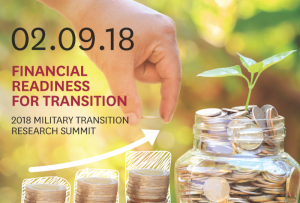
Were you prepared for the different financial needs as a civilian?
The USC Center for Innovation and Research on Veterans & Military Families is hosting the 2018 Military Transition Research Summit: Financial Readiness for Transition on Friday, Feb. 9, 2018. A series of panel discussions will feature personal transition experience from veterans and expert perspectives on the financial challenges facing service members and veterans. Attendees will also learn about innovations in financial wellness. Featured panelists from Prudential, USO, and the U.S. departments of Defense, Veterans Affairs and Labor, among others. From our experts: "Financial readiness along with one's military identity possibly represent the two most important elements of a military transition for the service member." -- Carl Castro, associate professor and director, CIR "Financial preparation is essential to finding success after separation from the military. From putting down a deposit on an apartment or a home loan to covering bills while finding a job, transition can be a financially stressful period. Through financial preparedness and understanding the expenses associated with transition from the military, our veterans can alleviate a significant source of stress." -- Sara Kintzle, research associate professor Source:

What will Donald Trump’s National Defense Strategy mean for Americans and its citizens?
The Department of Defense recently published an unclassified synopsis of the Trump administration’s first National Defense Strategy (NDS). The document, is missing the usual and sometimes expected Trump-like rhetoric of ‘America First’ and instead focuses on a balanced and cooperative approach among nations. At Augusta University, our experts have been examining the strategy, they have found that within the NDS the following stood out: • More money will be spent on military, private military contracting firms and cyber firms. This could benefit the local economy but does show that we’re worried. • Our military is growing more high-tech with artificial intelligence and robotics. The future of warfare could start to resemble something out of Hollywood. • For the last two decades, we were concerned with small-scale wars, counter-insurgency and counter-terrorism. Now, we are preparing our military for a Great Power War. In other words, we are preparing for a WWII type engagement, versus Iraq or Afghanistan. • Trump’s policy is very assertive whereas Obama’s policy was more conciliatory and forgiving in nature. • We are clearly focused on reasserting ourselves as the superpower. But what will this mean for every-day Americans? Will it be a boost to our economy as we invest in our military or will it mean other programs suffer as a result? Are we on the verge of another cold war? There are a lot of questions to answer – and that’s where our experts can help. Dr. Craig Albert is an expert on American politics and political philosophy. He was recently appointed director of Augusta University’s new Masters of Arts in Intelligence and Security Studies. Dr. Albert has experience with all forms of national and local news organizations and is available to speak to media regarding Donald Trump’s National Defense Strategy. Simply click on his icon to arrange an interview. Source:


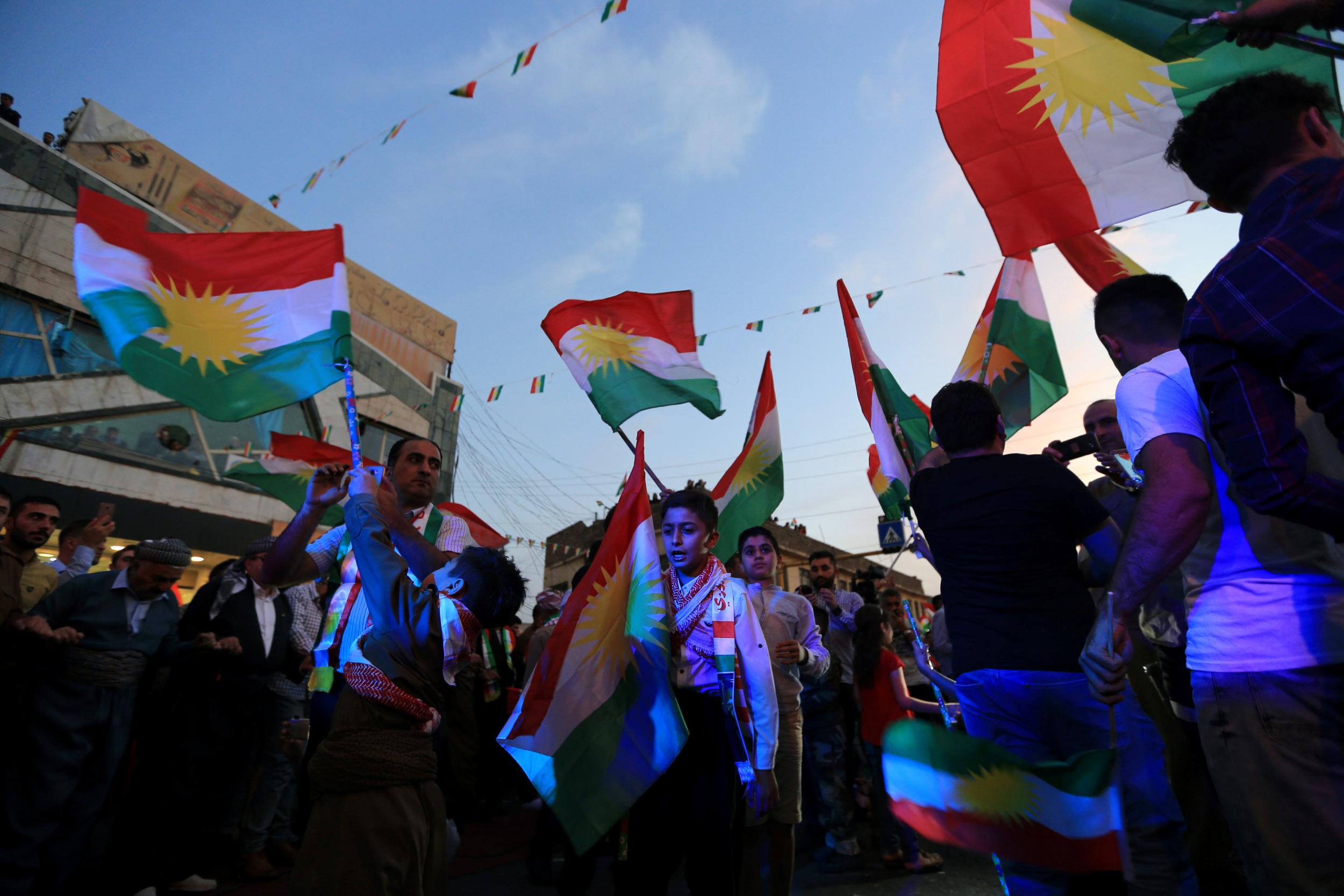
Threats loom in the wake of historic Kurdish vote
Iraq’s Prime Minister Haider al-Abadi has demanded Kurdish authorities negate the results of Monday’s historic referendum. The move is the latest attempt by Iraqi officials to prevent Kurdish independence. Al-Abadi, who earlier this week called the Kurdish vote “unconstitional,” said his government was unwilling to discuss the results of Monday’s referendum with members of the Kurdistan Regional Government. Dr. Craig Albert, associate professor of political science at Augusta University, said a failure to recognize the vote could potentially be catastrophic for the region. “A worst-case scenario could see the beginnings of an Iraqi civil war, or a push by Turkish forces into the country,” Albert said. Turkish President Recep Tayyip Erdoğan has touted economic sanctions to protest the Kurdish vote. Albert said the use of military measures by the Turkish government against Iraqi Kurds was likely. Click “Contact” to schedule an interview with Dr. Craig Albert, or call 1-(706) 504-2724. Source:

Kurdish independence referendum could lead to chaos in region, expert says
A historic independence referendum in Iraqi Kurdistan could lead to civil unrest or war if successful, cautions Dr. Craig Albert, associate professor of Political Science at Augusta University. The Iraqi Parliament has already ordered troops to gather in the region under the guise of “protecting citizens. Turkish President Recep Tayyip Erdoğan has touted economic sanctions to protest the vote, and will likely use military measures. If Kurdistan overwhelmingly votes for independence—an event Albert says is likely—a worst-case scenario could see the beginnings of an Iraqi civil war or a Turkish push into Iraq to put down Iraqi Kurds. If the vote is not recognized, Albert said, the region will likely see an increase in Kurdish acts of terror or guerilla warfare. Click "Contact" to schedule an interview with Dr. Craig Albert or call 1-(706) 504-2724. Source:

Relief effort in Houston a complicated one
Record amounts of rain fall will bring catastrophic flooding to the Houston area. How to manage such a crisis brings to mind any number of logisical nightmares and heart-breaking scenarios. Goizueta’s Ken Keen is an expert in crisis response. Keen was commander of the Joint Task Force in Haiti when the earthquake hit six years ago. He was charged to lead the largest U.S. military based response to a foreign disaster commanding more than 22,000 personnel, 19 ships and 57 aircraft. Keen spent 39 years in the U.S. Army with positions including Military Deputy Commander of the U.S. Southern Command, Commander, Joint Task Force-Haiti and Commander positions around the world. He can speak to emergency preparedness and the steps following a natural disaster. Source:


North Korea Rejects South Korea's Call For Talks: How High Will Tensions Escalate?
North Korea has been in the news a lot lately. Saber rattling, political posturing and missile testing by the hermit state have led to escalating tensions between the United States, South Korea and even neighbouring China. Earlier this month, Pyongyang claimed it successfully tested an ICBM, for the first time, of the type that experts believe could reach Alaska. But as the situation looked to boil over, tensions may have had a chance at simmering. Tongilgak - a North Korean building in the Panmunjom compound in the demilitarized zone between the two countries, which has been used for previous negotiations, was suggested by the South Koreans as a destination for talks between North and South Korea aiming to stop 'all hostile activities that raise military tension.' By early Friday morning, all intelligence indicated – that offer was rejected. The two countries that have been bitter enemies since 1950 remain opposed and unwilling to compromise. There’s a lot at stake – safety, the threat of global war and between the two countries, some families are still divided and incapable of meeting after more than half a century. So, is there a chance the two sides can find a diplomatic solution? Is this rejection just another tactic by North Korean leader Kim Jong Un to leverage more from the west in order to speak? Does North Korea have the ability to launch a missile that may reach American soil? There’s a lot more to this new alignment than a simple agreement and that’s where Missouri State University experts can help. Dr. Dennis Hickey is a global studies expert specializing in Asian politics and American foreign policy. He is a go-to source when media agencies require clear perspective and answers regarding this complex situation and region. Dr. Hickey is available for interviews. Click on his icon to contact him. Source:


Since Jan. 20, 2017, America has seen a new style of leadership and authority under President Donald Trump. Trade agreements that were already in place are now under renegotiation, and even agreements like the Trans Pacific Partnership that were expected to be scrutinized by Congress have all but been abandoned. On the international stage, even long held reservations and hesitations to comment on sensitive topics like Taiwan and the ‘One China’ policy seem to be off the table when brought up in public conversation. So, what will this mean for the short- and long- term relationships between the world’s two most powerful countries? Can we expect conflict, military posturing, trade wars and currency battles? Or will the two sides have to simply ‘re-learn’ how to negotiate and cooperate in the new Trump era? But a new person in charge isn’t just an American issue. China too may see a change in leadership at its highest levels this fall. That is a factor that has many watching and wondering about that country’s future direction. For America’s economy, and the global economy – there is much at stake and many world leaders are watching. A recent discussion at the Brookings Institution explored the expectations for China’s leadership change and the prospects for U.S.-China relations in the interim. Dr. Dennis Hickey is a global studies expert specializing in Asian politics and American foreign policy at Missouri State University. His extensive experience and perspective have made him one of the leading opinions on this topic. Simply click of Dr. Hickey’s icon to arrange an interview. Source: