
Experts Matter. Find Yours.
Connect for media, speaking, professional opportunities & more.
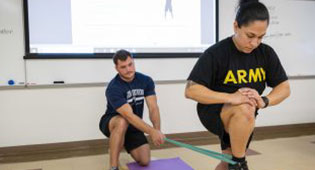
What began in 2016 as a partnership between Georgia Southern University and the Third Infantry Division at Fort Stewart has become a nationally recognized educational and research program with $5.68 million in federal funding to improve soldier health and performance to ensure force readiness. Now called the Soldier Performance and Readiness (SPAR) program, this Georgia Southern project aligns with the U.S. Army’s Holistic Health and Fitness (H2F) initiative and represents a multifaceted partnership with the Army to provide onsite training that decreases musculoskeletal injuries; deliver an online certificate program in tactical fitness for college credit; collaborate with the Army’s Research Institute for Environmental Medicine (USARIEM); and develop programs to enhance and assess cognitive performance in tactical situations. The initial partnership program to prevent musculoskeletal injuries was delivered at first to small cohorts to implement new practices in the physical training of their squads and platoons in a train-the-trainer model. Results were so encouraging, the program expanded at Fort Stewart and to training brigades at Fort Benning last year with the assistance of $1.5 million in Department of Defense funding. Studies show significant preparedness and financial benefits from reducing musculoskeletal injuries to soldiers during drilling and training exercises. In April 2020, officials determined that 58,000 soldiers (the equivalent of 13 Brigade Combat Teams) had injuries that classified them as non-deployable. In 2019, more than half of soldiers experienced a new injury, resulting in 10 million limited-duty days. Musculoskeletal injuries account for nearly 25% of all military injuries and approximately $557 million in acute patient care. Most of these injuries were associated with fitness training-related activities Georgia Southern’s online Tactical Athlete Certificate program was first offered in 2020 and is available exclusively to soldiers on active duty, in the National Guard or reserve. Through a series of three courses, the program teaches foundational exercise and biomechanical concepts, strength and conditioning principles, and rehabilitation. The coursework parallels the Army’s Master Fitness Trainer curriculum, with additional rehabilitation principles, and teaches soldiers how to develop evidence-based and well-rounded physical training programs while minimizing risk of musculoskeletal injury. Certificate completion provides soldiers with nine college credits with Georgia Southern, potential promotion opportunities in the Army, and preparation for the National Strength and Conditioning Association’s TSAC-F exam. “By sharing knowledge, expertise and experience between our faculty and doctoral students with soldiers, drill instructors, and brigade combat fitness teams to create aligned programs that improve tactical performance and force readiness, the SPAR program has become a national model of public-impact research,” said Christopher Curtis, Ph.D., Georgia Southern’s vice provost for research. “We are excited about the future of this partnership. We relish the significant support and encouragement we receive from the Army commands at Fort Stewart, Fort Benning, USARIEM, and the Training and Doctrine command (TRADOC), and we are grateful to Congressman Carter and his fellow members of the Georgia Congressional delegation who have advocated for the value of the partnership on our behalf.” The progress and continued success of this program would not have been possible without several years of support from the Georgia Congressional Delegation and especially the leadership and support of Congressman Buddy Carter, who represents Fort Stewart and the Armstrong Campus of Georgia Southern in Savannah. “Providing for our nation’s defense is the number one responsibility of the federal government. Innovation and research, which is what these dollars will fund at Georgia Southern, will improve working conditions for our brave servicemen and women by providing them with top-of-the-line training and resources,” said Rep. Buddy Carter (R-GA). “I am a proud supporter of Georgia’s military community and am happy that the federal government is investing in these necessary programs.” SPAR programming allocated in the FY23 federal budget will enable Georgia Southern to: Develop protocols and expand delivery of the onsite musculoskeletal injury prevention training and the Tactical Athlete Certificate to commands at Fort Gordon in Augusta and to the Georgia National Guard. Develop and deploy similar online certificate programs for soldiers in Cognitive Performance and Nutrition to further support the Army’s H2F program. Host a national conference on “Charting Future Readiness Needs” in partnership with the U.S. Army Training and Doctrine Command and U.S. Army Forces Command that will bring together other research universities who also work in partnership with the Army. Work with the Army commands to develop specific academic degree programs to meet the specific H2F professional workforce needs at the brigade level. Army officials estimate approximately 3,000 personnel will need graduate degrees or advanced certifications in the next six years. Develop a Tactical Performance Research Lab in Savannah to support the fundamental research and innovation activities of Georgia Southern’s Tactical Performance Group that supports the Army’s H2F program as well as translational research to apply the knowledge and practices broadly to law enforcement and other first responders. Looking to know more - then let us help. Christopher Curtis is available to speak to media - for more information simply click on his icon here or reach out to Georgia Southern Director of Communications Jennifer Wise at jwise@georgiasouthern.edu to arrange an interview today.


Researchers in Georgia Southern University’s Tactical Athlete Readiness and Preparedness Program (TARP) have teamed up with the Georgia Public Safety Training Center (GPSTC) to ensure the readiness and resilience of Georgia’s public safety officials. Members of the TARP in the Waters College of Health Professions have worked to revise the fitness training standards for Georgia’s police cadets with a focus on functional fitness, mental resilience and injury prevention. In addition, the program has formed a partnership with the GPSTC, Georgia’s premier training facility for all state and local public safety related units to include police, fire and communication. Bridget Melton, Ed.D., professor of exercise science and lead faculty member of TARP, said that due to high stress and health concerns, some police and public safety officials are at high risk for cardiovascular disease or other fatal illnesses. “Our program provides state academies with fitness exercises that increase overall cadet fitness and focuses on injury prevention,” said Melton. “Our program focuses on occupational focused fitness to hopefully encourage a more positive view of exercise that will stick with cadets even after their academy training is done.” Richard Cleveland, Ed.D., associate professor of leadership, technology and human development, heads resilience and mental health for the TARP team, and has created a Mindfulness-Based Tactical Instruction curriculum for the state of Georgia. “Tactical athletes need training and support for resilience and mental health, but too often it’s only presented as a one-time workshop or seminar,” said Cleveland. “Our program dovetails into the state’s resilience curriculum for officers, but provides ‘bite-sized’ mindfulness practices within the fitness program. This gives cadets repeated practice at using mindfulness and embeds it within their context using police language, actions and behaviors.” The partnership was made possible due to a subgrant GPSTC was awarded from the Criminal Justice Coordinating Council to fund TARP at their facilities due to the program’s comprehensive view of officer wellness, which is aimed at improving de-escalation skills among recruits through mental and physical training. “We are pleased to form a partnership with the GPSTC and the Tactical Athlete Readiness and Preparedness Program,” stated Chris Wigginton, director of GPSTC. “This partnership will allow public safety professionals to be better prepared in their personal and professional lives. Some of the many benefits will be a reduction in injuries, being better prepared to use needed skills in rapidly evolving situations, and the resiliency and mental health component. As word has gotten out of the possibility of the GPSTC implementing this program we have already been contacted by several states regarding the initiative.” Additionally, graduate students in the Department of Health Sciences and Kinesiology participate in the program and gain firsthand and practical experience by performing training and assessment for state instructors. TARP is part of Georgia Southern’s Tactical Athlete Initiative, which aims to reduce the number of injuries and increase readiness and preparedness of tactical athletes. The interdisciplinary team consists of the following Georgia Southern faculty members: • Bridget Melton, Ed.D., Professor • Richard Cleveland, Ed.D., Associate Professor • Greg Grosicki, Ph.D., Assistant Professor • Haresh Rochani, DrPH, Associate Professor • Mary Beth Yarbrough, Lecturer • Sarah Davis, Lecturer TARP is just one example of the work coming from Georgia Southern University’s Tactical Athlete Initiative. The Tactical Athlete Initiative is a multi-discipline collaboration providing research, training and support for military, police, fire and EMS workers. The Tactical Athlete Initiative has partnered with multiple agencies including the Statesboro Police Department, Statesboro Fire Department, Bulloch County Sheriff’s Office, Forsyth County Sheriff’s Office, Waycross Fire Department, Georgia Public Safety Training Centers, Federal Law Enforcement Training Centers and the United States Army. If you're a reporter looking to know more about this partnership at Georgia Southern University - the let us help. Richard Cleveland, Ph.D., is an assistant professor in the Department of Leadership, Technology & Human Development at Georgia Southern - simply click on his icon to get in touch or contact Georgia Southern Director of Communications Jennifer Wise at jwise@georgiasouthern.edu to arrange an interview today.


ChristianaCare also ranks as No. 2 overall health care employer nationwide for diversity and inclusion, No. 40 overall For the second consecutive year, Forbes magazine has ranked ChristianaCare as one of the best employers for diversity and inclusion in the United States in its list of Best Employers for Diversity 2022. ChristianaCare ranked as the No. 2 employer for diversity and inclusion in the health care industry and the No. 40 employer in the nation overall. “Through purposeful actions, we commit to valuing diversity and fostering an environment for inclusion as we support all caregivers and serve all our neighbors with love and excellence, in our actions and in our words,” said Neil Jasani, M.D., MBA, FACEP, chief people officer at ChristianaCare. “We know when we support our caregivers and they can be their authentic selves, they will be exceptional today and even better tomorrow.” ChristianaCare, Delaware’s largest private employer, has committed to being an anti-racism organization and works to ensure that commitment is reflected through the organization’s policies, programs, and practices. (Read more about ChristianaCare’s anti-racism commitment here.) All employees of ChristianaCare are referred to as caregivers, whether they provide direct patient care or support that care indirectly. ChristianaCare’s inclusion efforts include 10 employee resource groups, which connect caregivers who have a common interest or bond with one another. Formed by employees across all demographics – such as disability, gender, race, military status, national origin, sexual orientation, etc. – these voluntary grassroots groups work to improve inclusion and diversity at ChristianaCare. More than 1,100 caregivers at ChristianaCare participate in employee resource groups. ChristianaCare also has developed LeadershipDNA, a leadership development program that is specifically targeted to underrepresented, diverse populations early in their leadership journey within the organization and is designed to foster professional and career development. ChristianaCare President and CEO Janice E. Nevin, M.D., MPH, has signed the CEO Act!on for Diversity & Inclusion Pledge, which outlines a specific set of actions the signatory CEOs will take to cultivate a trusting environment where all ideas are welcomed, and employees feel comfortable and empowered to have discussions about diversity and inclusion. More than 1,600 of ChristianaCare’s caregivers have also signed the pledge. “This recognition shows that we are making progress in our commitment to invest in our caregivers and to make all who join us feel included,” said Pamela Ridgeway, chief diversity officer and vice president of talent at ChristianaCare. “Taking care of people is what we do, and our ability to help people achieve optimal health is tied directly to how successful we are at embracing diversity and creating an inclusive environment for our caregivers.” Forbes’ Best Employers for Diversity were identified from an independent survey of more than 60,000 U.S. employees working for companies employing at least 1,000 people in their U.S. operations. Respondents were asked to rate their organizations on criteria such as age, disability, ethnicity, gender and sexual orientation equality, as well as general diversity. More than 10,000 companies were reviewed and approximately 2,000 were given a diversity score that is derived from employee surveys and publicly available information. The final list ranks the 500 employers that not only received the most recommendations, but also have the most diverse boards and executive leadership, and the most proactive diversity and inclusion initiatives.


Aston University psychologists to take part in major study to improve concussion prognosis
Researchers from the Aston Institute of Heath and Neurodevelopment, in the College of Health and Life Sciences at Aston University, are taking part in a major multiple partner study to identify new ways to accurately predict whether patients will develop long-term complications as a consequence of concussion. Experts from the University of Birmingham and the Defence Medical Rehabilitation Centre, in collaboration with Defence Medical Services, are to lead the UK consortium carrying out the study. With year one funded by the Ministry of Defence (£2m) and projected to run over eight years, the multi-faceted study will include a trial involving 400 civilians and 400 military personnel aged over 18 with a new diagnosis of concussion (also known as a mild traumatic brain injury or mTBI) which has resulted in them needing hospital treatment or rehabilitation. At specific time intervals over two years, the participants will take part in nine different areas of research using a variety of medical techniques and assessments to establish if these can be used routinely by medics as ‘biomarkers’ to indicate prognosis and long term impact of concussion. Medical techniques and assessments being trialled include brain imaging and function, analysis of blood and saliva samples, and headache measures, as well as mental health, vision, balance, and cognitive performance. mTBI is common and has been declared a major global public health problem, with 1.4 million hospital visits due to head injury annually in England and Wales - 85% of which are classified as mTBI. It is also estimated that up to 9.5% of UK military personnel with a combat role are diagnosed with mTBI annually. The research will involve 20 University of Birmingham experts working across disciplines, including neurology, psychology, sports medicine, mathematics and academics within the University’s Centre for Human Brain Health, and will be coordinated by Birmingham Clinical Trials Unit. It will also be driven by experts at the Defence Medical Rehabilitation Centre Stanford Hall; Imperial College London; University of Westminster; University of Nottingham; Royal Centre for Defence Medicine; and University Hospitals Coventry & Warwickshire. Dr Caroline Witton, reader in psychology and scientific lead for magnetoencephalography (MEG) at the Aston Institute for Health and Neurodevelopment (IHN), Aston University said: "I am very excited to be part of this landmark study of traumatic brain injury. At IHN we are focussed on improving lives through brain imaging and this work has the potential to help the thousands of people each year who suffer long term disability following a concussion." Dr Jan Novak, lecturer in psychology and MRI lead at Aston University said: "It is outstanding that this prestigious work is being conducted at Aston University’s Institute of Health and Neurodevelopment. We will provide our expertise in brain imaging, prediction of outcomes in patient groups, and credentials in mTBI research to enrich the study. It is hoped that it will build upon existing collaborations with other local institutions and government bodies such as the Ministry of Defence." Alex Sinclair, professor of Neurology at the University of Birmingham and chief investigator of the mTBI-Predict project explained: “Although classified as mild, and many recover, the consequences of concussion can be profound with many patients suffering long-term disability due to persistent headaches, fatigue, imbalance, memory disturbance, and poor mental health including post-traumatic stress disorder, while it can have a significant impact on the economy through loss of working hours and demand on the health system. Identifying those patients most at risk of these disabling consequences is not currently possible. There is therefore a pressing need to develop accurate, reproducible biomarkers of mTBI that are practical for use in a clinical setting and can predict long-term complications. "Our programme of research will deliver a step change in the care of patients with mTBI, enabling a personalised medicine approach to target early intervention for those most in need but also identifying those with a good prognosis who can return rapidly to activities of daily living.” Co-Chief Investigator, Air Vice-Marshall Rich Withnall QHS Director of Defence Healthcare, UK Ministry of Defence said: “I am delighted that the Defence Medical Services, including the Defence Medical Rehabilitation Centre at Stanford Hall, will be working hand-in-glove with class-leading civilian colleagues and the National Rehabilitation Centre Programme. I fully support this ground-breaking research which I am confident will lead to significant clinical innovation to benefit military and civilian patients and have a translational positive impact for sporting activities from grass-roots to elite levels.” Chief Executive of Headway, Peter McCabe said: “We know that even a seemingly minor head injury can have a major impact on a person’s life – and often the lives of those closest to them. This is particularly the case if the brain injury goes undiagnosed or its effects are mistaken for other conditions. The frustration of not having an accurate diagnosis or receiving the right support can be compounded by the lack of a clear recovery pathway or timeline. We therefore welcome this study in the hope that it can advance our understanding of concussion and mTBI.”


Georgia Southern now one of nation’s Top Ten Military Friendly® Schools
Georgia Southern University has earned a 2022-2023 Top Ten Military Friendly® distinction by Viqtory. Georgia Southern ranked at number nine on the Top Ten list. Being named a Military Friendly School is nothing new for Georgia Southern University, having earned a gold-level distinction for the past 10 years. “We are extremely proud to be recognized as being among the 10 most military friendly universities in the country, especially after learning that more than 1,800 schools participated in the survey,” said Georgia Southern University President Kyle Marrero. “With our connections to Fort Stewart, and the fact that about 10% of our student body is military-connected, we have a responsibility to ensure our people and our processes are attuned to the needs of those who are serving selflessly, who are retired or who are related to a veteran or active-duty service member. My thanks to all our faculty and staff who have worked hard to earn this recognition.” Institutions earning the Military Friendly® School designation were evaluated using both public data sources and responses from a proprietary survey. More than 1,800 schools participated in the 2022-2023 survey with 665 earning special awards for going above the standard. Georgia Southern University has a strong and proud history of supporting veterans, current-serving military personnel and their families, and has accumulated many awards for its dedication to the military community. Information and resources are available on the Military and Veteran Services webpage. “We are honored to receive such a significant recognition as a Top Ten Military Friendly® institution,” said retired Col. George Fredrick, Ed.D., director of Military and Veteran Services. “Georgia Southern University maintains strong ties to the military forces in our region, specifically Fort Stewart, Hunter Army Airfield, the Marines, the Georgia National Guard, the Air Force, and the Coast Guard. We proudly serve our veterans and their families while on their academic journeys. We are indebted to our faculty, staff, students and communities for their continued support of our military-connected student population.” Methodology, criteria and weightings were determined by Viqtory with input from the Military Friendly® Advisory Council of independent leaders in the higher education and military recruitment community. Final ratings were determined by combining the institution’s survey scores with the assessment of the institution’s ability to meet thresholds for student retention, graduation, job placement, loan repayment, persistence (degree advancement or transfer) and loan default rates for all students and, specifically, for student veterans. “Military Friendly® is committed to transparency and providing consistent data-driven standards in the designation process,” said Kayla Lopez, national director of Military Partnerships, Military Friendly®. “Our standards provide a benchmark that promotes positive outcomes and support services that better the educational landscape and provide opportunity for the Military Community. This creates a competitive atmosphere that encourages colleges to evolve and invest in their programs consistently. Schools who achieve awards designation show true commitment in their efforts, going over and above that standard.” The 2022-2023 Military Friendly® Schools list will be published in the May and October issue of G.I. Jobs magazine and can be found at www.militaryfriendly.com. Retired Col. George Fredrick is available to answer your questions - simply reach out to Georgia Southern Director of Communications Jennifer Wise at jwise@georgiasouthern.edu to arrange an interview today.

Podcast: Russia expert discusses fears of Putin's 'madness' over Ukraine
Speculation that isolation caused by Covid-19 pandemic could have affected his state of mind Closest advisers said to fear for their lives if they speak out against him Potential scenarios considered include a ‘heart attack-style’ assassination of dictator by senior military and secret services. Two years spent isolating during the coronavirus pandemic have led to a debate that Russian President Vladimir Putin has gone ‘bonkers’, resulting in the invasion of Ukraine. There is now even speculation that only a “heart attack-style” assassination of the dictator by his senior military and secret services could prevent Putin from seeking to expand his borders even further. These themes were discussed by Dr Elisabeth Schimpfössl, a senior lecturer in sociology and policy at Aston University, and author of the award-winning book Rich Russians: From Oligarchs to Bourgeoisie. Dr Schimpfössl, speaking about the ongoing Russian invasion of Ukraine as part of the 'Society matters' podcast series, presented by journalist Steve Dyson, explained there were two reasons why Putin had decided to invade its neighbour. She considered two potential reasons behind the invasion: “The first is he has always had ambitions to incorporate eastern Ukraine and, particularly, keep NATO at bay and not have it anywhere so close to Russia’s own borders. The second thought is whether Putin might have simply lost it, in a clinical sense.” Dr Schimpfössl said Putin had been “extremely isolated” during the pandemic, with very few people allowed to see him in his “bunker”. She added: “It might well be, as bizarre as it sounds and unimaginable as it might be, that he is losing it and courting advice from people who have such fear of him that they would say what he wanted to hear.” While such madness is currently pure speculation, Dr Schimpfössl explained how people close to him would potentially “fear for their lives” if they contradicted him or alerted him to what a “crazy idea” war was. She said Russian Foreign Minister Sergey Lavrov, whose daughter lives in New York, had wanted to retire “years ago” but Putin would not let him. And she mentioned claims that the former head of Russia’s foreign secret service died from an apparent heart attack after he “pretty much messed up” the poisoning of double agent Sergei Skripal in Salisbury in 2018. She said: “It’s pretty obvious that similar fears were deep in the bones of all the closest entourage of Putin. They all know pretty well how the system works.” Dr Schimpfössl described reports on how opposition activists and investigative journalists “suddenly, suspiciously, jump off their balcony to their death. And they threaten people that if they don’t jump then their family will suffer”. She suggested that Russia’s billionaire oligarchs could have taken measures if they had seen what was coming. However, the European Union had now added oligarchs onto the sanctions list for the first time after being deeming them “Putin’s cronies” instead of business leaders. Dr Schimpfössl said: “Until Friday, Putin’s plan was to succeed within maybe a week and sanctions would have become effective in weeks, or months from now. Now things have changed and the EU sanctions have gone a big step further on.” She said it will be a “catastrophe” for Russia’s oligarchs now they are subject to sanctions. The only thing that could “save their skin”, she added, is if they create an image of being “anti-war, anti-Putin”. But would this help stop Putin? “Not if he’s completely gone bonkers, then nothing will stop him,” Dr Schimpfössl again speculated. “It makes him extremely dangerous in terms of his announcement of using nuclear weapons. It would be the maddest possible thing to do, but there is no guarantee anymore.” The only thing that could stop him, she hypothesised, was if Putin suffered the similar fate of a “sudden heart attack” following a “silent coup” by Russia’s top military and secret services, although it is pure conjecture that any such actions are being planned. Opinion polls in Russia suggest that only 40 per cent of the population support the action against Ukraine, compared to 80 per cent over the annexation of Crimea in 2014. Dr Schimpfössl said she hoped negotiations between Russia and Ukraine would lead to an agreement, but added: “We know from history when an aggressor sees itself being on the losing end, or things not go according to plan, they often lash out at the very last moment. Any escalation of the conflict could easily and very quickly get very cruel and barbaric.” Episode 1 in series 3 of the ‘Society matters’ podcast and all previous episodes can be found HERE.

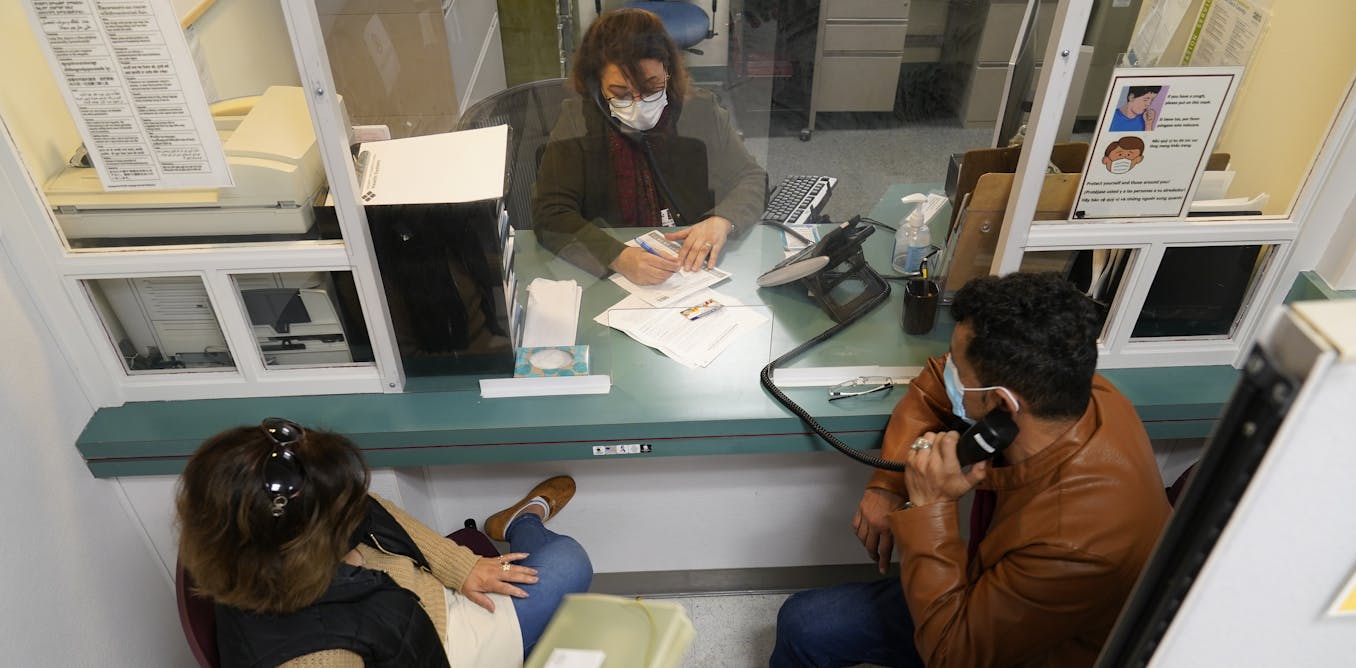
Operation Allies Welcome -- the official name for the American government's ongoing effort to assist vulnerable Afghans following the U.S. withdrawal from Afghanistan -- is the most significant U.S. resettlement effort since 1975. As of February 2022, some 65,000 Afghans have evacuated and settled in American communities. UConn School of Social work professors Kathryn Libal and Scott Harding have extensively studied the refugee resettlement process in America. In a recent essay for The Conversation, they detailed the resettlement process that refugees face -- and the challenges that individuals, families, agencies, and volunteers are enduring as the effort strains an already overburdened system. U.S. agencies brought in Afghans under humanitarian parole, rather than standard refugee procedures, because of the urgency of the evacuation. But the consequences may be profound. Some parolees had to wait weeks or months for the government or social service organizations to file paperwork granting them the right to work. Another challenge for parolees is securing family members’ admission to the U.S., which requires a high level of proof of threat to that particular individual. Many Afghan parolees should eventually qualify for asylum, but applying is a lengthy and complex process that generally requires significant legal assistance. More than 400,000 asylum cases are pending in the U.S. asylum system. Refugee resettlement organizations and voluntary groups that could normally help with filing asylum claims are already stretched thin. Evacuees’ advocates have called for approval of the Afghan Adjustment Act, which would allow Afghans to apply for lawful permanent resident status without waiting for the asylum system to rule on their cases or processing of special immigrant visa applications. Governors, businesses, celebrities, universities, military members, veterans and individuals across the U.S. have stepped in to support recent Afghan evacuees – many in locales with no history of resettling refugees. The responsibilities of resettlement, however, extend beyond helping evacuees in their first few weeks, to helping them secure a stable future. -- The Conversation, February 18, 2022 An associate professor of social work and human rights, Kathryn Libal is the director of UConn's Human Rights Institute and is an expert on human rights, refugee resettlement, and social welfare. She is available to speak with media – click on her icon now to arrange an interview.


Podcast: Germany’s caution over Russian aggression ‘disappointing’ NATO
Russia’s threat to Ukraine has highlighted differences between east and west Germans over handling of Russia, and the country’s cautious foreign policy Aston University academic explains why German soldiers shooting at Russian counterparts would be seen as a “tremendous failure” New Chancellor Olaf Scholz faces massive challenges including how to handle Covid-19, “crumbling” infrastructure, and climate change targets. Germany without its stalwart former leader Angela Merkel faces a number of huge challenges – not least the threat of Russia invading Ukraine. While Germany wants to provide leadership within the European Union, its diplomatic stance over Russia is at odds with many other countries within NATO. Those are the views of Dr Ed Turner, a reader in politics at Aston University, who was interviewed in the latest episode of the 'Society matters' podcast series, presented by journalist Steve Dyson. The episode, subtitled 'What Germany's new government means for the UK, Europe and Russia', follows a political shift following the departure of Chancellor Angela Merkel last year after 16 years in charge, after the defeat of her Christian Democratic Party. Dr Turner said the immediate priority for new Social Democrat Chancellor Olaf Scholz was “undoubtedly the crisis in Ukraine and the positioning of large numbers of Russian troops on Ukraine’s border, and the real worry that Russia will invade”. He said Germany wants the issue addressed, “but is doing so in a way that is really very cautious and is disappointing to many of Germany’s allies”. Dr Turner, who is also co-director of the Aston Centre for Europe, said Germany’s “very different approach” was reflective of its history with Russia. He explained: “There is a strong sense that Germany owes a significant debt, has a particular responsibility towards Russia for the losses incurred in World War One and, particularly, in World War Two. “The perception is that German troops once again firing at Russian soldiers would be a tremendous failure. Germany also places a strong emphasis on diplomacy as a way of engaging in foreign relations rather than hard military interventions.” There were also “economic angles”, he added, with Germany needing Russian energy at a time when it was committed to phasing out coal and nuclear power. Dr Turner, whose fascination with Germany began when he cycled through the country as a teenager, said a “carrot and stick” balance was dividing the country, with 68 per cent of west Germans but only 34 per cent of east Germans last year supporting EU sanctions against Russia. This reflected “really big disparities” more than 30 years after German reunification, with 60 per cent of east Germans feeling they are treated as second class citizens. Dr Turner said post-Merkel Germany faced big challenges including handling Covid-19, large parts of German infrastructure “really crumbling” with a big backlog of investment needed, and a pledge to move faster towards net zero emissions. But he added that UK-German relations in the wake of Brexit were not on the list of big things. “Good relations between the UK and Germany will depend on the nature of the UK’s relations with the European Union,” he said. “If the UK is at loggerheads with the European Union, in particular if there was a worsening of the situation in relation to the Northern Ireland protocol, then relations with Germany would get worse.” But Dr Turner said there was “huge affection” for the UK in Germany. “Germans are willing to disentangle the UK from Brexit and to say ‘we want to move on and don’t think badly of you’. I really want to see bridge-building between the two countries over the coming years.” Dr Turner said Germany remained “nervous” of the advance of the far right, especially if numbers of refugees coming to Germany were to grow. He said Angela Merkel would be remembered for Germany’s “humane response” to the 2015 refugee crisis, but others were “much more critical” over her policy. This, he added, led to German society becoming divided and the far right gaining ground. But Dr Turner acknowledged Mrs Merkel as a “remarkable leader who really broke the mould” as the first woman Chancellor and first from the east. In contrast, her successor is seen as a “steady hand on the tiller” as he heads a “traffic light coalition” of Social Democrats, Greens and Liberals. Episode 6 in series 2 of the ‘Society matters’ podcast and all previous episodes can be found HERE.

Troops are amassing along both sides of the border separating Russia and Ukraine. Diplomatic efforts from leaders from across Europe are in high gear as the concerns of an invasion and potentially all-out war between Russia and Ukraine could send the region into chaos. As the world watches and both sides gather allies for support, there are a lot of questions to ask, history to explore and explanations needed about what’s going on now and why. Dr. Craig Albert, associate professor of political science and director of the Master of Arts in Intelligence and Security Studies at program at Augusta University, sat down with ABC News to answer some of those lingering questions. Q: What is the reason for Russia’s interest in Ukraine? "If NATO allows Ukraine to become a member of NATO, which is what Putin is fearing here, he might think that they might want to go to Belarus next. Where else are they going to go? Georgia, the Republic of Georgia? Putin does not want NATO literally bordering the Russian federation. He thinks that’s a threat and would allow NATO to put missiles and missile defense in those countries, which as you know, is much more of a direct threat to Russia." Q: Maybe it comes down to the possibility of military threats. Why does the US care what’s happening way over there? "So, when you have any type of European possible land mass war, conventional war, that’s going to be a cataclysmic problem for the world. I think of the untold numbers of dead that would happen in some type of land conventional war, kinetic operations on Europe. The last time we had something like that was the wars in the former Republic of Yugoslavia in the early ’90s. That resulted in up to 300,000 to 400,000 dead in two or three years. So, we live in a globalized world, so if you have Eastern or Central Europe that gets confronted with a massive conventional war, that’s going to effect the security and the economy of the entire world including us." Q: So, is it just the US being world police again? "Each side is viewing the other as acting aggressively and I think both sides are just trying to sure up their defenses, just trying to make sure that they can handle the current situation. The United States is entering in what’s called a status quo power cycle, where the United States just wants the power of the international arena to stay where it is.” With news reports of an invasion potentially happening soon, there will be an enormous amount of coverage on this topic – and that’s where the experts from Augusta can help with your stories. Dr. Craig Albert is director of the Master of Arts in Intelligence and Security Studies at Augusta University. He is a leading expert on war, terrorism, and American politics. This is an important national and international issue. Albert is available to speak with media – simply click on his name to arrange an interview today.


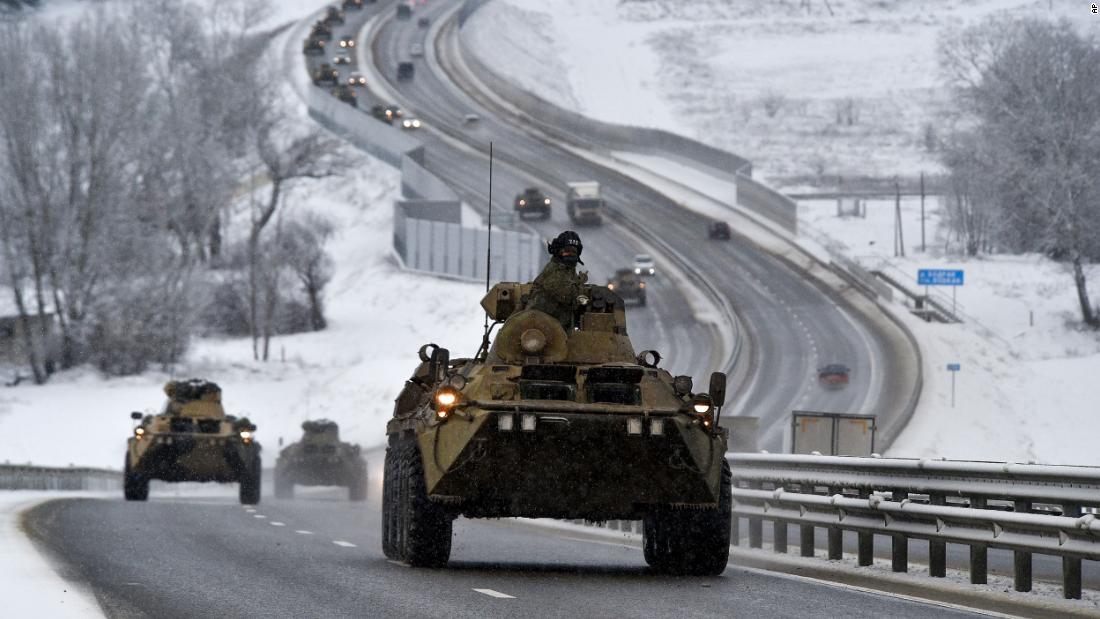
Tension are rising in Eastern Europe as troops, tanks and weapons are piling up on both sides of the border separating Russia and Ukraine. And with each passing day, the invasion of Ukraine and the possibility of outright war seems to be increasing. Is war inevitable? How did this situation escalate so quickly? Is this a power-play but Vladimir Putin? Should other neighboring countries be worried? And what is the strategic and historical significance of Ukraine when it comes to Russia wanting to invade? How could this affect the U.S.? There's a lot of questions to be answered - and if you are a reporter covering this escalating news story, then let our experts help. Jacek Lubecki, Ph.D., is an associate professor of political science and international studies at Georgia Southern University. He is also expert in Polish and European military history. Lubecki is available to speak with media regarding this topic - simply click on his icon now to arrange an interview today.
