
Experts Matter. Find Yours.
Connect for media, speaking, professional opportunities & more.
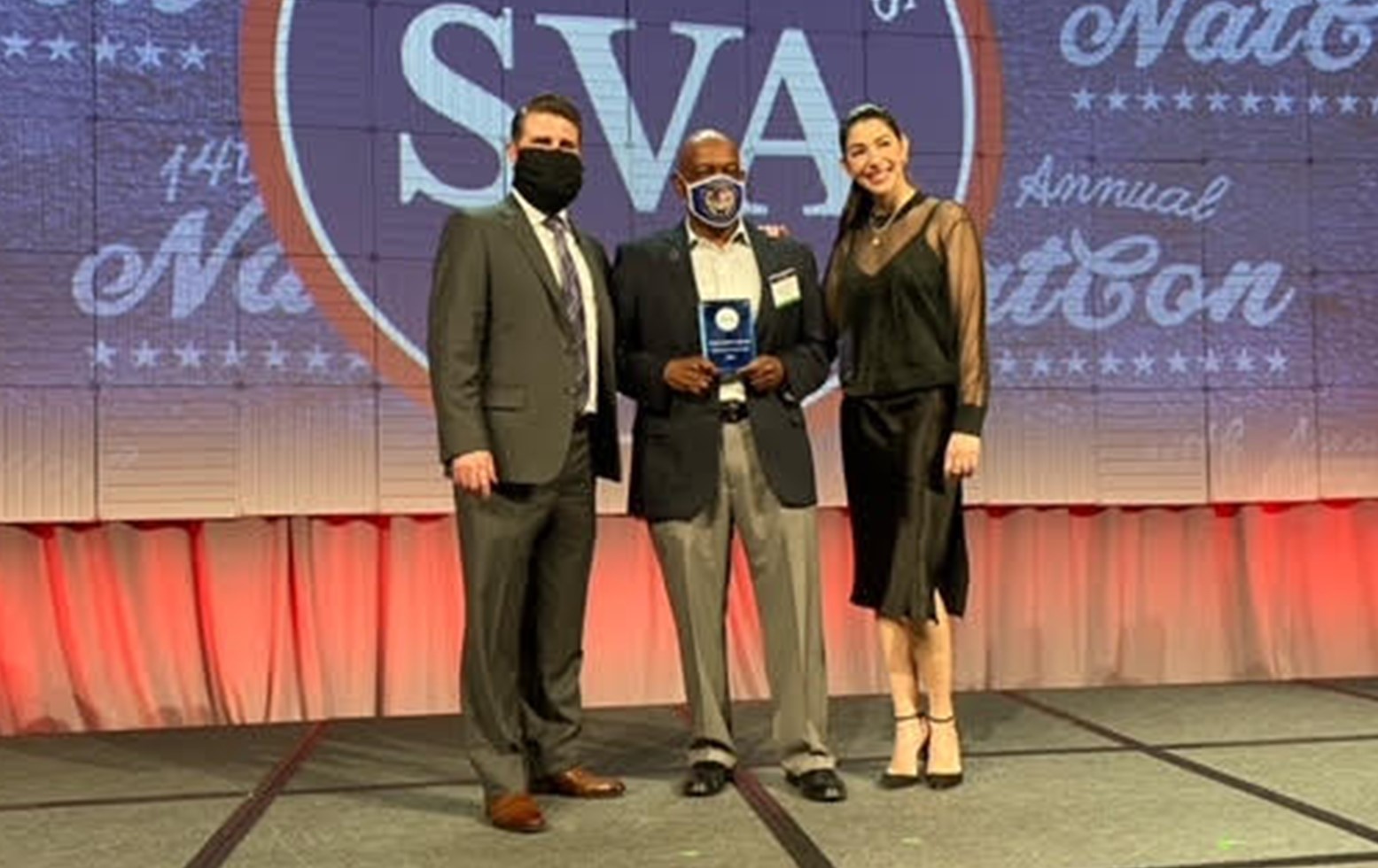
Georgia Southern University was selected as a finalist for the Chapter of the Year awarded by Student Veterans of America (SVA), an organization focused on advocating for and advancing resources for veterans in higher education. The University has SVA chapters on the Statesboro Campus and Armstrong Campus in Savannah, both of which were recognized with the award. “I am so proud of both of our SVA Chapters,” said Col. George Fredrick, Ed.D., director of Military and Veteran Services. “They offer truly outstanding support to our military-connected student population at Eagle Nation.” While this is the first time Georgia Southern has been a contender for this acknowledgement, the University has a tradition of being recognized for its investment in the military community. The Army ROTC program was established in 1980, and has won the MacArthur Award four times since 2009 for being one of the nation’s top ROTC programs. The Military Times publication named Georgia Southern as a Top 15 Best for Vets 4-year school for five consecutive years, including in 2019 when the University was ranked No. 1. Because the University operates near Hunter Army Airfield in Savannah and Fort Stewart in Hinesville, a number of students, faculty and staff are enlisted, retired or spouses of military members. Richelle Keilholz, Ed.D., is the staff advisor for SVA-Armstrong, and she believes this makes the campus community and military community deeply intertwined. “They become part of the campus culture, and I think that’s where you start to see that excellence comes when you have that kind of devotion,” said Keilholz. “You want to see our military service members, our family members and our spouses succeed in the military community and in higher education.” Georgia Southern’s relationship with veterans isn’t common among other universities, said military veteran project coordinator Rudy Duero. Many veterans feel overlooked and are an “untapped resource,” but not at Georgia Southern. “It’s awesome to have a group of individuals at the executive level who care and respect the opinions of the veteran students,” Duero said. “Veterans are being heard and they know that they’re being heard when they have good leadership representing them. The communication is always open.” Georgia Southern is one of five schools to be named a finalist for the award. The University sent a delegation to Orlando to attend the awards ceremony on Jan. 7. Academic and financial resources for veterans looking to pursue a degree can be found here. And if you’re a journalist looking to cover how Georgia Southern is working to support our veterans and the university’s military veteran project – then let us help. Rudy Duero is available to answer your questions - simply reach out to Georgia Southern Director of Communications Jennifer Wise at jwise@georgiasouthern.edu to arrange an interview today.


Friends or enemies? Is there any solving the ancient secret that is Chinese diplomacy?
When it comes to trade, investment and trillions of dollars of opportunity for American companies – it would appear that China and the United States should be close-knit allies. However when it comes to military escalation, an emerging global bull and national security – China is also a country that the U.S. government is very concerned about. NPR recently got in touch with UMW Professor of Political Science and International Affairs Elizabeth Larus to lend her expertise when it comes to the politics of China. Elizabeth Larus, who teaches Chinese studies at the University of Mary Washington in Virginia, says any economic "de-coupling" between the U.S. and China will be very difficult. "You can't just say you're going to pick up your factory and move all your resources and have a consistent, reliable energy source and the shipping port to get your stuff out at a decent price, and the logistics. China has nailed that down," said Larus, the author of Politics and Society in Contemporary China. China's President Xi Jinping uses this as leverage, she noted. "One of the goals of this Xi Jinping regime is to make the world really reliant on China for its supply chain, but not to have China reliant on the rest of the world," she added. "So that makes it difficult for the businesses." Is there a way out of this downward spiral? "I do not see a de-escalation anytime soon," she said. October 08 - NPR There will be no easy or immediate solution to the hot-and-cold relationship between the United States and China. But if you are covering this ongoing story – then let our experts help with your questions and coverage. Dr. Elizabeth Larus is an expert in the politics of China. She is available to speak to media, simply click on her icon to arrange an interview today.



History was made at Arlington – and UConn’s expert was recruited to help with national news coverage
For the first time in the 84 years that soldiers have stood watch over the Tomb of the Unknowns at Arlington National Cemetery, the duty was carried out by three women. UConn's Micki McElya, a professor in the Department of History and the author of The Politics of Mourning: Death and Honor in Arlington National Cemetery, offered her perspective and insight into the significance of the moment: The images of the three female soldiers were a “visual marker” of the often unrecognized sacrifices that women and other marginalized people in the United States have made for the military, Professor McElya said. “Women have served either officially or unofficially in every single war this country has ever waged, but they have never been drafted,” she said. “So if we want to talk about sacrifice and honor, women have done that because they wanted to.” The changing of the guard was also an important moment in military history, one that showed that women are serving in “the most revered positions,” said Kara Dixon Vuic, a professor of war, conflict and society in 20th-century America at Texas Christian University in Fort Worth. “These are the rituals that the nation holds dear,” she said. “Some might call it militaristic and some might say it represents the best of us. But to have women at the heart of it, whatever your perspective is, is important because it shows that women are at the heart of these debates now.” If you are a journalist covering the historic aspects of this occasion or other events taking place, then let our experts help with your stories. Professor McElya is an expert in the histories of women, gender, sexuality, and race in the U.S., with a focus on politics and memory. She’s available to speak with media regarding these topics – simply click on her icon now to arrange an interview today.


International security scholar's thoughts on Biden, military decision-making in Afghanistan
Baylor University's Peter Campbell, Ph.D., associate professor of political science, penned a column for City Journal, in which he discusses who deserves scrutiny following the U.S. withdrawal from Afghanistan. Getty Images In a column published Sept. 23 in City Journal, international security scholar Peter Campbell, Ph.D., associate professor of political science at Baylor University, explained the civilian-military dynamic in the United States and argued that President Biden -- not the U.S. military -- should shoulder the blame for what Campbell described as the president's "ill-conceived plan for withdrawing U.S. troops." During the withdrawal in August, many dozens of people were killed in a terrorist bombing, including 13 U.S. soldiers. Also, more than 100,000 people were airlifted from the country. Right now, we can only speculate about precisely what advice Biden’s military advisors shared with him, but it’s unlikely that American military leaders would have sanctioned on their own the accelerated withdrawal that the president demanded. My years of studying military history and military doctrine have taught me that fighting withdrawals are among the most difficult military operations to undertake, even for a highly disciplined and well-trained military force. Moreover, the Afghanistan withdrawal was to take place during the active fighting season, when favorable weather tends to increase the tempo of Taliban operations. The Afghan government requested that Biden delay the withdrawal until the winter, when conditions reduce the mobility of forces in the region. Wedded to his timeline, the president refused. In the column, Campbell wrote that America and the international community should not be left to speculate as to what advice the president received prior to his decision. He called for U.S. Congressional committees to investigate. "Americans deserve to know exactly what the military and the intelligence community told the president," he wrote. ABOUT PETER CAMPBELL, Ph.D. Peter Campbell, Ph.D., associate professor of political science at Baylor University, is a scholar on international security, civil-military relations, insurgency and counterinsurgency, the just war tradition, and cyber warfare. He is the author of Military Realism: The Logic and Limits of Force and Innovation in the U.S. Army, published by University of Missouri Press.


Baylor Expert: 9/11 Reshaped Every Aspect of American Life – Not Necessarily for the Better
English professor, culture expert says terror attacks damaged America, but it’s not too late to recover sense of purpose and generosity The Sept. 11, 2001, terrorist attacks on the World Trade Center and the Pentagon continue – 20 years later – to have profound effects on everything from America’s political, religious and cultural polarization to American entertainment choices, said Baylor University faith and culture expert Greg Garrett, Ph.D., professor of English. “It shouldn’t surprise anyone that an event that shook our sense of security and our identity would be reflected in every aspect of American life,” Garrett said. “But what does surprise and alarm me is the degree to which 9/11 continues to shape our attitudes about race, religion, immigration and the Other, whether that Other is in Afghanistan or just across town. The United States initiated a perpetual war against terror in response to the 9/11 attacks, and the fear that took root in the American psyche has proven difficult to shake.” Garrett, author of more than two dozen books, is internationally recognized as an expert on faith, culture, race and story, and he argues that the reaction to 9/11 can be measured just as much through literature and culture as through accounts of executive orders and covert military operations. Country music, procedurals and reality TV after 9/11 “Initially, Americans supported the War on Terror across political, religious and cultural lines,” Garrett said. “Country musicians like Toby Keith leaned into militant songs about American greatness and righteous revenge. The top-selling act the Chicks (then the Dixie Chicks) was drummed out of country music for their public stand against going to war. The TV show 24 reflected the growing darkness of America’s extra-legal approach to that war—the willingness to use torture, rendition and the opening of a dark site in Guantanamo Bay to house suspected terrorists—and it actually shaped opinion and policy as it grew in popularity and influence.” Two other types of television shows became extremely popular as a result of 9/11, Garrett said. Procedurals (shows such as CSI, Law and Order and House, M.D.) gained a new popularity because they offered viewers something the ongoing War on Terror never could or will: closure. “A serious problem was introduced in every episode, grappled with and solved by the end of an hour,” he said. Another type of show that leapt in popularity in the months and years following the attacks – reality shows – offered “train-wreck escapism,” Garrett said. “The contestants on Survivor and The Bachelor, and the wayward souls on Jersey Shore and Keeping Up with the Kardashians, presented exaggerated versions of our present moment that allowed viewers to forget about the dark actuality of the times,” he said. Springsteen, Harry Potter and critiquing ‘moral failures of the War on Terror’ Not all popular culture offered reinforcement or escapism, Garrett said, adding that some of the most powerful pop culture from 2001 onward critiqued the “moral failures of the War on Terror and critiqued the American people for so readily accepting them.” “Punk rock, always a prime medium for protest, was one of the earliest forms of dissent,” Garrett said. Green Day’s 2004 album American Idiot reached the top of the charts in the United States and 18 other countries, ultimately selling 16 million albums. But mainstream acts like Bruce Springsteen also asked complicating questions about the attacks and their aftermath. “After primarily offering empathy and comfort in The Rising (2002), Springsteen realized that America had betrayed many of its most important ideals, as revealed by songs like ‘Your Own Worst Enemy’ on the No. 1 2007 album Magic,” Garrett said. “Later novels in J. K. Rowling’s Harry Potter series, the most popular fictional narrative of all time, introduce questions of torture and terror, and powerful TV dramas like Battlestar Galactica and the British import Doctor Who also criticize the choices made by the American government and its allies.” Zombies and the Apocalypse Perhaps the most significant byproduct of 9/11 in our culture is the resurgence in apocalyptic stories such as 28 Days Later, Sean of the Dead, The Walking Dead, Game of Thrones, World War Z and The Road, Garrett said. Stories about the Zombie Apocalypse – whether in games, books, comics, TV or movies – asked serious questions about what it means to be human, and about what moral compromises a person might be willing to take to stay alive, Garrett explained. They also reflected the new 24/7 sense of encroaching menace that “seeped into our culture and lit up our phones at all hours of the day and night.” “You could fight all day every day against this menace, these creatures who look like humans but seek your destruction. And then the next morning, you still have to rise and confront it again,” Garrett said. ‘Not too late’ “People 20 years ago said that 9/11 changed everything, and so it did.” Garrett said. “But 20 years later it is not too late to recognize that the fears those attacks brought to the surface don’t have to be the way we continue to live. In my faith tradition, Jesus constantly admonishes his followers not to be so afraid. We make bad and selfish decisions out of fear. We abridge hospitality, compassion and liberty when we believe we are endangered. That’s not the America I grew up in, and it’s not the America in which I hope to die. That America, the light of the world, the city on a hill, Lady Liberty lifting her torch to welcome all, is the America that our founders dreamed, and that we can dream once again.” ABOUT GREG GARRETT, PH.D Greg Garrett, Ph.D., is a professor of English at Baylor University and Theologian-in-Residence at the American Cathedral of the Holy Trinity in Paris. An award-winning professor, Garrett has written about 9/11 and its aftermath in a number of books, including One Fine Potion: The Literary Magic of Harry Potter (Baylor University Press), Living with the Living Dead: The Wisdom of the Zombie Apocalypse, and A Long, Long Way: Hollywood’s Unfinished Journey from Racism to Reconciliation (both Oxford University Press). ABOUT BAYLOR UNIVERSITY Baylor University is a private Christian University and a nationally ranked research institution. The University provides a vibrant campus community for more than 19,000 students by blending interdisciplinary research with an international reputation for educational excellence and a faculty commitment to teaching and scholarship. Chartered in 1845 by the Republic of Texas through the efforts of Baptist pioneers, Baylor is the oldest continually operating University in Texas. Located in Waco, Baylor welcomes students from all 50 states and more than 90 countries to study a broad range of degrees among its 12 nationally recognized academic divisions. ABOUT THE COLLEGE OF ARTS & SCIENCES AT BAYLOR UNIVERSITY The College of Arts & Sciences is Baylor University’s largest academic division, consisting of 25 academic departments and eight academic centers and institutes. The more than 5,000 courses taught in the College span topics from art and theatre to religion, philosophy, sociology and the natural sciences. Faculty conduct research around the world, and research on the undergraduate and graduate level is prevalent throughout all disciplines. Visit baylor.edu/artsandsciences.

UCI scholars discuss how 9/11 changed America
In recognition of the 20th anniversary of the Sept. 11, 2001, terrorist attacks in the U.S., we asked UCI scholars a single question: How did 9/11 change America? They responded according to their expertise – which ranges from collective trauma, media, air travel, foreign relations, false narratives, political divisiveness, and the war on terror. Contact Tom Vasich at 949-285-6455, tmvasich@uci.edu, to arrange interviews. Roxane Cohen Silver, Distinguished Professor of psychological science, public health and medicine E. Alison Holman, professor of nursing Topic: Media and collective trauma Quote: “The Sept. 11 terrorist attacks – which hijacked our television screens that Tuesday morning as people who sought to do us harm hijacked four airplanes – captured people’s attention throughout the days and weeks that followed. It also ushered in 24/7 media attention to what has become known as a “collective trauma,” transmitting the horrible events of that day throughout the country and, indeed, throughout the world in a matter of seconds. …The 9/11 attacks were tragic for American residents, but they also taught us that the media can broadcast distress alongside the news it’s covering.” Jan K. Brueckner, Distinguished Professor of economics Topic: Air travel Quote: “In response to the revenue shock of 9/11 and to new competition from low-cost carriers, the major airlines behaved conservatively in adding back capacity as traffic returned, so that the carriers eventually offered fewer seats to an ultimately larger number of passengers, leading to fuller flights and today’s less comfortable flying experience. Even though 9/11 is long past, the airline industry continues to operate in a climate of fear of terrorism from the air.” Erin Lockwood, assistant professor of political science Topic: U.S. foreign policy Quote: “The attacks – and the U.S. response – set in motion decades of war, anti-Arab and anti-Islamic bias and violence, and a willingness to sacrifice military and civilian lives and civil liberties for the perception of security. As we mark the withdrawal of U.S. forces from Afghanistan this month, it’s all too apparent that many of those trends continue to reverberate today.” David Kaye, clinical professor of law Topic: National security Quote: “Despite my hopes for something better that might emerge, the attacks reinforced a cult of national security that the United States transformed into the torture of terrorism suspects, drone warfare, the invasion of Iraq, Guantanamo Bay’s indefinite detentions, anti-Muslim discrimination at home and the emergence of the contemporary surveillance state. … The predominance of national security as an ideology and apologia remains among the most significant legacies of that day, a feature of American political life that continues to constrain creativity and a return to normalcy in American law and policy.” Matthew Beckmann, associate professor of political science Topic: War on terror Quote: “To understand the legacy of 9/11 is to define the legacy of George W. Bush. For after the deadliest terrorist attacks on U.S. soil in our nation’s history, American citizens and lawmakers gave President Bush broad support and broader authority to wage the “war on terror” as he saw fit. … Twenty years after the attacks, having seen those lofty aspirations dashed in Afghanistan and Iraq, disregarded in Guantanamo Bay and black site prisons, and discounted even by our staunchest allies, the biggest legacy of Sept. 11 for the United States is that the “shining city on a hill” has less luster and a shorter reach.” David Theo Goldberg, professor of comparative literature Topic: Rise of false narratives Quote: “The events of 9/11 lent themselves to make-believe. The smoke hadn’t yet cleared when conspiracies began to abound, from “weapons of mass destruction” to “the deep state.” That the Trump administration adopted this as its own playbook while insisting on “draining the swamp” required cooking the rules. … Fabrication had become the rule book of the game. Invention and inventedness, disruption and innovation fueled the movement. The “truth” was, well, oh so yesterday.”

UCI experts can discuss unfolding crisis in Afghanistan
UCI faculty members Dr. Heidi Hardt, associate professor of political science, and Dr. Mark LeVine, professor of modern middle eastern history, are available to speak about the crisis in Afghanistan. Dr. Heidi Hardt Dr. Hardt can talk about NATO's contribution to Afghanistan, implications for NATO's legitimacy, security concerns for Afghan women and provide broader context on military interventions and operations. She can address more specific questions related to the two decades long allied operation. About Dr. Hardt: Dr. Hardt has expertise in transatlantic security, national security and European security and defense, including NATO, the EU and OSCE. Issue areas include transatlantic security cooperation, collective defense, crisis management, military operations (e.g. Afghanistan), coalition warfare, strategy, learning, adaptation, organizational change, gender and diplomacy. She's the author of two books: NATO's Lessons in Crisis: Institutional Memory in International Organizations (Oxford UP, 2018) and Time to React: The Efficiency of International Organizations in Crisis Response (Oxford UP, 2014). She's the recipient of a 2021-2022 Council on Foreign Relations International Affairs Fellowship and will soon be working as a foreign policy fellow for the Office of Congresswoman Katie Porter. Contact: hhardt@uci.edu Dr. Mark LeVine Dr. Levine was in Kabul in 2019. His point of view on Afghanistan includes: • “Why did the US abandon the embassy when the agreement with the Taliban specifically allowed to diplomatic staff to remain in Afghanistan and there was no imminent threat by the Taliban to the embassy and in fact the US was coordinating with them. They could have certainly kept the lights on and not looked like cowards running, which set the tone for everything else.” • “It seems pretty clear that there was an internal military coup. The Taliban did not just waltz into Kabul without coordination with senior military people who are already handing over parts of the country to them in the days before. Some kind of deal had been worked out behind the scenes and without the knowledge of the president, which is why he felt he had no choice but to flee.” About Dr. LeVine: Dr. LeVine completed his Ph.D at NYU’s Dept. of Middle Eastern Studies in 1999, after which he held postdoctoral positions at Cornell University's Society for the Humanities and the European University Institute's Robert Schuman Centre for Advanced Studies, in Florence, Italy before coming to UCI. His research and teaching focus on the following issues: histories, theologies and political and cultural economies of the Middle East and Islam in the modern and contemporary periods; Palestine/Israel; cultural production, revolution and resistance in the Middle East and Africa; modern and contemporary Iraq, Egypt, Tunisia and Morocco; art and conflict in West Africa (especially Ghana and Nigeria, but also Senegal, Mali and Kenya); comparative studies of imperialism and colonialism, urban planning and architecture (history and theory); critical theory and globalization studies with a comparative focus on popular cultures and religion in Europe and the Muslim world; peace and conflict studies; and comparative nationalisms. Contact: mlevine@uci.edu
The Taliban returns - what's next for Afghanistan?
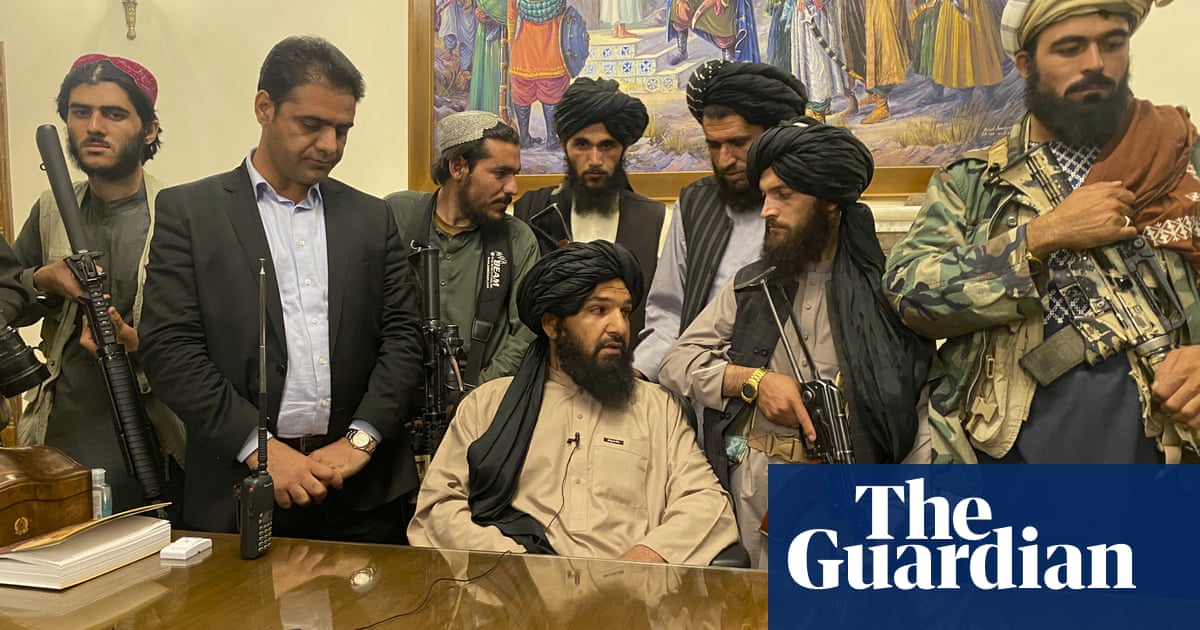
As the era of occupation ends in Afghanistan, it was with record speed and precision that the once defeated Taliban have returned to cease near total control of Afghanistan. The Taliban has begun the process of forming a government in Afghanistan, after taking control of the capital Kabul and declaring that the war is over as Afghan forces surrendered and President Ashraf Ghani fled the country. Despite two decades of U.S. military presence in Afghanistan, and a war that cost more than $1 trillion, Taliban insurgents arrived at the gates of Kabul on Sunday and took the capital, including the presidential palace, with little resistance. “Today is a great day for the Afghan people and the mujahideen [Taliban],” said Taliban spokesman Mohammad Naeem. “They have witnessed the fruits of their efforts and their sacrifices for 20 years. Thanks to God, the war is over in the country.” August 16 - The Guardian For many, there is much speculation about what the country faces in its short and long term future. Is it possible for a peaceful transition? What will happen to all of the advances for women that occurred over the last two decades? Will the punitive measures taken against those who worked for or assisted of coalition forces? And how will these recent events alter how foreign policy and how America engages in the rebuilding of countries? This is news and events that are unrolling in real time and if you are a journalist covering this topic - then let us help. Robert Rabil, Ph.D., is an expert in political Islam, terrorism, U.S. foreign policy, and U.S.-Arab relations. He is available to speak with media about the current situation in Afghanistan, simply click on his icon now to arrange an interview today.


Clean, Silent Energy Whenever You Need It
Sitting on the dock on a quiet evening, it’s easy to take electricity for granted. It’s silent, odourless, and always available… until the power goes out. Francois Byrne is an engineer who has spent years developing power backup and replacement systems that work silently and with no fumes, supplying power when the hydro grid goes down, and even replacing that grid entirely with a solar- or wind-powered battery system. He is the owner of Hybrid Power Solutions. “We’re a Canadian manufacturer, specializing in attractive, easy-to-use power systems that work seamlessly and supply as much power as our customers need, no matter where they are,” says Francois. That might mean powering tools and equipment on a construction site or a mine located far from the electrical grid, or a military site or a film shoot where the noise of generators is unacceptable. And it can mean powering a bunkie that’s beyond reach of hydro lines, or providing silent backup power for homes and cottages. Power Tower For whole-home power supplies, Francois recommends the Power Tower. “Our Power Tower is a scalable system that’s incredibly easy to use,” says Francois. “There’s no maintenance, no fuel to buy. You simply wire it in to your home and forget about it.” Solar panels allow the Tower to supply power regardless of whether the electrical grid is operating. “It’s a great way to help offset the cost of hydro or get completely off the grid,” Francois explains, adding that wind turbines can also feed in to the Power Tower. “And when the power grid goes down because of a storm or some other reason, the system just keeps on supplying energy.” “It’s a power backup system that actually pays for itself over time.” Whole home or portable options The Power Tower is capable of offering 6,000 watts of continuous power and up to 18,000 watts of surge power at 120- and 240-volts, plenty of power to make true off-grid living a reality. As many as 15 lithium-ion batteries can be connected to the wall-mounted control unit. “We work directly with our customers to help them find the best power solution for their situation,” says Francois. Hybrid Power Solutions also offers smaller, more portable units that are suitable for boats and trailers and RVs, as well as smaller cabins and bunkies. “You still want power when you’re at the lake or in the woods, but you want it to be silent,” says Francois. “That’s what we supply. No fumes, no noise, no fuss – just clean, reliable electricity wherever you need it to be.” Originally published in Muskoka Life Magazine.


At the age of 88, American political giant and two-time former Secretary of Defense Donald Rumsfeld is dead. Donald Rumsfeld, the two-time defense secretary and one-time presidential candidate whose reputation as a skilled bureaucrat and visionary of a modern U.S. military was unraveled by the long and costly Iraq war, died Tuesday. He was 88. In a statement Wednesday, Rumsfeld’s family said he “was surrounded by family in his beloved Taos, New Mexico.” President George W. Bush, under whom Rumsfeld served as Pentagon chief, hailed his “steady service as a wartime secretary of defense — a duty he carried out with strength, skill, and honor.” Regarded by former colleagues as equally smart and combative, patriotic and politically cunning, Rumsfeld had a storied career in government under four presidents and nearly a quarter century in corporate America. June 30 - Associated Press If you're a journalist looking to know more about Rumsfeld's legacy and impact on American foreign policy, then let our expert help. Professor of Political Science and International Affairs Jason Davidson is an expert in American foreign and security policy, and international security. His study, The Costs of War to United States Allies Since 9/11, recently received an onslaught of media attention, landing in Forbes, The Guardian and Daily Mail. If you’re looking to arrange an interview with Dr. Davidson, simply click on his icon now to arrange an interview today.
