
Experts Matter. Find Yours.
Connect for media, speaking, professional opportunities & more.

Research finds video games improve mobility for children with autism
University of Delaware professor Anjana Bhat has a long history of finding creative ways to keep autistic children engaged with the added benefit of improving their flexibility and gross motor skills. She’s used dance and play in the past but is now testing video games to see if they’re a viable intervention to promote movement in this population. Bhat and her team in the Move to 2 Learn Innovation Lab at UD's STAR Campus have been using Ring Fit on Nintendo Switch to help children with autism get their daily dose of exercise. “Children love video games, and they’re fun,” said Bhat, professor of physical therapy in UD's College of Health Sciences. “But there’s also a lot of evidence that video games with an exercise component have positive effects on cognition, social interactions and general physical activity levels.” She added that children with autism have a predilection for technology with a love of computers and robots, but exergaming hasn’t been studied in this population. “Technologies that have been tested and studied in children with autism mainly target sedentary functions that look at improvement in executive function and decision-making, but not necessarily exergaming,” Bhat said. “Exergaming has been studied in older populations and healthy children, but not so much in children with autism, so this study is unique.” After testing the intervention on a dozen children with autism over eight weeks, the consensus is that it works. “I’ve never seen anything grab their attention so much. Across the board, this tool is far more engaging than any other tool we’ve used before, including music and movement, yoga, general exercise, and outdoor play, which do not always work for every child,” Bhat said. “With exergaming and the variety of content that exists, most children remain engaged, and that’s what’s so unusual about this intervention compared to past interventions.” Games like tennis, volleyball, badminton, golf, sword fighting and bowling focus on the upper extremities, while soccer focuses on the lower extremities. Bhat receives accurate measures of improvement in a child’s ability through accelerometers in the video game controllers. “This is one place where children with autism shine,” Bhat said. “Their visual learning and sensory enhancements help them excel. This gives them a sense of self-efficacy and self-assurance that — they’re good at this,” she said. “It also gives them a sense of connection to the community because they can make friends and feel empowered. Video games are a great equalizer.” Bhat’s innovative pilot study was funded through a $50,000 award from the donor-created Maggie E. Neumann Health Sciences Research Fund, which targets research and innovation that aims to improve the lives of people with disabilities. Equipped with data from this study, Bhat hopes to expand access to the intervention and test it in the community. It’s already available at D-Fit Plus, an inclusive fitness center in New Castle that aims to help those with special needs explore fitness to build social skills and confidence, grow cognition, and manage stress. “It’s relatively low cost,” Bhat said. “Another advantage of this intervention is that you don’t need a highly skilled person present to work the intervention because the game leads the activity, making it accessible if embedded in the community.” This also provides a social outlet for the child’s parents. “Community settings bring a sense of connection for the child’s parents, who are always looking for community-based activities, and many environments aren’t suitable for children with autism,” Bhat said. “Many environments are too noisy or distracting. Exergaming removes those barriers and allows the child to engage with the game and maybe another partner.” Bhat’s previously published research has shown that 80% of people with autism face motor challenges. Her research is so compelling that she’s made a case to change the definition of autism to include motor impairments so those on the spectrum can get the proper physical therapy or gross motor interventions that could dramatically improve their quality of life.


Baylor Expert: Don't Lose Focus on Spiritual and Mental Well-being
Baylor Social Work professor shares tips and resources during stressful half-way mark of semester Holly Oxhandler, Ph.D., LMSW., associate dean for research and faculty development and associate professor in the Diana R. Garland School of Social Work. October marks the halfway point to the fall semester and can carry all the excitement, stress and anxiety of another academic term winding to a close. The month also typically marks one of the busiest times of the year for university counseling centers across the nation. With unique challenges in 2020 related to COVID-19, the University has acknowledged those hardships for all in the Baylor Family by taking the initiative to focus on mental health throughout October. Baylor University’s Holly Oxhandler, Ph.D., LMSW, associate dean for research and faculty development and associate professor in the Diana R. Garland School of Social Work, is an expert on mental health, primarily anxiety and depression, as well as religion and spirituality in clinical practice. In this Q&A, she shares tips and resources to students, faculty and staff who are facing all of the typical challenges of another mid-term while also navigating a global health crisis. Q: The 2020 fall semester provided challenges and obstacles never seen before in higher education. Why has COVID-19 been a uniquely stressful influence on the mental and spiritual well-being of students, faculty and staff? There are a number of reasons COVID-19 has been a uniquely stressful influence on the mental and spiritual well-being of those in higher education. First, there are the unanticipated layers and learning curves of new considerations and adjustments to course delivery, safety protocols, dining, campus activities and communication, to name a few, on top of the typical adjustments and emotions we all navigate at the beginning of each fall semester. Second, those in higher education entered fall 2020 without the “typical” summer that’s needed to reset, make adjustments and plan for the upcoming year’s activities. For example, many administrators, faculty and staff spent the summer not only planning for the usual upcoming academic year but also reconfiguring classes to be hybrid or online or simultaneously include both in-person and online students, in addition to modifying student activities and faculty research project timelines and plans. For degree programs that include internships, like social work, there have also been additional layers of consideration in order to comply with our professional accreditation standards. Third, we recognize that many students, their family members, as well as Baylor faculty and staff members’ loved ones, have been affected by the economic impact of COVID-19, adding a layer of financial stress. Fourth, many within the Baylor community – staff, faculty and students – have needed to juggle childcare and homeschooling their children as they continue to engage in their own work and/or educational expectations. Finally, the fear of contracting COVID-19, especially among the most vulnerable and high-risk populations, has been constantly present. Not only are we adjusting to this academic year with new ways of being and new protocols that keep us and one another safe, we’re also facing unexpected waves of fear and layers of grief for the missed events, opportunities and connections we had hoped to experience. As resilient as our community is, I think it’s important to remember we cannot “operate as usual” because things aren’t usual. Instead, we must allow ourselves and one another the time, margin, flexibility and grace needed to sit with and move through the rising emotions, grief, stress, loneliness, fear and uncertainty as they come. We cannot skip or bypass these emotions, but instead, must move through them, often with the support of loved ones and/or a trained mental health care provider. Q: Mental and spiritual health are challenging during even a typical semester experience. What are some of the effects and reactions you’ve witnessed to these circumstances among students, faculty and staff compared to a non-COVID-19 semester? As human beings navigating a global pandemic to the best of our ability, our mental and spiritual health have all been impacted to some degree this semester as we have individually and collectively faced a number of unexpected difficulties. I have also seen a beautiful response to the reality of this collective struggle in my interactions with Baylor faculty, staff and students that includes deep empathy for one another and an increase in valuing authenticity as we engage in the high-quality, meaningful work we each do. It has been a gift to witness Baylor community members holding space for colleagues’ and students’ vulnerability as we admit this is hard for various reasons and recognize that we cannot just push our way through this season. When we admit this isn’t easy and that we are all juggling so much to the best of our ability through thick layers of uncertainty, it gives those around us permission to admit their experiences, too. In fact, I think when we create space for that shared vulnerability and empathy in our interactions with others, we can better assess the current situation, remain present to one another and discern what steps are needed to move forward together, particularly because we’re not carrying an additional layer of effort pretending that everything is fine. That said, the Garland School of Social Work conducted a couple of well-being surveys since this summer to internally check in on how our faculty and staff are coping with this season and identify the biggest stressors they’re facing and sources of support. Our faculty and staff have also been continually checking in on our students through this season. Not only do we see many noting the same stressors that we’re all facing these days, normalizing how difficult this is for each of us, but the act of nonjudgmentally holding that space for ourselves and one another has been a tangible step of offering the care we know is uniquely woven into the Baylor experience. Q: How can individuals within the campus community tend to their spiritual health to close out the semester? I would invite readers to take a moment to pause and identify a few spiritual practices that uniquely support them well, even if that means thinking back to less stressful seasons. The key to note here is that these are practices which require regular engagement, similar to if we were to practice a new instrument or sport. Spiritual practices can vary based on our faith tradition and may include praying; meditating; centering prayer; reading our religious text; walking a labyrinth; journaling; practicing gratitude; listening to a sermon or faith-based podcast; praying over and contemplating scripture; engaging in creativity; practicing daily examen; or listening to spiritual music. Some practices may involve other individuals that can be done safely, including seeking spiritual direction, participating in a Bible or faith-based book study with others or engaging in worship (even virtually!). These practices can offer a sense of groundedness and a reminder that God is with us, including through this season. As we continue to navigate this season of uncertainty, it is critical that we intentionally weave in spiritual practices that offer rhythms, routines and a grounded faith that can support us well through the waves of difficulty. Especially on campus, I would encourage Baylor community members to follow along with Spiritual Life’s resources and events, or check out Better Together BU, a partnership supported by both Spiritual Life and Multicultural Affairs. Q: How can individuals within the campus community tend to their mental health to close out the semester? Tending to our mental health in this last stretch of the semester will be so important as we move into the stress of finals, the complex emotions tied to the holidays, grief with upcoming celebrations looking different this year (including how we celebrate holidays, who we celebrate with and the reality of many having lost loved ones to COVID-19) and the reality of seasonal affective disorder on the horizon. In fact, in a typical year, about 5% of U.S. adults have seasonal affective disorder (SAD), with another 10-20% having mild forms of it. In light of all of the added transition, uncertainty, complexity of caregiving and homeschooling while working/studying at home, layers of loneliness and grief, I do hope our Baylor students, staff and faculty will actively prioritize taking good care of their mental health and supporting others’ mental health care, too. One way I highlight this with my social work students is by recommending creating a self-care plan that pays attention to our physical health, mental health, social support and spiritual health. If we can identify some strategies to holistically care for ourselves well and be mindful of potential barriers to navigate, we may have more resilience and practices to draw from to cope with challenges and stressors that arise. Finally, although NAMI highlights that 1 in 5 of us are currently facing a mental health struggle, some studies have shown that over 80% of us will meet criteria for a mental illness by young adulthood or middle-age. Therefore, I highly recommend that anyone who is noticing any changes in their mood, diet, sleep habits, behaviors or overall well-being immediately reach out for help. Students are encouraged to reach out to Baylor’s Counseling Center, CARE team or the BARC. Faculty and staff also have resources available through Baylor’s employee assistance program. Other resources for finding a mental health provider include HelpPRO, Psychology Today, Low Cost Help or these additional resources. For those who are deeply struggling, please reach out to the Suicide Prevention Lifeline at 1-800-273-8255 or text ‘HOME’ to 741-741 for the Crisis Text Line. As part of my faith and my social work values, I believe that each of us are worth caring for ourselves, including caring for our mental health alongside our spiritual and physical health. Q: What successes or bright spots have you seen within your campus experience that offer encouragement to how the Baylor Family has handled the crisis throughout the semester? I am regularly amazed by the Baylor students, faculty and staff, the ways we have navigated the crisis together this semester, and I am especially grateful for President Livingstone’s and Provost Brickhouse’s leadership since March. This semester, some bright spots have included Dr. Deborah Birx’s reflections on Baylor’s efforts to keep everyone safe from COVID-19, the Fall Faculty meeting and Dr. Peter Hotez’s appreciation of how Baylor leaders have kept the Baylor and Waco community safe and following along when Baylor students take over Baylor’s Instagram account (like Brandon Nottingham’s takeover on World Mental Health Day!). As the Garland School of Social Work’s associate dean for research and faculty development, I have also loved learning about the ways so many Baylor faculty are offering their unique research expertise and wisdom to serve others through this difficult time, such as Dr. Emily Smith’s “Friendly Neighbor Epidemiologist” Facebook page to explain COVID-19 information. I’ve also been reminded of what a gift it is to be a part of the Garland School of Social Work (GSSW) and this community of faculty, staff and students. The resilience, creativity, love for serving others, dedication to the social work profession and care for our students is so apparent within the GSSW. I have especially seen how my faculty and staff colleagues have adapted courses and assignments, creatively considered students’ needs and juggled their research responsibilities while extending grace to themselves and one another as we navigate this season together as a school to the best of our ability. Similarly, seeing our students’ resilience, flexibility, support of one another, commitment to the profession and heart for the clients and communities they serve is truly inspiring. Finally, Dean Jon Singletary’s servant-leader heart for the GSSW and the ways he has supported our school through so much transition over the last five years has been a gift. One example of this includes the two hours of weekly well-being time he extends for all GSSW staff and faculty to use in support of our spiritual and mental health care. Q: What gives you hope for the spring semester and beyond as students continue through their academic endeavors? Truthfully, our students’ presence and their enthusiasm over the fields of study they are dedicating their lives to gives me hope. As a professor, there is nothing like watching a student become fully alive in the work they are passionate about and feel as though they were made to do. Our students’ willingness to fully participate in the transformational education that Baylor offers, especially in this difficult season of COVID-19, is an honor to witness as a professor and certainly gives me hope. Further, seeing the ways our students are empathically caring for their neighbor by following Baylor’s safety guidelines, growing in their faith, checking in on one another, understanding faculty and staff are doing their very best and continuing to demonstrate their determination to learn and grow is an inspiration. My hope and prayer for our students as well as our staff and faculty colleagues as we move through the remainder of the fall semester and into the spring is that they rest as they need to and prioritize taking good care of their mental and spiritual health. I also pray that we recognize as a community that by caring for our spiritual and mental health, by taking this season one day at a time, by trusting we are doing our best and by reaching out for help when needed, we give others permission to do the same.


Taylor Swift workshop helps fill a blank space for economics students
The University of Delaware's Kathyrn Bender developed a concept that professors could only conjure in their wildest dreams: A Taylor Swift-themed workshop that helps college students better understand data analytics through the music of the world's biggest pop star. Bender, assistant professor of economics in UD's Lerner College of Business and Economics, came up with the idea while teaching her Introduction to Microeconomics class in early October when the discussion turned to MetLife Stadium, home of the NFL’s New York Giants and Jets. “I noticed in that class there was a lot of excitement, and I had just about everybody’s attention in there, whether they were interested because of football or because of the Taylor Swift aspect. So I thought that was really cool,” Bender said. Using grant money, Bender quickly jumped on the idea and developed a Swift-themed data visualization workshop series entitled “Data Enchanted: Transforming Numbers into Knowledge.” She held three 90-minute workshops during the fall semester, which ran from late October through early December: “Ready for It,” an introduction to Stata; “You Belong with Me,” building and structuring data for analysis; and “I Knew You Were Trouble,” transforming and cleaning data for analysis. The workshops helped UD students learn to utilize Stata, a statistical software package used for data manipulation, visualization and automated reporting. They were an immediate success, as Bender received over 60 applicants, although she was limited to accepting just 32 due to space limitations. Though students don’t earn credit for completing the workshops, just a certificate, Bender said they help fill some gaps that aren’t covered in classes. “I think they’re kind of expected to learn about it, piecing it together from different classes,” Bender said. “This [workshop series] is a way for students to get introduced to thinking about data, how it’s set up, how you can create good visualizations with it … those basics before you get into the analysis.” Making the workshops Swift-themed helped students pick up concepts more easily in a fun environment. Before jumping into data sets, the students make friendship bracelets to the soundtrack of Swift's music. In one session, they pulled Spotify data and statistics to analyze the popularity of Swift’s songs. “We’ve stuck with Taylor Swift songs and albums so far,“ Bender said. “So all the data sets have been very easy for the students to understand as opposed to something that’s not as familiar for them to think about. They know what a song is, they know what the duration of a song is, those things are all very easy to understand. They’re able to practice these new data skills without having to worry about the content as much.” Due to the workshop’s immediate success, Bender is planning on expanding the program during the spring semester. She aims to hold eight workshops, the initial three and then five more, and hopes to make them available for all UD students (they were available only as an undergraduate program in the fall). Reporters who would like to write about the workshop and interview Bender can contact her directly by simply the contact button on her profile. Or, send an email to UD's media relations team.


Countdown To the Big Game: Dr. Tyrha’s Top Five Super Bowl Commercials for the Past Five Years
Advertising executive and multicultural media expert Tyrha M. Lindsey-Warren, Ph.D., clinical assistant professor of marketing at Baylor University's Hankamer School of Business, , is a sought-after media commentator on the brands who win big during the game's commercial breaks. Commercials always are the most anticipated and talked-about aspect of the Super Bowl, but the expanding digital landscape requires advertisers to use more authentic and nuanced strategies to reach consumers. Advertising executive and multicultural media expert Tyrha M. Lindsey-Warren, Ph.D., clinical assistant professor of marketing at Baylor University’s Hankamer School of Business, is a sought-after media commentator on the brands who win big during the game’s commercial breaks. How do companies break through the noise and make a lasting impression on viewers? Lindsey-Warren – or Dr. Tyrha, as she is known – says the key is empowered storytelling. As a consumer behavior scholar, Dr. Lindsey-Warren’s research is rooted in narrative transportation theory – in other words, storytelling – that exudes the emotion of empowerment and its impact on consumer attitudes, behaviors, purchase intention and message recall. “There is a growing space for cleverly crafted and positive storytelling that can break through the clutter and competition and get the attention of Millennials, Gen Z and Alpha generations in an authentic and meaningful manner,” Lindsey-Warren said. At the top of every year, Dr. Tyrha always enjoys exposing the juniors and seniors in her advertising class to the joys of storytelling in advertising by way of the Super Bowl commercials. By leveraging the Super Bowl as an “edutaining” entry point for student learning, Dr. Lindsey-Warren finds it to be a fun and wonderful way to bring many advertising lessons to life for her students, including branding, consumer targeting and segmentation, social media campaign analysis, and more. To that end, here are Dr. Tyrha Lindsey-Warren’s top picks for the best Super Bowl commercials over the past five years. COUNTDOWN TO THE SUPER BOWL: DR. TYRHA’S TOP 5 SUPER BOWL COMMERCIALS FOR THE PAST 5 YEARS #5: Company/Brand: AMAZON Title of the commercial: “#BeforeAlexa” (With Ellen Degeneres and Portia de Rossi) Year it ran in the Super Bowl: 2020 Link to the commercial: https://www.youtube.com/watch?v=PLUwmnPJIGk Ad Agency that produced the commercial: Droga5 Dr. Tyrha’s rationale as to why this ad is so good: In my opinion, this was a wonderfully creative and clever introduction of the Alexa product by Amazon. The nostalgic storytelling in the spot humorously does make you wonder and realize how “did” we all live “before Alexa?” The commercial is multigenerational, incorporates women extremely well, and is so funny! #4. Company/Brand: NFL Title of the commercial: “Bring Down the House!” Year it ran in the Super Bowl: 2022 Link to the commercial: https://www.youtube.com/watch?v=8PhfMtZce1k Ad Agency that produced the commercial: Co-directed by Peter Berg of Film 47 and Arthur Mintz of Swaybox Studios Dr. Tyrha’s rationale as to why this ad is so good: In 2022, the NFL creatively leveraged the power of animation to get our attention with this wonderfully told story with children as the lead Talent and set in a situation that all families can relate to! The spot is so much fun and keeps you guessing as well as laughing with Grandma saving the day in the end. The commercial is multigenerational, multicultural, and incorporates women and girls extremely well. #3. Company/Brand: MOUNTAIN DEW & DORITOS (OWNED BY PEPSICO) Title of the commercial: “Doritos Blaze vs. Mountain Dew Ice” (with Morgan Freeman and Peter Dinklage) Year it ran in the Super Bowl: 2018 Link to the commercial: https://www.youtube.com/watch?v=C2tyVjEuqcY Ad Agency that produced the commercial: Goodby, Silverstein & Partners Dr. Tyrha’s rationale as to why this ad is so good: The “in your face” storytelling of this commercial – performed exquisitely by acclaimed actors, Peter Dinklage and Morgan Freeman, and accompanied by the perfect voiceover narrators in Rappers Missy Elliot and Busta Rhymes – is so much fun and truly unforgettable! The commercial also cleverly makes you pay attention to the presentation of the products being promoted as well as compels you to wonder as to “when did you last have a Mountain Dew and some Doritos?” This commercial is multicultural, multigenerational, multibodied, and incorporates women well and UBER memorable! #2. Company/Brand: NFL Title of the commercial: “The 100-Year Game” Year it ran in the Super Bowl: 2020 Link to the commercial: https://www.youtube.com/watch?v=tJjiIuH1VnY Ad Agency that produced the commercial: 72 and Sunny Dr. Tyrha’s rationale as to why this ad is so good: If you love the game of football, you have to love this ad that celebrates the fun and contagious spirit of the game. Truly, this commercial has something for everyone who loves the game of football! The unassuming opening of the ad’s storytelling set at an awards banquet and led by NFL Commissioner Roger Goodell quickly evolves into a fun and rambunctious game of football with NFL players of all ages in their tuxedos destroying the ballroom with their play. The musical hip-hop soundtrack alone for the spot is amazing, current, and supports the action of the storytelling extremely well. This spot is multigenerational, incredibly diverse in age ethnicity and more, as well as weaves women and girls into the spot ever so cleverly. A truly memorable ad and so much fun! #1. Company/Brand: Mr. Clean (OWNED BY P&G) Title of the commercial: “Cleaner Of Your Dreams” Year it ran in the Super Bowl: 2018 Link to the commercial: https://www.youtube.com/watch?v=ozuWoZITX3Y Ad Agency that produced the commercial: Leo Burnett Dr. Tyrha’s rationale as to why this ad is so good: Every year I show this commercial to my Advertising students at Baylor University and they absolutely LOVE this ad! The storytelling of this commercial leverages the animated Mr. Clean in such a clever manner, while showing the product benefits at the same time, and not being “in your face” with the product’s selling proposition. The music and the dancing accompaniment to the storytelling all help to bring an emotional connection to the viewer, especially the female audience. Plus, the spot is just super funny and so much fun! Every time I see this ad, I want to run and buy Mr. Clean. And, I tell my female students every year that when they get older, they are going to LOVE a man who can clean a house!!!! Additionally, this was an incredibly smart move by P&G to put this ad in the Super Bowl. This is due to the fact that the “current and future market power of women – as a whole and by segments – is undeniable and truly cannot be ignored by marketers, especially the NFL.” Today, women influence more than 80% of all consumer spending; 89% of the financial decisions are made by women; and globally, women control more than $20 trillion in worldwide spending. In addition, nearly 24.3 million African American women are brand loyalists and cultural trendsetters who have influence over the $1.2 trillion in Black spending power. And, Forbes reported in 2018 that “women constituted about 49 % of the 108 million-plus people who watched” that year’s Super Bowl – and they paid closer attention to the ads!

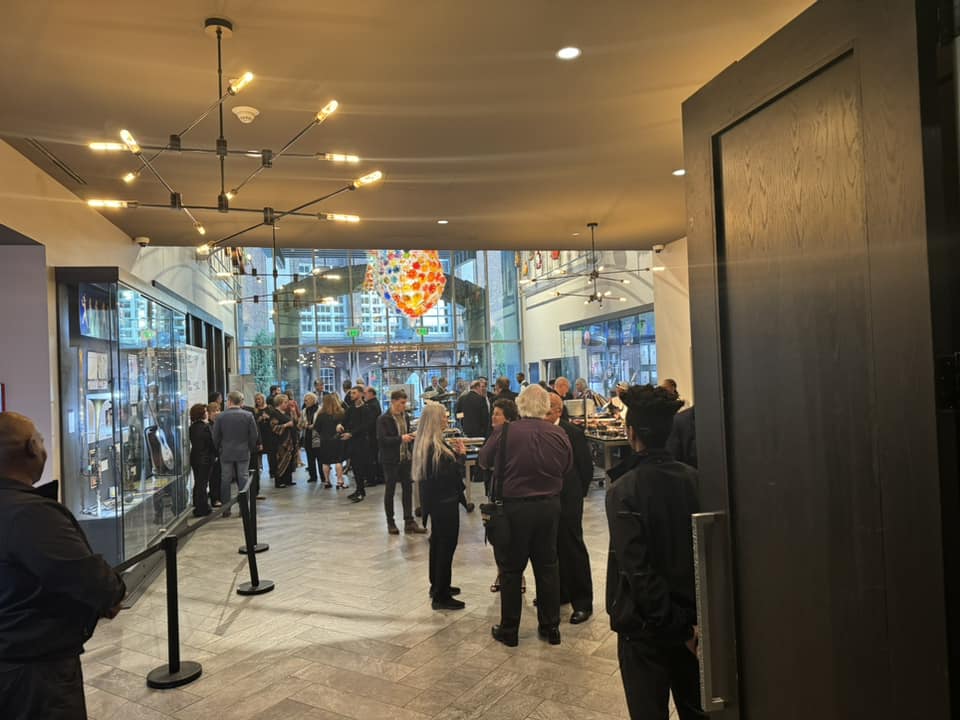
Celebrating 140 years of the Gretsch Company
Georgia Southern University helped Fred and Dinah Gretsch – and a roomful of other supporters and musical friends – celebrate 140 years of the Gretsch musical instruments company and “that great Gretsch sound” at a recent anniversary celebration at Savannah’s Plant Riverside district. Benefitting the Georgia Music Foundation, the event was held in a space that is a living testament to the partnership between Georgia Southern and the Gretsches, whose name are on the University’s school of music. “That Great Gretsch Sound!” Museum is a spotlight destination in the heart of downtown Savannah that tells the rich history of the Gretsch family and company. The space celebrates Gretsch’s ever-growing worldwide musical community, honors the Gretsch family commitment to music education, and showcases hundreds of Gretsch’s most storied instruments. In addition to the instruments and artifacts on display in Savannah, Georgia Southern is working to build one of the most comprehensive digital document collections of music industry history, thanks to decades of resources collected by Fred and Dinah and donated to our University Libraries. Together, through innovative pathways, Gretsch and Georgia Southern are creating renewed interest in performance and music education amongst K-12 students throughout our region. And, this fall at Georgia Southern, the Fred and Dinah Gretsch School of Music saw a 25% increase in enrollment – with nearly 20% of the school’s students focused on our Music Industry program. “Fred and Dinah, we thank you for your tireless efforts to make Georgia Southern a more musical place,” Georgia Southern University President Kyle Marrero said. “Your guidance, resources, and imagination have helped us soar to new heights, and we look forward to our future together. “ The evening included performances by Georgia Southern Gretsch School of Music students, and Tony Arata, a member of the Nashville Songwriters Hall of Fame who grew up on Tybee Island and studied at Georgia Southern University. Interested in learning more about the Gretsch's involvement with Georgia Southern or the Gretsch School of Music? Contact Georgia Southern's Director of Communications Jennifer Wise at jwise@georgiasouthern.edu to arrange an interview today.


'Shake it Off' - Do Grammy-Winning Pop Artists Take More Creative Risks Than Their Runners-Up?
Taylor Swift has had a career marked by an evolution in sound and style. Swift emerged into the industry a country star and was later rebranded a pop icon. She’s gone on to explore alternative rock and indie folk sounds. Research by Giacomo Negro, professor of Organization & Management and professor of Sociology (by courtesy), suggests Grammy award wins may be credited as the catalyst for these changes. Swift, who holds 11 Grammy awards, won her first in 2010, taking home Album of the Year for country album “Fearless,” then again for her first exclusively pop album “1989” and again in 2021 for her indie folk album “Folklore.” Each time she earned another Grammy, she tried something new. Swift is not the only one. After winning Album of the Year in 1988 for classic arena rock album “The Joshua Tree,” U2 released “Achtung Baby,” an album that dabbled with kraut rock and electronic music. Similarly, Fleetwood Mac’s “Rumours” won them Album of the Year in 1978, after which, they released their double album “Tusk,” an experimental record that incorporated punk-rock. Does Missing out on a Grammy Win Make Artists Timid? Negro’s research shows Grammy award winners tend to release albums that are more distinct from the work of other artists, whereas Grammy nominees who do not win create music that is more similar to other artists than they had prior to their nomination. Negro co-authored the research with Balázs Kovács from Yale University and Glenn Carroll from Stanford University–a culmination of more than five years of work. Negro says he has always been interested in cultural production, and he set out to study the patterns of differentiation in the music market. He chose the Grammys because these symbolic awards provide a situation similar to a natural experiment that is hard to find in real life or without a controlled environment. The Grammys are also unique because they share the names of both the award winners and the nominees, presenting a comparison among candidates of similar quality. To explore this question, Negro obtained data from four main sources: Grammy Awards Academy, online music database AllMusic, Spotify, and Billboard. From the academy information, he collected data for the Grammy nominated artists and winners from 1959 to 2018 in four “general” categories: Album of the Year, Record of the Year, Song of the Year,and Best New Artist. From AllMusic, they collected data based on the Grammy information that included artist name, recording name, year of release, record labels the artists released the music with, the production team they worked with, and the stylistic tags attached to each recording. Spotify holds a repository of popular songs; from here, they sourced data on the songs’ sonic features, which are the objective parameters of the music that qualify how the music sounds and is measured by algorithms, including tempo, genre, and key. Looking at the Billboard charts for the 2000s, they found the most albums that sold the most copies. “We combined all of this information coming from different sources, which was a challenge and an endeavor by itself, to attach information related to styles, sonic features, performance on the chart, and performance with the awards,” Negro says. They compared albums of Grammy winners with the albums of the nominees, then compared these with albums from a group of artists in the general market matched on a series of characteristics (such as genre and length of recording career). The researchers found that after artists win a Grammy, they become more experimental with their work, whereas the runners-up make music that is stylistically more conventional. This latter result was unexpected. Negro argues that there is value to be seen in the Grammys–even though it may be criticized for being too commercial or questioned for its relevance–because it has an impact on the music market and the careers of artists who are nominated and awarded. “These prizes celebrate creativity and innovation but may have unintended consequences in terms of their artists’ behavior,” he adds. “If more people become more conventional because of not receiving an award, one implication for cultural production is that awards have mixed impact. They benefit winners because they afford them more autonomy and, perhaps, confidence to explore new ideas, but they don’t necessarily benefit innovation in the field overall because more artists are just becoming more conventional.” He offers that, conversely, there may be a positive impact for artists who were not nominated at all. These artists may try to imitate the winners and try different things in the future. From this, it is clear that there is a benefit to mention who wins an award, but he says it is inconclusive whether there is a benefit to sharing the names of shortlisted candidates. What are the Greater Cultural Implications? “It’s interesting to observe how cultural production is sensitive to symbolic awards,” Negro says. “We tend to think that artists mainly follow their muse or their inspiration, but they respond to the stimuli around them.” Negro speculates that the results found in this study might apply to other industries in which producers or artists can combine different elements of styles to create their products, such as book publishing, visual arts, film, or television. He adds, these results may apply more generally to other markets and professional settings, in which employers create programs of rewards for employees. A bestowal of such awards may empower winners to continue with their behaviors, while discouraging those who were not recognized for their efforts, leading them to return to more typical behaviors. Negro is interested in following up this research by looking at the general impact of all Grammy Awards–not just the general ones–to see if specialized awards have a similar impact. He is also curious to investigate the patterns of collaboration between artists, and if stylistic changes are related to changes in the people artists work with. When Business Meets Research, What Can Students Take Away? Negro says this research also yielded findings that his team did not expect, as in the difference between winners and non-winning nominees. Where they thought they may see similarities, they, instead, saw differences, reiterating the importance of questioning how industries operate. To inquisitive students he advises, “Keep your eyes open and be curious about understanding why or how things work the way they do. Then, be persistent because it can take a long time to bring your idea to fruition.” Interested in knowing more or connecting with Giacomo Negro - simply click on his icon now to arrange an interview or time today.


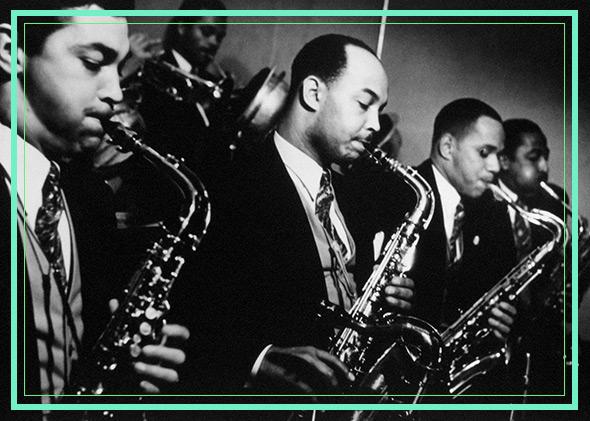
Too Cool for School? Our #experts can help with a history lesson in hipness
Who decides what’s “cool?” What have been the criteria over the years for rising to the ranks of “hot,” “phat” or “lit?” Colin Rafferty teaches a course that delves into the elusive but ever-so-attractive notion of being deemed “cool.” The syllabus examines this coveted quality and the entities described by it in historical and contemporary contexts, from its roots in the post-WWI jazz-age to rappers and TikTok. “The Idea of Cool” uses books, music and movies to explore what and who rises to the top of popular opinion and why. “I am decidedly not cool,” said Rafferty, who describes himself as a middle-aged man who owns a book of crossword puzzles. “But I find cool to be a fascinating thing.” Colin is available to speak with media about “The Idea of Cool” and his very cool work . Simply click on his icon to arrange an interview.



Predicting the post-pandemic desires for the Latin music industry
Coachella, identified as a mega-festival universe, decided on a diverse 2023 roster with artists like Becky G, Kali Uchis, and Rosalía. Bad Bunny, last year’s most-streamed global artist, made history as the festival’s first Spanish-language headliner. It also marked the first year since Coachella’s founding in 1999 that none of the headliners were white. José Valentino Ruiz-Resto, an assistant professor in the School of Music at the University of Florida, co-authored a paper for the Journal of Arts Entrepreneurship Education, which focused on how the music industry would evolutionarily change after the pandemic and ultimately predicted the 2023 Coachella trend. “The rise of Latin artists/headliners at festivals like Coachella is really a reflection of what has been happening in the music industry for the past two decades,” said José Valentino Ruiz-Resto who is also the program coordinator of Music Business & Entrepreneurship at UF. Ruiz-Resto’s research showed that the post-Covid era music industry would encourage more people to stay home and listen to music digitally, but the traditional Latin music experience is an outlier to this. The world-renowned multi-instrumentalist explains, "In order for concerts and festivals to maintain success, they needed to branch out to other markets to bring in those people who were still very much passionate about experiencing music in a live context.” Although this shift was initiated by the pandemic, it has been patiently anticipated by Ruiz-Resto for over 23 years, starting with the founding of the Latin Grammys in 2000. “Because the amount of production within the Latin recording academy is almost equivocal to that of all of the other genres in the American market combined. Latin music is the No. 1 meta genre in the music industry in terms of sales and fan support,” Ruiz-Resto, now a four-time Latin Grammy Award winner, said. Ruiz-Resto's data predicted the need for a stronger focus on the Latin music enthusiasts who still actively go to concerts like Coachella, “In order for Coachella to ultimately succeed in the post-Covid era and attract people, they needed to bring in artists like Bad Bunny.” This historic Coachella moment followed an announcement from the Recording Industry Association of America, stating that Latin music revenues in the United States were at an all-time high, exceeding over $1 billion in 2022. All of this was no surprise to Ruiz-Resto, who observes, researches and directly participates in the Latin music industry. “Now bigger shows are catching up to what has been the largest-selling music market for years. It’s a testament to how positively Latin American cultures are inspiring listeners across the U.S.” By Halle Burton



Georgia Southern University opens doors to Gullah Geechee Cultural Heritage Center
Georgia Southern University’s Gullah Geechee Cultural Heritage Center officially opened its doors with a grand opening and ribbon cutting on June 19. Coinciding with the Center’s Juneteenth celebration, the public was invited to attend the afternoon festivities at 13040 Abercorn Street in Savannah. The ribbon cutting saw many local dignitaries in attendence, including Savannah Mayor Van R. Johnson, Georgia Rep. Carl Gilliard, Georgia Sen. Derek Mallow and Chatham County Chairman Chester Ellis, as well as Gullah Geechee Cultural Heritage Corridor Executive Director Victoria Smalls, Gullah Geechee historian and preservationist Queen Quet and Georgia Southern Provost and Vice President for Academic Affairs Carl Reiber, Ph.D., offered opening remarks. “This is a monumental occasion,” said Maxine Bryant, Ph.D., director of the Gullah Geechee Center. “To celebrate our grand opening on the nationally recognized Juneteenth is extremely meaningful. We will simultaneously honor the freedom of enslaved Black Americans and the Gullah Geechee culture that has preserved more African traditions than any other group.” The Gullah Geechee people of Coastal Georgia are descendants of enslaved Africans from plantations along the lower Atlantic coast. Many came from the rice-growing region of West Africa and were brought to the Americas for their agricultural and architectural knowledge and skills. The enslaved Africans were isolated on the Sea Islands. This isolation enabled them to create and maintain a unique culture steeped in remnants of Africa. This culture became known as Gullah Geechee and is visible in the people’s distinctive arts, crafts, foodways, use of waterways, music, dance and language. Much of the Gullah Geechee community today, which is estimated to be a population of 1 million, can speak the African Creole language or tell the stories of their ancestors who are credited with influencing southern and American culture. Local Gullah Geechee artists and the McIntosh County Shouters showcased their talent at the event. The Gullah Geechee Cultural Heritage Center, established in 2019, honors myriad contributions made by Gullah Geechee people, provides educational resources for the public, promotes scholarship and research, and serves as a model for national reconciliation and reparations. It is part of the Gullah Geechee Corridor, which stretches across 27 counties in Georgia, South Carolina, North Carolina and Florida. If you're interested in learning more about Georgia Southern University’s Gullah Geechee Cultural Heritage Center - then let us help. Simply reach out to Georgia Southern's Director of Communications Jennifer Wise at jwise@georgiasouthern.edu to arrange an interview today.
If you’re looking for comment on this week’s announcement about government’s proposed £50bn investment in creative industries we have a design expert available. Dr Tim Whitehead is associate dean and senior lecturer, engineering and technology, Aston University. He believes that although the Tory's promise spending for the creative industries they need to invest in education first. His full response is attached and below: “This week the government announced a plan to boost the creative industries by £50bn by 2030 and invest £77m in funding for the sector. “This news is fantastic and long overdue. The UK design economy contributes £97.4bn GVA and for every £1 invested in design we see a return of £4 to the wider economy. “The creative sector is a major British export with film, TV, music being some of the biggest exports. However, we also have physical products; If you’ve ever used an iPhone, a Dyson or ridden on a London double decker bus then you’ve used world class British design. “The funding is welcome, however we really need investment in our schools to teach creativity and align this with recent announcements in maths education. “The majority of our most successful designers / creative engineers started with Design and Technology at school. “Between academic years 2009-10 and 2021-22, the proportion of pupils taking Design and Technology GCSEs fell from around 42% to 27% in all schools in England. With only a minor increase in pupils taking Art and Design GCSE which increased from 27% to 29% over the same period. “There is a big gap here, and we really need to ensure that children have access to a creative education as school. “By embedding creativity into the next generation it will help foster new creative engineers data scientists etc. and the next Dyson.” Dr Tim Whitehead, associate dean and senior lecturer, engineering and technology, Aston University For inquiries contact Nicola Jones, Press and Communications Manager, on (+44) 7825 342091 or email: n.jones6@aston.ac.uk
