
Experts Matter. Find Yours.
Connect for media, speaking, professional opportunities & more.

Podcast: Research into household chores reveals fascinating home truths
The notion of ‘women’s work’ still deeply embedded in today’s society Men’s choice of housework centred around machinery and perceived physical strength Some household tasks have ‘shifted’ over the years A fascinating study by an academic at Aston University has revealed that women still do certain traditional tasks within the home. The research by Dr Emily Christopher, a lecturer in sociology and policy, found that ‘woman-type’ tasks often involve multi-tasking while men’s roles often include solo duties such as mowing the lawn. Dr Christopher, whose research focuses on the reproduction of gender inequalities in paid and unpaid work, spoke about her study in the latest episode of the 'Society matters' podcast series, presented by journalist Steve Dyson. The episode is sub-titled 'Did you iron my shirt? Why household work, and who does it, matters'. Dr Christopher explained that men are doing much more household work than they did 50 years ago, and that there was “general agreement” among the couples she interviewed that household work should be shared. The lecturer, who invited couples to assign ‘task cards’ during interviews in their homes, said past research found that women still perform the ‘lion’s share’ of household work. This, she said, followed on from the “age old idea” of women being more caring and nurturing which was “deeply embedded in the way society thinks”. While some tasks were still more likely to be done by women, some had shifted over time. Tasks still “overwhelmingly gendered” today include women remembering birthdays, organising presents, and remembering whether a child needs PE kit or money for a cake sale, all the cognitive labour of household management. She said: “The problem is it’s invisible, so it isn’t recognised as work.” Dr Christopher said that men tend to do the ironing if they find it “enjoyable”, often while listening to football or music, or if they have “particular standards”, such as creases in their sleeves. However, some women choose ironing as a “form of protest”, doing their own and their children’s clothes but refusing to iron men’s shirts. Dr Christopher pointed out that some other tasks traditionally seen as women’s, which had ‘shifted’, included cooking. She said: “Men are more likely to do this now, arguably this might be because they are less likely to be seen as less masculine for doing so, this helped by the rise of celebrity chefs like Gordon Ramsay, Rick Stein and Jamie Oliver.” Her research also revealed that men are more likely to wash up and stack the dishwasher but, like ironing, men doing these tasks was often driven by standards such as liking them stacked a particular way. They are also more likely to hoover than to clean, which fell mostly to women, with Dr Christopher suggesting: “I wonder whether sometimes this is something to do with the fact that hoovering involves technology and machinery, so it conceptualises more as a masculine form of housework.” Similarly, Dr Christopher said men are more likely to do outside jobs such as DIY, washing the car and mowing the lawn, with the emphasis again on physical strength. Significantly, tasks which men are more likely to be responsible for, such as DIY, are less likely to “interfere” with paid work, whereas those done by women often involve a reduction in their hours with “very wide implications” such as a gender pay gap, restrictions in career progression, and restricted access to pensions in later life. As a result, she said the state needs to do more, particularly around parental leave and the lack of affordable childcare provision. Dr Christopher said: “If you take maternity leave, it’s 12 months maximum in comparison to one or two weeks’ paternity leave, so straight away we are sending a message about who’s the natural carer. Parental leave needs to change to challenge this reinforcing of gender roles.” She added that childcare provision needs to be seen as integral to the way society and the economy works, so needs funding. Increasingly, Dr Christopher said couples are relying on their parents for help with childcare, and “interestingly, it tends to be the grandmothers who take on this work”. Individuals wanting to put a monetary value on household work can complete the Office for National Statistics’ domestic labour calculator, although she said it was a crude measure and only gives a rough idea. “Using this measure, my household work, on top of a full-time job at Aston University, is worth £18,000 a year,” she said. Listen to all episodes of the 'Society matters' podcast


New research highlights the economic importance of live music to Birmingham and the West Midlands
It found local authorities need to more explicitly recognise the economic, social and cultural value of live music and live music venues The report calls for dialogue between music stakeholders and government The research is published by Aston University and supported by the AHRC-funded Creative Industries Policy and Evidence Centre. New research by the Birmingham Live Music Project (BLMP) highlights the huge economic value of Birmingham’s live music scene, the vital contribution small independent venues make, the ongoing impact of the pandemic and what is needed to support the recovery of the sector in the city. The research is published by Aston University, with colleagues from Newcastle University and Birmingham City University, and supported by the Arts and Humanities Research Council (AHRC)-funded Creative Industries Policy and Evidence Centre. In 2019, the UK’s live music sector was valued at over £1.3 billion. After almost a decade of strong growth the sector helped push the UK music’s overall GVA from £3.5 billion in 2012 to £5.8 billion in 2019, the outbreak of the global pandemic brought it to a near standstill. This paper explores, through a local lens and a focus on Birmingham, the challenges stakeholders across the live music sector have faced in recent years. The research finds that small live music venues are the lifeblood of this financial, cultural and community asset for the city. In 2019 Birmingham helped bring 877,000 music tourists to the West Midlands, with a total cultural spend in the region of £252,000,000 (UK Music). But during summer 2020, the research published today found, Birmingham’s live music capacity of approx. 98,000 dropped by around 75%. This impacted ticket prices, the availability of events across the city, and the economic viability of shows – while some venues could stay open, they couldn’t make a profit. The report makes clear independent venues need protection and support particularly in the wake of the pandemic. It calls for dialogue between music stakeholders and government in advance of the 2025 review of the EU-UK Trade and Co-Operation Agreement to identify the best means of reducing friction and support for the efforts to improve the Agreement, for example work on border force training, expanding the number of checkpoints where carnets and Music Instrument Certificates can be checked, reducing bureaucracy for live event transport and haulage, examination of further measures to develop the ’dual registration’ system for specialist hauliers to ease pressure on touring. Dr Patrycja Rozbicka, a senior lecturer in politics and international relations at Aston University and one of the report authors, said: “Local authorities need to more explicitly recognise the economic, social and cultural value of live music and live music venues, including grassroots venues, to their region(s). “Environmental, health, culture and city regeneration strategies have to take account of the existing and huge potential contribution of live music to the city and region. “What is needed is a cross-policy approach, implementation of a Night-time Industry Impact Assessment and dialogue between local authorities and the music sector, where the recently launched West Midlands Music Board could play a role. “We would like to see the creation of information hubs to support local venues and audiences with initiatives such those undertaken by the Liverpool City Region including a Music Fund which supports activities of the Liverpool City Region Music Board as well as helping with funding applications and advice. You can read the full report here.


Winnipeg, MB, March 16, 2022 - Longing for your next adventure? Look no further because CAA Manitoba has unveiled a new set of luxurious travel packages designed for travellers who are ready to embark on an iconic Canadian adventure. As part of each package, travellers will be flying on a CAA chartered jet with all business class seating, offered in partnership with Air Canada. They will be joined only by those travelling on a Premier Collection tour. Itineraries are curated with affordable luxury in mind. “Our research has shown us that Canadians are looking to experience travel in a more intimate setting and at this time, many are still looking to stay closer to home,” said Susan Postma, regional manager, CAA Manitoba. “By coupling the best of Canadian culture, food and heritage, with the safety and luxury of travelling on a CAA chartered plane, we are confident that these packages will give travellers a delightful option to start exploring again.” Travellers will rediscover the nation’s greatest sights, sounds and smells on one of five journeys showcasing Canada’s unforgettable wonders and hidden gems. “For many of us, travelling again for the first time is a momentous occasion and we wanted to make that extra special by cultivating a premium experience with the utmost attention to health and safety,” said Postma. “Each destination encourages travellers to immerse themselves in every moment and create lasting memories.” Packages feature everything from stargazing to whale watching; enjoying a pancake brunch on a maple farm to World Famous “Digby Scallops” in Nova Scotia; witnessing the highest tides in the world in New Brunswick to taking in Quebec’s most breathtaking waterfall and many more unique experiences in between. “We are very pleased that CAA is recognizing our superior customer service in choosing Air Canada for its unique, luxury travel packages. Our private charter service, Air Canada Jetz, is specially designed for ultra-premium customers, such as pro athletes, celebrities and music stars, ensuring CAA’s explorers will travel in extraordinary style wherever their adventure takes them,” said Eric Bordeleau, senior director, Network Scheduling and Charters at Air Canada. Tours and dates include: Glorious Lakes and Glaciers: Banff, Jasper and Beyond (August 13-20, 2022) – 8 Days Savour Quebec: A Culinary Journey Through Quebec City, Charlevoix and Montreal (August 15 – 24, 2022) – 10 Days Rich and Enticing Quebec: Explore the Spectacular Gaspé Peninsula (August 15 – 24, 2022) – 10 Days Magical Maritimes: Acadian Culture, Delicious Flavours and Historic Charms (September 10-19, 2022) – 10 Days Platinum Journey - Mountains and Memories: Wonders of the West and Rocky Mountaineer (September 13-21, 2022) – 9 Days CAA Travel has over 50 years of experience in helping members plan and book unforgettable travel excursions around the world. CAA’s new Premier Tours Collection packages are part of CAA’s Extraordinary Explorations collection and range in price starting at $6,300 CDN. Extraordinary Explorations is CAA’s collection of unique travel adventures designed for adventurous travellers looking to embark on a luxe vacation for an affordable price. Experience one-of-a-kind destinations, intriguing itineraries and exceptional excursions. Available as escorted and hosted packages, every exploration is guaranteed to create lasting memories. The 2022 Premier Collection packages can be purchased at all CAA stores or by phone at 1-844- 202-8045. Click here for more information.


25th Anniversary African American Art Song Alliance Conference
25th Anniversary African American Art Song Alliance Conference Organized by Dr. Darryl Taylor October 13 - October 16, 2022 The African American Art Song Alliance, founded by Professor of Music Dr. Darryl Taylor in 1997, is one of the nation’s leading advocacy organizations, representing Black composers of Western classical art songs. Its quinquennial conference is unique and inspirational for scholars and performers of this music. Learn more about the conference and its events on the website at music.arts.uci.edu. Come be part of this community of like-minded supporters! The Alliance remains focused on maintaining accessibility for the audience it serves and the larger population. They have made registration free and open to the public for the conference and its events. To learn more about the African American Art Song Alliance, visit their website at https://artsongalliance.org To speak to Dr. Taylor about the conference, contact Tom Vasich at 1-949-285-6455 or tmvasich@uci.edu.

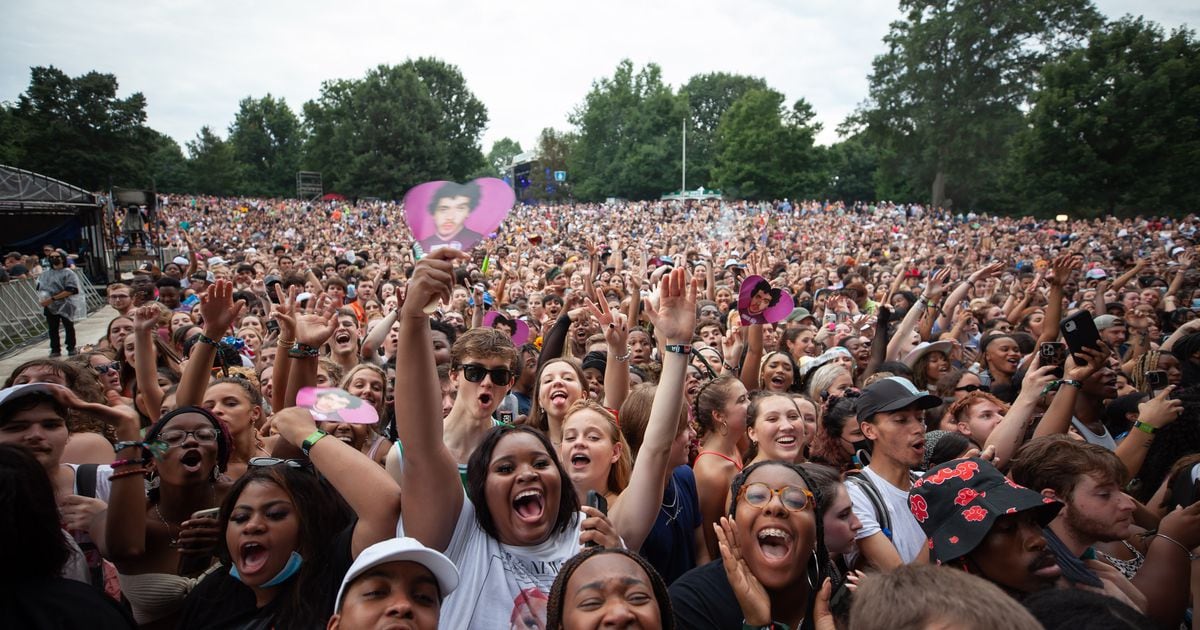
Politics, policy and public safety: Experts explain why a popular Atlanta festival was canceled
A sad tune is being hummed in Atlanta, where it was announced the popular annual Music Midtown festival is not happening, possibly in part due to the state’s laws surrounding guns in public parks. The event's cancellation, which brought tens of thousands of music lovers to the city -- along with the tourism dollars they spend -- has caused disappointment and drawn local and national media coverage. Calling it a “sad day” for the city, Atlanta City Council President Doug Shipman wrote on Twitter that: “Public policy has real impacts and, in this case, economic and social implications on a great tradition.” And state Democrats chastised Republicans for adopting a raft of pro-gun legislation, including a 2022 law that allows Georgians to carry concealed handguns without first getting a license from the state. The governor, who is seeking a second term, did not immediately comment on the festival’s decision. But state Rep. Rick Jasperse, a Jasper Republican who sponsored the 2014 law, said the measure is designed with public safety in mind. He said those intent on “causing chaos and crime in Georgia” won’t care if the festival bans firearms and would try to bring them in regardless. “Good Georgians who can qualify for a permit and carry a weapon do so to protect themselves from that element in our society,” he said. -- The Atlanta Journal Constitution, Aug. 1, 2022 Organizers of events like Music Midtown could look at Georgia’s gun laws and regulation of firearms as a potential legal liability. If there is a firearms incident, organizers may fear being held legally accountable and sued for any potential damages. The companies and their risk management advisors might think twice about holding large events in Georgia. Augusta University's Dr. William Hatcher, an expert when it comes to public administration and social, economic and political institutions in local communities, agrees that event organizers might be rethinking their plans in the state. "Yes. I think so. These types of laws have an impact on the economy and the business decisions of firms. We may see future effects on the economic behavior of individuals and firms." This topic could have further economic impact beyond canceled events, including affecting property values and home prices. If you're a journalist looking to know more, then let us help with your stories. Dr. William Hatcher is a professor of political science and chair of Augusta University’s Department of Social Sciences. He is an expert in the areas of public administration and social, economic and political institutions. Hatcher is available to speak with media regarding this topic. To arrange an interview today, simply click on his icon now.



'Good Guys With Guns May Be Heroes—But They're Not Our Solution '
Each tragic event mass shooting dominates the news cycle, leaving the public grieving -- and demanding answers and solutions. But while an armed gunman in the recent mass shooting at Greenwood Park Mall in Indiana was stopped by an armed citizen with his own legally possessed gun, Kerri M. Raissian and Jennifer Necci Dineen from the University of Connecticut's ARMS Center are warning against thinking about "good guys with guns" as the solution to the gun violence problem in the United States: But his heroic success is rare, and while we applaud his courage and skill, "good guys" with guns can only (maybe) end future shootings. What we really need is to prevent them. While it may ultimately be the case that "the only thing that stops a bad guy with a gun, is a good guy with a gun," the truth is America's "good guys" have more guns than ever before, and sadly, they have not always stopped the shooter in time. The Texas House of Representatives preliminary report revealed that in Uvalde, Texas, 376 police waited to engage the active shooter for 77 minutes due to systemic failures and miscommunication. Such failures were also seen in Parkland, Fla. in 2018, when 17 students and staff were killed. And the good guys' inability to stop the shooter isn't always a failure, sometimes the shooters are at a tactical disadvantage. Most recently in the Highland Park parade shooting and Las Vegas Route 91 Harvest music fest, the shooters were elevated and difficult to reach. A regular good guy is not able to safely or effectively respond when bullets are raining down. Of the 433 active shooter cases since 2001, an armed bystander shot the attacker in just 22 of the incidents. In almost half of those, the "good guy" was a security guard or an off-duty police officer. But even these "success stories" are tragedies—because if a good guy is responding, shots have been fired. People are likely injured—or worse—dead. Communities are shattered. And in the process, a regular good guy has been asked to do something none of us should ever have to do—stopping the bad guy likely means ending a human life. Success is not achieved if people die. That's not safety; that's salvaging. Their Newsweek commentary is attached here and is a must-read for anyone following this issue. Kerri M. Raissian is associate professor of public policy at the University of Connecticut, co-director of the University of Connecticut's ARMS Center, and co-leader of Connecticut's Scholars Strategy Network. She is available to speak to media about this important topic - simply click on her icon now to arrange and interview today.


Covering the music beat? Then tune in and get in touch with our resident hip-hop expert
Augusta University Professor Adam Diehl is an expert in hip-hop culture, lyrical analysis, rap as a form of literature and specifically, the works of Kendrick Lamar. Diehl gives an update on what's new in hip-hop and of course, answers questions about Lamar and his highly anticipated new album. How has the hip-hop music scene changed over the last 5 years? The hip-hop music scene has changed faster than any other genre the last five years. Whereas country still uses radio play and music videos to gauge success (along with album sales and streaming numbers) and rock uses touring to supplement and offset recording costs, pop and hip-hop have a great advantage in that they can raise people to stardom almost overnight. In fact, several of the biggest pop stars like Billie Eilish and Post Malone made their rapid ascents through the same channel many of the top hip-hop stars did: Soundcloud. Because this platform allowed new artists the chance to put their music alongside heavyweights, it democratized the listening process. What sent Soundcloud soaring? To put it succinctly, Soundcloud was the great reset of the hip-hop world. But when COVID hit and musicians couldn't tour for upwards of two years, the hip-hop community soared past country and rock (which they were already outselling pre-pandemic) because they didn't base their profit model on touring. Even pop stars were at a disadvantage, because the TV appearances and interviews they used to promote their new releases were few and far between for at least a year, and virtual events just couldn't replicate award show appearances and performances. Hip-hop, meanwhile, continued to be "Black America's CNN" and reported on the protests and outrage following the high-profile deaths of George Floyd and Breonna Taylor. The resurgence of Black Lives Matter brought mainstream media and cultural attention to the Black community, and as such the importance of hip-hop grew, just as it did in the wake of the Rodney King verdict and the deaths of Trayvon Martin, Michael Brown and Eric Garner. How has the economy of music changed? Most people under 20 don't own any CDs. What money these kids don't spend on music can now go to a modern cultural institution: the music festival. Increasingly, cities are hosting these previously camping-required concerts, which has been a particular advantage for hip-hop artists, who don't need roadies or sometimes even other people on stage. All they need is a setlist with six to 10 catchy songs, an entrancing light show, a DJ/engineer and a strong stage presence, and they can captivate the audience as easily as some of the all-time greats of any genre. Going forward, the music industry is going to be about return on investment. Instead of developing artists over a five-year period and then letting them blossom for two to three decades, they are looking for someone to explode in popularity instantly, stay in the spotlight and public consciousness consistently for three to five years, and then maybe stick around. TikTok is, in many ways, analogous to this career arc: the videos are short, the makers are -- to some extent -- largely forgettable, and the popularity relies heavily on a "hook." It's no surprise that hip-hop has been the most adopted genre by TikTokers: the genre has been more effective than any other in terms of codifying "catch phrases." And that's what TikTok is going for: something to hook viewers into watching more. Did the Super Bowl appearance by hip-hop artists take the genre to a whole new level as far as mainstream music? If the Super Bowl halftime show in 2022 did anything, it showed that rap and hip-hop are now as household friendly as rock, country and pop. Perhaps because so many best-selling rock acts had already played the halftime show, and perhaps because the pop acts of recent years had failed to maintain the public's attention, the 2022 halftime show featured one of hip-hop's founding fathers: Dr. Dre. His menagerie of artists' careers stretched over 30 years, and the time constraints of the show made hip-hop the ideal soundtrack. In a 13-minute set, six performers all got their moment in the California sun, and the mega-mix model so often used in clubs was perfect to segue from artist to artist. What 30 to 35 years ago was "Parental Advisory" is now the music that parents listen to. The target demo of the Super Bowl would've thought someone like Simon & Garfunkel or The Eagles much more risky picks than Dr. Dre & Co., even if their music was more family-friendly. Many casual music fans thought Kendrick Lamar was the head-scratcher because of his shorter tenure in the spotlight, but the younger generations watching were much more interested in what Kendrick did than "old heads" like Snoop Dogg and Mary J. Blige. Was this new album by Kendrick Lamar overdue? The new Kendrick Lamar album comes right on time: it is the definitive COVID album. If he had released in spring/summer 2020 when he originally intended (i.e. if the early March 2020 pgLang rollout was foreshadowing his record release), this would be a substantially different work of art. Instead, the project voices what so many people have endured in the pandemic: domestic turmoil. The tracks cover a vast array of topics -- from vaccinations to transgenderism to cancel culture -- but the unifying theme is therapy. As much emphasis as physical health got over the past two years, the pandemic was arguably just as bad if not worse for people's mental health. Accordingly, this album goes into dark valleys in Kendrick's and his family's trials and traumas: child abuse, sex addiction, separation/divorce, deaths, etc. In the two years that society has been persevering through the pandemic, countless marriages and millions of lives have been shaken to their cores. Listening to this double-album adds another tremor to our already-jostled souls. Tracks like "We Cry Together" capture the rapid-fire romantic arguments that can quickly escalate from disappointment to suicidal ideation, and "United in Grief" recreates the sense of a panic attack with its intensifying lyric delivery and drumbeats. Anxiety and depression are the recurring moods of this album, and the track list ranges in sonic textures -- from Lamar's tried-and-true vintage gangsta rap beats to the utterly unpredictable piano flourishes that come straight from a spoken word poetry reading -- to reflect the all-too-familiar combination of monotony and chaos that the world has undergone for the last two years. It is unforgettable -- just like COVID-19 -- but also, perhaps, something we'd rather not relive. Why do some consider Lamar the most influential rapper of our generation? Kendrick Lamar only has two real rivals for most influential rapper of the generation: Kanye West and Drake. Although Kanye is 10 years older, his career overlaps to a large degree with Kendrick's. Kanye's influence certainly comes more in the production of songs than in lyrical delivery, but his subject matter has been very contagious. Kendrick's mentioning of a Birkin bag in "N95" would never have happened if not for Kanye's lyrical (and career) forays into high fashion. Drake, on the other hand, is probably the rapper most influenced by Kanye...who went on to influence the most artists. Without Drake, many rappers wouldn't have had the blueprint for being singers as well as MCs. What Kendrick brings to the conversation is, in a way, more elusive; however, he without a doubt has raised the bar for lyrical delivery and flow, such that rappers have a better chance at success if they are comically basic than if they are merely competent. It's as if Kendrick took Eminem's velocity and used it to speak on bigger picture issues. Kendrick has also proven to be a fashion-forward rapper, collaborating with Reebok, Nike and Converse over the last few years. His influence might be most prominent in the "realness" of his lyrics: without Kendrick's "everyday life music," the emergence and popularization of "Soundcloud rap" might have been significantly limited. Instead, he uses Kodak Black -- one of the most successful of all Soundcloud-era rappers -- on Mr. Morale & the Big Steppers. If Kendrick isn't the most influential rapper of his generation, it's because his ambition and execution have placed him with the all-time greats, and oftentimes that puts artists at odds with their contemporaries. In 100 years, people won't remember some big acts because popularity wears off, but they will still celebrate Kendrick because his work is excellent. Looking to know more? Hit up Adam Diehl today -- simply click on his icon now to arrange an interview.


Music in nature: from birds and cicadas to whales
When Henry Wadsworth Longfellow described music as the “universal language of mankind,” he was only partially right. Why? Because the roots of music trace all the way back to nature, specifically the animal kingdom, which uses it to communicate or simply commune. Author Michael Spitzer goes even further, describing music as our “umbilical cord” to Mother Nature, noting, “The very simple answer to where music begins is in animals, because birds sing and whales sing.” NJIT’s David Rothenberg knows this first-hand, as a composer and jazz clarinetist who jams with fish large and small and hordes of whirring cicadas – insects that spark both his heart and brain. As he explains, “Playing along with these guys is like joining into a fantastic trove with millions of singers.” As a researcher who investigates the musicality of animals, Rothenberg speaks authoritatively and animatedly about the music of fish, birds and yes, cicadas, identifying three distinct sounds they make during their massive mating call every 17 years. In short, if you want to know what makes nature sing, why and how, he’s your source. To interview him, simply click on the button below.



'A Fundamental Part of Being Human' - UConn Expert on the Ritual of Caring for the Dead
The War in Ukraine has brought images of death and mourning onto screens across the globe and directly into public consciousness. Funerary rights, explains UConn expert Dimitris Xygalatas, are among the traits that archeologists find distinguishing between humans and other species. While those rituals are ostensibly about the dead, their importance, he writes in a new essay published in The Conversation, lies in the roles they play for those still living: They allow them to grieve, seek comfort, face the reality of death and find the strength to move on. They are deeply human acts, which is why being deprived of them can feel devastating and dehumanizing. This is what is happening in Ukraine. In besieged cities, people cannot retrieve the bodies of their loves ones from the streets out of fear of being killed. In other cases, Ukrainian officials have accused the Russian army of burying victims in mass graves to hide war crimes. Even when they are retrieved, many of the corpses have been mutilated, making them difficult to identify. To people who have lost their loved ones, the lack of a proper send-off can feel like a second loss. The need for closure is widely recognized to be indispensable – not only by anthropologists and psychologists, but also first responders, governments and international organizations. This is why armies go to great lengths to return the remains of fallen soldiers to their families, even if that takes decades. The right to a burial is acknowledged even for one’s foes. The Geneva Convention stipulates that belligerents must ensure that the bodies of enemies are “honorably interred” and that their graves are respected and “properly maintained and marked so that they may always be found.” Given the importance of those rites, it is also striking that the Russian defense ministry has reportedly been reluctant to bring their own dead back home, because they are concerned with covering up the scale of the losses. This seeming indifference to the suffering of Russia’s own people and their need for closure may be yet another act of dehumanization. Professor Xygalatas is an anthropologist and cognitive scientist at the University of Connecticut who specializes in some of the things that make us human, including ritual, music, cooperation, and the interaction between cognition and culture. He is available to speak with media, simply click on his icon to arrange an interview today.


Aston University professor made deputy lieutenant for the West Midlands
Professor Monder Ram has been recognised for his work around ethnic minority entrepreneurship Six individuals have been given the honour for contributing significantly to either national life, to their local communities – or both He will support the Lord-Lieutenant in several ways including attending on Royalty during official visits to the County. The Lord-Lieutenant of the West Midlands, John Crabtree OBE, has announced the appointment of an Aston University professor as a deputy lieutenant for the West Midlands. Six individuals, whose backgrounds range from music to education, entrepreneurship, and tackling homelessness, have been given the honour for contributing significantly to either national life, to their local communities – or both. Professor Monder Ram, director of the Centre for Research in Ethnic Minority Entrepreneurship (CREME) at Aston University, has been recognised for his work around ethnic minority entrepreneurship. The new appointees will support the Lord-Lieutenant, Her Majesty’s personal representative in the West Midlands, in several ways including attending on Royalty during official visits to the County, representation at citizenship ceremonies, supporting the armed forces of the Crown particularly the reserve and cadet forces, encouraging charitable and voluntary work and local initiatives to benefit the community, as well as promoting and encouraging nominations for Honours and Queen’s Awards for the County of the West Midlands. Professor Monder Ram, director of the Centre for Research in Ethnic Minority Entrepreneurship (CREME) at Aston University, said: “I am delighted and honoured to be appointed a Deputy Lieutenant for the West Midlands region. This role will provide an invaluable opportunity for me promote the importance of diversity, inclusion and enterprise, which are central to my work at CREME.” The West Midlands Lieutenancy comprises Birmingham, Coventry, Dudley, Sandwell, Solihull, Walsall and Wolverhampton. It was established in 1974. John Crabtree OBE, the Lord-Lieutenant for the West Midlands and Aston University honorary graduate, said: “The six appointments came at a pivotal time for the West Midlands which this year is on the national and world stage with Coventry as UK City of Culture and the region hosting the Commonwealth Games in July and August - as well as participating fully in the Queen’s Platinum Jubilee. The West Midlands is this year welcoming visitors from throughout the world and the West Midlands Lieutenancy is committed to supporting and representing every community in the County.”
