
Experts Matter. Find Yours.
Connect for media, speaking, professional opportunities & more.

Chatbots can ease medical providers' burden, offer trusted guidance to those with COVID-19 symptoms
COVID-19 has placed tremendous pressure on health care systems, not only for critical care but also from an anxious public looking for answers. Research from the Indiana University Kelley School of Business found that chatbots -- software applications that conduct online chats via text or text-to-speech -- working for reputable organizations can ease the burden on medical providers and offer trusted guidance to those with symptoms. Researchers conducted an online experiment with 371 participants who viewed a COVID-19 screening session between a hotline agent -- chatbot or human -- and a user with mild or severe symptoms. They studied whether chatbots were seen as being persuasive, providing satisfying information that likely would be followed. Their results showed a slight negative bias against chatbots' ability, perhaps due to recent press reports. When the perceived ability is the same, however, participants reported that they viewed chatbots more positively than human agents, which is good news for health care organizations struggling to meet user demand for screening services. "The primary factor driving user response to screening hotlines -- human or chatbot -- is perceptions of the agent's ability," said Alan Dennis, the John T. Chambers Chair of Internet Systems at Kelley and corresponding author of the paper, "User reactions to COVID-19 screening chatbots from reputable providers." "When ability is the same, users view chatbots no differently or more positively than human agents." Other authors on the paper, forthcoming in the Journal of the American Medical Informatics Association, are Antino Kim, assistant professor of operations and decision technologies at Kelley; and Sezgin Ayabakan, assistant professor of management information systems, and doctoral candidate Mohammad Rahimi, both at Temple University's Fox School of Business. Even before the pandemic, chatbots were identified as a technology that could speed up how people interact with researchers and find medical information online. "Chatbots are scalable, so they can meet an unexpected surge in demand when there is a shortage of qualified human agents," Dennis, Kim and their co-authors wrote, adding that chatbots "can provide round-the-clock service at a low operational cost. "This positive response may be because users feel more comfortable disclosing information to a chatbot, especially socially undesirable information, because a chatbot makes no judgment," researchers wrote. "The CDC, the World Health Organization, UNICEF and other health organizations caution that the COVID-19 outbreak has provoked social stigma and discriminatory behaviors against people of certain ethnic backgrounds, as well as those perceived to have been in contact with the virus. This is truly an unfortunate situation, and perhaps chatbots can assist those who are hesitant to seek help because of the stigma." The primary factor driving perceptions of ability was the user's trust in the provider of the screening hotline. "Proactively informing users of the chatbot's ability is important," the authors wrote. "Users need to understand that chatbots use the same up-to-date knowledge base and follow the same set of screening protocols as human agents. ... Because trust in the provider strongly influences perceptions of ability, building on the organization's reputation may also prove useful."


As China clamps down on Hong Kong – Is Taiwan next?
As protests erupt again across Hong Kong against the recent imposing of new security laws essentially giving Beijing unprecedented powers – it has some worried about what is next as China pursues it’s One-China policy. In Taiwan people are watching, and concern is growing. Professor Elizabeth Freund Larus teaches political science at the University of Mary Washington and is an #expert on China and the field of Asian studies. She has also been interviewed by media such as CNBC, The Diplomat and CBN News regarding this topic. She has noted that the developments in China, especially with regards to Hong Kong and Taiwan are catching global attention and will impact economies and governments across the globe. Beijing has taken an especially hard line towards Taiwan since the 2016 election of President Tsai Ing-wen of the Democratic Progressive Party (DPP), ramping up military, economic and diplomatic pressure. Tsai views Taiwan as a de facto independent nation and not part of "one China". But the pressure campaign has done little to endear China to Taiwan's 23 million people. In January, Tsai won a second term with a historic landslide and polls consistently show a growing distrust of China... Social media is filled with messages of support for Hong Kong's democracy movement. Some back Taiwanese independence, or highlight China's rights abuses in regions such as Tibet and Xinjiang. Wendy Peng, a 26-year-old magazine editor who said she often shared pro-Hong Kong democracy messages on social media, said she would now avoid visiting the city. "The national security law makes me wonder how far would China go. Right now I don't see a bottom line and there's probably none. I think it's possible they will target Taiwan next," she said. July -7 Yahoo! New/AFP If you are a reporter covering this progressing story – then let our experts help. Elizabeth Larus is available to speak to media, simply click on her icon to arrange an interview.



Individuals With Intellectual and Developmental Disabilities More Likely to Contract COVID-19
Recent news coverage has indicated that individuals with intellectual and developmental disabilities (ID/DD) are more likely than those without ID/DD to contract COVID-19 and to die as a result of it. "Similar to other individuals with disability, those with ID/DD often have pre-existing health conditions that increase their risk," says Suzanne C. Smeltzer, EdD, RN, the Richard and Marianne Kreider Endowed Professor in Nursing for Vulnerable Populations at Villanova University's M. Louise Fitzpatrick College of Nursing. Some people with ID/DD live in group settings in which they come in contact with others who may be infected with COVID-19. The frequent turnover of personal assistants and contact of persons with ID/DD with multiple personal assistants may increase the risk of COVID-19 in part because of their exposure to multiple potential carriers and the need for many of their personal assistants to use public transportation. Dr. Smeltzer says, "There is also concern in the disability community, among family members of individuals with disability and among disability advocates that those with these disabilities will be viewed as less deserving of more aggressive therapies, such as ventilators. The quality of life of persons with ID/DD may be considered by others as low, even though quality of life can only be judged by the people themselves." Initial limitations put in place in many health care institutions included the exclusion of family members and other support persons because of risk for COVID-19 infection. However, a groundswell of advocacy resulted in changes in this policy because individuals with ID/DD hospitalized during the COVID-19 pandemic were being deprived of essential support. "These support persons are needed to help those with ID/DD understand what was happening in the hectic health care settings and to help with communication and decision making," says Dr. Smeltzer. "Individuals with ID/DD need the same care as others and must receive explanations about their care and must be allowed to participate in making decisions about their care."


What will the extradition of Meng Wanzhou mean for relations between Canada, China, and the U.S.?
There is the rule of law, and there’s politics – but what happens when you are a country like Canada stuck in the middle of an ugly legal battle between China and America? This Monday, in Vancouver – a hearing is underway that will see one of the world’s titans victorious and the other, probably quite angry. Legal arguments at the B.C. Supreme Court in the extradition case of Huawei executive Meng Wanzhou may stretch into next year. Crown lawyer Robert Frater told the court Wednesday that lawyers for both sides will propose a new schedule later this month that would bring the hearings to a close in early 2021 at the latest, instead of this fall. The Unites States wants Canada to extradite Meng over allegations she misrepresented the company’s relationship with Skycom Tech Co., putting HSBC at risk of violating U.S. sanction against Iran, a charge both she and Huawei deny. Associate Chief Justice Heather Holmes dismissed the first phase of arguments last week by Meng’s lawyers who claimed the case should be thrown out because the U.S. allegations against her wouldn’t be a crime in Canada. Global News - June 03 It has been a long and drawn out process and will likely stretch into this year, and odds are patience is wearing thin. Can any of the countries expect retaliation and what would that look like? Is the United State right seeking extradition of this official? Will a change at the Whitehouse see this effort dropped? And what are the underlying issues at play that may be attributing to this drama? If you are a journalist covering this topic – then let our experts help. Dr. Glen Duerr's research interests include comparative politics and international relations theory. Glen is an expert on this subject and is available to speak to media regarding this topic– simply click on his icon to arrange an interview.


The protests inspired by the tragic death of George Floyd have now touched every state in America. The protests have dominated the news and the world has been watching, sometimes in shock. Jennifer E. Cobbina is an associate professor in the School of Criminal Justice at Michigan State University. She has authored books on police protests and is highly regarded as an expert on these issues. Recently, she was interviewed about police tactics, policies and how they might be adding fuel to the fire as opposed to de-escalating the tensions among protestors. Jennifer Cobbina, a professor of criminal justice at Michigan State University, told Insider that protest policing in the 1960s and 1970s was "based on the philosophy of escalated force in which increasing violence on the part of protesters was met with increasing force from police. This approach was primarily aggressive and confrontational in nature." "We see protest police resorting to this strategy" in the ongoing George Floyd and Black Lives Matter protests, she said, even though such tactics "exacerbate tension between police and protesters." Cobbina suggested police adopt the negotiated management approach that was favored from the mid-1970s until the 1990s. This response protects the right to free speech, tolerates some disruption, de-escalates tension, and avoids high levels of police force unless it's absolutely necessary. This would allow demonstrators and police departments to "decrease disruptiveness from protesters and limit the need for police violence," she said. June 02 Insider.com If you are a journalist covering the protests occurring across America and various responses by police and authorities when handling them – let our experts help with your story. Jennifer E. Cobbina is an associate professor in the School of Criminal Justice at Michigan State University. She is an expert in the areas of race, crime, policing, as well as protest movements. Professor Cobbina is available to speak with media – simply click on her icon to arrange an interview today.


UMW Professor Wrote the Book on Trump’s Relationship With Twitter
The Twitter Presidency of Donald Trump – that’s chapter five of a book by Stephen J. Farnsworth. As the freshly fueled fire between Twitter and Trump burns hotter, Farnsworth, a professor of political science at the University of Mary Washington, is perfectly poised to fan the flames. In fact, he wrote the book on it. Presidential Communication and Character, White House News Management From Clinton and Cable to Twitter and Trump, traces the means used by our commanders in chief to herald their policies, and specifically targets the Trump administration, which Farnsworth calls “the first true Twitter presidency.” Dr. Stephen Farnsworth is a sought-after political commentator on subjects ranging from presidential politics to the local Virginia congressional races. He has been widely featured in national media, including The Washington Post, Reuters, The Chicago Tribune and MSNBC. He is author or co-author of six books on presidential communication. Dr. Farnsworth is available to speak with media and help with your coverage – simply click on his icon to arrange an interview today.

No graduation – no problem. See how one Georgia Southern senior took care of her ceremony online
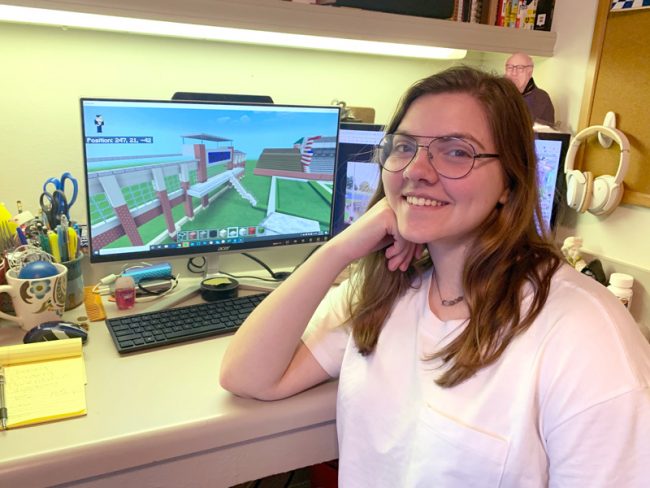
For many, this spring was to be a milestone commemorating many years of hard work and dedication. Graduating from university is the official step into adulthood and the achievement of academic excellence. But this year is different. COVID-19 is either restricting celebrations or cancelling them outright. For some students, it is a disappointing moment. Others, like Rebecca Hooper, a senior marketing major at Georgia Southern University, saw an opportunity to innovate. On Tuesday, March 17, during spring break, Georgia Southern announced the cancellation of its in-person Spring 2020 Commencement ceremonies for Statesboro and Savannah. Since that time, the University has announced an online ceremony for graduates on May 8 and 9 and hopes to be able to hold a rescheduled in-person ceremony on or before commencement in December. As the news broke, Hooper and her friend were playing Minecraft, a sandbox video game which allows users to create digital worlds where they can build as many landscapes and structures as they like. As they played the game and chatted online, Hooper had what seemed like a crazy idea. “I was like, ‘Wouldn’t it be cool if we built the stadium?’ I just said it as a joke at first, but then the next day rolled around and I started on it. And then it kept on going and going and I couldn’t stop,” she said. Two days later (and more than eight hours of digital construction), Hooper had created Glenn Bryant Field and the home side of the stadium. She also built a commencement stage complete with a jumbotron that said, “Hail Southern! One More Time!” Knowing that no ceremony would be complete without Freedom’s Flight, Hooper added “Freedom” on the stage. However, the closest thing she could find to the University’s bald eagle mascot was a green parrot, who let out a little squawk and bobbed up and down. Hooper posted a flythrough of the stadium on Twitter, with a comment that said, “GSU said no graduation in Paulson. I said Minecraft graduation in Paulson #HailSouthern.” The response was immediate and overwhelming. Hooper has big plans for her virtual stadium. She’s planning on doing some online tours through Twitch, a video game playthrough app. She’s also invited her friends to help her finish building the stadium, complete with Bishop Fieldhouse, press boxes, sky boxes, and the large parking lot where she hopes to invite people to build their own virtual tailgating structures. If you are journalist and would like to know more about this story - simply reach out to Georgia Southern Director of Communications Jennifer Wise at jwise@georgiasouthern.edu to arrange an interview.

As the world watches – Many wonder who is next in line in to the throne in North Korea?
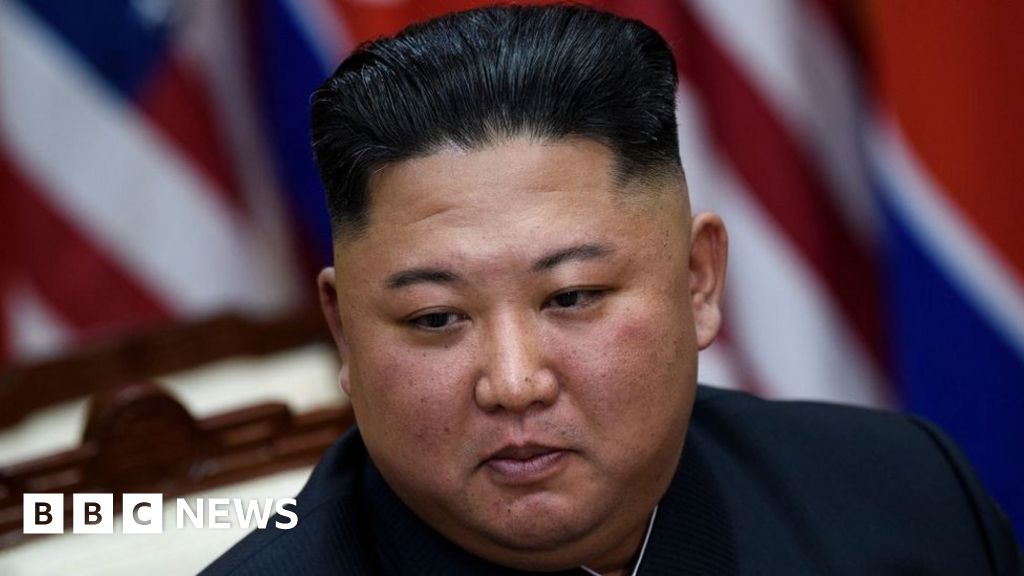
It’s the rumor that won’t go away. The mysterious leader of North Korea, Kim Jong-un is dealing with serious health issues. Some are even speculating death may be close or has even potentially occurred. The news of a nuclear armed rogue nation that could soon be leaderless has the west watching and worried. If you’re a journalist covering, there are many questions to be asked. What is the succession plan for North Korea’s leadership? Will the traditionally patriarchal country allow Kim Yo-jong, Kim Jong-un's younger sister to ascend to power? Are there more distant relatives who could make a claim to the role? Is there a chance North Korea could accept a change in power structure or even adopt a non-dictatorial style of government? And, is now the opportunity for change in North Korea? If you are covering, we’re here to help. Dr. Glen Duerr's research interests include comparative politics and international relations theory. Glen is an expert on this subject and is available to speak to media regarding this topic– simply click on his icon to arrange an interview.

Forecasting demand of any product for industry, manufacturing and even retail is already a difficult task. And now, amid a global pandemic that has seen some industries grind to a halt while others ramp up to keep up - means that measuring expectations about demand is key to corporate survival during these trying times. We have not experienced a global pandemic like the coronavirus in last 100 years. The sheer increase in demand for everyday necessities like toilet paper, sanitary wipes and bottled water is putting undo stress on a lean global supply chain. It is testing the agility of many retailers and consumer packaged goods (CPG) companies as they attempt to ramp up manufacturing facilities and logistical operations while struggling to keep up with consumer demand. Business executives are looking to data, analytics, and technology for answers on how to predict and plan for the surge and, ultimately, the decline in consumer demand. It is significantly easier to shut down facilities than it is to quickly boost production and capacity. The biggest unknown is whether there will be a delayed economic recovery or a prolonged contraction. Regardless of the outcome, retailers and their CPG suppliers will need to think ahead and be prepared to act quickly. March 25 – RIS News There are so many angles and aspects of our daily life that need to be covered during the COVID-19 outbreak – and if you are a journalist looking at how business and industry are adapting during this crisis, the let our experts help. Dr. Karen Sedatole is the Goizueta Advisory Board Term Professor of Accounting. She has conducted extensive research on forecasting and capacity management that can shed light on the challenges of responding to the current uncertain environment. Karen is available to speak with media – simply click on her icon to arrange an interview today.



Scapegoating During Pandemics Has Always "Plagued" Humanity
Though it was widely known that the first known cases of coronavirus could be traced back to Wuhan in China, many Americans were shocked and saddened to hear President Donald Trump repeatedly calling the illness the "Chinese virus" during a news conference in March. Though President Trump has insisted it's "not racist at all," Asian-Americans have reported incidents of slurs and physical abuse over the perception that China caused COVID-19. Rev. Joseph Ryan, OSA, PhD, teaches a course on the history of disease, with a focus on the bubonic plague, and notes that this type of xenophobic hysteria is not new when it comes to pandemics. “A theme that we can see with these epidemics is hysteria and the scapegoating of people who are liminal and have no defenders,” says Fr. Ryan. “We also see nativism and xenophobia evident in people's response to epidemic illness. Pandemics test the humanity of human populations and sometimes we are inhumane in the face of the fear of death from such diseases.” Here are a few examples from history of how humanity shifts blame during times of great pandemic-related stress: 1348: The Bubonic Plague A third of Europe's population was eliminated by this epidemic, which spread along trade routes. The event caused different expressions of hysteria among Europeans, including the persecution of the Jewish community. 1832: Cholera Like the bubonic plague, cholera traveled along trade routes. In the United States, Irish immigrants were scapegoated. 1918: Spanish Influenza It gained its name because the first journalists to talk about the disease were from Spain. Influenza came from Kansas and spread through the transport of American soldiers to Europe to fight in the First World War. Later, it traveled to British colonies in India and Africa via the transport of British troops, and the result was the rise of independence movements in these countries. 1980s: HIV/AIDS The HIV/AIDS crisis caused hysteria surrounding gay men. 2014: Ebola Another event that sparked hysteria was the recent outbreak of Ebola in West Africa. The governors of New York and New Jersey threatened to close their airports, though there was little chance of the virus breaking out in the United States. (To the best of Fr. Ryan's knowledge, only two Americans developed the disease.)