
Experts Matter. Find Yours.
Connect for media, speaking, professional opportunities & more.
Coronavirus Confirmed – Let our experts help with your questions and coverage of this emerging story
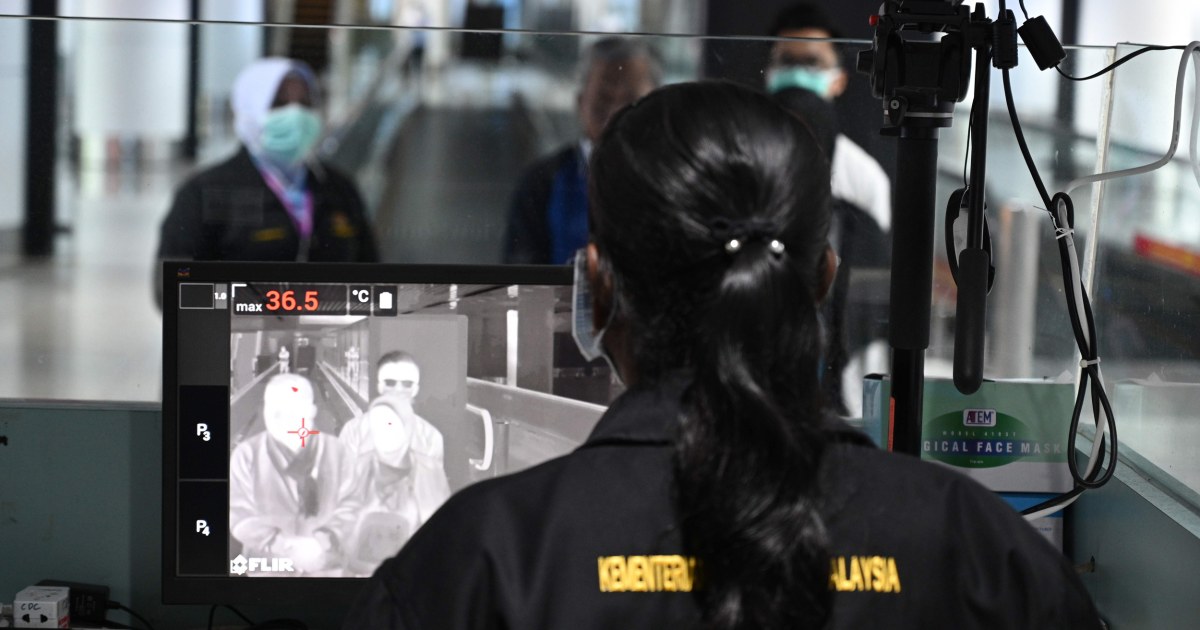
It’s here – and Washington State gets the unfortunate honor of being the location of the first confirmed case of Coronavirus on American soil. “The patient in Washington state, a resident of Snohomish County, is a male in his 30s. The CDC said the man arrived in the U.S. around Jan. 15 after visiting Wuhan. He had not, however, visited the seafood market where this virus is said to have originated.” What is a coronavirus? Coronaviruses are a group of viruses that can cause a range of symptoms including a runny nose, cough, sore throat and fever. Some are mild, while others are more likely to lead to pneumonia. They're usually spread through direct contact with an infected person. The coronavirus gets its name from the crown-like spikes on its surface, according to the Centers for Disease Control and Prevention. (Corona is Latin for crown.) Including the newly identified form of the virus, there are a total of seven coronaviruses that can infect humans, the CDC says." January 21 – NBC News But how safe are Americans – and a lot of concerns to be addressed How is the virus transmitted? Are there simple and easy ways to diagnose simples? What preventable practices can be put in place? Are there vaccines or how long will it take to develop and distribute a vaccination program? And is America better equipped to handle this since the SARS epidemic? There are a lot of questions – and that’s where our experts can help. Dr. Sweeney is the Founding Dean of the School of Pharmacy at Cedarville University. He is an expert in health and wellness and advanced medical equipment. Dr. Sweeney is available to speak to media regarding this topic – simply click on his icon to arrange an interview.


Coronavirus expert available for interviews
Ralph Baric is the William R. Kenan Jr. Distinguished Professor in the Department of Epidemiology at UNC-Chapel Hill. His research specializes in coronaviruses and emerging infections. He is available to speak with reporters about the latest outbreak news. If you’d like to speak with Baric, call 919-445-8555 or email mediarelations@unc.edu. Baric serves as professor in both the Gillings School of Global Public Health and the UNC-Chapel Hill School of Medicine’s Department of Microbiology and Immunology. His substantial research focuses on advancing knowledge about — and vaccines for — coronaviruses and emerging infections like Zika virus, spanning the spectrum from discovery to translation.

All about impeachment – and does it really matter?
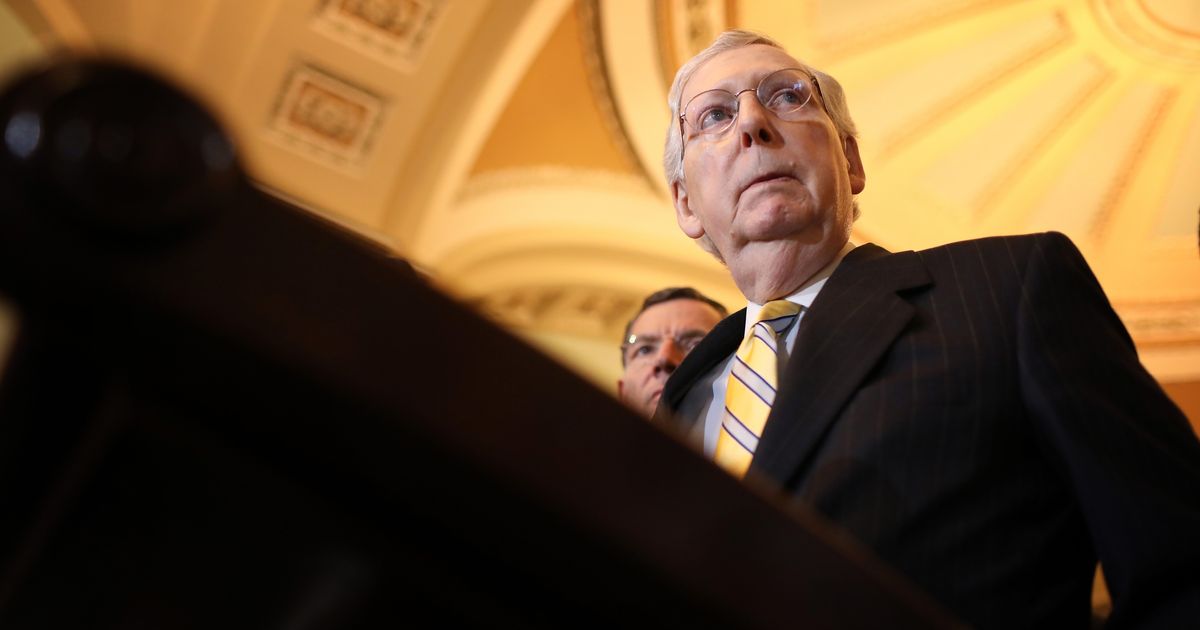
It’s dominating the news and the airwaves, but an event that was once expected to rival the trial of O.J. Simpson seems to be getting caught up in what most government hearings tend to be – boring, bureaucratic and not really captivating viewing for those living outside the beltway. And for some, the reality is the impeachment process seems to be coming with self-fulfilling expectations. Unfortunately, in these hyper-partisan times, the result may likely not be dictated by the facts presented. Despite what compelling evidence is presented by either side, the House will impeach, and the Senate will acquit. That’s how the game will play out. Though procedure will be followed – will it matter? "But in fact, McConnell has repeatedly said he would indeed hold a trial — too many times to reverse himself, in all probability, as the Hill reports: “Under the impeachment rules of the Senate, we’ll take the matter up. The chief justice will be in the chair … We intend to do our constitutional responsibility,” he said. McConnell had previously indicated that he would have “no choice” but to take up impeachment if the House passes articles, though he has also [run] a Facebook ad over the recent two-week recess positioning himself and the GOP-controlled Senate as a roadblock to Trump being removed from office." New York Magazine – November 13 If you’re a reporter covering the impeachment hearings and want to know what to expect, what does matter and how this event will influence politics and government moving forward – then let our experts help. Mark Caleb Smith is the Director of the Center for Political Studies at Cedarville University. Mark is available to speak with media regarding Trump, impeachment and what follows. Simply click on his icon to arrange an interview.

The killing of Iranian military leader Maj. Gen. Qassim Suleimani by an American ordered drone strike has put the world is on edge. As leaders call for calm, hundreds of thousands are protesting across the Middle East and war seems almost inevitable. As news broke of the attack late last week, media were scrambling to find experts to lend their perspective, opinions and expertise about what’s next. That’s where the University of Connecticut’s Director of Middle East Studies Jeremy Pressman was able to help. Pressman said it’s “too early to say” what kind of repercussions the killing of Iranian Maj. Gen. Qassim Suleimani will have in Iran, Iraq or in other countries like Saudi Arabia or Lebanon, in part because it’s not known yet how much planning went into the decision. “The Trump administration is an administration that, on foreign policy, has not demonstrated that it usually plans much in advance,” he said. “You want to have thought what ways Iran could respond, and how you are going to defend yourselves in those situations and respond to those situations.” January 03 – Middletown Press If you are a reporter covering this ongoing and progressing situation – the let our experts help with any of your questions or stories moving forward. Jeremy Pressman (MIT, PhD) studies international relations, the Arab-Israeli conflict, Middle East politics, and U.S. foreign policy. He is the Director of Middle East Studies at the University of Connecticut and is available to speak with media, simply click on his icon to arrange an interview today.


A President is Impeached – Now What?
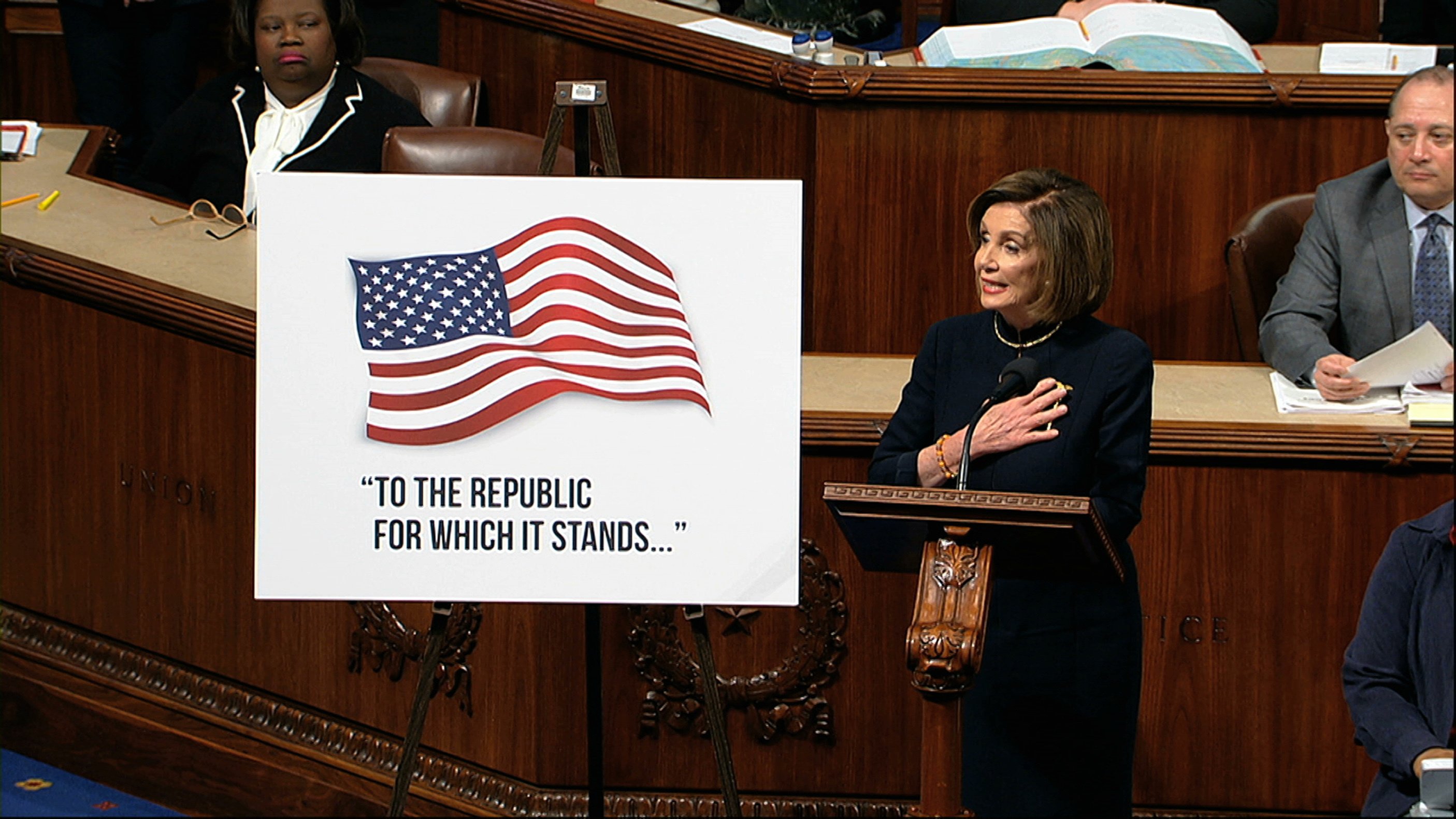
The numbers are in and for the third time in history – a sitting United States President has been impeached. But now what? There will be rhetoric, threats and predictions – but what is the process and what are the actual potential outcomes? This is a serious issue, and not just for either political party, but for the government and country as well. So, if you are covering – let one of the leading political experts in the country help with your stories. Dr. Stephen Farnsworth is a sought-after political commentator on subjects ranging from presidential politics to the local Virginia congressional races. He has been widely featured in national media, including The Washington Post, Reuters, The Chicago Tribune and MSNBC. He is author or co-author of six books on presidential communication. His latest work, "Presidential Communication and Character: White House News Management from Clinton and Cable to Twitter and Trump," examines how the last four U.S. presidents sell themselves and their policies in an ever-expanding and sometimes precarious media environment. Dr. Farnsworth is available to speak with media – simply click on his icon to arrange an interview today.



Is your social media ready for when the next crisis strikes? Let our experts help!
At the National Institute for Social Media, response plans are the priority. A response plan is the high-level look, or the umbrella overview, that crisis management falls under. Your response plan details how you respond to positive, negative feedback, and any neutral feedback that comes your way. Take a compliment and make the most out of it: Positive feedback feels like you’re off the hook. If feedback is all positive, you feel like you don’t have to do anything. But that’s your opportunity to nurture and strengthen those who are already your supporters. They then become your brand champions. Avoid the neutral zone traps – react and respond accordingly: Questions or posts that aren’t really positive or negative land in neutral space, and that’s really not crisis communication, responding to those is just good customer service. When crisis strikes: If you have a crisis, most people associate it with an isolated event, and sometimes you can plan for it, sometimes you can’t. A few years ago, when Nordstrom’s discontinued Ivanka Trump’s clothing line, they anticipated a negative backlash by those who would accuse them of being politically motivated. They stated sales was the reason, and 100 percent came out neutral, but they could anticipate that particular feedback. Whereas, in the viral video of a passenger being physically dragged off an airplane, the airline couldn’t have anticipated that event. However, with an online response plan, they would have been prepared to respond to the unexpected event. A quick response is important but an informed response is more important than anything else. If it fits the situation, you may buy yourself time to do a little research by commenting that you’ve passed their question on and will respond soon. If you don’t have a strategic plan to fall back on, and you respond quickly but poorly, you run the risk of doing more harm than good. With an online response plan, people understand how to assess a given situation. Respond: To show transparency, we want everyone to see we are responding to customer; we have a planned response where we acknowledge the customer. Take offline: Give them an offline option for sharing additional information. Resolve: This allows the customer to have their issue resolved and be heard but discourages them from sharing ugly details on that highly visible platform. The plan is for a social media manager to have a path when they don’t know what to do. The viral airplane video is one example because by the time their social media people saw it, it was already going viral. They had every indication they should be panicking. Did they have a person to talk to help them make the decision about how it needs to be addressed? For those crises we can’t anticipate, there needs to be a clear path to a leader who can help with this difficult situation. One of my favorite things to tell people is that you don’t have to be victimized online just because you’re a professional organization. You can set up community guidelines. Some businesses think, what if someone starts using racial slurs or inappropriate comments? You can post community guidelines that state these are our expectations of how our customers can participate respectfully, and we reserve the right to delete your content. You can set the expectation that you want people to engage respectfully. You have to get to the heart of what people are really asking or wanting. In the case of Ivanka Trump’s clothing line, nobody was upset because Nordstrom’s wasn’t carrying the clothing line; what they were really upset about was that a large organization could be taking a political stance against the at-that-time republican candidate. Are you looking to know more about how corporations and institutions need to be prepared and how they need to react when bad news goes viral? That’s where we can help. Amy Jauman is social media expert, consultant, writer, and professor at Saint Mary’s University of Minnesota. Dr. Jauman authored a (National Institute for Social Media) NISM textbook for social media strategists and is available to speak to speak with media – simply click on her icon to arrange an interview.


2020 is going to be the year of politics – let Stephen Farnsworth be the expert you call first when you’re covering it. Like the final act in a great Shakespearean play – 2020 looks to be a year of tragedy, irony, comedy and intrigue. We can expect betrayal, vengeance, protagonists, antagonists, heroes and villains. With impeachment hearings, the DNC primaries, summer conventions, trade deals and the election that promises to be an epic display of speeches and stumping as well as vicious and vitriolic attacks. Dr. Stephen Farnsworth is a sought-after political commentator on subjects ranging from presidential politics to the local Virginia congressional races. He has been widely featured in national media, including The Washington Post, Reuters, The Chicago Tribune and MSNBC. He is author or co-author of six books on presidential communication. His latest work, 'Late Night with Trump Political Humor and the American Presidency' shows how late-night political humor, have responded to the Trump presidency. Employing a dataset of more than 100,000 late night jokes going back decades, Farnsworth and S. Robert Lichter discuss how the treatment of Trump differs from previous presidents, and how the Trump era is likely to shape the future of political humor. Stephen is available to speak with media – simply click on his icon to arrange an interview today.

It may be the most wonderful time of the year, but for those delivering packages to houses and homes across America this holiday season it’s also the busiest one. In fact, it’s expected that Amazon alone will ship close to 300 million packages for Christmas. Customers want their purchases quicker and cheaper and it’s changing how the landscape works. It's estimated that free shipping will cost Amazon more than a billion dollars this quarter alone. This explains why shippers are looking at some radical new technologies to cut the cost of the last mile – and this is not just limited to the retail shopping industry. “Technology-driven innovations such as delivery drones or driverless vehicles not only facilitate last-mile delivery, they help with the inclusion of new sets of “customers, especially those in remote locations or rural areas with poor infrastructure, says Morvarid Rahmani, assistant professor of Operations Management at Scheller College of Business at Georgia Institute of Technology. For instance, companies like UPS, CVS, and WakeMed are exploring the idea of drugs and other health-related items being delivered by drones. In a first, collaboration between the FAA and UPS partner Matternet made deliveries from a CVS pharmacy in Cary, North Carolina as well a customer’s retirement community in November. Rahmani thinks this type of delivery shows promise. “Using drones to deliver medical packages can give rural communities access to products and medical supplies, which they would not be able to access otherwise. This delivery model is a way of incorporating social concerns and conditions of underserved populations into business practices. Using drones to deliver medial packages is a great example of collaboration between a governmental agency and for-profit companies, which is toward the dual goals of promoting efficiency and inclusion,” she notes. So, while most consumers are coming to terms with drone technology as a means for the Amazons of the world to replace it’s fleet of trucks, many customers are seeing the future of receiving essential, potentially life-saving drugs to their doorstep. “These technologies enable inclusive retailing and distribution for large (excluded) communities all over the world, says Rahmani. “Successful implementation of inclusive business practices requires collaboration of for-profit firms with the public sector, civil society organizations, and communities”.CBS News - December 15, 2019 Morvarid Rahmani is an Assistant Professor of Operations Management at Scheller College of Business at Georgia Tech. She is an expert in the areas of research is on collaboration in work processes such as new product development, management/IT consulting, and education. Dr. Rahmani is available to speak with media regarding this topic – simple click on her icon to arrange an interview. About Scheller College of Business The Georgia Tech Scheller College of Business is located in a state-of-the-art building in Georgia Tech’s vibrant Technology Square, the core of the Atlanta’s high-tech business community. The College offers an internationally recognized business education, including full-time, evening, and executive MBA options as well as undergraduate and Ph.D. degrees, to approximately 2,000 degree-seeking students each year. Scheller College collaborates across Georgia Tech to offer joint MS degrees in quantitative and computational finance and business analytics. Custom and open enrollment programs for executives and professionals are offered through the Huang Executive Education Center, located within the College. Interdisciplinary centers for teaching and research within the College enrich the educational experience, the campus and the community by providing a direct connection with the real world. They fuel collaborative teaching and research in some of the most relevant areas in business today: leadership, innovation, sustainability, the global enterprise, and business ethics. For more information, contact media@scheller.gatech.edu


Myanmar Faces Allegations of Genocide
A United Nations report in September alleged Myanmar security forces had engaged in arson, rape and killings that forced more than 730,000 people to flee for Bangladesh. The countless Rohingya Muslims that remain in Myanmar face the threat of genocide. At a recent International Court of Justice hearing, Nobel Peace Prize laureate Aung San Suu Kyi defended her country's government against the allegations of genocide. Timothy Horner, a professor at Villanova's Center for Peace and Justice Education with a focus on genocide, said it is not new for leaders to defend their countries against charges of atrocity, even genocide. However, it is new to have that leader be a Nobel Prize winner. "Aung San Suu Kyi was given the award in 1999 while she was under house arrest in Myanmar," says Horner. "She was released in 2010 and rose to become the de facto leader of Myanmar since 2016. Her contention is that the West has been duped by 'fake news.' It is mystifying to many international observers to see her turn from an activist for democracy and open government to a nationalistic defender of the Myanmar military. But her willingness to represent Myanmar at the ICC [International Criminal Court] has only increased her already booming popularity within the country." "Since 2017, satellite imagery, video footage and numerous reports from the hundreds of thousands of Rohingya fleeing the country have catalogued a long list of structured ethnic violence, ethnic cleansing and perhaps even genocidal actions taken against this beleaguered ethnic Muslim group. These have allegedly been carried out by the Myanmar military in operations that have been widely supported not only by Myanmar civilians, but also by radical Buddhist monks who see in the Rohingya an existential threat to Myanmar's national security. "There have been deaths on both sides, but the dozens of deaths at the hands of the Rohingya are dwarfed by the tens of thousands of deaths that have come at the hands of the military and vigilante groups in the region. Nearly 750 thousand Rohingya have fled the country since 2017. Many are still stranded in camps on the border in Bangladesh. They have no recourse to the courts in Myanmar because they are not considered citizens by any government. The international community has seen this coming for a long time, but the presence of Suu Kyi has added an ironic twist to the proceeding." Horner says it's very hard to prove genocide—and that it will take time. "It will take years. Individual generals could be imprisoned. Architects as well. It is very hard to prove genocide. It's only been done a few times. Proving genocide is all about intention. You have to prove that the intention behind the actions is designed to destroy the group. Leaders have gotten better at hiding their tracks. But it's possible to work back from the action, but problematic. They have to eliminate every possible intention, leaving only genocide."


Villanova Experts Reflect on the 2010s
The iPad. Hurricane Sandy. Affordable Care Act. #MeToo. Brexit. Streaming services. Since 2010, there have been so many memorable and historic events that have shifted culture and society into unfamiliar territory around the world. Two Villanova experts have put together thoughts on a few of the decade's top stories that will continue to be relevant for the next ten years—and beyond. Stephen Strader, assistant professor of geography and the environment Over the last decade we have seen the issue of anthropogenic or human-induced climate change shift from something discussed between select, interested scientists to the front page of the news on a daily basis. This dramatic change in the importance and coverage of climate change makes complete sense given six of the last ten years globally have been in the top ten warmest on record. Actually, it's very likely, if not certain, that the last five years will be the hottest globally on record. The odds of that happening naturally are very close to zero. Nowhere have the effects of a changing climate been realized more so than in the western United States, where wildfires have wreaked havoc year after year in the 2010s. States such as California, Colorado, Kansas, Oklahoma, New Mexico and Washington all experienced record-breaking wildfires over the last decade. Specifically, the Camp Fire in 2018 became the deadliest and most destructive wildfire in California history, destroying 18,000-plus homes and killing 85 people in the town of Paradise. Additionally: Hurricanes Dorian, Irma, Harvey, Maria, etc. damaged entire countries (Puerto Rico and Bahamas) so much that there is question whether they will ever recover from the effects. The deadliest tornado season on record occurred in 2011, including the devastating April 27, 2011, tornado outbreak and the deadliest U.S. tornado in modern history, which struck Joplin, Missouri (158 fatalities). Between 2011 and 2017, drought and water shortages impacted the western U.S., with California seeing its worst drought in history (or worst in 1,200 years). The drought killed 100-plus million trees and resulted in water shortages that affected crops and caused municipalities to limit water use. Record-setting rainfall and floods occurred in locations such as Colorado, New York, Oklahoma, Texas, etc., resulting in hundreds dead and millions of dollars in crop losses. If the last 10 years have taught scientists, climatologists, policy makers and the general public anything, it's that we have our work cut out for us if we are to reverse this trend of increasing disasters around the world. The atmosphere continues to warm, and all model projections point to a progressively warmer future Earth if action is not taken. And this action can't be tomorrow or by 2025, 2050 or some other arbitrary year; it has to happen now if we want to reduce future economic and societal losses. Yes, it's easy to be afraid and fearful of the future when all we see as scientists and citizens are rising temperatures, deadlier disasters and a lack of drastic climate action. However, we can't let this fear result in crippling inaction; we have to let it motivate us to fight, not for just our futures but our children's, grandchildren's and great-grandchildren's futures. Let's give them a chance to see the world the way we used to: beautiful. Jerusha Conner, associate professor of education and counseling The latter half of this decade witnessed a resurgence of student activism, sparked by Black Lives Matter protests and the dramatic events at the University of Missouri in the fall of 2015. Highlighting 2015 as a pivotal year for student activism, the authors of the American Freshman National Norms survey deemed the 2015 freshman class "the most ambitious" group in 49 years of the survey's administration in terms of their expectations for participating in protests, connecting to their communities and influencing the political structure; and the numbers of freshmen who report having participated in demonstrations as high school seniors has ticked up every year since. In my own research with college student activists in 2016, I found three striking trends: Nearly half came to college already seeing themselves as activists; only 10% consider themselves single-issue activists (with more than half identifying seven or more issues their activism addressed); and a significant share were not protesting their own institution's policies or practices, but instead concerning themselves with broader social and political issues. They are what I call "outward-facing activists," who use their campuses to stage and mobilize campaigns, rather than as the targets of their change efforts. In the last couple of years, we have seen activism among high school students take off, as students have staged walkouts and school strikes to protest inaction on climate change and gun violence. Although these movements may appear narrowly focused on a single issue, the students involved have intentionally advanced an intersectional perspective, which draws attention to the racialized, economic and gendered dimensions of the multifaceted problems they are seeking to address. Digital natives, these young people have deployed the affordances of social media not only to mobilize their peers in large-scale collective action, but also to attract and sustain the attention of the media, pressure business leaders and politicians and shape public understanding of the issues. One interesting shift with this generation of student activists is that, rather than turning their backs on the system or seeking to upend it, they are focused on enhancing voter registration and turnout, especially among young people. And their efforts appear to be working. Youth turnout in the 2018 midterms was double that of 2014, and record numbers of youth are continuing to register to vote. As the decade comes to a close and the 2020 campaign season revs up, the engagement of student activists in electoral politics will be important to continue to track.

