
Experts Matter. Find Yours.
Connect for media, speaking, professional opportunities & more.
Confronting the Fake News Phenomenon with Credibility
Fake news is suddenly big news. A quick browse this morning and the topic is featured in articles and stories in The Guardian, CNN, Forbes, Reuters, iPolitics and The New York Times. Explaining fake news, finding its source, its effectiveness and how to counter it are all top of mind priorities for journalists, politicians and even technology leaders. Fake news is eroding the trust the public has in its leaders and media and something must be done soon. We need to see a return of intelligence and knowledge to present true facts. In this new era, issues such as climate change, economic data, security, crime and healthcare policy -people without qualifications are being asked to speak on topics that require years of study, research, and experience. Opinions — not always informed opinions — are taken as fact. To reverse this trend, institutions need to work with the media to present a more balanced set of perspectives. We need to see academics, physicians, professionals, and leaders in their respective fields contribute more to these big conversations. It won’t be easy, but it is possible. ExpertFile is the world's first marketing platform and search engine for expert content. The company specializes in providing media access to thought leaders and thousands of experts who are objective, credible and whose opinions are sought and respected worldwide. Now more than ever – the public needs trustworthy sources of accurate and unbiased information. Peter Evans is the CEO and Co-founder of ExpertFile. His experience and expertise has made him a leader in the realms of innovation, marketing and digital software. He is a respected speaker and a sought-out panelist for technology, marketing and innovation events throughout the world. Peter is available to speak to media regarding fake news and how technology companies are fighting back. Simply click on his icon to arrange an interview. Source:


It’s all eyes on Africa as the UN looks to find ways to ensure universal health care for all
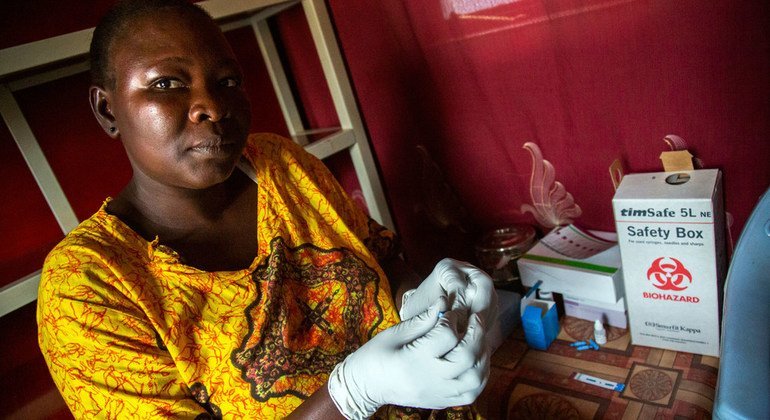
It was a historic moment earlier this month as the United Nations and African Union pledged to pursue bolds goals that will strengthen global health and provide health care to all across Africa. “The Memorandum of Understanding we have signed today is an important step towards formalizing the cooperation between WHO and the African Union and to implementing the Addis Ababa Call to Action,” said the WHO chief. “The Addis Ababa Call to Action is a powerful commitment from African Union leaders to increase domestic financing for health, and to hold themselves accountable for that commitment”, he added. Following a political declaration on universal health coverage, which was approved in September by all UN Member States, the General Assembly adopted a global resolution to translate that commitment into reality by legislators in 140 countries. November 18 - UN News It’s indeed a bold declaration and one that will require prevention, infection control and affordable delivery of care. Key UN-AU collaboration specifics Provide technical expertise to the African Medicines Agency and create an environment to foster local production of medicines. Strengthen collaboration between WHO and the Africa Centers for Disease Control and Prevention – with a particular focus on emergency preparedness, to build defenses against epidemics and other health emergencies. Support the implementation of the Addis Ababa Call to Action on universal health coverage and the AU Declaration on Domestic Financing. The prospects are positive, but delivery will be a challenge, and if you are a journalist covering this topic and need an expert source for insight and perspective – let us help. Dr. Saad Bhamla is an Assistant Professor of Chemical & Biomolecular Engineering at the Georgia Tech College of Engineering where he also runs the Bhamla Lab that develops low cost tools for science education and global health. Saad is available to speak to media regarding this topic, simply click on his icon to arrange an interview.



This month, U.S. Secretary of State Mike Pompeo announced a shift in U.S. policy toward settlements in the Israeli-occupied West Bank. Pompeo announced that the Trump administration does not view the settlements as inconsistent international law, and rescinded a 1978 state department legal opinion that held that view. The move now leaves the issue of individual settlements up to Israeli courts. Assistant Professor Sandy Marshall has spent time as a volunteer instructor in a Palestinian refugee camp in the West Bank and returned to the region this past summer to advance his research into the experiences of Palestinian refugee children. A human geographer, he has conducted extensive research into the impact of conflict, division and displacement on children and youth in the Middle East. Asked for a brief comment on the shift in U.S. policy, here’s what Marshall had to say: “Coming on the heels of the U.S. embassy move to Jerusalem and recognition of Israeli sovereignty over the Golan Heights, the change in policy on West Bank settlements is another nail in the coffin of a negotiated peace-settlement based on the two-state solution, represent U.S. rejection of broad international legal consensus . This move undermines any remaining legitimacy the U.S. has in the region as a peace-broker and threatens further destabilization of the region.” If you're interested in talking with Professor Marshall as you continue to cover this important topic, please reach out to Owen Covington, director of the Elon University News Bureau, at ocovington@elon.edu or (336) 278-7413. Professor Marshall is available for phone, email and broadcast interviews.


It was a historic election in Georgia that saw changing tastes and shifting tides among voters across the state. The coverage was extensive and the experts from front and center in local and statewide media lending their expert perspectives and opinions to reports and journalists about the results. “A political science associate professor on Georgia Southern’s Armstrong Campus in Savannah says all the women who made history in Tuesday’s election overcame significant obstacles with their campaigns in Bulloch and Chatham counties. “Those three new women beat incumbents and that’s very unusual,” said Dr. Lara Wessel. “So when we see women or men beating incumbents, again we want to look to try to figure out what’s going on behind those election results. “What it says to me is that the citizens of Statesboro and the citizens of Savannah are interested in change.” Dr. Wessel adds that the five women who won elections are much more than trailblazers, they’re local proof female candidates can break through barriers that have held women out of some local political offices for centuries.” November 06 – NBC News Soon, Savannah will be welcoming four new aldermen, and two new alderman-at-large. “It’s majority progressive. It’s majority female. It’s majority community activists. A lot community activists," said Georgia Southern Associate Professor of Sociology Dr. Ned Rinalducci … “We’re going to see a shift to deal with things like affordable housing, homelessness, and less on development and tourism,” said Rinalducci. Rinalducci said the city saw a turnover back in 2015-ushering in more pro-business candidates. He said this election’s shift towards could be a sign of dissatisfaction with voters. “I think clearly there’s some discontent with the priorities of city government previous, and I think that was communicated clearly with yesterday’s election results," said Rinalducci. November 06 – ABC News The coming twelve months are going to be a busy one for political reporters across the state and country. If you are a journalist looking for political experts who can be a solid source of context and perspective for your stories – let us help. Dr. Lara Wessel and Ned Rinalducci are both available to speak to media about politics, elections and issues affecting voters. Simply click on either expert’s icon to arrange an interview. https://fox28media.com/news/local/municipal-election-draws-low-turnout-equates-to-sweeping-changes-in-savannah-races


Will e-cigarettes and vaping be the next addictions epidemic to sweep across America?
In a recent op-ed, David T. Courtwright, Ph.D., an author and addiction specialist opined that there’s a market to getting people hooked on substances and that e-cigarettes are the next big problem facing America. "I had just finished a new book on addiction when the vaping crisis erupted. The gist of the book is that that globalization, industrialization, mass marketing, digitization, and social media have turned the ancient human preoccupation with disreputable, potentially addictive pleasures into lucrative, commercially normal enterprises. Bad habits have been McDonaldized. Vaping couldn’t have been a more perfect example of this. I call those who help make bad habits routine “limbic capitalists,” a reference to their products’ neural common denominator. Whether they sell junk food, porn, slots, computer games, alcohol, or drugs, they target the limbic system, the brain networks responsible for pleasure, motivation, long-term memory, and other survival functions linked to emotions. Biological evolution shaped the limbic system, which is indispensable for life and reproduction. But cultural evolution and technological change created a trapdoor. The same neural pathways can be exploited — lethally — by entrepreneurs of brain-rewarding products that foster excessive consumption and addictive behavior." October 28, 2019 – STAT There has been growing concern, awareness and news coverage about e-cigarettes and the dangers they present. As well, industry spin-doctors and public health advocates have been in overdrive trying to convince politicians about the pros and cons of legislation and regulation for these products. Are you a journalist covering this emerging issue? Then let the experts from Cedarville help with your coverage. Dr. Marc Sweeney is an expert specializing in drug abuse, prescription drug abuse, Opioid addiction, medical marijuana & related issues. Justin Cole is an expert in clinical pharmacy, Pharmacogenomics, and the pharmacy industry. Both experts are available to speak to media regarding this issue – simply click on either gentlemen’s icon to arrange an interview.


Fifty years ago, the first computer-to-computer connection was made through ARPANET, the precursor to the modern internet. What will the internet look like 50 years from now? That's the topic of a new report by Elon University's Imagining the Internet Center and Pew Research. The report, "The Next 50 Years of Digital Life," is part of a series on the future of the internet and features insights from 530 technology pioneers, innovators, developers, business and policy leaders, researchers and activists. They were asked to respond to a series of questions about how individuals' lives might be affected by the evolution of the internet during the next 50 years. “In just 50 years the internet grew from a handful of interlinked computers to a worldwide network connecting billions of active users across all corners of the globe,” said Kathleen Stansberry of Elon University’s Imagining the Internet Center, the lead author of the report. “This vast experiment in human collaboration has not been without cost, but these experts believe that by enacting thoughtful reform today the vision of the internet as a tool of equality and enlightenment can still be realized.” Overall, 72 percent of these respondents said they hope and expect that the next 50 years might bring significant change for the better; 25 percent say they fear there could be significant change for the worse and 3 percent said they expect there will be no significant change. You can find a list of key themes from the report here, and the full report, including scores of comments from experts, here. If you're interested in talking with Professor Stansberry about the report, please reach out to Owen Covington, director of the Elon University News Bureau, at ocovington@elon.edu or (336) 278-7413. Professor Stansberry is available for phone, email and broadcast interviews.

Minority of Twitter users responsible for vast majority of political tweets
Associate Professor of Law David Levine recently lent his expertise to a Washington Post article looking at who is posting tweets about U.S. politics on the popular social media platform. The Oct. 24 article by reporter Marie Baca examined a recent report by the Pew Research Center that found that 10 percent of U.S. adult Twitter users generated 97 percent of tweets mentioning national politics. Those who were most prolific accounted for just 6 percent of all U.S. adult Twitter users, but authored 73 percent of all political tweets, the report found. "It can be quite dangerous if you’re not taking a step back and saying, ‘What do I know about the sources of this information and who or what is behind it?’” — David Levine, associate professor of law Levine, who is the founder of the "Hearsay Culture" radio show about modern technology issues, noted that Twitter users who find themselves in an echo chamber populated by others who mirror their views could take less time to determine the origin or assess the truthfulness of information they receive in that chamber. “It can be quite dangerous if you’re not taking a step back and saying, ‘What do I know about the sources of this information and who or what is behind it?’” he said. “It’s very easy psychologically, especially if you’re coming into it with a particular perspective, to go along with it.” If Professor Levine can assist with your reporting about social media and online extremism, please reach out to Owen Covington, director of the Elon University News Bureau, at ocovington@elon.edu or (336) 278-7413. Professor Levine is available for phone, email and broadcast interviews.

This past October, the FCC began to explore opening up 1,200 megahertz of spectrum in the 6 GHz band for different types of unlicensed uses. This band is currently populated by microwave services that are used to support utilities, public safety, and wireless backhaul. Studies show that sharing this band with unlicensed operations is feasible—and can put massive amounts of new spectrum into the hands of consumers. Unlicensed innovator Claus Hetting of WI-FI NOW said, “This is without a doubt the single biggest opportunity in Wi-Fi—and probably in wireless—in a generation.” He added, “This 6 GHz spectrum boost will launch the Wi-Fi industry into a new growth trajectory.” Circuit Seed is aiming to have the best of both worlds: protect today’s incumbent users of the band while turbocharging the Wi-Fi networks and applications of the future. While this is good news for Wi-Fi, it will not work without adequate filtering to split this super wide frequency allocation into sub-bands. Ceramic filters will be able to do that, but it will be static. If an enterprise or a home wants smart frequency allocation with some ‘AI’ behind it, dynamic low loss filtering is a must. Circuit Seed’s 100% digital process for analog signal processing is an ideal solution for high performance filtering with low noise and low signal loss.


Corporate board diversity: Tokenism, or true change?
As corporations face pressure to increase gender diversity on their boards, there are those that simply add a single female director to appease critics, and those that make genuine and successful efforts to diversify. Mark Mallon, assistant professor of strategic management, is part of a research team that has explored factors that can differentiate between what is a token effort, and one that adds more female directors to a corporate board. Research recently published by the team found that U.S. firms with more top female managers and with a female director serving on the nominating committee are more likely to see additional female board appointments. The article titled “Beyond tokenism: How strategic leaders influence more meaningful gender diversity on boards of directors” appeared in Strategic Management Journal. “We also found that boards and nominating committees with younger members amplify these effects, and result in boards that have greater female representation,” Mallon said. “These of course aren’t the only factors that can contribute to greater gender diversity on corporate boards, but they are important ones.” Professor Mallon is available to talk with you about this research, which hopefully can add to your coverage of the efforts by corporations to change the composition of their boards to better reflect the broader population. If Professor Mallon can assist with your reporting about corporate governance, please reach out to Owen Covington, director of the Elon University News Bureau, at ocovington@elon.edu or (336) 278-7413. Professor Mallon is available for phone, email and broadcast interviews.

Teaching kids about addiction and the opioid epidemic
If there is one thing we all know, it is that children are resilient, aware and often impacted by the actions and environments that surround them. And as America is still in the grips of the opioid epidemic, it was only a matter of time before a traditional and respected outlet like Sesame Street took the lead on making sure children could relate. According to Sesame Workshop, 5.7 million children under the age of 11 in the U.S. live with a parent battling a substance abuse disorder. That's one in eight kids and doesn't include children who have been separated from a parent due to circumstances like divorce, incarceration or death related to their addiction. "Addiction is often seen as a 'grown-up' issue, but it impacts children in ways that aren't always visible," said Sherrie Westin, President of Social Impact and Philanthropy at Sesame Workshop. "Having a parent battling addiction can be one of the most isolating and stressful situations young children and their families face." "'Sesame Street' has always been a source of comfort to children during the toughest of times, and our new resources are designed to break down the stigma of parental addiction and help families build hope for the future." CBS NEWS, October 10 Are you a journalist covering the opioid epidemic or addiction issues in America? If so, let our expert help with your questions and coverage. There are a lot of questions and that’s where we can help. Dr. Marc Sweeney is the Founding Dean of the School of Pharmacy at Cedarville University and is an expert in the fields of drug abuse, prescription drug abuse and Opioid addiction. Marc is available to speak with media regarding this growing issue. Simply click on his icon to arrange an interview.