
Experts Matter. Find Yours.
Connect for media, speaking, professional opportunities & more.

Baylor Professor, Public Relations Ethics Expert Shares Thoughts on Resignation of ICE Spokesman
James Schwab, spokesman for the U.S. Immigration and Customs Enforcement (ICE) in San Francisco, recently resigned his position -- alleging that Trump administration officials, including U.S. Attorney General Jeff Sessions, made false public statements after the agency’s recent Northern California sweep to arrest undocumented immigrants. Marlene Neill, Ph.D, APR, an expert on public relations ethics and coauthor of the new book "Public Relations Ethics: Senior PR Pros Tell Us How to Speak Up and Keep Your Job," said it's incredibly challenging for PR professionals when they feel their integrity is at stake or when they are at odds with their supervisors. If Schwab's accusations are founded, Dr. Neill said she feels he made the best decision. "I applaud James Schwab for his moral courage and willingness to stand firm in his values despite a high personal cost. From news accounts, it appears he tried to persuade other executives to be more forthright and truthful in their communication, but was unsuccessful in his efforts. That left him no choice but to resign. In our new book, we discuss different persuasive approaches senior executives can use to advocate for ethical communication. However, when those efforts fail, it leaves communication executives with few options to maintain their integrity. That is why it is so important to have a personal crisis plan." Dr. Neill, Ph.D., APR, is an assistant professor at Baylor University. She teaches courses in public relations and advertising. She also serves as the faculty adviser for the Baylor PRSSA chapter. Her research interests include public relations management and ethics. She has published research in the following journals: Journal of Mass Media Ethics, Public Relations Review, Journal of Communication Management and Journal of Advertising Education. Neill is an accredited member of the Central Texas Chapter of the Public Relations Society of America. She served as the chair for the Southwest District of PRSA in 2011. At the national level, Neill served a three-year term on the Universal Accreditation Board, which administers the examination for Accreditation in Public Relations; the Nominating Committee, which selects national board officers in 2012; and was appointed to the Board of Ethics & Professionals Standards in January of 2013. Dr. Neill is available to comment. Source:



Are You Sure More Than Half of LGBTQ Youth Have an Eating Disorder? Because Science Says Otherwise
Each day, thousands of lesbian, gay, bisexual, transgender and queer (LGBTQ) youth wake up to a world filled with homonegativity, violence, gender shaming, bathroom bills that attempt to legislate the most private daily experiences, and family and peer rejection. Research has consistently found violent experiences to be prevalent for this group of young people. For example, gay and lesbian teenagers are respectively eight and 10 times more likely to be victimized at school than their heterosexual peers (D’Augelli), and national meta-studies find similar results (Friedman et al). It’s true that these victimization experiences have resulted in some pretty negative outcomes for LGBTQ young people over time. Studies have estimated that LGBTQ youth are three to four times more likely to report an internalizing disorder (e.g., anxiety, depression), and two to five times more likely to report externalizing disorders (e.g., substance use) than their heterosexual and cisgender peers. Nationally representative studies, like Monitoring the Future and the Youth Risk Behavior Survey, also find similar disparities, with higher rates of substance use, depression and suicidality among nearly all sexual and gender minority groups tracked. With this knowledge in mind, I was shocked to wake up and read headlines purporting “more than half of LGBTQ youth have an eating disorder” on articles published by Teen Vogue and the Huffington Post. At first, I was saddened to think this statement could be true -- that is, until the reality of how ostentatious this claim was set in. More at https://dworakpeck.usc.edu/news/are-you-sure-more-half-of-lgbtq-youth-have-eating-disorder-because-science-says-otherwise Source:


Prose, prayers, palindromes and 45 presidents
If there’s one thing Colin Rafferty – a University of Mary Washington associate professor of English and teacher of creative nonfiction – knows better than prose, it’s the United States’ 45 presidents. His current manuscript, a collection of essays about each of them, includes pieces that range from “The Fear” about Martin Van Buren and “Bully” about Theodore Roosevelt to “What They Said About Him” about Barack Obama and “The Imagineer Considers Tomorrow” about Trump. Written as palindromes, death songs, prayers, movie scripts and more, Rafferty’s work has appeared in such prestigious publications as Brevity, Cobalt, Juked, Parcel and Waxwing, and he was recently featured on the Virginia Public Radio’s With Good Reason for a segment on “Getting to Know the Presidents.” “Reading and writing about the presidents has let me explore both American history and the expansiveness of creative nonfiction,” said Rafferty, who read a biography of each president before penning his essays. Colin is available to speak with media about his work and about President's Day. Simply click on his icon to arrange an interview. Source:



The effects of Native American mascots
The Cleveland Indians announced today they will drop "Chief Wahoo" from uniforms in 2019. This is not the first news about Native American mascots of late. Goizueta Business School's Mike Lewis has extensive research on team value and mascots -- including the effects of live mascots in college sports and the controversial use of Native American mascots across collegiate and professional athletics. Source:



What will Donald Trump’s National Defense Strategy mean for Americans and its citizens?
The Department of Defense recently published an unclassified synopsis of the Trump administration’s first National Defense Strategy (NDS). The document, is missing the usual and sometimes expected Trump-like rhetoric of ‘America First’ and instead focuses on a balanced and cooperative approach among nations. At Augusta University, our experts have been examining the strategy, they have found that within the NDS the following stood out: • More money will be spent on military, private military contracting firms and cyber firms. This could benefit the local economy but does show that we’re worried. • Our military is growing more high-tech with artificial intelligence and robotics. The future of warfare could start to resemble something out of Hollywood. • For the last two decades, we were concerned with small-scale wars, counter-insurgency and counter-terrorism. Now, we are preparing our military for a Great Power War. In other words, we are preparing for a WWII type engagement, versus Iraq or Afghanistan. • Trump’s policy is very assertive whereas Obama’s policy was more conciliatory and forgiving in nature. • We are clearly focused on reasserting ourselves as the superpower. But what will this mean for every-day Americans? Will it be a boost to our economy as we invest in our military or will it mean other programs suffer as a result? Are we on the verge of another cold war? There are a lot of questions to answer – and that’s where our experts can help. Dr. Craig Albert is an expert on American politics and political philosophy. He was recently appointed director of Augusta University’s new Masters of Arts in Intelligence and Security Studies. Dr. Albert has experience with all forms of national and local news organizations and is available to speak to media regarding Donald Trump’s National Defense Strategy. Simply click on his icon to arrange an interview. Source:


What are the pros and cons of landing Amazon HQ2?
Thursday Atlanta appeared on the shortlist for Amazon's second corporate headquarters. What would that mean for the city? Two Goizueta experts break down the finance and the real estate angles. Source:


Baylor Consumerism Expert Discusses the Challenges of Gift Cards and Spending
James Roberts, Ph.D., The Ben Williams Professorship in Marketing in Baylor’s Hankamer School of Business and an expert on consumerism, is featured in this Chicago Tribune story about spending gift cards – a popular holiday present. Roberts commented on a study that showed consumers spend an average of $38 more than the value of their gift cards. “We’re going to be more free with our spending when ... we didn’t generate the money that’s paying for it. The fact that we’re paying with a credit card-like mechanism means we’re not going to be as mindful of the price. We’ll overpay or spend more money than we would otherwise,” Roberts said. This story was picked up in dozens of national publications, including the Atlanta Journal-Constitution, Stars and Stripes, Dayton (Ohio) Daily News, Palm Beach Post and the St. Paul Pioneer Press. Source:

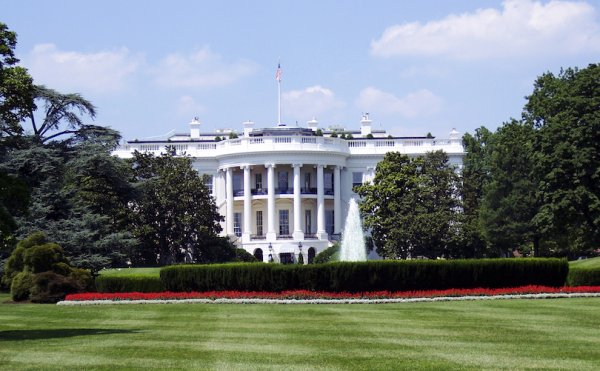
Trade, security and America First – Does Donald Trump’s new National Security Strategy make sense?
On Monday, President Donald Trump released his National Security Strategy. In a bold delivery that was almost more of a campaign speech than a policy announcement, President Trump was focused on terrorism, dictatorships, cyberterrorism and even referenced immigration as a potential threat to national security. Trump referred to China and Russia as "rival powers" who "seek to challenge American influence, values and wealth” but seemed more diplomatic than worried. "We will attempt to build a great partnership with those and other countries, but in a manner that always protects our national interest," Trump said But what will this mean for the Trump Administration and America moving forward? Will America’s polices become more assertive? Will the pursuit to eradicate ISIS and terrorist threats expand? Trump also referenced trade, never leaving out the opportunity to maintain his agenda of keep America’s economy and his efforts to strengthen it on the public’s radar. But what does this have to do with national security? There are a lot of questions still to be answered. That’s where the experts from Augusta University can help. Dr. Craig Albert is an expert on American politics and political philosophy. He was recently appointed director of Augusta University’s new Masters of Arts in Intelligence and Security Studies. Dr. Albert has experience with all forms of national and local news organizations and is available to speak to media regarding this latest development in Washington. Simply click on his icon to arrange an interview. Source:

Another planet discovered by NASA – 2,545 light-years from Earth
Today, the scientific world was watching as NASA made a big announcement. Its Kepler Space Telescope, which has been conducting an intensive planet-hunting mission since 2009, had new results to share with the public. A media release from NASA states: “Our solar system now is tied for most number of planets around a single star, with the recent discovery of an eighth planet circling Kepler-90, a Sun-like star 2,545 light years from Earth. The planet was discovered in data from NASA’s Kepler Space Telescope. The newly-discovered Kepler-90i – a sizzling hot, rocky planet that orbits its star once every 14.4 days – was found using machine learning from Google. Machine learning is an approach to artificial intelligence in which computers “learn.” In this case, computers learned to identify planets by finding in Kepler data instances where the telescope recorded signals from planets beyond our solar system, known as exoplanets." There are some very technical and scientific data and information here. As well, a lot of questions to be asked and answered. That’s where experts like Dr. Michael Reed from Missouri State University can help. Dr. Reed is a professor of astronomy at Missouri State. He researches extrasolar planets and pulsating stars. Dr. Reed is available to speak to the media and can explain what this all means for science, the study of space and if there might actually be life out there. Click on his icon to connect with him. Source:


Done in by digital? What will the sale of Time mean for the industry?
On Monday, a once mighty media juggernaut was sold off for $2.8 billion dollars. Time Inc. – the publisher of Time, Fortune, Sports Illustrated and People was now property of the Meredith Corporation. The Des Moines, Iowa-based company better known for its Better Homes and Gardens, Family Circle, Parents and Family Fun magazines. It’s a bitter and sad end for Time. The company was once the industry leader in magazines and world-respected periodicals. The magazines were’ must-reads’ for the informed. But times have changed, and Time never did catch on or catch up with the digital wave that has transformed journalism as we know it. So, what will all of this mean? Can the world of print media survive and adapt to changing times and tastes? As well, with shrinking circles of media ownership – will regulators let this sale proceed? And what will this mean for the many journalists? More job cuts and shrinking news rooms? Will they move from NYC to Iowa? Has the lustre and allure of being a New York based journalist lost its shine? There are a lot of questions that still need to be addressed and answered. That’s where the experts from Cedarville University can help. Dr. Marc Clauson is a professor of history and law at Cedarville. Marc is an expert in the fields of anti-trust regulation and the economic impact of mergers and takeovers like this. Dr. Clauson is available to speak with media – simply click on his icon to arrange an interview. Source:
