
Experts Matter. Find Yours.
Connect for media, speaking, professional opportunities & more.
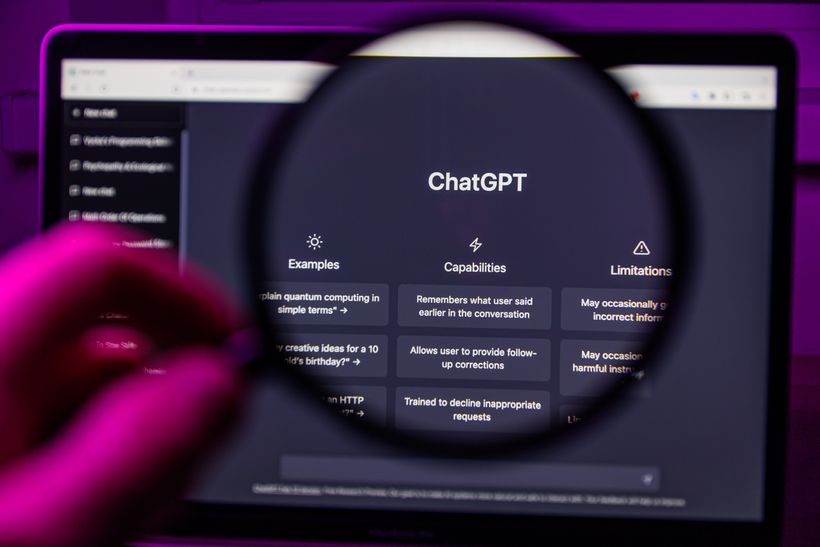
With OpenAI’s latest release, GPT-5.2, AI has crossed an important threshold in performance on professional knowledge-work benchmarks. Peter Evans, Co-Founder & CEO of ExpertFile, outlines how these technologies will fundamentally improve research communications and shares tips and prompts for PR pros. OpenAI has just launched GPT-5.2, describing it as its most capable AI model yet for professional knowledge work — with significantly improved accuracy on tasks like creating spreadsheets, building presentations, interpreting images, and handling complex multistep workflows. And based on our internal testing, we're really impressed. For communications professionals in higher education, non-profits, and R&D-focused industries, this isn’t just another tech upgrade — it’s a meaningful step forward in addressing the “research translation gap” that can slow storytelling and media outreach. According to OpenAI, GPT-5.2 represents measurable gains on benchmarks designed to mirror real work tasks. In many evaluations, it matches or exceeds the performance of human professionals. Also, before you hit reply with “Actually, the best model is…” — yes, we know. ChatGPT-5.2 isn’t the only game in town, and it’s definitely not the only tool we use. Our ExpertFile platform uses AI throughout, and I personally bounce between Claude 4.5, Gemini, Perplexity, NotebookLM, and more specialized models depending on the job to be done. LLM performance right now is a full-contact horserace — today’s winner can be tomorrow’s “remember when,” so we’re not trying to boil the ocean with endless comparisons. We’re spotlighting GPT-5.2 because it marks a meaningful step forward in the exact areas research comms teams care about: reliability, long-document work, multi-step tasks, and interpreting visuals and data. Most importantly, we want this info in your hands because a surprising number of comms pros we meet still carry real fear about AI — and long term, that’s not a good thing. Used responsibly, these tools can help you translate research faster, find stronger story angles, and ship more high-quality work without burning out. When "Too Much" AI Power Might Be Exactly What You Need AI expert Allie K. Miller's candid but positive review of an early testing version of ChatGPT 5.2 highlights what she sees as drawbacks for casual users: "outputs that are too long, too structured, and too exhaustive." She goes on to say that in her tests, she observed that ChatGPT-5,2 "stays with a line of thought longer and pushes into edge cases instead of skating on the surface." Fair enough. All good points that Allie Miller makes (see above). However, for communications professionals, these so-called "downsides" for casual users are precisely the capabilities we need. When you're assessing complex research and developing strategic messaging for a variety of important audiences, you want an AI that fits Miller's observation that GPT-5.2 feels like "AI as a serious analyst" rather than "a friendly companion." That's not a critique of our world—it's a job description for comms pros working in sectors like higher education and healthcare. Deep research tools that refuse to take shortcuts are exactly what research communicators need. So let's talk more specifically about how comms pros can think about these new capabilities: 1. AI is Your New Speed-Reading Superpower for Research That means you can upload an entire NIH grant, a full clinical trial protocol, or a complex environmental impact study and ask the model to highlight where key insights — like an unexpected finding — are discussed. It can do this in a fraction of the time it would take a human reader. This isn’t about being lazy. It’s about using AI to assemble a lot of tedious information you need to craft compelling stories while teams still parse dense text manually. 2. The Chart Whisperer You’ve Been Waiting For We’ve all been there — squinting at a graph of scientific data that looks like abstract art, waiting for the lead researcher to clarify what those error bars actually mean. Recent improvements in how GPT-5.2 handles scientific figures and charts show stronger performance on multimodal reasoning tasks, indicating better ability to interpret and describe visual information like graphs and diagrams. With these capabilities, you can unlock the data behind visuals and turn them into narrative elements that resonate with audiences. 3. A Connection Machine That Finds Stories Where Others See Statistics Great science communication isn’t about dumbing things down — it’s about building bridges between technical ideas and the broader public. GPT-5.2 shows notable improvements in abstract reasoning compared with earlier versions, based on internal evaluations on academic reasoning benchmarks. For example, teams working on novel materials science or emerging health technologies can use this reasoning capability to highlight connections between technical results and real-world impact — something that previously required hours of interpretive work. These gains help the AI spot patterns and relationships that can form the basis of compelling storytelling. 4. Accuracy That Gives You More Peace of Mind...When Coupled With Human Oversight Let’s address the elephant in the room: AI hallucinations. You’ve probably heard the horror stories — press releases that cited a study that didn’t exist, or a “quote” that was never said by an expert. GPT-5.2 has meaningfully reduced error rates compared with its predecessor, by a substantial margin, according to OpenAI Even with all these improvements, human review with your experts and careful editing remain essential, especially for anything that will be published or shared externally. 5. The Speed Factor: When “Urgent” Actually Means Urgent With the speed of media today, being second often means being irrelevant. GPT-5.2’s performance on workflow-oriented evaluations suggests it can synthesize information far more quickly than manual review, freeing up a lot more time for strategic work. While deeper reasoning and longer contexts — the kinds of tasks that matter most in research translation — require more processing time and costs continue to improve. Savvy communications teams will adopt a tiered approach: using faster models of AI for simple tasks such as social posts and routine responses, and using reasoning-optimized settings for deep research. Your Action Plan: The GPT-5.2 Playbook for Comms Pros Here’s a tactical checklist to help your team capitalize on these advances. #1 Select the Right AI Model for the Job: Lowers time and costs • Use fast, general configurations for routine content • Use reasoning-optimized configurations for complex synthesis and deep document understanding • Use higher-accuracy configurations for high-stakes projects #2 Find Hidden Ideas Beyond the Abstract: Deeper Reasoning Models do the Heavy Work • Upload complete PDFs — not just the 2-page summary you were given • Use deeper reasoning configurations to let the model work through the material Try these prompts in ChatGPT5.2 “What exactly did the researchers say about this unexpected discovery that would be of interest to my <target audience>? Provide quotes and page references where possible.” “Identify and explain the research methodology used in this study, with references to specific sections.” “Identify where the authors discuss limitations of the study.” “Explain how this research may lead to further studies or real-world benefits, in terms relatable to a general audience.” #3 Unlock Your Story Leverage improvements in pattern recognition and reasoning. Try these prompts: “Using abstract reasoning, find three unexpected analogies that explain this complex concept to a general audience.” “What questions could the researchers answer in an interview that would help us develop richer story angles?” #4 Change the Way You Write Captions Take advantage of the way ChatGPT-5.2 translates processes and reasons about images, charts, diagrams, and other visuals far more effectively. Try these prompts: Clinical Trial Graphs: “Analyze this uploaded trial results graph upload image. Identify key trends, and comparisons to controls, then draft a 150-word donor summary with plain-language explanations and suggested captions suitable for donor communications.” Medical Diagrams: “Interpret these uploaded images. Extract diagnostic insights, highlight innovations, and generate a patient-friendly explainer: bullet points plus one visual caption.” A Word of Caution: Keep Experts in the Loop to Verify Information Even with improved reliability, outputs should be treated as drafts. If your team does not yet have formal AI use policies, it's time to get started, because governance will be critical as AI use scales in 2026 and beyond. A trust-but-verify policy with experts treats AI as a co-pilot — helpful for heavy lifting — while humans remain accountable for approval and publication. The Importance of Humans (aka The Good News) Remember: the future of research communication isn’t about AI taking over — it’s about AI empowering us to do the strategic, human work that machines cannot. That includes: • Building relationships across your institution • Engaging researchers in storytelling • Discovering narrative opportunities • Turning discoveries into compelling narratives that influence audiences With improvements in speed, reasoning, and reliability, the question isn’t whether AI can help — it’s what research stories you’ll uncover next to shape public understanding and impact. FAQ How is AI changing expectations for accuracy in research and institutional communications? AI is shifting expectations from “fast output” to defensible accuracy. Better reasoning means fewer errors in research summaries, policy briefs, and expert content—especially when you’re working from long PDFs, complex methods, or dense results. The new baseline is: clear claims, traceable sources, and human review before publishing. ⸻ Why does deeper AI reasoning matter for communications teams working with experts and research content? Comms teams translate multi-disciplinary research into messaging that must withstand scrutiny. Deeper reasoning helps AI connect findings to real-world relevance, flag uncertainty, and maintain nuance instead of flattening meaning. The result is work that’s easier to defend with media, leadership, donors, and the public—when paired with expert verification. ⸻ When should communications professionals use advanced AI instead of lightweight AI tools? Use lightweight tools for brainstorming, social drafts, headlines, and quick rewrites. Use advanced, reasoning-optimized AI for high-stakes deliverables: executive briefings, research positioning, policy-sensitive messaging, media statements, and anything where a mistake could create reputational, compliance, or scientific credibility risk. Treat advanced AI as your “analyst,” not your autopilot. ⸻ How can media relations teams use AI to find stronger story angles beyond the abstract? AI can scan full papers, grants, protocols, and appendices to surface where the real story lives: unexpected findings, practical implications, limitations, and unanswered questions that prompt great interviews. Ask it to map angles by audience (public, policy, donors, clinicians) and to point to the exact sections that support each angle. ⸻ How should higher-ed comms teams use AI without breaking embargoes or media timing? AI can speed prep work—backgrounders, Q&A, lay summaries, caption drafts—before embargo lifts. The rule is simple: treat embargoed material like any sensitive document. Use approved tools, restrict sharing, and avoid pasting embargoed text into unapproved systems. Use AI to build assets early, then finalize post-approval at release time. ⸻ What’s the best way to keep faculty “in the loop” while still moving fast with AI? Use AI to produce review-friendly drafts that reduce load on researchers: short summaries, suggested quotes clearly marked as drafts, and a checklist of claims needing verification (numbers, methods, limitations). Then route to the expert with specific questions, not a wall of text. This keeps approvals faster while protecting scientific accuracy and trust. ⸻ How should teams handle charts, figures, and visual data in research communications? AI can turn “chart confusion” into narrative—if you prompt for precision. Ask it to identify trends, group comparisons, and what the figure does not show (limitations, missing context). Then verify with the researcher, especially anything involving significance, controls, effect size, or causality. Use the output to write captions that are accurate and accessible. ⸻ Do we need an AI Use policy in comms and media relations—and what should it include? Yes—because adoption scales faster than risk awareness. A practical policy should define: approved tools, what data is restricted, required human review steps, standards for citing sources/page references, rules for drafting quotes, and escalation paths for sensitive topics (health, legal, crisis). Clear guardrails reduce fear and prevent preventable reputational mistakes. If you’re using AI to move faster on research translation, the next bottleneck is usually the same one for many PR and Comm Pros: making your experts more discoverable in Generative Search, your website, and other media. ExpertFile helps media relations and digital teams organize their expert content by topics, keep detailed profiles current, and respond faster to source requests—so you can boost your AI citations and land more coverage with less work. For more information visit us at www.expertfile.com



Why Are Canadian Banks Not Protecting Seniors? The $40 Billion Dollar Question
After an 89-year-old Victoria man lost $1.7 million to phone scammers despite bank red flags, retirement expert and authour, Susan Pimento, exposes a critical protection gap: while U.S. banks like Bank of America offer "Trusted Contacts" (designated people banks call to verify suspicious transactions) for all accounts, Canadian banks restrict this safeguard to investment accounts only—leaving everyday banking vulnerable where most fraud occurs. In Canada, senior fraud is vastly underreported (RCMP estimates only 5-10% surface), and banks are treating this as a cost issue rather than a moral crisis. Susan Pimento is available for interviews to discuss practical solutions, industry insights from her decades of work within financial institutions, and why Canadian banks are failing to implement a simple fix that could save seniors' life savings. Connect with her directly through ExpertFile to schedule TV, radio, podcast, or print interviews. As I was polishing this post for Canadian Financial Literacy Month, another senior fraud story flashed across my screen. This one stopped me cold. According to this CBC story, an 89-year-old man in Victoria, B.C., was tricked into handing over nearly $1.7 million of his life savings in a months-long phone scam. The caller claimed to be from the fraud department at CIBC and said he was helping with a national money-laundering case. (Spoiler: he wasn't.) Despite red flags and staff awareness, the bank still allowed large in-person withdrawals. He was told to buy gold bars — yes, actual gold bars — with drafts of up to $395,000, which couriers then collected like some twisted Uber Eats retirement fraud. Every week in Canada, we see another heartbreaking headline: a senior sends thousands, sometimes millions, to a scammer pretending to be their grandchild, the CRA, or — the ultimate irony — their bank. These scams targeting seniors don't require fancy hacking. They rely on fear, isolation, and misplaced trust. Once the money's gone, it's gone—no refund policy. And here's the kicker: what we're reading about is just the tip of the iceberg. For seniors, fraud now ranks as the top crime, and most fraud goes unreported—especially in this demographic. In a previous post, I showed how the data suggests the real figures could be 10 to 20 times higher than what's officially reported. The RCMP estimates that only 5-10% of fraud victims come forward. Many victims never speak out due to embarrassment, fear, or confusion. Translation? For every story that makes the news, countless others suffer in silence. How The Banking Industry Can Actually Fight Fraud I've worked within financial institutions for decades. Let's just say I understand how the process works. Banks have billion-dollar tech stacks, layers of compliance, and advanced fraud detection systems that can flag a suspicious $47 transaction in milliseconds. But the solution for this type of fraud isn't a multimillion-dollar algorithm or a new "AI-powered fraud prevention dashboard." Instead, it's a human-based approach called a Trusted Contact. What's a "Trusted Contact," Anyway? It's not an app, a chatbot, or some new gadget that requires a firmware update every Thursday. It's a person. Someone you trust — a family member, attorney, accountant, or another third-party who you believe would respect your privacy and know how to handle the responsibility of communicating with your bank in your best interests if something suspicious occurs. They don't access your money or view your accounts. They can't see that you spent $47 at the LCBO last Tuesday (Your secret is safe). They're simply your human safety net — a fraud wing person, if you will. The Origins of the Trusted Contact The concept began in the U.S. in 2018, when FINRA mandated investment firms to request a Trusted Contact Person. Canada followed in 2022, when the Canadian Securities Administrators introduced similar guidance for investment accounts. What things can be discussed with a trusted contact? As its name implies, a Trusted Contact is a designated person who is inherently trusted by the individual (and has no authority to transact business on a client’s account), so there is little to no danger that any reasonable disclosure would violate a client’s trust or give rise to any material issue.” What Canadian Banks Are Doing...And Not Doing Here's the good news. If you invest through Wealthsimple, RBC Direct Investing, TD Direct, or BMO InvestorLine, you can already designate a Trusted Contact. But here's where it gets ridiculous: RBC Direct might have that security feature — but your regular RBC chequing account? Not so much. That protection vanishes the moment Mom or Dad logs into their everyday banking. And that's where most fraud actually occurs. It's like installing a state-of-the-art security system on your front door but leaving the back door wide open with a welcome mat that says "Scammers Enter Here!" Fraud in Canada for Banks is Still a Budget Item: Not a Moral Crisis Here's the uncomfortable truth: For banks, fraud is considered a "cost of doing business." And since most of those losses are borne by customers, not the bank, there isn't much urgency to innovate. The Big Five earned over $40 billion in total last year. They have the means to care. They're not particularly motivated to actually do so. The Big Opportunity for Banks: Add a Little Humanity to the System Banks like to boast about their AI, blockchain, and next-gen fraud analytics. But most scams don't occur because of breached firewalls — they happen because of breached hearts. A Trusted Contact provides an additional simple, low-tech layer: human verification. Picture this: The bank spots an unusual transaction — a large new payee, an international wire transfer, or a sudden gold-bar purchase (it happens). Instead of sending another automated text alert, the system could ask: "This looks unusual. Would you like us to confirm with your Trusted Contact before proceeding?" or “Just a heads-up: scammers often use urgent or unusual requests. Prefer we run this by your Trusted Contact before we proceed?” That's it. One additional step. One extra set of eyes. One brief conversation could save someone's life savings. This isn't about limiting independence — it's about safeguarding autonomy. Ensuring your decisions are genuinely yours, not the scammer's. Banks could even call it "Senior Protection Mode." I'd sign up tomorrow. Heck, I'd pay extra for it. (Shhh, don't tell them that.) Here's the Proof Trusted Contacts Work: Bank of America Did It In 2022, Bank of America became the first major bank to extend Trusted Contacts beyond investment accounts to everyday banking clients. Customers can now add a trusted person the bank can call if something seems wrong, if they can't reach you, or if staff suspect undue influence. That person can't access your money — they're just the human speed bump before disaster: one simple form, one phone number, and much heartbreak avoided. If Bank of America can do it, why can't ours? Canadian banks already have the tech — and indeed the profits — to make it happen. What's Holding Canada's Banks Back? Cue the usual excuses: "Our legacy systems can't handle that." Sure — some of your code still thinks "Y2K" is an active threat. But if you can build an app that tracks my latte points and sends me notifications about my "spending insights," you can add one field for a Trusted Contact. "Privacy laws make it risky." Nope. FINRA and the CSA already provide safe-harbour protections. With consent, banks can legally contact a Trusted Person. Just add a checkbox. You love checkboxes. You make us check dozens of them every time we update our password. "Customers haven't asked for it." They're asking now. Loudly. With megaphones. And pointing at stories like the Victoria gentleman who lost $1.7 million in gold bars. The business case has historically been weak because most fraud losses affect customers, not the bank's balance sheet. But here's the catch: every fraud story damages trust. And in banking, trust is supposed to be the core of the business. For Canadian Banks There's a Competitive Advantage in Caring Rolling out a Trusted Contact feature isn't just good ethics; it's good business. Imagine the marketing campaign: "We don't just protect your password — we protect your peace of mind." Seniors would love this. So would their kids. That's multi-generational loyalty money can't buy. If EQ Bank or any challenger brand wanted a PR home run, this would be it. It's Time to Take Action on Fraud To the Banks: Stop waiting for regulators to force your hand. Lead. Be the first to offer Trusted Contacts for all customers — not just investors. You have the framework, the talent, and the budget. You absolutely do not need another consultant to tell you this is the right thing to do. To Policymakers: The Financial Consumer Agency of Canada should update its Code of Conduct to include a mandatory Trusted Contact option for all customers, safe-harbour rules allowing banks to pause suspicious transactions, and annual public reporting on outcomes. Because sunshine is the best disinfectant, even in banking. To Consumers: Don't wait for policy — be the policy. Ask your bank today if you can add a Trusted Contact. If they say no, ask why not — and post it. Loudly. Talk to your family. Choose your Trusted Person now. Write your MP or MPP and ask why U.S. banks protect seniors better than ours. Remember the $3 ATM Fee Rebellion? Canadians once revolted over paying $3 to access their own money at ATM's. We later got no-fee accounts, digital challengers, and a whole new generation of more innovative banking. If we can rally over an ATM fee, surely we can rally to protect our parents and grandparents from losing their life savings. Fraud isn't an inevitable part of aging — it's a solvable problem. And Trusted Contacts are one of the simplest, most human solutions we have. Don't Forget Two-Factor Authentication for the Soul Adding a Trusted Contact won't stop all fraud — let's be clear about that. But it will go a long way toward slowing it down, adding a common-sense pause, and potentially saving even one senior from losing any part of their hard-earned money. It's unfortunately too late for that gentleman and his family in BC, but it's not too late for countless others. This won't crash legacy systems or drain bank profits. It just adds a little humanity back into banking — right where it belongs. Because the best kind of security isn't just two-factor authentication. It's two people who care. And if we don't care about protecting our elders, who exactly do we care about? Sue Don’t Retire…Re-Wire! Want to become an expert on serving the senior demographic? Just message me to be notified about the next opportunity to become a "Certified Equity Advocate" — mastering solution-based advising that transforms how you work with Canada's fastest-growing client segment.


Google's New AI Overviews Isn’t Just Another Search Update
Google's recent rollout of AI Overviews (previously called “Search Generative Experience”) at its annual developer conference is being hailed as the biggest transformation in search since the company was founded. This isn’t a side project for Google — it fundamentally alters how content gets discovered, consumed, and valued online. If you're in marketing, PR, content strategy, or run a business that depends on online visibility, this requires a fundamental shift in your thinking. What Is AI Overviews? Instead of showing users a familiar list of blue links and snippets, Google now uses artificial intelligence to generate a summary answer at the very top of many search results pages. This AI-generated box pulls together content from across the web and tries to answer the user’s question instantly—without requiring them to click through to individual websites. Here’s what that looks like: You type in a question like “What are the best strategies for handling a media crisis?” Instead of just links, you see a big AI-generated paragraph with summarized strategies, possibly quoting or linking to 3-5 sources—some of which might not even be visible unless you scroll or expand the summary. Welcome to the new digital gatekeeper. Elizabeth Reid, VP of Search at Google states "Our new Gemini model customized for Google Search brings together Gemini’s advanced capabilities — including multi-step reasoning, planning and multimodality — with our best-in-class Search systems. Let's breakdown this technobabble. Think of Gemini as the brain behind Google’s search engine that’s now: Even More Focused on User intent For years, SEO strategies were built around guessing and gaming the right keywords: “What exact phrase are people typing into Google?” That approach led to over-optimized content — pages stuffed with phrases like “best expert speaker Boston cleantech” — written more for algorithms than actual humans. But with Google Gemini and other AI models now interpreting search queries like a smart research assistant, the game has changed entirely. Google is no longer just matching phrases — it’s interpreting what the user wants to do and why they’re asking. Here’s What That Looks Like: Let’s say someone searches: “How do I find a reputable expert on fusion energy who can speak at our cleantech summit?” In the old system, pages that mentioned “renewable energy,” “expert,” and “speaker” might rank — regardless of whether they actually helped the user solve their problem. Now Google more intuitively understands: • The user wants to evaluate credibility • The user is planning an event • The user needs someone available to speak • The context is likely professional or academic If your page simply has the right keywords but doesn’t send the right signals — you’re invisible. Able to plan ahead Google and AI search platforms now go beyond just grabbing facts. They string together pieces of information to answer more complex, multi-step queries. In traditional search, users ask one simple question at a time. But with multi-step queries, users are increasingly expecting one search to handle a series of related questions or tasks all at once — and now Google can actually follow along and reason through those steps. So imagine you’re planning a conference. A traditional search might look like: "Best conference venues in Boston” But a multi-step query might be: “Find a conference venue in Boston with breakout rooms, check availability in October, and suggest nearby hotels with group rates.” This used to require three or four different searches, and you’d piece it together yourself. Now Google can handle that entire chain of related tasks, plan the steps behind the scenes, and return a highly curated answer — often pulling from multiple sources of structured and unstructured data. Even Better at understanding context Google now gets the difference between ‘a speaker at a conference’ and ‘a Bluetooth speaker’ — because it understands what you mean, not just what you type.” In the past, Google would match keywords literally. If your page had the word “speaker,” it might rank for anything from event keynotes to audio gear. That’s why so many search results felt off or required extra digging. Now Google reads between the lines. It understands that “conference speaker” likely refers to a person who gives talks, possibly with credentials, experience, and a bio. And that “Bluetooth speaker” is a product someone might want to compare or buy. Why this matters for marketers: If you’re relying on vague or generic content — or just “keyword-stuffing” — your pages will fall flat. Google is no longer fooled by superficial matches. It wants depth, clarity, and specificity. Reads More Than Just Text Google now processes images, videos, charts, infographics, and even audio — and uses that multimedia information to answer search queries more completely. This now means that your content isn’t just being read like a document — it’s being watched, listened to, and interpreted like a human would. For example: • A chart showing rising enrollment in nursing programs might get picked up as supporting evidence for a story about healthcare education trends. • A YouTube video of your CEO speaking at a conference might be indexed as proof of thought leadership. • An infographic explaining how your service works could surface in an AI-generated summary — even if the keyword isn’t mentioned directly in text. Ignoring multimedia formats? Then, your competitors’ visual storytelling could be outperforming your plain content. Because you're not giving Google the kind of layered, helpful content that Gemini is now designed to highlight. Why This Matters There's a big risk here. Marketers who ignore these developments are in danger of becoming invisible in search. Your old SEO tricks won’t work. Your content won’t appear in AI summaries. Your organization won’t be discovered by journalists, customers, or partners who now rely on smarter search results to make decisions faster. If you’re in communications, PR, media relations, or digital marketing, here’s the key message. You are no longer just fighting for links. You need to fight to be included in the Google AI summary itself at the top of search results - that's the new #1 goal. Why? Journalists can now find their answers before ever clicking on your beautifully written news page. Prospective students, donors, and customers will often just see the AI’s version of your content. Your brand’s visibility now hinges on being seen as “AI-quotable.” If your organization isn’t optimized for this new AI-driven landscape, you risk becoming invisible at the very moment people are searching for what you offer. How You Can Take Action (and Why Your Role Is More Important Than Ever) This isn’t just an IT or SEO problem. It’s a communications strategy opportunity—and you are central to the solution. What You Can Do Now to Prepare for AI Overviews 1. Get Familiar with How AI “Reads” Your Content AI Overviews pull content from websites that are structured clearly, written credibly, and explain things in simple language. Action Items: Review your existing content: Is it jargon-heavy? Outdated? Lacking expert quotes or explanations? Then, it's time to clean house. 2. Collaborate with your SEO and Web Teams Communicators and content creators now need to work hand-in-hand with technical teams. Action Items: Check your pages to see if you are using proper schema markup. Are you creating topic pages that explain complex ideas in simple, scannable formats? 3. Showcase Human Expertise AI values content backed by real people—especially experts with credentials. Action Items: Make sure your expert profiles are up to date. Make sure you continue to enhance them with posts, links to media coverage, short videos, images and infographics that highlight the voices behind your brand and make you stand out in search. 4. Don’t Just Publish—Package AI favors content that it can easily digest and display such as summary paragraphs, FAQs, and bold headers that provide structure for search engines. This also makes your content more scannable and engaging to humans. Action Items: Repurpose your best content into AI-friendly formats: think structured lists, how-tos, and definitions. 5. Monitor Your Presence in AI Overviews Regularly search key topics related to your organization and see what shows up. Action Items: Is your content featured? If not, whose is—and identify what they doing differently. A New Role for Communications: From Media Pitches to Machine-Readable Influence This isn’t the end of communications as we know it—it’s an evolution. Your role now includes helping your organization communicate clearly to machines as well as to people. Think of it as “PR for the algorithm.” You’re not just managing narratives for the public—you’re shaping what AI systems say about you and your brand. That means: • Ensuring your best ideas and experts are front and center online. • Making complex information simple and quotable. • Collaborating cross-functionally like never before. Final Thought: AI Search Rewards the Prepared Google’s new AI Overviews are here. They’re not a beta test. This is the future of search, and it’s already rolling out. If your institution, company, or nonprofit wants to be discovered, trusted, and quoted, you can no longer afford to ignore how AI interprets your online presence. Communications and media professionals are now at the front lines of discoverability. And the best way to lead is to act now, work collaboratively, and elevate your role in this new era of search. Want to see how leading organizations are getting ahead in the age of AI search? Discover how ExpertFile is helping corporations, universities, healthcare institutions and industry associations transform their knowledge into AI-optimized assets — boosting visibility, credibility, and media reach. Get your free download of our app at www.expertfile.com

Humans have long taken inspiration from the natural world. From the indigenous cultures of the world who understand and utilize the properties of plant and animal products, to Leonardo da Vinci’s “flying machine” sketches inspired by his observations of flying birds, humankind has often looked to nature to help solve its problems and drive innovation. With rapid scientific advancements of the 19th and 20th centuries, and the exponential growth of sustainability practices over the last quarter century, the concepts of bio-inspired design and biomimicry have been increasingly pursued across myriad disciplines of study and implementation. Alyssa Stark, PhD, associate professor of biology at Villanova University, is one of the “boots-on-the-ground” researchers in pursuit of nature’s solutions to human problems. She recently took the time to chat with us about these fields, her research interests and the future of biomimicry. Villanova PR: We sometimes hear the terms “bio-inspired design” and “biomimicry” used interchangeably. Are they the same concept? Alyssa Stark: I see those as two different things. Bio-inspired design is when we are looking at an organism and see that it’s doing something that we want to emulate as humans. I work with animals that have unique adhesive properties. I ask questions like: Can we see that? Can we build it? Can we transfer that information, those ideas, those principles – it could be chemistry, physics, biological structure – and make something useful for us? That is also true with biomimicry, but the big difference for me is that we're keeping in mind the sustainability components. The natural world is not polluting. If we're using this biomimicry lens, how do we learn from nature to make products or solve problems in a sustainable way, keeping in mind the specific environment in which we are located? As an example, we wouldn't use a heavy water process if we were in the Arizona desert, instead we should look to our immediate surroundings to solve problems. PR: It seems the work going on in this field really takes a unique level of interdisciplinary collaboration. What types of different professionals are working in biomimicry? AS: It really pulls together biologists, engineers, physicists, chemists, even design artists and businesspeople. I've worked with a lot of different businesses that want to have sustainability in their company at broad levels by using biomimicry. They are not motivated by making a cool product, but realizing it actually saves them money if they think about their whole company in a biomimetic perspective. There are people who work on the social side of biomimicry, helping these companies completely restructure themselves to be more efficient and more time and money sensitive, without ever making a product. But of course, products are a huge part of it, too. And to make that happen, all of those professions, and more, are vital and active in this space. PR: In terms of products, what are some of the most successful examples of biomimetic designs being implemented? AS: A classic one is a building in Africa that doesn't have any air conditioning units because it has a series of vents like a termite mound. Or the bullet train being shaped like a kingfisher’s beak. One scientist found that whales have bumps on their fins, which you might think is not hydrodynamic. But as it turns out, it actually cuts through water more efficiently by creating little vortices. This concept was then applied to wind turbines. There are many examples of biomimicry actually working and being used. My mind is blown when I talk to an artist or designer about biomimicry because it's just wild the way they think. PR: Where does your overall work as a biologist fit into the world of biomimicry? AS: My hard science work is very much functional morphology – shape and structure of things and how they function. That includes behavior and their organismal interaction with the environment. I ask questions like: How do their structures function and perform? How sticky are they? How fast are they? How do they behave in their environment? What happens if they hit different challenges in their environment? My work kind of naturally fits well with biomimicry, especially for product development. I observe the natural world and then I start testing questions and predictions that I have about it, like figuring out how the heck this ant is sticking to this wet leaf. My results can then be applied directly. We have to first understand how these organisms work, and then others can run with it to try to put it to use. PR: What organisms do you work with and what about them are you studying? AS: I mostly study geckos, ants, and sea urchins and I just started working with some coral, looking at why some coral undergo bleaching, and some don’t. With sea urchins, we're also figuring out where their incredibly hard teeth are mineralized so we can understand it enough to try to mimic it. I like playing in that zone, because it still provides me a chance to do the hard science, but also talk to engineers and others and provide them information. With geckos, what I kind of broke open with my PhD thesis was that they have an adhesive that works in wet environments. Having a reusable adhesive that can work on skin, especially in the medical world, is a big problem and where most of my research lies. Think of a bug that you can’t pry off, but then it suddenly runs. How do these organisms move with such sticky feet? Figuring out how to make a reusable adhesive that doesn’t get dirty and can handle all these different environments is a difficult problem to solve. PR: How do you see this field evolving, especially as we strive for a greener, more sustainable future? AS: I would say the next step is the social levels of these big ecosystems. How do we build a city that functions like a rainforest or like a coral reef? Not just a product, but how do we actually shape our world by taking behaviors, processes, or systems that we see in the natural world to help us? Look at a pride of lions and their hierarchy, or what kind of feedback loops are there in an ant colony that allow them to give information back to their colony members quickly and share resources. I think that is the future of this field, and it’s an exciting future. *To learn more about Dr. Stark’s research and the field of biomimicry, click here to listen to a recent episode of NPR’s science show, “The Pulse.”


The 2024 Cision State of the Media Report is jam-packed with all sorts of detailed PR info which can be somewhat overwhelming. But there's an important theme to be found in the data. Kudos to the team at Cision for running this survey that polled over 3,000 staff journalists and freelancers, which is now in its 15th year. The big takeaway for me? Give journalists what they want. Sounds simple enough. Yet, with so many organizations competing for media attention amidst a sea of new AI-enabled platform hacks, many need to focus on the fundamentals of media relations, which this report nicely captures. The media is inundated with pitches. So, the secret to success lies in understanding what jobs journalists have to do and giving them what they need to file their stories…fast. According to the Cision 2024 survey, at the top of the journalists' wish list are: Topical Relevance (68%): Understanding the target audience and what they find relevant. Access to Experts (52%): Connecting journalists with experts and setting up interviews. Credible Data and Research (48%): Providing data and key research. Speed of Response (47%): Responding quickly to inquiries and respecting journalists’ deadlines. In short, journalists want relevant pitches, expert connections, and credible data, and they want it ASAP so they can meet their deadlines. While the Cision report outlines many other best practices that will undoubtedly improve your coverage rate (such as helping journalists quickly source multimedia assets like images), I want to focus on the importance of nailing these first four rules. Rule #1: Pitch Relevant Topics to Journalists Irrelevant pitches not only waste a journalist's time but also damage your credibility. In fact, 77% of journalists in the Cision study cited being spammed with irrelevant pitches as a reason to block a PR professional or put them on the "do not call" list. The study also reported that journalists are "fed up" with follow-ups to unsolicited pitches. Now, only 8% of journalists think it's okay to follow up more than once to check on a story they have pitched. Rule #2: Get Your Experts in Front of Journalists Connecting with credible expert sources is time-consuming. Joint research conducted by ExpertFile and the Associated Press revealed it takes on average, over 2 hours for journalists to secure an expert source for an interview. We can do better than that. As a PR/Media Relations pro, one of your "superpowers" needs to be the ability to spot a story opportunity and get your subject matter experts lined up for the media interview. This is an area where journalists see comms and media pros playing a vital role inside the organization. But if your pitch "sounds like a marketing brochure" the Cision survey shows that 55% of journalists would add you to their naughty list. One of the best ways to avoid this trap and enrich your story is to bring experts and their unique, specialized knowledge to the interview. That means ensuring you are attributing the source of your blog posts to experts in your organization and including links to their expert profile in your pitch. Enclosing a link to an outdated, boring biography on your website or a LinkedIn profile that hasn't been updated since the Yankees last won the World Series (2009), won't score points with journalists. Rule 3: Provide Journalists with Credible Data and Key Research Providing this information not only supports your story but also builds trust. Ensure that your pitches include the latest research findings, statistics, and data from reputable sources within your institution. This evidence-based approach enhances the credibility of your pitches and increases the likelihood of them being picked up by the media. While primary data is best, if you are curating data from other sources, it's critical to cite sources and, ideally, create derivative insights that help the journalist look at the information in a fresh way. For example we have many economists on our ExpertFile network that provide insights regularly on data they didn't gather. But their ability to critically analyze economic data from trusted sources such as the US Census Bureau or the European Union and generate unique, often counterintuitive or provocative insights is what sets them apart from other experts. Rule #4: Help Meet the Journalist's Deadline Journalists often work under tight deadlines and timely responses from PR professionals. Our software has helped organizations handle thousands of media requests every year and if there is one thing we've learned, media is all about speed. If you are a "serious player" you need protocols and processes to quickly respond to media inquiries and get your expert sources lined up to provide the necessary information and insights to meet same-day deadlines. This shows journalists you respect their time and are a reliable source and you will be on speed dial for future stories. Are You Pitching Effectively? Here’s a few tough questions. Answer truthfully. Are You Personally Wasting Time Pitching? How much time do you spend pitching the media vs. responding to inbound media opportunities? Data from Propel Media shows 97% of media pitches fail. While journalists open approximately half of the pitches they receive they only respond to an average of 2.99% of the pitches. Yet the Cision data shows that it's not always your fault. Why? Well, unless you're a gifted psychic, you simply can't know for sure how a journalist is going to react to your pitch. That's why more media departments and their PR agencies are cutting back on spammy pitch activities and moving to more strategic activities that get more traction. With the extra time they save, they can focus on promoting their experts online where journalists are actively searching for credible sources. The result is more qualified inbound inquiries from journalists genuinely interested in interviewing your experts. And that means a lot less anxiety about meeting your media coverage targets. Are You Wasting Journalists' Time? Is your newsroom or media relations page set up to allow journalists to quickly serve themselves 24x7? Can they easily search by specific topics to find an expert within seconds to help meet their deadlines? Or are you expecting them to email or call you for help. (hint: journalists don't have time for that kind of friction). Here's a nice example of how US-based health system, ChristianaCare makes their medical experts available to journalists round the clock while saving hundreds of hours a year for their Comms and Digital team. I'd love to hear more about how you are helping journalists and how that's paying off with increased media coverage. Let me know in the comments below or connect/follow me on LinkedIn or on ExpertFile.
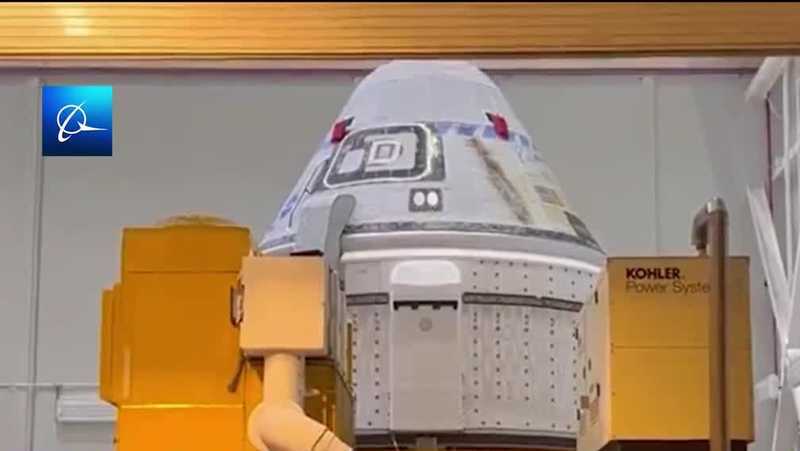
Ready for takeoff! The Starliner is set for its first mission to the ISS
Since 2011, any American astronaut looking to get to or from the International Space Station (ISS) had to lift off from the Baikonur Cosmodrome, a spaceport operated by Russia within Kazakhstan. It was the only way to get up into space - for now. It's why almost a decade ago private sector companies Boeing and SpaceX were engaged by NASA to develop a new way to get to the ISS from American soil. All of that is about to change, and all eyes have been on Boeing's Starliner as it readies to take flight with a crew for the first time. Florida's Tech's Don Platt , the Director of the Spaceport Education Center, has also been busy as the media coverage has been intense. “In this case, NASA is truly buying a service and it’s up to the company to get it all right. With just some oversight," said Don Platt, of Florida Tech. Starliner rolled out to Launch Complex 41 in the early morning on Tuesday. It will be positioned atop a ULA Atlas 5 rocket for the planned liftoff on May 6 from the Cape Canaveral Space Force Station. As Platt explained, Starliner is a critical second option for NASA. “With all the success of SpaceX has had recently, we can’t simply rely on SpaceX to provide all services to the American space program," Platt said. This is the first flight of Starliner with a crew onboard so it’ll be the first time for it to fly in this configuration. During these test missions, there are always lessons to be learned. “We are all aware of some of the issues the Boeing company has experienced in the last couple of years. And to have a successful test flight here with astronauts onboard is a definite plus from PR aspect,” Platt said. Two seasoned NASA astronauts will be the first to take a ride in Starliner up to the ISS; Suni Williams and Barry “Butch” Wilmore. They’ll be up there for eight days on this test mission and if all goes well, the first Starliner mission on NASA crew rotation up to the ISS will come next spring. -- April 16 - NBC News Getting to the ISS, Moon and even Mars are getting a lot of attention lately. If you're a journalist look to cover the topic, let us help. Dr. Don Platt's work has involved developing, testing and flying different types of avionics, communications, rocket propulsion systems as well as astrobiology/biotechnology systems and human deep space exploration tools. Don is available to speak with media anytime. Simply click on the icon below to arrange an interview today.


The CRISPR Dilemma: A Road To Saving Lives Riddled with Roadblocks
The New York Times recently published an Op-Ed by Dr. Fyodor Urnov unpacking the incredible advancement and possibilities of CRISPR gene editing technology on human lives. It also addressed some of the roadblocks and challenges preventing this "not so new" technology from getting to the finish line of promise. Dr. Eric Kmiec, the director of ChristianaCare's Gene Editing Institute, whose unparalleled research has led to over 18 patents that have advanced medical research, also shared his concern in a follow-up letter published by the New York Times about the many roadblocks standing in the way of life-saving opportunities with gene editing and CRISPR technology. Dr. Kmiec (above) in the lab "If we were able to safely and effectively approve a COVID vaccine in a year, we must do the same by pooling public and private funds and seek ways to speed science. Why can’t we support the most promising solutions to some of the longest running and most intractable of cancers or rare diseases?" The advancement of gene editing has not only been stalled by the outdated processes of medical reviews and policies, but many have introduced political and religious barriers. The idea of "playing God" or even Dr. Frankenstein when people hear the term "gene editing" raises ethical questions based on a lack of understanding. Some of these concerns are shared in this recent article in Futurism. Ask one of the 100 people afflicted with a gene defect that could cost them their lives at age 7 and the perspective may be a little different. Nature makes mistakes, often imperfect, and impacted by the ever-changing landscape, impacted by external factors that are either known or unknown. Gene editing, simply put, can fix typos in genes that have experienced a glitch. As Dr. Kmiec puts it, "It allows us to correct mutations that are inbred in the genome, it's correcting nature's mistakes — and nature does make a bunch of mistakes." Whether gene editing fits into a belief system or is too otherworldly for some to grapple with, Dr. Kmiec asserts that speeding up the delays put onto science by process, politics or fear will result in saving lives, saving pain and advancing possibility. Dr. Urnov agrees, "Scientists owe them and their families honesty about the chasm between a test tube in a lab and an IV line in a hospital. The greatest obstacles are not technical but legal, financial and organizational." Gene editing is a pioneering technology that can help humans, plants and animals alike. When it comes to putting it into action, at the very least, if science is there to help, everyone should have the choice to use it.



Podcast: UK’s first non-white prime minister is ‘big moment’ – but can Rishi Sunak survive?
Academic focuses on importance of UK having its first prime minister of Indian descent Rishi Sunak’s personal family history could be seen as a testament to the ‘British dream’, as he is also ‘richest man’ ever to sit in the House of Commons But his ability at restoring economic stability and tackling cost-of-living crisis will decide his fate at the polls Having the first non-white leader of the UK is undoubtedly a “big moment” in the history of British politics, according to an academic at Aston University. But, although he may be able to count on the British Asian vote at the next general election, Rishi Sunak faces a major challenge to remain in No 10 due, in part, to the growing number of Conservative MPs intending to stand down. Mr Sunak’s rise to become Britain’s first Asian and first Hindu leader has been discussed by Dr Parveen Akhtar, a senior lecturer and deputy head of politics, history and international relations at Aston University. Dr Akhtar, who has studied across Europe and authored a book on British Muslim politics, was speaking as part of the latest episode in the 'Society matters' podcast series, presented by journalist Steve Dyson. She said Rishi Sunak benefitted from a “privileged upbringing”, but also married into wealth in the form of the daughter of Indian billionaire N R Narayana Murthy, co-founder of information technology company Infosys. With the couple having a combined wealth of £730 million, Parveen said Rishi Sunak can “allegedly lay claim to another title – the richest man to ever sit in the House of Commons”. A “scandal” over his wife’s non-domiciled tax status had even threatened to end Sunak’s career less than a year ago. But she added: “Whatever the mixed feelings are around his personal fortune, this is nevertheless a big moment. Becoming the first non-white leader of the UK is important. It’s important for the country and it’s important for the UK’s ethic minority communities too.” Dr Akhtar, who is currently writing a new book on the politics of Pakistan and Pakistanis abroad, said Rishi Sunak’s paternal grandparents were from Gujranwala, which is in present-day Pakistan. Sunak, himself, was born in Southampton, but his father Yashvir, a family doctor, and mother, Usha, a pharmacist who studied at Aston University, were born and brought up in present-day Kenya and Tanzania respectively.However, they joined an exodus of Asians from East Africa in the second half of the last century, fuelled by Idi Amin’s wholesale expulsion of Asians from Uganda in 1972. Sunak’s “cultural affinity” lies with his Indian roots, Dr Akhtar said, including being a practising Hindu, and he himself had said that ‘British Indian’ is what he ticks on the census. She added: “The Sunaks’ personal family history could be read as a testament to the British dream: the idea that the UK is a land of opportunity where, no matter who you are, if you work hard, you can make it right to the top. The formula for success is simple: head down, hard work perseverance.” While Sunak was privately educated at Winchester, and went on to study at both Oxford University in England and Stanford University in the US, he has spoken about various jobs, including being a waiter in an Indian restaurant. Dr Akhtar said that, in some ways, the Conservative Party has a “lot to be proud of” when it comes to promoting ethnic minority colleagues, as reflected by three key posts in Liz Truss’s short-lived administration, and Suella Braverman as the current Home Secretary. Sunak’s own heritage could prove to be an asset in strengthening ties and negotiating trade deals with other countries, with India’s Prime Minister referring to him as the ‘living bridge’ of UK Indians, and US President Joe Biden describing his success as a ‘ground-breaking milestone’. But can an unelected Sunak win the next election amidst soaring inflation and the cost-of-living crisis? Dr Akhtar replied: “These are challenging times to be at the helm of the ship, a ship which many in his party appear to be jumping off, given the number of Conservative MPs who have announced their intention not to stand at the next general election. “If, in the coming months, people feel further fiscal pain, if there are prolonged strikes by teachers and nurses, firefighters and railway workers, if the NHS is overwhelmed this winter, then no matter how slick Sunak’s PR messaging, he will not be elected come election time.”


MEDIA RELEASE: Manitoba’s Worst Road for 2022 is…
Winnipeg, MB, May 24, 2022 – A provincial road that connects Seven Sisters Falls through Manitoba’s Whiteshell Provincial Park is the province’s Worst Road. Provincial Road 307 is the dubious “winner” of CAA Manitoba’s Worst Roads contest for 2022, says Heather Mack, Manager, Government and Community Services. “This is the first time a rural road has made the top of our list,” says Mack. “But it’s not a surprise – more rural roads have been making our Top 10 list as the annual contest goes on.” A resident who lives near Otter Falls, which is in the Whiteshell off of PR 307, tells CAA Manitoba that the road is even worse in the winter – thanks to how much the road heaves in the cold. “It just comes up and if you aren’t careful, you go flying,” he says, noting the province has erected warning signs, but has not fixed the heaving. Last week, the road was closed due to overland flooding, which should be a wake-up call to governments, says Mack. “Climate change affects our infrastructure as much as anything else,” she says. “We need to be pro-active in preparing our roads so these vital community links, especially in rural Manitoba, are not cut off.” Winnipeg’s Saskatchewan Avenue came in second due to its numerous patches and potholes – including one pothole that was so deep, a local man took a photo of himself standing waist-deep inside it. It’s not just potholes that CAA Manitoba asked Manitobans to think about when voting for their worst road. Lack of active transportation paths, lack of safe and accessible access, poor or no signage, bad design or poor maintenance all went into this year’s voting. This year’s Top 10 list for Manitoba: 1. Provincial Road 307 2. Saskatchewan Avenue, Winnipeg 3. Waller Avenue, Winnipeg 4. Provincial Trunk Hwy 34, Pilot Mound/Crystal City 5. 18th Street, Brandon 6. Provincial Trunk Hwy 44, Lockport to Whiteshell 7. Leila Avenue, Winnipeg 8. Kenaston Boulevard, Winnipeg 9. Dawson Road North, Winnipeg 10. Goulet Street, Winnipeg Last year’s winner, Taylor Avenue, dropped off the provincial Top 10 list thanks to recent reconstruction efforts by the City of Winnipeg, but is still in the Top 10 list for Winnipeg. “This contest provides a snapshot of what Manitobans are experiencing out on our roads. We are pleased to see some of the usual roads on our list get moved down or fall off as local governments take action,” says Mack. “We are here to advocate for the safest roads possible for Manitobans – no matter whether they drive, bike, use transit or walk.” Photos and video of Manitoba’s Worst Road: https://bit.ly/3yP1wNl Other Regional “Winners” Winnipeg’s worst: 1. Saskatchewan Avenue 2. Waller Avenue 3. Leila Avenue 4. Kenaston Boulevard 5. Dawson Road North 6. Goulet Street 7. Taylor Avenue 8. Portage Avenue 9. Narin Avenue 10. Empress Street Southern Manitoba’s worst: 1. Provincial Road 307 2. Provincial Trunk Hwy 34 3. 18th Street, Brandon 4. Provincial Trunk Hwy 44 5. Provincial Road 250 6. Main Street, Selkirk 7. Trans-Canada Highway, Brandon 8. Provincial Trunk Hwy 23, Morris 9. Provincial Trunk Hwy 12 10. Provincial Road 450 Portage La Prairie’s Worst: 1. Lorne Avenue West. 2. Saskatchewan Avenue Brandon’s Worst: 1. 18th Street. 2. Trans-Canada Highway Thompson’s Worst: 1. Provincial Trunk Hwy 6. 2. Hayes Road Morden’s Worst: 1. Provincial Road 432. 2. 1st Street Selkirk’s Worst: 1. Main Street 2. Manitoba Avenue Steinbach’s Worst: 1. Loewen Boulevard 2. Park Road West


Critical Infrastructure in the UK & a Fragile Climate
Listen below to Dr Kiran Tota-Maharaj, from the College of Engineering and Physical Sciences at Aston University, talking on 630 CHED in Canada about the UK's infrastructure in the scorching heat. Dr Tota-Maharaj has also written in The Conversation about why Britain isn’t built to withstand 40°C – and where infrastructure is most likely to fail. If you wish to talk to Dr Tota-Maharaj, or any of Aston University's experts, you can email PR@aston.ac.uk