
Experts Matter. Find Yours.
Connect for media, speaking, professional opportunities & more.

Video games tackle climate change
The University of Delaware recently hosted a Climate Change Video Game Jam for students that paired the ingenuity of designing a video game with activism and the use of research to address one of the world's biggest problems. The national video game design competition was the brainchild of A.R. Siders, director of the UD's Mangone Climate Change Science and Policy Hub and core faculty in the Disaster Research Center. Participants representing five universities — UD, the University of California - Irvine, Ohio University, the University of Southern California and Irvine Valley College — competed in the event at UD's Esports Arena. Eight games were submitted and ran the gamut in their design, gameplay and visual effects. They ranged from a game focused on sustainable fishing, an ocean pollution clean-up, pirates cleaning oil spills, a mermaid helping her sea creature friends and a professor collecting magical stones to address storms and sea level rise. Four games included original artwork — both hand-drawn pixel art and 3-D models — and original sound effects and music. One had voice acting by the lead developer because the team “wanted to center her voice” in the game both figuratively and literally. The students behind the latter walked away victorious. As a self-proclaimed “climate geek” and long-time gamer, the idea for such an event was a natural way for Siders to marry two of her passions while actively engaging UD’s student body in addressing environmental issues. “The Jam is a great opportunity to bring people together from totally different perspectives who are all excited about the connections across these themes,” Siders said. “Facts and charts don’t move people. They don’t inspire action or instigate change, but video games can change how people think about climate change.” Siders also hopes that the game jam helps put UD on the map as a place that does cross-disciplinary climate work. “We have excellent expertise in game design, climatology, engineering, ocean science, and environmental humanities,” Siders said. “But our real strength is our ability to put those together creatively.” Members of the media who would like to interview Siders about the Climate Change Video Game Jam or other related topics can visit her profile and click "connect" or send an email to mediarelations@udel.edu.


#Expert Q&A: Amid the Wildfire Haze, NJIT's Alexei Khalizov Explains What's in the Air
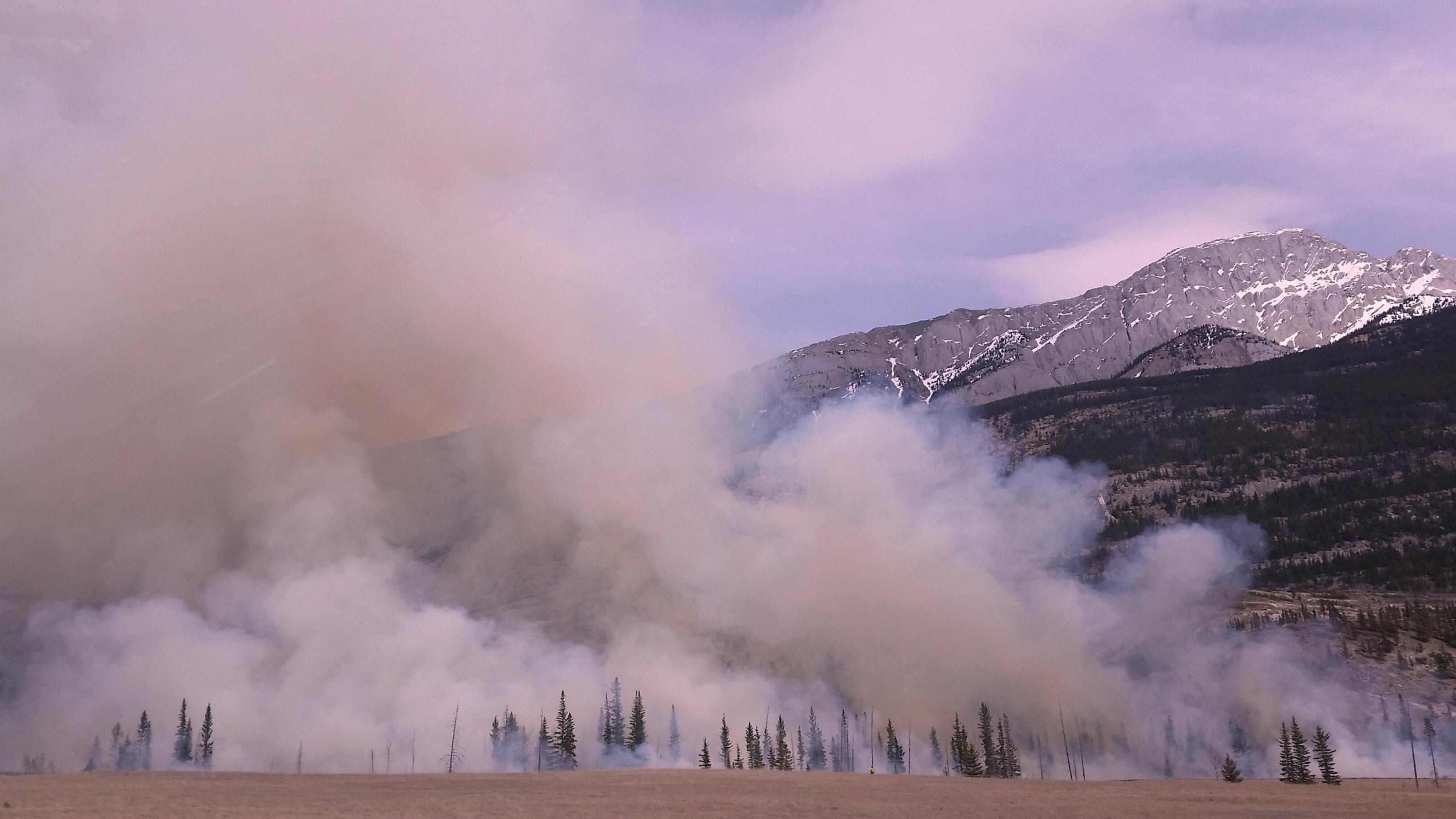
The soot that permeated the air in New Jersey and New York this summer — courtesy of massive wildfires in Canada — is exactly what a New Jersey Institute of Technology professor is studying to determine its impact on climate change. Alexei Khalizov, an associate professor of chemistry and environmental science, is partnering with Associate Professor Gennady Gor on the three-year project, which began last year and is supported by a $620,000 grant from the National Science Foundation. Specifically, they’re examining the soot created by wildfires and the burning of fossil fuels in hopes of better predicting its impact on climate. Khalizov, who’s been at NJIT since 2013, took time out from his research to explain what millions of residents of N.J. and N.Y. are experiencing as a result of the wildfires hundreds of miles to the north. Q: What’s in the smoke? Small particles and some gas chemicals. These particles and chemicals were released by wildfires and they were picked up by the air mass and carried all the way to New Jersey from Canada. Those particles are extremely small: you can stack maybe a hundred of such particles across single human hair thickness. Q: Is breathing it the equivalent of smoking a pack of cigarettes? That would be a reasonable comparison. A cigarette is made of plant material. When it smolders and burns it releases particles that are very much like those particles from wildfires. Maybe the only difference is that the wildfires have no nicotine. But they have lots of other chemicals. Q: What factors contribute to the density of the smoke? Well, it's a major wildfire. It covers a huge territory in Canada. And the meteorology is such that this smoke is carried all the way from Canada to the U.S. without significant dilution. And due to that, the concentration of those particles is very high. Q: When did we last experienced something of this magnitude? We had some Canadian and Alaskan wildfires a few years ago. And air mass transport brought the smoke all the way to New Jersey, but it wasn't as bad as what we are observing today. Q: What about in terms of EPA standards? The Environmental Protection Agency has a list of criteria pollutants. One of those pollutants is particles smaller than 2.5 microns. And typically, if the concentration of those particles exceeds 35 micrograms per cubic meter, the air is considered unhealthy. When I looked at the map of pollution today (June 7, 2023), it showed that throughout the majority of New Jersey, the concentration is around 90 micrograms, which is two to three times higher than this unhealthy threshold. And actually, there is a location, I believe it's around Paterson, where the concentration is 140 micrograms, which is four to five times above the threshold. Q: Can the wildfires in South Jersey be contributing to this? It's possible, but probably it's not a major contribution. Also, if you look at the wind pattern, it's probably not a major factor at all. Q: Why is wind unable to disperse the smoke? For the wind to disperse the smoke, one needs to mix clean air with all this contaminated air and the amount of contaminated air is so high that there’s no clean air around to actually produce any dilution. Q: Why is there so much haze? It’s because of the continuous inflow of air, which is contaminated by emissions from the wildfires. The haze itself has a relatively short lifespan. Q: How does temperature change affect the smoke? If the temperature increases that may accelerate the rate of some chemical reactions that will also be accelerated by the sunlight. And that's one reason why the smoke that was released in Canada is not exactly the same smoke that we experience in New Jersey. As this haze is traveling over three to six hundred miles, it undergoes a number of chemical reactions and even the smell changes. You know how freshly released wood smoke smells — it's actually pretty pleasant. What we're smelling now, it's not pleasant at all. That's the result of those chemical reactions, which makes this even more unhealthy. Q: Will rain immediately clear the smoke? Yes, it will. If we could have rain, then the rain would remove the majority of these particles. And in fact, I believe we've been experiencing the smoke for several days, almost a week now. It would go up and decrease. And we’ve had several rains and those rains did really clear out some smoke. Q: What can we do individually and collectively to protect ourselves? We can help ourselves by staying indoors and wearing masks if you have to go outside. Certainly, exercising outside is not a good idea even while wearing a mask. Also, if you have a central air conditioning system, you can turn on the fan to run the air through the filter, which will remove some of these particles. It depends on what kind of filter you have — high efficiency or regular. Q: What kind of mask? Make sure that it's an N-95 mask, not a surgical mask. A surgical mask is not is not going to help you at all. Q: How does what we’re experiencing relate to your research? My collaborator and I received a major grant from the National Science Foundation to study the particles released by combustion. As they travel through the air, they change both in shape and in composition. And these changes affect their toxicity and they affect their impact on climate. These particles actually are one of the warming agents. So, we hope that within about three years of working on this project, we’ll be able to explain better what happens and then modelers will be able to predict the impacts of such events with better accuracy. Looking to know more - we can help. Alexei Khalizov is available to discuss this important topic with media - simply click on his icon now to arrange an interview.


Aston University wins grant to make research more sustainable and environmentally friendly
University awarded grant to develop more sustainable separation method through AstraZeneca’s Open Innovation CoSolve Challenge at ELRIG Dr Vesna Najdanovic will explore use of the solvent ethyl lactate It is a biorenewable and environmentally friendly alternative. An Aston University scientist has won a $25000 grant in the AstraZeneca Open Innovation CoSolve sustainability challenge to help to make research more sustainable and environmentally friendly. Dr Vesna Najdanovic, senior lecturer in chemical engineering at the University’s Energy and Bioproducts Research Institute (EBRI), successfully pitched her idea to explore a new method using ethyl lactate as a solvent. Ethyl lactate is a biorenewable and environmentally friendly alternative solvent produced from lactic acid and ethanol, both obtained by fermentation of biomass. Currently hazardous organic solvents such as acetonitrile are widely used instead. Dr Najdanovic won the AstraZeneca’s Open Innovation CoSolve Sustainability Challenge at the European laboratory research & innovation group (ELRIG) Research and Innovation meeting. She said: “Throughout my research career, I have been working with various green solvents, such as supercritical fluids, ionic liquids and biosolvents, to improve chemical and separation processes. “I am delighted to be selected by the expert judging panel and the highly engaged audience to apply my knowledge to develop greener analytical methods using ethyl lactate as a solvent for liquid chromatography. “I hope this project will pave the pathway to use this environmentally friendly alternative solvent while reducing carbon footprint and pollution”. The pharmaceutical industry generates the highest amount of waste per mass of products compared to other chemical industry sectors, such as the petroleum industry, bulk and fine chemicals. Dr Kelly Gray, CoSolve sustainability programme lead at AstraZeneca, said “In order to protect people, society and planet we have to identify and develop solutions to deliver sustainable science. The goal of the CoSolve sustainability programme was to do just that and identify innovative ideas to practical challenges faced by researchers across scientific disciplines in R&D.” Sanj Kumar, CEO of ELRIG, said “Ensuring that drug discovery processes become sustainable is a priority issue to the ELRIG community, so partnering with AstraZeneca on the CoSolve initiative, by hosting the pitching and final award ceremony, is not only an honour, but raises the awareness of sustainability to our community. Dr Najdanovic and her innovation are a worthy winner and ELRIG is proud that we are able to share her success story.” As much as 80% of this waste presents hazardous organic solvents obtained from petrochemical sources. For example, the pharmaceutical industry consumes 50% of globally produced acetonitrile, of which 20% is a solvent for liquid chromatography, a widely used analytical tool in research and development laboratories. After its use, most acetonitrile is discarded as chemical waste and subsequently incinerated, generating greenhouse gases and other pollutants such as nitrogen oxides and highly toxic hydrogen cyanide. The CoSolve sustainability challenge award builds on Dr Najdanovic’s previous work employing ethyl lactate as a solvent for various separation processes. Her new project supports EBRI’s wider objectives of using bioproducts to deliver low-carbon and environmentally sustainable solutions.


Aston University to help power Indonesia with affordable energy made from rice straw
Project to convert unwanted rice straw into cheap energy on a commercial scale Most rice straw in Indonesia is burned causing pollution and health problems Project will almost double affordable energy captured from waste. Scientists at the Energy and Bioproducts Institute at Aston University are to start a project to convert Indonesia’s unwanted rice straw into low-cost energy on a commercial scale. Each year the country produces 100 million tonnes of the rice waste, of which 60% is burned in open fields, causing air pollution and has even been linked to lung cancer. The amount burned is equivalent to approximately 85 Terawatts of electricity, which is enough to power Indonesia’s households 10 times over. A consortium which includes Aston University aims to develop processes to capture more affordable energy from rice straw than ever before - and demonstrate that it can be done on a commercial scale. Part of the process involves a biomass conversion technology called pyrolysis. This involves heating organic waste materials to high temperatures of around 500 °C to break them down, producing vapour and solid products. Some of the vapour may be condensed into a liquid product called pyrolysis oil or pyrolysis bio-oil. Both the pyrolysis vapour and liquid bio-oil can be converted to electricity. Current methods convert just 35% of the thermal energy of rice straw to affordable electricity. However, a newly patented combustion engine designed by consortium member, UK-based Carnot Limited, could see that doubled to 70%. Energy extracted this way could help low and middle-income countries create their own locally generated energy, contribute to net zero by 2050, create new jobs and improve the health of locals. The project will help develop a business model which could support companies and local authorities to produce local, cheap energy in Indonesia, and other countries with biomass capacity. Three academic experts from different disciplines at Aston University are involved in this initial project, which focuses on Indonesia’s Lombok Island. Dr Jude Onwudili, Dr Muhammad Imran and Dr Mirjam Roeder are based at Aston University’s Energy and Bioproducts Research Institute (EBRI). Dr Jude Onwudili who is leading the team said: “This project has huge potential - commercialisation of this combined technology will have significant economic benefits for the people of Indonesia through direct and indirect job creation, including the feedstock supply chain and electricity distribution and sales. “About one million Indonesian homes lack access to energy and Indonesia's 6,000 inhabited islands make sustainable infrastructure development challenging in areas such as Lombok Island. “The new techniques being explored could reduce environmental pollution, contribute to net zero and most importantly, provide access to affordable energy from sustainable local agricultural waste. “Aston University is a global leader in bioenergy and energy systems, and I am delighted we received funding to explore this area.” Over a power plant’s life, the project team have calculated that biomass produces cheaper electricity (approx. $4.3$/kWh) compared to solar (approx. $6.6/kWh), geothermal (approx. $6.9/kWh), coal (approx.$7.1/kWh), wind (approx. $8/kWh) and subsidised gas (approx.$8.4ckWh). The project will start in April 2023 with a total of £1.5 million funding for the four partners from Innovate UK. Alongside Carnot Limited, the Aston University scientists will be working with two other UK-based businesses to deliver the project, PyroGenesys and Straw Innovations. PyroGenesys specialises in PyroChemy technology which will convert 70% of the rice straw into vapour or bio-oil for electricity production, with the remainder converted into nutrient-rich biochar, which can be sold back for use as fertiliser on the rice farms. Straw Innovations will contribute their rice straw harvesting and collection expertise, with their many years of similar operations in Asia.



Fashioning Fusion: Villanova Professor Explains Clean Energy Breakthrough
On December 13, scientists at Lawrence Livermore National Laboratory announced a breakthrough that could change the future of clean energy. The long-awaited achievement of nuclear fusion was accomplished by researchers and, if harnessed on a larger scale, fusion energy could provide an energy option without the pollution of fossil fuels and without the radioactive waste of nuclear energy. A new world running on clean energy may not be imminent, but the state of ignition achieved is an important first step. Villanova University professor of mechanical engineering David Cereceda, PhD, received a U.S. Department of Energy Early Career Award from the Office of Fusion Energy Sciences for his research on fusion energy materials—and has worked at the Lawrence Livermore National Laboratory, located in California. "Ignition means that a nuclear fusion reaction becomes self-sustainable," Dr. Cereceda said. "The experiments performed at NIF [National Ignition Facility] last week reached for the first time in history a condition called scientific breakeven, meaning the scientists produced more energy from fusion than the laser energy used to drive it." The breakthrough discovery was made when 192 lasers focused on a cylinder the size of a pencil eraser. That container was filled with a small amount of hydrogen that was encased in a diamond. The resulting reaction that occurred was brief but significant, as this important step has proved allusive to researchers for decades. "Those who criticized fusion said that fusion was always five decades away. That's not true anymore," Dr. Cereceda remarked. "I'm not surprised about the announcement. It finally arrived after decades of hundreds of brilliant scientists and engineers carefully working on it." Still, the national laboratory says much work still lies ahead. Scientists will continue to push toward a higher fusion output and are looking at more efficient ways to produce ignition. Researchers also believe they may still be decades away from making fusion energy a mainstay and usable for the general public. "In my opinion, some of the most important challenges that remain on the path to commercial fusion energy are related to structural materials, tritium breeding blankets and laser technology, among others," mentioned Dr. Cereceda. "Multiple challenges remain to making it a commercial energy source, but this recent and historic breakthrough was a critical milestone."


UConn insect expert David Wagner on the troubling decline of the mayfly
One of the world's oldest flying insects is in trouble. Mayflies are in serious decline and, after 300 million years in existence, their dwindling population should be an alarm bell for all of us. More than just a bug with a short life span flying masterfully near creeks, rivers, and ponds, the mayfly plays a serious role in local ecosystems and the environment at large. A key component in the food chain, the mayfly nymph feeds off of algae, plants, and rotting leaves, cleaning up nature's mess while growing large enough to become a meal itself -- for fish, amphibians, lizards, birds, and even humans. Without mayflies, the ripple effect upwards could mean calamity for the planet. In a recent Washington Post Magazine deep-dive, UConn insect expert David Wagner offered his perspective on the on the plight of the mayfly: I reached out to David Wagner, a biologist and lepidopterist at the University of Connecticut, for context, thinking that perhaps the problems were isolated or overblown. He has studied insects for decades and reviewed numerous scientific studies about them from around the globe. He did not provide much comfort. There’s a growing body of research suggesting that the world is in the midst of its sixth mass extinction, he said. The losses of all kinds of creatures appear to be driven by climate change, habitat degradation, pollution and other ecological stressors. In a paper for the Proceedings of the National Academy of Sciences last year, “Insect Decline in the Anthropocene: Death by a Thousand Cuts,” Wagner and several other scientists delivered a stark warning about the disappearance of insects. The report did not focus on mayflies, but Wagner told me they are among the most vulnerable of the world’s insects because of their need for clean, well-oxygenated water. “Mayflies are reliable ‘canaries in the coal mines’ for freshwater systems,” he explained. “And their future prospects, especially in areas that are drying or warming, are bleak.” September 19 - Washington Post Magazine Dr. David Wagner is an expert in caterpillars, butterflies, moths, and insect conservation, and he's commented extensively on the current decline of insects worldwide. Click his icon to arrange an interview today.


Using biosensors to detect disease, pain, pollution and weapons
Air pollution, chemical weapons, diseases, drugs and signs of life on other planets — all can be detected with biosensors. The development of high tech to do this job — when canines or conventional tests aren’t practical — is a field that spurred NJIT’s Omowunmi Sadik into action. Case in point: Sadik created a sensor that detects the novel coronavirus using the power of a smartphone — "So simple it can be 3D-printed by undergraduates," she explained — and there are even biosensors that can measure pain. The latter are especially useful for those who can't accurately communicate due to age or health. Sadik, a distinguished professor of chemistry and environmental science, leads NJIT's BioSMART Center and is a fellow of the American Institute of Medical and Biological Engineering, Royal Society of Chemistry and African Academy of Sciences. To interview her, simply click on the button below.


Antimicrobial resistance now causes more deaths than HIV/AIDS and malaria worldwide – new study
Antimicrobial resistance is spreading rapidly worldwide, and has even been likened to the next pandemic – one that many people may not even be aware is happening. A recent paper, published in Lancet, has revealed that antimicrobial resistant infections caused 1.27 millions deaths and were associated with 4.95 million deaths in 2019. This is greater than the number of people who died from HIV/AIDS and malaria that year combined. Antimicobial resistance happens when infection-causing microbes (such as bacteria, viruses or fungi) evolve to become resistant to the drug designed to kill them. This means than an antibiotic will no longer work to treat that infection anymore. The new findings makes it clear that antimicrobial resistance is progressing faster than the previous worst-case scenario estimates – which is of concern for everyone. The simple fact is that we’re running out of antibiotics that work. This could mean everyday bacterial infections become life-threatening again. While antimicrobial resistance has been a problem since penicillin was discovered in 1928, our continued exposure to antibiotics has enabled bacteria and other pathogens to evolve powerful resistance. In some cases, these microbes are resistant even to multiple different drugs. This latest study now shows the current scale of this problem globally – and the harm it’s causing. Global problem The study involved 204 countries around the world, looking at data from 471 million individual patient records. By looking at deaths due to and associated with antimicrobial resistance, the team was then able to estimate the impact antimicrobial resistance had in each country. Antimicrobial resistance was directly responsible for an estimated 1.27 million deaths worldwide and was associated with an estimated 4.95 millions deaths. In comparison, HIV/AIDS and malaria were estimated to have caused 860,000 and 640,000 deaths respectively the same year. The researchers also found that low- and middle-income countries were worst hit by antimicrobial resistance – although higher income countries also face alarmingly high levels. They also found that of the 23 different types of bacteria studied, drug resistance in only six types of bacteria contributed to 3.57 million deaths. The report also shows that 70% of deaths that resulted from antimicrobial resistance were caused by resistance to antibiotics often considered the first line of defence against severe infections. These included beta-lactams and fluoroquinolones, which are commonly prescribed for many infections, such as urinary tract, upper- and lower-respiratory and bone and joint infections. This study highlights a very clear message that global antimicrobial resistance could make everyday bacterial infections untreatable. By some estimates, antimicrobial resistance could cause 10 million deaths per year by 2050. This would overtake cancer as a leading cause of death worldwide. Next pandemic Bacteria can develop antimicrobial resistance in a number of ways. First, bacteria develop antimicrobial resistance naturally. It’s part of the normal push and pull observed throughout the natural world. As we get stronger, bacteria will get stronger too. It’s part of our co-evolution with bacteria – they’re just quicker at evolving than we are, partly because they replicate faster and get more genetic mutations than we do. But the way we use antibiotics can also cause resistance. For example, one common cause is if people fail to complete a course of antibiotics. Although people may feel better a few days after starting antibiotics, not all bacteria are made equal. Some may be slower to be affected by the antibiotic than others. This means that if you stop taking the antibiotic early, the bacteria that were initially able to avoid the effect of the antibiotics will be able to multiply, thus passing their resistance on. Likewise, taking antibiotics unnecessarily can help bacteria to evolve resistance to antibiotics faster. This is why it’s important not to take antibiotics unless they’re prescribed, and to only use them for the infection they’re prescribed for. Resistance can also be spread from person to person. For example, if someone who has antibiotic-resistant bacteria in their nose sneezes or coughs, it may be spread to people nearby. Research also shows that antimicrobial resistance can be spread through the environment, such as in unclean drinking water. The causes driving this global antimicrobial resistance crisis are complex. Everything from how we take antibiotics to environmental pollution with antimicrobial chemicals, use of antibiotics in agriculture and even preservatives in our shampoo and toothpaste are all contributing to resistance. This is why a global, unified effort will be needed to make a difference. Urgent change is needed in many industries to slow the spread of antimicrobial resistance. Of the greatest importance is using the antibiotics we have smarter. Combination therapy could hold the answer to slowing down antimicrobial resistance. This involves using several drugs in combination, rather than one drug on its own – making it more difficult for bacteria to evolve resistance, while still successfully treating an infection. The next pandemic is already here – so further investment in research that looks at how we can stop this problem will be key.


Good COP or bad COP? | The Aston Angle
Four Aston University experts reflect on COP26 and what it means for transport, community and global action on decarbonisation, support for small businesses and China’s coal consumption. COP26 was the 26th United Nations Climate Change conference held in Glasgow from 31 October to 13 November 2021. The participating 197 countries agreed a new deal, known as the Glasgow Climate Pact, aimed at staving off dangerous climate change. But will it be enough? Dr Lucy Rackcliff explains why replacing petrol and diesel vehicles with electric ones alone is not radical enough. The overwhelming message coming from COP26 transport day seemed to be that moving to zero emission-vehicles would solve the well-documented issues created by petrol and diesel fuelled vehicles. As noted at the conference itself, transport is responsible for 10% of global emissions, and emissions from transport continue to increase. The WHO estimates that transport-related air pollution affects the health of tens of thousands of people every year in the WHO European Region alone. However, on-street pollution is not the only effect we should seek to address. Transport is responsible (directly or indirectly) for a wider range of environmental issues, and a wider range of health impacts. Moving to electric vehicles will not address impacts such as loss of land for other activities, use of finite resources in the manufacturing process, the need to dispose of obsolete materials such as used tyres, and the health effects of sedentary lifestyles, facilitated by car-use. In urban areas in particular, re-thinking policy to focus on walking, cycling and public transport-use could free up land for other activities. Car parks could become actual parks, in turn encouraging more active lifestyles, creating space for people and plants, and leading to a range of wider societal benefits. Assuming that replacing petrol and diesel vehicles with electric ones will solve all our problems is a strategy which lacks ambition, and thus denies us the benefits that more radical thinking could deliver. Dr Lucy Rackcliff, Senior Teaching Fellow, Engineering Systems & Supply Chain Management, Aston Logistics and Systems Institute, College of Engineering and Physical Sciences. "Assuming that replacing petrol and diesel vehicles with electric ones will solve all our problems is a strategy which lacks ambition." Professor Patricia Thornley reflects on the role that Aston University and EBRI can play in empowering community action and informing global action with research. COP26 energy day was a fabulous experience. I have never before seen so many people in one place with one ambition: to support and accelerate decarbonisation of the UK’s energy systems. We ran a “fishbowl”, which allows people with different perspectives on a topic (experts and non-experts) to participate in dialogue around a common interest. Our researchers, local government representatives, industrialists and students shared their thoughts on what our future energy mix should look like, how it should be delivered and who needs to act. Without doubt the consensus was that many different technologies have a role to play and there is an urgent need to accelerate implementation. There were reflections on the importance of governance at different levels and an interesting discussion around the relative merits of centralized solutions and devolved actions. The reality is that of course we need both and that made me think about what Aston University and EBRI can do. Of course we should implement centrally with initiatives like the impressively low carbon Students’ Union building, but we also need to raise awareness among our students. Our film showing with the Students’ Union a week later helped with that I hope, and many more of our courses are incorporating sustainability elements which is fantastic. But what we haven’t quite achieved yet is an empowered, proactive voice that would lead to wider community action. There are pockets of excellence but a lot still to be done. My second week at COP26 was very different with police presence outside a building where I had three meetings with industrialists on the controversial topics of forestry and land-use. It was sad to be working with key players to improve sustainability and increase carbon reductions through UK bioenergy while listening to drumbeats outside from objecting protestors. There is a real lack of understanding around forest management and global land use and we need to work harder to improve that. It is a huge challenge, but one that EBRI will work hard to address. Professor Patricia Thornley, Director of EBRI, Energy and Bioproducts Research Institute (EBRI), College of Engineering and Physical Sciences. "There is a real lack of understanding around forest management and global land use and we need to work harder to improve that." Professor Presanta Dey explores whether Government pledges on climate change will translate to practical support for small businesses Following the COP26 climate change summit, the UK Government led the way in making a series of pledges and policy commitments to combat climate change. The question is: how will this translate to practical support for SMEs? Large corporations often take centre stage at COP, which is welcomed, but if we are to see real change, everyone needs to be involved. COP26 provided a refreshing voice for UK small businesses which featured panel discussions on the ‘SME Climate Hub’, highlighting net zero opportunities and challenges for SMEs. The momentum of COP26 has already inspired over 2,000 UK small businesses to sign up to the UN's Race to Zero campaign, which is designed to accelerate the adoption of credible net-zero targets. A long journey ahead still awaits us, however campaigns like these will hopefully start a ripple effect inspiring the remaining six million UK SMEs to take climate action. Small businesses have been crying out for more assistance from the government in the form of ‘green’ grants and financial support to enable them to make the necessary long-term changes. The timely announcement of HSBC’s £500m Green SME Fund at COP26 marks a promising first step towards making it easier for SMEs to fund their green ambitions. In summary, COP26 provided some comfort to UK SMEs seeking a higher level of commitment from government, financial services and businesses. This moment must act as a catalyst for policy makers to continue removing the barriers that are holding small businesses back. Professor Presanta Dey, Professor of Operations & Information Management, College of Business and Social Sciences. Professor Jun Du explains what China’s deal means for the rest of the world following its own energy crisis earlier this year… Despite the many disappointments expressed around the COP26 outcomes, important progess has been made for the world economy moving towards carbon neutrality. Among the noticeable achievements China and the US, which together emit 43% of the total CO2 in the air, have agreed to boost climate co-operation despite many disagreements. This includes China’s pledge to more actively control and cut methane emissions during the next decade - even when the country did not sign up to the global methane pledge made in Glasgow. Reaching net zero will be an unprecedented challenge for all countries. China will need to do the heaviest lifting among all. The country’s energy crisis earlier this year has shown just how hard it will be to reach net zero. The exceptionally early and cold winter this year will demand even more coal, so China’s willingness and resolve for climate commitments are good news to all. While lots of attention was turned to the absence of China’s president, Xi Jinping, from the COP26 climate summit, what is less appreciated is the fact that China is serious about decarbonisation. Few countries invest as much as China in that area, nor grow as fast in finding alternative energy to coal and in green industries like electric cars. China has set specific plans in its 14th national five-year plan for economic and social development to reach peak carbon emissions by 2030 and carbon neutrality by 2060. COP26 could be an additional driver for “an era of accountability” for China. Professor Jun Du, Professor of Economics, Finance and Entrepreneurship, Centre Director, Centre for Business Prosperity, Aston Business School levy.



Georgia Southern University has established a new research and outreach center, the Institute for Water and Health, to investigate the complex interactions between water and human activities, and protect and restore public health in a changing environment. As part of the University’s focus on public impact research, the center will foster collaboration among scientists, government agencies, industry, nonprofit organizations and communities. Coastal Georgia is the perfect location for such an institute to conduct interdisciplinary research because it lies at the intersection of many social, economic and ecological issues. The center supports the region through research, workforce training for students, and actively involving communities in water resource management decision-making process, said Asli Aslan, Ph.D., associate professor in Georgia Southern’s Jiann-Ping Hsu College of Public Health Department of Biostatistics, Epidemiology and Environmental Health Sciences. Now also director of the Institute for Water and Health, Aslan is a water microbiologist, and her research program bridges ecosystem and human health. She has ongoing funded projects on tracking sources of water pollution and assessing health risks associated with exposure to chemical and microbial contaminants. She works with local communities and nonprofit organizations to encourage water stewardship behaviors. Aslan has served in various federal and state agencies and organizations as an adviser, reviewer, scientific committee member and affiliated faculty. She is also the founder and currently the co-chair of the Water and Health Committee of the American Public Health Association. “We want to create a nationally recognized institution that provides meaningful solutions for community needs,” said Aslan. “Our immediate plan is to develop a coalition with all stakeholders in the region to address issues related to increased water demand, impact of sea-level rise on water resources, and potential emerging contaminants in our urban and rural water infrastructure. We are in the process of establishing a community advisory group consisting of scientists from academic institutions, representatives from local and state governments, community leaders, non-profit organizations and businesses to identify and prioritize community needs in water research and education.” For example, she said, although one in every six households in Georgia has a private well, few residents realize any water testing, treatment or well maintenance is the sole responsibility of the property owner as per the Safe Drinking Water Act. Aslan said the Institute for Water and Health will work with the homeowners to help them recognize potential risks and provide solutions that will keep families safe in the long term. “We also look at sources of contaminants using state-of-the-art-methods. And if you know where the pollution is coming from precisely, it’s easier to go fix that problem once and for all, which has a direct impact on the decision-making process to protect water resources.” she said. These new techniques allow researchers with the institute to provide test results within a few hours, which helps end-users to be informed the same day instead of days where most water testing methods currently take about 48 hours. The implications of these methods are broad, as they can be used to identify pathogens in storm water or in household drinking water pipes; assess how new sustainable water treatment technologies efficiently remove contaminants, or provide same-day results for recreational beach monitoring. “We can do all this fancy research in the lab, but it will be very important for us to go out into the community and talk to people, ask them what their immediate needs – our goal is to involve communities from the very beginning of our research so that we co-develop meaningful solutions that will improve the quality of their everyday lives,” Aslan said. “Our group at Georgia Southern consists of established researchers from multiple disciplines such as environmental education, public health, social and behavioral sciences, environmental and computational engineering, coastal ecology, and we are growing everyday”. Carl L. Reiber, Ph.D., Georgia Southern’s provost and vice president for academic affairs, said the center will pull together faculty from across the University, many of whom have already established themselves as water experts within their own discipline. He expects the center to take a very visible role for the University and is renovating space in Savannah near the Armstrong campus to house the center and its labs. “The Institute for Water and Health will bring to southeast Georgia an awareness of the importance of water quality, water management and how tightly these areas are aligned with our health,” Reiber said. “The public impact of this institute is immeasurable and will ultimately increase the quality of life in our community.” If you're a journalist looking to know more about this topic or are looking to cover - then let us help. Asli Aslan, Ph.D., is a water microbiologist, and her research program bridges ecosystem and human health. She has ongoing funded projects on microbial source tracking, health risk assessment of water resources, and the ecology of pathogens in the aquatic environment. She is available to speak with reporters – simply click her icon now to arrange an interview today.

