
Experts Matter. Find Yours.
Connect for media, speaking, professional opportunities & more.

Ask an expert: Are children mentally rebounding back to a sense of normalcy?
With kids heading back to class and schools facing a new normal, there's a lot to consider about life post-pandemic, especially when it comes to America's children. Recently, we sat down with Augusta University's Dr. Dale Peeples, a child and adolescent psychiatrist who treats young patients and educates parents on psychological disorders such as anxiety, ADHD and depression. Throughout the pandemic, Peeples has also been the go-to psychiatrist for media and parents, providing tips to maintain mental wellbeing. Q: Are children mentally rebounding or adjusting back to a sense of normalcy? I think we are seeing an impact from the pandemic that’s continued even though life is getting much closer to what we consider normal. The impact with kids largely focuses on school, both through education and through those social interactions. I still see kids who are struggling to make up for things after falling behind during the pandemic and struggling to work back to that classroom setting when they developed a little bit of anxiety for such extended periods. You also are seeing kids dealing with a lot of regret having missed out on life, on friendships and connections, and some kids have been really struggling with how to deal with a bunch of people again. Q: Is there a certain age group that you’ve seen that may be struggling more than others? I think the older kids are, because when they were going through this, the more impact it had. A couple of reasons for that: Peer relationships become a lot more important as you become a teenager as compared to when you are little bit younger. Also, school becomes more demanding and sometimes that catch-up on work that was missed is going to be a little more challenging than younger grades. Q: What would your advice be to parents to help their children mentally in these increasingly challenging times, specifically as we begin the new school year? Communication, obviously, is still ideal. Families want to make sure that they are still getting together, having dinner as a family, discussing how the children's day went, so parents are in the loop about what kids are dealing with, trying to maintain that open line of communication. Parents also want to kind of generally be on the lookout for symptoms of depression. Obviously that's the changes in mood, feeling sad, feeling down, but also when kids kind of socially withdrawal and they lock themselves in their rooms and they don't want to go out, be around other people, do things they enjoy. When you see grades begin to decline, those are warning signs that there might be a little bit more going on here. Q: What can children do to help themselves and make sure they feel heard? Any time I'm sitting down with a patient for the first time and we're talking about treatment options, we'll talk about medication sometimes. We generally talk about talk therapy, behavioral and cognitive interventions. They also always talk about lifestyle interventions, healthy lifestyle, and there is a ton there that people can really do to make a big difference. The biggest thing I see kids struggle with, honestly, is sleep. Sleep has a huge impact on mood and anxiety and getting proper sleep is really tough in this day and age, when you've got cell phone notifications going off around the clock. Q: We know kids are resilient. Those who have struggled the most over the last two years, can they turn the corner and get better? Absolutely, I 100% agree that the kids are resilient. I'd say almost always, I share that optimistic attitude that if they have a hard time, they're going to get better. Sometimes it's just putting out the safety guards to support them and make sure that they keep on that right track. Q: Unfortunately, school shootings are again in the news and seem to be on the rise in recent years. Are you seeing more concern and stress for children or maybe even from their parents as it relates to safety in school? I try to remind my patients that part of the reason they get a lot of national attention is because they're infrequent and they're rare. So part of it is parents kind of controlling media for younger kids. Teenagers, obviously, they understand what's going on, and it's going to be a little bit harder for parents to monitor the media, but having those open dinner table discussions can let parents know when their kids are having worries. This is an important topic, especially as students are heading back to school and beginning a fresh start to a new academic year. If you're a reporter looking to cover this topic, then let us help. Dr. Dale Peeples is available to speak with media. Simply click on his icon now to arrange an interview today.



'Good Guys With Guns May Be Heroes—But They're Not Our Solution '
Each tragic event mass shooting dominates the news cycle, leaving the public grieving -- and demanding answers and solutions. But while an armed gunman in the recent mass shooting at Greenwood Park Mall in Indiana was stopped by an armed citizen with his own legally possessed gun, Kerri M. Raissian and Jennifer Necci Dineen from the University of Connecticut's ARMS Center are warning against thinking about "good guys with guns" as the solution to the gun violence problem in the United States: But his heroic success is rare, and while we applaud his courage and skill, "good guys" with guns can only (maybe) end future shootings. What we really need is to prevent them. While it may ultimately be the case that "the only thing that stops a bad guy with a gun, is a good guy with a gun," the truth is America's "good guys" have more guns than ever before, and sadly, they have not always stopped the shooter in time. The Texas House of Representatives preliminary report revealed that in Uvalde, Texas, 376 police waited to engage the active shooter for 77 minutes due to systemic failures and miscommunication. Such failures were also seen in Parkland, Fla. in 2018, when 17 students and staff were killed. And the good guys' inability to stop the shooter isn't always a failure, sometimes the shooters are at a tactical disadvantage. Most recently in the Highland Park parade shooting and Las Vegas Route 91 Harvest music fest, the shooters were elevated and difficult to reach. A regular good guy is not able to safely or effectively respond when bullets are raining down. Of the 433 active shooter cases since 2001, an armed bystander shot the attacker in just 22 of the incidents. In almost half of those, the "good guy" was a security guard or an off-duty police officer. But even these "success stories" are tragedies—because if a good guy is responding, shots have been fired. People are likely injured—or worse—dead. Communities are shattered. And in the process, a regular good guy has been asked to do something none of us should ever have to do—stopping the bad guy likely means ending a human life. Success is not achieved if people die. That's not safety; that's salvaging. Their Newsweek commentary is attached here and is a must-read for anyone following this issue. Kerri M. Raissian is associate professor of public policy at the University of Connecticut, co-director of the University of Connecticut's ARMS Center, and co-leader of Connecticut's Scholars Strategy Network. She is available to speak to media about this important topic - simply click on her icon now to arrange and interview today.


What does back to school look like this year? Augusta University expert talks challenges
Students will be back at the bus stop with school starting soon, but what can parents expect as their children return to the classroom after the effects of the pandemic years? Dr. Stacie Pettit, associate professor in the College of Education and Human Development at Augusta University, said not being in the classroom full-time has had an impact. Pettit said it’s documented that reading scores are down and many students were unaccounted for during at-home learning. But students also developed other skills during this period of time. “On one hand, you can’t completely make up for learning loss,” said Pettit. “Teachers just need to assess where students are and both students and teachers do the best you can from this point. On the other hand, students didn’t just stop learning altogether. There are important life and family skills that were gained during quarantine and the months after. I believe we should look at students from 'funds of knowledge' perspective rather than a deficit lens in order to recognize the cultural resources that a student’s household contains.” She added some students did become isolated and will need to relearn social skills, but many found a lively community online through social media during the pandemic. Pettit also pointed out students are resilient, as well as teachers. They didn’t stop teaching, but rather found new skills in instruction to make learning accessible in the new reality. There are some challenges going back to in-person instruction after the last couple of years. “Overcoming fear they’ve picked up through other people and the news,” she added. “”Feeling uncomfortable with their faces exposed after getting used to hiding behind a mask and dealing with germ phobia. Students also have the additional challenge of another recent school shooting in Uvalde, so not only are they getting used to being back in school full-time, but they also have safety concerns.” Pettit added there are still a few groups of students who could struggle being back in the classroom full-time. “Certainly kids who missed kindergarten. Students from foster care. Students in special education who didn’t have the support they needed during at home learning.” If you're a journalist covering education or are looking to line up your back-to-school stories this year, then let us help. Pettit is a respected leader in middle level teacher education and meeting the needs of marginalized young adolescents. She's available to speak with media - simply click on her icon now to arrange an interview today.

Well before the uncertainty of the pandemic, Orion Travel Insurance, a CAA company, decided to change the way travellers access travel insurance online. Working with a team of anthropologists, the goal of the redesign was to better understand how humans think about travel and safety. Researchers scoured opinions online, analyzed media and sat down with travellers to document their feelings around travel. “The traditional way of building an online quoting system just wasn’t sufficient,” says Kellee Irwin, VP, Orion Travel Insurance Company. “We didn’t feel that the online experience was putting the needs of the traveller first, so we turned it on its head and approached things differently. We are confident that this new approach to accessing travel insurance and information about travel insurance online is going to be an industry game-changer.” Traditionally, online quoting systems for travel insurance have been designed with business needs at the forefront, rather than designed to reflect what customers need to confidently purchase the appropriate protection. “As a company founded to deliver the protection that our members deserve, this antiquated way of doing things wasn’t good enough. Our mission was to create an online buying experience that was inspired by what it’s like when a traveller engages with a CAA Associate at a store,” adds Irwin. The end result of this in-depth work is the launch of a reinvented online travel quote and purchase system that makes learning about and buying travel insurance an easy and seamless experience for travellers. "Our research told us that travellers want to feel like 'their own best expert'. This new online experience enables travellers to explore and learn about the different types of travel insurance and compare the cost of various levels of protection all at their fingertips," says Irwin. The new system helps customers clearly understand the protection they are viewing and why qualifying questions are being asked. No longer will customers be forced to click through a series of prompts, only to discover that their selections do not reflect their needs and they must start all over again. As they explore coverage and learn more about what protection is right for them, travellers can get to a price in just seven clicks. Plus, they can alter their choices and the system will give updated quotes in real time. It also allows customers to use our SMART FAQ search engine in which the customer enters a question and immediately receives a matched answer. The new online buy flow is now in effect, click here to experience Orion’s reimagined online travel insurance system.



Researchers in Georgia Southern University’s Tactical Athlete Readiness and Preparedness Program (TARP) have teamed up with the Georgia Public Safety Training Center (GPSTC) to ensure the readiness and resilience of Georgia’s public safety officials. Members of the TARP in the Waters College of Health Professions have worked to revise the fitness training standards for Georgia’s police cadets with a focus on functional fitness, mental resilience and injury prevention. In addition, the program has formed a partnership with the GPSTC, Georgia’s premier training facility for all state and local public safety related units to include police, fire and communication. Bridget Melton, Ed.D., professor of exercise science and lead faculty member of TARP, said that due to high stress and health concerns, some police and public safety officials are at high risk for cardiovascular disease or other fatal illnesses. “Our program provides state academies with fitness exercises that increase overall cadet fitness and focuses on injury prevention,” said Melton. “Our program focuses on occupational focused fitness to hopefully encourage a more positive view of exercise that will stick with cadets even after their academy training is done.” Richard Cleveland, Ed.D., associate professor of leadership, technology and human development, heads resilience and mental health for the TARP team, and has created a Mindfulness-Based Tactical Instruction curriculum for the state of Georgia. “Tactical athletes need training and support for resilience and mental health, but too often it’s only presented as a one-time workshop or seminar,” said Cleveland. “Our program dovetails into the state’s resilience curriculum for officers, but provides ‘bite-sized’ mindfulness practices within the fitness program. This gives cadets repeated practice at using mindfulness and embeds it within their context using police language, actions and behaviors.” The partnership was made possible due to a subgrant GPSTC was awarded from the Criminal Justice Coordinating Council to fund TARP at their facilities due to the program’s comprehensive view of officer wellness, which is aimed at improving de-escalation skills among recruits through mental and physical training. “We are pleased to form a partnership with the GPSTC and the Tactical Athlete Readiness and Preparedness Program,” stated Chris Wigginton, director of GPSTC. “This partnership will allow public safety professionals to be better prepared in their personal and professional lives. Some of the many benefits will be a reduction in injuries, being better prepared to use needed skills in rapidly evolving situations, and the resiliency and mental health component. As word has gotten out of the possibility of the GPSTC implementing this program we have already been contacted by several states regarding the initiative.” Additionally, graduate students in the Department of Health Sciences and Kinesiology participate in the program and gain firsthand and practical experience by performing training and assessment for state instructors. TARP is part of Georgia Southern’s Tactical Athlete Initiative, which aims to reduce the number of injuries and increase readiness and preparedness of tactical athletes. The interdisciplinary team consists of the following Georgia Southern faculty members: • Bridget Melton, Ed.D., Professor • Richard Cleveland, Ed.D., Associate Professor • Greg Grosicki, Ph.D., Assistant Professor • Haresh Rochani, DrPH, Associate Professor • Mary Beth Yarbrough, Lecturer • Sarah Davis, Lecturer TARP is just one example of the work coming from Georgia Southern University’s Tactical Athlete Initiative. The Tactical Athlete Initiative is a multi-discipline collaboration providing research, training and support for military, police, fire and EMS workers. The Tactical Athlete Initiative has partnered with multiple agencies including the Statesboro Police Department, Statesboro Fire Department, Bulloch County Sheriff’s Office, Forsyth County Sheriff’s Office, Waycross Fire Department, Georgia Public Safety Training Centers, Federal Law Enforcement Training Centers and the United States Army. If you're a reporter looking to know more about this partnership at Georgia Southern University - the let us help. Richard Cleveland, Ph.D., is an assistant professor in the Department of Leadership, Technology & Human Development at Georgia Southern - simply click on his icon to get in touch or contact Georgia Southern Director of Communications Jennifer Wise at jwise@georgiasouthern.edu to arrange an interview today.


Feeling Stressed? You’re More Likely To Procrastinate. A Neuroscientist Explains Why.
Procrastination can be thought of as losing the never-ending battle of approach vs. avoidance, with avoidance as the victor. According to Alicia Walf, a neuroscientist and senior lecturer at Rensselaer Polytechnic Institute, when we are stressed, we are more likely to want to avoid not just the task at hand but the negative emotions we feel around that task as well. That’s because at a basic neuroscientific level, we have a bias toward the present and prefer the immediate reward of feeling good when the brain releases the neurochemical dopamine. Humans have a hard time considering consequences of inaction in the present. Dr. Walf says that we tend to learn associations particularly strongly when there is a rapid release of dopamine. This is one way procrastination can become a habit, which is hard to break. Some people actually procrastinate in order to get that burst of energy that motivates us to a quick completion of the task. This type of dynamic could involve basic emotional and reward structures of the brain. Unfortunately, although avoiding the task may make you feel good in the short-term, this is misguided because it begets longer-term negative consequences. This is the crux of procrastination. Our bias toward the here and now tends to produce avoidance of thinking about the long-term until it is too late. Hence, a vicious cycle of avoiding the negative now then becomes negative later. This pattern is compounded because as much as procrastination can cause stress, stress can increase procrastination. How can stress increase procrastination? The physiological and psychological function of stress is to refocus our attention on challenges and dangers so that we can deal with them. This happens very quickly, which has been advantageous to our species to avoid danger and approach safety without much thought. In this case, our limbic brain, including our amygdala, which is a sensor for danger and our hippocampus, which promotes storage of those memories, is driving this neural response. Other regions involved in emotion regulation, attention, and decision-making, such as the prefrontal cortex and anterior cingulate cortex, make contact with this limbic brain, but these regions are slower to act and more deliberate. Recent studies have shown less activity in these higher brain regions compared to the limbic brain during procrastination. To reduce procrastination, it may be helpful to deliberately refocus attention on what is important and by using mindful techniques. The science in mindfulness supports a benefit related to these connections between limbic and higher cortical brain structures. On the flipside, stress causes us to refocus attention on what causes the stress and our reactions to it, rather than the task that may be at hand. When we are not in immediate danger from the stress, we still feel stressed out and fall into a pattern of overthinking and focusing on the wrong task. The wrong task in this scenario is procrastination driven by stress. In the end, Walf says, anything that people can do to refocus and reduce stress may be a useful approach to conquer procrastination.


Ontario drivers say they aren’t feeling as safe as they used to on highways, and they’re seeing more dangerous driving behaviours on the roads. A new study by DIG Insights on behalf of CAA South Central Ontario (CAA SCO) indicates that 98 per cent of Ontario drivers witnessed unsafe driving behaviours in the past year – up three per cent last year. This increase in unsafe driving behaviours could also explain why six per cent fewer drivers are feeling safe on our roads, specifically on highways with speed limits of 100 km/h. “Ontario police services continue to report significant amounts of speeding, stunt and aggressive driving. Although the pandemic amplified the awareness, the issue was growing well before that,” says Michael Stewart, community relations consultant, Government and Community Relations, CAA SCO. About half of respondents point to speeding as a big problem in Ontario which is no surprise considering the most common behaviour seen was speeding, followed by aggressive driving, unsafely changing lanes and distracted driving. “Traffic returning to pre-pandemic levels could be the reason why we’re seeing this increase in unsafe driving,” says Stewart. “Some drivers even admit to doing it themselves.” In total, 58 per cent admitted to engaging in dangerous driving behaviours. Forty-three per cent of Ontario drivers admitted to speeding, 17 per cent say they’ve driven distracted, eight per cent say they’ve made unsafe lane changes and six per cent have driven aggressively. Most of the time, these behaviours are witnessed on higher-speed highways, says Stewart. “It can be nerve-wracking when you come across a driver who is behaving this way,” he says. “If you do come across a speeding or aggressive driver, the best thing you can do is stay calm, focus on your driving and do not engage with the other driver. "If possible, drivers should safely pull over and call 911 if someone is driving erratically or you believe their behaviour could be an immediate danger to others.” The rise in speeding and stunt driving prompted the Ontario government to introduce tougher fines and penalties in 2021, called Moving Ontarians More Safely Act. While most drivers say they believe photo radar helps deter speeding and that photo radar should be in school zones and community safety zones, one in three Ontario drivers say they try to avoid roads that have photo radar, and 43 per cent say they accelerate after passing a photo radar camera. “Drivers need to be mindful of driving to the posted speed limit, because speeding isn’t worth the risk of a collision, fine or penalty,” says Stewart. Our research partner Dig Insights conducted this online survey of 1,503 Ontario drivers aged 18 and older from April 7 to 14, 2022, as a follow-up to research CAA conducted in 2021.


MEDIA RELEASE: CAA survey says gas prices affecting summer travel plans
Rising fuel prices means those heading out on road trips this year are being forced to make adjustments. A recent survey conducted by CAA South Central Ontario has found that rising gas prices are having an impact on road trip plans now that gas is higher than $2 per litre. Seventy-six per cent of those surveyed say they have a road trip planned within the province this year, while 26 per cent are planning an out-of-province road trip, and 23 per cent are planning to drive to the US. Of those who are planning a road trip, 64 per cent of these respondents said gas prices are likely to impact their road trip plans. While some are limiting the number of trips they take overall or driving shorter distances, some travelers are planning around gas prices, and others are adjusting their budget to accommodate fuel prices during their trip. As we transition into summer, there are easy ways to save money on fuel. This includes controlling speed and limiting hard stopping, avoiding unnecessary idling, and being mindful of your vehicle’s temperature. Savings can also start at the pump, as CAA Members save 3 cents per litre when filling up at select Shell gas stations. More summer fuel saving tips: Don’t start your car until you need to – your vehicle will “loosen up” as you drive. Turn off your vehicle if you’re going to be waiting for longer than a stoplight. Avoid “jackrabbit” starts and hard braking. Fuel economy peaks between 80-90km/h. Use cruise control to maintain your speed to get more distance out of your fuel tank. Gradually cool down your vehicle by first rolling down your windows to air out the vehicle, then turn on your air conditioning gradually. Close your windows and sunroof when highway driving, and use a window shade when the car is parked to help keep the vehicle cooler Keep your tires at the manufacturer’s recommended pressure. Set a reminder on your phone to check it monthly. Plan your route to avoid backtracking and unnecessary mileage. Planning is essential to ensure road trip safety. “We recommend you plan routes ahead of time and share them with someone, bring a map as a backup to your GPS, and check the weather ahead of time,” says Kaitlynn Furse, Director of Corporate Communications, CAA South Central Ontario. “We recommend a daily driving maximum of 800km per day with 15-minute breaks every two hours to ensure you are well rested before you get behind the wheel.” Be sure to pack your CAA membership or download the CAA app for peace of mind on the road. As a part of planning a trip, it’s important to ensure your vehicle is safe and reliable. Here are some ways to get your car road trip ready: Check your tires. Ensure the tire pressure meets the manufacturer's recommendations to improve your vehicle's handling and extend the life cycle of your tires. Top up your fluids. Consider packing extra summer washer fluid and change your oil if you are close to your regularly scheduled appointment. Clean your windshield. Clean any debris inside and out and replace worn wiper blades. Check your lights. Make sure your headlights, brake lights and turn signals are working properly. If you have kids, teach them about road safety by involving them in the process. Test the battery. Intense heat can cause just as much havoc on your car battery as the frigid cold. If your battery is older than three years, have a professional test your car battery and replace it. CAA Battery Service will test, boost or replace your battery. Pack an emergency roadside kit. Whether you buy a pre-assembled kit or create your own, it should include a few essentials like a flashlight, jumper cables, working jack cellphone battery charger, water and non-perishable food. Double check your licence plates are renewed. Doing a quick spot-check online is easy and will help you avoid the risk of getting a ticket. Renewing your licence plate is free. For CAA Members, when you run out of gas, a limited supply of gasoline will be delivered to your disabled vehicle to enable you to reach the nearest open service station, or in accordance with towing service provisions, a tow will be provided to a facility where fuel is available. Specific brands or octane ratings cannot be promised. CAA surveyed 1,697 respondents via a CAA Member Matters Panel in South Central Ontario from May 27 to June 5, 2022.


Looking for a 'real' expert to explain the latest advances in virtual reality? We're here to help!
Virtual reality is quickly becoming an actual necessity in all facets of technology, education, entertainment and the workplace. It's a popular topic, and Augusta University's Lynsey Steinberg sat down to answer a few questions about how far VR has come and where it's going. VR is changing everyday life for many. What are the biggest advances you've seen in VR use? Virtual reality is rapidly evolving and expanding. It wasn’t too long ago we were excited for the idea of a wireless head set. Now there are companies such as Virtuix creating 360-degree treadmills to interact with your experience in VR and Hypnos VR (a product which releases scents in the air based on the experience in VR). There have been advances of adaptive and stress response simulations based on pupillometry measurements or even integration of physiological sensors for behavioral research. The biggest advancements are solutions that have been unimaginable before that are now entirely possible. It seems the medical field has been a big benefactor of VR. Is this giving students a better way to "learn" about anatomy and other aspects of the field? I believe all experience is valuable to learning. VR is unique in allowing an individual to view as if from their own perspective for virtual experiential learning. We often hear the phrase, “If you could imagine walking a mile in someone else’s shoes,” and now we can provide perspective, allowing another person to view the world as someone with a particular disease or simulate training in a low-risk environment. One example, Fire in the OR, is a VR simulation allowing medical professionals to train safely on how to remove fire danger in the operating room. I believe simulations like these are remarkable examples of how valuable VR can be in education, to remove elements of danger in everyday life. Their research showed 250% improvement rate on fire safety in the OR. A huge industry leader in surgical simulations is Osso VR, creating surgical training procedures for surgeons and hiring some of our Augusta University medical illustration graduates. How is this being applied at Augusta University? The Center for Instructional Innovation created modules with the Medical College of Georgia on handwashing hygiene health and end-of-life care scenarios with the College of Nursing. We encourage faculty to develop multiple methods of interactive modules for the benefit of all learning styles. VR certainly provides engaging and enriching materials for a low-risk environment in instruction. The Center for Instructional Innovation is currently working with the Academic Student Success Center to implement Oculus Quest head sets for anatomy and physiology students to benefit from application use in VR. Augusta University student Henry Oh and his 3D printed pottery from VR sculpture. How else has VR and its use changed the way we go about our daily lives? VR head sets are known in robotics, manufacturing, therapeutic modalities, gaming capabilities, technology in research and education. Any scene you can film in 360 degrees you can now watch in a headset and be fully immersed in the scene (ie: a theater production, a museum tour, an art exhibit, a temple historically preserved, etc). We have gone from telling a story to being immersed in a story. We have been able to utilize VR technology integration and innovation on campus to create enriching learning experiences. We collaborated with our Ceramics department (with Brian McGrath and Raoul Pachecho) to support students in virtual clay sculpting with Adobe Medium. Students 3D printed their works of art after exporting the files from the VR simulation. Where do you see the future of VR? The future developments for integrating systems for haptic feedback will be remarkable integrations. The continued development of behavioral research and integration of gamification is an exciting opportunity in VR as well as the continued development for protocols and appropriate safety procedures. The cross-platform and cross-disciplinary possibilities will allow for creativity to blossom in new world solutions. It is clear, the ongoing need for technical workforce required to create and support more VR and other high-impact technology is rapidly growing. VR is a fascinating topic and if you're a journalist looking to know more by speaking with Steinberg, then let us help. Steinberg is one of the 300 board-certified medical illustrators with experience in hands-on surgery in the operating room, utilizing development in virtual reality, 3D printing, animation, gamification and graphic design while working directly with students, faculty and physicians. Steinberg is available to speak with media -- simply click on her icon now to arrange an interview today.

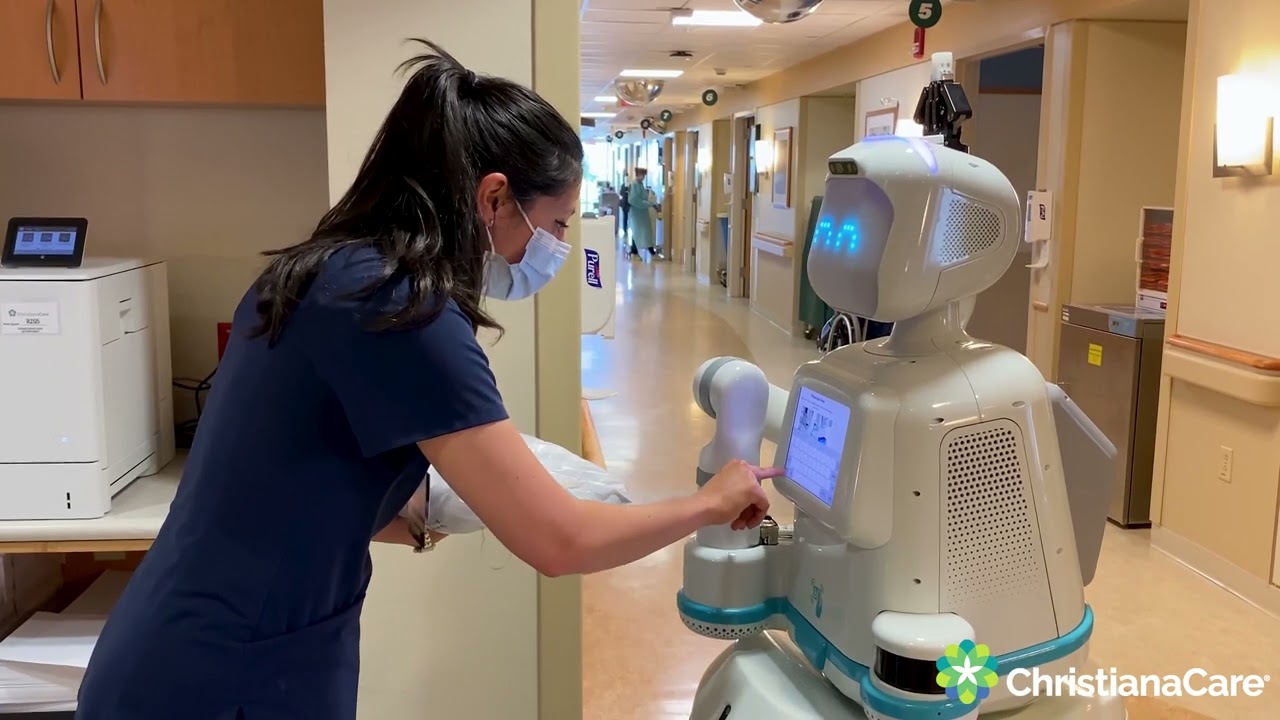
ChristianaCare is the first health system in the Philadelphia region piloting an innovative tool called Moxi, a collaborative robot — or “cobot”— that can assist in the hospital by making deliveries and performing other non-clinical tasks so that nurses and other clinical staff can spend more time focused on what they do best—caring for patients. With a landmark $1.5 million grant from the American Nurses Foundation, ChristianaCare will deploy a total of five Moxi cobots at Christiana Hospital. It is the largest single grant in the history of Nursing at ChristianaCare. Research published in the Journal of Nursing Management shows that nurses spend a significant amount of time — up to 33% of their shifts — on time-consuming but simple tasks such as dropping off lab specimens, collecting supplies or picking up medications from the pharmacy. By taking over these time-consuming but simple tasks, Moxi enables nurses to focus on patient care, where their skills are most needed. “Nurses need the time and space to deliver care and patient education at the top of their license,” said Ric Cuming, Ed.D., MSN, RN, NEA-BC, FAAN, chief nurse executive and president, ChristianaCare HomeHealth. “Moxi will be doing those hunting and gathering tasks such as getting equipment and supplies, which nurses are doing today but don’t need to be doing.” Cobots are designed to share workspace and interact directly with people. In ChristianaCare’s initiative, the Moxi cobots will be integrated with the Cerner Corporation electronic health record (EHR) platform and use artificial intelligence to proactively identify when nurses will need equipment, supplies, medications and lab tests. The Moxi cobots will be deployed to 11 inpatient units, partnering with more than 400 nurses. The American Nurses Foundation grant will enable ChristianaCare to evaluate the impact of cobots on nursing practice with the goal of scaling the technology if successful. “Moxi is not a replacement for a nurse or nursing position — or any position,” Cuming said. “It is an additional resource for nurses and their teams. “With robotic technology, we are using resources wisely and effectively, creating more efficient workflows, reducing repetitive tasks and freeing up nurses’ time for the complex clinical work that they excel at doing.” Reimagining Nursing ChristianaCare is one of 10 grant recipients from the American Nurses Foundation Reimagining Nursing (RN) Initiative. “We are proud that the American Nurses Foundation has the confidence in bold nurse-led ideas that will lead to large-scale, replicable change,” said Katherine Collard, MS, RN-BC, chief nursing informatics officer at ChristianaCare. “This grant will support nurses at ChristianaCare and our nursing colleagues across the nation in realizing their full potential, giving them the tools, resources and power to improve health care now and in the future.” With the American Nurses Foundation grant, ChristianaCare will conduct research on driving nursing outcomes through robotics. “We have a transformative opportunity to generate new knowledge and to move the science forward around robotics in nursing and in health care,” said Susan Birkhoff, Ph.D., RN, nurse scientist at ChristianaCare. “Through research, we will study Moxi’s impact to nursing caregivers that will have broad implications for nursing practice, workforce and education,” she said. ChristianaCare began exploring the potential of robotics to support Nursing with two Moxi cobots acquired in February, funded through the generosity of donors including Good Samaritan, Inc. and E.J. “Woody” Rice. With the grant, said Birkhoff, ChristianaCare will take Moxi to the next “bold frontier,” adding three more cobots with the goal of automating and optimizing nurses’ workflow without interrupting care. With five total cobots, ChristianaCare will be home to the largest number of Moxi robots in health care. The Little Bot That Can Before Moxi can become fully part of the care team, it must learn to navigate the hospital and respond to the nurses’ needs. Using artificial intelligence, Moxi is mapping out Christiana Hospital through sensors and other machine-learning technology so that the cobots can ultimately navigate and work autonomously. “When the Moxi cobots are fully integrated, we anticipate that they will complete up to 200 delivery tasks a day,” Collard said. “By making point-to-point deliveries, Moxi can save nurses hours of time and thousands of steps.” Designed to be compatible with the busy environments of hospitals, Moxi’s features include: Social intelligence: Moxi won’t bump into people or objects in hallways, waves when it sees someone new and happily poses for selfies. Mobile manipulation: Moxi can learn to use its robotic arm to operate existing automatic doors and elevator panels. Human-guided learning: The more Moxi is used, the more Moxi learns and adapts to the environment and specific ways of doing things. Friendly and safe design: With heart-shaped eyes and a friendly appearance, Moxi is designed to navigate safely and get the job done so nurses can focus on patient care. “What Moxi is doing in health systems like ChristianaCare is really transforming the way we think about health care and allowing staff to focus on the people in the hospital as opposed to the tasks,” said Dr. Andrea Thomaz, CEO and co-founder of Diligent Robotics, which created Moxi. “Robots are not something way in the future. Our robots work side-by-side with humans to ease the stress and workload of one of the most demanding jobs in society, nursing. The partnership between Diligent and ChristianaCare shows that the future is now.” Hospital Helper Directly from the Cerner EHR, Moxi will be able to anticipate clinician and patient needs and perform tasks without human involvement. Examples could include: Delivering items to patients based on nurses’ order requests. Making rounds across units to deliver lab samples on collections completed in the electronic health record. Making just-in-time deliveries of pharmaceuticals not stocked on the floor. Prioritizing tasks based on the nursing workload in a unit, so that the busiest nurses will get help first. “Connecting Moxi to the existing technology that clinicians use on a daily basis is key to making it easier to anticipate needs so clinicians can spend more time on patient care,” says Eva Karp, DHA, MBA, RN-BC, senior vice president, chief clinical and patient safety, Cerner. “Moxi could make a real difference in a nurse’s day — alleviating burnout and staffing shortages, which have become especially prevalent since the pandemic.” Incorporating the electronic health record into Moxi is part of the study funded by the American Nurses Foundation. “It’s absolutely in the best interest of our patients that Moxi can work alongside nurses so we can spend more time working directly with our patients to do what we do best,” said Pam Owen, MSN, RN-BC, nurse manager on 7E, one of the pilot units. “And Moxi brings a smile to people’s faces.” Fast Facts About Moxi Works in 22-hour shifts. Needs only two hours of charging time. Weighs about 300 pounds. Can carry a total weight of 70 pounds. Gender-neutral. Pronouns are “it” for a single Moxi cobot and “they” for more than one. Named one of America’s Greatest Disruptors in 2021 by Newsweek and one of the Best Inventions of 2019 by Time Magazine. About ChristianaCare Headquartered in Wilmington, Delaware, ChristianaCare is one of the country’s most dynamic health care organizations, centered on improving health outcomes, making high-quality care more accessible and lowering health care costs. ChristianaCare includes an extensive network of primary care and outpatient services, home health care, urgent care centers, three hospitals (1,299 beds), a freestanding emergency department, a Level I trauma center and a Level III neonatal intensive care unit, a comprehensive stroke center and regional centers of excellence in heart and vascular care, cancer care and women’s health. It also includes the pioneering Gene Editing Institute. ChristianaCare is nationally recognized as a great place to work, rated by Forbes as the 2nd best health system for diversity and inclusion, and the 29th best health system to work for in the United States, and by IDG Computerworld as one of the nation’s Best Places to Work in IT. ChristianaCare is rated by Healthgrades as one of America’s 50 Best Hospitals and continually ranked among the nation’s best by U.S. News & World Report, Newsweek and other national quality ratings. ChristianaCare is a nonprofit teaching health system with more than 260 residents and fellows. With its groundbreaking Center for Virtual Health and a focus on population health and value-based care, ChristianaCare is shaping the future of health care.

