
Experts Matter. Find Yours.
Connect for media, speaking, professional opportunities & more.

Optimizing the delivery speed promise can boost sales
After the coronavirus pandemic forced most of the country into lockdown, online shopping soared. According to CCInsights.org, by the end of April 2020 there was a 146% year-over-year increase in U.S. and Canadian online retail orders. Amazon was so overwhelmed by the combination of increased demand, logistical nightmares, and warehouse worker safety issues that the company announced significant delays in its Amazon Prime shipping speeds. When the company announced it would prioritize the shipping of essential items, the online retailer’s third-party sellers were left to manage their own shipping — something Amazon usually did for them. Shoppers who placed orders for non-essential products at the end of March sometimes received estimated delivery dates of more than a month away. While consumers often received their orders sooner than the 30-day estimate, for Prime shoppers used to getting their items delivered for free the next day, the change in delivery speed was a shock. Amazon shoppers turned to alternative outlets that promised much quicker delivery speeds. Companies with strong e-commerce positions and supply chains, such as Walmart, took advantage of Amazon’s situation. “People are very sensitive to delivery and how fast they can get products,” said Ruomeng Cui, assistant professor in information systems & operations management. “Maybe, just maybe, Amazon would be able to deliver faster than one month, but they chose to promise customers one month — that was their choice.” Unfortunately for Amazon, by setting conservative delivery speed promises, they exacerbated an already bad situation. According to Cui’s paper “Sooner or Later? Promising Delivery Speed in Online Retail” (Ruomeng Cui, Tianshu Sun, Zhikun Lu and Joseph M. Golden), optimizing delivery speed promise can have a substantial effect on a company’s sales. How substantial? Without changing the actual delivery speed itself — only the delivery speed promise — Cui’s research showed that when the retailer promised customers one day faster shipping, sales increased, profits increased, and customers spent more on each order. “It’s a very critical decision for retailers to try to determine how to manage delivery and how to manage the information aspect of delivery,” added Cui. The study is attached and found two key findings: The value of communicating delivery times From a customer satisfaction standpoint, the conservative disclosure lowered customer satisfaction while the aggressive disclosure didn’t affect the company’s satisfaction score, although it did increase product returns when shipping speed was overly aggressive and products were delivered late. “These results indicate that in our research context, promising customers a faster delivery speed can boost sales and profitability but at the cost of a higher product return rate,” the researchers wrote. They go on to caution retailers that promising a conservative shipping speed can be costly. “It’s a careful balance that companies need to think about — how to manage customers’ expectations properly,” explained Cui. Crafting the delivery promise Given online retailers’ adoption of machine learning, Cui believes companies could tweak their algorithms to explore what products and which types of customers are more tolerant to over-promising as it relates to the delivery speed promise. “Companies can then use the analysis to customize and differentiate the types of products that adopt different types of information strategies,” Cui said. “Just change your algorithm, learn and incorporate some of the data-driven decisions and methods.” Going forward, Cui hopes to customize algorithms for companies in an effort to help them dynamically optimize how to promise the correct delivery speed to customers. While many companies, like Collage.com, don’t own their own delivery function and can’t change the actual delivery speed by changing infrastructure, these companies can “manage the information,” said Cui. “It’s easy, and I think it should be the retailer’s responsibility and job to optimize.” “I want to advocate for all retailers to think strategically in their information aspect,” said Cui. “Don’t let such an easily fixed lever just sit there at almost zero cost.” If you are a journalist looking to cover this study or speak with Professor Ciu about subjects like online shopping and operations management, simply click on her icon now to arrange an interview today.



People with outgoing personalities get noticed. Heads turn toward those with charismatic voices, emotional speech, high energy, empathetic gestures, and engaging smiles, but on the corporate front, how do these traits come to bear on executive compensation, hiring, and firm outcomes? “The short answer is that extraversion is associated with positive career and firm outcomes,” said T. Clifton Green, professor of finance at Emory’s Goizueta Business School, whose published work Executive Extraversion: Career Firm and Outcomes (The Accounting Review, 2019), explores this phenomenon. The study, with coauthors Russell Jame 10PhD, University of Kentucky’s Gatton College of Business and Economics, and Brandon Lock 12BBA Baruch College’s Zicklin School of Business, City University of New York, highlights the role of personality traits in explaining executive promotions, job tenure, and outside board service. Green also finds evidence that having an extraverted CEO bodes well for investor recognition, sales growth, and acquisitions. The study goes on to explain the personality trait of Extraversion, which is often described as “the single most important aspect of an individual’s personality,” according to Green, with the other of the Big Five traits being Agreeableness, Openness, Emotional Stability, and Conscientiousness. Extraverts tend to be outgoing and gain energy from being around others, whereas introverts tend to be more reserved and recharge through solitude. Psychology research identifies extraversion as the personality trait most closely associated with leadership emergence. The study linked above is available for reading – and if you are a journalist looking to learn more or cover this very interesting topic, then let our experts help. T. Clifton Green is a Professor of Finance at the Goizueta Business School. He is an expert in the areas of market microstructure, with an emphasis on behavioral finance and his research has been featured in the Wall Street Journal, Barrons, Financial Times, and on CNBC.


As the persistent turmoil of protests grips America on an almost daily basis, people are becoming more aware of issues, getting engaged and taking sides. Be it around the dinner table debating, marching in the streets or even arguing on a national news panel – topics like Black Lives Matter, masks during COVID, the upcoming election or a host of other hot-topic issues are all part of the American conversation these days. It’s easy and even healthy for people to debate the issues – but for a business to pick a side on a controversial topic, it’s a much different picture. One recent example was Nike’s support of NFL quarterback Colin Kaepernick. However, Nike also had the resources to bolster their support. They had a multi-million-dollar ad budget, a public relations machine generating hours of earned media – and the company was, for the most part playing to its core audience. Though there was push-back, Nike was rewarded with increased sales and its stock surged. For almost a decade now, Chick-fil-A has also boldly taken a stance with its opinion on gay marriage. The restaurant chain has faced mountains of negative press and protests, but the fast-food giant’s bottom lined never suffered. It still sees sales over 10 billion a year. For Nike and Chik-Fil-A and their deep pockets to wade into the fray with an opinion – it’s one thing, but for a small business to share how it feels, there’s a matter of weighing risk versus reward no matter how important the topic might be. “It may well be that it’s harder for entrepreneurs to create a viable business model for their venture in a more polarized context, says Giacomo Negro, a Professor of Organization & Management at Emory University’s Goizueta Business School. “If your business is more hybrid—if you’re supportive of a cause without being overtly affiliated with it—then it could be harder to engage other customers or clients who are uncomfortable doing business with a firm that is even vaguely linked to a specific social group or movement. Similarly, the core supporters of the cause can look at the same organization as not authentically engaged with them.” His findings certainly suggest that existing in a “gray zone,” where you take neither one side or the other, is a hard place for organizations to thrive in times of social change. “If protest activates the cultural boundary surrounding a group’s identity, then increasing protest participation will threaten the viability of precisely those organizations trying to engage inside and outside audiences,” Negro said. “At the same time, bridging inside and outside audiences also conveys a confusing identity and a more limited commitment to pursuing goals relevant to either audience.” With a global pandemic impacting all aspects of national and local economies – small businesses are under pressure to sustain and survive like never before. And if you are a journalist looking to cover the state of small businesses in America and whether or not small business has a role to play in protests and politics in America – then let our experts help with your coverage. Giacomo Negro is a Professor of Organization & Management at Emory University’s Goizueta Business School and is an expert in the area of economic sociology. His resent research study research study, “Which Side Are You On? The Divergent Effects of Protest Participation on Organizations Affiliated with Identity Groups’ focuses on this very subject. Professor Negro is available to speak with media about this topic – simply click on his icon to arrange an interview today.


Governmental response to the pandemic shuttered much of the regional economy toward the end of the first quarter of 2020, stated Michael Toma, Ph.D., Fuller E. Callaway professor of economics, in Georgia Southern University’s Q1 2020 Economic Monitor. Economic growth ground to a halt as seven of the eight indicators of current economic activity in the region fell. Significant declines were recorded in airplane boardings, hotel sales and port activity. The business forecasting index fell sharply in the first quarter, as initial claims for unemployment insurance skyrocketed during the last week of March. All six leading indicators declined, and further signs of economic damage will be forthcoming in second quarter data, noted Toma. “Looking ahead, the regional economy will experience sharp contraction in the second quarter, likely extending into the third quarter of 2020,” he continued. “The speed of rebound and recovery will be influenced primarily by how people react to governmental easing of restrictions on business activity. More substantial economic recovery will be delayed until such time that business owners, employees and consumers develop a greater level of comfort interacting with each other in the public domain.” If you are a reporter looking to know more about the Georgia economy, including areas such as: Regional expansion Employment trends Tourism and Expected deterioration of local business Then let our experts help with your coverage. Michael Toma, Ph.D., is Georgia Southern University's Fuller E. Callaway professor of economics and is available to speak with media about this topic – simply click on his icon to arrange an interview.



Will an ‘Innovation Renaissance’ be part of a post-COVID America?
If there is one thing that comes out of a crisis or emergency – it is opportunity and innovation. And as COIVID-19 has held the country in its grip for nearly two months, America has had to adjust and adapt almost every aspect of life. From how we work, educate, shop, socialize, stay fit and interact, just about everything has had to change. With those changes comes ingenuity and innovation. And it is expected that from COVID-19 will come inspiration and a new wave of innovation. The coronavirus outbreak has altered not just how people connect, but also how consumers shop. Online grocery shopping, for instance, had never really taken off, accounting for only a fraction of total sales. That trend, of course, has now reversed, with all supermarkets scrambling to meet the surge in online sales. Even Amazon, which had bought U.S. grocery group Whole Foods in 2017, was caught flat-footed in delivering fresh food amid the endless demand for home delivery. Just how we will shop, eat, connect with one another and travel in the future remains to be seen. It may well be that a year or two after the health crisis, the world will resume interacting as it had before the pandemic. For Japan, though, this should be a golden opportunity to think outside the box and re-evaluate how to innovate to meet its changing needs and be a global leader in the services industries, including logistics as well as health care. After all, enhancing the stay-at-home experience through improved connectivity and enhanced distribution mechanisms would be a boon to an aging society as well as to people who are hesitant to venture out as much as they once had. At the same time, discerning consumers can choose their online experiences from across the world, in which Japanese retailers’ attention to detail is particularly attractive. If you are a journalist looking to cover the role innovation will play in a post-pandemic era, then let our experts help with your stories. Dr. Ashely Gess, a leading expert in innovation and an associate professor of STEAM education at Augusta University, is available for interviews. Click on her name to schedule a time to speak with her.


Scarcity reduces consumers' concerns about prices, research shows
BLOOMINGTON, Ind. -- During the current pandemic, panicked overbuying of products such as toilet paper, cleaning products and similar items often has led to limited options for consumers and empty store shelves. What's often left are generic or lower-priced branded products. According to new research from the Indiana University Kelley School of Business, it may not be because consumers during this crisis are viewing higher-priced products as having better quality. A paper published in the Journal of Consumer Research finds that scarcity actually decreases consumers' tendency to use price to judge a product's quality. "Scarcity is aversive and triggers the desire to compensate for the shortage, and to seek abundance," said paper co-author Ashok Lalwani, associate professor of marketing at Kelley. "People who face scarcity are less likely to view less vs. more expensive options as belonging to different categories, and thus are open to differences at either or both ends of the price continuum." This is the first paper to directly show the impact of scarcity on price-quality judgments. The findings are applicable amid times of economic crisis, natural disasters and social disturbances. "We suggest that people may not only differ in terms of how they categorize purchases, but also in terms of the extent to which they categorize, and scarcity reduces the tendency," Lalwani said. While consumers frequently judge the quality of a product based on its price, they change their thinking during times of scarcity and are less likely to categorize objects and less likely to use the price of a product to infer its quality, Lalwani and his co-authors found. The business implications for managers at high-end stores or those who want to increase sales of high-priced items are numerous. Lalwani suggested that one way such managers can activate the belief that higher prices indicate higher quality is by varying context or environmental factors. This could include encouraging consumers -- such as through contests or sweepstakes -- to categorize assorted items by price to facilitate the use of price-tiers as a basis for judging a product's quality. "The same objective could also be attained by reducing consumers' desire for abundance," Lalwani said. "For example, inside the store, managers could have portraits, displays or ads highlighting the harmful effects of gluttony or hoarding behavior. Doing so may increase customers' price-quality inferences and shift them from purchasing lower-priced to higher-priced goods. "Our findings also suggest that when stronger price-quality inferences are desired, retailers are advised to avoid utilizing scarcity messages, such as 'sale ends this week' or 'while supplies last,' especially for product categories in which the proportion of high-priced items is high, as priming scarcity among consumers may decrease their price-quality inferences." Other authors of the paper, "The Impact of Resource Scarcity on Price-Quality Judgments," were Hanyong Park, assistant professor of marketing at the Eli Brand College of Business at Michigan State, and David Silvera, retired associate professor of marketing at the University of Texas at San Antonio.


Expert available to discuss how economic impact of COVID-19 may vary across the country
Retailers such as Macy’s, Nordstrom and Urban Outfitters have announced they will temporarily shutter stores and car maker Honda will close six U.S. plants for a week. Earlier, in-person service at restaurants and bars was ceased. R. Andrew Butters, assistant professor of business economics and public policy at the Indiana University Kelley School of Business, cautions against making general assessments about COVID-19’s economic impact across the country. “Assessing the economic impacts of this pandemic -- and the range of policy responses enacted -- or being considered; however, might be harder to predict and have the potential to be even more uneven. For instance, take the most recent response of closing in-person dining at bars, and restaurants after the first confirmed death in Indiana was announced on Monday. Citing the of example restaurants, “According to the most recent economic census data, on the dimension of annual sales per capita coming from restaurants and other eating establishments, the state of Indiana is less dependent on this sector of the economy than other neighboring states Illinois and Ohio, that have enacted similar responses. On this particular dimension, one could view the economy of Indiana being somewhat insulated relative to its Midwest neighbors. “In sectors like airline travel and hotels, net bookings are down across the board -- and at unprecedented levels. How long travelers stay at home will have a lasting impact on the distribution of foregone revenues experienced at restaurants, bars, and hotels across the country. “An empty seat, or hotel room, contributes zero to GDP. This is especially true in a country like the US, as the demands for air travel and lodging vary across different parts of the country. Some areas of the country with peaks in demand over the spring months (e.g. Arizona and Florida) are likely to be especially vulnerable. Other areas with peaks in travel and recreational demand later in the year, (e.g., some areas of New York and Minnesota) might be less impacted, if the health concerns of travel are mitigated over the next couple of months. “There are many factors one can point to as contributors to a sharp rebound in economic activity, after the impact of the health concerns of the virus are subdued. These factors include the current personal savings and unemployment rates. As more varied -- and reflective -- economic and financial data comes in from areas affected by the global supply chain/consumption disruptions created by this virus (see, e.g., Brave-Butters-Kelley Business Cycle Indices and National Financial Conditions Index), it will be imperative that public policy makers work in concert with the most recent assessments of the depth and duration of this crisis to ensure the stabilization of local and national economies.” Butters can be reached at 812-855-5768 (o), 630-699-4868 and rabutter@indiana.edu.

Baylor Sports Marketing Expert Discusses NBA, NCAA Coronavirus Decisions
On Wednesday, the NBA took the unprecedented step to suspend its season following the revelation that one of its players tested positive for coronavirus. In addition, the NCAA announced that the March Madness basketball tournaments will be played, but without fans present. Baylor University’s Dr. Kirk Wakefield is a nationally recognized expert on sports marketing, sports psychology and fan/consumer response. He has conducted research on the sports retail market – including the NBA and all major national organizations – for more than 20 years. In this brief Q&A, he shares his thoughts about these two decisions. Q: This was an unprecedented action by the NBA to suspend the season due to coronavirus. What does this mean for the teams? A: We’ve had work stoppage before with labor lockouts. Fans were angry then, but the majority won’t be now. Most won’t blame the league or the teams. We might see even more passion for the teams as fans are anxious for play to resume. Q: Based on your understanding of the decision-making process, does this seem to be an action that was done thoughtfully? A: It was carefully considered. No one wants to be the one who could have prevented a catastrophe and didn’t take prudent steps. Just like after lockout years, the leagues will recover. Q: The NCAA tournament will be played – but without fans. What does this mean for college sports teams and the NCAA? A: Obviously, viewership will increase – which is good for sponsors with heavy broadcast and digital assets. Sponsors and venues/teams who are reliant on gate revenue will be hit the hardest. ABOUT KIRK WAKEFIELD, PH.D. Kirk Wakefield, Ph.D., is the Edwin W. Streetman Professor of Retail Marketing and executive director of Sports Sponsorship & Sales at Baylor Unviersity's Hankamer School of Business. His research on retailing covers more than two decades and focuses primarily on sports psychology, team sports marketing, entertainment marketing, and fan and consumer response to pricing and promotional tools. He has conducted fan research in almost every venue in sports including the NBA, NFL, MLB, MLS, NHL and NASCAR. ABOUT BAYLOR UNIVERSITY Baylor University is a private Christian University and a nationally ranked research institution. The University provides a vibrant campus community for more than 18,000 students by blending interdisciplinary research with an international reputation for educational excellence and a faculty commitment to teaching and scholarship. Chartered in 1845 by the Republic of Texas through the efforts of Baptist pioneers, Baylor is the oldest continually operating University in Texas. Located in Waco, Baylor welcomes students from all 50 states and more than 90 countries to study a broad range of degrees among its 12 nationally recognized academic divisions. ABOUT HANKAMER SCHOOL OF BUSINESS AT BAYLOR UNIVERSITY At Baylor University’s Hankamer School of Business, integrity stands shoulder-to-shoulder with analytic and strategic strengths. The School’s top-ranked programs combine rigorous classroom learning, hands-on experience in the real world, a solid foundation in Christian values and a global outlook. Making up approximately 25 percent of the University’s total enrollment, undergraduate students choose from 16 major areas of study. Graduate students choose from full-time, executive or online MBA or other specialized master’s programs, and Ph.D. programs in Information Systems, Entrepreneurship or Health Services Research. The Business School also has campuses located in Austin and Dallas, Texas. Visit www.baylor.edu/business and follow on Twitter at twitter.com/Baylor_Business.


Economic Impact of Macy's Closures, Sephora Openings
On February 4, Macy's announced that it will lay off 2,000 employees at corporate-level positions and close 125 stores over the next three years. They will also look to open smaller store concepts in shopping center locations, which have become more popular destinations for consumers than shopping malls. On the same day, Sephora announced it was going to open 100 stores in 2020. Villanova's David Fiorenza, an assistant professor of economics, has provided comments on both retailers' moves: "Macy's closing about 125 stores with a couple thousand jobs lost is basic economics. Supply and demand has been changing for many years, as people are shopping online, visiting boutique stores, travelling to smaller stores in strip malls, and visiting the urban-style malls that are popping up in suburban towns. These town centers, like King of Prussia Town Center, offer everything a mall or city shopping district does—but with smaller stores such as Sephora or Ulta." "Specialty stores like Sephora and Ulta will continue to see good growth in 2020 and beyond, as this is one area of retail that cannot be replaced with online shopping. The servicing of makeup, cosmetics, hair salons and fragrances needs to be experienced in a store with a knowledgeable sales representative." "The cosmetics counters in the large stores that are anchors in malls, such as Nordstrom, Neiman Marcus and Bloomingdale's, continue to show strong sales. However, in other departments within these stores, the sales are flat or declining." "Most of the smaller strip malls and suburban town centers do not have the competition you see at the larger malls." "Since the economy has been thriving for some time now, people have more discretionary income to spend. This is another bonus for Sephora and even Ulta to expand." "Macy's is a great organization but some of the stores look old and tired, similar to what happened with Toys 'R' Us' shops. I can see Macy's opening smaller boutiques, like what Best Buy has done, or discount stores, like Nordstrom Rack." "Landlords in these small strip centers and urban centers look for a certain type of business, and the large format of Macy's does not work at this point."

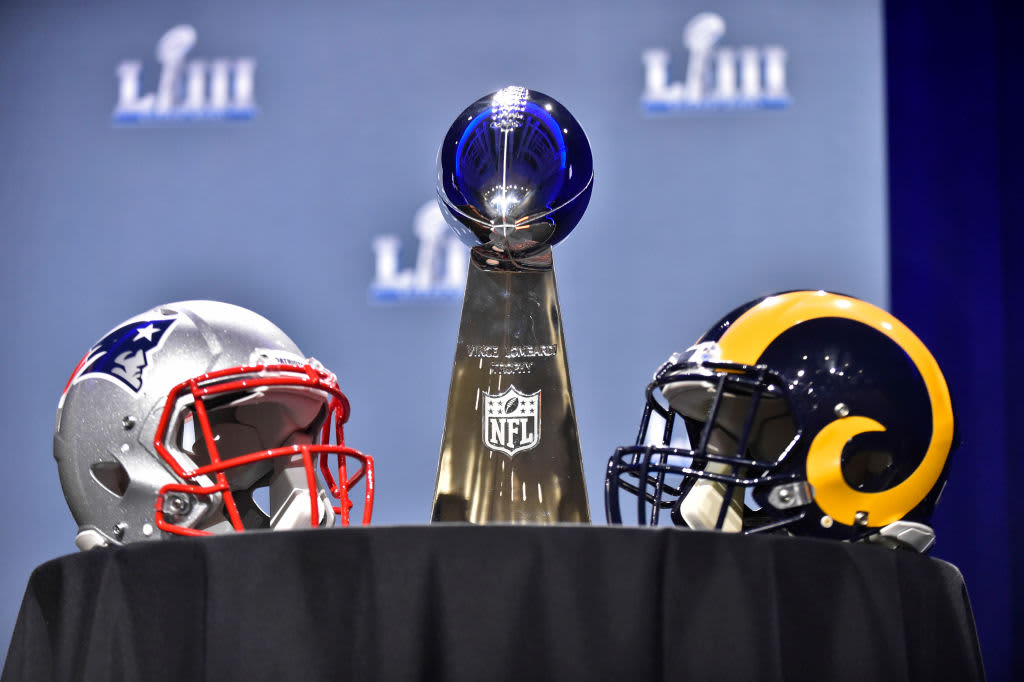
Curious about who’s cashing in on Superbowl Sunday? Let our experts help!
The big day is almost here! Fans around the world are getting squares ready, chili cooked, and prop-bets placed. Superbowl Sunday is America’s biggest day for television and sports. This year, it will be all eyes on the Kansas City Chiefs and San Francisco 49ers as they land in Miami to prep and promote for Sunday’s kickoff. There’s big money to be made this week, and a lot of it is going around, according to CNBC – last year was a windfall and most expect this year to be even bigger. Super Bowl ad spots are the most expensive on commercial TV in the U.S. by far, with a 30-second slot costing $5.25 million. That works out at roughly $175,000 per second. Last year, the winners of the Super Bowl made an estimated $112,000 each, while their opponents made $56,000 each. Referees, meanwhile, make between $4,000 and $10,000 a game, according to an estimate by CBS, and their annual salary is about $201,000. Stores are set to make $14.8 billion in sales around the game, with most of that money spent on food and drink to consume while watching, according to a survey carried out by Prosper Insights & Analytics for the National Retail Federation last week. That equates to $81.30 per person, up from last year’s $81.17. Are you a journalist covering this Sunday’s big game? If you have questions about the marketing or economics of the Superbowl, the let our experts help with your stories and coverage. Professor Andrew Wonders joined the faculty of the School of Business Administration at Cedarville University in 2013 following a 13-year career in the sport industry. He is an expert in the areas of major sporting events and the business of sports. If you are looking to arrange an interview with Professor Wonders – simply click on his icon to arrange a time.

