
Experts Matter. Find Yours.
Connect for media, speaking, professional opportunities & more.

Expert Insights: Navigating Tariffs in a Time of Global Disruption
As global headlines swirl with shifting tariff regulations, U.S. businesses are navigating uncertain waters. With new trade actions impacting industries from automotive to renewable energy, the ripple effects are being felt across supply chains, labor markets, and even insurance models. In this conversation, J.S. Held experts Peter Davis, Timothy Gillihan, Andrea Korney, and Robert Strahle unpack how tariffs are shaping decision-making across industries and where organizations can spot opportunities amid the volatility. Highlights: • Industries most likely to experience tariff impacts • Potential disruptions in manufacturing processes • Supply chain and quality concerns • Expected changes coming in the insurance, reinsurance, and construction markets • The importance of strategic tariff engineering • Guidance for dealing with uncertainty and a rapidly changing business environment Looking to connect with Peter Davis and Andrea Korney? Click on their profile cards to arrange an interview or get deeper insights. For any other media inquiries - contact : Kristi L. Stathis, J.S. Held +1 786 833 4864 Kristi.Stathis@JSHeld.com


BEPI Poll: Hispanic Economic Outlook Drops Amid Tariffs, Rising Prices
As households face increasing prices for goods and talk of new tariffs, Hispanic optimism in the economy waned in the first quarter of 2025, according to a poll from the Business Economic and Polling Initiative at Florida Atlantic University. The Hispanic Consumer Sentiment Index (HSCI) decreased to 85.7 in the first quarter of 2025, down from 89.6 in the fourth quarter of 2024. When compared to the fourth quarter of 2024, there was a decrease in optimism in four out of five questions used to generate the HCSI. Looking at the year ahead, 53% of Hispanics said they expect the country to experience good business conditions, a decline from 61% in the prior quarter; and 64% of Hispanics indicated they will be better off over the next year, down from 70% in the last quarter of 2024. In terms of the long-run economic outlook of the country, Hispanics are less optimistic in the first quarter of 2025 compared to the fourth quarter of 2024 (52% vs. 58%). Only 51% of Hispanics think it is a good time to buy big-ticket items, compared to 52% in the last quarter of 2024. Only one question had an increase in confidence: 63% of Hispanics said they are better off financially than a year ago, which is 8 percentage points (55%) higher than the last quarter of 2024. “Sentiment softened in four of the five questions this quarter,” said Monica Escaleras, Ph.D., chair and director of BEPI. “Persistently high borrowing costs and everyday price pressures – together with talk of new tariffs and a possible recession – are weighing on household outlooks. These headwinds are keeping many Hispanic families cautious about the economic outlook in the United States.” The poll is based on a sample of 542 Hispanic adults over 18 years old. The survey was administered using both landlines via Interactive Voice Response data collection and online data collection using Dynata. Respondents were sampled between Jan. 1 and March 31 with a margin of error of +/- 4.21 percentage points. Responses for the entire sample were weighted to reflect the national distribution of the Hispanic population by region, education, gender, age and income according to the latest American Community Survey data. Full results can be found here: Looking to know more? We can help. Monica Escaleras is available to speak with media about the BEPI Hispanic Consumer Sentiment Index . Simply click on her icon now to arrange an interview today.


The Impact of Counterfeit Goods in Global Commerce
Introduction Counterfeiting has been described as “the world’s second oldest profession.” In 2018, worldwide counterfeiting was estimated to cost the global economy between USD 1.7 trillion and USD 4.5 trillion annually, as well as resulting in more than 70 deaths and 350,000 serious injuries annually. It is estimated that more than a quarter of US consumers have purchased a counterfeit product. The counterfeiting problem is expected to be exacerbated by the unprecedented shift in tariff policy. Tariffs, designed as an import tax or duty on an imported product, are often a percentage of the price and can have different values for different products. Tariffs drive up the cost of imported brand name products but may not, or only to a lesser extent, impact the cost of counterfeit goods. In this article, we examine the extent of the global counterfeit dilemma, the role experts play in tracking and mitigating the problem, the use of anti-counterfeiting measures, and the potential impact that tariffs may have on the flow of counterfeit goods. Brand goods have always been a target of counterfeits due to their high price and associated prestige. These are often luxury goods and clothing, but can also be pharmaceuticals, cosmetics, and electronics. The brand name is an indication of quality materials, workmanship, and technology. People will pay more for the “real thing,” or decide to buy something cheaper that looks “just as good.” In many cases, “just as good” is a counterfeit of the brand name product. A tariff is an import tax or duty that is typically paid by the importer and can drive up the cost of imported brand name products. For example, a Yale study has shown that shoe prices may increase by 87% and apparel prices by 65%, due to tariffs. On the other hand, counterfeit products don’t play by the rules and can often avoid paying tariffs, such as the case of many smaller, online transactions, shipped individually. Therefore, we expect to see an increase in counterfeit products as well as a need to increase efforts to reduce the economic losses of counterfeiting. The Scale of the Counterfeit Problem In their 2025 report, the Organisation for Economic Co-operation and Development (OECD) and the European Union Intellectual Property Office (EUIPO), estimated that in 2021, “global trade in counterfeit goods was valued at approximately USD 467 billion, or 2.3% of total global imports. This absolute value represents an increase from 2019, when counterfeit trade was estimated at USD 464 billion, although its relative share decreased compared to 2019 when it accounted for 2.5% of world trade. For imports into the European Union, the value of counterfeit goods was estimated at USD 117 billion, or 4.7% of total EU imports.” In a 2020 report, the US Patent and Trademark Office (USPTO) estimated the size of the international counterfeit market as having a “range from a low of USD 200 billion in 2008 to a high of USD 509 billion in 2019.” According to the OEDC / EUIPO General Trade-Related Index of Counterfeiting for economies (GTRIC-e), China continues to be the primary source of counterfeit goods, as well as Bangladesh, Lebanon, Syrian Arab Republic, and Türkiye. Based on customs seizures in 2020-21, the most common items are clothing (21.6%), footwear (21.4%), and handbags, followed by electronics and watches. Based on the value of goods seized, watches (23%) and footwear (15%) had the highest value. However, it should be noted that items that are easier to detect and seize are likely to be overrepresented in the data. Although the share of watches declined, and electronics, toys, and games increased, it remains unclear whether this represents a long term trend or just a short term fluctuation. In general, high value products in high demand continue to be counterfeited. Data from the US Library of Congress indicates that 60% – 80% of counterfeit products are purchased by Americans. The US accounts for approximately 5% of the world’s consumers; however, it represents greater than 20% of the world’s purchasing power. Though it is still possible to find counterfeit products at local markets, a large number of counterfeit goods are obtained through online retailers and shipped directly to consumers as small parcels classified as de minimis trade. This allows for the duty-free import of products up to USD 800 in value. Counterfeit items may be knowingly or unknowingly purchased from online retailers and shipped directly to consumers, duty-free. Purchased products can be shipped via postal services, classified as de minimis trade. Approximately 79% of packages seized contained less than 10 items. Given the size and volume of the packages arriving daily, many or most will evade scrutiny by customs officials. This means of import is increasing over time. In 2017-19 it was 61% of seizures. By 2020-21, it was 79%. Economic Impact of Counterfeiting The scale of the counterfeiting problem has significant impacts on the US economy, US business interests, and US innovations in lost sales and lost jobs. Moreover, counterfeit products are often made quickly and cheaply, using materials that may be toxic. The companies producing these goods may not dispose of waste properly and may dump it into waterways, causing significant environmental consequences. Counterfeit products from electrical equipment and life jackets to batteries and smoke alarms may be made without adhering to safety standards or be properly tested. These products may fail to function when you need it and may lead to fire, electric shock, poisoning, and other accidents that can seriously injure and even kill consumers. Counterfeit cosmetics and pharmaceuticals can also lead to injuries by either including unsafe ingredients or by failing to provide the benefits of the real product. The Tariff Counterfeit Connection Tariffs may be seen as a tax on consumers and raise the price of imported products that are already the target of counterfeiters such as luxury leather products and apparel. It’s commonly understood that raising prices on genuine products can only drive up the demand for counterfeit goods. In general, consumers will have less disposable income and the brand goods they desire will cost more which is bound to increase the demand for counterfeit goods. Although recent changes removing the USD 800 tax exemption on de minimis shipments from China and Hong Kong will make it more expensive for counterfeiters to ship their goods internationally, tariffs are typically applied as a percentage of the cost of an object. This will cause the price of more expensive legitimate goods to increase even more than the cheaper counterfeit goods and likely make the counterfeit products even more attractive economically. Therefore, we expect to see an increase in counterfeit products as well as an increase in efforts to reduce the economic losses of counterfeiting. The Role of Technical Experts in Counterfeit Detection Technical experts play an important role in both the prevention and detection of counterfeits and helping to identify counterfeiting entities. Whether counterfeit money, clothing, shoes, electronics, cosmetics or pharmaceuticals, the first step in fighting counterfeits is detecting them. In some cases, the counterfeit product is obvious. A leather product may not be leather, a logo may be wrong, packaging may have a spelling mistake, or a holographic label may be missing. These products may be seized by customs. However, some counterfeit products are very difficult to detect. In the case of a counterfeit memory card with less than the stated capacity or a pharmaceutical that contains the wrong active ingredient, technical analysis may be needed to identify the parts. Technical analysis may also be used to try and identify the source of the counterfeit goods. For prevention measures, manufacturers may use radio frequency identification (RFID) or Near Field Communication (NFC) tags within their products. RFID tags are microscopic semiconductor chips attached to a metallic printed antenna. The tag itself may be flexible and easy to incorporate into packaging or into the product itself. A passive RFID requires no power and has sufficient storage to store information such as product name, stock keeping unit (SKU), place of manufacture, date of manufacture, as well as some sort of cryptographic information to attest to the authenticity of the tag. A simple scanner powers the tag using an electromagnetic field and reads the tag. If manufacturers include RFID tags in products, an X-ray to identify a product in a de minimis shipment (perhaps using artificial intelligence technology) and an RFID scanner to verify the authenticity of the product can be used to efficiently screen a large number of packages. Many products also may be marked with photo-luminescent dyes with unique properties that may be read by special scanners and allow authorities to detect legitimate products. Similarly, doped hybrid oxide particles with distinctive photo-responsive features may be printed on products. These particles, when exposed to laser light, experience a fast increase in temperature which may be quickly detected. For either of these examples, the ability to identify legitimate products, or – due to the absence of marking – track counterfeit products, allows authorities to map the flow of the counterfeit goods through the supply chain as they are manufactured, shipped, and are exported and imported to countries. For many years, electronic memory cards such as SD cards and USB sticks have been counterfeited. In many cases, the fake card will have a capacity much smaller than listed. For example, a 32GB memory card for a camera may only hold 1GB. Sometimes, these products may be identified by analyzing the packaging for discrepancies from the brand name products. In other cases, software must be used to verify the capacity and performance of each one, which is time-consuming when analyzing a large number of products. Forensic investigators, comprised of forensic accountants and forensic technologists, are heavily involved in efforts to combat this illicit trade. By analyzing financial records, supply-chain data, and transaction histories, they trace the origins and pathways of counterfeit products. Their work often involves identifying suspicious procurement patterns, shell companies, and irregular inventory flows that signal counterfeit activity. Forensic investigators often begin by mapping the counterfeit supply chain, an intricate web that often spans continents. Using data analytics, transaction tracing, and inventory audits, they identify anomalies in procurement, distribution, and sales records. These methodologies help pinpoint the origin of counterfeit goods, the intermediaries involved, and the final points of sale. By reconstructing the flow of goods and money, forensic investigators can begin to unmask activities. Cross-border partnerships are essential for tracking assets, sharing insights, and coordinating with financial regulators. Public-private partnerships further enhance the effectiveness of anti-counterfeiting efforts. Forensic investigators often serve as bridges between government agencies, brand owners, and financial institutions, facilitating the exchange of key information. These partnerships increase information-sharing, streamline investigations, and amplify the impact of enforcement actions. A promising development in this space is the World Customs Organization’s Smart Customs Project, which integrates artificial intelligence to detect and intercept counterfeit goods. Forensic investigators can leverage this initiative by analyzing AI-generated alerts and incorporating them into broader financial investigations, which allows for faster and more accurate identification of illicit networks. Jurisdictional complexity is a major hurdle in anti-counterfeiting efforts. Forensic investigators work closely with legal teams to navigate these challenges to ensure that investigations comply with local laws, and evidence is admissible and can withstand scrutiny in court, especially when dealing with offshore accounts and international money laundering schemes. Forensic investigators follow the money, tracing illicit profits through bank accounts, shell companies, and cryptocurrency transactions. Their findings not only help recover stolen assets but also support disputes by providing expert testimony that quantifies financial losses and identifies the bad actors. Conclusion Imitations of brand name products have become more convincing, harder to detect, and the sources of the counterfeit goods more difficult to identify. While counterfeiting clearly has evolved because of technological advancements, e-commerce, and the growing sophistication of bad actors, the process has now been complicated even further by the unpredictable tariff and trade policies that are affecting businesses worldwide. Consequently, companies need to take a multi-faceted approach to these new challenges introduced into the counterfeiting of products by tariffs. By engaging high-tech product authentication measures, utilizing technology-based alerts about counterfeits, and retaining the specialized skills of forensic investigators and other experts, companies will be able to navigate the risks posed by the complex and changing relationship between tariffs and counterfeit goods. To learn more about this topic and how it can impact your business or connect with James E. Malackowski simply click on his icon now to arrange an interview today. To connect with David Fraser or Matthew Brown - contact : Kristi L. Stathis, J.S. Held +1 786 833 4864 Kristi.Stathis@JSHeld.com


What's the True Story on the State of Tourism in Florida?
Tourism is one of the key economic drivers in Florida. The sector is responsible for approximately 10 percent of the Gross State Product (GSP), employs millions, and contributes billions to the state's economy. But how are things in the sector? It depends on the day, what you're reading or what you're watching: the industry in Florida is either booming or in a vulnerable situation. Here are two examples: Rising tariffs, visa delays, and shifting global travel trends have created a perfect storm, leading to a sharp drop in tourist numbers across Florida and several other U.S. states. The U.S. tourism industry is facing unprecedented challenges as international visitors choose alternative destinations amid political and economic shifts. According to recent data from the U.S. Travel Association, international visits to the U.S. saw a 14% decline in March, reflecting a broader global trend. However, the most significant impact has been felt among Canadian travelers, with a staggering 20.2% decrease in the number of Canadians visiting the U.S. This marks a troubling shift for the U.S., which has long relied on its neighboring country as a key source of international tourism. Florida, which has seen a decrease in tourism since the pandemic, is now facing a compounded crisis. The state, which historically attracted millions of international visitors, is seeing fewer long-term snowbirds, as well as a general decline in international arrivals. The state’s tourism sector, once a booming economic engine, is facing significant challenges. With both fewer foreign visitors and changes in local tourism trends, the state’s economy is under increasing strain. According to the World Travel & Journalism Council, the U.S. is on track to lose more than \$12 billion in international travel spending this year alone due to the decline in visitor numbers. June 06 - Travel and Tour World Whereas government officials are painting a very different picture. Florida welcomed 143 million visitors in 2024, setting a new tourism record for the state. State officials said this is the most visitors in a single year in Florida's history. The trend isn't slowing down, as more than 41 million people visited Florida in just the first three months of this year. May 21 - ABC News So there are questions that need to be answered: What is the current state of tourism in Florida? Have tariffs impacted visits from abroad? Does the high US dollar have anything to do with fewer people coming to the Sunshine State from outside of America? Has domestic travel increased with more Americans choosing Florida as a destination? If the sector is suffering from a decline in visitors, how can it adapt to be more attractive to tourists? If you are a reporter following the tourism industry - we're here to help. Peter Ricci is the Director of the Hospitality and Tourism Management program in Florida Atlantic University’s College of Business. He is a hospitality industry veteran with more than 20 years of managerial experience in segments including food service, lodging, incentive travel and destination marketing. Peter is available to speak with the media about tourism in Florida and the potential for gambling. Simply click on his icon to arrange an interview.


Supply Chain Report: Logistics Leaders Predict Tight Capacity, High Prices Through Mid-2026
The Logistics Managers’ Index rose for the second consecutive month due to rising costs as the economy remains uncertain, according to researchers at Florida Atlantic University and four other schools. May’s index read in at 59.4, up slightly from April’s reading of 58.8. The reading is up 3.8 from the year prior. A score above 50 indicates that the logistics industry is expanding, while a score below 50 indicates that the industry is shrinking. Costs, particularly inventory costs, led to this month’s expansion. Inventory costs rose to 78.4, the highest level since October 2022, while inventory levels were only 51.5. The gap between the two suggests that many inventories are sitting stagnant. “The persistent uncertainty with respect to tariffs seems to be causing upward pressure on inventory costs, likely because of stockpiling effects,” said Steven Carnovale, Ph.D., associate professor of supply chain management in the College of Business. “The previous pause on tariffs opened up an opportunity to stockpile, which is also likely reflected in the rise in warehousing utilization and costs, as well as the rise in upstream warehouse utilization.” The LMI, a survey of director-level and above supply chain executives, measures the expansion or contraction of the logistics industry using eight unique components: inventory levels, inventory costs, warehousing capacity, warehousing utilization, warehousing prices, transportation capacity, transportation utilization and transportation prices. Along with FAU, researchers at Arizona State University, Colorado State University, Rutgers University and the University of Nevada at Reno calculated the LMI using a diffusion index. Warehousing readings also point to further uncertainty among firms on the direction of the U.S. economy and tariff policy. Warehousing capacity was flat at 50, while warehousing costs and warehousing utilization read at 72.1 and 62.5, respectively. The readings suggest that inventories are sitting longer amid slower consumer demand and firms have been holding goods in anticipation of future tariff changes. “At a certain point, the see-saw effect of increased/decreased tariffs is likely going to lead to firms stockpiling when tariffs come down, and likely be forced to sit on excess inventory,” Carnovale said. “In this case, the decision will be: are the holding costs of excess inventory less than the (potential) future tariffs? And to what degree will these increased prices pass through to consumers?” Overall, respondents expect inventory levels to increase in the year ahead, with capacity growing tighter and costs expanding, highlighting the overall sentiment that trade issues and uncertainty will be wrapped up by the end of the year. Looking to know more - we can help. Steven is a supply chain strategist specializing in interfirm networks, risk management and global sourcing/production networks. He is available to speak with media. Simply click on his icon now to arrange an interview today


Video Insights: What Boards of Directors Need to Know About Tariffs
Boards of directors globally are confronting unknown circumstances as a result of the current quickly shifting tariff and trade environment. Business risks and opportunities are magnified during such times, compelling boards to seek the right strategies in order to meet these challenges. In this video, Brian Gleason, John Peiserich, James E. Malackowski, and Mariano de Alba – experts in business turnaround, supply chain, intellectual property, and political risk – outline emerging considerations for boards of directors in light of changing tariff policies, including: • Tracking the financial impact of tariffs and effects on company supply chains • Understanding changes to regulatory requirements and whether internal policies need to be modified • Planning for short- and long-term effects on intellectual property • Adjusting communications between the board and senior management To view more of our Tariffs and Trade Series expert analysis and commentary, visit: Looking to know more or connect with John Peiserich and James E. Malackowski? Simply click on either expert's icon now to arrange an interview today. If you are looking to connect with Brian Gleason or Mariano de Alba - contact : Kristi L. Stathis, J.S. Held +1 786 833 4864 Kristi.Stathis@JSHeld.com


Video Insights: What Investors Need to Know About Shifting Tariffs
Unprecedented uncertainty brought on by quickly evolving tariff policies is creating challenges and additional considerations for investors and other capital providers. In this video, J.S. Held experts Brian Gleason, John Peiserich, James E. Malackowski, and Tom Burns – experts in turnaround, supply chain, intellectual property, and political risk – pose twelve questions to private equity sponsors and their portfolio companies to explore amid the continued tariff uncertainty. Restructuring and operations expert Brian Gleason has managed or participated in more than 300 turnaround engagements over the past 29 years and applies the principles utilized in J.S. Held's work advising companies in crisis. In the video, Brian addresses three essential questions that investors should consider with their portfolio companies during this period of unprecedented tariff-policy-induced uncertainty: 1) How have tariffs impacted business forecasting and investor confidence? 2) What are the key actions portfolio company management teams should take during tariff-induced uncertainty? 3) What leadership strategies are recommended for navigating the economic stress caused or complicated by tariffs? Business intelligence expert Tom Burns has extensive experience leading intelligence collection assignments for financial institutions, law firms, and blue-chip multinationals around the world. Tom explores the additional pre-acquisition diligence essential amid tariff uncertainty in the video. He addresses three questions, including: 4) How have tariffs changed the due diligence process in acquisitions? 5) What is transshipment, and why is it a concern for investors and their portfolio companies? 6) What steps should investors take to manage tariff-related risks in acquisitions? Capital projects, environmental risk, and compliance expert John Peiserich has over 30 years of experience advising heavy industry and law firms throughout the country with a focus on Oil & Gas, Energy, and Public Utilities. In the video, John reflects upon: 7) Why is it important for investors to assess the owner-operator's understanding of supply chain risks? 8) How have tariffs introduced new challenges for large-scale projects? 9) What is the potential impact of supply chain and tariff-related delays on investment outcomes? James E. Malackowski has a unique perspective on intellectual property litigation risk, strategic management, and monetization, which benefits from his prior work at a leading private equity firm. In the video, he advises investors and their portfolio companies to consider: 10) How do tariffs influence decisions around manufacturing relocation and intellectual property? 11) What IP-related risks should companies consider when relocating manufacturing operations? 12) What steps should investors take to ensure IP is properly managed in response to tariffs? The J.S. Held Tariffs and Trade Series is a collection of intelligence, insights, and action plans that inform strategic business decision-making and foster resilience in an increasingly volatile global market. To view more of our Tariffs and Trade Series expert analysis and commentary, visit: Looking to know more or connect with John Peiserich and James E. Malackowski? Simply click on either expert's icon now to arrange an interview today. If you are looking to connect with Brian Gleason or Tom Burns - contact : Kristi L. Stathis, J.S. Held +1 786 833 4864 Kristi.Stathis@JSHeld.com

ExpertSpotlight: American Steel Tariffs – A Brief History
The history of steel trade and tariffs in the United States is deeply intertwined with the nation’s industrial rise, global economic strategy, and political maneuvering. From the late 19th century through the 21st, steel has symbolized both national strength and international tension. Trade protections—such as tariffs—have been used to shield American steel producers from foreign competition, often sparking international disputes and shaping the direction of U.S. economic policy. This topic matters to the public because it affects manufacturing jobs, infrastructure costs, international relations, and the price of goods in everyday life. Understanding steel tariffs offers a lens into larger debates about globalization, economic nationalism, and trade fairness. Key story angles that may interest a broad audience include: The origins of U.S. steel tariffs: Tracing the first protective tariffs in the late 1800s and their role in America’s industrial expansion. The role of steel in national security and economic independence: Investigating why steel has been labeled a “strategic industry” across administrations. Tariff flashpoints: Highlighting major tariff battles—such as the 2002 and 2018 steel tariffs—and their economic and diplomatic consequences. Impact on American manufacturing and jobs: Examining whether tariffs have protected or hindered employment in steel-producing regions. Global trade tensions: Exploring how tariffs have affected relationships with allies such as Canada, the EU, and China. Future of steel trade policy: Discussing evolving views on protectionism, globalization, and climate-linked trade strategies. Connect with our experts about the history of tariffs and steel in America: Check out our experts here : www.expertfile.com


Video Insights: How Senior Management Teams Can Respond to Tariffs
Companies around the world are facing increasing uncertainty brought on by the unpredictable and rapid shifts in tariff policies. As a result, corporate leaders are seeking ways to adapt and respond to the sudden and unprecedented changes in the international trade landscape. In this video, Brian Gleason, John Peiserich, James E. Malackowski, and Livia Paggi – experts in turnaround, supply chain, intellectual property, and political risk – discuss key strategies for senior management teams to address evolving tariff policies, including: • Updating business forecasts and understanding company liquidity • How companies can optimize their intellectual property (IP) value and mitigate risk • How to approach the unique risks associated with planning and permitting for capital projects • How to manage geopolitical volatility from shifting tariffs in the dealmaking process To view more of our Tariffs and Trade Series expert analysis and commentary, visit: Looking to know more or connect with John Peiserich, Livia Paggi and James E. Malackowski? Simply click on either expert's icon now to arrange an interview today. If you are looking to connect with Brian Gleason - contact : Kristi L. Stathis, J.S. Held +1 786 833 4864 Kristi.Stathis@JSHeld.com

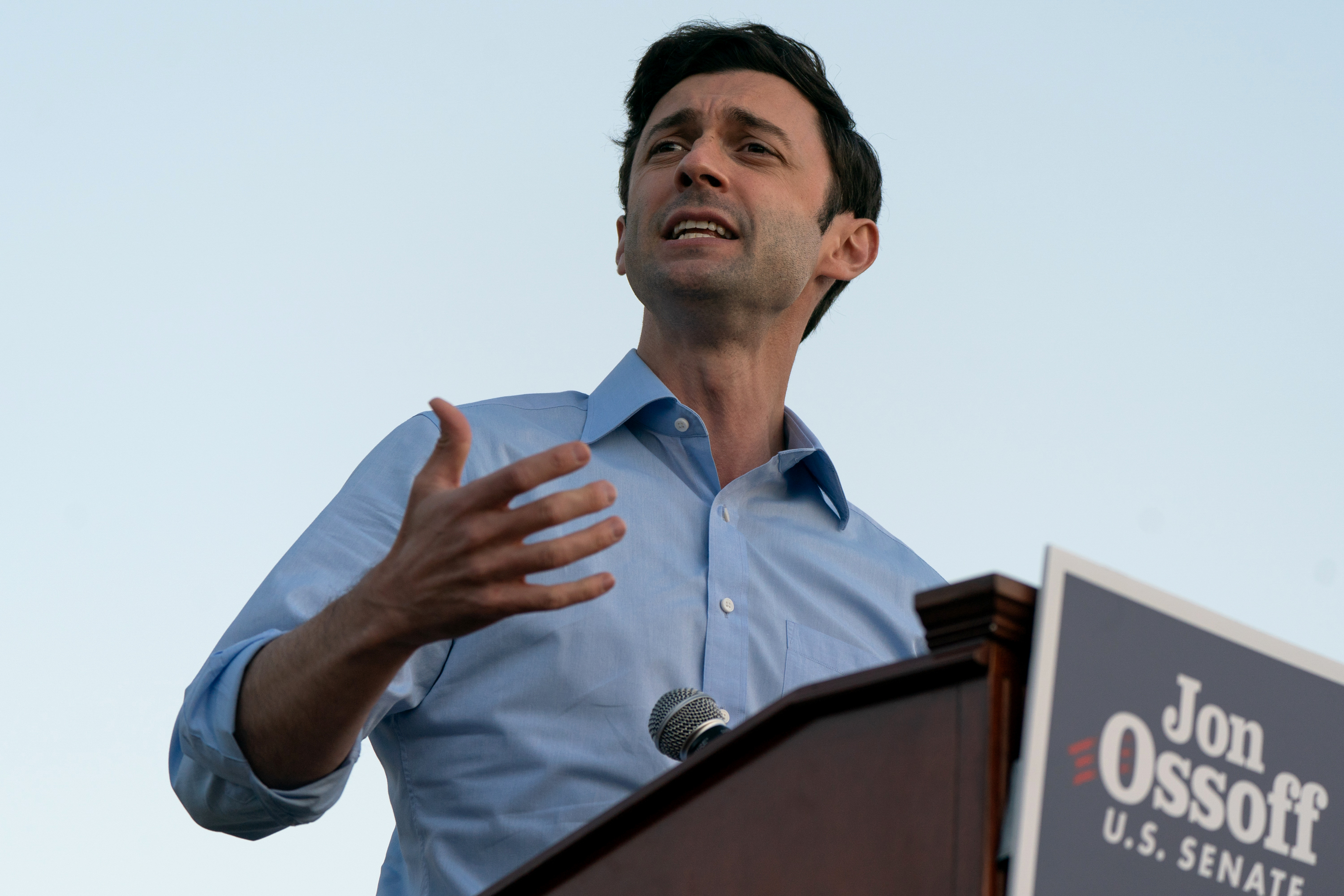
Experts in the Media: With Kemp bowing out of mid-terms is Georgia staying blue?
Control of the Senate is key for most administrations, and with a razor-thin edge favoring the Republicans, any pickup to keep control of the Senate after the mid-term elections is a priority. However, with a heavy favorite in Gov. Brian Kemp stepping away from the chance to run for the GOP, many are speculating the once traditionally Republican stronghold could stay blue under the Democrats with the re-election of Sen. Jon Ossoff. It's a topic that has political watchers and media trying to cover and figure out as parties get ready to get back on the campaign trail for next year. It's also why journalists and news outlets like Newsweek are connecting with experts like William Hatcher, PhD, for expert opinion and perspective. An award-winning scholar, Hatcher is the chair of the Department of Social Sciences and a professor of political science. His research focuses on the connection between public administration and the development of local communities. Kemp's decision not to challenge Ossoff in the state's 2026 Senate race could be a boon to Democrats' chances of holding the seat in the battleground state, according to recent polls... Kemp's announcement follows months of speculation about whether he would challenge Ossoff, a Democrat first elected in 2020. Polls suggest Kemp would have been the strongest candidate against Ossoff and that other potential Republicans trail the incumbent senator in a hypothetical matchup. "Given that Kemp was perhaps the strongest candidate to face Ossoff, his decision to not run will make it difficult to find another candidate that would be as competitive. However, the election is over a year away, and in politics, a lot can happen in that amount of time," William Hatcher, chair and professor of social sciences at Augusta University, told Newsweek on Tuesday. A poll from the Atlanta Journal-Constitution found that Kemp led Ossoff by 3.3 points (49% to 45.7%), Ossoff led three other prospective challengers. That poll surveyed 1,426 respondents from April 24 to April 27, 2025, and had a margin of error of plus or minus 2.9 percentage points. Hatcher said the state Republicans face a "limited" bench to challenge Ossoff, but whoever prevails will eventually have to defend Trump's "unpopular economic policies that will most likely adversely affect states like Georgia, particularly his recent commentary on leveling tariffs on the film industry – a industry that has a significant presence in Georgia." May 06 - Newsweek The race is obviously already on for the mid-term elections in November of 2026, and if you're a journalist looking to cover Georgia politics, let us help. William Hatcher, PhD, is available to speak with media - simply click on his icon now to arrange an interview today.

