Experts Matter. Find Yours.
Connect for media, speaking, professional opportunities & more.

Why Shrinking the Pay Gap is a Question of Dollars, Not Percentages
The gender wage gap shows no sign of improving any time soon. If anything, evidence suggests it’s growing in the United States. Recent stats show that for every dollar earned by men, women in the same job earn just 92 cents—that equates to one month of salary less in a given year. That gap widens even more for Black and other minority women. In the meantime, men’s wages are increasing—just shy of 4% in the last two years—while women’s income hasn’t budged. Organizations should take note, warn Goizueta’s Karl Schuhmacher and Kristy Towry. Wage inequity is an issue that undermines the concept of equal pay for equal work. It’s also bad for business. Employers that don’t pay or play fair with their workers stand to lose talent to competitors who offer better conditions, not to mention customers or investors who care about fairness. And that’s not all. In meritocracies, employees are incentivized to engage more, care more, and create more value because they understand their compensation is pegged to the effort they make and outcomes they achieve—to merit itself, regardless of demographics. The gender wage gap in the United States is inherently unmeritocratic. And fixing it has proved elusive—at least until now. In their new study, co-authored by Goizueta PhD graduate, Hayden T. Gunnell 25PhD of the University of Texas in Austin, Schuhmacher and Towry have come up with a novel approach to addressing the gender wage gap; one as practicable as it is simple. And it’s all down to percentages. Pay Gaps Baked In Most employers review employee salaries on an annual basis—usually yoking them to performance reviews. Overwhelmingly, managers will frame raises in terms of percentages: those doing well might be awarded a five or even 10 percent pay raise, for example. The problem with this, argues Schuhmacher, is that percentage-based raises are tied to initial salaries. And if that baseline is biased from the start, handing out similar percentage raises will only compound the problem, and perpetuate inequities—whatever the intention. If women start out getting paid less than men for the same job, and your raise budgets are framed in percentages, you end up baking those gaps in more, even if you don’t mean to. Karl Schuhmacher, Assistant Professor of Accounting “That five percent raise you’re giving everyone for the same job well done sounds fair and effective,” says Schuhmacher. “But it’s only actually fair if the initial salary is equitable—if Jane has been making the same as John from the off. And if she hasn’t—if John is being overcompensated relative to Jane—then all you’re doing is perpetuating that gap.” Awarding similar percentage raises doesn’t recognize or acknowledge preexisting, unfair discrepancies in initial salaries. A better approach, he and Towry argue, is to reframe pay raise budgets in terms of absolute dollars. “Budgeting for raises in absolute terms—a $150,000 pool for all raises in a group, say, versus a budgeted pool of 5% per person—automatically unshackles raises from preexisting unfairness in people’s pay,” says Schuhmacher. “You reduce the risk of perpetuating pay gaps by giving managers a way of assessing and evaluating work and assigning a dollar value that recognizes that work. It’s a fairer, more meritocratic approach.” It also has the effect of “nudging the cognitive processes” that employers use. Percentages are a ubiquitous way of determining raise budgets because they feel fair and easy to use, says Towry. A five percent raise for employees sounds reasonable, equitable, and doesn’t tax managers cognitively, making it simple to implement again and again—a norm or procedural “anchor” within most organizations. Substituting dollars for percentages, however, should provide enough of a nudge that managers focus more on the actual value their employees contribute to the organization. And it shouldn’t require a major rehaul of the system: a win-win for employees and organizations looking to retain talent, says Towry, where the gains significantly outweigh the effort involved. Thinking in Dollars, Not Percentages To put this idea to the test, Towry, Schuhmacher, and Gunnell enlisted Goizueta MBA students to participate in a lab experiment, taking on the role of manager at a hypothetical bank. Participants were given the salary details of four high-performing employees—two male, two female—with gender discrepancies baked into initial pay. Importantly, in this setting, male and female employees do the same job and perform equally well. Participants were divided into two camps: the first instructed to hand out percentage raises, the second dollar raises. All participants had to allocate the same pay raise budget of $30,800—5% of total salaries—among the two male and two female employees, the sole difference being that one group received a percentage budget, while the other group received a dollar budget. The results support the theory, says Towry. When participants use percentages, the individual pay raises cluster around the 5% mark, meaning that existing pay gaps are perpetuated. Kristy Towry, Professor Emerita of Accounting “Our fictional male employees, Jason and Gary, walk away with higher overall raises than Martha and Sarah, because they are already earning more than the women,” says Towry. “And this happens even though our participants know about initial pay discrepancies, and women and men perform equally well in the same job.” When participants use absolute dollars, however, this clustering effect around the 5% mark disappears. Participants give pay raises that better reflect employees’ value contributions to the organization. As such, pay raises are less dependent on initial pay gaps. In some cases, participants even award more cash to the women than the men to counteract the initial gap. “Martha ends up with a higher raise than Gary, but their initial salaries are $116,000 and $192,000, respectively,” says Towry. “So, what we’re seeing here is that our managers are asked to take out the percentage and think in dollars, they effectively redress the balance. The preexisting pay gap is reduced in recognition of equal merit.” Reproducing this in real-word settings shouldn’t be difficult for organizations. And at a time when gaps are becoming more entrenched and progress on equitable pay is stagnating in the United States, there is a clear imperative ahead of employers interested in sending clear signals to existing and future male and female talent, says Schuhmacher. Pay that reflects performance fairly is inherently meritocratic and we know that being a meritocracy is attractive to employees—to your existing workforce and to the workforce that you want to attract. Karl Schuhmacher “When people know they’re being evaluated based on their results, regardless of their gender or background, they are more motivated to work hard,” says Schumacher. “The beauty of this solution is that it supports a more meritocratic way of rewarding talent. It’s also easy to implement—easier than interventions like bias training or organizational audits that consume time and resources. Using dollars instead of percentages is something that organizations can do that translates into real impact. And it’s something that they can do in a day. Our advice: start tomorrow!”




Downsizing: The Biggest Retirement Myth We Keep Repeating
I have a friend who announced she was downsizing the way some people announce a move to Tuscany. Lightness. Optimism. A touch of smugness. Six months later, she called me from her condo and whispered, “Sue… I think I bought a very expensive closet with a concierge.” Welcome to downsizing, the most celebrated, most recommended, and most wildly misunderstood retirement strategy in Canada. Like most things that sound simple, it works beautifully until you look a little closer. I spent a decade in the reverse mortgage industry watching this play out. Clients would come in — smart, capable, financially savvy people — who had spent years being told their retirement plan was simple: sell the big house, buy something smaller, pocket the difference, and ride off into the sunset. Many of them were sitting across from me because that plan had not worked the way anyone promised. The advice was decades old. Their lives were not. Two Retirees. Same Strategy. Completely Different Outcomes. Let me introduce you to Carol and Robert, whose stories say everything. Carol did everything right. She sold her long-time home, bought a sleek condo, freed up some equity, and checked every box on the “responsible retirement” list. On paper, it was a perfect move. In practice, she lost her community, her routines, her doctor, and a piece of her identity. She found herself sitting in a condo surrounded by unpacked boxes, wondering how a smart financial decision could feel so much like a personal loss. Robert also did everything right, but his story unfolded differently. He sold his home, moved closer to family, bought something smaller, and banked a meaningful sum. What he gained had very little to do with the numbers. He gained connection, belonging, and a life that felt fuller, not smaller. The strategy was identical. The outcomes were not. That is the uncomfortable myth about downsizing. It is not a formula. It is a life decision disguised as a financial one. The Downsizing Math People Love to Quote For decades, downsizing earned its reputation honestly. Retirement was shorter, often fifteen to twenty years. Pensions were stable. Housing was affordable. Families lived closer together. Selling your home and buying something smaller freed up real capital and meaningfully cut expenses. It was practical, logical, and often the right call. Fast forward to today, and almost none of those conditions still apply. Retirement now runs twenty-five to thirty-five years — a span longer than most people’s careers were when this advice was invented. Defined benefit pensions have largely become a public sector privilege. In the 1970s, 90% of private-sector workers with a workplace pension had a defined-benefit plan. Today, that figure has dropped to roughly 40%, and that’s only among the shrinking share who have any pension plan at all (Canadian Centre for Policy Alternatives, 2025). Housing prices have surged far beyond income growth. Real estate now accounts for over half of household wealth in Canada. Meanwhile, according to Statistics Canada, the average Canadian at sixty-five has approximately $272,000 in retirement savings, while estimates for a comfortable retirement often exceed $1 million. That is not a gap. That is a canyon. This gap turned the family home into something it was never designed to be. Not just a place to live, but a retirement plan. And once that shift happened, we collectively made a convenient assumption: the only way to access that wealth is to sell the house. That assumption is where things begin to unravel. The four assumptions that made downsizing work are no longer as reliable as they once were. 1. Smaller homes are cheaper. In many markets, the opposite is true. Smaller properties often command higher prices per square foot, and retirees now compete with first-time buyers and investors for the same limited inventory. That charming condo may cost nearly as much as the house you just sold. 2. Selling releases meaningful capital. Transaction costs alone can consume eight to twelve percent of the home’s value. Commissions, legal fees, land transfer taxes, moving costs, repairs. What looks like a windfall on paper can shrink dramatically before you ever see the money. 3. New home costs will be lower and more predictable. Condo fees, special assessments, and rising insurance costs tend to quietly escalate. What was supposed to simplify your financial life can quietly complicate it. 4. The process is straightforward. Market timing plays a much larger role than most people realize. Selling in a soft market while buying in a strong one can erode value on both sides. Downsizing is not just a financial decision. It is a transaction with real timing risk. When all four of these assumptions weaken at once, the outcome can be very different from what was promised. And yet, despite the evidence, the advice has not changed. We still tell people to “just downsize,” as though the calendar hasn’t moved since 1987. Nostalgia is not a strategy. The Part Nobody Puts in the Spreadsheet Here is what the financial projections consistently leave out: the emotional weight of this decision is enormous, and most people dramatically underestimate it. We are not talking about a slight reluctance to pack boxes. We are talking about the deep, visceral human attachment to home. The place where you raised your kids, hosted Thanksgiving, walked the dog, and knew every creak in every floorboard. The urge to age in place is powerful, primal, and not remotely irrational. And when we dismiss it with a spreadsheet, we are not being helpful. We are being reckless. And here is the harder truth: to make the numbers actually work, people often need to move two or three hours away into smaller communities where housing is genuinely cheaper. That means leaving your neighbourhood, your friends, your church, your yoga class, your doctor of twenty years, and your very carefully curated hairdresser. (Finding a new hairdresser in a rural town? That is not a life transition. That is a medical emergency.) Re-establishing a full support network in an unfamiliar community is daunting and exhausting work for anyone at any age. It often requires the senior to resume regular driving, something many are quietly hoping to scale back. And then there is healthcare. Access to specialists, familiar family physicians, and hospital services is non-negotiable for most people over sixty-five. It does not figure neatly into a spreadsheet, but it absolutely figures into the decision. I have never once met a senior who said, “You know what, I’m really glad I had to find a new GP at 72.” The urge to stay put almost always wins. Here is something worth sitting with: every older person knows what it is like to be young, but no young person knows what it is like to be old. That asymmetry matters enormously in this conversation. A well-meaning adult child running scenarios on a laptop has never felt the specific, irreplaceable comfort of a neighbourhood they have lived in for thirty years. Really listening — not just problem-solving — can bridge that gap. Because retirement is a family affair. And the families who navigate it best are the ones where everyone feels heard before anyone pulls out a spreadsheet. The Conversation That Actually Needs to Happen Financing retirement is not a binary choice. Downsize or don’t. That framing does everyone a disservice, and spoiler alert: the senior will almost always choose not to downsize. The real question is what happens next, because “stay put and hope for the best” is not a retirement plan. It’s a wish. The more useful conversation is about how to create cash flow while staying put. And that conversation is a minefield if you are not prepared. Here is the first obstacle: suggesting any kind of loan to finance retirement is a spectacular lead balloon. These are people who spent forty years lecturing their kids to pay off their mortgages and eliminate debt. Debt is the villain in their financial story. It is a bug, not a feature. So when you walk in and suggest that borrowing against their home might be the solution, their internal switchboard immediately puts that call on permanent hold. And if you mention a reverse mortgage? The Cybertruck of mortgages. The product everyone has an opinion about and almost no one fully understands. You will get one of two responses: the “talk to the hand” or the look usually reserved for the person who reheats leftover fish in the office microwave. Is some of that resistance rational? Absolutely. But is some of it just fear in a hat — old anxiety dressed up as financial principle? Also yes. This is why the key is to ask, not tell. The moment you lead with a product, you’ve lost the room. Lead with questions instead: • What are your actual cash flow needs? • How are you planning to meet them? • Are you carrying debt that is quietly strangling your monthly budget? • Do you need a lump sum, or do you need more reliable monthly income? The answers look very different, and they lead to very different solutions. If the goal is to free up monthly cash flow, paying off high-interest debt using home equity may deliver an immediate and meaningful result. A home equity line of credit can do that cleanly. If the goal is ongoing income, a reverse mortgage can provide tax-free monthly payments or a lump sum without requiring a move or a monthly repayment. If there is room on the property, a secondary suite or an addition can generate rental income and potentially add long-term value. For those comfortable thinking a few steps ahead, using a reverse mortgage or HELOC to purchase an annuity or a small rental property creates a stream of sustainable income that has nothing to do with square footage. None of these options shows up in the standard “should I downsize?” conversation. They should. The biggest financial mistake most retirees make is not the decision they choose. It’s the options they were never shown. Back to Carol and Robert Their outcomes were not the result of luck or timing. They were the result of alignment. Robert moved toward what he wanted. Carol moved away from what she felt she should. One decision created a sense of expansion. The other created a sense of loss. No spreadsheet captures that distinction. But it is the distinction that matters most. Downsizing is neither inherently good nor bad. It is simply a tool. When it is driven by clear goals, realistic assumptions, and an honest accounting of both the financial and emotional realities, it can be genuinely transformative. When it is driven by habit, pressure, or advice that stopped aging well some time ago, it tends to lead somewhere Carol knows well. So before you follow the script, pause long enough to ask a different question. Not “Should I downsize?” but “What do I actually need, and what are all the ways I can get there?” Retirement is not about having less space. It is about having more life. The right strategy is the one that gets you there without sacrificing everything that makes life worth living in the first place. Your community. Your doctor. Your Sunday routine. Your hairdresser who finally knows exactly what you mean by “just a trim.” Downsizing is a tool. Like a hammer. Enormously useful when you actually need a hammer. Spectacularly unhelpful when what you really need is a different plan. The goal was never to end up with less. It was to end up with enough. Ask better questions. You’ll get better answers. And maybe keep your hairdresser’s number. Sue Don’t Retire…Re-Wire!!! My Book is Now Available for Pre-Order I hope you will consider pre-ordering a copy of Your Retirement Reset for you, a friend, or a loved one. It will be on store shelves on September 8, 2026. You can now order on the ECW Press site here. And if you love supporting Canadian booksellers, please also check with your local independent bookstore.


U.S. National Debt: How to Stop the Bleeding
The U.S. national debt exceeding the size of the American economy is a dubious milestone that has sparked alarm and confusion among policymakers who are asking how worried they should be and what can be done to stop the bleeding. David Primo, a political scientist and professor of business administration at the University of Rochester and a fiscal policy expert who has testified before Congress on the national debt, says Americans should be very concerned about the debt and, at the same time, know there is a solution. “The federal budget outlook is grim and threatens the economic future of the United States,” says Primo, the author of Rules and Restraint: Government Spending and the Design of Institution (University of Chicago Press). “If Congress waits to act, Americans will need to give up a bigger piece of the nation’s economic pie to stabilize the country’s finances.” Primo says a solution lies in a constitutional amendment restraining the federal budget. Specifically, such an amendment would clearly define spending and revenue, set spending limits based on a multiyear period, and allow for waiving the limit only with a large supermajority in Congress. “As it stands, Congress is constitutionally incapable of tying its own hands, making it difficult for legislators to implement durable changes to the federal budget,” Primo says. Recent data show the national debt has crossed 100% of the GDP threshold — roughly $31.27 trillion versus $31.22 trillion in economic output — marking the highest peacetime level in U.S. history. The Congressional Budget Office has projected that debt levels, if left unchecked, could reach 181% of GDP in the next 30 years. Primo says delaying implementing a solution raises the risk of increased interest rates, which would, in turn, reduce investment and, ultimately, economic growth. For journalists covering deficits, tax policy, and the long-term economic outlook, Primo offers key expertise and a clear lens on: • The implications of national debt exceeding GDP • Constitutional and institutional approaches to fiscal reform • Fiscal policy and political incentives “The United States is in precarious fiscal health,” Primo told Congress in 2023. “In the absence of a constitutional amendment, I fear it will take a fiscal crisis before Congress acts. Nobody wants that.” Connect with Primo by clicking on his profile.



When the Cheque Stops Coming: Canada Post, Seniors, and the Quiet Cost of Modernization
There’s an old line that has saved more awkward conversations than most of us care to admit: “The cheque is in the mail.” It has been used to buy time, soften bad news, and occasionally stretch the definition of truth. But it worked because, deep down, everyone believed the premise. The mail would come. Eventually. Reliably. Without negotiation. That quiet assumption carried a surprising amount of weight — especially for the 79-year-old navigating an icy driveway. Now, it seems, even that assumption is up for review. I understand the economic argument. Big Losses: The official Canada Post 2024 Annual Report shows they have racked up $3.8 billion in losses since 2018. Lower Letter Volumes: The shift to email has hit Canada Post hard. Letter volumes have dropped dramatically. Less in the mailbag equals far less revenue to offset costs. Increasing Costs Factors: The number of Canadian addresses continues to grow. The math is not subtle, and change is clearly required. But this deserves more attention. Modernization is not the problem. Thoughtless modernization is. Cuts to Canada Post Service May Not Land Equally Not all Canadians experience change the same way, and this particular shift will land unevenly if proper consultation isn't done. We're getting older: According to Statistics Canada, nearly one in five Canadians is now over the age of 65, and that proportion continues to rise. A meaningful share of those older Canadians also live outside major urban centers. We're spread out geographically: Depending on how you measure it, we're also far apart compared to most other countries. According to the Public Health Agency of Canada & the Vanier Institute of the Family, roughly one-quarter to one-third of seniors live in rural or small communities, where services are more dispersed, and distances are longer. Rural Canada is also aging faster than urban Canada. In other words, the places most likely to lose convenient access are often the places with the highest concentration of people who rely on it. This is not a niche issue. It is a structural one. The Real Issue Isn’t the Mailbox. It’s the Journey. Policy discussions tend to reduce this to a simple question of location. Move the mailbox, problem solved. But the issue is not where the mailbox is. The issue is whether someone can get to it safely, consistently, and without turning a routine task into a risk calculation. I am thinking of a client. She is 79, sharp, organized, and fully in charge of her life. Her bills are paid on time, her paperwork is immaculate, and she has no interest in becoming dependent on anyone. In the summer, she walks daily without a second thought. In the winter, she studies the ground before every step. Ice changes everything. A short walk becomes a decision. A slightly longer one becomes a concern. For her, a community mailbox is not a mild inconvenience. It is a variable she now has to manage. That is the difference between designing for the ideal user and designing for the real one. Mail Still Matters More Than We Pretend There is a quiet assumption that everything important has already moved online. That assumption works well for people who are comfortable navigating digital systems. It does not work for everyone. For many seniors, mail remains the backbone of how they manage their lives. Pension statements, government notices, insurance documents, tax slips, prescription information, and replacement banking cards still arrive in envelopes, not inboxes. And yes, occasionally, an actual cheque. The phrase “the cheque is in the mail” may be fading, but the need behind it has not disappeared. For some Canadians, that envelope still represents income, security, and peace of mind. Digital systems are efficient when they work. When they do not, they can be frustrating and, at times, risky. One expired password or one convincing phishing email can turn a simple task into an afternoon of confusion. It is easy to underestimate the value of paper systems when you no longer rely on them. It is harder to replace them when you still do. Efficiency Has a Way of Moving Downward There is a pattern in modern service design worth naming. Call it effort laundering: the practice of shifting work from institutions to individuals in the name of efficiency. We see it in banking, where branches quietly disappear. We see it in healthcare systems that assume patients are comfortable online. We see it in customer service models built around apps and automated menus. And now we may see it in mail delivery. Where the service moves from your front door to a location you must reach yourself. For many Canadians, this is manageable. For others, it is not. When the burden of efficiency lands on those least able to absorb it, the system may be efficient on paper but inequitable in practice. If Change Is Necessary, It Should Be Smarter I understand that change is necessary. The cost differences between door-to-door delivery and centralized delivery are real, and the financial pressures on Canada Post are not going away. But the choice is not between doing nothing and eliminating access. There is a middle path, and other countries have already explored it. In Norway, proposed postal reforms included reducing delivery frequency to once per week. Following public consultation, the government stepped back earlier this year from that plan and maintained more frequent delivery, recognizing the impact on certain populations (Norwegian Ministry of Transport, 2026). In the United Kingdom, the regulator Ofcom has examined reducing delivery to 5 or even 3 days per week as a way to manage costs while preserving universal service (Ofcom, 2025). Research from Sweden and New Zealand shows that older adults rely more heavily on traditional mail systems than the general population, particularly for official and financial communication (Crew & Kleindorfer, 2012; New Zealand Ministry of Business, Innovation and Employment, 2021). These examples point to a practical conclusion. Reducing frequency can achieve savings without removing access. Eliminating access altogether is a different decision with different consequences. Canada Is Not Denmark Denmark has gone further than most, effectively ending traditional letter delivery after a dramatic decline in mail volumes of roughly 90 percent since 2000. The move is often cited as a model of modernization. It should be considered with caution. Denmark operates within a context of high digital adoption, a compact geography, and milder weather conditions. Notably, Canada’s digital divide among seniors is more pronounced than Denmark’s, meaning the proportion of older Canadians who cannot easily go online is higher to begin with. Even so, a significant number of Danish residents have been classified as "digitally exempt" and continue to rely on alternative arrangements to receive essential communications (PostNord, 2025). Canada is not Denmark. Our geography is larger, our winters are harsher, and our population is more dispersed. Also, we play better hockey. If Home Delivery Changes, People Will Adapt Canadians are remarkably adaptable, and seniors are often the most resourceful of all. If home delivery is reduced, practical solutions will emerge. Neighbours will organize. Families will build mail pickup into regular visits, turning a logistical task into a reason to connect. Some seniors will finally set up paperless billing, one account at a time. These are workable adjustments. But they should be supported by thoughtful policy, not forced by avoidable design choices. The Problem With Accommodation Accommodation programs will likely exist, but their effectiveness depends on how easy they are to access. Systems that require people to search, apply, document their needs, and follow up repeatedly tend to favour those with the time and persistence to navigate them. The seniors who most need support are often the least inclined to engage in that process. The real test is not whether accommodation exists. It is whether it is simple, visible, and available before a problem becomes a crisis. This Is About More Than Mail At its core, this debate is not really about mail. It is about independence. It is about whether people can continue to manage their own lives without unnecessary friction. It is about whether public systems are designed for real users rather than ideal ones. The ideal user is mobile, tech-savvy, and well-supported. The real user may be older, living alone, and quietly determined to remain independent. That determination deserves to be supported, not complicated. Modernization, With a Memory Home delivery is not just a legacy feature. For many seniors, it remains a small but meaningful part of how life stays organized and manageable. When that support disappears, the burden does not disappear with it. It shifts to individuals, to families, and to systems that will eventually feel the impact. If the greatest disruption falls on those least able to absorb it, the design needs a second look. And About That Cheque... We may be moving toward a world where fewer things arrive by mail. That is probably inevitable. But before we retire the idea entirely, it is worth remembering why that old line worked in the first place. “The cheque is in the mail” was believable because the system behind it was dependable. It showed up. It connected people. It did its job quietly and consistently. Modernization should aim for the same thing. Not nostalgia. Not resistance to change. Just reliability that works for everyone. Because if the day comes when the cheque is no longer in the mail, we should at least be able to say that whatever replaces it works just as well for the people who need it most. Ideally, without requiring ice cleats, a flashlight, and a willingness to sign a waiver. Sue Don’t Retire…ReWire! My Book is Now Available for Pre-Order I hope you will consider pre-ordering a copy of Your Retirement Reset for you, a friend or loved one. It's available September 8, 2026 - You can now order on the ECW Press site here. And if you love supporting Canadian booksellers, please also check with your local independent bookstore. Most can easily order it for you.

CEOs 5 times more likely to survive fraud than a personal scandal
If the CEO of Astronomer had overseen tax fraud instead of being caught on a kiss cam cuddling his HR chief in an extramarital affair, he might still have a job. That’s because, according to a new study, CEOs are five times more likely to be fired for personal misconduct than for overseeing financial fraud. “For financial fraud, the CEO can easily say, ‘Hey, it wasn’t me,’” said Aaron Hill, Ph.D., an associate professor in the University of Florida Warrington College of Business who led the study. “With personal misconduct, there’s no excuse.” The research, forthcoming in Strategic Organization, examined 59 cases of personal misconduct and compared them with more than 300 financial scandals at publicly traded companies between 1997 and 2020. The personal cases included inappropriate relationships, drug or alcohol incidents, domestic violence, falsifying credentials and derogatory speech. Hill and his colleagues found that boards move decisively when a CEO’s private behavior becomes public. By contrast, financial misconduct — such as accounting restatements that can wipe out billions in shareholder value — often leaves room for a chief executive to deflect blame onto others in the organization. Recent company performance influenced how boards responded, to a point. A CEO whose company was thriving could often survive a financial scandal because directors had both plausible deniability and a strong incentive not to disrupt success. But good numbers offered little protection when the problem was personal behavior. For example, McDonald’s ousted Steve Easterbrook in 2019 over a consensual relationship with a subordinate, even though the company’s stock price had doubled under his leadership. Hewlett-Packard similarly dismissed CEO Mark Hurd after harassment allegations despite his reputation for turning the firm around. “Even strong performance can’t erase certain kinds of misconduct,” Hill said. “There are some things you just can’t excuse.” The study also uncovered how scandals influenced succession decisions. When personal misconduct led to a firing, boards were more likely to promote an insider, signaling that the problem lay with one person rather than the culture of the company. Financial scandals, on the other hand, often prompted boards to recruit outsiders as a way of reassuring markets that the firm was serious about change. “It’s a signaling move,” Hill said. “Bring in an outsider after fraud, and the market reacts positively. Stick with an insider after a personal scandal, and it says the organization itself is sound.” The researchers argue that these choices reveal how boards balance their fiduciary duty with the reputational risks of scandal. While dismissing a CEO can serve as a public relations reset, Hill emphasized that it is almost always a financially motivated calculation. “Boards are supposed to look out for the company and its shareholders,” he said. “But when they decide to keep a CEO after misconduct, I think it sends the wrong message — to employees, to investors and to the public.”



April 1st is the one day we all expect to be fooled. Scammers are counting on the other 364
Breaking News: Free Cruise for All Retirees! Congratulations!!! If you are reading this, you have just been chosen for a luxury Caribbean cruise, a $5,000 shopping spree, and a lifetime supply of… well, something vaguely exciting. All you need to do is: Click this link, enter your banking info, confirm your SIN, and maybe your childhood pet's name for good measure. Still reading? Good. Because if that opening gave you even the tiniest thrill, the little flutter of wait, really? You've just experienced exactly what scammers are counting on. APRIL FOOL'S!!! And also: welcome to the world of phishing. Population: way too many of us. Phishing vs. Fishing: A Retirement Skill You Didn't Know You Needed There are two kinds of fishing in retirement. One involves a dock, a thermos of good coffee, and no deadlines at all. The fish might or might not cooperate. That's fine. That's the whole point. The other scenario involves someone trying to steal your identity by congratulating you on a cruise you never booked, a prize you never won, and a windfall that demands your banking details, your SIN, and, just for fun, the name of your first pet. (Buttons. It's always Buttons.) Let's make sure you're fluent in the first kind and bulletproof against the second. Fraud Doesn't Just Happen to Fools Here's something important to say aloud before we proceed. Fraud isn't caused by people being careless, gullible, or old. It is orchestrated by professionals whose full-time job is to manipulate human behaviour under pressure. There is a clear difference between these two, and how we discuss fraud influences whether victims come forward or stay silent out of shame. This issue is more significant than most realize. Canadians lost over $638 million to fraud in 2024, an increase from $578 million the previous year, according to the Canadian Anti-Fraud Centre. However, that figure only tells part of the story. The CAFC estimates that just 5 to 10 percent of total fraud losses are ever reported. Think about that for a moment. The number we see is already staggering, and the real total is almost certainly ten times higher. Seniors make up a disproportionate share of those losses, especially in investment fraud, romance scams, and the grandparent scam. But here's the part the statistics don't show: fraud is improving at its craft. These aren't the poorly written emails of 2005. Today's scams are refined, patient, and psychologically targeted. They're designed to create urgency, confusion, and fear — aiming to override careful thinking precisely when it's needed most. So let's talk about what that actually looks like. A Very Personal Fraud Story That Will Stay With You A family reached out to me recently, after reading one of my earlier posts on fraud and seniors. Their father had been the victim of a prolonged scam, one that unfolded over months and caused significant financial damage. They only found out after he passed away. Three things about this story stopped me cold. First, their father kept meticulous records. He journaled every interaction, every step, every decision. There was essentially a play-by-play account of how he became entangled and how difficult it became to find a way out. Second, he was an intensely private person. Not a single family member knew any of it was happening while it was happening. Third, he was a chartered professional accountant. Decades of financial training, discipline, and experience. Someone who understood numbers, risk, and how money moves better than most people ever will. And still. Under the right conditions, with the right psychological pressure applied at the right moments, he was drawn in. That is not a story about a foolish man. That is a story about how sophisticated fraud has become. And it is a story that is playing out in living rooms and email inboxes across this country every single day. Why Seniors Are Targeted (And It's Not What You Think) Scammers don't just go after older adults because they think we're naive. They go after us because we have assets. Savings. Home equity. Good credit. Pension income that actually shows up every month. We're not easy targets; we're valuable ones. They also go after us because retirement can come with conditions that fraud is specifically designed to exploit: financial anxiety about making savings last, changes in how we process decisions under pressure, and, for many, reduced opportunities to run something by a trusted person before acting. Social isolation is not a character flaw. It is a vulnerability, and the people running these operations know exactly how to use it. The Scams You Actually Need to Know About The Grandparent Scam. You get a call. It's your grandchild. They're in trouble, arrested, in an accident, stranded, and they need money right now. Please don't tell Mom and Dad. The caller may not even sound exactly right, but panic has a way of filling in the gaps. Sometimes a fake lawyer or police officer jumps on the line to add credibility. The script is designed to bypass your rational brain and go straight for your heart. If this ever happens: hang up. Call your grandchild directly on a number you already have. Every time. The CRA Impersonation Call. This one is especially popular at tax time. An official-sounding voice informs you that you owe back taxes and if you don't pay immediately via e-transfer or gift cards, a warrant will be issued for your arrest. The Canada Revenue Agency does not call you out of the blue demanding gift cards. Full stop. If you're ever unsure, hang up and call the CRA directly as 1-800-959-8281. The Romance Scam. Someone finds you online, charming, attentive, almost too good to be true. Weeks or months in, a crisis emerges. Could you help, just this once? These scams are emotionally brutal and financially devastating. If an online relationship moves unusually fast and a financial request follows, that's not love. That's a script. The Investment Opportunity. Guaranteed returns. Exclusive access. Limited time. These words belong together the way "healthy" and "deep-fried" don't. Legitimate investments don't come with countdown clocks. Phishing Emails and Texts. These mimic your bank, Canada Post, Service Canada, Amazon, and anything you'd recognize. They look almost right. The email address is a little off. The link goes somewhere slightly wrong. They want you to click, to enter information, to act now before something bad happens. The urgency is the tell. No Shame. Seriously. None. If this has happened to you, or someone you love, please hear this: falling for a scam does not mean you are getting old, losing it, or slipping cognitively. It means you are human and were placed under carefully engineered psychological pressure by someone who practices this for a living. That is it. The end. And if you need a reminder that this crosses every age and profession, consider the case of a retired district court judge who lost the equivalent of over $100,000 to a digital arrest scam. Fraudsters called claiming his phone number was linked to a trafficking investigation. Despite decades on the bench watching deception unfold in real time, fear and intimidation did what all that professional knowledge could not protect against. A judge. Still got hooked. That is what these scams do when they are built well. (Source: Devdiscourse) RCMP Sergeant Guy Paul Larocque of the Canadian Anti-Fraud Centre puts it plainly: "Fraudsters are professional salespeople who work a target until they close the deal and get their money." That framing matters. You would not blame yourself for being sold something by a skilled salesperson operating under false pretenses. This is no different. The embarrassment is real and completely understandable. However, it does not fairly reflect what occurred. The CAFC has pointed out that many individuals feel ashamed of being victims of fraud and hesitate to report it, but every report helps break up fraud schemes and protect others. Reporting to the Royal Canadian Mounted Police is not a sign of failure; it is a vital way to safeguard the next person. A Word to Family Members re: Fraud: Drop It Like It's Hot If someone you care about has been scammed, put down whatever you are holding, take a breath, and read this carefully. Do not scold them. Do not lecture them. Do not "grandsplain" them into the ground. Grandsplaining, for the uninitiated, is mansplaining for the aged, and it is just as unwelcome. Nobody needs a slow, patient, thoroughly detailed breakdown of everything they should have done differently while they sit there wishing the floor would open up and swallow them whole. They already know. They feel terrible. They have probably been replaying every moment of it since it happened, asking themselves how they missed it, why they trusted it, and what they were thinking. What they do not need is you asking those same questions out loud. Your role at this moment isn't to be the smartest person in the room. It's not to claim you would never have fallen for something like this. And it's certainly not to start a sentence with "well, I always said you should..." because if you finish that sentence, you're on your own. Your job is to be kind. Full stop. Help them contact the bank. Sit with them while they file the report. Make the tea. Handle the phone call they are too rattled to make. Be the calm in the room. That is what love looks like in a crisis, and this is a crisis. Now here is the part where the tables turn, so pay attention. Scammers are not ageist. They are not sitting in a room somewhere saying, "Let's only go after the over-65s today." They go after anyone with money, a phone, and a moment of distraction. Which means they go after everyone. Your inbox is not immune. Your judgment under pressure is not immune. Your "I would never fall for that" confidence is, frankly, exactly the kind of thing scammers count on. Fraud can happen to anyone, and sharing your experience with others, whether or not money was lost, can help prevent them from being victimized by the same or a similar fraud. Nobody is too sharp, too young, or too digitally savvy to be targeted. The call is coming for all of us eventually. So when it comes for you, and you call your mother in a panic, wouldn't you rather she answer with warmth instead of a very long "I told you so"? Be nice to her now. Consider it an investment. One day, she might be the one sitting you down for "the talk." And at that point, the only appropriate response is to make the tea and keep your opinions to yourself. What the Experts Say: Practical Tips to Stop Fraud In my book "Your Retirement Reset" (ECW Press: Now available for Pre-Order here), I cover the topic of fraud and scams." I wanted to address this issue in depth because fraud prevention is not a footnote in retirement planning. It belongs front and center. Here is an excerpt of Chapter 9 of the book: "Remember the old saying, 'Nothing ever comes free'? While it is hard for many seasoned Canadians not to trust a caller, unfortunately, that's the way of the world today. Here are some tips for protecting yourself. Be skeptical. Be wary of unsolicited phone calls, emails, or messages, especially those asking for personal information or money. Don't take their word for it. Ask the person for their details. If they say they are calling from your bank, get their name and branch number and call your bank for verification. If the message is in an email, contact the institution identified in the email. Do not respond right away, ever. Don't share personal information. Never share personal, financial, or health information with unknown individuals or organizations. Consult trusted individuals. Discuss suspicious offers or communications with family members, friends, or trusted advisors. This is especially important if you are asked to donate to a charity or make any kind of financial investment. Use technology wisely. Install antivirus software, create strong passwords, and stay alert to phishing tactics such as harmful links in texts or emails. Use the block feature on your phone to cut off repeat callers you suspect are fraud artists. Work closely with your financial institution. Ask your bank to send alerts for any unusual activity on your account. Review your statements every month and report unauthorized transactions immediately. Report suspicious activity. If you suspect a scam has targeted you, contact the police. Stay informed. Keep up to date on prevalent scams aimed at older adults. A quick Google search on any unsolicited information request can often tell you whether it has already been flagged. These scams are frequently reported to authorities and featured in the media and on consumer advocacy websites." How to Stay Off the Hook When It Comes to Fraud A little friction can be helpful. Scammers depend on speed, on you reacting before you think. The best thing you can do is slow down. Avoid clicking links in unexpected messages; instead, go directly to the company's website by typing it yourself. Call back on a number you find independently, not one provided in the suspicious message. Check email addresses carefully, as a transposed letter can sometimes be all it takes. Keep your devices updated, since those updates fix real vulnerabilities. Discuss these topics openly. With your kids, friends, book club, or the person behind you in the coffee line. Scams flourish in silence and shame. Talking honestly is one of our strongest protections. In retirement, urgency belongs in spin class. Not your inbox. What to Do If You Took the Bait No judgment here. These scams are truly sophisticated. Smart, experienced, financially educated people fall for them, as we've just established. If you think you've been scammed, stop engaging immediately, change your passwords, contact your bank to flag or freeze your account, run a security scan on your device, and report it to the Canadian Anti-Fraud Centre at 1-888-495-8501. Reporting matters even if you cannot recover the money. It protects the next person in line. Think of it as cutting the line before the fish swims off with your whole tackle box. 3 Things Worth Setting Up This Week to Protect Yourself from Fraud These take 20 minutes and quietly protect you around the clock. Two-factor authentication (2FA) adds a second verification step. It's usually a text code. And it helps ensure that a stolen password alone won't give access to your accounts. Credit Card controls allow you to lock and unlock your debit or credit card instantly through your bank's app, so if something seems suspicious, you can freeze it within seconds. Real-time alerts enable you to set notifications for any transaction over a threshold you specify, so if someone is spending your money, you are informed immediately, rather than finding out at the end of the month when the damage is already done. Don't Get Hooked by Fraud. Retirement should be about freedom. The freedom to fish from a proper dock, travel somewhere warm, and spend your money on things that truly bring you happiness. It's not meant to involve fake urgency, suspicious links, or people who want your SIN and the name of your childhood cat. We Need to Do More to Protect Seniors The fraud prevention system in this country, to be frank, hasn't kept pace with the rise of fraud itself. That gap is real, it's growing, and it needs more attention than it currently gets. Meanwhile, the best we can do is stay informed, keep in touch with trusted people, and not let embarrassment prevent us from seeking help or reporting what happened. You worked hard for what you have. You deserve to enjoy it without looking over your shoulder. So enjoy the lake. Take the cruise — a real one that you booked yourself. Spend wisely, live well, and protect what's yours. And if anyone ever tells you that you've won something you never entered? Smile. Wish them a Happy April Fool's. Then hang up. Have a scam story, a close call, or thoughts on what fraud prevention is getting right or getting wrong? I would love to hear from you. Drop it in the comments or send me a note. This is exactly the kind of conversation we should all be having, and the more real experiences we share, the better equipped we all are to protect each other. Sue Don't Retire…ReWire! My Book is Now Available for Pre-Order If this message speaks to you, or to someone you love, I hope you will pre-order a copy of Your Retirement Reset. Available September 8, 2026. Here's the link. And if you love supporting Canadian booksellers, please also check with your local independent bookstore. Most can easily order it for you.

Villanova Tax Experts Break Down Legislative Changes, Best Practices Before Filing Deadline
It's time to collect your W-2s, 1098s and 1099s: On April 15, Americans are required to submit their annual tax returns—recapping earnings, income and life events from the past calendar year. Yet, as filers prepare their records and statements for 2025, they should anticipate some substantial departures from the 2024 season. According to Stephen Olsen, JD, faculty director of the Graduate Tax Program at Villanova University Charles Widger School of Law, and Luke Watson, PhD, associate professor of Accounting in the Villanova School of Business, one of the most significant drivers of change is the One Big Beautiful Bill Act (OBBBA), signed into law on July 4, 2025. A sweeping piece of legislation, OBBBA has instituted a number of new tax rules and regulations, including a deduction of $6,000 for taxpayers over 65 years of age, a deduction for certain overtime payments up to $12,500, a deduction for certain tips up to $25,000 and an increase in the state and local tax (SALT) deduction cap from $10,000 to $40,000. Given these policies, most taxpayers should expect a modest decrease in taxes owed this season, and refunds on average should trend higher than in 2025—something borne out by early data from the U.S. Department of Treasury. Of course, the full extent and range of the windfalls have yet to be discovered. "It is unclear if the average refund will be as high as estimated by the administration or what the actual distribution of those tax benefits will be," says Professor Olsen. "Not every taxpayer will receive a significant benefit, and there are so many factors that could cause someone's tax bill to increase, including increased taxable income, the loss of other deductions, changes in filing status and claimed dependents." "There are also many restrictions and phaseouts that changed with OBBBA," adds Dr. Watson. "For example, many seniors and tipped workers paid little to no income tax even under prior law, so they would not necessarily see much benefit with the new legislation." As Dr. Watson's remarks reflect, the question of who exactly qualifies for and benefits from OBBBA's provisions has preoccupied the general public for quite some time. In particular, the deduction-related measure tied to tips, or the "no tax on tips" policy, has sparked curiosity. "Like many things in the Internal Revenue Code, 'no tax on tips' sounds simple, but the actual law is a bit more nuanced," says Professor Olsen. "Only workers who are in an occupation that 'customarily and regularly' receives tips qualify for this deduction. This includes lots of people in transportation, personal services and the food, beverage and hospitality industries—even some in entertainment. "Certain professions, including those in healthcare, law, accounting, financial services and consulting, will likely be prohibited from taking the deduction… Importantly, qualifying workers will need to be able to prove their tip income to take the deduction." "It is also worth noting that, due to the generally lower-wage nature of tipped jobs and the historical underreporting of tips on returns, many taxpayers earning tips paid little to no tax on tips in prior years," says Dr. Watson. "So, they would not experience much of a change under OBBBA." Navigating new provisions like this one, during a process and time already known for provoking anxiety, can be a daunting prospect for many taxpayers. What's more, administrative adjustments at the Internal Revenue Service (IRS) could potentially exacerbate levels of stress. "IRS staffing remains lower than in past years, which could impact customer service and processing of returns," says Professor Olsen. "In addition, the current administration has elected to eliminate the IRS Direct File tool for income taxes that was available last year. Taxpayers who used the tool last year will need to find other options for the preparation of their income tax returns." For those concerned about filing and worried about abiding by the new rules and regulations, Professor Olsen and Dr. Watson highlight the importance of remaining organized, maintaining a game plan and, if necessary, seeking assistance. "First, taxpayers should be proactive," says Professor Olsen. "Start gathering information as soon as possible and start the process of preparing your returns as early as possible. That will provide you with more time to troubleshoot issues or find other information you may not have initially gathered." "Free resources are also available for taxpayers," says Dr. Watson. "There is a federal volunteer-run program called Volunteer Income Tax Assistance (VITA) that operates throughout communities to prepare tax returns for free, and many of the big tax prep companies do offer a free version of their software, despite trying very hard to sell a paid version. "That said, the best advice is to keep thorough tax and financial records throughout the year. Then, seek help—such as through VITA—when you need it. The better your records, the easier it will be for VITA or others to assist you."

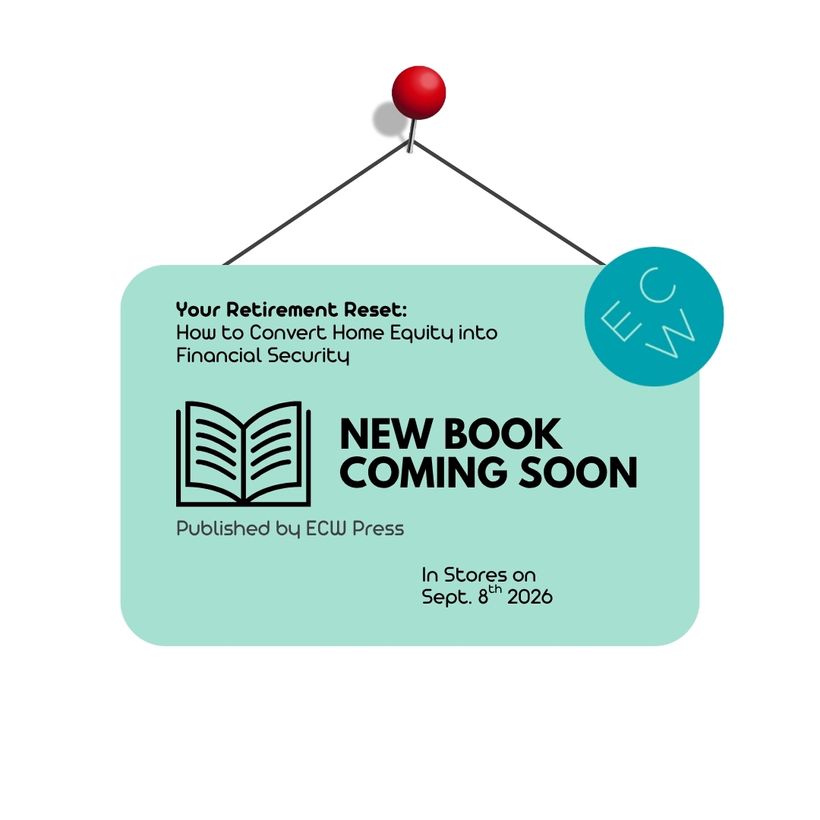
Your Retirement Reset: My New Book will Be in Stores on Sept. 8th
This one has been a long time coming. My new book, Your Retirement Reset: How to Convert Home Equity into Financial Security, published by ECW Press, finally has a publication date. Why I Wrote This Book I have spent decades watching far too many older Canadians carry unnecessary financial stress into what should be a more secure and dignified stage of life. Throughout my career as a mortgage broker, business owner, and later as an executive at HomeEquity Bank, I saw the same painful pattern again and again: people who had worked hard, paid down their homes, built real equity, and still felt trapped. Many were living with fear, cutting back on basic pleasures, worrying about every bill, and feeling ashamed that they had not “saved enough.” Meanwhile, a major asset was sitting right beneath their feet. What struck me most was this: younger homeowners often see home equity as a financial tool, but many retirees do not. For many older Canadians, the idea of borrowing against their home feels frightening, even when it could improve their quality of life and help them stay independent. This resistance is not just about math. It is emotional. It is psychological. And it is deeply tied to identity, security, family, and fear. The Retirement Problem We Are Not Talking About Honestly Enough The old retirement script is failing too many people. We are living longer. The cost of living keeps rising. Private sector pensions have largely disappeared. Healthcare and long-term care costs are real concerns. And many people reaching retirement are discovering, far too late, that the traditional advice to simply save, downsize, and make do does not reflect today’s reality. At the same time, most older Canadians want to age in place. They want to remain in the homes and communities they know and love. They do not want to be pushed into selling, renting, or moving in with family unless they truly choose that path. Yet many are gripped by what I call FORO — Fear of Running Out. That fear shapes countless decisions and robs people of peace of mind. It’s actually rooted in neuroscience and the way we’re wired to behave as we do. I’ve posted about this here in my newsletter and Substack a lot. Because it’s important. This is not a fringe issue. It is a national issue. And it deserves a more honest conversation. Why This Book Matters for Canadians 55+ There is a critical gap in this country when it comes to retirement literacy. Many Canadians over 55 have substantial value tied up in their homes, yet traditional retirement advice often does not seriously incorporate home equity into the conversation. At the same time, the information people do find is often fragmented, biased, overly technical, or scattered across lenders, planners, brokers, lawyers, accountants, media stories, and well-meaning family members. That leaves people vulnerable. They may rely on outdated assumptions. They may wait too long to explore options. They may make decisions out of fear rather than clarity. And because older adults usually do not have decades to recover from a financial mistake, the stakes are high. I want to be direct about this: one wrong decision later in life can be extremely hard to reverse. Seniors need unbiased, transparent information they can actually trust. I wanted to create a resource that is practical, plainspoken, and empowering. Not a sales pitch. Not a jargon-filled textbook. Not a one-size-fits-all solution. What I Hope This Book Will Accomplish I hope “Your Retirement Reset” helps Canadians 55+ do a number of things. First, I hope it helps people understand their options more clearly. Too many retirees only hear about a narrow set of choices. I want readers to see the full landscape and understand how different strategies work, including the pros, cons, and trade-offs. Second, I hope it helps people replace fear with confidence. Retirement should not be defined entirely by scarcity thinking. When people understand how to use all of their assets strategically, including home equity, they can make decisions from a position of strength rather than panic. Third, I hope it helps families have better conversations. One of the great hidden challenges in retirement planning is communication. Adult children often mean well, but they may not understand the emotional reality of aging, independence, or financial vulnerability. These conversations matter, and they are often avoided until a crisis forces them. This book is meant to encourage healthier, earlier, and more respectful dialogue. Fourth, I hope it helps more older Canadians protect their dignity and independence. To me, this is the heart of the matter. As I work through my current MBA studies, my life today is filled with spreadsheets. But retirement shouldn’t be. It is about autonomy, confidence, lifestyle, peace of mind, and the ability to live on your own terms for as long as possible. The Information Gap Nobody Is Filling One reason I felt so compelled to write this book is that the resources simply are not where they need to be. There is no shortage of opinions in the marketplace. But there is a shortage of clear, balanced, accessible education specifically designed for older Canadians trying to navigate retirement in the world as it actually exists now. Many books in this category are dated, narrowly focused, or too technical for many of the people I speak with. And it’s to be expected that much of the consumer-facing content around financial products like reverse mortgages comes from lenders themselves. Many seniors are left trying to piece together a life-changing financial strategy from disconnected advice and Google searches. That is the gap I am trying to fill. Canadians need impartial, balanced information they can trust — especially around home equity strategies and retirement financing. I believe Canadians deserve better than that. They deserve a resource that speaks to them in plain language, respects their intelligence, acknowledges the emotional complexity of these decisions, and gives them practical tools to move forward. We Need a More Modern Retirement Roadmap This book is built around a simple idea: retirement planning cannot just be about accumulating savings. It also has to be about learning how to use those resources wisely. That includes understanding how to: • create income • manage spending • shelter income from unnecessary tax pressure • protect savings from fraud and bad decisions • evaluate whether home equity should play a role in your retirement strategy These are the pillars I keep coming back to. They reflect what I believe Canadians in this stage of life truly need. I want readers to come away not just informed, but steadier. More capable. More hopeful. This Is Personal for Me I am part of this demographic myself. I understand the questions, the transitions, the uncertainty, and the pressure. I also know from lived experience that retirement is not simply a financial event. It is a life event. It affects your confidence, your relationships, your routines, your health, and your sense of who you are. That combination — professional experience and personal experience — is exactly what I bring to every page. That is why I have approached this book not simply as a finance book, but as a practical guide for real people facing real decisions. My hope is simple: that this book helps more Canadians 55+ move into the next chapter of life with greater knowledge, less fear, and a stronger sense of possibility. Because retirement should not just be about getting by. It should be about living with confidence, dignity, and choice. The Book is Now Available for Pre-Order If this message speaks to you, or to someone you love, I hope you will pre-order a copy of Your Retirement Reset. Available September 8, 2026. PRE-ORDER NOW: https://ecwpress.com/products/your-retirement-reset And if you love supporting Canadian booksellers, please also check with your local independent bookstore. Most can easily order it for you. Don’t Retire… Re-Wire! Sue

Iran Conflict Intensifies Focus on Affordability
Professor of Finance Anoop Rai spoke to Newsday about economic fallout from the Iran campaign, which is refocusing attention on rising costs at a time when affordability was already a top concern, locally and nationally. If the economy cools down, it could reduce the state’s tax revenues, and any actions lawmakers take to further help with affordability could lead to greater deficits, said Dr. Rai. “Then it becomes more like a philosophy. Do you help now during bad times and then try to recover later, or stick to your principles and say ‘tough luck’?”



Need a tourism expert? Connect with Florida Atlantic today
Tourism is a cornerstone of both Florida’s and America’s economy. In Florida alone, visitor spending exceeds $100 billion annually and supports roughly one in every ten jobs statewide, making it one of the state’s largest industries. The ripple effect extends far beyond hotels and attractions, fueling restaurants, retail, transportation, construction, real estate, and public tax revenues that help fund infrastructure and services. Nationally, tourism contributes hundreds of billions to U.S. GDP each year and serves as a key indicator of consumer confidence and economic momentum. When travel demand rises or falls, it signals broader shifts in spending behavior, business investment, and workforce stability , which is why tourism remains a critical economic beat for journalists. Peter Ricci is Clinical Associate Professor & Director, Hospitality Management Programs at Florida Atlantic University. He is a hospitality industry veteran with over 20 years of managerial experience in segments including: food service, lodging, incentive travel, and destination marketing and is considered an expert in food service, lodging, incentive travel, and destination marketing. View his profile Peter offers research-based insight into visitor trends, workforce dynamics, and destination strategy. His expertise helps media connect travel patterns to economic impact, providing clear analysis of how tourism shapes Florida’s economy and influences broader industry trends across the United States. Recent media coverage: South Florida Sun Sentinel Peter Ricci, director of the hospitality and tourism management program at Florida Atlantic University’s College of Business, cited the openings of the 801-room Omni Hotel next to the county convention center in Fort Lauderdale, the revamped Pier Sixty-Six Resort nearby and a variety of high-profile events as reasons for promising visitor traffic this year. “South Florida should expect to have a relatively strong 2026 with major events in the area [PGA Tournament, Formula 1, et al] and the Southern White House of Mar-a-Lago enhancing higher average daily rates in The Palm Beaches,” he said by email. “Broward is perfectly positioned to capture demand both to its south and north and I expect that hotels and restaurants will have a good year ahead,” he added. Newsweek "The tariffs, staffing shortage, perception of it being difficult to emigrate to the USA, and any possible anti-USA sentiment all go into the 'ingredients of the soup' as I call it," Peter Ricci, Director of Florida Atlantic University's Hospitality and Tourism program, told Newsweek. South Florida Sun Sentinel This is actually a complicated process behind the scenes, said Peter Ricci, director of the hospitality and tourism management program at Florida Atlantic University in Boca Raton. “Restaurant profit margins are slim, so training and development are often not a part of the process,” he said. “Also, one must recognize that restaurant front-of-house roles are somewhat high-turnover compared to other industries. With higher turnover, there is less likelihood for development of training, knowledge of all the systems (which can lead to dissatisfaction among guests), and a ‘new face’ every time regular guests return to the venue.” The Daytona Beach News-Journal When asked if Florida is experiencing a "restaurant apocalypse," Ricci said, "I don't see that as the case. I don't see it like a disaster, but I have seen more (restaurant) closures the past six months. The reasons include operating costs that are higher than ever in an industry with low (profit) margins to begin with." "Closures are being driven by rising rent, rising costs of labor, rising costs of goods (food, glassware, supplies, cleaning services, deep cleaning surcharges, et al.), and changing consumer habits." Orlando Sentinel Peter Ricci, director of the hospitality and management program at Florida Atlantic University’s College of Business, said he has not heard of hoteliers suddenly losing foreign nationals from their staff. But it’s the confusion that is perplexing many. “I hear frustration and confusion of what changes will occur on a regular basis for owners, operators and managers,” Ricci said. “It’s more of the unknown that’s disconcerting than, ‘I’m now worried about losing workers in my hotel or restaurant.’”