
Experts Matter. Find Yours.
Connect for media, speaking, professional opportunities & more.

Aston Business School has risen significantly across Business and Management Studies to 66th place in the world It follows being shortlisted for Business School of the Year by Times Higher Education The prestigious QS World University Rankings by Subject are based on academic reputation, employer reputation and citations. Aston University has risen to 66th place in the world in the 2024 QS World Rankings by Subject for Business and Management Studies. The QS World University Rankings by Subject are based on academic reputation, employer reputation and citations. These latest results recognise Aston Business School as among the best in the world for business and management studies. The rankings, released today by global higher education analyst QS Quacquarelli Symonds, provides independent comparative analysis on the performance of more than 16,400 individual university programmes, taken by students at more than 1,500 universities in 96 locations around the world, across 55 academic disciplines and five broad faculty areas. It follows a successful period for Aston Business School, which is part of an elite group of global business schools that hold the gold standard of ‘triple-crown’ accreditation from AACSB, AMBA and EQUIS, having recently been shortlisted for Business School of the Year by Times Higher Education (THE) and the QS Reimagine Education Awards, as well as success in the Shanghai rankings, which ranked Aston 13th in the UK for business administration. Professor Aleks Subic, Vice-Chancellor and Chief Executive of Aston University, said: “These latest rankings reinforce Aston University’s strong upward trajectory as we continue to climb the global rankings. Our recent successes reflect the concerted efforts and dedication of our exceptional academic community and stakeholders. “Strong global positioning of our Aston Business School is an integral part of the Aston 2030 Strategy that defines Aston as a leading university of science, technology and enterprise, measured by the positive transformational impact we achieve for our people, students, businesses and the communities we serve.” Professor Zoe Radnor, Pro Vice-Chancellor and Executive Dean for the College of Business and Social Sciences at Aston University, said: “I am delighted to see such a strong global performance for our business and management offering here at Aston University, which confirms Aston Business School as amongst the best in the world. “This is the latest external accolade in recognition of our excellence in teaching and research and reflects our strengths in working with industry, developing ethical business practices and providing students with a world-class education.”


Artificial Intelligence (AI) has emerged as a pivotal force driving innovation and reshaping our societal landscape. Its transformative potential spans across sectors, touching upon crucial global challenges such as ethics, privacy, and the future of employment. As AI continues to permeate various aspects of our lives, its intersection with pressing issues like climate change takes center stage. The upcoming launch of the Corporate Climate Responsibility Monitor by the NewClimate Institute in collaboration with Carbon Market Watch presents an invaluable opportunity to explore the symbiotic relationship between AI and corporate climate responsibility. Why This Matters to the Public: The Corporate Climate Responsibility Monitor 2024 serves as a beacon of insight into the nexus between corporate actions and environmental sustainability. Here are key sub-topics that offer intriguing story angles for a broad audience: Corporate Accountability in Climate Mitigation: Delve into how corporations are leveraging AI technologies to enhance their climate mitigation strategies. Highlight case studies of companies pioneering innovative approaches to reduce carbon emissions and promote sustainable practices. Transparency and Reporting Standards: Investigate the role of AI-driven data analytics in facilitating transparent reporting on corporate carbon footprints and environmental impact. Explore how enhanced transparency fosters accountability and drives corporate responsibility. Emerging Trends in Carbon Markets: Explore the evolving landscape of carbon markets and the role of AI in optimizing carbon trading mechanisms. Examine how AI-powered algorithms are revolutionizing carbon pricing strategies and incentivizing emission reductions. Collaborative Initiatives for Climate Action: Showcase collaborative efforts between corporations, NGOs, and government bodies in tackling climate change. Highlight partnerships forged to develop AI-driven solutions for environmental monitoring, renewable energy adoption, and sustainable supply chain management. The Economics of Climate Responsibility: Analyze the economic implications of corporate climate responsibility initiatives. Investigate how AI technologies are reshaping business models, driving cost savings through energy efficiency measures, and unlocking new revenue streams in the transition to a low-carbon economy. Impacts on Global Sustainability Goals: Assess the contribution of corporate climate responsibility efforts to achieving international sustainability targets such as the Paris Agreement and the United Nations Sustainable Development Goals (SDGs). Highlight success stories and challenges faced in aligning corporate strategies with broader environmental objectives. Connect with an Expert about Corporate Climate Responsibility For journalists with questions or looking to cover the the Corporate Climate Responsibility Monitor here is a select list of experts. To search our full list of experts visit www.expertfile.com Pamela Grothe Assistant Professor · University of Mary Washington Michael Vandenbergh Professor of Law · Vanderbilt University Sara Harris Professor of Teaching, Department of Earth, Ocean and Atmospheric Sciences · University of British Columbia Tom Rand Managing Director at MaRS Cleantech Fund I, L.P. · MaRS Cleantech Michael Rawlins Extension Associate Professor and Associate Director, Climate System Research Center · University of Massachusetts Amherst Photo Credit: Markus Spiske

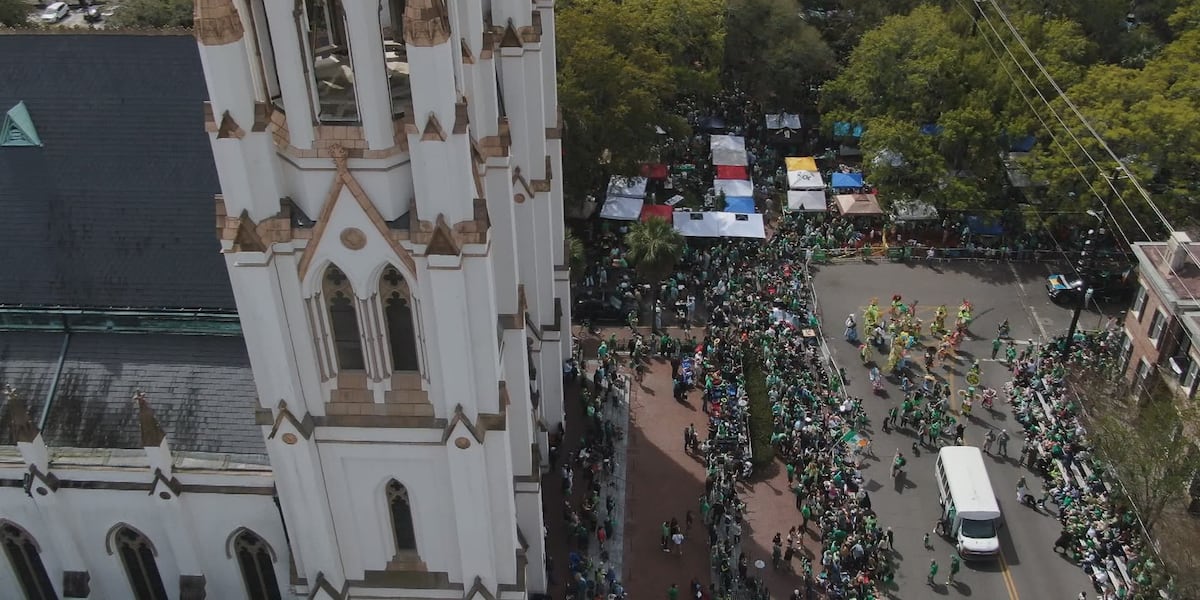
Turning the City Green! Georgia Southern celebrates Savannah's 200th St. Patrick's Day Parade
Savannah’s St. Patrick’s Day Parade is one of the largest in America, right behind New York City and Chicago. Comprised of Irish heritage, marching bands, traditional dancers and elaborate floats, people come to Savannah from all over the world to participate in the local parade. And as the city looks to commemorate the 200th St. Patrick’s Day Celebration this year, Dr. Howard Keeley, the director of Georgia Southern University's Center for Irish Research, is a crucial member of the global Irish community. Notably, he said the fact that St. Patrick’s Day celebrations are still prevalent and evolving come down to several things. Firstly- he says that people with Irish heritage in Savannah have such a hyper-local pride. There were three main neighborhoods the Irish settled in- East Savannah, Yamacraw, and Frogtown - and a lot of local Irish people now can trace their lineage back to one of those neighborhoods. He also says that Irish immigrants were received very well into the Savannah community unlike in some other places, such as the Northeast. That cultural integration has allowed Irish pride to be woven into the fabric of Savannah and he says that Irish people also love to share their heritage with others. So, it’s only natural that St. Patrick’s Day celebrations have continued on for this long. ”It’s the Irish and everybody else. There’s a phrase that has come into being, I think it was coined by the Irish government, but when you think about the phrase it makes so much sense. And that is ‘affinity diaspora’, so diaspora referring to the Irish that live abroad, but affinity meaning anyone can be Irish. That you align with certain values that Ireland wants to stand for, values of inclusion, values of cultural vibrancy, and you know, Ireland is welcoming,” said Keeley. Keeley was recently in the news for receiving the 2023 Presidential Distinguished Service Award for the Irish Abroad from the Government of Ireland. It is the highest honor the country of Ireland can give to a person who is a non-resident. This will be an exciting event, and if you're looking to speak to Howard Keeley simply click on his icon now or contact Georgia Southern's Director of Communications Jennifer Wise at jwise@georgiasouthern.edu to arrange an interview today.


Taylor Swift workshop helps fill a blank space for economics students
The University of Delaware's Kathyrn Bender developed a concept that professors could only conjure in their wildest dreams: A Taylor Swift-themed workshop that helps college students better understand data analytics through the music of the world's biggest pop star. Bender, assistant professor of economics in UD's Lerner College of Business and Economics, came up with the idea while teaching her Introduction to Microeconomics class in early October when the discussion turned to MetLife Stadium, home of the NFL’s New York Giants and Jets. “I noticed in that class there was a lot of excitement, and I had just about everybody’s attention in there, whether they were interested because of football or because of the Taylor Swift aspect. So I thought that was really cool,” Bender said. Using grant money, Bender quickly jumped on the idea and developed a Swift-themed data visualization workshop series entitled “Data Enchanted: Transforming Numbers into Knowledge.” She held three 90-minute workshops during the fall semester, which ran from late October through early December: “Ready for It,” an introduction to Stata; “You Belong with Me,” building and structuring data for analysis; and “I Knew You Were Trouble,” transforming and cleaning data for analysis. The workshops helped UD students learn to utilize Stata, a statistical software package used for data manipulation, visualization and automated reporting. They were an immediate success, as Bender received over 60 applicants, although she was limited to accepting just 32 due to space limitations. Though students don’t earn credit for completing the workshops, just a certificate, Bender said they help fill some gaps that aren’t covered in classes. “I think they’re kind of expected to learn about it, piecing it together from different classes,” Bender said. “This [workshop series] is a way for students to get introduced to thinking about data, how it’s set up, how you can create good visualizations with it … those basics before you get into the analysis.” Making the workshops Swift-themed helped students pick up concepts more easily in a fun environment. Before jumping into data sets, the students make friendship bracelets to the soundtrack of Swift's music. In one session, they pulled Spotify data and statistics to analyze the popularity of Swift’s songs. “We’ve stuck with Taylor Swift songs and albums so far,“ Bender said. “So all the data sets have been very easy for the students to understand as opposed to something that’s not as familiar for them to think about. They know what a song is, they know what the duration of a song is, those things are all very easy to understand. They’re able to practice these new data skills without having to worry about the content as much.” Due to the workshop’s immediate success, Bender is planning on expanding the program during the spring semester. She aims to hold eight workshops, the initial three and then five more, and hopes to make them available for all UD students (they were available only as an undergraduate program in the fall). Reporters who would like to write about the workshop and interview Bender can contact her directly by simply the contact button on her profile. Or, send an email to UD's media relations team.


Leap Years and the Connection Between Astronomy and Our Lives
Most of us know February 29 as a whimsical anomaly—nothing more than a chance to tease our friends or colleagues born on this day as technically being a quarter of their purported age. But how often do we think about the origins of the day as we now know it? Or about the near-universal implementation of this specific way to keep track of time? Do we ever consider the impact a leap year could have on everyday life? Frank Maloney, PhD, an associate professor of astronomy and astrophysics at Villanova University, has been teaching for nearly 12 leap years (47 years). He is an expert in timekeeping and calendaring, calling them a “fundamental connection to our lives, ruled by the motion of objects in the sky,” because “everyone has to agree what day and time it is.” Dr. Maloney currently teaches a course called “Earth: Our Habitable World,” where he discusses this and other connections between astronomy and people’s lives. In the case of leap years, the astronomical phenomenon from which they originate—the Earth’s time to orbit the sun—is a very important one to accurately track. “You want your calendar to keep pace with the seasons,” Dr. Maloney explained. “There are all sorts of ways of measuring the pace of the Earth around the sun, but the way that [also] keeps pace with seasons is called the tropical year, and unfortunately, there’s not an integer number of days in that year. We can’t ignore it, because after the first year you’re off by a quarter of a day and after four years off by a full day, and so on.” Ancient civilizations were aware there were slightly more than 365 days in a solar year but didn’t know exactly how much more. Gradually, the seasons would become unsynchronized with the calendar, and those various civilizations added days back in at random times to realign. “In those days, it might be possible to leave one area in April, and arrive [somewhere else] the previous December,” Dr. Maloney joked. The concept of a leap year began with the Roman Empire’s implementation of Julius Caesar’s namesake calendar on January 1, 45 B.C.E., at his behest. The Julian calendar was a solar calendar, which consisted of a 365-day year, and a 366-day leap year every four years, without exception. It was often added as a duplicate day in the middle of February. “But a year is not exactly 365 and a quarter days. It’s a little bit less,” Dr. Maloney explained. “By the Middle Ages, it was 10 or so days out of whack with the tropical year. Astronomers would have seen that very easily... but the reason to change it was not there.” Not until the late 16th century, that is. And the reason it did change was because Easter had moved out of line with the vernal equinox. “Nearly all calendars have a mystical, religious or theological component,” Dr. Maloney said. “In the Roman Church, Easter is reckoned as the first Sunday after the first full moon on or after the vernal equinox, or first day of spring.” In order to have Easter fall back in line with the equinox, Pope Gregory XIII issued a papal bull in 1582, which declared a year to be a more accurate 365 days, 5 hours and 49 minutes in length (roughly). What that meant for leap years was that, instead of every four years without exception, they would now occur every four years except on century marks, unless that century mark was divisible by 400. For example, 1900 was not a leap year, but 2000 was. The years 2100, 2200 and 2300 will not be leap years. The global switch to a new calendar was not easy or done in haste. To enact the initial calendar change, 1582 went from October 4 to October 15 to eliminate extra accumulated days. Catholic countries mostly followed suit soon after, but many others resisted, as citizens feared it was a political trick. It took centuries to get to the near-universal use of the Gregorian calendar we have today. Great Britain and other Commonwealth nations did not adopt the Gregorian calendar until 1752. An individual such as George Washington could have been considered to be born on one day in the Julian calendar and have a different birthday in the Gregorian calendar. In the American colonies, September 1752 skipped to the 14th day of the month from the second. The most recent country to switch from the Julian to Gregorian calendar was Greece in 1923. By then, the calendar was roughly two weeks off from the tropical year. In the early 1900s, when globalization was commencing, this was a big deal. “You could get in an airplane and fly someplace, and not even know what day you’d be landing. According to the calendar, it’d be time travel,” Dr. Maloney said. Saudi Arabia still used a few elements of the Islamic calendar for fiscal purposes until 2016, and Afghanistan, Iran, Nepal and Ethiopia are the only countries in the world that do not officially use the Gregorian calendar currently. So, what does all this mean for people today? For starters, historians and genealogists must be careful when studying historical dates and events. For example, a country may have still been using the Julian calendar during a particular time period, or perhaps an event might have occurred during the time days were skipped to make the switch from the Julian to the Gregorian calendars. “If an infant were born [in the American colonies] on the second of September 1752, for example, and died on the 14th, they were not really 12 days old,” Dr. Maloney said. “Or if a war began in a country one day but started on a different day in a different country, it causes confusion.” Leap years and other adjustments to timekeeping can also cause a plethora of computing and software issues, impacting multiple industries. This is especially true in the digital age where time-stamping is so ubiquitous. Case in point, on occasion, we actually have to add a leap second to time to account for the slowing of Earth’s rotation. These leap seconds are added after 11:59:59 on either December 31 or June 30, when needed. “There’s a great deal of controversy about this particular practice,” Dr. Maloney said. “It really confounds software. A jet airplane, for example, can travel a fairly long distance in one second. Time has to be kept now to fractions of seconds, [even for things like] lawsuits and insurance policies. Timekeeping is a very important task for astronomers.” It seems those astronomers have it figured out... for now. Even the Gregorian calendar will eventually need an adjustment, as its margin of error is about 27 seconds per year. That means every 3,236 years—so sometime in the early 4800s—an additional extra day will need to be added somewhere to correct it. Luckily, we have some time to plan ahead.


Covering King Charles? Our Expert can Help
It's news that has shocked the world and has citizens across Britain and the Commonwealth as well loyal watchers of the British monarchy in deep concern. This week, King Charles was diagnosed with cancer. News was released Monday in a statement from the palalce. This news will raise many questions both in the UK and abroad. Will his medical condition make him consider stepping down? Is William ready to be King? Is there still a time, place and relevance for Royals in these modern times? If you're covering - let our experts help. Dr. Glen Duerr is a citizen of three countries. He was born in the United Kingdom, moved to Canada as a teenager, and then to the United States to obtain his Ph.D. His teaching and research interests comparative politics and international relations theory. Dr. Duerr is available to speak to media regarding this topic– simply click on his icon to arrange an interview.


In Poland, the Debate Over Solidarity's Legacy Continues
On November 13, 2023, Poland’s parliament convened for the first time since a centrist-progressive coalition won a legislative majority, ending the eight-year rule of the right-wing Law and Justice party. The recent political shift has been heralded by some as the most significant since 1989, when the then-Soviet-controlled government allowed the country’s first elections in over four decades. That year, an anti-authoritarian movement called “Solidarity” seized all but one seat in the Senate and every contested seat in the Sejm (or lower chamber). A stunning rebuke for the Soviet regime, the landslide victory effectively signaled the end of Communism in Poland—and served as a harbinger of the Eastern Bloc’s collapse. Gerald Beyer, PhD, is a professor of Christian ethics in Villanova University’s College of Liberal Arts and Sciences, the instructor of the class “Solidarity and Peacebuilding in Central and Eastern Europe” and the author of Recovering Solidarity: Lessons from Poland’s Unfinished Revolution. He recently shared his thoughts concerning the parallels being drawn between 1989 and 2023, the complicated legacy of Poland’s anti-Communist struggle and what can be gleaned from studying and reconsidering the Solidarity movement. Q: As a new Polish government takes shape, how would you describe the current political situation in the country? Dr. Beyer: At the present moment, Poland finds itself at a major crossroads. Like the United States, the country is very divided, politically speaking. On the one hand, you have people who believe that Poland has turned away from the European Union (EU) to a troubling extent and backslid into authoritarianism under the Law and Justice party’s rule. So, you have a significant portion of Polish society who believe that this recent election [in October] was about protecting democracy and ensuring the future of democracy in the country. On the other hand, you have an equally significant portion of the population who think democracy has not been in peril—and that, in this year’s election, what’s at stake was a sense of Polish national values and national sovereignty. Q: Is there any credence to the new legislative majority’s claims that the Law and Justice party “overstepped” while in governance? DB: I think there’s reason to ask that question. The EU has sanctioned Poland during the present ruling party’s tenure for weakening the autonomy of the judicial system, and there has been concern over the ruling party exerting undue influence on state-based Television Poland (TVP). Poland, however, has a very vibrant free press—and has since 1989… I would contend that there’s been some backsliding on measures that would not score well on the democracy metrics, but I would not say that Poland has been existing under an authoritarian regime. Q: Do you consider this year’s election comparable to the election of 1989? DB: It’s certainly one of monumental significance. You may have noted the turnout of 74-plus percent. That’s historic for Poland, that massive turnout. At the same time, the overthrow of the Communist system in ’89 stands out as a unique and discrete moment in Polish history. So, there are ways that a comparison can be made, but there are ways in which I don’t believe it’s particularly apt. Q: What makes tying the events of 1989 and 2023 a complicated issue? DB: Whether or not 2023 is directly comparable to 1989 is a matter of perspective, and there are a number of different perspectives that exist in Poland today. Since the fall of Communism, there has been an ongoing conflict over Solidarity, its history and its legacy, and various political actors and parties have claimed their objectives are in concert with the values and principles of the movement. In this year’s election, the Law and Justice party’s candidates presented themselves as guarantors of freedom, which was at the heart of the Solidarity movement, by stressing their opposition to external forces like the EU. In addition, during their time in leadership, the party’s officials worked to institute a number of social welfare programs that were designed to help people economically, providing something akin to what Catholic social teaching calls a “family living wage.” So, they were actively trying to raise the standard of living in a way that was arguably analogous to Solidarity. On the other side of this equation, the election-winning opposition parties emphasized their status as defenders of democracy—once again, a core tenet of Solidarity. As we discussed, many members of that alliance and their supporters felt that the independent judiciary had been stifled by the Law and Justice-run government; they also voiced concerns about the free press. On both sides, there has existed and continues to exist a sense that they are the ones best suited, maybe even solely suited in the current political landscape, to carry on Solidarity’s legacy and to ensure Poland thrives. Herein lies the source of conflict. Q: Despite the ongoing debate over Solidarity’s legacy, are there any lessons from the movement’s history that might prove helpful today? DB: Sadly, much of Poland’s current political acrimony can be traced to the “war at the top” that emerged within Solidarity in the wake of 1989, when longstanding tensions within the movement manifested in political rivalries. Once united, anti-Communist organizers became adversaries in the years after the Soviet regime’s dissolution, laying the groundwork for the divisive rhetoric of the current day. Looking beyond what’s transpired over the past three decades, however, I think much can be learned from Solidarity in its early years and at its core. When the movement first took shape, its central aim was attaining a society characterized by unity among differences. And, to achieve this end, its leaders and supporters recognized the “necessity of dialogue,” a concept frequently invoked in Father Józef Tischner’s The Spirit of Solidarity. Given the stark divides that currently define Polish politics, I think these origins and these concepts should be revisited—and that it’s important to look at Solidarity not just as a political moniker, but as an objective and a virtue. Personally, I believe that people can change. And if they are reacquainted with the principles that inspired and guided their struggle for freedom and democracy, perhaps Poland’s elected officials can change for the better.
Georgia Southern University launches ‘Together We Soar’ Campaign
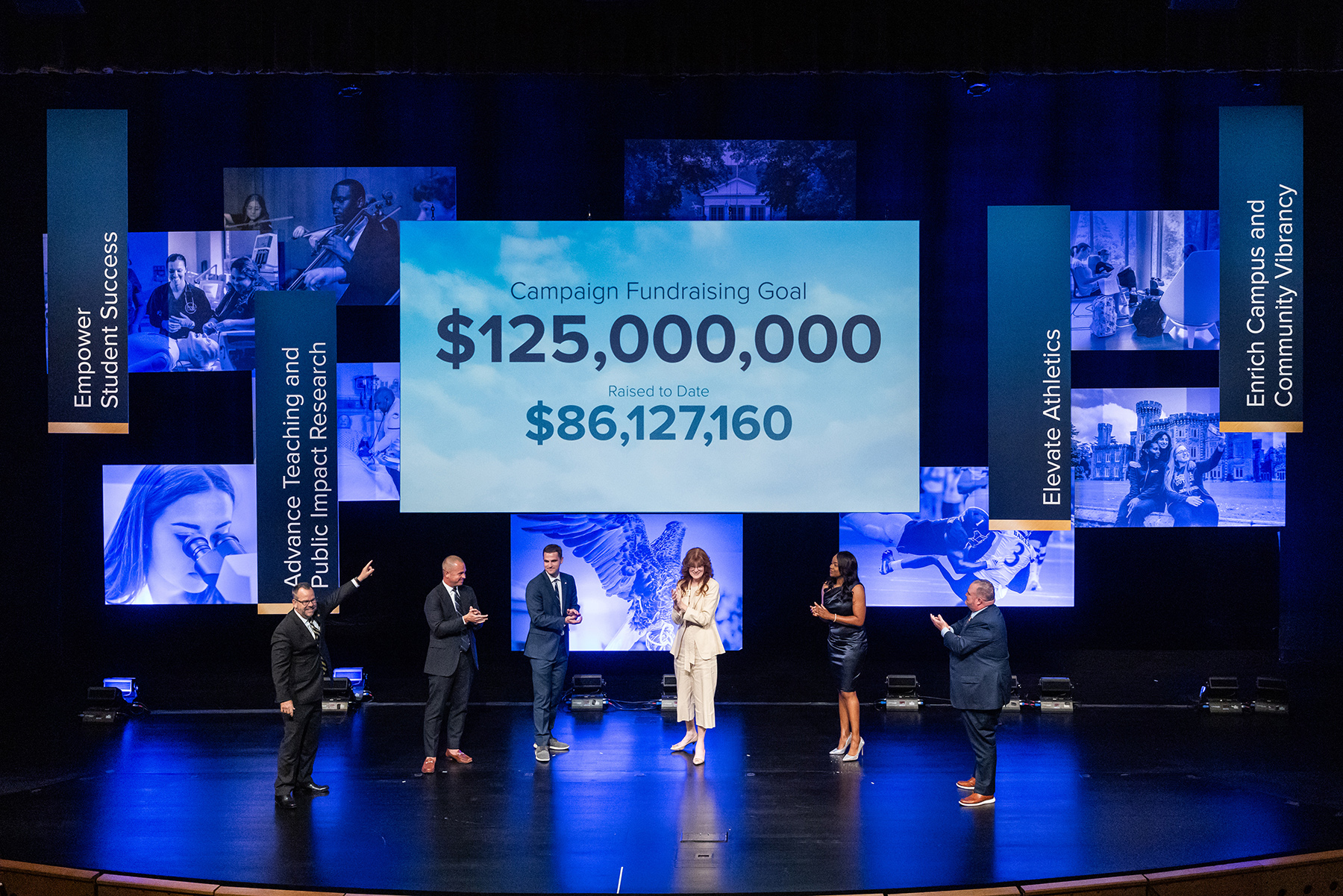
Georgia Southern University proudly announces the launch of its comprehensive campaign, “Together We Soar: The Campaign for Georgia Southern University.” This transformative initiative aims to elevate the University’s impact on students, faculty, research, athletics, and the communities it serves. Georgia Southern, renowned for its majestic campuses adorned with southern live oaks and towering pines, symbolizes not just American freedom but also the promise, achievement and boundless potential of its students. The University’s trajectory is on the rise, reaching for greater heights in education and community impact. Central to this momentum is the unwavering support from alumni, friends and the community. Publicly launched last Friday evening, Together We Soar: The Campaign for Georgia Southern University aims to raise $125 million by 2026. More than $86 million has already been secured. Dr. Kyle Marrero, President of Georgia Southern, expressed his gratitude and vision for the University. “Georgia Southern is on the move, in motion, and soaring to new heights. The ‘Together We Soar’ campaign—fueled by the generous support of our alumni, friends, and partners—will ensure our ability to drive innovation, develop talent, transform lives, and propel the economic development of a growing region.” (L-R) Georgia Southern President Kyle Marrero, Vice President for University Advancement Trip Addison, Deputy Athletics Director of Development Davis Hendrickson, Executive Director of Development Julie Gerbsch, Director of Alumni Relations Ava Edwards, and University Campaign Co-chair Leonard Bevill on stage at the Oct. 20 launch event for Together We Soar: The Campaign for Georgia Southern University. The campaign has identified four primary objectives: Empower Student Success: The campaign aims to stimulate learning by recruiting high-achieving students, increasing student access, and promoting inclusive excellence and career readiness. Advance Teaching and Public Impact Research: The focus is on meeting regional economic needs, increasing faculty expertise, and enhancing research capacity. Elevate Athletics: The campaign seeks to attract and retain elite student-athletes, provide top-notch facilities, and boost the Competitive Excellence Fund. Enrich Campuses and Community Vibrancy: The goal is to improve the communities surrounding the campuses and teach about local wildlife, among other initiatives. Campaign co-chairs Mike Sanders and Leonard Bevill shared their excitement for the campaign and what it will mean for Georgia Southern. “I could not be more excited about Georgia Southern and its possibilities. Opportunities abound for our University and the Together We Soar Campaign is the catalyst. It is time to do ‘more with more.’” - Mike Sanders “‘Together We Soar’ is spot on. From across campus to athletics and throughout our community, we’re perfectly aligned and equipped to launch to historic heights. I’m very blessed and excited to be involved.” Leonard Bevill The campaign also highlights the significant economic impact of Georgia Southern, with a regional economic contribution of $1.1 billion in fiscal year 2022. The University plays a critical role in the economic growth and transformation of Southeast Georgia. Marrero said Georgia Southern invites all its supporters, alumni and the community to join this transformative journey. With collective support, there’s no limit to how high Georgia Southern can soar. For more information or to contribute to the “Together We Soar” campaign, visit GeorgiaSouthern.edu/TogetherWeSoar.
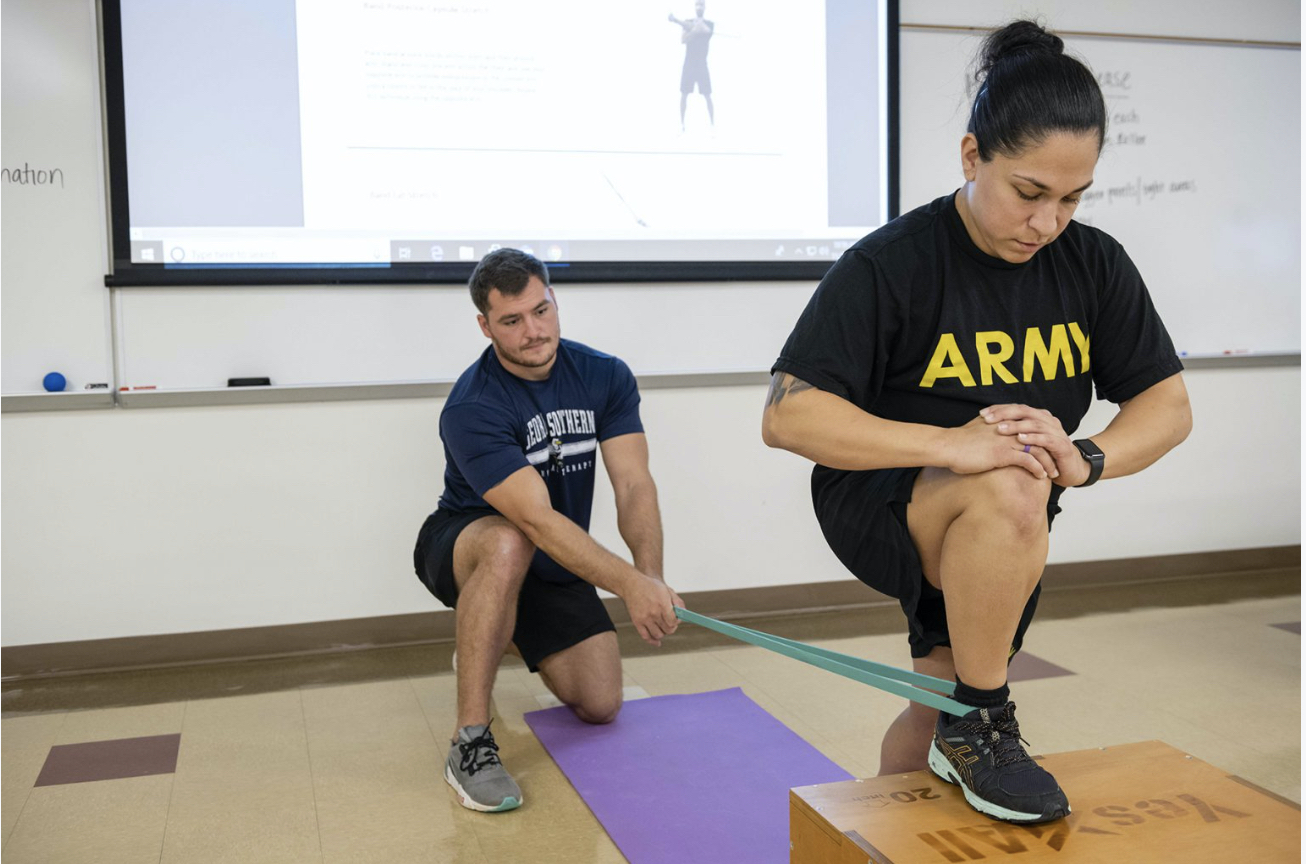
The Georgia Southern University Soldier Performance and Readiness (SPAR) program received a $1.5 million, two-year grant from the Department of Defense’s U.S. Army Medical Research and Development Command (USAMRDC). The grant will expand Georgia’s Southern research and programming capacity in injury prevention techniques that ensure force readiness for the Army. “Through this large-scale research study, Georgia Southern doctoral students have opportunities to be involved in the research process and work directly with soldiers,” said Nancy Henderson, Ph.D., assistant professor in the Doctor of Physical Therapy (DPT) program. “Additionally, the grant will fund graduate assistant positions in the Doctor of Physical Therapy program.” USAMRDC’s mission is to provide solutions to medical problems for American service members at home and abroad, as well as to the public at large. The scope of this effort and the priorities attached to specific projects are influenced by changes in military and civilian medical science and technology, operational requirements, military threat assessments and national defense strategies. Extramural research and development programs play a vital role in the fulfillment of the objectives established by the organization. Research and development funded through this are intended to benefit both military and civilian medical practices. “The grant investigates different physical training programs to identify those practices that best prevent non-combat injuries,” said Henderson. “Faculty on the research team will seek to advance the body of literature by determining the best educational models to educate soldiers on injury-prevention topics.” This is the first time that Georgia Southern will act as lead investigator on a collaborative research project with an Army research institute. However, SPAR has long been involved in multiple branches of research with community impact. “Georgia Southern has several initiatives underway to help improve the health, fitness and performance of military service members, law enforcement personnel and firefighting and rescue personnel,” said Joseph Kardouni, Ph.D., director of the Tactical Performance Group. “The Tactical Athlete Certificate (TAC) program is one of these initiatives that teaches service members exercise fundamentals to help mitigate training-related injuries. The funding coming through Medical Research and Development Command will improve evidence-based teaching methods and inform similar efforts to teach service members within this field. Leaders from health and human performance programs within the Army understand the importance of leveraging partnerships with academic institutions to work toward improving the quality of life, health and occupational performance of soldiers.” Faculty and students in the DPT program have educated soldiers on injury prevention topics since 2016 and this grant further provides students with the opportunity to assess effectiveness while learning how to improve educational methods with military service members. “This research is an important next step in delivering on the promise of the SPAR program and Georgia Southern’s close working relationship with Army research partners,” said Interim Vice President for Research and Economic Development Christopher Curtis, Ph.D. Curtis also noted that funding was made possible by the advocacy of U.S. Rep. Buddy Carter and the strong support of Georgia’s legislative delegation in Washington D.C. Interested in learning more or looking to talk with Nancy Henderson? Simply click on her icon now or Contact Georgia Southern's Director of Communications Jennifer Wise at jwise@georgiasouthern.edu to arrange an interview today.


An interdisciplinary team from Georgia Southern University was awarded more than $465,000 from the National Academies of Sciences, Engineering, and Medicine to foster the development of scientific and environmental skills that are critical to solving complex issues in the Gulf of Mexico region now and into the future. The award is part of an initiative with the Gulf Research Program (GRP) that awarded $2 million to eight projects that engage children and youth in place-based educational activities. The funded project, “Suwannee Watershed: Assessment and Monitoring of Place to Gain Understanding of Local Flow (SWAMP to GULF),” is led by principal investigator (PI) Lacey Huffling, Ph.D., associate professor of science education, and co-PIs Heather Scott, Ed.D., and Regina McCurdy, Ph.D., both assistant professors of science education. (l-r) College of Education’s Lacey Huffling, Ph.D., Regina McCurdy, Ph.D., and Heather Scott, Ed.D., are part of an interdisciplinary team awarded $465k to train science teachers in the Gulf of Mexico. “I am honored that we were selected to receive funding from the Gulf Research Board,” said Huffling. “Over the past four years, we have developed a strong network of Georgia middle and high school teachers who are dedicated to developing the science and environmental literacy of their students through watershed citizen science, specifically focused on areas of Georgia that flow into the Gulf of Mexico. We are excited to continue to grow this network of teachers in Florida further to foster scientific and environmental literacy of future generations to monitor and advance scientific and community understanding of the Lower Suwannee Watershed.” The group will train and support teachers in Florida to implement place-based learning through citizen science using communities as classrooms to deepen teachers’ and students’ sense of place and connection to local watersheds; research how teachers and students address local issues and solve problems by using and developing their critical environmental agency; and increase participation of rural populations in science, which have historically been underrepresented. This initiative, along with the seven other GRP projects, will help connect young learners across the Gulf of Mexico region with local environmental issues and work toward the betterment of the region at large. “The goal of these grants is to empower young learners through place-based education, an interdisciplinary, student-centered, inquiry-driven teaching and learning practice situated in the local community and environment,” said Karena Mary Mothershed, senior program manager for the GRP’s Board on Gulf Education and Engagement. “These eight projects have a high potential to create long-lasting impacts on underserved students in grades K-8 across the Gulf of Mexico region, enabling them to consider and address environmental challenges impacting their own communities.” Additional SWAMP to GULF project members include Georgia Southern staff and faculty: Mary Thaler, senior administrative assistant for the Center for STEM Education; J. Checo Colón-Gaud, Ph.D., professor of biology and associate dean of the Jack N. Averitt College of Graduate Studies; Shainaz Landge, Ph.D., assistant professor of chemistry, Luke Roberson, coordinator of Community Engagement and Outreach for the Institute of Water and Health; and Asli Aslan, Ph.D., director of the Institute of Water and Health. Interested in learning more? Contact Georgia Southern's Director of Communications Jennifer Wise at jwise@georgiasouthern.edu to arrange an interview today.