
Experts Matter. Find Yours.
Connect for media, speaking, professional opportunities & more.

Are You an Expert? Here’s How to Tell
Have you ever wondered whether or not you are an expert? When asked this question about what defines expertise, you will hear a variety of answers. Many will reference key requirements such as an expert must have extensive knowledge in their field. Others will see education, published work, or years of experience as key qualifiers. Yet there are so many other dimensions of expertise that contribute to how visible, influential and authoritative they are within their community of practice or with the general public. Who Qualifies as an Expert? I started looking closer at this topic for two reasons. The first is my personal work with experts. Having worked with thousands of them across a variety of sectors I've observed that many are driven to develop themselves professionally as an expert to meet a variety of objectives. Often these are focused on raising one's profile and reputation among peers or with the broader market to inform the public. Some see media coverage being an essential part of their strategy while others are more interested in developing a larger audience for their research or client work, by speaking at conferences or on podcasts. Others have a focus on improving their PageRank on search engines. All these activities can enable important objectives such as attracting new clients, research funding or talent. The second reason for this deeper dive into expertise is a need to better organize how we look at experts within organizations. My work with communications departments in knowledge-based sectors reveals that they are keen to learn more about how they can better engage their experts to build reputation, relationships and revenue. However, better engagement starts with a better understanding of what qualifies someone as an expert - what attributes can we objectively look at that define expertise? With that knowledge, we can first better appreciate the amount of work experts have put into establishing themselves in their field. Then organizations can nurture this expertise in a more collaborative way to accomplish shared goals. My observation is that with a little more insight, empathy, and alignment, both experts and their organizations can accomplish incredible things together. And there has never been a more important time for experts to "show their smarts." By definition, an expert is someone with comprehensive or authoritative knowledge in a particular area of study. While formal education and certifications are a starting point for expertise, many disciplines don’t have a set list of criteria to measure expertise against. It’s also important to recognize other dimensions of expertise that relate not just to the working proficiency in a field but also to the degree of influence and authority they have earned within their profession or community of practice. Because of this, expertise is often looked at as a person’s cumulative training, skills, research and experience. What are the Key Attributes of Expertise? In evaluating your accomplishments and the various ways you can contribute as an expert to both your community of practice and the public, here are some key questions that can help you assess how you are developing your expertise: Have you completed any formal education or gained relevant experience to achieve proficiency in your chosen field? Are you actively building knowledge in a specific discipline or practice area by providing your services as an expert? Are you generating unique insights through your research or fieldwork? Are you publishing your work to establish your reputation and reach a broader audience such as publications or books? Are you teaching in the classroom or educating and inspiring audiences through speaking at conferences? Do you demonstrate a commitment to impact your community of practice and help advance your field and generate an impact on society by informing the public? Have you established a reputation as a go-to source for well-informed, unique perspectives? Some Additional Tips to Help you Develop Your Expertise To further the discussion, I’ve also shared further thoughts about the meaning of “expertise”. As you think about developing your own personal skills, or if you are a communicator who is responsible for engaging with your organizations experts, here are a few additional principles to keep in mind. Experts Aren't Focused on Some“Magic Number” Related to Hours of Experience Malcolm Gladwell’s book “Outliers” (2008), outlined the now famous “10,000-hour rule” as the magic number of greatness for the time it takes to master a given field. As the rule goes, you could become a genuine expert in a field with approximately 10,000 hours of practice — roughly 3 hours a day, every day for a consecutive decade. But is that what it really takes to become an expert? But is that what it really takes to become an expert? Or did Gladwell oversimplify the concept of expertise? Some of his assumptions for “Outliers” (which became a major bestseller) relied on research from Dr. Anders Ericsson at Florida State University who made expertise the focus of his research career. Contrary to how Gladwell outlined it, Ericsson argued that the way a person practised mattered just as much, if not more, than the amount of time they committed to their discipline. It also depends on the field of research or practice one is involved in. Some disciplines take decades to achieve expertise and many experts will admit they are just scratching the surface of what they are studying, well after they have passed the 10,000-hour mark. That might be just the first stage of proficiency for some disciplines. Experts are Continuously Learning It’s difficult to claim proficiency as an expert if you are not staying current in your field. The best experts are constantly scouring new research and best practices. Dr. Anders Ericsson observed in his work that "deliberate practice" is an essential element of expertise. His reasoning was that one simply won’t progress as an expert unless they push their limits. Many experts aren’t satisfied unless they are going beyond their comfort zone, opening up new pathways of research, focusing on their weaknesses, and broadening their knowledge and skills through avenues such as peer review, speaking, and teaching. The deliberate practice occurred “at the edge of one’s comfort zone” and involved setting specific goals, focusing on technique, and obtaining immediate feedback from a teacher or mentor. Experts Apply their Knowledge to Share Unique Perspectives While many experts conduct research, simply reciting facts isn't enough. Those who can provide evidence-based perspectives, that objectively accommodate and adapt to new information will have more impact. Expertise is also about developing unique, informed perspectives that challenge the status quo, which can at times be controversial. Experts know that things change. But they don’t get caught up in every small detail in ways that prevent them from seeing the whole picture. They don't immediately rush toward new ideas. They consider historical perspectives and patterns learned from their research that provide more context for what's happening today. And these experts have the patience and wisdom to validate their perspectives with real evidence. That's why expert sources are so valuable for journalists when they research stories. The perspectives they offer are critical to countering the misinformation and uninformed opinions found on social media. Experts Connect with a Broader Audience Many experts are pushing past traditional communication formats, using more creative and visual ways to translate their research into a wider audience. We conducted research with academics in North America and in Europe who are trying to balance their research (seen in traditional peer-reviewed journals) with other work such as blogs, social media, podcasts and conferences such as TEDx - all with the goal to bring their work to a wider audience. While that's an essential part of public service, it pays dividends for the expert and the organization they represent. Experts Are Transparent More than ever, credible experts are in demand. The reason for this is simple. They inspire trust. And the overnight success some have seemingly achieved has come from decades of work in the trenches. They have a proven record that is on display and they make it easy to understand how they got there. They don't mask their credentials or their affiliations as they didn't take shortcuts. They understand that transparency is a critical part of being seen as credible. Experts Don’t Take “Fake It Till You Make It” Shortcuts The phrase “fake it till you make it,” is a personal development mantra that speaks to how one can imitate confidence, competence, and an optimistic mindset, and realize those qualities in real life. While this pop psychology construct can be helpful for inspiring personal development, it gets problematic when it becomes a strategy for garnering trust with a broader audience to establish some degree of authority - especially when this inexperience causes harm to others who may be influenced by what they see. When self-appointed experts take shortcuts, promoting themselves as authorities on social media without the requisite research or experience, this blurs the lines of expertise and erodes the public trust. Experts Are Generous The best experts are excited about the future of their field, and that translates to helping others become experts too. That's why many openly share their valuable time, through speaking, teaching and mentorship. In the end, they understand that these activities are essential to developing the scale and momentum necessary to tackle the important issues of the day. How Do You Show your Smarts? How do you personally score on this framework? Or if you are in a corporate communications or academic affairs role in an institution how does this help you better understand your experts so you can better develop your internal talent and build your organization’s reputation? As always we welcome your comments as we further refine this and other models related to expertise. Let us know what you think. Helpful Resources Download our Academic Experts and the Media (PDF) This report, based on detailed interviews with some of the most media-experienced academics across the UK and United States draws on their experiences to identify lessons they can share in encouraging other academics to follow in their path. Download the UK Report Here Download the US Report Here The Complete Guide to Expertise Marketing for Higher Education (PDF) Expertise Marketing is the next evolution of content marketing. Build value by mobilizing the hidden people, knowledge and content you already have at your fingertips. This win-win solution not only gives audiences better quality content, but it also lets higher ed organizations show off their smarts. Download Your Copy



The University of Florida aims to bring a scientist to every Florida school
By Emma Richards It was the encouraging support of his 10th grade earth science teacher that led Bruce MacFadden to pursue his dream of becoming a scientist. Now an accomplished paleontologist, MacFadden is paying it forward as director of the UF Thompson Earth Systems Institute and its “Scientist in Every Florida School” program. The program connects more than 700 scientists to K-12 classrooms in 42 counties throughout the state, providing students and teachers alike with up-to-date science lessons that both inform and, hopefully, inspire future scientists. Teachers use the program’s online application portal to request a visit by a scientist to teach a specific concept. Teachers are then matched with a scientist with that expertise, who delivers the requested lesson in person or virtually. Participating scientists are vetted to ensure they can communicate clearly with audiences of varying education levels. The program benefits students, teachers and scientists, MacFadden said. Students get to see the amazing things scientists do. Teachers receive timely knowledge and professional development. And scientists get to give back to society and gain confidence in their ability to share research, even with the youngest students. “We want to let young people know that if they want to be a scientist and apply themselves, they can also be a scientist,” MacFadden said. “It’s a synergy between the scientists and the teacher,” he said in an interview on the From Florida podcast. “We do not have prescribed, off-the-shelf lesson plans, but instead we typically talk with the teacher and say, ‘What would you like to do?’” It is the only program that currently works throughout the state to deliver high-quality STEM instruction to teachers and students, particularly in public Title 1 schools. “We want to make sure that there’s a level playing field with the understanding and teaching about STEM in a larger context,” he said. “But for me, it’s more about earth system science so that all teachers and students can benefit from what we know about current research in this field.” Outreach conducted through the Thompson Earth Systems Institute focuses on those systems — the interaction of air, water, land and life, and human impacts. Another important aspect of the “Scientist in Every Florida School” program is showcasing what a 21-st century career in science can look like for people from a variety of different backgrounds and interests. MacFadden said graduate students serve as role models in their visits to schools. “We want to let young people know that if they want to be a scientist and apply themselves, they can also be a scientist,” MacFadden said. The program aims to get a scientist into every public school in Florida at least once. With more than 4,000 public schools in the state, the scientists have a lot of stops to make — though virtual visits have helped them reach distantly located schools. MacFadden said once the team accomplishes that feat, they’ll focus on expanding outreach to other states. “Right now, I’m totally focused on making a difference in Florida’s public education,” he said. To learn more about the Scientist in Every Florida School program, listen to the full episode on From Florida at this link. Listen to other episodes of the From Florida podcast here. To learn more about the Thompson Earth Systems Institute, visit this link.


Aston Institute of Health and Neurodevelopment hosts showcase event to highlight research expertise
Research showcase held to highlight research underway at the Aston Institute for Health and Neurodevelopment Researchers met with local clinicians and funding bodies to talk through their latest developments The event will take place each year with a plan to invite guests back to update them on how the institute has progressed. Aston Institute of Health and Neurodevelopment (IHN) held its inaugural research showcase event on Thursday 7 July at Conference Aston. The yearly event is an opportunity to highlight its research projects and meet with the Institute’s external partners, funding bodies and professional colleagues. Guests were invited to join IHN’s research and teaching team to learn more about its vision and hear about individual research projects currently underway. The centre’s co-directors Professor Jackie Blissett and Professor Gavin Woodhall talked about IHN’s vision which includes: • unlocking the potential of research to support child health and development • answering the questions that matter to children and young people, their families and the services that support them • developing the next generation of research leaders in child health and development. Researchers working on projects including treatments for drug resistant epilepsy, childhood eating behaviour, improving support for people with rare neurogenetic conditions and diagnosis of paediatric brain cancer using magnetic resonance imaging and artificial intelligence met with external partners and clinicians to talk them through their latest projects and developments. The event was also attended by Aston University Interim Vice-Chancellor, Saskia Loer Hansen, Executive Dean of the College of Health and Life Sciences, Anthony Hilton and other members of the University executive team, together with academic researchers in the University’s College of Health and Life Sciences. There was also an opportunity to meet all the Institute’s researchers, ask questions and network. Professor Jackie Blissett, co-director of Aston Institute of Health and Neurodevelopment, said: “After a successful launch of our new £2.8 million MRI scanner earlier this year, it is great that we were able to come together again and showcase all of our research that goes on in IHN, particularly to our external partners, including local clinicians and funding bodies. “This is our inaugural research showcase and we plan to invite guests back to Aston University each year to update them on how the institute has progressed with its research. “As a research institute that puts children and young people at the heart of what we do, it is important to be in touch with all of our partners from a cross section of the community to update them on all of our latest developments and find ways to collaborate further – particularly in clinical settings.” For more information about research being undertaken at AIHN please go to our website. If you are interested in the courses we have available in this area please go here.



Aston University academic named President of the College of Optometrists
Professor Leon Davies named incoming President of the College of Optometrists Professor Davies will serve a two-year term as President Seven new Council members have also been elected onto the board Professor Leon Davies of the School of Optometry at Aston University has been named as the College of Optometrist’s incoming President. The College of Optometrists also welcomed seven new Council members at its AGM, held during its clinical conference, Optometry Tomorrow 2022, on 20 June. Incoming President, Professor Leon Davies FCOptom, is currently a board member and previous Vice President. Leon is professor of optometry and physiological optics at Aston University and former editor-in-chief of the College’s peer reviewed CPD journal, Optometry in Practice. Academically, Leon has over 60 publications and has been awarded over £2.5m of funding for his research from UKRI, the EU, charities and a number of multinational organisations. His research is focused on presbyopia and the restoration of ocular accommodation to the ageing eye. He is also a recipient of the College of Optometrists Research Fellowship Award, and was awarded the inaugural Neil Charman Medal for research excellence in optometry, optics and vision science. Professor Leon Davies said: “I am extremely proud to be elected President of the College and honoured to represent the profession at such a crucial time, with transformational changes underway including the General Optical Council (GOC) Opticians Act review and the College’s newly published Workforce vision. “I am determined to continue the profession’s advances to ensure optometrists across the UK are at the centre of new models of eye care, and that their competences and skills are recognised and used to their full potential. “I would like to pay tribute to our outgoing President, Colin Davidson FCOptom, for his unstinting work and dedication over the last two years and offer thanks to all our departing Board and Council members for their dedicated service." The School of Optometry’s portfolio of courses range from undergraduate, to masters taught and doctoral level research, as well as a wide range of optometry continuing professional development options. All programmes are informed by professional practice and are led by an inter-disciplinary teaching team of optometrists, dispensing opticians, ophthalmologists, and vision scientists. Reflecting this highly practical ethos, students on the School’s undergraduate programmes benefit from substantial hands-on experience in the onsite Aston Eye Clinic, one of the largest at any UK university, with over 6,000 patient episodes completed every year. For more information about the School of Optometry at Aston University please visit our webpages.

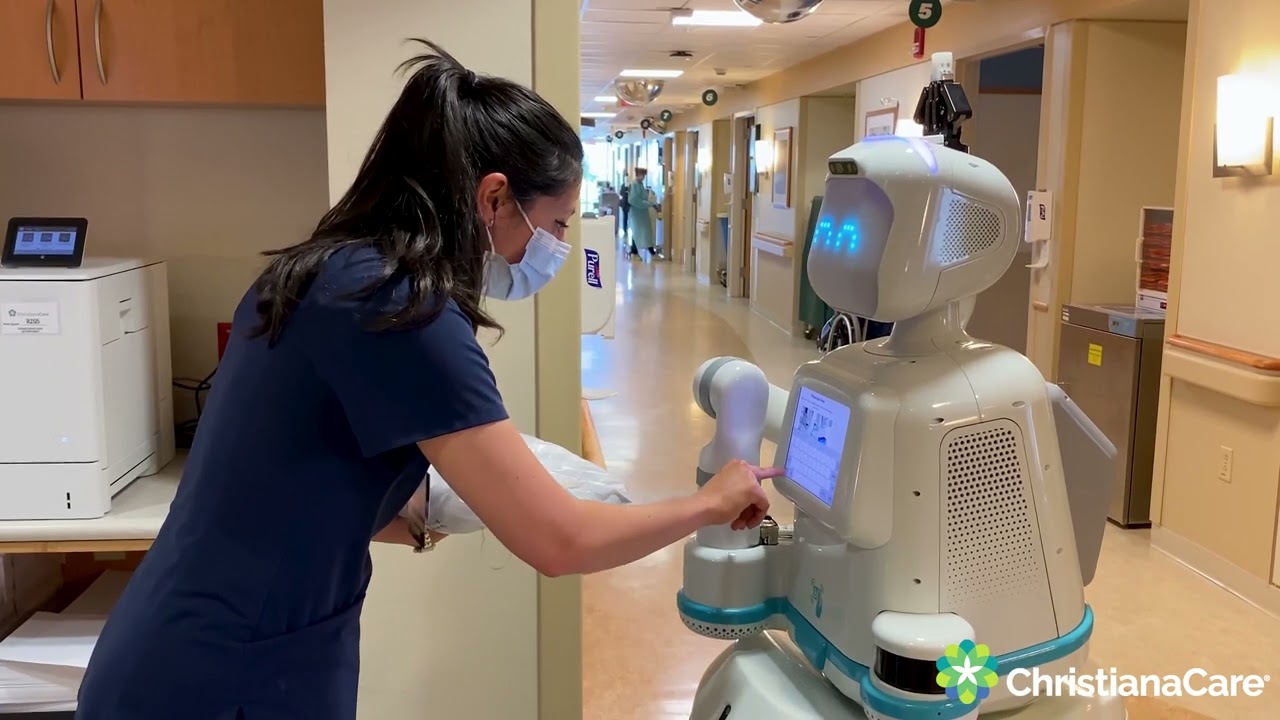
ChristianaCare is the first health system in the Philadelphia region piloting an innovative tool called Moxi, a collaborative robot — or “cobot”— that can assist in the hospital by making deliveries and performing other non-clinical tasks so that nurses and other clinical staff can spend more time focused on what they do best—caring for patients. With a landmark $1.5 million grant from the American Nurses Foundation, ChristianaCare will deploy a total of five Moxi cobots at Christiana Hospital. It is the largest single grant in the history of Nursing at ChristianaCare. Research published in the Journal of Nursing Management shows that nurses spend a significant amount of time — up to 33% of their shifts — on time-consuming but simple tasks such as dropping off lab specimens, collecting supplies or picking up medications from the pharmacy. By taking over these time-consuming but simple tasks, Moxi enables nurses to focus on patient care, where their skills are most needed. “Nurses need the time and space to deliver care and patient education at the top of their license,” said Ric Cuming, Ed.D., MSN, RN, NEA-BC, FAAN, chief nurse executive and president, ChristianaCare HomeHealth. “Moxi will be doing those hunting and gathering tasks such as getting equipment and supplies, which nurses are doing today but don’t need to be doing.” Cobots are designed to share workspace and interact directly with people. In ChristianaCare’s initiative, the Moxi cobots will be integrated with the Cerner Corporation electronic health record (EHR) platform and use artificial intelligence to proactively identify when nurses will need equipment, supplies, medications and lab tests. The Moxi cobots will be deployed to 11 inpatient units, partnering with more than 400 nurses. The American Nurses Foundation grant will enable ChristianaCare to evaluate the impact of cobots on nursing practice with the goal of scaling the technology if successful. “Moxi is not a replacement for a nurse or nursing position — or any position,” Cuming said. “It is an additional resource for nurses and their teams. “With robotic technology, we are using resources wisely and effectively, creating more efficient workflows, reducing repetitive tasks and freeing up nurses’ time for the complex clinical work that they excel at doing.” Reimagining Nursing ChristianaCare is one of 10 grant recipients from the American Nurses Foundation Reimagining Nursing (RN) Initiative. “We are proud that the American Nurses Foundation has the confidence in bold nurse-led ideas that will lead to large-scale, replicable change,” said Katherine Collard, MS, RN-BC, chief nursing informatics officer at ChristianaCare. “This grant will support nurses at ChristianaCare and our nursing colleagues across the nation in realizing their full potential, giving them the tools, resources and power to improve health care now and in the future.” With the American Nurses Foundation grant, ChristianaCare will conduct research on driving nursing outcomes through robotics. “We have a transformative opportunity to generate new knowledge and to move the science forward around robotics in nursing and in health care,” said Susan Birkhoff, Ph.D., RN, nurse scientist at ChristianaCare. “Through research, we will study Moxi’s impact to nursing caregivers that will have broad implications for nursing practice, workforce and education,” she said. ChristianaCare began exploring the potential of robotics to support Nursing with two Moxi cobots acquired in February, funded through the generosity of donors including Good Samaritan, Inc. and E.J. “Woody” Rice. With the grant, said Birkhoff, ChristianaCare will take Moxi to the next “bold frontier,” adding three more cobots with the goal of automating and optimizing nurses’ workflow without interrupting care. With five total cobots, ChristianaCare will be home to the largest number of Moxi robots in health care. The Little Bot That Can Before Moxi can become fully part of the care team, it must learn to navigate the hospital and respond to the nurses’ needs. Using artificial intelligence, Moxi is mapping out Christiana Hospital through sensors and other machine-learning technology so that the cobots can ultimately navigate and work autonomously. “When the Moxi cobots are fully integrated, we anticipate that they will complete up to 200 delivery tasks a day,” Collard said. “By making point-to-point deliveries, Moxi can save nurses hours of time and thousands of steps.” Designed to be compatible with the busy environments of hospitals, Moxi’s features include: Social intelligence: Moxi won’t bump into people or objects in hallways, waves when it sees someone new and happily poses for selfies. Mobile manipulation: Moxi can learn to use its robotic arm to operate existing automatic doors and elevator panels. Human-guided learning: The more Moxi is used, the more Moxi learns and adapts to the environment and specific ways of doing things. Friendly and safe design: With heart-shaped eyes and a friendly appearance, Moxi is designed to navigate safely and get the job done so nurses can focus on patient care. “What Moxi is doing in health systems like ChristianaCare is really transforming the way we think about health care and allowing staff to focus on the people in the hospital as opposed to the tasks,” said Dr. Andrea Thomaz, CEO and co-founder of Diligent Robotics, which created Moxi. “Robots are not something way in the future. Our robots work side-by-side with humans to ease the stress and workload of one of the most demanding jobs in society, nursing. The partnership between Diligent and ChristianaCare shows that the future is now.” Hospital Helper Directly from the Cerner EHR, Moxi will be able to anticipate clinician and patient needs and perform tasks without human involvement. Examples could include: Delivering items to patients based on nurses’ order requests. Making rounds across units to deliver lab samples on collections completed in the electronic health record. Making just-in-time deliveries of pharmaceuticals not stocked on the floor. Prioritizing tasks based on the nursing workload in a unit, so that the busiest nurses will get help first. “Connecting Moxi to the existing technology that clinicians use on a daily basis is key to making it easier to anticipate needs so clinicians can spend more time on patient care,” says Eva Karp, DHA, MBA, RN-BC, senior vice president, chief clinical and patient safety, Cerner. “Moxi could make a real difference in a nurse’s day — alleviating burnout and staffing shortages, which have become especially prevalent since the pandemic.” Incorporating the electronic health record into Moxi is part of the study funded by the American Nurses Foundation. “It’s absolutely in the best interest of our patients that Moxi can work alongside nurses so we can spend more time working directly with our patients to do what we do best,” said Pam Owen, MSN, RN-BC, nurse manager on 7E, one of the pilot units. “And Moxi brings a smile to people’s faces.” Fast Facts About Moxi Works in 22-hour shifts. Needs only two hours of charging time. Weighs about 300 pounds. Can carry a total weight of 70 pounds. Gender-neutral. Pronouns are “it” for a single Moxi cobot and “they” for more than one. Named one of America’s Greatest Disruptors in 2021 by Newsweek and one of the Best Inventions of 2019 by Time Magazine. About ChristianaCare Headquartered in Wilmington, Delaware, ChristianaCare is one of the country’s most dynamic health care organizations, centered on improving health outcomes, making high-quality care more accessible and lowering health care costs. ChristianaCare includes an extensive network of primary care and outpatient services, home health care, urgent care centers, three hospitals (1,299 beds), a freestanding emergency department, a Level I trauma center and a Level III neonatal intensive care unit, a comprehensive stroke center and regional centers of excellence in heart and vascular care, cancer care and women’s health. It also includes the pioneering Gene Editing Institute. ChristianaCare is nationally recognized as a great place to work, rated by Forbes as the 2nd best health system for diversity and inclusion, and the 29th best health system to work for in the United States, and by IDG Computerworld as one of the nation’s Best Places to Work in IT. ChristianaCare is rated by Healthgrades as one of America’s 50 Best Hospitals and continually ranked among the nation’s best by U.S. News & World Report, Newsweek and other national quality ratings. ChristianaCare is a nonprofit teaching health system with more than 260 residents and fellows. With its groundbreaking Center for Virtual Health and a focus on population health and value-based care, ChristianaCare is shaping the future of health care.



School to provide increased access to preventative health services for young students so they can learn, grow and thrive To address health issues at the earliest and most preventable stages, provide whole child health, and advance health equity in the community, ChristianaCare opened a new school-based health center at Kuumba Academy Charter School in Wilmington on Friday, May 6th. The creation of the center, made possible through ChristianaCare’s partnership with the Community Education Building (CEB), which houses Kuumba Academy, means that students at the kindergarten-through-8th grade school will have increased access to an array of health services. “At ChristianaCare, we recognize the comprehensive health needs of adolescents in our community and are committed to partnering and using our resources wisely and effectively to expand our school-based health centers,” said Bettina Tweardy Riveros, J.D., chief health equity officer and senior vice president of Government Affairs and Community Engagement at ChristianaCare. “We know that childhood trauma adversely affects the ability of children to learn and build healthy relationships and it increases their risk of mental health issues and lifelong chronic disease. The opening of our school-based health center at Kuumba Academy means that ChristianaCare can support medical and behavioral health services and wraparound social care our children need, so we can positively influence their health, their education and their futures.” With the latest opening, ChristianaCare now operates 21 school-based health centers throughout the First State, in partnership with the Delaware Department of Health & Social Services, the Delaware Division of Public Health and several school districts. Kuumba Academy students, who spoke at an event Friday to celebrate the grand opening, will have access through its school-based health center to the following: Comprehensive behavioral health services. Crisis intervention and suicide prevention. Substance use disorder treatment. Tobacco cessation. Nutrition and weight management. Physical examinations. Health screenings. Treatment for minor illnesses and injuries. Reproductive health. In addition, Kuumba Academy students also will have access to resources that help their families surmount obstacles such as transportation, challenging appointment times, and worries about cost and confidentiality. “Kuumba Academy remains committed to meeting the needs of the whole child and family,” said Sally Maldonado, head of school at Kuumba Academy, the mission of which is to provide an innovative learning environment for the whole child from kindergarten through eighth grade. “The opening of this school-based health center means that our students and families will have daily access to the high-quality behavior and health services that they deserve, and we are grateful to ChristianaCare and CEB for their partnership. We are beginning to see ourselves on the other side of this pandemic and we are energized to emerge with these newfound partnerships focused on health and wellness for our village.” ChristianaCare has partnered with CEB and Kuumba Academy on community-focused health initiatives in the past. In February 2021, ChristianaCare provided more than 800 vaccinations to community members and staff at CEB. On February 7th of this year, ChristianaCare vaccinated 38 people, including 19 children, against COVID-19. This added to the more than 6,000 vaccinations that ChristianaCare Community Health has administered since 2021. “At CEB, we understand the importance that health plays on a child’s ability to learn and succeed,” said Linda Jennings, CEO at CEB. “We are beyond excited to partner with Kuumba and ChristianaCare to launch the Kuumba Academy School-Based Health Center at CEB and add to the list of holistic and integrated support we provide to students and their families.” Today’s event coincides with Better World Day, an annual, national event on the first Friday in May. During Better World Day, students showcase their learning about initiatives that they believe will have a positive impact on their community and the world. Through collaboration and acts of service, students learn the power of their voice to make change. About ChristianaCare Headquartered in Wilmington, Delaware, ChristianaCare is one of the country’s most dynamic health care organizations, centered on improving health outcomes, making high-quality care more accessible and lowering health care costs. ChristianaCare includes an extensive network of primary care and outpatient services, home health care, urgent care centers, three hospitals (1,299 beds), a freestanding emergency department, a Level I trauma center and a Level III neonatal intensive care unit, a comprehensive stroke center and regional centers of excellence in heart and vascular care, cancer care and women’s health. It also includes the pioneering Gene Editing Institute. ChristianaCare is nationally recognized as a great place to work, rated by Forbes as the 2nd best health system for diversity and inclusion, and the 29th best health system to work for in the United States, and by IDG Computerworld as one of the nation’s Best Places to Work in IT. ChristianaCare is rated by Healthgrades as one of America’s 50 Best Hospitals and continually ranked among the nation’s best by U.S. News & World Report, Newsweek and other national quality ratings. ChristianaCare is a nonprofit teaching health system with more than 260 residents and fellows. With its groundbreaking Center for Virtual Health and a focus on population health and value-based care, ChristianaCare is shaping the future of health care. About Kuumba Academy Charter School Kuumba Academy Charter School’s mission is to provide an innovative learning environment for the whole child from kindergarten through eighth grade. Our directors, staff, and families share the core belief that parents are children’s primary educators. KACS parents, in partnership with teachers and administrators, believe that every child can maximize his or her learning potential given the opportunity to do so. In response to the outcry from Wilmington parents looking for a high-quality public education and increased access to arts education for their children, Christina Cultural Arts Center leaders, parents, and community supporters took action and were granted a Department of Education charter to create Kuumba Academy Charter School (KACS) in 2001. KACS was the first school model in the state that partnered a public charter school with a nonprofit community organization. Christina Cultural Arts Center (CCAC) and KACS form a unique nonprofit/public school partnership committed to educational excellence. Through the innovative union of academics, arts, technology, and family engagement, each KACS student’s individual learning style is nurtured—resulting in creative learners who are agents of positive change in the community. The CCAC/KACS model is regarded by many as the single most significant achievement in Wilmington’s post public school desegregation history. About the Community Education Building (CEB) CEB was established in 2012 after Bank of America donated the former MBNA Bracebridge IV building to The Longwood Foundation. Living up to its commitment of increasing access to education, the Longwood Foundation created CEB as an independent entity, and transformed the space into an ecosystem to support the social, emotional, physical, and academic development of Wilmington’s youth. CEB is an innovative co-location and shared services model. Focused on supporting the entire family, CEB offers vibrant programs and support systems that provide a sound foundation for each student. It serves as a hub for families by offering services such as healthy meals, life coaches, and mental health services. This model leads to deeper family engagement in their child’s learning and allows schools to focus on teaching and learning, not operations and overhead. CEB is an educational ecosystem that holistically integrates programs and resources for students and their families, ensuring that every student has an equitable opportunity to succeed.


Earlier this month, Georgia Southern University's Regina Rahimi, Ed.D., chatted with a journalist from Insight into Diversity to discuss the importance of trauma-informed education and how it is becoming a popular treatment for those dealing with the stress of COVID 19 and other sources of anxiety. "In recent years, a growing number of schools of education have begun focusing on trauma-informed teaching practices to help educators holistically address negative academic and social outcomes for students. Now, amid the COVID-19 pandemic, widespread racial injustice, and a host of other major stressors for U.S. youth, these concepts have become more popular, and important, than ever. “When the pandemic came, people really became concerned and interested in new traumas that were [affecting] students,” explains Regina Rahimi, Ed.D, a professor of education at Georgia Southern University. “Not only were students isolated, but if they were in an abusive household or they lived in a community where violence was prevalent, these things all became more pervasive in their lives, so that trauma was just further exacerbated.” March 16 - Insight into Diversity The full article is attached below. If you are a journalist looking to know more about trauma-informed education then let us help with your stories. Regina Rahimi is a professor in the Department of Middle Grades and Secondary Education at Georgia Southern University where her research is focused on issues of gender and sexuality in education and middle and high school drop-outs. She is available to speak with media about this important topic - simply click on her icon now to arrange an interview today.


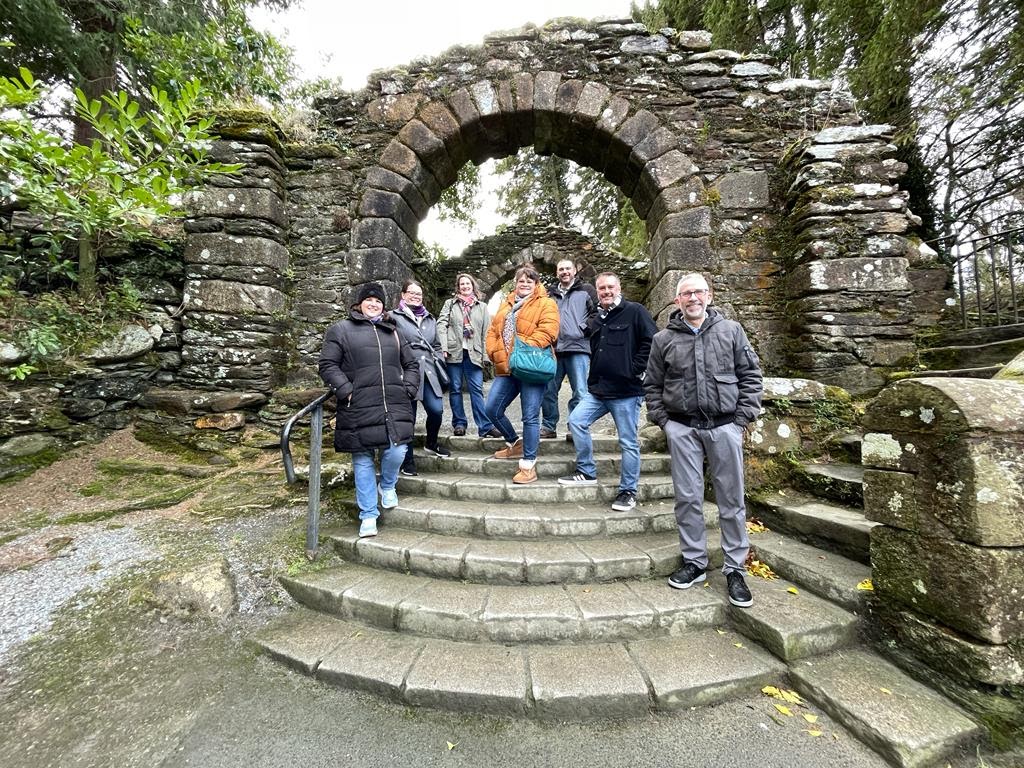
$100K student scholarship pool available for 2022 summer courses in Ireland Six professors from Georgia Southern University’s College of Education (COE) recently broadened their horizons during a trip to Ireland as they learned from and shared insight with instructors and educational leaders in the Wexford County community. Led by Howard Keeley, Ph.D., director of the University’s Center for Irish Research and Teaching, COE faculty traveled to Georgia Southern’s learning center in Wexford, Ireland, to observe Irish educational settings and exchange ideas with local leaders just ahead of a summer study abroad program opportunity for Georgia Southern students in which $100,000 of scholarship funding is available. “The main thing we did was get in front of leaders in the education space in Ireland,” stated Keeley. “We spoke to a number of folks who are either principals or vice principals or, in some way, senior administrators in a variety of schools including all-boys, all-girls, religious, secular and mixed schools.” The group included Catherine Howerter, Ph.D., associate professor of elementary and special education; Kip Sorgen, Ph.D., assistant professor of leadership, technology and human development; Alex Reyes, Ph.D., assistant professor of middle grades and secondary education; Amanda Wall, Ph.D., associate professor of middle grades and secondary education; Betsy Barrow, Ed.D., assistant professor of middle grades and secondary education; and Dan Calhoun, Ph.D., professor of leadership, technology and human development. Reyes, who trains pre-service and in-service teachers to work with culturally and linguistically diverse students, was excited to travel to Wexford after a study abroad program in Czech Republic she spearheaded with Wall was canceled in March 2020 due to the pandemic. Intrigued by Ireland, a plurilingual country, she was curious to see how Wexford’s environment might benefit students culturally. “I thought it was really exciting,” said Reyes. “All of the street signs are in Irish, even though English is the main language spoken. That prioritizing of that cultural heritage is fascinating. It was great to learn that the students in their primary and secondary schools take Irish language and culture as a subject every year.” She was especially motivated by a field trip to an Irish-language school, Meanscoil Gharman, which serves middle and high school students. With the exception of one daily class in English, teachers and students conducted all lessons in Irish. “It was really interesting to see that perspective,” she said. “There has been a revitalization of that culture. I thought that was fascinating to see how that can be handled in school.” In addition, Reyes was duly impressed with the country’s prioritization of social and emotional literacy for children, and the mandated well-being hours that are incorporated into daily school routines as a result of the pandemic. A program that promotes hygiene and an anti-bullying campaign also fit into the wellness curriculum. “It really impressed me that as a nation they prioritize the wellness of students, and how language and cultures can really be supported in a meaningful way,” Reyes said. “It’s affirming to see a proactive approach that has positive outcomes. Now, thinking ahead, we can look at how we can create opportunities for our students to experience this kind of approach.” Sorgen, who teaches in the educational leadership program at Georgia Southern, was interested in Ireland’s professional preparation. “None of them had advanced degrees, like what we offer at Georgia Southern,” noted Sorgen. “Learning about how to be a principal in Ireland is on-the-job training. In Georgia, there are specific educational requirements for our school administrators guided by professional standards. In Ireland, they generally ascend through the ranks, which makes professional mentoring essential to their success. We are exploring ways our educational leadership students could learn from Irish administrators about their experience, specifically with mentoring.” He also foresees the international partnership as a two-way exchange. “Given educational leadership programs are not common in Ireland, our faculty are considering ways in which we could use our expertise to foster leadership development of principals and teachers in Wexford,” said Sorgen. “We would utilize the Georgia Southern Wexford campus to host some of these sessions, furthering Georgia Southern’s relationship within the Wexford community.” Keeley also arranged meetings with education policy makers, including an extended meeting with an Irish congressman who is a representative for the County of Wexford in the Irish national parliament and chairs the joint committee for the Irish equivalent of the House and Senate Committee on education and higher education. “That was a tremendous opportunity for our faculty to talk to somebody at the highest level of government in Ireland, creating Irish state policy on education,” said Keeley. “And I know from the feedback we got from our College of Education colleagues that particularly for those in higher education, that to them was a really useful, next-step experience.” The trip exceeded expectations. “It was a fantastic learning experience for everyone,” said Keeley. “We had lots of high-level and also very practical experiences, and I could see our College of Education team thinking, ‘How can I bring what I’m learning, what I’m experiencing in this moment, into my classroom, into my curriculum, into my prospective study abroad courses in a way to build student success for our Georgia Southern folks.’ I think it was a great visit.” Complementing the faculty’s trip, a COE Irish study abroad program on diverse education in Ireland was recently approved for Summer 2022 and will give education students the opportunity to take one or two courses with the study abroad component. This will be a part of a broader study abroad program in Wexford, presented by the Honors College and the Center for Irish Research and Teaching, with assistance from the Office of the Provost and the Office of Global Engagement. The costs for undergraduate students at Georgia Southern’s Wexford campus will be offset by a $100,000 scholarship fund with awards of $1,000 for each student accepted into the program. “For students traveling to Wexford, Ireland, this summer, we will be able to defray the cost of the program through a generous travel scholarship through the Georgia Southern University Foundation,” said Dustin Anderson, Ph.D., associate provost for Student Success. “The donation makes these the most affordable multi-week programs that we ever have been able to offer.” Keeley is thrilled the gifts from generous donors will enable a number of students to earn valuable global experiences. “For students to have an opportunity to have international lives is powerful, and it’s powerful in ways that sometimes we can’t even predict,” he said. “Just the very fact of being abroad is going to change any of us, right? It can have a really transformative effect to feel a sense that, you know, as a student, ‘I can do this,’ and then a sense after the fact, ‘I did this,’ and just that in itself is educational. Giving students a safe space in Wexford, Ireland, to grow and feel that they are in a sense global citizens and bring the best of America, bring the best of Georgia, bring the best of the states from Savannah to Ireland, and learn to be an ambassador. That’s wonderful.” In addition to the education courses, students will also be able to choose from a Wexford-Savannah honors inquiry and an interdisciplinary program open to all students on human migration with courses in geography, religious studies, public health and a CORE study abroad course. Students interested can learn more about the program by clicking here and can email Kristin Karam in the Office of Global Engagement for more information about the scholarships. Georgia Southern University-Wexford is a global hub for learning housed in a historic building constructed in 1812. The space now features state-of-the-art classrooms and student apartments. Georgia Southern is the first public university in the United States to open an outreach learning facility in Ireland. If you're a reporter looking to know more about this initiative, then let our experts help. Howard Keeley, Ph.D., is the director of the Center for Irish Research and Teaching at Georgia Southern University. He is available - simply click on his icon now to arrange an interview today.


Aston University appoints new Vice-Chancellor
Aston University is delighted to announce that Professor Aleks Subic has been appointed as its next Vice-Chancellor and Chief Executive. He succeeds Professor Alec Cameron, who stepped down after five years in December 2021. He will take up the post in August 2022, until which time Saskia Loer Hansen will continue in her role as Interim Vice-Chancellor. Dame Yve Buckland, Pro-Chancellor of Aston University, said “I am absolutely delighted at Professor Aleks Subic’s appointment. He joins the University at an exciting time and his wide experience of leadership across both academia and industry makes him a perfect fit for Aston University’s needs and ambitions.” Professor Subic said “I feel privileged at being given the opportunity to lead Aston University at this time. The University is renowned for its commitment to graduate employability, translational research and its engagement with business. “I look forward to continuing the momentum built up by Professor Alec Cameron and Saskia Loer Hansen, and I am ambitious to see Aston University continue to build on its reputation for high quality teaching, research and business engagement locally, nationally and internationally.” Saskia Loer Hansen, Interim Vice-Chancellor of Aston University, said “I should like to congratulate Professor Subic warmly on his appointment. His credentials as a leader, both in industry and in higher education, equip him for guiding Aston University to even greater success. “I am sure he will work rigorously to build on our achievements, promote the University worldwide and further strengthen our reputation as a leading university for business and enterprise.” Professor Subic is currently the Deputy Vice-Chancellor (STEM) and Vice President (Digital Innovation) at RMIT University, where he is responsible for leading the STEM College and Digital Innovation portfolio in Australia and globally. Prior to this appointment he was the Deputy Vice-Chancellor (Research & Enterprise) at Swinburne University of Technology, responsible for research, graduate studies, engagement and partnerships, advancement, innovation, enterprise, and commercialisation, leading the research transformation of the university towards top 2% in the world. Before that, he was the Executive Dean of Engineering at RMIT University, one of the largest engineering faculties in Australia, ranked in top 1% in the world and renowned for industry-partnered education and research. Concurrent with his academic appointments, Professor Subic has held notable appointments on the Australian Prime Minister's Industry 4.0 Taskforce and the Australian Advanced Manufacturing Council Leaders Group (Australian Industry Group). Previously he was the Director and Deputy Chair of the Australian Association of Aviation and Aerospace Industries, Director of Oceania Cybersecurity Centre Governing Board, Director of the Society of Automotive Engineers Australasia Board, Director of National Imaging Facility Governing Board, Director of Australian Housing and Urban Research Institute Governing Board, and Director of the Victorian Centre for New Energy Technologies Governing Board. He has served on a number of national and international research committees and expert panels, including as Chair of the European Research Council Expert Panel for Physical Sciences and Engineering, Technology Group of the Global Federation of Competitiveness Councils, Forbes Technology Council, Defence Materials Technology Centre, Editor and Associate Editor of international scholarly journals.

Widening participation expert joins Aston University as visiting professor
Liz Thomas is a leading researcher in widening participation and closing the achievement gap She has a very strong international and national reputation for using her research to inform policy and practice Professor Thomas will work within the University’s College of Business and Social Sciences. A leading researcher whose work addresses patterns of under-representation in higher education has joined Aston University as a visiting professor. Liz Thomas is an expert in widening participation and closing the achievement gap. She has joined the University’s College of Business and Social Sciences to work largely with Aston Business School on inclusivity and employability. Professor Thomas has previously worked on the Teaching Excellence Framework Main Panel (Widening Participation Expert), been Chair of Advisory Group, Evaluation of pre-16 outreach work, Office for Fair Access (now Office for Students) as well as an International member of the Vice Chancellor’s Quality Review, University of South Wales, Australia. During the next Research Excellence Framework (REF) period her research will focus on higher education student and graduate experiences in the ‘new new normal’. The COVID-19 pandemic resulted in an emergency pivot by higher education providers worldwide, from predominantly present-in-person teaching, to primarily or exclusively remote and online learning. As the pandemic has progressed, HE providers have adapted to the new normal, providing a range of hybrid learning, engagement and support opportunities. Employers are also seeing the advantages of more flexible and hybrid ways of working, and this suggests that graduates will need demonstrate additional skills and competencies in relation to autonomy and time management, team working, digital skills and effective communication through a wider range of media. Professor Liz Thomas said: “I am very excited to have been appointed visiting professor in the College of Business and Social Sciences at Aston University. “I'm very much looking forward to working with colleagues on equity in higher education and employment. “Belonging will continue to be an important theme within my research, both conceptually and practically, and within higher education and employment, in the post-pandemic world. We need to capitalise on the advantages that have emerged, and ensure inclusion, and equitable outcomes for all.” Professor Helen E Higson, associate dean accreditations at Aston Business School, said: “I am looking forward to welcoming Liz to Aston Business School to share her knowledge on inclusivity and employability. “She will bring further leadership internally in areas which fit very well with Aston University’s values, student demographics and objectives. “She has a very strong international and national reputation for using her research-informing policy. Much current practice and policy in HE in the UK is influenced by her work.”