
Experts Matter. Find Yours.
Connect for media, speaking, professional opportunities & more.
-fotor-20250826990.jpg)
How a UF reading program is reaching classrooms worldwide
For more than 25 years, Holly Lane, Ph.D., has been laser-focused on a global educational goal: to ensure that students worldwide have access to information about reading. Her passion project, known as the University of Florida Literacy Institute, or UFLI, has already improved the literacy skills of more than 10 million children. What began as a modest classroom tool now has a Facebook community of over 273,000 members; 18 million online toolbox views; and more than 500,000 instructional manuals in classrooms. And as the UFLI brand gains traction, Lane continues to champion what the acronym means and why the program has been so life-changing. “When you learn to read, you fly,” said Lane, who serves as the UFLI director and a professor of special education at UF. UFLI is an ongoing effort by UF faculty and students to improve literacy outcomes for struggling students by addressing two key areas: reader development and teacher development. The program began in 1998 as a tutoring model for beginning readers working with Lane’s pre-service teachers. The idea was that, if teachers understood how to employ effective, evidence-based practices in a one-on-one tutoring session, they could transfer those skills to their small-group or classroom instruction. However, some teachers struggled to make that transition, so a dedicated small-group lesson model was created. That foundation eventually expanded into a dyslexia support program and caught the attention of a surprising partner, best-selling author and philanthropist James Patterson. Known worldwide for his literacy advocacy and generous support of reading initiatives, Patterson has become a key benefactor for the program. When the COVID-19 pandemic hit, a challenge turned into a breakthrough. UFLI started its Virtual Teaching Resource Hub and, in the first week, about 70,000 teachers visited the site and downloaded materials. The turning point came when a school in St. Augustine reached out to UFLI, asking for professional development. “I said, ‘Well, what if we planned the lessons for you instead of teaching you how to plan these lessons?’” Lane said. What followed was what Lane called her “accidental phonics program.” “They ended the year with the best scores they'd ever seen, better than their pre-COVID scores, and that was unheard of,” Lane said. That success led to an effective district-wide pilot in Alachua County with 21 elementary schools. UFLI leaders decided to publish the contents of the program and create a manual that individual teachers could purchase. This concept boomed, and the program even made waves overseas. “Starting with the virtual teaching hub… we had a huge following in Perth and in Melbourne, and now we have an Australian edition of the manual,” Lane said. “We’ve been in every state and every Canadian province and territory, but we're also now in something like 60-some other countries.” Patterson has continued his support by directing efforts toward expanding UFLI’s reach in Florida, aiming to bring the program to every district in the state. Looking ahead, Lane is especially excited about UFLI’s new technology. “We're calling it our assessment and planning portal,” Lane said. “Teachers assess two skills a week, and they enter their data into this program and it spits out small-group lesson plans for the following week that target specific needs of their students.” The data input system is highly advanced, requiring the teacher to simply hold up work in front of a webcam, and the system then reads the student handwriting and imports the data. The program’s structure also ensures that students apply new concepts daily and revisit them regularly. But behind it all is a deeply connected community. For Lane, the success of UFLI boils down to people. “We have an amazing team here,” Lane said. “If anything, that's my superpower, finding really good people who are really good humans but also really good at what they do.” For more information about UFLI, visit ufli.education.ufl.edu.



Expert Q&A: What is Soft Diplomacy and how does it impact classrooms?
"Right now, storytelling is critical. Language learning is highly personal, and it’s the person-to-person relationships that grease the wheels," says Cheryl Ernst, director of the English Language Institute at the University of Delaware. She recently published English Language Programs as Facilitators of Soft Diplomacy in Innovations in Star Scholars Press. Here's how she's discussing this important topic. Q: What is the focus of this research, and why is it important? Ernst: ELI and other English language programs provide the ideal space for communication development, cross cultural appreciation, gaining life skills, and raising awareness about people beyond the media. Post pandemic, we’re hearing across campus how individuals feel less connected, and in English language classrooms, connection is critical. Language is only learned through production and practice since it’s a skill that needs to be honed. In language, there is no such thing as perfect. In our classrooms, English is the common goal, and everyone comes to that space at their own levels and overflowing with imperfection. Our students learn to use their vulnerability as a tool. They learn the value of a growth mindset living in a culture that is different from their own, and with that comes an appreciation for difference, respect for others, trust, human-to-human communication. Q: What inspired this research? Ernst: More than 30 years of observation, conversations, experiences, and personal relationships. There was no term to describe the skills English language programs teach beyond grammar (what’s perceived, anyway). Terms like personal diplomacy, person-to-person diplomacy, civic diplomacy, and the like happens all the time and oversimplifies what we do. In my readings, I started to see overlaps between soft power and diplomacy, which led to the concept of Soft Diplomacy. Then what distinguishes Soft Diplomacy from other more common monikers are the variety of skills that happen organically in our classrooms that we rarely acknowledge and students may not recognize. Q: What are some key findings or developments? Ernst: Institutionally, ELPs can do better highlighting the skills beyond English that we teach organically or deliberately. Q: How could this work potentially impact the field or the wider public? Ernst: Respecting ELPs for the space they provide and the skills they offer. It’s not “just English,” rather is learning to communicate in a common language and with people from around the globe. I’d like people to realize that relationships are foundational, that there are common values across nations and that differences are not bad. What version of English is “correct” British or American dialects (the New York? Wisconsin? Alabama? Iowa?). Q: What are the next steps or upcoming milestones in your research? Ernst: A former student and I have launched a podcast series called Soft Diplomacy in Action that focuses on personal stories from those who work in international education. We’ve interviewed an ELI associate professor from Morocco, the UD coordinator of the Mandela Fellows program, a professor who sees (and lives) the diplomatic value of sports, and a retired English language professional. We’re looking forward to continuing these conversations with individuals from a variety of disciplines that also work in this space but through different lenses. ABOUT CHERYL ERNST Cheryl Ernst is the director of the English Language Institute at the University of Delaware where she and her colleagues and students practice Soft Diplomacy every day. Her professional areas of interest include program administration and international marketing, teacher training and working with international teaching assistants, curriculum design, and advanced level academic English (graduate levels). To speak with Ernst her work and the importance of Soft Diplomacy, reach out to MediaRelations@udel.edu.


AI in the classroom: What parents need to know
As students return to classrooms, Maya Israel, professor of educational technology and computer science education at the University of Florida, shares insights on best practices for AI use for students in K-12. She also serves as the director of CSEveryone Center for Computer Science Education at UF, a program created to boost teachers’ capabilities around computer science and AI in education. Israel also leads the Florida K-12 Education Task Force, a group committed to empowering educators, students, families and administrators by harnessing the transformative potential of AI in K-12 classrooms, prioritizing safety, privacy, access and fairness. How are K–12 students using AI in classrooms? There is a wide range of approaches that students are using AI in classrooms. It depends on several factors including district policies, student age and the teacher’s instructional goals. Some districts restrict AI to only teacher use, such as creating custom reading passages for younger students. Others allow older students to use tools to check grammar, create visuals or run science simulations. Even then, skilled teachers frame AI as one tool, not a replacement for student thinking and effort. What are examples of age-appropriate tools that enhance learning? AI tools can be used to either enhance or erode learner agency and critical thinking. It is up to the educators to consider how these tools can be used appropriately. It is critical to use AI tools in a manner that supports learning, creativity and problem solving rather than bypass critical thinking. For example, Canva lets students create infographics, posters and videos to show understanding. Google’s Teachable Machine helps students learn AI concepts by training their own image-recognition models. These types of AI-augmented tools work best when they are embedded into activities such as project-based learning, where AI supports learning and critical thinking. How do teachers ensure AI supports core skills? While AI can be incredibly helpful in supporting learning, it should not be a shortcut that allows students to bypass learning. Teachers should design learning opportunities that integrate AI in a manner that encourages critical thinking. For example, if students are using AI to support their mathematical understanding, teachers should ask them to explain their reasoning, engage in discussions and attempt to solve problems in different ways. Teachers can ask students questions like, “Does that answer make sense based on what you know?” or “Why do you think [said AI tool] made that suggestion?” This type of reflection reinforces the message that learning does not happen through getting fast answers. Learning happens through exploration, productive struggle and collaboration. Many parents worry that using AI might make students too dependent on technology. How do educators address that concern? This is a very valid concern. Over-reliance on AI can erode independence and critical thinking, that’s why teachers should be intentional in how they use AI for teaching and learning. Educators can address this concern by communicating with parents their policies and approaches to using AI with students. This approach can include providing clear expectations of when AI is used, designing assignments that require critical thinking, personal reflection and reasoning and teaching students the metacognitive skills to self-assess how and when to use AI so that it is used to support learning rather than as a crutch. How do schools ensure that students still develop original thinking and creativity when using AI for assignments or projects? In the age of AI, there is the need to be even more intentional designing learning experiences where students engage in creative and critical thinking. One of the best practices that have shown to support this is the use of project-based learning, where students must create, iterate and evaluate ideas based on feedback from their peers and teachers. AI can help students gather ideas or organize research, but the students must ask the questions, synthesize information and produce original ideas. Assessment and rubrics should emphasize skills such as reasoning, process and creativity rather than just focusing on the final product. That way, although AI can play a role in instruction, the goal is to design instructional activities that move beyond what the AI can do. How do educators help students understand when it’s appropriate to use AI in their schoolwork? In the age of AI, educators should help students develop the skills to be original thinkers who can use AI thoughtfully and responsibly. Educators can help students understand when to use AI in their school work by directly embedding AI literacy into their instruction. AI literacy includes having discussions about the capabilities and limitations of AI, ethical considerations and the importance of students’ agency and original thoughts. Additionally, clear guidelines and policies help students navigate some of the gray areas of AI usage. What guidance should parents give at home? There are several key messages that parents should give their children about the use of AI. The most important message is that even though AI is powerful, it does not replace their judgement, creativity or empathy. Even though AI can provide fast answers, it is important for students to learn the skills themselves. Another key message is to know the rules about AI in the classroom. Parents should speak with their students about the mental health implications of over-reliance on AI. When students turn to AI-augmented tools for every answer or idea, they can gradually lose confidence in their own problem-solving abilities. Instead, students should learn how to use AI in ways that strengthen their skills and build independence.


Solving for X: Expert highlights importance of algebra in middle and high school
Math educators agree that Algebra is a critical course for middle and high schoolers, often serving as a gateway to more advanced math courses and influencing students’ academic trajectories in STEM pathways. Yet, many students struggle in this important course. Since May 2025, University of Delaware Associate Professor Erica Litke has partnered with the University of Pennsylvania Graduate School of Education and the School District of Philadelphia in a $5 million, three-year initiative to improve algebra teaching in the district. The project offers algebra teachers professional development through a year-long fellowship. With expertise in improving instructional quality in math and supporting algebra teaching, Litke leads the design and delivery of the professional development with Penn GSE experts. Close to 80 teachers participated in the first cohort of the fellowship, which includes a four-day summer institute. Litke’s research in math education has connected instructional quality to broader policy issues in education and focused on teacher knowledge and professional development. “The focus on algebra content and key features of algebra teaching that support students in learning algebra content helps teachers translate their learning from the fellowship directly into their teaching practice,” said Litke. “Being able to translate my research findings into usable knowledge for teachers and contribute to the design of this kind of comprehensive professional learning has been really exciting.” Litke can speak to her role in the Algebra Fellowship project, the importance of Algebra 1 in the trajectory of students’ STEM education and strategies for supporting teaching learning at the school and district levels. ABOUT ERICA LITKE Erica Litke is an associate professor specializing in mathematics education in the School of Education at the University of Delaware. Her research focuses on understanding and improving instructional quality in mathematics for students in the elementary and secondary grades. Her research has described and analyzed instructional practice in mathematics using observation instruments, connected instructional quality in mathematics to broader policy-related issues in education, and focused on teacher knowledge and professional development. She has appeared in The Philadelphia Inquirer, Daily Pennsylvanian and other publications. To speak with Litke or to learn more, email mediarelations@udel.edu.

Rethinking AI in the classroom: A literacy-first approach to generative technology
As schools nationwide navigate the rapid rise of generative artificial intelligence, educators are searching for guidance that goes beyond fear, hype or quick fixes. Rachel Karchmer-Klein, associate professor of literacy education at the University of Delaware, is helping lead that conversation. Her latest book, Putting AI to Work in Disciplinary Literacy: Shifting Mindsets and Guiding Classroom Instruction, offers research-based strategies for integrating AI into secondary classrooms without sacrificing critical thinking or deep learning. Here is how she is approaching the complex topic. Q: Your new book focuses on AI in disciplinary literacy. What is the central message? Karchmer-Klein: Rather than positioning AI as a shortcut or replacement for student thinking, the book emphasizes a literacy-first approach that helps students critically evaluate, interrogate, and apply AI-generated information. This is important because schools and universities are grappling with rapid AI adoption, often without clear guidance grounded in learning theory, literacy research, or classroom practice. Q: What inspired this research? Karchmer-Klein: The book grew directly out of my work with preservice teachers, practicing educators, and school leaders who were asking practical but complex questions about AI: How do we use it responsibly? How do we prevent over-reliance? How do we teach students to question what AI produces? I also saw a gap between public conversations about AI which often focused on fear or efficiency and what teachers actually need: research-informed strategies that support deep learning. My long-standing research in digital literacies provided a natural foundation for addressing these questions. Q: What are some of the key findings from your work? Karchmer-Klein: AI is most effective when it is embedded within strong instructional design and disciplinary literacy practices, not treated as a stand-alone tool. The research and classroom examples illustrate that AI can support student learning when it is used to prompt reasoning, reveal misconceptions, provide feedback for revision, and encourage multiple perspectives. Another important development is the emphasis on teaching students to evaluate AI outputs critically by recognizing bias, inaccuracies, and limitations, rather than assuming correctness. Q: How could this work impact schools, teacher education programs and the broader public? Karchmer-Klein: For educators, this work provides concrete, evidence-based literacy strategies coupled with AI in ways that strengthen, not dilute, student thinking. For teacher education programs and school districts, it offers a research-based framework for professional development and policy conversations around AI use. More broadly, the work speaks to a public concern about how emerging technologies are shaping learning, helping to reframe AI as something that requires human judgment, ethical consideration, and strong literacy skills to use well. ABOUT RACHEL KARCHMER-KLEIN Rachel Karchmer-Klein is an associate professor in the School of Education at the University of Delaware where she teaches courses in literacy and educational technology at the undergraduate, graduate, and doctoral levels. She is a former elementary classroom teacher and reading specialist. Her research investigates relationships among literacy skills, digital tools, and teacher preparation, with particular emphasis on technology-infused instructional design. To speak with Karchmer-Klein further about AI in literacy education, critical evaluation of AI-generated content and teacher preparation in the era of generative AI, reach out to MediaRelations@udel.edu.
What "Super Agers" Are Teaching Us About Growing Older
When I think about aging well, I don't see a number on a birthday cake. I see capacity. The ability to think clearly. To move with confidence. To stay curious. To laugh easily. To remember where I put my keys. (Okay, that last one is still aspirational.) That's why I teach 4 fitness classes a week and pay close attention to how I fuel my body. Not because I'm chasing youth, but because I've learned, both personally and professionally, that the way we move, eat, sleep, and cope influences how we feel... and how we show up for the people we care about. I don't want to live forever. I just want to live well while I'm here. Like many Boomers, I've been interested in the growing research on longevity. And let's be honest: Boomers have never been good at accepting "no" for an answer. Why would we start now, just because it's mortality asking? We're the generation that refused to compromise. Retirement? Optional. Slowing down? Negotiable. Death? We'd like to speak to the manager. This leads us to a fascinating group of scientists known as "Super Agers." Who Are Super Agers, Really? In research terms, Super Agers are adults over 80 whose cognitive abilities, especially memory, perform at levels expected of people in their 50s or 60s (Rogalski et al., 2013). But here's what I love most: they aren't superhuman. They're not top athletes. They're not biohackers living on kale foam and cold plunges at dawn. (Though if that's your thing, carry on.). They're everyday people who never disconnected from life. A striking Canadian example is Morry Kernerman, a Toronto violinist who kept on learning, hiking, and performing well into the ripe age of 101. His story embodies the spirit of Super Aging: it's not about dodging age, it's about refusing to stop living. In a CBC interview, Maury Kernerman doesn't sound like someone "trying to live longer." He talks like someone who's still interested in living, fascinated by the world, hungry for learning, and unwilling to stand still just because he might do something imperfectly. He also admits something that matters to a lot of readers: he wasn't always an exercise person. He started taking it seriously later in life and describes it as a "rear guard action" that hasn't stopped aging, but has helped him keep his capacity. One of the most poignant lessons: when we're afraid of doing the wrong thing, afraid of failing or being embarrassed, we stop. And standing still is what really costs us. Haven't you heard? Sitting is the new Smoking!! What the Science Is Showing Us Canadian and U.S. researchers, at Western University and Northwestern University, are discovering something significant. Not a pill. Not a quick fix. A system. Angela Roberts (Western University) explained that the Canadian arm of the research isn't relying only on lab snapshots. Participants are sent home with wearable devices so researchers can monitor real-world activity patterns continuously (24 hours a day) over multi-week periods (CBC News, 2024 - https://www.cbc.ca/news/health/superager-centenarians-brain-second-opinion-9.7049411). That design matters because it turns "healthy aging" from a vague concept into measurable behaviours: how much movement you get, how intense it is, how consistent it is, and how it fits into the rhythm of normal life. Super Agers typically stay active, remain mentally sharp, maintain close relationships, handle stress effectively, sleep well, and keep a generally positive attitude (Rogalski et al., 2013 - https://doi.org/10.1162/jocn_a_00300; Sun et al., 2016 - https://doi.org/10.1523/JNEUROSCI.1492-16.2016) Their brains display thicker cortical areas linked to attention and memory, experience slower atrophy rates, have fewer Alzheimer's markers, and show stronger neuronal connections (Gefen et al., 2015 - https://doi.org/10.1523/JNEUROSCI.2998-14.2015; Harrison et al., 2012 - https://doi.org/10.1017/S1355617712000847) A Data Point Worth Remembering When It Comes to Longevity From the wearables, the research study observed that many 80-year-olds in the study, both "super agers" and the control group, were averaging about 25 to 30 minutes of exercise a day (roughly aligned with Canadian movement guidelines). The difference wasn't that super agers moved a little more. The study showed that they got about 30% more of the kind of movement that raises heart rate, what researchers call moderate-to-vigorous physical activity In plain language: it's not just steps. It's getting your engine up into that slightly breathy zone on purpose, most days. There's no single longevity switch. It's a belt-and-suspenders approach: multiple protective habits working together over decades. Let's Talk About Weight (Without Losing Our Minds) People often ask: Should Super Agers be skinny? Or a little plump? The research answer is surprisingly dull (and comforting): Neither. Super Agers come in all sizes. There is no evidence that they share a specific body weight or BMI. What matters much more than the scale is stability, strength, and body composition (Stenholm et al., 2008). Obesity Shows Up Consistently in the Research Midlife obesity is associated with an increased risk of dementia later in life. Several large studies indicate that obesity (BMI ≥30) during midlife raises dementia risk by 33 to 91% compared to individuals of normal weight (Kivipelto et al., 2005; Qizilbash et al., 2015) However, in older age, unintentional weight loss often signals frailty or illness. Weight loss in later life is linked to faster cognitive decline and higher risk of death (Diehr et al., 2008) Being underweight increases the risk of death. Studies consistently indicate that underweight older adults (BMI <20) have 2 to 3 times the all-cause mortality risk compared to those with a normal weight, with one study reporting a 34% higher risk of dementia (Diehr et al., 2008). A slightly higher BMI in later life may actually be protective, especially if muscle mass is maintained. The "obesity paradox" demonstrates that overweight and mild obesity in older adults (ages 65+) are often linked to a lower risk of mortality, particularly from non-cardiovascular diseases (Natale et al., 2023). So, the prescription is clear: avoid extremes. Not so skinny you could use a Cheerio as a hula hoop, and not so plump that tying your shoes feels like a full-contact sport. Here's What Truly Matters: Muscle Mass Strength defends the brain, maintains balance, boosts metabolism, and offers resilience during illness or stress (Peterson & Gordon, 2011) "Skinny-fat", low muscle, higher fat, is actually worse for aging than carrying a bit more weight with muscle beneath (Prado et al., 2012). Super Aging isn't about shrinking yourself. It's about supporting the structure you live in. Sleep: The Quiet Superpower If movement is the main act, sleep is the stage crew ensuring the entire show runs smoothly. Sleep isn't just one thing. It's a cycle (Walker, 2017). The Stages of Sleep (a quick, non-boring tour) Light sleep: The warm-up. Easy to wake from. Necessary, but not enough by itself. Deep sleep: The body's main repair mode. This is where physical repair occurs: muscle recovery, immune support, hormone regulation (Scullin & Bliwise, 2015) (Walker, 2017). REM sleep: The brain's spa. Memory consolidation, emotional regulation, creativity, and learning all occur here (Scullin & Bliwise, 2015) (Walker, 2017). Missing deep sleep leaves your body feeling exhausted. Missing REM causes your brain to become fragile and foggy (Mander et al., 2017). Super Agers tend to guard their sleep, though not perfectly, deliberately (Mander et al., 2016). Consistent bedtimes, morning sunlight, daily activity, and relaxing evenings appear repeatedly. For some people, slow-release melatonin or magnesium can help improve sleep maintenance (Ferracioli-Oda et al., 2013). However, the greatest benefits often come from simple routines: consistency, darkness, cooler rooms, and avoiding phone use at 10 p.m. Sleep isn't a luxury. It's essential brain maintenance (Mander et al., 2017). Stress: The Real Villain Chronic stress is like kryptonite for cognitive health (McEwen & Sapolsky, 1995). The main source of stress is not accepting what is. We argue with reality, and we lose every time. We revisit conversations. We resist change. We attempt to control others. Super Agers appear more accepting, not resignation, but realism (Sun et al., 2016) Here are some practical strategies to consider: Let them. (Thank you, Mel Robbins.) People will be people. You don't need to manage them. Save your energy for what truly matters. And remember: what people think of you... is none of your business. Calm isn't passive. Calm is protective. Gratitude also plays a role. Many Super Agers exhibit a distinct emotional tone: more grateful, less gripeful (Hill & Allemand, 2011) Life wasn't simpler; they simply didn't let bitterness steer the way. Relationships and Quality of Life: The Real Gold Standard Super Agers don't have more friends; they have deeper ones. Strong relationships are linked to better emotional regulation and preserved brain regions. (Cacioppo & Cacioppo, 2014) (Holt-Lunstad et al., 2010) And this isn't about extending life. It's about quality of life: cognitive, physical, and emotional well-being. Because no one wants a farewell-to-life party where nobody shows up because you've been miserable, bitter, or exhausting to be around (thank you, BR). Strong body. Clear mind. Warm relationships. A sense of humour that endures gravity. That's the win. 3 Practical Takeaways to Steal this Week If you want the super-ager approach without turning your life into a science experiment, here are three low-drama moves: Add intensity, not just activity. Keep your regular walk, but pick one segment to walk faster, take a hill, or add short brisk bursts. Your heart rate is the clue. Keep a learning thread running. Music, audiobooks, a class, a museum habit, a book club, anything that keeps your mind taxed in a good way and makes you feel curious again. Make "don't stand still" a rule. If you're avoiding something because you might look silly (a dance class, a new hobby, a new friend group), that's exactly the place to lean in, gently, but on purpose. Super Agers aren't chasing youth. (No one needs to see me in low-rise jeans again.) They're cultivating engagement. (Do you want to dance?) They move. They learn. They sleep well. They stay positive. They accept what is. They remain connected. They rely on the belt and suspenders. And most importantly, they don't wait for permission to live life to the fullest at any age. Yes, biology will win eventually. None of us gets out of this alive. But the real victory isn't in defeating what we can't control. It's in mastering what we can, for as long as we can, and living fully right up until biology takes its final bow. Don't Retire...ReWire! Sue Want more of this? Subscribe for weekly doses of retirement reality—no golf-cart clichés, no sunset stock photos, just straight talk about staying Hip, Fit & Financially Free.


Brian Levine, M.D., Named Chief Academic Officer and Intellectual Property Administrator
ChristianaCare announced Feb. 12 the promotion of Brian Levine, M.D., to chief academic officer, along with his appointment as intellectual property administrator. He will also continue in his role as designated institutional official. As chief academic officer and leader of ChristianaCare’s Department of Academic Affairs, Levine oversees 38 residency and fellowship programs encompassing 315 residents and fellows, along with the education and training of students across the continuum of medical education. He leads the continued growth and strengthening of ChristianaCare’s undergraduate and graduate medical education infrastructure, ensuring that ChristianaCare continues to prepare physicians to care for our community well into the future. In addition, Levine oversees physician assistant education and allied health educational programming, supporting workforce development and long-term community health needs. As the largest academic medical center between Philadelphia and Baltimore, ChristianaCare has been a hub of academic excellence for over a century. ChristianaCare is one of the largest community-based teaching hospital systems in the United States. ChristianaCare also serves as the Delaware Branch Campus for Sidney Kimmel Medical College and the Philadelphia College of Osteopathic Medicine. This unique program allows medical students to complete their third and fourth years of clinical rotations exclusively at ChristianaCare, providing a clear pathway to launch their medical careers in Delaware. Each year, 55 students participate in the Branch Campus program, with many continuing into ChristianaCare’s highly sought-after residency programs and remaining in Delaware to serve local communities. ChristianaCare is a destination of choice for medical students and residents because of its strong patient-centered culture, reputation for excellence, and diversity of clinical experiences that include urban and suburban campuses with a wide range of pathologies. In his newly expanded role as intellectual property administrator, Levine manages and enforces ChristianaCare’s intellectual property policy, ensuring fair and consistent application in alignment with applicable laws and regulations. He also leads the multidisciplinary committee responsible for guiding organizational decisions related to intellectual property valuation, commercialization strategies and revenue distribution. Levine brings deep experience in academic medicine, health system education and scholarly publishing to these responsibilities. An emergency physician, he led the development of widely used clinical reference guides published by the Emergency Medicine Residents’ Association. These pocket-sized tools — covering topics such as antibiotic stewardship, orthopedic injury management, and EKG interpretation — are used by thousands of emergency medicine residents worldwide. Levine has held leadership roles at ChristianaCare for nearly two decades. Since 2018, he has served as associate chief academic officer and designated institutional official. Previously, he was program director of the Emergency Medicine Residency program from 2012 to 2018 and associate program director from 2006 to 2012. Levine is a clinical professor of Emergency Medicine at Sidney Kimmel Medical College at Thomas Jefferson University and previously served as associate medical director for the LifeNet aeromedical transport program. He earned his medical degree from the University of Vermont Larner College of Medicine and completed his emergency medicine residency at ChristianaCare.


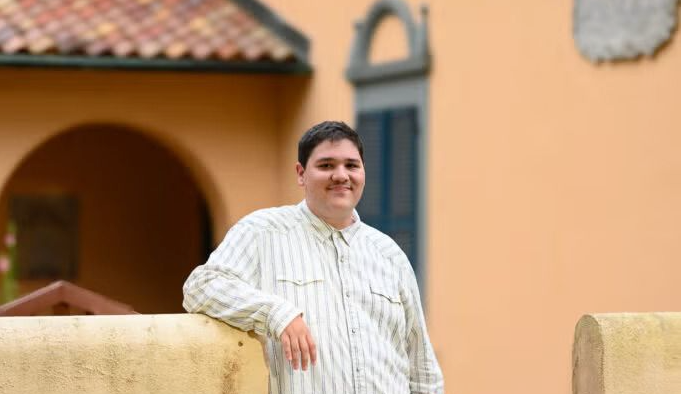
A future in pharmacy, made possible by support and mentorship
A freshman chemistry major from Hinesville, Georgia, Geovanii Pacheco already has his sights set on a career in pharmacy. His ambition is rooted not just in a love for science, but in personal experience. Growing up, his family spent countless hours navigating prescriptions and insurance coverage for his older brother, Devin, who has autism. During those moments, one pharmacist consistently stood out. This was someone who advocated for his family, helped them through paperwork and made sure Devin got the medication he needed. “It really resonated with me,” Pacheco said. “As a pharmacist, I’d like to embody what she did for us, for others as well.” That goal brought Pacheco to Georgia Southern University where he is now supported by the National Science Foundation’s S-STEM Scholarship Program Award. This is a nearly $2 million grant designed to support Pell-eligible students pursuing degrees in biochemistry, biology, chemistry, geosciences, mathematics, physics or sustainability science. For Pacheco, the program has been nothing short of life-changing. “I can say that I’m not going to college with any financial stress,” he said. “I have no money coming out-of-pocket.” Administered through Georgia Southern’s College of Science and Mathematics, the federally funded program provides last-dollar scholarships that cover remaining costs after Pell Grants and other aid are applied. In addition to financial support, the program pairs students with dedicated faculty mentors and offers structured programming aimed at retention, professional development and long-term success. Sara Gremillion, Ph.D., professor of biology and principal investigator on the grant, said the goal is to ensure that students don’t just enroll in college, but that they also thrive once they arrive. “They may not have a strong expectation about what to expect in college,” said Gremillion. “This program not only removes financial barriers, but it also surrounds students with the support they need to navigate college and plan for their future.” Pacheco has felt that impact from day one. Thanks to the program, he moved into his residence hall a week early to attend a one-week Basebamp program to jump start his college experience. There, he met fellow scholarship recipients and connected with his faculty mentor before classes even began. His mentor, Shainaz Landge, Ph.D., associate professor of chemistry, has helped connect Pacheco with opportunities from joining the Student Affiliates of the American Chemical Society to learning about upcoming pre-pharmacy organizations and undergraduate research. “Students such as Geovanii serve as prime examples of the fulfillment derived from mentorship and teaching,” said Landge. “Their growth and engagement highlight the critical role that effective mentorship plays in fostering both academic development.” That blend of mentorship and financial support is exactly what the grant was designed to provide. Over five years, the program will serve dozens of students in eligible majors such as chemistry, biology, biomedical science, biochemistry, physics, mathematics, sustainability science and geoscience. Each student receives individualized scholarship support, up to $15,000 per year, based on need, along with a faculty mentor who stays with them throughout their undergraduate journey. For Pacheco and his family, the scholarship brought immediate relief. He vividly remembers opening the acceptance email with his mother and scrolling down to see the financial aid details. “She was tickled, let me tell you,” he said. “It lifted so much stress off her shoulders. It was life-changing.” Applications to be part of the next cohort of COSM S-STEM Scholars are open until Feb. 1, 2026. Eligibility requirements, necessary documentation and other information can be found at this webpage. Looking to know more about Georgia Southern University or the National Science Foundation’s S-STEM Scholarship Program Award? Simply contact Georgia Southern's Director of Communications Jennifer Wise at jwise@georgiasouthern.edu to arrange an interview today.

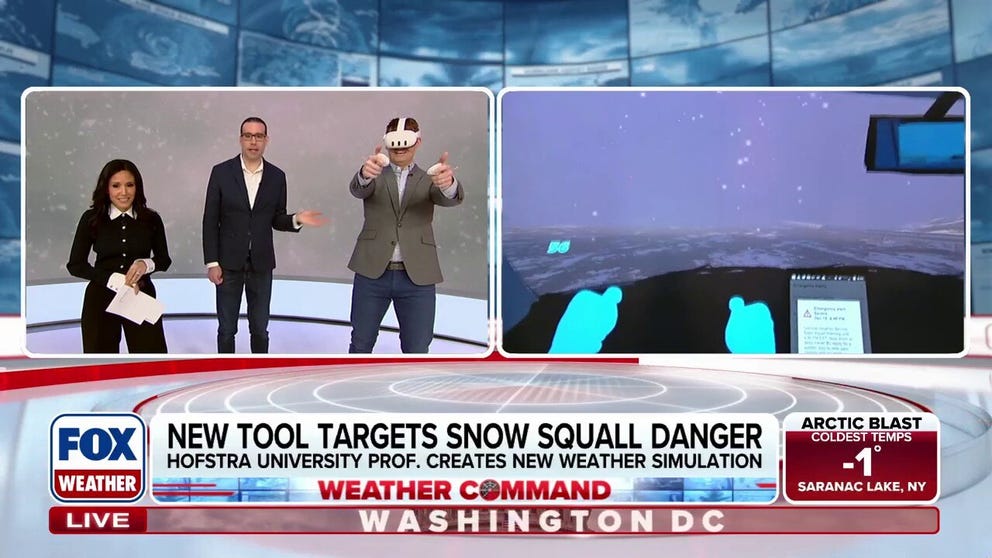
Teaching Driving Safety During a Snow Squall
Dr. Jase Bernhardt, associate professor of geology, environment, and sustainability and director of Hofstra University’s meteorology program, was interviewed by Fox Weather about a virtual reality tool he developed that simulates the danger of driving in a snow squall.

Baby, It's Cold Outside… And That's No Joke for Seniors
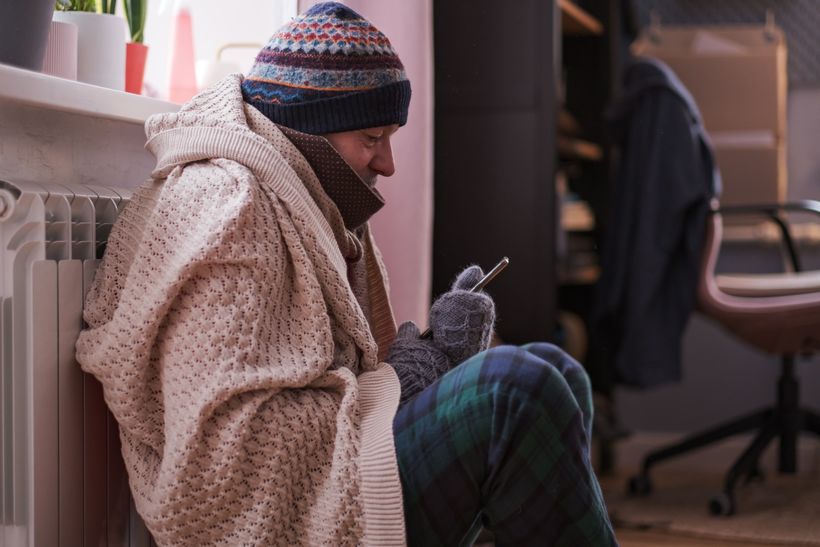
How cold is it? • It's so cold I saw a dog stuck to a fire hydrant. • It's so cold my words froze mid-air and my neighbour had to thaw them out to hear what I said. • It's so cold, I just saw a politician with his hands in his own pockets. Okay, I'm joking—but just a bit. Because while I enjoy a good cold-weather quip, hypothermia isn't funny. Currently, this severe Arctic blast is gripping Canada and large parts of the United States, dropping temperatures 20–40°F (11–22°C) below seasonal norms across a 2,000-mile stretch of North America. Nearly 80 million people are under winter storm warnings. Power outages are anticipated. Roads could be impassable. Travel is about as appealing as a root canal in a snowstorm. For many seniors on both sides of the border, this isn't just an inconvenience—it's a real safety risk. The Cold, Hard Stats (Brace Yourself) Looking at the research I couldn't believe what I found: Older adults are more than 5x as likely to die from hypothermia as younger adults (Kosatsky et al., 2015). In the U.S., approximately half of all hypothermia deaths are people over 65 according to data from the CDC. In Canada, adults over 75 are more than 5 times more likely to die from hypothermia than younger adults—and 87% of those deaths happen right in their own homes. (StatsCan Health Infobase ) Read that again. Slowly. Not on frozen lakes. Not stranded on highways. Instead, in familiar living rooms. Sitting on well-worn couches. Beneath afghans crocheted by someone who loved them. Why Your Body Becomes a Cold -Weather Traitor Our bodies change as we age, and not in the fun "I've earned every wrinkle" way. The insulating fat layer under the skin thins. Circulation slows. Metabolism drops like your interest in small talk. Certain medications—prescription and over-the-counter cold remedies—can interfere with temperature regulation and awareness. Your body's thermostat? It's on the fritz. Here's the math: Hypothermia doesn't require a blizzard. It can begin indoors when temperatures fall below 65°F / 18°C. And here's the truly dangerous part: hypothermia affects the brain first. Judgment declines before shivering becomes severe. You don't realize you're in trouble. You just feel "a bit chilly" while your core temperature quietly drops. Stop Acting Your Age! (But Also... Dress as if you know your age) I'm all for embracing life at every stage—hiking to Everest Base Camp at 60-something, teaching Zumba, and that MBA thing at 70, refusing to "act your age." But embracing life in this weather requires wisdom, not bravado. Cold weather brings real risks: • Slips and falls on icy surfaces (and no, we don't bounce like we used to) • Increased risk of heart attack and stroke because cold thickens the blood • Respiratory infections that linger far too long • Frostbite on fingers and toes • Hypothermia that clouds thinking before any alarms sound. The Indoor Survival Guide—Keep Up (Yes, You Can Get Hypothermia at Home) Set the thermostat to at least 68–70°F (20–21°C). This is not a time to be a miser. Heating bills can be expensive, but hospital stays are even more costly. And they don't even give you warm blankets anymore. Layer like a pro. This is not the time for fashion minimalism. Think: • Long underwear or thermal leggings • Pyjamas under clothes • Stockings or tights under pants • Two pairs of socks • Warm boots with good tread (essential for any outdoor ventures) • Shirts layered under sweaters When it's this cold, if you still own leg warmers—congratulations. Wear them. The warmth is worth the call from the '80s asking for them back. Hats indoors are permitted. This isn't a fashion show; it's survival style. You lose a lot of body heat through your head. Emulate your inner Elmer Fudd if you need to. Carbon monoxide alarms are essential & in many areas legally required. When temperatures drop, people get creative—and desperate. Space heaters, fireplaces, generators, kerosene heaters, or (please, dear God, don't) using gas ovens for heat. That last one is about as safe as texting while skydiving. And here's an important PSA: Starting January 1, 2026, Ontario's updated fire code mandates a functioning carbon monoxide alarm on every level of homes that have fuel-burning appliances. Remember to test alarms when you change your clocks for daylight saving time—it's easy to do, and not easy to forget. Block drafts like you're defending a castle. Roll towels under doors, seal windows, close unused rooms, open curtains during sunny days, and close them tightly at night. Check your medications. Ask your pharmacist or doctor if any prescriptions or over-the-counter remedies influence temperature regulation or alertness. Knowledge is power—and warmth. Check Food & Other Supplies. If venturing out feels risky, order groceries for delivery. Services like Voilà by Sobeys, Instacart, PC Express, and many local grocers deliver directly to your door. This isn't laziness—it's smart risk management. Most delivery services are free or inexpensive, especially when compared to the alternative: icy sidewalks, falls, broken hips, or getting stranded in extreme cold while wearing inadequate footwear because "it's just a quick trip." Clear Your Snow. Snow and ice hinder movement. Limited movement results in isolation. Isolation worsens depression and cognitive decline. Clear snow isn't just about safety—it's about dignity. Pro Tip: Protect Your Pipes (and Your Wallet). Winter power outages can mean burst pipes and serious water damage. If you expect a prolonged outage: • Know where your main water shut-off is • Turn it off • Open faucets to drain the lines It feels extreme—until it doesn't. Until you're standing in three inches of water at 2 a.m., wearing your emergency leg warmers. Know or Live Near an Older Adult? Here's Your Cold Weather Action Plan Don't ask if they need help—just do it. Clear the porch. Shovel a path. Salt the steps. Think of it as the winter cousin of snow angels: shovel angels. Be one! When people Are Shut In—Go check in with them. For those stuck indoors, reach out by video, not just text or voice. Seeing someone tells you far more than hearing "I'm fine." Use FaceTime, Zoom, WhatsApp, or Google Meet. Do this with older people you know. Because pride prevents people from asking for help. Shame prevents people from being honest—about empty fridges, sleeping in mittens, or wearing coats to bed. Look for these signs: • Confusion or slurred speech • Shivering—or lack of it (paradoxically dangerous) • Pale or bluish skin • Slow movements or lack of coordination • Extreme fatigue Know When to Call for Help If something feels off, err on the side of safety. In Canada: • Telehealth Ontario: 1-866-797-0000 • Quebec: 811 • Other provinces: Know your local health line If you notice any signs of distress—confusion, chest pain, shortness of breath, severe cold exposure—or if you're unsure, call 911. Cold-related emergencies escalate rapidly. The Culture Shift We Need—Right Now Cold snaps reveal faults in our systems and communities. This is the time to foster a check-in culture: a call, a knock, a cleared walkway, groceries dropped at the door. Preparation matters. Connection matters more. Winter is temporary. The habits we build to take care of one another are not. Be cool—and stay warm out there, friends. Sue Don’t Retire… Rewire! What are your best winter safety tips? Share them—because staying warm is better when we do it together. Want more of this? Subscribe for weekly doses of retirement reality—no golf-cart clichés, no sunset stock photos, just straight talk about staying Hip, Fit & Financially Free.