
Experts Matter. Find Yours.
Connect for media, speaking, professional opportunities & more.

Experts from the Centre for Personal Financial Wellbeing will examine the daily financial struggles of low to moderate income UK households The Real Accounts project will capture day-to-day financial fluctuations, understanding household money management strategies It is hoped the results will help inform policy and market innovation and debate. New research by the Centre for Personal Financial Wellbeing at Aston University will shine a light on the real day-to-day experience of financial uncertainty among UK households and help inform policy and market innovation and debate. The Real Accounts project will build an in-depth understanding of the lived experience of financial uncertainty among low to moderate income households across the country. Believed to be the first of its kind in the UK and in contrast with the snapshot data achieved by annual surveys, this long-term study will provide a fully joined-up view of household finances, capturing the day-to-day, week-to-week ups and downs, working with households to understand the situations they face and the strategies they use to manage their money. The project will be a collaboration with Nest Insight and the Yunus Centre for Social Business and Health at Glasgow Caledonian University. Experts will use a research data collection app that has been custom designed by Moneyhub to capture real-time income and expenditure transaction data over six months for a sample of around 50 low to moderate income households, combined with monthly interviewing. Professor Andy Lymer, director of the Centre for Personal Financial Wellbeing at Aston University, said: “We are really pleased to be part of this innovative project, directly focusing on real experiences of managing financial volatility and the impact that has on broader aspects of wellbeing. Too little is currently known about the scope and scale of income and expense volatility experienced by UK households. This research is really timely given people are currently facing the very significant impact of the cost-of-living crisis and often enormous uncertainty about both their incomes and their expenditures. The outcomes of this work will generate deeper understanding of what it means to experience financial challenges in reality and over sustained periods of time. It will contribute to finding better ways to help people in their everyday lives and is a perfect fit for the focus of our Centre that seeks to deepen our understanding of what matters in creating personal financial wellbeing.” Sope Otulana, head of research at Nest Insight, said: “As the rising cost of living continues to impact households across the country, and levels of household debt climb, this research is more crucial than ever. The project aims to shine a light on exactly what it is like for households today managing volatile income and expenditure, sharing their first-hand stories. While large income and expenditure datasets track individuals and their behaviour out in the world, this research puts individuals back into the contexts where their financial lives play out, focussing on the overall household – partners, parents, siblings, friends and other social connections. It will look beyond the balance sheet to also analyse social, environmental, and health factors, as well as other dynamics that can come into play and affect household finances. The research will identify trends but also capture the variation within households, recognising that there is no ‘average’ household circumstance or experience.” Alex Christopoulos, Aviva Foundation lead and senior strategic adviser and consultant, said: “Millions in the UK are struggling and worried about money. The Real Accounts research provides us with an opportunity to understand how these households are managing to get by day-to-day; the choices they make, the strategies they take and the knock-on effects this has on other areas of their life. In uncertain times, we need to better understand how people deal with fluctuations in their incomings and outgoings – and what kinds of financial support and services might enable them to build a buffer, and a plan, to deal with today’s pressures, as well as what tomorrow may bring. The Aviva Foundation is proud to be supporting Nest Insight and its partners to deliver to the Real Accounts research.” Samantha Seaton, CEO of Moneyhub, said: “It is only when we have in-depth and holistic data on a person's or household’s finances that we can truly know and begin to understand the impact of the rising cost of living. This can only be successfully achieved by bringing all of an individual's or household’s financial data together in one place, from every-day spending to long-term projects such as buying a property and saving for retirement. At Moneyhub, we’re absolutely delighted to be providing our cutting-edge technology to enable Nest Insight and its partners to collect and analyse this crucial data. We know from our own users the pressure that the current economic situation is placing on them, with many unable to save resorting to borrowing to get by each month. Having thorough data and insight will enable any solution to be highly personalised in its approach and have a much more positive impact on those that require it most. Ultimately the more real-time financial data points, the more informed the decisions can be. It has always been our purpose at Moneyhub to improve financial wellness, and this project is just one example of how we’re using Open Finance to do exactly that.” You can find out more about the project here.


Aston University student and graduate business startup support programme marks 10th year
BSEEN is a collaboration of four Birmingham universities, led by Aston University It has helped over 800 new businesses to launch through intensive startup bootcamps and a network of business mentors An awards dinner was held on 4 May to celebrate a decade in operation. An Aston University student and graduate business startup support programme has celebrated its 10th year in operation. BSEEN, a collaboration of four Birmingham universities led by Aston University, marked a decade of supporting student and graduate entrepreneurs with an awards dinner on 4 May 2023. Mike Bander, an Aston University alumnus and recipient of an honorary doctorate, was guest speaker and gave a keynote speech. The programme has helped over 800 new businesses to launch through 31 intensive startup bootcamps and a network of 85 business mentors. The awards night at Fazeley Studios in Birmingham showcased the student and graduate entrepreneurs supported by BSEEN and the mentors and professional services organisations who have worked to help startups through surgeries, drop-ins and round table discussions. Mike Bandar, international business trainer and speaker and founding partner of Turn Partners, said: “The power of the collective community has changed “I” into “us”. Personal ambition is essential, but the true spirit of entrepreneurship is to unite, collaborate and transform. Diversity gives us strength by not seeing competitors as rivals, but partners.” Professor Zoe Radnor, pro-vice chancellor and executive dean of the College of Business and Social Sciences at Aston University, said: “I have heard so much about BSEEN that was amazing and I am looking forward to supporting young people to achieve their goals despite European funding for the scheme coming to an end.” Paula Whitehouse, deputy dean for enterprise and engagement at Aston University, said: “The programme has delivered a big social and economic impact with businesses ranging from hand-crafted paper goods to medical devices.” Carolyn Keenan, BSEEN project manager, said: “It has been a privilege to be involved with the programme from the beginning.” The eight awards presented during the event went to the following: BSEEN Rising Star Winner: Ruth Mestel and Charis McRoberts, Calathea Arts Highly Commended: Denise Amory-Reid, Amory R Management BSEEN Champion Award Winner: Ben Brophy, Ad Valorem Accountants Highly Commended: Richard Freeman and Jamie Partington, Higgs LLP Award for Technology Winner: Alliyah and Amirah Khan, Our Tied Camel Highly Commended: Safe Queen Team Award for Creative Industries Winner: Morgan Grice, Odd Orange Highly Commended: Andrea Craciun, Sweetest Mango Illustration Award for Innovation Winner: David Akraka, Akreon Technology Highly Commended: Hardeep Randhawa, ProLimbs Award for Social Impact Winner: Cleo Morris, Mission Diverse Highly Commended: Jamaal O’Driscoll, O’D Collective BSEEN Community Award Winner: Shovon Wiggan, Inspire-a-Doll Highly Commended: Janani Prasad, Supabite.com Award for Small Business Growth Winner: Bobby Bradstock, Serenity Psychotherapy Highly Commended: Joseph Housley and Connor Watt, Narce Media and Ben Curtis, Hobby Store Group. To find out more about the BSEEN programme, click here.

Expert Insight: The Voice of Alexa: How Speech Characteristics Impact Consumer Decisions
In the 2020 film “Superintelligence,” an all-powerful artificial intelligence attempts to take over the world, and it studies an average person, played by Melissa McCarthy, to decide if humanity is worth saving. The AI is voiced by James Corden—a voice it chooses because it knows it’s one McCarthy’s character will engage with. Rajiv Garg, associate professor of Information Systems & Operations Management at Emory’s Goizueta Business School, shows the “Superintelligence” trailer before his research presentations to set the tone. Garg conducts research that explores the impact of artificial intelligence voices on consumer behavior and purchase intent, along with Haris Krijestorac, a professor at HEC Paris, and Vijay Mahajan, a professor from The University of Texas at Austin. Garg’s research began when Amazon launched celebrity voices for its Alexa device in 2019. From Samuel L. Jackson to Shaquille O’Neal, users can now get their news and entertainment, while interacting with their favorite superstars. “I questioned if certain voices could get more engagement or more purchases from consumers,” Garg says. If Alexa starts talking to you in Samuel L. Jackson’s voice, will you continue the conversation? What could Samuel L. Jackson’s voice sell you that you would buy? Garg and his team began their research by collecting more than 300 celebrity voice samples, which they analyzed based on their sound characteristics, such as amplitude, frequency, and entropy. They looked at 20 sound characteristics and identified that all the voices could be segmented into six clusters: ostentatious, colloquial, friendly, authoritative, seductive, and suave. The team then created advertisements for select products using computer generated voices for each of the six clusters, opting for artificial intelligence-created speech instead of celebrity deep fakes due to permission legalities. They chose a shoe and an office chair as their products, and created two different advertisements for each product. One ad was simple, denoting the shoe as comfortable for all-day wear and the office chair as comfortable for sitting in for extended time periods. The other ad was hedonic, denoting the shoe as crafted with Italian leather and the office chair equipped with several massage features. They recorded the four advertisements using both a female and male voice for all six voice clusters. Study participants listened to each of the four advertisements in one of the 12 voices, which was randomly selected. After the advertisement was played, participants were asked if they wanted more information, and later, if they wanted to buy the product (omitting the price as to not add another factor to their decision making). Influencing Consumer Behavior For simple, utilitarian products, they found no significant effect of voice on information seeking behavior. Garg says once participants hear this type of advertisement, they simply decide to purchase or move on. Participants do, however, engage more in information seeking behavior for hedonic products when the voice is ostentatious, seductive, or authoritative. The team also found men were more likely than women to engage with ostentatious or seductive voices, and women were more likely to engage with friendly or colloquial voices. Overall, they found participants did not seek information with male voices. For information seeking, men and women only engage if the voices are female, which is somewhat intuitive. The industry is doing this—Alexa, Google, and Siri all have a female voice. In terms of purchase intention, they found ostentatious voices have higher yields for utilitarian products. Men, especially, were more likely than women to purchase a utilitarian product advertised in an ostentatious voice. Think about advertising a stapler. It’s a stapler—it staples paper—but you advertise it in a French accent to make it sound interesting. Conversely, for hedonic products, an ostentatious voice has a negative effect on purchase intent because Garg says it can make the product sound gimmicky. Their research shows colloquial voices do the best here because people focus more on the advertisement’s content. Across the board, they found seductive voices have a negative effect on purchase intent, but more so on utilitarian products compared to hedonic ones. Men were more likely than women to respond positively to seductive and suave voices. Applying the results Voices are another way smart device companies can personalize their customers’ experiences. Garg says these companies should be aware that there may be a certain voice that will garner the best engagement. Their findings are not isolated to business, but may apply to other industries, such as the media. Garg says, for example, if publications intend to increase reader curiosity and engagement, they should use a female colloquial voice on “click to listen” features. Although not yet tested, Garg says he wouldn’t be surprised if their results extend to real-world settings with real human voices as well. During their research, Garg’s team asked participants if they had heard the advertisement voices before, and about 15 percent of respondents says they had. "These were voices we’d created for the first time,” Garg says. “If they say they’ve heard the voice before, that means they were thinking of them as human voices. Although we didn’t study it that way, I do believe what we’re seeing will be relevant for actual human being’s voices and interactions.” Having researched this for years, Garg says every time he listens to a voice, whether a customer service representative or podcast host, he questions whether or not it is impacting his behavior. A lot of times when I’m making a decision, I know that I’m making that decision passively because of the voice. “I’m acting 50 percent based on the rational information in the voice, but the other 50 percent I just want to listen more. There is an inherent desire for a certain voice.” Garg says his favorite part of the research are those “aha moments,” whether they be the influence of voice in his own life or in the industry—such as large companies using female voices in their products to draw engagement. He says he hopes to continue doing this kind of research to help startups and other companies perform better, as AI-powered voices continue to change the way people interact with technology and consume information. “We’re finding these interesting phenomena that can help create new products that are more effective,” Garg says. “I am trying to increase the economic surplus, in some ways to improve society, and this technology presents numerous opportunities.” Looking to know more? Rajiv Garg from Emory’s Goizueta Business School is available to speak with media – simply click on his icon now to arrange an interview today.



Expertise Marketing and Content Marketing - Is There a Difference?
We often get asked the question about how Content Marketing compares to Expertise Marketing. It’s ironic that still to this day many of our academic clients don’t refer to what they do as “content marketing.” But corporate customers are well acquainted with the importance of developing content to build reputation, relationships and revenue. Adding to the confusion are all the names that are bantered about by marketing departments and agencies - There’s inbound marketing popularized by companies such as Hubspot. And there are more bespoke “Thought Leadership” programs that are often developed by outside agencies such as Weber Shandwick and Edelman. While there are a lot of common elements to these programs there are some important differences that we focus on when developing and launching Expertise Marketing programs with our institutional and corporate clients. Here’s a deeper dive to help you better understand the value of Expertise Marketing. Introducing Expertise Marketing Expertise marketing is the practice of making the knowledge and skills of your human resources more visible to your partners and audiences. It draws attention to the value that your people can bring as brand ambassadors and strategically leverages the work your experts are doing to tell a more personal story. In many cases, expertise marketing can also be used to showcase your strengths in research and innovation. Creating a stronger digital presence, expertise marketing more effectively uses your channels to connect with audiences such as media, customers, partners and donors. It builds a sense of trust with your customers and above all else, it helps establish your reputation as an industry leader. ex•per•tise mar•ket•ing 1. The practice of collectively promoting an organization’s experts as brand ambassadors to demonstrate their skills or knowledge. 2. Best practices to publish and connect The Value of Expertise Marketing Reputation - Positions research, client work, thought leadership perspectives and achievements in the context of relevant topics that are in the news. Market Awareness - Expertise marketing makes it easier for key audiences to find expert content and people in search engines and on the organization’s website. Audience Engagement - Provides more intuitive search features for visible content which can be expanded to include assets such as video, social, and publications to drive richer conversations with audiences. Metrics on performance in areas related to expert development, content contribution and audience engagement page views and inquiries can be tracked. Demand Generation - Increased number of direct leads/ inquiries from audiences such as: Customers/Students Industry Partners Alumni Donors Media New Employee Recruits Conference Organizers Talent - Better engage stakeholders, researchers & subject-matter experts in the development and distribution of content while improving recruitment and retention of talent. Internal Collaboration - Better coordinate the knowledge and resources across internal communications teams and other departments as they engage experts. Provide a faster, more efficient way to generate content for breaking news and events. Content Contribution - Increase the size of the organization’s digital footprint by aggregating more content and distributing it contextually to multiple websites and third-party databases. Efficiency - Help employees get their jobs done faster and more efficiently. Enable them to find information faster, speed up internal processes and foster collaboration among people in multiple locations. Leverage Current and Future Infrastructure - Properly integrated, new technology investments should integrate seamlessly to leverage existing/proposed infrastructure such as content management systems (such as WordPress™) and marketing automation systems (such as Hubspot) How is Expertise Marketing Different from Content Marketing? A More Human Approach: People buy from people. That’s why content that is more personalized and attributed to specific experts who are well-identified as expert sources is far more trusted than most company-sponsored content. A More Collaborative Process that Engages Employees: A more structured “win-win” model empowers experts to contribute their knowledge. Expertise marketing is a proven way to build culture and celebrate diversity which assists with talent retention and recruitment. An Efficient Way to Create More Content to Boost SEO & Website Traffic: Engaging your experts creates a larger hub of “owned” content that is proven to boost PageRank in search engines and site traffic. Expert content is used by organizations to enhance their “About Us” page, staff/faculty/physician directories, newsroom pages, research pages and speakers bureaus. Optimized Content Formats Better Connect with Audiences: A variety of short format, long format and visual content formats (such as expert profiles, blogs, Q&A and videos) are designed to engage specific audiences at various stages of the customer journey. Improved Calls to Action & Analytics Boost Demand Generation & Leads/Inquiries: Experts become more approachable as “lead magnets” that generate measurable inbound opportunities, avoiding common issues of lost customer leads due to poor processes and workflow. You might be surprised at how much value expertise marketing can bring to your organisation. The chances are, that the time you are currently spending on ineffective content marketing strategies will be greatly reduced with a redefined focus on expertise marketing. By putting the focus back on the skills and relevance of your experts, as people, you're not only making them more visible but also establishing your brand reputation which will simultaneously generate more leads and increase efficiency.




Amanda Hewes, MS, education program manager at ChristianaCare’s Gene Editing Institute, has been named one of the 2023 Outstanding Delaware Women in STEM by Million Women Mentors, an international movement dedicated to encouraging girls and women to pursue careers in science, technology, engineering and math (STEM). Hewes’ selection spotlights her dedication to engaging young people in the science of gene editing by introducing the Gene Editing Institute’s CRISPR in a BoxTM educational toolkit into classrooms across Delaware and her commitment to bridging disparities in STEM education. “I’m overjoyed to be honored among so many amazing women in this state,” Hewes said. “It’s humbling to be considered and to stand alongside them. All of these women foster and lead dynamic communities of young women that inspire me every day. I hope that I can do the same by making young women in this state feel empowered through the work that I do.” Hewes joined ChristianaCare’s Gene Editing Institute in 2017 with a focus on expanding its CRISPR gene editing system in a cell-free environment. She was first author in a publication in Nature that established the highly innovative “gene editing on a chip” protocol that allowed CRISPR to edit DNA outside of the cell for the first time. This methodology enables researchers to take fragments of DNA extracted from human cells, place them in a test tube and precisely engineer multiple changes to the genetic code. This gene editing system eventually led to the creation of the CRISPR in a Box™ toolkit. This innovative educational resource provides a way for students to learn about this exciting frontier of science through a hands-on exercise in which they use CRISPR gene editing to disrupt a synthetic gene within a plasmid. The simplicity of this experiment allowed for the reaction to be developed into a remarkable teaching tool that can be brought into most school laboratories containing basic laboratory equipment. Once CRISPR in a Box™ was developed, Hewes recognized the potential it could have for high school and college students. She took on a new role as education program manager and expanded the Gene Editing 360™ platform, which is the Gene Editing Institute’s suite of educational tools for engaging students and the public. “Amanda has set us on a tremendous path toward providing more educational opportunities for Delaware students,” said Eric Kmiec, Ph.D., director of ChristianaCare’s Gene Editing Institute. “She’s inspired young women in multiple states and has created so much of this program with her own ingenuity and passion.” Hewes was honored alongside 10 other women by Gov. John Carney, Lt. Gov. Bethany Hall-Long and others at the Delaware State House with the signing of a proclamation to declare March 24, 2023, as “Delaware Women and Girls in STEM Day.”

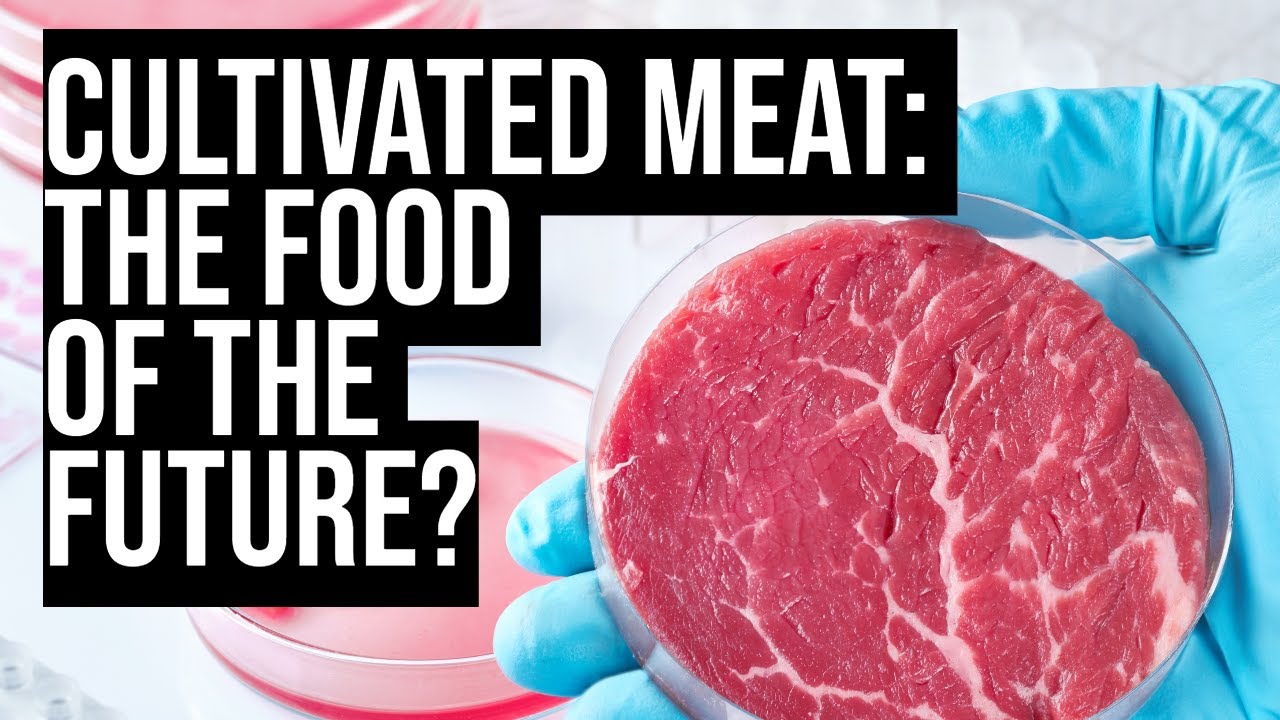
Aston University predicted as one of the UK’s leading centres for lab-made meat
• Aston University named as one of the UK’s leaders in the potential future of food • Highlighted for research, teaching, public outreach, industry links and location • Process uses cells taken from animals via biopsy, so doesn’t involve slaughter. Aston University has been named as one of the UK’s leading lights in what is predicted to be the future of food - lab-made meat. The University is one of 17 higher education institutions that are expected to play a major role in the development of cultivated meat. Cultivated or lab-grown meat is made from cells taken from animals via biopsy. The cells are used to create meat which doesn’t involve the slaughter of animals. The process promises fewer greenhouse gases and a decrease in land required for its production compared to traditional livestock. The list of universities has been compiled by Cellular Agriculture UK, a non-profit organisation which promotes the UK’s so-called ‘cell-ag’ sector. Aston University is one of five institutions they chose to highlight in their report Mapping the potential for UK universities to become research and teaching hubs for cellular agriculture. Aston University is described in the report as having potential to be an anchor institution for cellular agriculture, and was highlighted for its research and teaching, public outreach work, links with emerging industry and its central location. Dr Eirini Theodosiou, senior lecturer in the School of lnfrastructure and Sustainable Engineering, focuses on ways to produce enough cell mass to create the meat. She said: “This is still a relatively new food technology. Unlike many others we work on biomaterials for microcarriers/scaffolds for cultivated meat, which puts us in a very strong position, in the UK at least.” Meanwhile Dr Jason Thomas’ work explores the psychology behind supporting people to accept lab-made food. Although many people are willing to try it, there are still many who are reluctant to do so. A recent study of the US and UK found that 35% of meat eaters and 55% of vegetarians claimed they were too disgusted by the idea of cultured meat to even try it. A key goal of his research is how to support people to not just try it but to integrate it into their diet. Dr Thomas said: “We are interested in finding out what factors can influence consumer purchase of and consumption of lab-made meat.” “The engineering/psychology link is one of our USPs and is something Aston University can capitalise on; learning what the consumer wants from cultivated meat, and what would encourage them to consume it, using psychological science, and then incorporating this directly into the production process via engineering. “It is a relatively new food technology, and much work still needs to be done to make it affordable, acceptable and on a massive scale, but it could easily end up being one of the most transformative new foods of the 21st century.”


CAA South Central Ontario is excited to announce a partnership with HAAS Alert. The new partnership will send CAA-specific warnings to popular traffic and navigation apps. Through the CAA dispatch system, Safety Cloud© by HAAS Alert will send warning messages of “CAA Rescuer Ahead. Slow Down, Move Over” and “Vehicle Breakdown. Slow Down, Move Over” to the world’s largest navigation apps, including Waze and vehicles covered by the Stellantis Group OEM (Dodge, Jeep, RAM, Chrysler, and Alfa Romeo). The alerts are specific to CAA member rescue calls but will be visible to anyone who uses the alerting platforms. “As longtime advocates for road safety, CAA is always on the lookout for new and innovative ways to enhance safety on our roads. The new partnership with HAAS Alert helps drivers obey the law and provides an extra layer of safety to those who are stranded and to our Roadside Assistance Rescuers,” says Teresa Di Felice, assistant vice president of Government and Community Relations at CAA South Central Ontario. Every year CAA clubs across Canada mark the second Tuesday of May as National Slow Down Move Over Day. This year, National Slow Down Move Over Day is on May 9, 2023. Across North America, nearly 100 tow truck drivers are killed every year after being struck by oncoming traffic while helping stranded motorists with flat tires, breakdowns, and collisions. “As we approach the summer driving season, it is important for drivers to slow down and move over when approaching a roadside emergency rescue. By doing so, we can help protect the lives of those who work on our roads and highways and make our roads safer for everyone,” adds Di Felice. In Ontario, the SDMO law requires drivers to slow down, and if there is space and it's safe, move over one lane when approaching a stopped emergency vehicle, including tow trucks, with flashing lights. Fines could range from $400 to $2,000 and 3 demerit points if convicted and possible suspension of driver's licence for up to 2 years. By partnering with HAAS Alert and using this technology to warn drivers of stranded vehicles and tow trucks on the side of the road, CAA is working to make our roads safer for everyone. For more information about CAA’s advocacy for road safety and the Slow Down Move Over Law, please visit caasco.com/sdmo.



When Our Feelings Become Physical: Understanding Our Bodily Responses To Emotion
Alicia Walf is a neuroscientist and senior lecturer at Rensselaer Polytechnic Institute whose research interests are fueled by the broad question: Why are there individual differences in stress? This question led to studying hormones' actions for growth and plasticity in the brain and body. She has since refined her pursuit to include consideration of body, brain, and mind relationships as they relate to memory, perception, social cognition, and emotions. Dr. Walf has taken a cross-species and cross-discipline approach in her work. Dr. Walf’s studies of the effects and mechanisms of stress and well-being often occur in the “wild,” such as in architectural built environments, artistic installations, interactions with technology, contemplative practices, conference rooms, and classrooms. Here, Walf examines what we know and what we have yet to learn about the physical manifestations of our emotions. Over 100 years ago, the earliest ponderings of how feelings are reflected in our body were described. Also, several decades ago, the first personality associated with an intense stress response was Type A personality. This personality type is characterized by quickness to anger and competitive drive as well as the negative consequences of chronic stress on the cardiovascular system. Recent work in mice shows that increasing heart rate produces an anxiety-like state (Hsueh et al., 2023, Nature). Now, a focus is trying to link changes in the body with feelings to brain mechanisms. Even after all of these years of study, we do not fully understand if there is a signature bodily response associated with specific feelings. For example, both anger and love (and other feelings that have been studied like jealousy) are associated with changes in the body that look indistinguishable from stress. The heart beat quickens, the eyes widen and the pupils become larger, blood rushes to the muscles and surface of the body. As surface body temperature and blood flow rises with these changes, a blush may become apparent on our cheeks. Indeed, a study showed that people have similar responses in describing which areas of the body are activated or deactivated in different emotional states; that is, where they feel these emotions in their body (Nummenmaa et al., 2013, PNAS). In this study, people said that love most greatly activated the head and trunk, whereas anger’s activation of the body was more focused on the head, arms, and chest. We can agree that love and anger – and all the strong feelings we have – mentally feel quite different from each other and we also have different behaviors. Those differences are likely due to a cognitive component, or how we assess the current situation in relation to what we know and our past experiences. Neuroscientists would argue that there are likely different brain circuits active in an angry and love state (and others), but those precise mechanisms are yet to be figured out. To date, we understand that feelings of love activate a reward pathway. Neurochemical differences may also play a role. For example, release of dopamine in this reward pathway and oxytocin in areas involved in social bonding are tied to love. The challenge of understanding the links between these expressions of emotions in the body to the mechanisms in our brain remains. Walf is available to speak with media - simply click on her icon now to arrange an interview today.


Comment: UK Government alert text message test
The UK government recently conducted a nationwide test of their emergency alert system by sending out text messages to all mobile phone users in the country. The test has sparked a range of reactions from the public, including concerns about the effectiveness of the system and the potential for false alarms. What did we learn from Sunday's test? Is it a concern that it apparently didn't work for everybody? As we would expect, not everything went to plan. However, that is the point of preparing and doing this kind of test – to find out what parts of the system works before it is relied upon. The implementation of a new system rarely works perfectly. Sunday’s test was useful to show people what to expect from the alarm system and to identify any aspects that need to be corrected and improved to make the system more effective. It is not so much a concern that the test didn’t work for everyone; it is only of concern if we don’t know how to fix the problem and/or don’t take identified steps to fix it. Is there a risk that public confidence has been undermined here? Is there also a risk of false alarms? The government needs to manage its public awareness campaign – swiftly and fully. Public confidence need not be undermined as identifying the faults in the system was exactly what this kind of test was meant to do. However, public confidence will be undermined if the government doesn’t explain that to the public and isn’t completely transparent about what happened and what has been done to improve. False alarms are always a possibility, but the benefits outweigh the risks. Having the right information at the right time can help a lot of people in complicated circumstances. Additionally, the government needs to ensure that the message is worded appropriately. The government should continue to keep messages short and simple so that there is no unnecessary worries or panic for the public. What are the key challenges? There are also issues related to people with anxiety or similar who may be overwhelmed by the noise the alarm makes and/or feel extra anxious from the threat of an emergency, even if it is simply a test alert. There are also those who suffer from domestic violence and may have secret phones so more communications on how to protect these vulnerable groups are required. Anyone without a mobile phone device may have been side-lined – senior citizens, vulnerable people, children – anyone without a command of English and/or isn’t really technologically minded enough to have a mobile device is at risk of not receiving these messages. Why do we need a system like this in place anyway? Preparedness is fundamental to mitigate the impact of any negative situation. The UK government is trying to leverage technology available to the public to get them crucial information when facing a crisis. The value of the system is to make people aware of a major danger and provide information about the best course of action which can be key for their protection. Alert systems are a great way to warn people of an impending situation, but equally important is that there are measures in place to handle an emergency such as evacuation procedures and rehearsals. It is the absence of a plan, contingency or knowing what to do in an emergency that transforms an emergency or disaster into a crisis. As such, we need a system like this because it aids in preparedness measures. The Aston Crisis Management Centre is focused on preparedness – whether it is for a business crisis or a natural hazard as we know that preparing for a crisis or disaster will help reduce the impact and may even help prevent some aspects of the disaster from happening. Not only is there a human cost in an emergency but also economic cost. It is important that preparing for crises reduces the impact of both. It is also important to be aware that in times of crisis and emergency it is important to have unified response and this system is the start of that important process. This article was written by David Cantliff, David Carrington, Oscar Rodriguez-Espindola & Lauren Traczykowski of Aston Crisis Management Centre


Gene Editing Institute Opens a Unique Learning Lab for High School and College Students
Free program uses CRISPR in a Box™ toolkit to teach the power of gene editing To inspire the next generation of students to pursue careers in STEM (science, technology, engineering and math) and learn about the power of genomic science, ChristianaCare’s Gene Editing Institute has launched a new Learning Lab on its premises that offers educational programming about revolutionary CRISPR gene editing technology. Located next to the Gene Editing Institute’s lab on the University of Delaware’s STAR Campus, the Learning Lab is a physical space that provides an immersive field trip experience for upper-level high school students and college undergraduates who may not have access at their schools to a laboratory to conduct gene editing experiments. There is no cost for schools to use the lab or for the materials to conduct the experiment. The Gene Editing Institute wants to ensure that all schools have equal opportunity to participate in educational programming at the lab. Students using the lab can perform a gene editing experiment in a single day using the Gene Editing Institute’s innovative CRISPR in a Box™ educational toolkit. All materials in the kit are safe, synthetic materials, and allow students to perform CRISPR gene editing with non-infectious E. coli bacteria. They will be able to see an appearance change indicating gene editing has occurred at the end of their experiment. “Students around the country, no matter where they go to school, have the potential to be scientists, researchers and laboratory technicians,” said Eric Kmiec, Ph.D., executive director and chief scientific officer of ChristianaCare’s Gene Editing Institute. “Our hope is that by creating access and space for students to explore, we can inspire the next generation of students to pursue STEM careers. The Learning Lab allows us to help cultivate the next generation of genetic scientists and strengthen Delaware and our region as a leader in biotechnology.” Education Program Manager Amanda Hewes, MS, developed the Learning Lab after noticing a problem that was undercutting the opportunities of teachers to bring gene editing experiments into the classroom — a lack of space and equipment. Amanda Hewes, education program coordinator, assists students from Wilmington Charter School with their samples of DNA during a Learning Lab experiment. “We don’t want anything to hinder the way students learn about CRISPR gene editing,” Hewes said. “If a student feels like there are too many steps, or a teacher doesn’t have an essential piece of equipment, then we’ve lost an opportunity to bring the next generation of scientists into the lab. We’re striving to break down as many barriers as possible for students.” Learning real-world applications of gene editing The Learning Lab also allows students to speak directly with experts in the field about careers in biotechnology and gene editing as they learn the difference between such things as phenotypic and genotypic readouts in their gene editing experiments. This gives students the chance to ask about the real-world application of genome experiments in a research lab. It also lets them think about their place in a lab setting. “I’ve never been in an actual lab setting before,” said Shiloh Lee, a junior at the Charter School of Wilmington, at a recent class. “I think it is very, very cool to be able to experience it.” “I’ve learned a lot of new skills with the micropipetting,” said Pauline Zhuang, a senior at The Charter School of Wilmington. “We don’t have the same resources at our school. The CRISPR in a Box is such a great resource. My classmates and I have been able to experience, firsthand, what it is like to actually do gene editing.” Through the program, the Gene Editing Institute hopes to educate 1,000 students by spring 2024. Currently, the lab is on track to engage more than 200 students by the end of the spring 2023 semester. CRISPR stands for Clustered Regularly Interspaced Short Palindromic Repeats, which are the hallmark of a bacterial defense system that forms the basis for CRISPR-Cas 9 genome editing technology. The CRISPR technology enables researchers to modify genes in living cells and organisms and may make it possible to correct mutations at precise locations in the human genome in order to treat genetic causes of disease. For more information about the Learning Lab and the educational program, email geneeditinginstitute@christianacare.org.
