
Experts Matter. Find Yours.
Connect for media, speaking, professional opportunities & more.

Aston University and ADInstruments Ltd (ADI) enter 24-month knowledge transfer partnership to develop ground-breaking animal telemetry system World-leading expertise in neuroscience to help bring game-changing system to market Outcomes of KTP will feed directly into the product hardware and software development, ensuring technological advantage for ADI. Aston University has teamed up with research software experts ADInstruments Ltd (ADI) through a knowledge transfer partnership to develop a revolutionary dual-function wireless telemetry system for neuroscience research that is set to transform how implanted biosensors are used for data generation in animals. Telemetry is the automatic recording and transmission of data from remote or inaccessible sources to an IT system in a different location for monitoring and analysis. ADI has an established reputation for developing, supplying and supporting its customers in specific areas of life science research, particularly in cardiovascular science. The company has recently acquired Kaha Sciences, which has developed ground-breaking telemetry technology that can be used to measure neuroscience-relevant signals in free-moving animals for research. The company is looking to use the KTP to harness the world-leading expertise of Aston University to build their reputation in neuroscience. Mark de Reus, head of support at ADInstruments, said: “The evidence-base of research papers, training and support materials from Aston University will be invaluable in improving the product design, identifying development opportunities and embedding a culture of neuroscience within the company.” A knowledge transfer partnership (KTP) is a three-way collaboration between a business, an academic partner and a highly qualified graduate, known as a KTP associate. The UK-wide programme helps businesses to improve their competitiveness and productivity through the better use of knowledge, technology and skills. Aston University is the leading KTP provider within the Midlands. The Aston University team features Professor Gavin Woodhall and Dr Stuart Greenhill from its Pharmacy School’s Pharmacology and Translational Neuroscience Research Group. Professor Woodhall is co-director of the Institute of Health and Neurodevelopment (IHN) and a neuroscientist who studies epilepsy and schizophrenia in rodent models of disease. Dr Stuart Greenhill is a member of IHN and senior lecturer in neuroscience, with a longstanding track record in developing and deploying novel and difficult mechanisms of recording from brain tissue both in vivo and in vitro. Dr Stuart Greenhill said: “It is a privilege to be involved in the development of this important technology, which will be invaluable to thousands of research groups across the globe, and we are delighted to be able to help the product team realise the potential of this device.”


Building Your Own Expert Network - How Expert Personas Help you Organize & Develop Your Talent Pool
As business continues to evolve at an unprecedented rate, companies need new ideas and strategies that help them rapidly transform to keep pace and grow. This explains the massive popularity that expert networks are having as companies look to connect with subject-matter experts with specialized sector and functional expertise who can accelerate their transformation efforts. Expert networks now represent a multi-billion dollar industry, helping companies in a variety of ways. From helping build primary research to assessing new market or acquisition opportunities to conducting due diligence for new technology purchases or competitive benchmarking, expert networks provide a valuable service. While many companies are increasing their use of traditional expert networks, there is also a trend toward organizing and developing internal talent by implementing a "knowledge management platform" or "employee skills marketplace." These can also be extended to engage broader audiences when experts are listed publicly as part of an Expert Center, Media Room, or Speakers Bureau. Depending on the scope and market visibility organizations wish to commit to in sharing their expertise, such programs can yield the following benefits: Improved access to shared knowledge throughout the organization Faster innovation through an improved discovery of key experts available for project opportunities Higher amount of cross-functional engagement between departments A more collaborative relationship with employees through better knowledge engagement and skills development Less reliance on outside consultants and traditional expert networks Improved brand reputation by engaging experts in thought leadership activities Increased media coverage and speaking engagements Improved business development opportunities by engaging experts earlier in the sales process Improved connection with the local community Additional ways to foster Diversity, Equity, and Inclusion throughout the organization What is an expert network? An expert network is a service that matches clients with experts who are willing to share their knowledge and advice via short conversations. These are usually in the form one hour long expert interviews conducted with the client. Expert networks such as GLG, AlphaSights, Guidepoint Global, Third Bridge, and Coleman Research help match the client's interest to specific experts in their private database of experts on call. They also look after logistics such as scheduling the expert interviews and have detailed processes for qualifying experts to ensure compliance with the exchange of information. And they handle time tracking and billing of interviews which are typically charged based on an hourly rate. They also handle the payment of fees to the experts following the interview. Building your own knowledge platform There is a growing trend towards organizing their expertise given the profound challenges organizations are facing. And these challenges didn’t just start when the pandemic hit. In a recent Deloitte survey, 63% of executives reported that work in their organizations is currently being performed in teams or projects outside of people’s core job descriptions, 81% say work is increasingly performed across functional boundaries, and 36% say work is increasingly being performed by workers outside of the organization who don’t have defined jobs in the organization at all. Yet fewer than half (42%) of respondents say their organization’s job descriptions do an “excellent job” of specifying the work that needs to be done in their positions. As work becomes far more fluid, packaging skills into rigid job descriptions leads to a lot of untapped human capital in organizations. It’s an issue that hasn’t gone unnoticed by leadership. Research shows that only 18% of executives strongly agree that their workforce is using their skills and capabilities to their fullest potential. 85% of HR and business executives say organizations should create more agile ways of organizing work to improve speed and swiftly adapt to market changes. These issues underscore the need to better organize and develop internal talent by implementing a "knowledge management platform" or "employee skills marketplace." This is for a variety of reasons. With vast amounts of acquired knowledge pooled across various departments and teams, it can be difficult for other employees to access this knowledge when it is outside their area of expertise - as the old saying goes, “people don't know what they don't know.” Organizing your expertise for external audiences also can provide huge benefits for building reputation, relationships, and revenues. How to position your experts as industry thought leaders More and more organizations are looking at employees who can advance their innovation efforts internally, often as part of a cross-functional team or special project. And there are also important revenue-generating activities, such as sharing research and perspectives through content generation (blogging, webinars, podcasting) or speaking (at internal events, industry conferences, or as an expert source for media interviews). Determining how to best identify and put experts to work isn't a simple process. That's because to do this right requires a more disciplined approach to assessing and developing the talent across your organization. One that goes beyond linear career paths and traditional job titles we assign to employees. It also requires a more progressive approach to diversity and experience. One that is not simply correlated to seniority or authority in an organization. Given the current state of the talent market, most organizations are also recognizing the importance of managing their talent, listening more to employees, and helping them achieve their goals - both professional and personal. And that extends to how best to tap into their skills that can benefit the organization both internally and externally. That's why we developed a talent framework that helps identify opportunities where subject-matter experts can best contribute as well as potential options for professional development. To make this process more intuitive, we have developed a model that outlines 4 "expert personas" that detail the various characteristics related to experts in an organization along with a potential development path. Level 1: Experts in the "Practitioner" persona group can offer their organizations a wide range of skills. Our research and in-field experience with companies focused on innovation reveals that organizations can realize significant gains by tapping into this broad pool of talent. To better engage practitioners, we have helped universities better engage their Ph.D. candidates who are approaching graduation to conduct research and writing content that promotes their work and institutional brand to prospective students or donors. This also extends to corporate innovation. A recent example of this was our collaboration with a Fortune 500 company in the CPG sector, where we completed the build of an internal expert network. One of the key challenges this organization faced was the inability to quickly engage with “practitioners” - subject-matter experts across the organization who could help with specific R&D and innovation projects. While this organization had legacy HR and intranet communication platforms, they had experienced a number of challenges engaging their researchers. To make things worse the pandemic forced many to work from home, creating the need for more opportunities to engage online. They needed the ability to conduct simple searches to find other researchers relevant to their work who could help them with projects. Our research/writing team started the process by taking an inventory of experts and then developed profiles for each researcher in collaboration with the company’s research/innovation team using the ExperFile SaaS software platform. With the unique data structure used to categorize this broader set of biographical information, we then enabled advanced search capabilities to build a private, SOC2 (security) compliant expert network which was easily integrated into their existing talent platforms. With thousands of researchers across the globe, they now have the ability to quickly search for experts on areas such as skills, topics, work experience, research publications, company/industry experience and IP/patents. It’s important to note that activating all this hidden expertise not only lays the groundwork for faster innovation. It also can reduce the fees associated with outside expert networks and consultants, maintains tighter internal control of proprietary research information and forges stronger collaborations between experts across the globe. Level 2: The "Ambassador" category represents experts with a more developed set of skills and a reputation both inside their organization and within their community of practice. Working with them to generate more exposure through internal speaking engagements and within their local community is a great way to create market visibility. For example, we have worked with a number of professional services firms to make experts at this level more visible in their local markets. Building reputation and generating new client opportunities with thought leadership activities such as blogging, webinars and speaking at local business events or on podcasts is a proven way to tap into this talent. These activities have allowed organizations we have worked with to bring in new clients and increase revenues across various practice areas. Ambassadors are also perfect for involvement in on-campus recruitment events where competition for talent is high. Particularly in fields such as engineering, law and accounting. One way to make these experts more approachable to a wider audience is by creating a speaker’s bureau. Remember that not all your experts will be comfortable speaking to the media, however, they can still meaningfully contribute as a keynote speaker or panelist at an event. Organizing your experts on key topics enables local event and conference organizers to find you more easily in Google search results and on your website. In addition to getting your experts on the podium, it’s a proven way to get your expert's guest appearances on webinars and podcasts. Given the growing importance of these channels, we recently formed partnerships with the leading marketplaces for webinars and podcasts - BrightTalk and Podchaser to help our clients promote their experts for speaking opportunities. Level 3: Experts in the "Authority" category have developed a strong reputation as an expert in their field, often speaking at academic or industry conferences. At this level, they have also developed a degree of proficiency in speaking as an expert source with the local or national media. They can be found speaking as a guest on podcasts to share their knowledge and are often active on social media. In higher education, these people are critical to helping media relations and other departments generate media coverage that is essential to building a reputation. We have worked with many organizations that effectively engage their Authorities by staying connected to their research and publications and collaboratively creating regular content with them to reach a broader audience. You will find regular opportunities to boost coverage with local and national media by utilizing this group of experts. We work with media teams to conduct Google Search (SEO) analysis to identify what topics their target audiences are searching for. This allows them to more strategically focus on key experts to promote. They are also focused on delivering more engaging content formats such as video interviews and Q&A to boost Google PageRank and audience engagement across their website. And they are working collaboratively with their faculty to post media advisories and a regular stream of content that contributes to higher rates of discovery by journalists looking for expert sources. Level 4: Experts in the "Evangelist" category are those go-to experts that you often see in the media as key spokespeople representing a certain topic. They are seen as notable authorities with deep domain expertise within their community of practice which has often been earned through heavy research and publications. Chances are they have also authored books that provide a path to speaking engagements at conferences and media interviews. These are also the people who have developed a regular audience through blogging or by hosting a podcast and have a well-established social media following. Ultimately, what separates this group from the others is the significantly broader market profile they have earned as a thought leader. These individuals have an intuitive sense of how to communicate complex topics in a relatable way that both educates and engages. That makes them particularly valuable to the organizations whose brands they represent. Given the degree of qualifications required to operate at this level, it’s to be expected that you will find far fewer “evangelist” category experts in any organization. Many are naturally found within the ranks of the executive team. These are the people who are comfortable in interviews, and most have extensive public speaking experience appearing on a large stage and on radio and television. At this level, organizations need to be far more strategic about how they utilize this talent pool to build a reputation and reach a wider audience. We have seen first-hand how strategic thought leadership programs can build a platform for these experts that can pay huge dividends. One healthcare system we have worked with recently forged a relationship with ABC News to feature one of their medical experts (a medical doctor) on a weekly segment related to important Covid-related health topics. Given the frequent appearances this expert has made on television, this was an earned media home run and a great way for this healthcare system to build visibility and trust within the community by providing accurate medical information. Their commitment to making their medical experts more discoverable and approachable online has also helped them promote their strengths in areas such as cardiology, neonatal, cancer, and genetic research. And the results are impressive. Over the past year, they have doubled their national media coverage and are currently outperforming much larger healthcare systems in their area. How to organize your experts Personas by their very nature are designed to provide a more standardized approach for planning using "clusters" of talent that are grouped against common characteristics. However, we're very aware that they cannot possibly capture all the nuances you will find within your organization when it comes to talent. But our experience helping leading organizations in knowledge-based industries to better manage thousands of experts shows that having a more methodical approach pays off. It optimizes the internal/external contributions and the development paths of experts to create win-win opportunities. but it also helps forge a stronger connection with employees who feel their organization is taking the development of their professional skills more seriously and more actively creating avenues for them to engage and contribute. With an understanding of these personas, we can then focus on another important consideration - where can we best engage our experts to more effectively tap into their skills inside and outside the organization? To help answer that question, we developed a "Talent Assessment Grid" (TAG) that helps you identify key areas where each of these personas can contribute. As a planning tool, it's meant to provide a more organized approach that helps you assess your bench strength and create a more tangible system for measuring progress over time in areas such as skills development or contributions to cross-functional innovation projects or outside industry consulting. Playing to the individual strengths these experts have while moving them out of their comfort zone to develop additional skills also yields additional marketing benefits. Contributing content; speaking at conferences or community events or to the media are proven ways to build market visibility, establish trust and generate revenues - and experts play a vital role in this process. A thriving network where knowledge is easily discoverable inside an organization and strategically shared outside in the community and beyond can make a huge difference in boosting innovation and culture. When properly promoted, these experts will also help you grow your reputation, relationships, and revenues. Although this process requires commitment, it positions you to be more agile and outperform your competition by ensuring you are optimizing every employee’s true potential and making them more discoverable both inside and outside the organization. How are you putting your expert talent to work? Do you have a process you use today for identifying and engaging your experts? We would like to hear from you. For more insights on how you can organize your experts online to support your internal knowledge management or promote them to a wider audience, visit us at https://expertfile.com/resources to learn more.



Women in STEM Careers Face Bias
Women are excluded from promotions when firms look at potential, rather than proof, says Dr. Nishtha Langer, an associate professor in the Lally School of Management at Rensselaer Polytechnic Institute. Promotions are an accepted way for firms to attract and retain talent. In an ideal world, promotion for employees would be purely merit-oriented, and thus, performance – or potential for performance – would be a firm’s most important criteria for career advancement. But, according to Dr. Langer, we don’t live in this idyllic world – we live in a world where women are evaluated differently than men, and often endure biases in the work environment that men don’t face. Dr. Langer believes that several factors contribute to such deleterious workplace practices. Promotions rely less on absolute merit and more on relative merit. Thus, prejudiced ideas of potential capabilities, for instance, those relying on gender-role orientation – or the ability of a woman to do what may be perceived to be a masculine task – may prevent senior managers responsible for promotions from realizing the potential of their female colleagues. Women in STEM or technology often suffer from this bias. This prejudice may further bias how women are evaluated. Especially in those jobs where women are a minority, the in-group versus out-group biases would affect the visibility of women vis-à-vis men for promotions. Another factor that may inhibit women from being promoted on the basis of potential – or even indeed with proof – is what researchers term the compensatory stereotype. If men succeed, it is because of their abilities; if women succeed, it is because of factors other than their abilities. Unfortunately, the potential or abilities of women are misattributed to luck or team factors, inhibiting them from the starting line. Finally, promotions are a way for firms to ensure valuable talent does not leave. In that sense, managers may be less sensitive to women’s outside prospects and may thus ignore their potential and choose to not promote them. They do so at their peril and fail to take advantage of the multitude of abilities women bring to the table. Dr. Langer, an authority in the field of business and the societal value of IT and IT human capital, has long focused her research on women in technology careers. She is available to speak to this and other concerns about equality in the workplace.


Researchers in Georgia Southern University’s Tactical Athlete Readiness and Preparedness Program (TARP) have teamed up with the Georgia Public Safety Training Center (GPSTC) to ensure the readiness and resilience of Georgia’s public safety officials. Members of the TARP in the Waters College of Health Professions have worked to revise the fitness training standards for Georgia’s police cadets with a focus on functional fitness, mental resilience and injury prevention. In addition, the program has formed a partnership with the GPSTC, Georgia’s premier training facility for all state and local public safety related units to include police, fire and communication. Bridget Melton, Ed.D., professor of exercise science and lead faculty member of TARP, said that due to high stress and health concerns, some police and public safety officials are at high risk for cardiovascular disease or other fatal illnesses. “Our program provides state academies with fitness exercises that increase overall cadet fitness and focuses on injury prevention,” said Melton. “Our program focuses on occupational focused fitness to hopefully encourage a more positive view of exercise that will stick with cadets even after their academy training is done.” Richard Cleveland, Ed.D., associate professor of leadership, technology and human development, heads resilience and mental health for the TARP team, and has created a Mindfulness-Based Tactical Instruction curriculum for the state of Georgia. “Tactical athletes need training and support for resilience and mental health, but too often it’s only presented as a one-time workshop or seminar,” said Cleveland. “Our program dovetails into the state’s resilience curriculum for officers, but provides ‘bite-sized’ mindfulness practices within the fitness program. This gives cadets repeated practice at using mindfulness and embeds it within their context using police language, actions and behaviors.” The partnership was made possible due to a subgrant GPSTC was awarded from the Criminal Justice Coordinating Council to fund TARP at their facilities due to the program’s comprehensive view of officer wellness, which is aimed at improving de-escalation skills among recruits through mental and physical training. “We are pleased to form a partnership with the GPSTC and the Tactical Athlete Readiness and Preparedness Program,” stated Chris Wigginton, director of GPSTC. “This partnership will allow public safety professionals to be better prepared in their personal and professional lives. Some of the many benefits will be a reduction in injuries, being better prepared to use needed skills in rapidly evolving situations, and the resiliency and mental health component. As word has gotten out of the possibility of the GPSTC implementing this program we have already been contacted by several states regarding the initiative.” Additionally, graduate students in the Department of Health Sciences and Kinesiology participate in the program and gain firsthand and practical experience by performing training and assessment for state instructors. TARP is part of Georgia Southern’s Tactical Athlete Initiative, which aims to reduce the number of injuries and increase readiness and preparedness of tactical athletes. The interdisciplinary team consists of the following Georgia Southern faculty members: • Bridget Melton, Ed.D., Professor • Richard Cleveland, Ed.D., Associate Professor • Greg Grosicki, Ph.D., Assistant Professor • Haresh Rochani, DrPH, Associate Professor • Mary Beth Yarbrough, Lecturer • Sarah Davis, Lecturer TARP is just one example of the work coming from Georgia Southern University’s Tactical Athlete Initiative. The Tactical Athlete Initiative is a multi-discipline collaboration providing research, training and support for military, police, fire and EMS workers. The Tactical Athlete Initiative has partnered with multiple agencies including the Statesboro Police Department, Statesboro Fire Department, Bulloch County Sheriff’s Office, Forsyth County Sheriff’s Office, Waycross Fire Department, Georgia Public Safety Training Centers, Federal Law Enforcement Training Centers and the United States Army. If you're a reporter looking to know more about this partnership at Georgia Southern University - the let us help. Richard Cleveland, Ph.D., is an assistant professor in the Department of Leadership, Technology & Human Development at Georgia Southern - simply click on his icon to get in touch or contact Georgia Southern Director of Communications Jennifer Wise at jwise@georgiasouthern.edu to arrange an interview today.


Worth Longest research on more targeted aerosol drug delivery systems
Michael Hindle, Ph.D., a professor in the VCU Department of Pharmaceutics, and P. Worth Longest, a professor in the VCU Department of Mechanical and Nuclear Engineering, have invested years of time and millions of dollars to address challenges found in the field of medical aerosols. In particular: While smaller particles are more effective in delivering drugs into the lungs and airways, these tiny particles are often exhaled out immediately when taking a dose. Current aerosol delivery systems — think asthma inhalers — effectively deliver just 10 percent of an aerosolized dose. That’s fine for most asthma and COPD sufferers who use standard inhalers with existing medications, as these patients only need a small amount of the potent drugs to reach the lungs and have an effect. “But the medical world wants to use the lungs for delivery of other drugs, whether it’s locally to the airways or systemically to the body, and for that, you need more efficient devices,” Hindle says. To effectively use inhaled drugs for complex medical conditions requires more of the aerosol to reach the airways and to potentially target different regions of the airways — plus the devices to get them there. “Our work is about doing something different — changing that ballgame from having 90% of the drug wasted and 10% make it to the lungs, and flip it so that we get just 10% lost and 90% in the lungs,” Hindle says. “That’s always been our goal.” Taking aerosols from lab to lung Over more than a decade, the duo and their teams have created the three keys to making aerosol drug-delivery work: “developing the strategy, developing the device, and developing the formulation,” says Longest, the College of Engineering’s Louis S. and Ruth S. Harris Exceptional Scholar Professor. “When you see inhalation of aerosols fail, or a new pharmaceutical aerosol product fail, one of these areas has often been neglected. Between my lab and the Hindle lab, we have expertise in each of these different areas.” The fourth component — commercializing their inventions — is underway through a partner in Quench Medical in a deal signed in 2020 thanks to VCU Innovation Gateway. The Minnesota-based company, led by founder and CEO Bryce Beverlin II, Ph.D., has identified lung cancer, severe asthma, and cystic fibrosis as potential initial applications using VCU’s intellectual property, the licensing of which covers both the aerosols and the delivery devices. “It’s very difficult for an academic institution to develop a drug product,” says Hindle, the Peter R. Byron Distinguished Professor in Pharmaceutics. “So Bryce has moved forward with a team of manufacturers, clinical testing plans, and is talking to the Food and Drug Administration.” The VCU researchers had not previously pursued lung cancer as a possible application until Quench came along, Hindle says. “The idea that you could deliver a chemotherapy locally to the lungs is obviously very advantageous, because you don’t get the systemic side effects through the body like with traditional chemotherapy,” he says. “You’re just delivering drugs direct to that site of action for targeting the metastases in the lung.” In May, Quench presented data using the VCU technology to the Respiratory Drug Delivery conference in Florida showing that using a chemotherapeutic dry powder aerosol in rats was highly effective. It significantly reduced tumor burden but used half of the standard IV-delivered chemo dose. “This approach also aims to decrease the total drug delivered with reduced systemic drug levels in the circulation to decrease systemic toxicity,” the report read. It noted the efforts “solve a critical unmet medical need to develop new strategies to improve treatment outcomes in patients with lung cancer.” Heavy interest nationally Hindle and Longest have millions of dollars in funded projects underway, backed by the National Institutes of Health, U.S. Food & Drug Administration, and the Bill & Melinda Gates Foundation. Their work is building on the reputation of VCU’s Aerosol Research Group, founded in 1988 by emeritus professor Dr. Peter Byron (the name on Hindle’s professorship). The group’s work spans a wide variety of research areas in aerosol formulation and delivery. Hindle and Longest have worked together since 2006. While Hindle is focused on drug formulations, Longest is the engineering and computer modeling expert. His background is in biological fluid flow, and prior to joining VCU in 2004 had worked in the area of blood flow in vascular disease. But he wanted to differentiate his work, and found VCU’s reputation in medical aerosols was the place he could, in his words, “make an impact.” Through computer models, Longest and his team can understand how powders or liquids will turn into aerosol particles and the behaviors they will undertake when delivered into the body. “The lung is an area of the body where we have all these complex phenomena occurring with airflow and moving walls,’” he says. “It really takes high performance computers to understand it.” Drs. Longest and Hindle have developed a series of technology platforms that produce particles that are tiny when entering the lungs to minimize deposition losses in the mouth and throat — but grow in size as they travel down the warm, humid airways. One of the devices uses a mixer-heater to produce tiny particles, other technologies use a pharmaceutical powder or liquid containing a simple hygroscopic excipient such as sodium chloride; it is this excipient that attracts water from the lungs and makes the particles grow and deposit in the lungs with high efficiency. Eyes on infants Lately, the pair have been working on a method of aerosol drug delivery to newborns and prematurely born babies. “It’s a different set of challenges when you’re trying to deliver aerosols to infants who are born prematurely, and don’t have the ability to breathe on their own due to the lack of airway surfactant,” Hindle says. “And that’s something that, academically, we thought we were in a position to try and make a contribution to the field.” The group is working with funding from the NIH and the Bill and Melinda Gates Foundation to develop a method of delivering an aerosol surfactant to infants that will hopefully remove the need to intubate these fragile babies. In addition to striking licensing deals with Quench and building relationships with additional partners, Innovation Gateway has backed the pair’s work with an initial $25,000 from VCU’s Commercialization Fund as well as a just-awarded additional $35,000. “We turned that into a series of intellectual property that has resulted in three licensed patents and a whole family of IP in relation to both formulations and devices,” Hindle says. “There’s been lots of interest in delivering drugs to the lungs, it’s just been very difficult to institute any sea change, because the pharmaceutical industry is relatively risk averse.” And so their research continues, as Quench moves forward to bring their inventions to the bedside. “What I’m doing, I don’t really consider it work — it’s an opportunity to interact with great colleagues and contribute to a mission that will be very helpful to a broad range of people,” Longest says. “I also see it as a big responsibility. We want to do this in the right way. Because people’s health and lives are at stake. We want to make sure we approach this with a large sense of responsibility, and do our best.”



Privacy implications of contact tracing for COVID-19
Contact tracing is the process of identification of persons who may have come into contact with an infected person and subsequent collection of further information about these contacts Contact tracing is a key public health response to battle infectious diseases such as COVID-19. Mobile technologies offer robust options for contact tracing through the use of GPS, Bluetooth, cellular information and AI-powered big data analytics. Together, this information can help manage the spread of COVID-19. Several countries have rolled out contact-tracing apps and solutions, such as the UK, Israel and South Korea among others. However, preserving personal privacy is critical toward maintaining public trust and protecting users during this crisis. Kurt Rohloff, assistant professor of computer science at New Jersey Institute of Technology and co-founder of Duality Technologies, is an expert in areas concerning privacy and the implications of contact tracing, and how technologies exist to both protect private information and support contact tracing. Duality Technologies has developed a prototype solution for privacy-preserving contact tracing that uses the open-source PALISADE homomorphic encryption library that Rohloff developed at NJIT with funding from DARPA. To speak with Rohloff directly on issues related to privacy and contact tracing, click on the button below to arrange an interview.



Aston University wins share of £118m funding to accelerate its research impact
The Impact Acceleration Account (IAA) investment over three years focuses on maximising impact, knowledge exchange, translation and commercialisation potential within research organisations Funding allows researchers to unlock the value of their work, including early-stage commercialisation of new technologies The University will receive over £580,000 ‘to accelerate UK bright ideas into global opportunities'. Aston University has won a share of £118m in UK Research and Innovation (UKRI) funding. The Impact Acceleration Account (IAA) investment over three years focuses on maximising impact, knowledge exchange, translation and commercialisation potential within research organisations. Funding allows researchers to unlock the value of their work, including early-stage commercialisation of new technologies and advancing changes to public policy and services such as NHS clinical practice. UKRI, a government body responsible for delivering £8bn research and innovation funding each year, is investing £118 million in the latest round of IAAs to translate research across 64 universities and research organisations. Aston University was successful in gaining both Engineering and Physical Sciences Research Council (EPSRC) and Biotechnology and Biological Sciences Research Council (BBSRC) IAA funding – the latter one of only 15 IAA full awards nationally. Luke Southan, technology transfer manager at Aston University, said: “This funding will be transformational for Aston University’s capacity to get the best good from the research it carries out. “We have a pipeline of world-changing inventions, medical treatments, net-zero initiatives and spinout companies that we can give the greatest chance of success through these highly prestigious pots of funding.” UKRI director of commercialisation, Tony Soteriou, said: “The UK is home to some of the brightest, most innovative and creative research teams in the world. They have the ideas and they have the entrepreneurial energy to create businesses and services that could turn sectors on their head. “What they need, what every great commercial idea needs, is support in the critical early stages. The Impact Acceleration Account is the catalyst that allows projects to grow to the next level, attracting investment, forging partnerships and creating jobs. “The breadth of UKRI allows us to work right across the UK’s world-class research and innovation system to ensure it builds a green future, secures better health, ageing and wellbeing, tackles infections, and builds a secure and resilient world.”

Looking for a 'real' expert to explain the latest advances in virtual reality? We're here to help!
Virtual reality is quickly becoming an actual necessity in all facets of technology, education, entertainment and the workplace. It's a popular topic, and Augusta University's Lynsey Steinberg sat down to answer a few questions about how far VR has come and where it's going. VR is changing everyday life for many. What are the biggest advances you've seen in VR use? Virtual reality is rapidly evolving and expanding. It wasn’t too long ago we were excited for the idea of a wireless head set. Now there are companies such as Virtuix creating 360-degree treadmills to interact with your experience in VR and Hypnos VR (a product which releases scents in the air based on the experience in VR). There have been advances of adaptive and stress response simulations based on pupillometry measurements or even integration of physiological sensors for behavioral research. The biggest advancements are solutions that have been unimaginable before that are now entirely possible. It seems the medical field has been a big benefactor of VR. Is this giving students a better way to "learn" about anatomy and other aspects of the field? I believe all experience is valuable to learning. VR is unique in allowing an individual to view as if from their own perspective for virtual experiential learning. We often hear the phrase, “If you could imagine walking a mile in someone else’s shoes,” and now we can provide perspective, allowing another person to view the world as someone with a particular disease or simulate training in a low-risk environment. One example, Fire in the OR, is a VR simulation allowing medical professionals to train safely on how to remove fire danger in the operating room. I believe simulations like these are remarkable examples of how valuable VR can be in education, to remove elements of danger in everyday life. Their research showed 250% improvement rate on fire safety in the OR. A huge industry leader in surgical simulations is Osso VR, creating surgical training procedures for surgeons and hiring some of our Augusta University medical illustration graduates. How is this being applied at Augusta University? The Center for Instructional Innovation created modules with the Medical College of Georgia on handwashing hygiene health and end-of-life care scenarios with the College of Nursing. We encourage faculty to develop multiple methods of interactive modules for the benefit of all learning styles. VR certainly provides engaging and enriching materials for a low-risk environment in instruction. The Center for Instructional Innovation is currently working with the Academic Student Success Center to implement Oculus Quest head sets for anatomy and physiology students to benefit from application use in VR. Augusta University student Henry Oh and his 3D printed pottery from VR sculpture. How else has VR and its use changed the way we go about our daily lives? VR head sets are known in robotics, manufacturing, therapeutic modalities, gaming capabilities, technology in research and education. Any scene you can film in 360 degrees you can now watch in a headset and be fully immersed in the scene (ie: a theater production, a museum tour, an art exhibit, a temple historically preserved, etc). We have gone from telling a story to being immersed in a story. We have been able to utilize VR technology integration and innovation on campus to create enriching learning experiences. We collaborated with our Ceramics department (with Brian McGrath and Raoul Pachecho) to support students in virtual clay sculpting with Adobe Medium. Students 3D printed their works of art after exporting the files from the VR simulation. Where do you see the future of VR? The future developments for integrating systems for haptic feedback will be remarkable integrations. The continued development of behavioral research and integration of gamification is an exciting opportunity in VR as well as the continued development for protocols and appropriate safety procedures. The cross-platform and cross-disciplinary possibilities will allow for creativity to blossom in new world solutions. It is clear, the ongoing need for technical workforce required to create and support more VR and other high-impact technology is rapidly growing. VR is a fascinating topic and if you're a journalist looking to know more by speaking with Steinberg, then let us help. Steinberg is one of the 300 board-certified medical illustrators with experience in hands-on surgery in the operating room, utilizing development in virtual reality, 3D printing, animation, gamification and graphic design while working directly with students, faculty and physicians. Steinberg is available to speak with media -- simply click on her icon now to arrange an interview today.


‘Rising star’ graduate: Sylvia Ofori’s journey from Ghana to Georgia Southern to Harvard
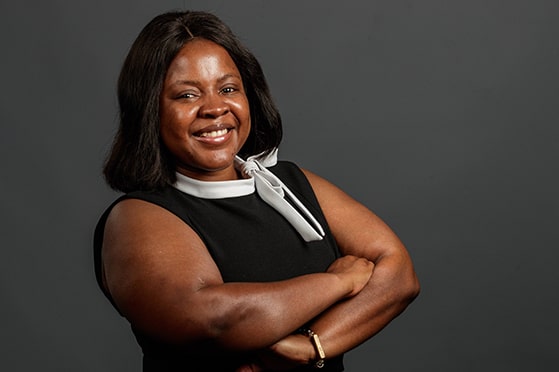
On her first flight from Ghana to the United States, Sylvia Ofori arrived in Atlanta, Georgia, at 1 a.m. By 4 o’clock the next afternoon, Ofori was in her first American classroom in Georgia Southern University’s Jiann-Ping Hsu College of Public Health on the Statesboro Campus. Jet-lagged and attempting to absorb a foreign campus and classroom procedures, Ofori was out of sorts when her professor, Isaac Chun-Hai Fung, Ph.D., encouraged her to apply for a student research position following class introductions. Within days, she’d interviewed and earned the spot, supported by funding from the Centers for Disease Control and Prevention. In their first meeting, Fung challenged Ofori to publish 10 papers by the end of her public health doctoral program. “I wasn’t familiar with publications, but he threw that challenge at me from the beginning,” Ofori remembered. “Wow. His plan was for me to start working on dissertation-related projects immediately.” Ofori’s first project was a scoping review on the use of digital technology to improve and monitor handwashing in children. Following a presentation of her review at the University’s 2019 Research Symposium, her work was published in an academic journal, and many more followed as co-author with Fung and another mentor, Kamalich Muniz-Rodriguez, DrPH. By the end of her doctoral training, Sylvia had published 11 papers with Fung, and three more manuscripts will be submitted. On May 13, Ofori earned a DrPH in public health with a concentration in epidemiology as she crossed the stage in one of two Savannah commencement ceremonies. In June, she’ll begin as a Postdoctoral Fellow in the Department of Epidemiology at Harvard University to continue global public health research she began at Georgia Southern. There's a full article detailing Sylvia's amazing story - and her success to date. It's attached here: If you're a reporter looking to know more about Sylvia's story, or how Georgia Southern has students from around 100 countries across the world currently studying on both the Statesboro Campus and the Armstrong Campus in Savannah. Simply reach out to Georgia Southern Director of Communications Jennifer Wise at jwise@georgiasouthern.edu to arrange an interview today.

Housing bubbles, student debt, stagnant salaries – America need a reset?
There’s an old saying we all know about those who don’t pay attention to history … they’re doomed to repeat it. Over and over and over sometimes. One would think after the 2008 housing crisis that nearly decimated the American and global economy – that we’d all be somewhat wiser. According to some, that may not be the case. America is once again approaching the same cliff it took a decade to climb up from. The measures that were put in place to prevent massive amounts of foreclosures a decade ago are now coming home to roost. “This massive problem of underwater homeowners could not be resolved only by shutting off the spigot of foreclosures. That is why a total of 25 million permanent mortgage modifications and other so-called 'workout plans' were put in place from 2008 until June 2018 according to data provider Hope Now. Modifying mortgages as an alternative to foreclosure just kicked the can down the road. It succeeded in bringing these delinquent homeowners into current status. Yet millions of them are re-defaulting on these modified mortgages. The number of re-defaults is increasing relentlessly around the U.S. Worse yet, many re-defaulters are on their second- or third mortgage modification.” - MarketWatch Mortgages once again are vulnerable as the housing market remains painfully out of sync with the rest of the economy. As well, with millennials facing massive student debt, a shortage of new builds means fewer people can enter the market nor can they afford to. Combine that with salaries flatlining and not keeping pace with the rising price of goods – it’s not a sunny forecast. Are you covering this potential financial crisis? What will America have to do to course correct and ensure we don’t have a repeat of the 2008 meltdown? And how did the country’s leaders allow this to happen? Did no one see this coming? There are a lot of questions and that’s where an expert from New Jersey Institute of Technology can help. Professor Michael Ehrlich's research focuses on financial markets and institutions, with an emphasis on market failures. He has written about the unintended consequences of financial market innovation and is Associate Director of the Leir Center for Financial Bubble Research. To reach Michael, simply click on the button below.
