
Experts Matter. Find Yours.
Connect for media, speaking, professional opportunities & more.

Holiday Season is Almost Here and Goizueta Business School has Holiday Experts Ready to Help
The holidays are the difference between operating in the red and operating in the black for many retail businesses. The Goizueta Business School has experts who can provide insight and expertise on a wide range of stories. Economics of the Holiday Season - Economist Tom Smith can discuss seasonal hiring, retail expectations, and the importance of the holiday season to retailers. Black Friday - Doug Bowman can discuss retail expectations and the importance of the holiday season to retailers. He expects this year shoppers will go to fewer stores and not travel long distances, delivery capacity will be an issue, and work from home/school purchases will be hot. AI Changing How We Shop - David Schweidel can discuss how new AI tools are changing how we shop and how brands are using AI to reach prospective customers. Product Reviews See Huge Increases: How Reviews Impact Holiday Shopping - What do reviews mean for the shopping experience and do reviews impact purchase? Reshma Shah can discuss the impact reviews have on the point of purchase. Product Returns - Marat Ibragimov can discuss the retail strategy and impact of holiday gift returns, comparing online returns to brick and mortar. Food and Travel Pricing - Saloni Firasta Vastani can discuss the cost of this year’s holiday dinners. What’s gone up and what’s gone down? She can also discuss the cost of travel this holiday season and what consumers can do to get a better deal. Avoiding Holiday Overspend - Rohan Ganduri can discuss how holiday shopping can expose consumers to credit products like store credit cards that offer various incentives to take up the credit card, often resulting in overspending. Ganduri can discuss his latest research paper on how taking up store credit cards can impact consumers’ future credit outcomes. Social Media & Advertising - David Schweidel can discuss how micro influencers work, how using product placement can cut through the advertising clutter, and the power of product reviews. The Constantly Changing Online Retail Experience - Styling videos, personal shoppers, messaging, and even Augmented Reality (AR) are being used to generate purchases. Doug Bowman can discuss how stores are reimagining the shopping experience to attract customers in person and online. Influencers Influencing Our Purchases - How are creators impacting the economy and are influencers impacting our purchasing decisions? Marina Cooley looks at the creator economy and how TikTok and Instagram are impacting our holiday wish lists and what it takes for a product to go from unknown to trending. She can also discuss how this holiday season will help normalize in-app TikTok shopping (something Instagram has struggled to execute on). How to Attract Customers to the Store this Holiday: Merging Online and In-person Experiences May be the Answer - Shopping looks different and it is up to retailers to stand out not just in the brick and mortar world but also online. The success of a business can balance on the customer experience. Reshma Shah can discuss the policies brick and mortar retailers need to have in place to successfully merge online shopping and the in-person shopping experience. To book your expert interview, call Kim Speece at (404) 849-6579 or email her at kim@leffassociates.com or simply click on the icon available. To find an expert on a specific topic, click the “Search” feature at https://goizueta.emory.edu/faculty/profiles. To check out other recent research, visit https://www.emorybusiness.com/faculty-research/.







It's a fabulous fall - and our expert can explain why all those colors come out this time of year
Autumn has arrived. And as we all take time to welcome this wonderous palette that nature delivers year after year, those who are curious about all those colors are looking for answers. Why there are so many different shades, tints, and tones? What causes the colors to change? And where's the best place to find one of nature's finest displays of leaves? It's a topic that comes up every year, and recently Connecticut Public Radio connected with UConn's Bob Fahey to get some of the answers about autumn in New England. I ventured into a forest in northeastern Connecticut with two UConn tree experts. We met up at Horsebarn Hill, one of the best viewpoints in the state, surveying a rolling river valley showing off with fall colors. We see oaks just starting to turn red. Nearby hickories provide a dash of yellow – and, of course, the maples are already stealing the show, even on a cloudy day. Here’s what I found out: Our trees are diverse One reason the foliage is so good is simply due to the number of species we have. “We have a very diverse hardwood forest in this part of New England,” said Bob Fahey, an associate professor and forest ecologist at UConn. “We have both species that are more southern species and also some of the more northern species.” “In comparison to say, the Mid-Atlantic or other places that have lots of deciduous species, we have maples, which are just the best,” he said. “We also have a number of species that have nice yellow foliage,” he said. “Birches and beech. If you go a little bit farther south from here, mostly what you have is oaks. And oaks can have good fall foliage colors, but there are a lot of times they don't and they don't last for as long.” We have lots and lots of trees The diversity of species provides a diversity of color, said Tom Worthley, an associate extension professor and a forester at UConn. He asked me to remember the last time I flew over Connecticut. What did you see, he asked. Lots of trees, right? “Most of the ground is covered by a tree canopy,” Worthley said, noting that some estimates put that tree canopy cover at around 75% of the land area of the whole state. “Back where we were standing a few minutes ago, we had some cherry trees,” Worthley said, his eyes scanning the trees enveloping us. “There's a few remnant ash, there's some walnut around the edges here. And let's see, some hickory.” A walnut tree towers over us – and there are even some white pines. It’s that varied bioscape that sets New England forests apart. “Even in my two-acre forest behind my house, I have 22 different species of tree, which is more than some regions of the northern part of the U.S.,” Fahey said. Travel to the west, and what you’re likely to see are lots of evergreens and aspen trees. “Not that there aren't others, there are plenty of others, but not in the same abundance and not in the same kind of mix that we have around here,” Worthley said. Climate plays a role Across New England are rolling hills with microclimates that can contribute to vibrant fall colors. “You’ll see ... highly different color in different parts of the landscape, which has to do with temperature differences,” Fahey said. Combine that with Connecticut’s mix of southern and northern species and the colors here might not be as exciting and bright as what you would see in Vermont and New Hampshire, Fahey said. But our foliage season can sometimes last a little bit longer. One reason? Oaks. “We have so much more of that oak component,” Fahey said. “The oaks will hold their leaves until the end of October.” Moisture, temperature and the amount of daylight all contribute to how long it takes for a tree to shed its leaves. And, for each species, the calculation is different. “A tree makes an economic decision,” Worthley said. “It decides, ‘Well, it's costing more in energy to keep these leaves going than what they're producing for me and so it's time to shut them off.’” Why do leaves fall anyway? It’s when leaves are green that the most important work is happening, pulling carbon out of the atmosphere and giving us oxygen. And for that green color, we can thank the pigment chlorophyll. “The color that's in the leaves – is always there from the time the leaf is grown,” Worthley said. “As the growing season fades, the chlorophyll disappears,” he said. Then the other colors in the leaf can begin to show off. Pigments like anthocyanins (reds and purples) and carotenoids (yellows and oranges) peek out, tiny threads in an autumnal blanket transforming New England’s green forests into a richly colored landscape. The colors are out - but only for a limited time. If you're a journalist looking to know more about this topic before all the leaves fall, then let us help. Dr. Fahey is an Associate Professor in the Department of Natural Resources and the Environment and Center for Environmental Sciences and Engineering at the University of Connecticut. He is also the George F. Cloutier Professor in Forestry, director of the UConn Forest, and associate director of the UConn Eversource Energy Center. Simply click on his icon now to arrange a time to talk today.


The Role of Artificial Intelligence in Customer Experience
Gaurav Jain, assistant professor of marketing at the Rensselaer Lally School of Management, examines how individuals make judgments, estimates, and decisions in the absence of complete information. Previously, Jain served as the chief marketing advisor at multiple firms. Below are his thoughts on the impact of artificial intelligence (AI) on customer experience. Voice of the Customer In today's hyper-connected world, the voice of the customer (VoC) is louder and clearer than ever. But how do we sift through this cacophony to understand what our customers are really saying? Enter AI. It's revolutionizing the way customer experience teams handle VoC programs, and as a marketing leader, I find this incredibly exciting. Take direct customer feedback, for example. We're no longer just collecting survey responses and storing them in a database for quarterly review. AI algorithms, particularly those using natural language processing, are helping us instantly categorize and prioritize this feedback. Imagine an e-commerce platform that can immediately flag a customer's mention of "late delivery" in a post-purchase survey. That's not just efficient; it's customer-centric. But what about the things customers are saying when they're not directly talking to us? That's where AI-driven sentiment analysis comes in. These tools can scan social media, forums, and review sites to gauge the sentiment behind a customer's words. I've seen hotel chains use this technology to monitor travel forums and review sites. If a guest mentions "noisy rooms," even without lodging a direct complaint, the brand can proactively look into soundproofing solutions. Then there's inferred feedback, the kind you get by reading between the lines. AI can analyze customer behavior, like frequent page visits without conversion or cart abandonment, to suggest what might be going wrong. For instance, an online fashion retailer could use AI to figure out why a particular dress gets a lot of views but few purchases. Maybe it's the sizing, maybe it's the price, but the point is, you get to know without having to ask. And it doesn't stop at gathering feedback. AI is helping us turn this raw data into actionable insights. We can predict future behavior, like churn rates, based on past feedback. This allows us to be proactive rather than reactive, which is a game-changer in customer experience management. Finally, let's talk about what happens after we've gathered all this feedback. AI is ensuring that every customer who takes the time to share their thoughts receives an immediate and appropriate response. Chatbots can handle common queries or concerns, making the customer feel heard and valued right away. So, from the perspective of a marketing leader, it's not just about the efficiency that AI brings to VoC programs. It's about the opportunity to deepen our connection with customers. By truly understanding their words, their sentiments, and even their behaviors, we can craft experiences that resonate on a human level. And in a world that's increasingly digital, that human touch is what sets a brand apart. Customer Service It's truly intriguing to observe how AI is weaving its way into the customers’ experience. Online, chatbots are making waves. Chatbots are not just digital tools; they're our first point of contact, bridging the gap between brands and consumers. However, there was always the question of accuracy versus efficiency while managing these chatbots – AI has answered that question. AI chatbots provide real-time yet accurate assistance, making the digital shopping journey feel more interactive. Companies can reduce customer dropout while avoiding the expense of managing a large human customer service team. AI is revolutionizing phone-based customer service as well. Voice recognition allows natural language processing for easier navigation, while predictive analysis anticipates caller needs based on their history. Enhanced personalization means customers no longer repetitively provide account details, and emotion detection aids in gauging caller mood. The result? Reduced wait times, more efficient interactions, and a significantly improved telephonic customer experience. In essence, AI is bridging the gap between technology and human touch in the retail world, making our interactions with brands more meaningful and personalized. Again, companies can do this in a cost-effective manner. Jain is available to speak with media - - simply click on his icon now to arrange an interview today.


It's only been since January, but the cannabis industry in Connecticut is already a hit among consumers. There was initial worry that the quick expansion of stores and dispensaries could potentially blunt the long-term success of the retail aspect of the product in the state, but according to UConn's Fred Carstensen concerns about the oversupply seen in neighboring states is not a worry. “It’ll take three to four years to see how the market develops,” said Carstensen, a professor at University of Connecticut and the director of the Connecticut Center for Economic Analysis. In an article that goes into great detail, Carsten told the Stamford Advocate about the many factors and influences that can impact what has been a volatile market in some states since legalization became the trend. And as the state government checks the expansion of Connecticut’s adult-use cannabis market, Carstensen said local governments do the same. He said it wouldn’t matter if Connecticut’s retail cannabis scene was over-licensed, under-licensed, or just right. “Every municipality has the right to say yea or nay (to retailers),” Carstensen said. But he said an estimated 69 cannabis retailers in the Nutmeg State’s pipeline will make the bigger picture clearer. “(Then) it's pretty much available to everybody on a relatively short-travel basis,” Carstensen said. “Then we'll actually know what the market is.” Regulation and observation will be key to measure the success or failure of the market. Carstensen said that as the Nutmeg State’s market matures, retailers will “pull that business back into Connecticut when we become more competitively priced.” Peake agreed that “as (more Connecticut retailers) open up, we can probably expect the vast majority of those folks to be buying cannabis in Connecticut.” And Carstensen said that as much as interstate cannabis purchases skew understanding Connecticut’s market, it also serves as a check on oversaturating the Nutmeg State’s cannabis economy... And, Carstensen said, if there were too many cannabis dispensaries, "the market will tell us." "They’ll close,” the economics professor said. If you're a journalist looking to know more about this emerging industry in Connecticut and beyond, let us help. Fred Carstensen is a University of Connecticut professor and director of the Connecticut Center for Economic Analysis. He is a renowned an expert in the areas of public policy, economic history, and economics. Simply click on his icon now to arrange a time to talk today.


#Expert Q&A: Amid the Wildfire Haze, NJIT's Alexei Khalizov Explains What's in the Air
The soot that permeated the air in New Jersey and New York this summer — courtesy of massive wildfires in Canada — is exactly what a New Jersey Institute of Technology professor is studying to determine its impact on climate change. Alexei Khalizov, an associate professor of chemistry and environmental science, is partnering with Associate Professor Gennady Gor on the three-year project, which began last year and is supported by a $620,000 grant from the National Science Foundation. Specifically, they’re examining the soot created by wildfires and the burning of fossil fuels in hopes of better predicting its impact on climate. Khalizov, who’s been at NJIT since 2013, took time out from his research to explain what millions of residents of N.J. and N.Y. are experiencing as a result of the wildfires hundreds of miles to the north. Q: What’s in the smoke? Small particles and some gas chemicals. These particles and chemicals were released by wildfires and they were picked up by the air mass and carried all the way to New Jersey from Canada. Those particles are extremely small: you can stack maybe a hundred of such particles across single human hair thickness. Q: Is breathing it the equivalent of smoking a pack of cigarettes? That would be a reasonable comparison. A cigarette is made of plant material. When it smolders and burns it releases particles that are very much like those particles from wildfires. Maybe the only difference is that the wildfires have no nicotine. But they have lots of other chemicals. Q: What factors contribute to the density of the smoke? Well, it's a major wildfire. It covers a huge territory in Canada. And the meteorology is such that this smoke is carried all the way from Canada to the U.S. without significant dilution. And due to that, the concentration of those particles is very high. Q: When did we last experienced something of this magnitude? We had some Canadian and Alaskan wildfires a few years ago. And air mass transport brought the smoke all the way to New Jersey, but it wasn't as bad as what we are observing today. Q: What about in terms of EPA standards? The Environmental Protection Agency has a list of criteria pollutants. One of those pollutants is particles smaller than 2.5 microns. And typically, if the concentration of those particles exceeds 35 micrograms per cubic meter, the air is considered unhealthy. When I looked at the map of pollution today (June 7, 2023), it showed that throughout the majority of New Jersey, the concentration is around 90 micrograms, which is two to three times higher than this unhealthy threshold. And actually, there is a location, I believe it's around Paterson, where the concentration is 140 micrograms, which is four to five times above the threshold. Q: Can the wildfires in South Jersey be contributing to this? It's possible, but probably it's not a major contribution. Also, if you look at the wind pattern, it's probably not a major factor at all. Q: Why is wind unable to disperse the smoke? For the wind to disperse the smoke, one needs to mix clean air with all this contaminated air and the amount of contaminated air is so high that there’s no clean air around to actually produce any dilution. Q: Why is there so much haze? It’s because of the continuous inflow of air, which is contaminated by emissions from the wildfires. The haze itself has a relatively short lifespan. Q: How does temperature change affect the smoke? If the temperature increases that may accelerate the rate of some chemical reactions that will also be accelerated by the sunlight. And that's one reason why the smoke that was released in Canada is not exactly the same smoke that we experience in New Jersey. As this haze is traveling over three to six hundred miles, it undergoes a number of chemical reactions and even the smell changes. You know how freshly released wood smoke smells — it's actually pretty pleasant. What we're smelling now, it's not pleasant at all. That's the result of those chemical reactions, which makes this even more unhealthy. Q: Will rain immediately clear the smoke? Yes, it will. If we could have rain, then the rain would remove the majority of these particles. And in fact, I believe we've been experiencing the smoke for several days, almost a week now. It would go up and decrease. And we’ve had several rains and those rains did really clear out some smoke. Q: What can we do individually and collectively to protect ourselves? We can help ourselves by staying indoors and wearing masks if you have to go outside. Certainly, exercising outside is not a good idea even while wearing a mask. Also, if you have a central air conditioning system, you can turn on the fan to run the air through the filter, which will remove some of these particles. It depends on what kind of filter you have — high efficiency or regular. Q: What kind of mask? Make sure that it's an N-95 mask, not a surgical mask. A surgical mask is not is not going to help you at all. Q: How does what we’re experiencing relate to your research? My collaborator and I received a major grant from the National Science Foundation to study the particles released by combustion. As they travel through the air, they change both in shape and in composition. And these changes affect their toxicity and they affect their impact on climate. These particles actually are one of the warming agents. So, we hope that within about three years of working on this project, we’ll be able to explain better what happens and then modelers will be able to predict the impacts of such events with better accuracy. Looking to know more - we can help. Alexei Khalizov is available to discuss this important topic with media - simply click on his icon now to arrange an interview.


A recent survey conducted on behalf of CAA South Central Ontario (CAA SCO) found that 82 per cent of parents in Ontario have witnessed dangerous driving behaviours in school zones – that’s a four per cent increase compared to last year. More than half (55 per cent) consider the roads around their child’s school to be unsafe. “Our children deserve to travel to and from school safely,” says Tracy Marshall, manager of community relations at CAA SCO. “As another school year begins, drivers should prepare for higher traffic periods in school zones and drive with extra vigilance.” According to the survey, some of the most common dangerous driving behaviours parents have witnessed include speeding, double parking and stopping in undesignated areas. Of those surveyed, the car remains the primary mode of transportation to and from school. Because of this, more than 80 per cent of parents report experiencing congestion around their child’s school. In fact, survey respondents believe that parents in a hurry (38 per cent), too much congestion (33 per cent) and parents not following the drop off or pick up procedures contribute the most to unsafe driving behaviours in school zones. Majority of parents say more can be done to help drivers slow down in school zones. Ninety-one per cent of parents in Ontario support lowering the speed limit in school zones with 83 per cent that say speed limits should be 30km/h or lower. When it comes to Automated Speed Enforcement (ASE): Seventy-seven per cent – an 11 per cent jump compared to last year – strongly support the use of it in school zones. Eighty-one per cent believe its presence would deter speeding around schools. Seventy-five per cent say that it should remain permanent in school zones. Drivers reminded to follow the rules of the road in school zones, especially near school buses. “It is dangerous and illegal to pass a stopped school bus with its red lights flashing and stop arm extended,” says Marshall. According to the survey, 11 per cent of parents report having ever been charged with failure to stop for a school bus. “Not only do you risk facing a fine of up to $2,000 and six demerit points for a first offense, but you are also putting the lives of others at risk,” adds Marshall. How drivers can help keep school zones safe. Drivers can also use the following CAA tips to ensure they are staying safe in school zones: Help reduce traffic with active school travel: Encourage your kids to walk or wheel to school to ease traffic congestion. If your school is a further distance, CAA encourages parents and guardians to park a block away and walk to school to reduce traffic and make school zones safer. Slow down: Know the speed limit in your neighbourhood’s school zones and respect them. Ensure you give yourself plenty of time to drop off your kids at school to avoid rushing. Choose a safe spot to drop off and pick up your children from school: Follow your school’s rules and avoid double parking or stopping on crosswalks, dropping off or picking up your kids on the opposite side of the street, and stopping in moving traffic as kids rush out. Instead, use the designated drop off areas or consider a spot a bit farther away from school that is easily accessible and safe. Make eye contact with pedestrians: With the excitement of going back to school, anticipate that children may not easily see or hear your moving vehicle, so ensure to make eye contact with pedestrians crossing the road. Watch for CAA School Safety Patrollers: When travelling to and from school, watch for CAA School Safety Patrollers in their lime green safety vests, as they play an important role in ensuring the roadway is safe before kids cross on their own. CAA supports safety in school zones through the CAA School Safety Patrol® program, developed to protect and educate elementary school children on safe road-crossing practices. CAA’s Ontario Road Safety Resource is a toolkit with valuable lesson plans for teachers to help educate students about road safety. To learn more please visit www.caasco.com/schoolzone. About the survey. The study, commissioned by CCG conducted by Dig Insights in May 2023 surveyed 1,560 Ontario parents/guardians between the ages of 18 and 74 with children attending school from kindergarten to grade 8. The margin of error for a sample of this size is plus or minus 2% at the 95% confidence level.



Georgia Southern sets fundraising record for third year in a row
Total cash, pledges and in-kind gifts to Georgia Southern University amounted to $23,831,604 during Fiscal Year 2023, which ended on June 30, 2023. That surpasses the total from the previous year, which was also a record at $22.3 million. For the third straight year, Georgia Southern supporters have propelled the University to a record-breaking year of private fundraising. Total cash, pledges and in-kind gifts to Georgia Southern University amounted to $23,831,604 during Fiscal Year 2023, which ended on June 30, 2023. That surpasses the total from the previous year, which was also a record at $22.3 million. The record total was buoyed by another record-breaking fundraising year for the Georgia Southern Athletic Foundation, Inc., which raised a record $11.06 million in new pledges and outright gifts. “As we soar into a very bright future for this University, record-breaking fundraising is a sign that Georgia Southern is not only strong now, but poised for even greater heights,” said Georgia Southern President Kyle Marrero. “We are endlessly thankful for the supporters, friends, alumni and donors who endorse our path forward and are stepping up to ensure our success.” Donors helped with various projects and programs this past year, including: $1 million from Betty Foy Sanders for the Betty Foy Sanders School of Art with scholarships, travel and programmatic needs $750,000 deferred gift for the Department of Biology to be used for student scholarships 23 newly created endowments Anthony P. Tippins Family Training Facility for athletics “Through unwavering dedication and the overwhelming generosity of our community, we have demonstrated the boundless potential of Eagle Nation in support of our students’ dreams and the University’s future,” said Georgia Southern Foundation Chair Mike Sanders. Last year’s Athletic Foundation Chair Leonard Bevill added, “The impact of this achievement will ripple through generations, leaving an indelible mark on the trajectory of higher education and Georgia Southern. I am humbled and inspired by the collective spirit that has made this three-year milestone possible.” The Erk Russell Fund, the Athletic Foundation’s annual fund, continues to grow and saw donations of $3.2 million this fiscal year. Additionally, the Athletic Foundation received 58 major gift commitments this year, which are gift commitments of $25,000 or greater to support Eagle Athletics. Over the past three fiscal years, the Athletic Foundation has raised more than $27 million in support of Georgia Southern Athletics. This total is the largest three-year fundraising window in department history. “It’s clear that Georgia Southern University’s power to transform lives and communities is making a positive impression with our private supporters,” said Trip Addison, Vice President of Advancement, noting that more than 3,600 alumni were among the supporters this past year. “I am grateful for the welcome reception we are receiving when we ask people to join in our effort to help support our students and the work they and our faculty are doing.” Interested in knowing more about fundraising or to speak with Georgia Southern Foundation Chair Mike Sanders? To arrange an interview simply connect with Georgia Southern's Director of Communications Jennifer Wise at jwise@georgiasouthern.edu to arrange an interview today.


Optical research illuminates a possible future for computing technology
Nathaniel Kinsey, Ph.D., Engineering Foundation Professor in the Department of Electrical and Computer Engineering (ECE), is leading a group to bring new relevance to a decades-old computing concept called a perceptron. Emulating biological neuron functions of the messenger cells within the body’s central nervous system, perceptrons are an algorithmic model for classifying binary input. When combined within a neural network, perceptrons become a powerful component for machine learning. However, instead of using traditional digital processing, Kinsey seeks to create this system using light with funding from the Air Force Office of Scientific Research. This “nonlinear optical perceptron” is an ambitious undertaking that blends advanced optics, machine learning and nanotechnology. “If you put a black sheet outside on a sunny day, it heats up, causing properties such as its refractive index to change,” Kinsey said. “That’s because the object is absorbing various wavelengths of light. Now, if you design a material that is orders of magnitude more complex than a sheet of black plastic, we can use this change in refractive index to modify the reflection or transmission of individual colors – controlling the flow of light with light.” Refractive index is an expression of a material’s ability to bend light. Researchers can harness those refractive qualities to create a switch similar to the binary 1-0 base of digital silicon chip computing. Kinsey and collaborators from the U.S. National Institute of Standards and Technology, including his former VCU Ph.D. student Dhruv Fomra, are currently working to design a new kind of optically sensitive material. Their goal is to engineer and produce a device combining a unique nonlinear material, called epsilon-near-zero, and a nanostructured surface to offer improved control over transmission and reflection of light. Kinsey’s prior research has demonstrated that epsilon-near-zero materials combine unique features that allow their refractive index to be modified quite radically – from 0.3 to 1.3 under optical illumination – which is roughly equivalent to the difference between a reflective metal and transparent water. While an effective binary switch, the large change in index requires a lot of energy (~1 milli-Joules per square centimeter). By combining epsilon-near-zero with a specifically designed nanostructure exhibiting surface lattice resonance, Kinsey hopes to achieve a reduction in the required energy to activate the response. The unique response of a nanostructure exhibiting surface lattice resonance allows light to effectively be bent 90 degrees, arriving perpendicular to the surface while being split into two waves that travel along the surface. When a large area of the nanostructure is illuminated, the waves traveling along the surface mix, where they interfere constructively or destructively with each other. This interference can produce strong modification to reflection and transmission that is very sensitive to the geometry of the nanostructure, the wavelength of the incident light and the refractive index of the surrounding materials. The mixing of optical signals along the surface can also selectively switch regions of the epsilon-near-zero material thereby performing processing operations. A key aspect of Kinsey’s work is to build nonlinear components, like diodes and transistors, that use optical signals instead of electrical ones. Transistors and other traditional electronic components are nonlinear by default because electrical charges strongly interact with each other (for example, two electrons will tend to repel each other). Creating optical nonlinear components is challenging because photons do not strongly interact, they just pass through each other. To correct for this, Kinsey employs materials whose properties change in response to incident light, but the interaction is weak and thus requires large energies to utilize. Kinsey’s device aims to reduce that energy requirement while simultaneously shaping light to perform useful operations through the use of the nanostructured surface and lightwave interference. The United States Department of Defense sees optical computing as the next step in military imaging. Kinsey’s work, while challenging, has potential to yield an enormous payoff. “Let’s say you want to find a tank within an image,” Kinsey said, “Using a camera to capture the scene, translate that image into an electrical signal and run it through a traditional, silicon-circuit-based computer processor takes a lot of processing power. Especially when you try to detect, transfer, and process higher pixel resolutions. With the nonlinear optical perceptron, we’re trying to discover if we can perform the same kinds of operations purely in the optical domain without having to translate anything into electrical signals.” Linear optical systems, like metasurfaces and photonic integrated circuits, can already process information using only a fraction of the power of traditional tools. Building nonlinear optical systems would expand the functionality of these existing linear systems, making them ideal for remote sensing platforms on drones and satellites. Initially, the resolution would not be as sharp as traditional cameras, but optical processing built into the device would translate an image into a notification of tanks, troops on the move, for example. Kinsey suggests optical-computing surveillance would make an ideal early warning system to supplement traditional technology. “Elimination or minimization of electronics has been a kind of engineering holy grail for a number of years,” Kinsey said, “For situations where information naturally exists in the form of light, why not have an optical-in and optical-out system without electronics in the middle?” Linear optical computing uses minimal power, but is not capable of complex image processing. Kinsey’s research seeks to answer if the additional power requirement of nonlinear optical computing is worthwhile given its ability to handle more complex processing tasks. Nonlinear optical computing could be applied to a number of non-military applications. In driverless cars, optical computing could make better light detection and ranging equipment (better known as LIDAR). Dark field microscopy already uses related optical processing techniques for ‘edge detection’ that allows researchers to directly view details without the electronic processing of an image. Telecommunications could also benefit from optical processing, using optical neural networks to read address labels and send data packets without having to do an optical to electrical conversion. The concept of optical computing is not new, but interest (and funding) in theory and development waned in the 1980s and 1990s when silicon chip processing proved to be more cost effective. Recent years have seen many advancements in computing, but the more recent slowdown in scaling of silicon-based technologies have opened the door to new data processing technologies. “Optical computing could be the next big thing in computing technology,” Kinsey said. “But there are plenty of other contenders — such as quantum computing — for the next new presence in the computational ecosystem. Whatever comes up, I think that photonics and optics are going to be more and more prevalent in these new ways of computation, even if it doesn’t look like a processor that does optical computing.” Kinsey and other researchers working in the field are in the early stages of scientific exploration into these optical computing devices. Consumer applications are still decades away, but with silicon-based systems reaching the limit of their potential, the future for this light-based technology is bright.

Florida Tech Scientist to Study Deep-Space Agriculture After Planetary Society Grant Award
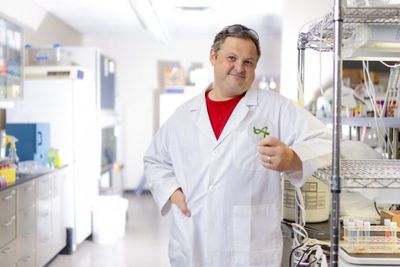
No matter where humans travel, sustenance remains a necessity. Finding a bite to eat during a visit to New York, for example, is no problem. When the destination is a bit farther away, such as Mars, the options are not as plentiful there or on the long journey to get there. That’s where Florida Tech’s Andrew Palmer comes in. He and other scientists are exploring ways to feed our explorers, and a new competitive grant from the Planetary Society will fund work that examines the two most likely ways to produce food during travel to these far-flung spots: in soil or something like soil, or in water. Palmer and his team were awarded a $50,000 Science and Technology Empowered by the Public (STEP) grant, the Planetary Society recently announced. Their project: “Evaluation of food production systems for lunar and Martian agriculture.” For the next year, they will grow radish microgreens, lettuce and tomatoes in identical environmental conditions with one major exception: one batch will be grown hydroponically, and another will be grown in regolith – like lunar or Martian soil. The aim of the experiment is to characterize and compare the two methods, both of which have merits and shortcomings. “It may be that a combination of these approaches, tailored to the diverse needs of different crops, is the best way to provide sustainable and productive agriculture,” Palmer said. “Until now, there have been no direct comparison studies between hydroponic and regolith-based systems for any crop targeted for space applications. We are excited to address this knowledge gap.” The team, which includes experts in plant physiology and biochemistry as well as space agriculture and systems efficiency analysis, will test their hypothesis that faster growing crops like microgreens will be better suited for hydroponic systems even in the long term, while slower-growing crops like tomatoes may favor a regolith-based production system. Palmer and his co-investigator, Rafael Loureiro from Winston-Salem University, are joined by collaborators J. Travis Hunsucker and Thiara Bento from Florida Tech, Laura E. Fackrell at the Jet Propulsion Laboratory and Jéssica Carneiro Oliveira at Universidade Federal do Estado do Rio de Janeiro, Brazil. Care to delve a little deeper? Palmer and a second STEP grant recipient, Dartmouth College professor Jacob Buffo, spoke to the Planetary Society senior communications advisor Mat Kaplan about their respective projects. The segment with Palmer begins at the 23:57 mark and the piece is linked above. Looking to know more about what it will take to feed our deep-space explorers? Then let us help with your questions and coverage. Dr. Andrew Palmer is an associate professor of biological sciences at Florida Tech and a go-to expert in the field of Martian farming. He is available to speak with media regarding this and related topics. Simply click on his icon now to arrange an interview.


As technology continues to advance, so do the methods that hackers use to steal personal information. One such method that even the FBI has taken notice of is juice jacking, a technique where hackers use public charging stations to install malware onto your device or steal your personal information. The specific danger is very real, experts say. Steve Weldon, director of the Cyber Institute at Augusta University’s School of Computer and Cyber Sciences, said people need to understand there is risk when plugging a phone into a USB port at a public charging station. “USB uses pins for data and power. When we plug devices in to charge, the data pins are also connected,” said Weldon. “No big deal if we’re in an environment we trust. However, do we trust the public charging stations to have access to our data pins and being able to make data transfers? Probably not and that’s the gist of the recent warning.” There are ways to avoid the risk. “The best advice is to bring your own cables and adaptors. Then we can plug directly into power outlets,” Weldon said. If you must use a public charging station, he suggests using a data blocking USB cable. These cables only allow power to flow through, preventing any data transfer between the charging station and your device. Also, be aware if you are using your phone while charging it. “When using public charging stations we should, at a minimum, watch for strange behaviors, weird popups, and being asked questions about trusting the device or drive we’re connected to. Those are danger signs, and we’d want to disconnect quickly,” added Weldon. Another option to protect your phone from juice jacking is to use a wireless charger. These chargers do not require a physical connection between your device and the charging station. While wireless charging is typically slower than using a cable, it is a safe alternative when you’re on the go and need to charge your device. Keeping your personal information safe is crucial in today’s digital age. Protecting your phone from juice jacking is just one way to prevent hackers from accessing your sensitive data. Looking to know more? Connect with our expert today. Steven Weldon is the Director of Cyber Institute at the School of Computer and Cyber Sciences at Augusta University and is an expert in the areas of cellular and mobile technology, ethics in computer science, scripting and scripting and automation. Steve is available to speak with media - simply click on his icon now to arrange an interview today.
