
Experts Matter. Find Yours.
Connect for media, speaking, professional opportunities & more.

Battling Election Fatigue? Balance It Out with Other Important Things in Life, Baylor Expert Says
It’s happening. Again. Another U.S. presidential campaign. The contentious 2018 midterm elections are barely in the mud-encrusted rear-view mirror, and the next general election is nearly two years away, but telltale campaigning has already begun as presidential hopefuls emerge to take on each other and Donald Trump, who consistently talks and tweets about Election Day 2020. Does this ubiquitous campaigning make you weary? If so, you’re not alone, said expert Patrick Flavin, Ph.D., associate professor of political science in Baylor University’s College of Arts & Sciences. “Election fatigue is real in the United States,” said Flavin, who researches the impact of politics and policies on citizens’ quality of life. “The U.S. holds more elections than just about any other country in the world: primary elections, school board elections, city council elections and more. So, it’s not unreasonable for someone to say, ‘I’m tired of voting because it seems like I’m voting all the time.’” But it’s not just the number of elections that takes a toll. The presidential election cycles are longer now than in years past. Much of that is due to the race for resources, Flavin said. Over the past few weeks, potential Democratic candidates like former Vice President Joe Biden, former San Antonio Mayor Julian Castro, U.S. Sens. Elizabeth Warren, Kamala Harris, Bernie Sanders, Kirsten Gillibrand and Amy Klobuchar have been making moves – either announcing candidacies or testing the political waters. “Right now, we’re at the start of the ‘invisible primary’ for Democratic candidates whereby they compete for staff, endorsements from other politicians and party leaders, name recognition and fundraising sources,” Flavin said. “For relatively unknown candidates, in particular, it is important to get into the race early to give yourself a head start in trying to compete for those scarce resources. In contrast, a more well-known candidate like Joe Biden can afford to wait for a while before starting his campaign – if he does decide to run.” Flavin said it’s important for citizens to know what’s happening on the national political scene, but he advises people to take a break when it becomes overwhelming. “Being an informed citizen is good and to be admired, but I don’t think it’s healthy to obsess over every single day-to-day political development – especially in the era of 24/7 news,” he said. “Balance it out with other important things in life.” And if you’re in a position (a political science professor, for example) that doesn’t often afford the time to break away, Flavin advises taking the time to approach politics as an observer. “Just like anyone else, political science professors would go crazy if they focused on politics 24/7. So, balance is important. In addition, it is healthier, I think, to approach campaigns and elections as an observer who is interested in better understanding why the candidates take the positions they do, why voters support this candidate over that candidate, etc.” Flavin also said that focusing too much on the national landscape pulls people away from critical state and local issues. “There are important decisions being made at the state and local levels that we need to be aware of,” he said. Flavin’s newest research shows that Americans are happier in states where governments spend more on public goods, such as libraries, parks, highways, natural resources and police protection. ABOUT BAYLOR UNIVERSITY Baylor University is a private Christian University and a nationally ranked research institution. The University provides a vibrant campus community for more than 17,000 students by blending interdisciplinary research with an international reputation for educational excellence and a faculty commitment to teaching and scholarship. Chartered in 1845 by the Republic of Texas through the efforts of Baptist pioneers, Baylor is the oldest continually operating University in Texas. Located in Waco, Baylor welcomes students from all 50 states and more than 80 countries to study a broad range of degrees among its 12 nationally recognized academic divisions. ABOUT BAYLOR COLLEGE OF ARTS & SCIENCES The College of Arts & Sciences is Baylor University’s oldest and largest academic division, consisting of 25 academic departments and seven academic centers and institutes. The more than 5,000 courses taught in the College span topics from art and theatre to religion, philosophy, sociology and the natural sciences. Faculty conduct research around the world, and research on the undergraduate and graduate level is prevalent throughout all disciplines. Visit www.baylor.edu/artsandsciences.


Why Some Mannequins Are Turning Blue, Taking a Dive and Putting on Weight
Baylor University fashion expert and author explains new twists in 'silent selling' -- and why frustrated customers may be relieved Women have long griped about pencil-thin mannequins in clothing displays, saying they bear little resemblance to real women’s bodies and make shopping frustrating and depressing. But the criticism is beginning to make inroads, and some members of the apparel industry are introducing changes to stop idealizing thin bodies and make mannequins more inclusive — among them creating mannequins with curvier shapes, modeling the figures after disabled people and, in a very different approach, fashioning forms that are totally unrealistic, says Baylor University researcher Lorynn Divita, Ph.D., co-author of the textbook "Fashion Forecasting” and associate professor of apparel merchandising in Baylor’s Robbins College of Health and Human Sciences. And more change may be in the works, prompted by research. A 2017 study published in the Journal of Eating Disorders found that 100 percent of the female mannequins studied in two large English cities represented an underweight body size — one that would be “medically unhealthy.” (Note: While female mannequins look scrawny, many of their male counterparts are brawny. Only 8 percent of male mannequins represented an underweight body size — although many appeared “unrealistically muscular,” researchers said.) Divita, who conducts research on the apparel industry, tracks trends and makes fashion predictions, offers some observations in this Q&A: Q: If mannequins are supposed to be a “silent seller” and a strong method for attracting customers, why are they so skinny that it is discouraging to women who are average or bigger? Why can’t their makers pack a few extra plastic pounds on them? A: For one thing, mannequins are expensive. The material for one that’s larger is going to cost more, the same way it is for plus-size garments, because you use more material. Typical department store mannequins can cost on average $500 to $900, and it can cost $150 just to repair a joint on a broken mannequin. In New York, where the retail industry is widely unionized, in some stores the sales associates are not allowed to touch the store mannequins. That responsibility is solely for visual merchandisers as a means of protecting the store’s investment. Another reason smaller mannequins have been appealing to retailers is that smaller dimensions make it easier to put on and remove clothing. Q: Wouldn’t it be worth the investment to make them bigger to showcase more realistic or inclusive figures and attract those customers? A: I recently visited the corporate offices of plus-size design company ELOQUII in New York, and their creative director, Jodi Arnold (B.S.H.E. ’88), shared with me that 65 percent of U.S. women are over size 14. Yet they represent only 17 percent of apparel spending. It’s hard to determine cause and effect: are they not spending on apparel because a wide variety of options aren’t available? Or is it that a wide variety of options are not available because this market does not spend on apparel? ELOQUII is betting on the former. In addition to their online store, they’ve recently begun opening brick-and-mortar storefronts which, unlike their website, feature merchandise on mannequins. Hopefully as the plus-sized apparel market continues to grow, the increased demand for plus-sized mannequins will result in wider representation of mannequin body types overall. Q: If most mannequins don’t reflect the majority of women’s physiques, where does the inspiration come for their sizes and shapes? A: Many mannequins can be sculpted using the measurements of live models or even have their proportions based on a celebrity who has a widely admired figure. Just like there is no standard apparel sizing system for women, there is no standard sizing system for display mannequins. Q: Besides beginning to be a bit more realistic in size, how are mannequins evolving? A: We are used to traditionally seeing mannequins in static poses like standing or sitting. With the rise in popularity of activewear, stores are devoting more floor space to this merchandise category, and it only makes sense to put those mannequins in dynamic positions like doing yoga poses or running. Another great example of dynamic poses can be found in swimwear: there are some great displays of mannequins diving. The impact of dynamic poses such as these are heightened when mannequins are displayed in groups of five or seven. Dynamic poses are currently being taken to the next level by actually suspending mannequins from the ceiling, so who knows how far this trend can go? One way to address representation is to go in the opposite direction and make a mannequin that is totally unrealistic. The last time I was shopping, I saw an entire section merchandised with glossy light-blue mannequins. This is actually a very clever way of appealing to everyone by targeting no one. Another interesting thing is that new technology allows visual merchandisers to creatively alter a mannequin’s appearance without changing it permanently by printing vinyl stickers to affix to mannequins’ faces. Merchandisers can print out bold lips or dramatic eyelashes, affix them to the mannequin in the display and easily take them off when they are done, which gives visual merchandisers yet another way to attract our attention. ABOUT LORYNN DIVITA, Ph.D. Divita is the author of the textbook “Fashion Forecasting” (Fourth edition, Fairchild Books). Her publications have appeared in the Journal of the Textile Institute and Journal of Fashion Marketing and Management, both published in England; Clothing and Textiles Research Journal and Journal of Textile and Apparel Technology and Management. She is the United States editor for the Bloomsbury Fashion Business Case Studies project and is on the editorial board of the Journal of Fashion, Style and Popular Culture. Divita received her B.A. in French and B.S. in fashion merchandising from California State University Chico, her Master’s degree in apparel manufacturing management from University of Missouri, and her Ph.D. in textile products marketing from University of North Carolina at Greensboro.


Terror sways voters - just not the way terrorists want
Those hoping to use fear to sway elections are in for a shock come election day. Terrorist attacks meant to suppress voter turnout — like the ethnically and racially-motivated attacks in Pittsburgh and Louisville, Kentucky in October — often have the opposite effect according to a study published by Augusta University researcher Dr. Lance Hunter. The study, published in “Behavioral Sciences of Terrorism and Political Aggression” in 2017, examined voter turnout following terrorist attacks in seven major urban centers across the United States over the course of four decades. The study found that attacks not only increase voter turnout, but that the severity of an attack may also impact how more voters show up at the polls. “Severity was measured as the number of individuals wounded in attacks and the amount of property value damage that occurred due to attacks,” said Hunter, assistant professor of Political Science in the Katherine Reese Pamplin College of Arts, Humanities, and Social Sciences. “We found that more severe terrorist attacks were associated with higher voter turnout.” The frequency of terror attacks also increased voter turnout, with every 10 attacks contributing to a 1.7 percent increase in turnout for gubernatorial elections and a 1.8 percent turnout for senate elections. “When the terrorist attacks variable was set at its minimum level (0 attacks) expected voter turnout was 28% for gubernatorial elections and 30% for senatorial elections,” Hunter said. “However, expected voter turnout increased to 43% for gubernatorial elections and 44% for senatorial elections as the number of terrorist attacks increased to its maximum level (80). Hunter attributed these findings to the notion that more severe terrorist attacks tend to have a greater psychological impact on citizens. That impact, he theorized, leads citizens of affected areas to pay greater attention to their political environment and encourages them to vote in greater numbers. “In other words, terrorism makes politics more salient for citizens,” he said. “As they become more attuned to the politics of the day, they are more likely to turnout to vote.” The data, which looked at elections held from 1970 to 2012, found that the type of election did not lessen or increase voter turnout following a terrorist attack. Voters in affected areas turned out in greater numbers for both midterm and presidential elections. Voter turnout is typically higher in presidential elections, regardless of attacks. Contact Nick Garrett at (706) 993-6411 or ngarret1@augusta.edu to schedule an interview with Dr. Hunter on this topic.


How the Migration Caravan became so large?
Edith Cruz was sitting at home in central Honduras, scanning Facebook on her phone, when she saw the post about the caravan on a community news page. It was Oct. 12. She and her cousin had just opened a small business selling tortillas when they were confronted by a gang, threatened with death if they didn’t hand over half of their profits. She looked at the Facebook post: “An avalanche of Hondurans is preparing to leave in a caravan to the United States. Share this!” Within three hours, her bags were packed. The question of how the migrant caravan began has wound its way to the American midterm elections. President Trump and other Republicans have suggested that Democrats paid migrants to begin the journey. As the group continues to grow, the largest such caravan in recent years, its beginnings are being scrutinized: How did more than 5,000 migrants from across Central America find each other? As the caravan continues to move toward the United States, Dr. Glen Duerr, associate professor of international studies at Cedarville University, has been following the situation and can provide insight into the caravan and its impact on our election and country, in general.


Multiracial Congregations Have Nearly Doubled, But They Still Lag Behind the Makeup of Neighborhoods
About one in five American congregants attends a racially mixed place of worship, Baylor University study find The percentage of multiracial congregations in the United States nearly doubled from 1998 to 2012, with about one in five American congregants attending a place of worship that is racially mixed, according to a Baylor University study. While Catholic churches remain more likely to be multiracial — about one in four — a growing number of Protestant churches are multiracial, the study found. The percentage of Protestant churches that are multiracial tripled, from 4 percent in 1998 to 12 percent in 2012, the most recent year for which data are available. In addition, more African-Americans are in the pulpits and pews of U.S. multiracial churches than in the past, according to the study. Multiracial congregations are places of worship in which less than 80 percent of participants are of the same race or ethnicity. “Congregations are looking more like their neighborhoods racially and ethnically, but they still lag behind,” said lead author Kevin D. Dougherty, Ph.D., associate professor of sociology in Baylor’s College of Arts & Sciences. “The average congregation was eight times less diverse racially than its neighborhood in 1998 and four times less diverse in 2012.” “More congregations seem to be growing more attentive to the changing demographics outside their doors, and as U.S. society continues to diversify by race and ethnicity, congregations’ ability to adapt to those changes will grow in importance,” said co-author Michael O. Emerson, Ph.D., provost of North Park University in Chicago. For the study, Dougherty and Emerson analyzed data from the National Congregations Study, a nationally representative survey conducted in 1998, 2006-2007 and 2012, with a cumulative sample of 4,071 congregations. The study by Dougherty and Emerson — “The Changing Complexion of American Congregations” — is published in the Journal for the Scientific Study of Religion. The study found that: One-third of U.S. congregations were composed entirely of one race in 2012, down from nearly half of U.S. congregations in 1998. Multiracial congregations constituted 12 percent of all U.S. congregations in 2012, up from 6 percent in 1998. The percentage of Americans worshipping in multiracial congregations climbed to 18 percent in 2012, up from 13 percent in 1998. Mainline Protestant and Evangelical Protestant churches have become more common in the count of multiracial congregations, but Catholic churches continue to show higher percentages of multiracial congregations. One in four Catholic churches was multiracial in 2012. While whites are the head ministers in more than two-thirds (70 percent) of multiracial congregations, the percentage of those led by black clergy has risen to 17 percent, up from fewer than 5 percent in 1998. Blacks have replaced Latinos as the most likely group to worship with whites. In the typical multiracial congregation, the percentage of black members rose to nearly a quarter in 2012, up from 16 percent in 1998. Meanwhile, Latinos in multiracial congregations dropped from 22 percent in 1998 to 13 percent in 2012. The percentage of immigrants in multiracial congregations decreased from over 5 percent in 1998 to under 3 percent in 2012. Previous research shows that congregations have adopted varying ways to encourage racial diversity, among them integrating music genres, using more participatory worship, hosting small groups to foster interracial networks and creating programs to address racial or ethnic issues. Churches with shorter histories are more likely to have diversity, and change is harder to bring about in long-established congregations. The new study by Dougherty and Emerson concluded that the complexion of American congregations is indeed changing — and the authors see benefits for American society. “During a several-year period of heightened racial tensions, the growth of multiracial congregations is a dramatic development,” Emerson said. “Such congregations are places of significantly increased cross-racial friendships and cross-racial common experiences.” ABOUT BAYLOR UNIVERSITY Baylor University is a private Christian University and a nationally ranked research institution. The University provides a vibrant campus community for more than 17,000 students by blending interdisciplinary research with an international reputation for educational excellence and a faculty commitment to teaching and scholarship. Chartered in 1845 by the Republic of Texas through the efforts of Baptist pioneers, Baylor is the oldest continually operating University in Texas. Located in Waco, Baylor welcomes students from all 50 states and more than 80 countries to study a broad range of degrees among its 12 nationally recognized academic divisions. ABOUT BAYLOR COLLEGE OF ARTS & SCIENCES The College of Arts & Sciences is Baylor University’s oldest and largest academic division, consisting of 25 academic departments and seven academic centers and institutes. The more than 5,000 courses taught in the College span topics from art and theatre to religion, philosophy, sociology and the natural sciences. Faculty conduct research around the world, and research on the undergraduate and graduate level is prevalent throughout all disciplines.
Baylor Researchers Awarded Grant to Develop Diabetes Mobile Health App for Use in India
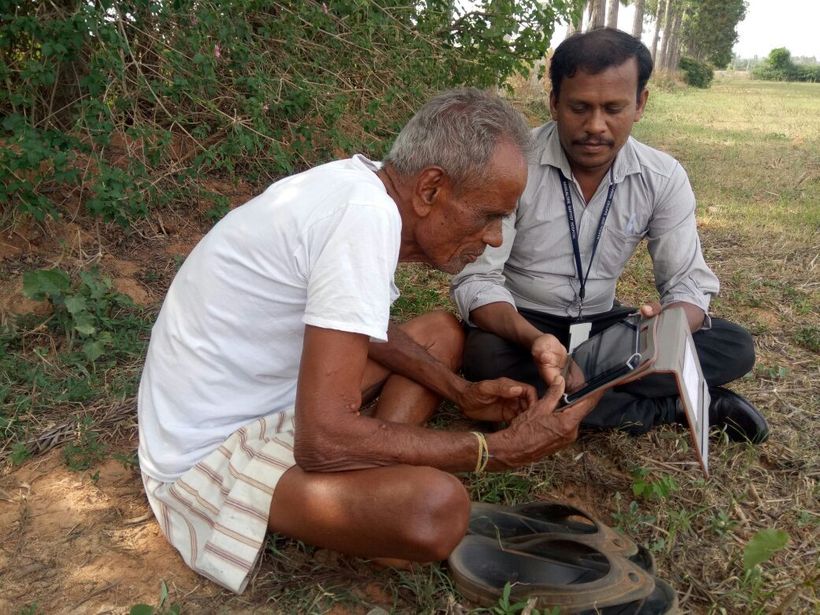
An interdisciplinary team of Baylor University researchers – from nursing and business information systems to art and video game design – and physicians from Bangalore Baptist Hospital in Bengaluru, India, were awarded a 21st Century Knowledge Initiative Grant from the U.S. India Education Foundation (USIEF) to develop a diabetes mobile health app to boost awareness and educate those in India who are most at risk for diabetes. The team is led by Shelby Garner, Ph.D., R.N., assistant professor in Baylor’s Louise Herrington School of Nursing, who has worked in India over the past six years to develop technological health resources. She cited statistics from the World Health Organization that show life expectancy in India is among the lowest in the South East Asian Region and is largely attributed to growing rates of non-communicable diseases, such as diabetes. Contextualized health education is one key to help raise awareness in the country, she said. “There is a need for culturally appropriate health education materials in India,” Garner said. “Our early research showed that technology, such as smartphones and internet accessibility, are widely available in India among health providers, but most technological educational resources were developed in the West and do not effectively translate to the Indian context.” Physicians from Bangalore Baptist Hospital will provide cultural context and help identify important medical content to be included in the app. “Our diabetes app will feature an interactive 3D animated video with gaming features to help educate patients at risk for diabetes,” Garner said. “Answers to questions addressed in the app include: What is diabetes? What happens if I have diabetes? How do I prevent and treat diabetes? What do I do now?” The app also serves as a data collection tool to help researchers determine if the video is improving participants’ knowledge on diabetes. Community health workers employed by Bangalore Baptist Hospital will use the app as they visit with people in rural villages and urban slums during door-to-door health education visits, Garner said. The research team will compare the app’s effectiveness with standard health educational resources previously used. Garner said the USIEF grant was awarded, in large part, due to the success of an earlier project that led to the development of a hypertension app. “Earlier this year, we tested the hypertension app among 346 people in one of the largest slums in Bengaluru, India, and in several rural villages surrounding Bengaluru,” she said. “The app was significantly effective in improving knowledge among participants. We used these results to justify the need to design more resources and applied for funding from the U.S. India Education Foundation.” From previous experience developing and employing the hypertension app, Garner said she knew this new project would require input from a variety of perspectives. “I’ve realized some of the ‘big picture’ challenges in health education, and it will take a team of experts to make this happen,” she said. Team members are: • Shelby Garner, Ph.D., R.N., assistant professor in Baylor’s Louise Herrington School of Nursing • Dr. Carol Elizabeth George, community health physician, Bangalore Baptist Hospital • Dr. Gift Norman, community health physician, Bangalore Baptist Hospital • Dr. Kingsly Victor, internal medicine physician, Bangalore Baptist Hospital • Hope Koch, Ph.D., associate professor of business information systems, Baylor’s Hankamer School of Business • Phil Young, Ph.D., assistant clinical professor of business information systems, Baylor’s Hankamer School of Business • Julia Hitchcock, M.F.A., associate professor of art, Baylor’s College of Arts & Sciences • Matthew Fendt, Ph.D., lecturer in computer science, Baylor’s School of Engineering and Computer Science The grant also will fund exchange teams of researchers and faculty from India to come to the U.S. and for Baylor team members to go to India to collaborate on the research for the next two years. The first team from India is due in late October. “We are really excited about the work we will do together with our Indian partners over the next two years,” Garner said. ABOUT BAYLOR UNIVERSITY Baylor University is a private Christian University and a nationally ranked research institution. The University provides a vibrant campus community for more than 17,000 students by blending interdisciplinary research with an international reputation for educational excellence and a faculty commitment to teaching and scholarship. Chartered in 1845 by the Republic of Texas through the efforts of Baptist pioneers, Baylor is the oldest continually operating University in Texas. Located in Waco, Baylor welcomes students from all 50 states and more than 80 countries to study a broad range of degrees among its 12 nationally recognized academic divisions. ABOUT LOUISE HERRINGTON SCHOOL OF NURSING The Baylor University Louise Herrington School of Nursing (LHSON) located in Dallas was established in 1909 as a diploma program within Baylor Hospital in Dallas, which is now Baylor University Medical Center, and in 1950 became one of the six degree-granting schools of Baylor University. The first Baccalaureate degrees were granted in 1950 establishing the school among the earliest baccalaureate nursing programs in the United States. In 1999, the School was renamed the Baylor University Louise Herrington School of Nursing after Louise Herrington Ornelas, a 1992 Baylor Alumna Honoris Causa, who made an endowment gift to the school. Accredited by the Commission on Collegiate Nursing, LHSON offers Bachelor of Science in Nursing (B.S.N.) degrees through a traditional program and FastBacc (one-year accelerated program). LHSON also offers an online Master of Science in Nursing (M.S.N.) Leadership and Innovation program, as well as Doctor of Nursing Practice (D.N.P.) programs to include Family Nurse Practitioner (F.N.P.), Nurse-Midwife (C.N.M.) and Neonatal Nurse Practitioner (N.N.P.). LHSON was featured in U.S. News & World Reportfor the 2018Best Graduate Schools ranking the D.N.P.program in the top 50 U.S.nursing schools at No. 46. The Baylor M.S.N.program is ranked at No. 56and the Nurse Midwifery Program ranked No. 10. Baylor’s M.S.N. in Nursing Leadership andInnovation Online Program ranked No. 39 in the 2018U.S. News Best Online Graduate Programs. For more information, www.baylor.edu/nursing.

The next threat to election meddling? Brain Hacking
Almost 15 percent of Americans have reported changing their opinion on political or social issues because of a social media post, according to a recent Pew Research Center survey. “What if, immediately before spreading polarizing social media posts, our adversaries flashed subliminal images known to induce a type of anxiety called state anxiety? Evidence suggests people would perceive those posts in a more emotional way. Those images could, in turn, influence their voting behavior,” said Dr. Jay Heslen, an expert in intelligence and cybersecurity policy and assistant professor of political science with a joint appointment in the Katherine Reese Pamplin College of Arts, Humanities, and Social Sciences and the School of Computer and Cyber Sciences at Augusta University. “Successfully manipulating the cognition of a few thousand people in order to influence their perception of events could be enough to change the result of an election.” Heslen’s current research project focuses on whether exposure to certain visuals or sounds, including subliminal prompts, can induce a negative emotional arousal on people. He’s interested in learning whether that emotional state, called state anxiety, can then influence behavior in a specific, predefined way – a concept he calls neurocognitive hacking. Although research using subliminal prompts is not new and has had mixed results, Heslen’s approach is novel. He uses a specific kind of visuals previously shown to trigger people’s unconscious discriminatory behaviors toward outsiders. “Neurocognitive hacking could potentially be used as a weapon in cyberwarfare,” said Heslen, who worked as an intelligence officer with the Defense Intelligence Agency and the United States Air Force for more than 20 years, specializing in combatting terrorism, counterintelligence and strategic cyber intelligence. “We need to study these capabilities not only for our own understanding but to create sound policies and countermeasures to defend ourselves against others who may use them on us.” With 68 percent of Americans on Facebook and 73 percent on YouTube, according to another Pew Research Center survey, neurocognitive hacking could be a national security problem, Heslen said. “As we advance our understanding of the brain and its processes, including how to manipulate it, we will need to provide neurocognitive cybersecurity to people who use information and communication technologies,” Heslen said. “This will be especially true as we spend more time in virtual worlds.” Heslen is available to discuss: · How neurocognitive hacking can influence people’s behavior · Why neurocognitive hacking is a powerful weapon of cyberwar · What kinds of policies should the government create to protect itself and its citizens from neurocognitive hacking Heslen is a Lieutenant Colonel in the United States Air Force Reserve and has served in military operations on four continents to include humanitarian relief operations in Mozambique and South Africa as well as an operational tour in Afghanistan. In his capacity as a reservist, he is currently assigned to the National Intelligence University pursuing an advanced degree in strategic intelligence. Contact us to schedule an interview with Dr. Heslen or learn more about his expertise.


Vielight Featured on CBC's "The Nature of Things" with Dr. David Suzuki
“The Brain’s Way of Healing”, an episode on The Nature of Things – aired on the CBC news network with David Suzuki and Dr. Norman Doidge. The episode featured the Vielight intranasal photobiomodulation technology. This episode featured Dr. Margaret Naeser a Research Professor of Neurology at Boston University who is researching the uses of an LED light helmet to treat PTSD victims. There are 1.7 million cases of traumatic brain injury right now in the United States and we don't have a really good treatments for them. We give them cognitive rehabilitation therapy which is very important but we're doing the photon work and light therapy to give the cells more energy to work with." To view the CBC Television episode please click below Dr. Margaret Naeser, Research Professor of Neurology at Boston University Select Publications PUBLISHED ON 2/10/2017 Saltmarche AE, Naeser MA, Ho KF, Hamblin MR, Lim L. Significant Improvement in Cognition in Mild to Moderately Severe Dementia Cases Treated with Transcranial Plus Intranasal Photobiomodulation: Case Series Report. Photomed Laser Surg. 2017 Aug; 35(8):432-441. PMID: 28186867. PUBLISHED ON 12/1/2016 Naeser MA, Martin PI, Ho MD, Krengel MH, Bogdanova Y, Knight JA, Yee MK, Zafonte R, Frazier J, Hamblin MR, Koo BB. Transcranial, Red/Near-Infrared Light-Emitting Diode Therapy to Improve Cognition in Chronic Traumatic Brain Injury. Photomed Laser Surg. 2016 Dec; 34(12):610-626. PMID: 28001756. PUBLISHED ON 8/17/2015 Naeser MA, Hamblin MR. Traumatic Brain Injury: A Major Medical Problem That Could Be Treated Using Transcranial, Red/Near-Infrared LED Photobiomodulation. Photomed Laser Surg. 2015 Sep; 33(9):443-6. PMID: 26280257. PUBLISHED ON 5/8/2014 Naeser MA, Zafonte R, Krengel MH, Martin PI, Frazier J, Hamblin MR, Knight JA, Meehan WP, Baker EH. Significant improvements in cognitive performance post-transcranial, red/near-infrared light-emitting diode treatments in chronic, mild traumatic brain injury: open-protocol study. J Neurotrauma. 2014 Jun 1; 31(11):1008-17. PMID: 24568233.


Real solutions to the world’s refugee crisis
Just last week, the United States announced its lowest refugee cap in history. Meanwhile, for the fifth year in a row, globally, we have reached a record number of displaced people around the world whose displacement will likely last decades. Refugees are increasingly living outside of camps in middle to low-income countries where they struggle to get their footing. At the same time, the communities that host them are burdened by the influx of a needy population and the tension that can arise when aid bypasses local organizations. Recently, a panel hosted by Catholic Relief Services invited key industry leaders to discuss these challenges and how responding agencies, governments and donors can better support the local communities in ways that promote safety, dignity, and lasting solutions. Bill O'Keefe is the Vice President for Government Relations and Advocacy with Catholic Relief Services and oversees the efforts to impact U.S. foreign policy in ways that reduce poverty overseas. Bill is available to speak to media regarding refugees and how those lasting solutions can be found. Simply click on his icon to arrange an interview. Source:


Former U.S. Attorney Available to Discuss Fallout for Trump Administration in Light of Cohen Plea
Wheaton College Professor David Iglesias, a former U.S. Attorney in New Mexico whose areas of expertise include federal prosecutions, is available for interviews regarding the fallout for the Trump administration in light of Michael Cohen’s guilty plea in federal court on 8 criminal counts, including violation of campaign finance laws. “President Trump is now in a place few presidents have ever been,” Iglesias says. “At this point, he is basically an unindicted co-conspirator to federal crimes.” “I wouldn’t call it the beginning of the end, but it’s certainly the end of the beginning.” Iglesias is an associate professor of politics and law and director of the Wheaton Center for Faith, Politics, and Economics. He can discuss topics including: -The process of presidential pardons -How federal prosecutors treat indicted persons who cooperate with information concerning the crimes of other persons, and the quid pro quo for getting an individual to cooperate with law enforcement -Guilty pleas, hung juries, and sentencing in federal court -Impeachment (What Iglesias calls “the nuclear option for removing a sitting President of the United States”), the process, and why it has happened so rarely in U.S. history -Whether a sitting president can be indicted for crimes -The importance of the rule of law (Why is America the world leader for holding all accountable for their actions? What message is being sent if wealthy and powerful people can avoid criminal exposure for their actions?) -Watergate as a precedent, and similarities/differences with the current situation -Rules of federal investigations (How do federal agencies conduct investigations? What is public and what is non-public? Why are prosecutions that are considered "political" so dangerous for law enforcement?) To request an interview with Professor Iglesias, e-mail Wheaton College Director of Media Relations LaTonya Taylor at latonya.taylor@wheaton.edu. Source:
