
Experts Matter. Find Yours.
Connect for media, speaking, professional opportunities & more.

Batty pathogens: Why do bats spread so many diseases?
Let’s face it — bats get a bad rap. Their links to disease outbreaks and their spooky association with vampires influence their notoriety. In reality, bats are truly remarkable. Bats support our agricultural industries as vital members of food webs. And, contrary to their portrayal in popular Halloween blockbusters, they are gentle and tidy creatures that groom themselves like cats. So why is it that when we hear of disease outbreaks, it always seems to be bats? According to University of Florida Emerging Pathogens Institute member Jim Wellehan, D.V.M., what sets bats apart isn’t black magic at all. But rather, it’s their long history of co-existing with viruses, the unique tradeoffs of flight and, perhaps most of all, a history of adapting to new pathogens. “(Infectious disease) has been the biggest factor in all of evolution,” said Wellehan, who is also a professor at the UF College of Veterinary Medicine. “People are always looking for an excuse (as to) why bats are magic, and the truth is bats have just been exposed to a lot of stuff and selected for those genes accordingly.” While humans are the most populous mammals on Earth, bats are a massive group of animals. Behind rodents, they represent the second-largest group of mammalian biodiversity, accounting for a whopping 20% of all mammal species. With over 1,400 species, it’s no surprise that pathogen diversity in bats is just as extensive and complex. Jim Wellehan's research focuses on comparative infectious disease, pathogen evolution, molecular diagnostics and pathogen discovery. View his profile here Bats, as we know them, have been on Earth for over 50 million years. This extensive period has given pathogens plenty of time to evolve alongside the winged mammals. Bats carry viruses like Ebola, Hendra virus, Nipah virus and SARS-CoV-2, which causes COVID-19. One factor that is important in this viral diversity is flight. Flight provides bats with many evolutionary advantages, such as predator evasion, access to new food sources and the ability to exploit diverse habitats. Flight also dramatically increases the chance of rapid pathogen transmission, as they can travel long distances and past many geographic barriers. Many species are highly social, which increases transmission rates as they live in close proximity and groom one another. “When I first learned about Darwin and evolution, ‘survival of the fittest,’ I assumed, meant ‘smartest and fastest and strongest,’ but if you look at our genomes, turns out that's wrong,” said Wellehan. “The genes that are selected for are mostly immune-related. The most important thing is to have enough genetic diversity in your population so that someone has immunity genes that are effective against the next pathogen that doesn't even exist yet. With their increased mixing and contact rates, bats have done this more often than most animals.” Generally, pathogens are most likely to cause disease when they first infect a new host species, as the susceptible animals have not yet developed the necessary defenses. Pathogens, along with their hosts, have no choice but to evolve to survive. With such a wide variety of species, it is not surprising that bats also carry a large proportion of mammal-associated viruses. This is not to say that bats are immune to all pathogens. As the most rapidly evolving factor in life, infectious disease is an incredibly dynamic part of medicine. Bats can get sick from lyssaviruses, including rabies. Additionally, white nose disease, a fungal infection that targets hibernating bats, has been a growing concern in the United States for the past decade. Though bat pathogens are a significant concern, habitat disturbance plays a larger role in bat population pathogen emergence, ultimately affecting humans as the dominoes fall. “Pathogen transmission to humans and conservation efforts go hand in hand,” Wellehan said. “When populations get under stress, that's when ecological balances get shifted, and zoonotic jumps occur. ... It turns out that if we think of ourselves as something separate from nature, it doesn't work so well.” So, while bats may embody the spirit of Halloween, their “magic” lies in evolution and resilience, shaped by millions of years of flying in the face of viruses, not spooky legends. Looking to know more? We can help. Jim Wellehan is available to speak with reporters about bats - simply click on his icon now to arrange an interview today.



Lighting the Night: The History and Meaning of the Jack-o’-Lantern
No Halloween is complete without the warm flicker of a Jack-o’-Lantern glowing from porches and windowsills. But long before it became a symbol of trick-or-treating and fall décor, the carved pumpkin had deep roots in folklore, superstition, and the immigrant experience that shaped North American culture. From Folklore to Flame The story begins in Ireland, where early Jack-o’-Lanterns were not pumpkins at all, but turnips and beets. The tradition sprang from an old Irish folktale about “Stingy Jack,” a clever but dishonest man who tricked the Devil and was doomed to wander the Earth with only a burning coal inside a hollowed-out turnip to light his way. People began carving their own “Jack’s lanterns” to ward off wandering spirits and evil forces during Samhain, the Celtic festival marking the end of the harvest and the beginning of winter. When Irish and Scottish immigrants brought this tradition to North America in the 19th century, they discovered that the native pumpkin—larger, softer, and easier to carve—was the perfect replacement. The transformation from turnip to pumpkin turned a small superstition into a dazzling new folk art. The American Reinvention By the mid-1800s, Jack-o’-Lanterns had become a staple of Halloween celebrations in the United States. Newspapers of the era described “pumpkin lanterns” lighting up autumn gatherings, and by the early 20th century, the smiling (and sometimes sinister) carved pumpkin was the defining symbol of the holiday. Over time, the tradition evolved from scaring away spirits to creating community and creativity. Towns began holding carving contests, families passed down patterns and designs, and pumpkin patches and Halloween festivals turned the once-humble lantern into an essential piece of American seasonal culture. A Symbol Beyond Scares Today, Jack-o’-Lanterns carry layered meanings: they celebrate harvest, creativity, and folklore while keeping a touch of the supernatural alive. In many ways, they embody the blend of ancient myth and modern celebration that defines Halloween itself—where fear meets fun, and the flicker of a candle becomes both decoration and tradition. Whether whimsical or eerie, the glowing face of a Jack-o’-Lantern continues to connect generations to an age-old story about light overcoming darkness—a reminder that even the spookiest traditions began with a spark of human imagination. Connect with our experts about the folklore, cultural history, and enduring legacy of the Jack-o’-Lantern. Check out our experts here : www.expertfile.com

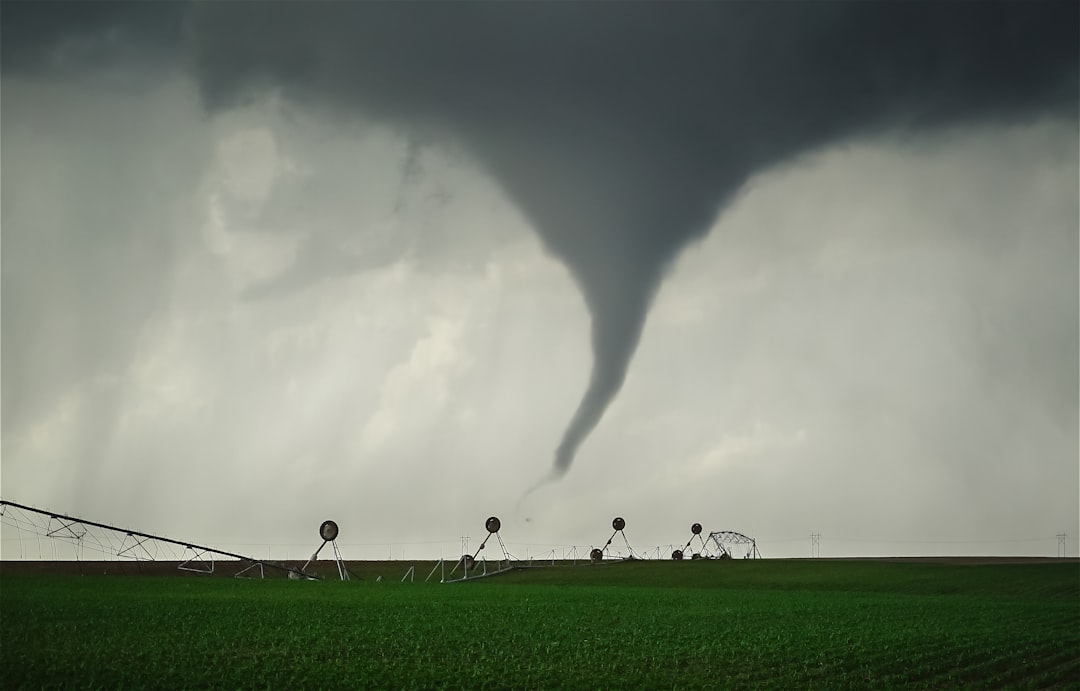
Understanding and predicting extreme weather in a changing climate
Kelsey Malloy is an assistant professor of climatology in the University of Delaware’s Department of Geography and Spatial Sciences, where she leads the Malloy Climate Research Group. Her research seeks to understand predictable climate variability and how large-scale climate patterns shape local weather and drive extreme events such as tornado outbreaks, floods and severe storms. Malloy’s research advances the predictability and understanding of severe weather in the United States and beyond. Her studies, published in Monthly Weather Review, Weather and Forecasting and Earth’s Future, have shed light on the climate signals influencing tornado activity and Great Plains rainfall. A member of the U.S. CLIVAR Predictability, Predictions, and Applications Interface Panel, Malloy also teaches courses in meteorological analysis and climatology, preparing the next generation of atmospheric scientists. In November 2025, Malloy will share her passion for climate science at TEDxUniversityofDelaware, using storytelling to illustrate climate’s enduring fingerprint on human history and experience. To speak with Malloy about the weather, email mediarelations@ude.edu.

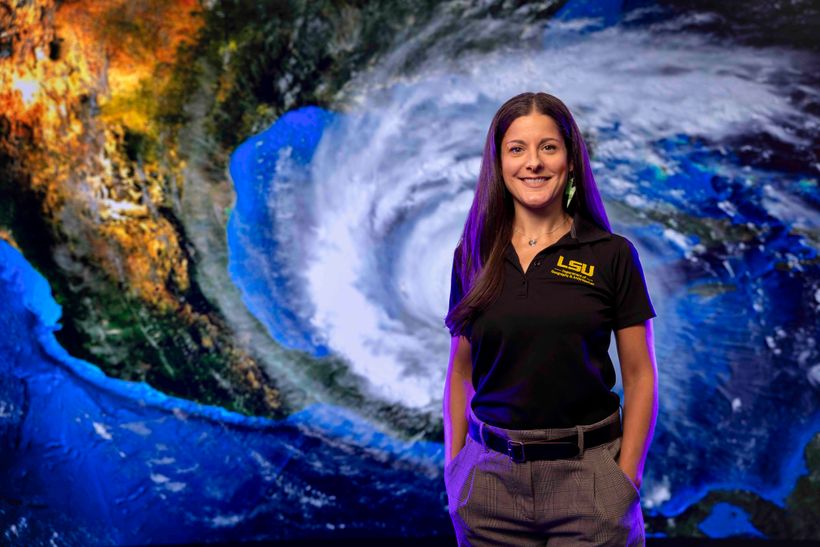
LSU Hurricane Expert Dr. Jill Trepanier Featured in TIME Magazine
For the first time in a decade, no hurricanes have made landfall in the United States through the end of September—a rare and welcome reprieve for coastal communities. But according to LSU hurricane climatologist Dr. Jill Trepanier, the season has been far from quiet. In a recent TIME Magazine feature, Trepanier explains that while no major storms have struck land, powerful systems have still formed over the Atlantic. “There are storms,” she says. “They’re just not making landfall.” Trepanier points to several atmospheric factors behind this pattern, including dry air moving in from the Sahara and a persistent high-pressure system over the Gulf of Mexico that has made conditions unfavorable for hurricane development near the U.S. coast. Another key influence, she notes, is a pressure pattern called the North Atlantic Oscillation, which helps steer storm paths. “When that oscillation pattern shifts closer to Bermuda, it unfortunately drives them directly into the Gulf Coast and the eastern seaboard,” Trepanier says. “It changes over the course of a handful of years, and then back again. It’s this controlling mechanism that has shifted, thankfully, in the favor of those of us at the coast.” Read the full article here:


Nursing researcher receives over $500K in prestigious grants
For the first time in nearly 15 years, a faculty member from Augusta University’s College of Nursing has been awarded a grant from the National Institutes of Health. Blake McGee, PhD, has secured an R03 award of $176,331 from the Eunice Kennedy Shriver National Institute of Child Health and Human Development to study Medicaid’s expanded role in late postpartum maternal health. But he hasn’t stopped there as McGee is also part of the fifth cohort of Betty Irene Moore Fellows, a prestigious program for nurse leaders and innovators that has awarded CON half a million dollars to support his research project and leadership development. McGee, the prelicensure department chair and an associate professor, is collaborating with colleagues from other Georgia universities on both studies, which are occurring simultaneously. “I began my career as an ER nurse and have always wanted to ask bigger questions about the challenges facing patients and how we might best address them as a society,” said McGee, who was recently selected for publication in Blood Advances, the American Society of Hematology’s journal. “As nursing scientists, we are uniquely poised to ask questions about healthcare policy, specifically from the vantage point of the impact that policy choices have on patients and their health outcomes.” This century, the United States has seen rising maternal mortality rates with alarming racial disparities. Over half of these deaths occur in the postpartum period, with 23% occurring more than six weeks after delivery. Medicaid expansion covers pregnant women in households below 138% of the Federal poverty level through postpartum day 60, which has been associated with decreased mortality and reduced racial disparity in maternal death. At the time of grant submission, pregnancy Medicaid eligibility traditionally lapsed 60 days after delivery, leaving postpartum people vulnerable to disruptions in care. McGee’s work aims to identify changes in maternal health care use and health outcomes 60 days to 1 year after delivery that were associated with state Medicaid expansions (2007–19). The team will examine whether the effects of expansion vary by maternal race or ethnicity and will explore whether patient-reported health care access and quality mediate the relationships between expansion and outcomes. “My hope is that after the study we’ll have a better understanding of how health and health care use change for women in this crucial late postpartum period and how they may differ for people of different backgrounds,” said McGee. “Due to the sample design, findings will reliably inform optimal policy for postpartum coverage duration.” He expects this study to provide preliminary data for a future R01-funded study that directly examines the impact of extending the duration of postpartum Medicaid under the American Rescue Plan. As part of the Betty Irene Moore Fellowship, McGee is one of 15 fellows across the nation in a curriculum co-delivered by the UC Davis School of Nursing and Graduate School of Management. A project coordinator from AU’s School of Public Health will also assist with the fellowship project. McGee hopes to involve graduate research assistants or recent alumni as research associates on the team. Specifically, McGee will be studying the Georgia Pathways to Coverage Program, making him one of the only academic researchers in the nation funded to do so. “As a researcher, it is always a privilege to engage in topics that directly impact the current state of health care, and I’m honored to tackle projects that are so relevant to today’s health policy headlines,” he said. Georgia stands out among other states that are exploring an extension of Medicaid to low-income, working-age adults who demonstrate a monthly commitment of 80 hours to an employment-related activity. By studying the effects of this program, McGee predicts the findings will be highly relevant to anticipating the impact of recent Medicaid changes at the federal level and may indicate differences between Pathways participants and those who might qualify but remain uninsured. This focus could provide data that helps the state target enrollment efforts. The state’s own logic model predicts that the program will reduce hospitalizations, and McGee is eager to determine the program’s success. “Our findings should be helpful to the state to better understand those enrolling, what their experience with increased access to care has been and how their health has improved after receiving coverage,” McGee said.



Thanksgiving North and South: Why Canada and the U.S. Celebrate at Different Times
Every fall, both Canadians and Americans gather around the table to give thanks — but they do it more than a month apart. While the two holidays share themes of gratitude, harvest, and togetherness, they evolved under distinct historical, cultural, and seasonal circumstances that reflect each nation’s story. A Canadian Harvest of Thanks Canada’s Thanksgiving traces its roots back to 1578, when English explorer Martin Frobisher held a ceremony in Newfoundland to give thanks for safe passage across the Atlantic. Over time, the holiday blended European harvest traditions with local customs, emphasizing gratitude for the year’s bounty rather than a single historic event. Because Canada’s growing season ends earlier than in most of the United States, Thanksgiving naturally became an autumn harvest celebration held in early October. It was officially recognized in 1957, when Parliament declared the second Monday of October as a national holiday “to give thanks for the harvest and the blessings of the past year.” The American Tradition South of the border, Thanksgiving carries a different historical symbolism. The U.S. holiday traces back to 1621, when Pilgrims and the Wampanoag people shared a harvest feast in Plymouth, Massachusetts. While similar in spirit, the American version became tied more closely to the nation’s founding mythology — a story of cooperation, survival, and gratitude in the New World. Because harvests occur later in the U.S., the celebration naturally took place in late November. In 1863, during the Civil War, President Abraham Lincoln proclaimed Thanksgiving a national holiday to promote unity, setting it for the final Thursday in November. Congress later standardized the date to the fourth Thursday in 1941. Seasons, Stories, and Shared Spirit At heart, both Thanksgivings mark the same human instinct: to pause, reflect, and give thanks. Canada’s October observance reflects the rhythm of northern harvests and a gratitude rooted in nature’s cycle. The American holiday, coming later in November, intertwines with its own national narrative of endurance and unity. Despite the calendar gap, the spirit is shared — families gathering to celebrate abundance, resilience, and community, in traditions that continue to evolve on both sides of the border. Connect with our experts on the history, traditions, and cultural meanings of Thanksgiving in North America. Check them out here : www.expertfile.com
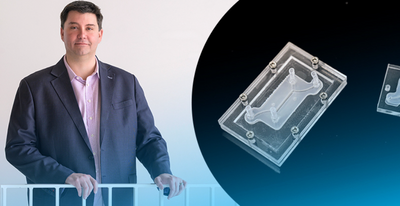
Taking discoveries to the real world for the benefit of human health
It takes about a decade and a lot of money to bring a new drug to market—between $1 billion to $2 billion, in fact. University of Delaware inventor Jason Gleghorn wants to change that. At UD, Gleghorn is developing leading-edge microfluidic tissue models. The devices are about the size of two postage stamps, and they offer a faster, less-expensive way to study disease and to develop pharmaceutical targets. These aren’t tools he wants to keep just for himself. No, Gleghorn wants to put the patented technology he’s developing in the hands of other experts, to advance clinical solutions in women’s health, maternal-fetal health and pre-term birth. His work also has the potential to improve understanding of drug transport in the female reproductive tract, placenta, lung and lymph nodes. Gleghorn, an associate professor of biomedical engineering, was named to the first cohort of Innovation Ambassadors at UD, as part of the University’s effort to foster and support an innovation culture on campus. Below, he shares some of what he’s learned about translating research to society. Q: What is the problem that you are trying to address? Gleghorn: A lot of disease has to do with disorganization in the body’s normal tissue structure. My lab makes microfluidic tissue models, called organ-on-a-chip models, that have super-tiny channels about the thickness of a human hair, where we can introduce very small amounts of liquid, including cells, to represent an organ in the human body. This can help us study and understand the mechanism of how things work in the body (the biology) or help us do things like drug screening to test therapeutic compounds for treating disease. And while these little microfluidic devices can do promising things, the infrastructure required to make the system work often restricts their use to high-end labs. We want to democratize the techniques and technology so that nonexperts can use it. To achieve this, we changed the way we make these devices, so that they are compatible with standard manufacturing, which means we can scale them and create them much easier. Gleghorn: One of the problems with drug screening, in general, is that animal model studies don’t always represent human biology. So, when we’re using animal models to test new drugs — which have been the best tool we have available — the results are not always apples to apples. Fundamentally, our microfluidic devices can model what happens in humans … we can plug in the relevant human components to understand how the mechanism is working and then ask questions about what drives those processes and identify targets for therapies to prevent the dysfunction. Q: What is innovative about this device? Gleghorn: The innovation part is this modularity — no one makes these devices this way. The science happens on the tiny tissue model insert, which is sandwiched between two pieces of clear acrylic. This allows us to watch what’s happening on the tissue model insert in real time. Meanwhile, the outer shell’s clamshell design provides flexibility: if we’re studying lung tissue and we want to study the female reproductive tract, all we do is unscrew the outer shell and insert the proper tissue model that mimics the female reproductive tract and we’re off. We’ve done a lot of the engineering to make it very simple to operate and use, and adaptable to common lab tools that everyone has, to eliminate the need for financial investment in things like specialized clean rooms, incubators and pumps, etc., so the technology can be useful in regular labs or easily deployable to far-flung locations or countries. With a laser cutter and $500 worth of equipment, you could conceivably mass manufacture these things for maternal medicine in Africa, for example. Democratizing the technology so it is compatible and useful for even an inexperienced user aligns with the mission of my lab, which focuses on scaling the science and the innovation faster, instead of only a few specialized labs being a bottleneck to uncovering new mechanisms of disease and the development of therapies. We patented this modularity, the way to build these tiny microfluidic devices and the simplicity of how it's used as a tool set, through UD’s Office of Economic Innovation and Partnerships (OEIP). Q: How have you translated this work so far? Gleghorn: To date, we've taken this microfluidic system to nine different research labs across seven countries and four continents — including the United States, the United Kingdom, Australia, France, Belgium and South Africa. These labs are using our technology to study problems in women’s health and collecting data with it. We’re developing boot camps where researchers can come for two or three days to the University of Delaware, where we teach them how to use this device and they take some back with them. From a basic science perspective, there is high enthusiasm for the power of what it can tell you and its ease of use. As engineers, we think it's pretty cool that many other people are using our innovations for new discoveries. Q: What support and guidance have you received from the UD innovation ecosystem? Gleghorn: To do any of this work, you need partners that have various expertise and backgrounds. UD’s Office of Economic Innovation and Partnerships has built a strong team of professionals with expertise in different areas, such as how do you license or take something to patent, how do you make connections with the business community? OEIP is home to Delaware’s Small Business Development Center, which can help you think about business visibility in terms of startups. Horn Entrepreneurship has built out impressive programs for teaching students and faculty to think entrepreneurially and build mentor networks, while programs like the Institute for Engineering Driven Health and the NSF Accelerating Research Translation at UD provide gap funding to be able to do product development and to take the work from basic prototype to something that is more marketable. More broadly in Delaware is the Small Business Administration, the Delaware Innovation Space and regional grant programs and small accelerators to help Delaware innovators. Q: How have students in your lab benefited from engaging in innovation? Gleghorn: Undergraduate students in my lab have made hundreds of these devices at scale. We basically built a little manufacturing facility, so we have ways to sterilize them, track batches, etc. We call it “the foundry.” In other work, graduate students are engineering different components or working on specific system designs for various studies. The students see collaborators use these devices to discover new science and new discoveries. That's very rewarding as an engineer. Additionally, my lab focuses on building solutions that are useful in the clinic and commercially viable. As a result, we've had two grad students spin out companies related to the work we've been doing in the lab. Q: How has research translation positively impacted your work? Gleghorn: I started down this road maybe five years ago, seriously trying to think about how to translate our research findings. Being an entrepreneur, translating technology — it's a very different way to think about your work. And so that framework has really permeated most of the research that I do now and changed the way I think about problems. It has opened new opportunities for collaboration and for alternate sources of funding with companies. This has value in terms of taking the research that you're doing fundamentally and creating a measurable impact in the community, but it also diversifies your funding streams to work on important problems. And different viewpoints help you look at the work you do in new ways, challenging you to define the value proposition, the impact of your work.

Recently, Craig Albert, PhD, was published in the Journal of Political Science Education. The article, 'Cyber-Enabled Education Operations: Towards a Strategic Cybersecurity Curriculum for the Social Sciences,' looks into how U.S. cyber intelligence training is overly technical and should integrate political science and social science courses to build strategic thinkers who understand adversaries’ motives and policies, ultimately strengthening U.S. national security. Craig Albert, PhD, is a professor of Political Science and the graduate director of the PhD in Intelligence, Defense, and Cybersecurity Policy and the Master of Arts in Intelligence and Security Studies at Augusta University. His areas of concentration include international security studies, cybersecurity policy, information warfare/influence operations/propaganda, ethnic conflict, cyberterrorism and cyberwar, and political philosophy. View his profile here. Here's the abstract from the paper in Research Gate: Most cyber intelligence analysts within the United States Intelligence Community (USIC) typically enter the field with strong technical expertise, often derived from degrees in computer science or extensive technical training. However, a critical gap exists in education and training on the strategic dimensions of cyber threats. This paper advocates for the integration of cybersecurity-focused courses within social science disciplines, particularly political science, to cultivate strategic thinkers who can contribute effectively to the USIC. The inclusion of strategic policy coursework in political science curricula, as well as more broadly across social science programs, would better prepare students for careers in the USIC by deepening their understanding of the motivations, capabilities, and intentions of the United States’ strategic adversaries in cyberspace—specifically Russia, China, Iran, and North Korea. Such training would equip analysts with critical insights to improve their effectiveness in identifying, attributing, and mitigating cyber intrusions. Moreover, a stronger emphasis on the human behavior and policy dimensions of cybersecurity would enhance the overall competency of the USIC workforce, thereby strengthening U.S. national security policy. Looking to know more? Let us help. Craig Albert, PhD, is available to speak with media. Simply click on his icon now to arrange an interview today.


James Sample Discusses President Trump’s Use of the Military in Cities
Hofstra Law Professor James Sample provided legal commentary to MSNBC, ABC News, and Raw Story on President Donald Trump’s deployment of the National Guard and Marines in Los Angeles. He discussed the recent ruling by United States District Judge Charles Breyer, which found that the Trump Administration violated the Posse Comitatus Act with its actions.



The Fed Just Cut interest Rates - What's Mean for Americans and What Does it Say about the Economy?
For the first time since December interest rates are being cut and all indicators point to even more signaled more cuts coming this year. The reactions so far have been mixed. The markets held steady but made no bold moves. And the opinions on how this will impact housing and home sales was also mixed with President Trump raving that housing will "soar" and others concerned about volatility. The announcement is getting a lot of media attention with reporters looking for angles, answers and what to expect for the future. And to get those answers - they need experts who understand every aspect of the economy. Dr. Jared Pincin's primary research interests explore the intersection of public choice economics with foreign aid as well as issues in sports economics. Pincin has published in popular publications such as The Hill, Real Clear Markets, Foxnews.com, and USA Today and scholarly journals such as Oxford Development Studies, Applied Economic Letters, and the Journal of Sport and Social Issues. View his profile here Dr. Haymond joined the faculty at Cedarville University in 2010 after a 29-year career in the United States Air Force. He taught at the United States Air Force Academy and was an Air Force Fellow at The Brookings Institution. His research has been published in scholarly journals such as the Quarterly Journal of Austrian Economics, Public Choice, the Journal of Public Choice and Public Finance, and Journal of Faith and Economics. His current research interests include economics and religion, as well as monetary theory. View his profile here Looking to know more? We can help. Jared Pincin and Jeff Haymond are both available to speak with media - simply click on either expert's icon to arrange an interview today.
