
Experts Matter. Find Yours.
Connect for media, speaking, professional opportunities & more.

Next Stop Iowa – Let our Experts Help with Your Coverage
It’s a tight race going into the Iowa and as the DNC debates now seem to be more warm ups than sparring – it’ll all likely come down to the ground game. Recent polls show Biden with a lead, but Sanders, Warren and Buttigieg all close behind. However, February 03 seems like a lifetime away and a lot could happen between now and then. So, can Biden be beat? What will it take for Sanders, Warren and Buttigieg to separate from the pack? Are there any wildcards? And the biggest question of all - can any of these contenders beat Donald Trump in November? There are a lot of scenarios and questions and if you are a reporter covering this topic – that’s where our experts can help. Mark Caleb Smith is the Director of the Center for Political Studies at Cedarville University. Mark is available to speak with media regarding the DNC Primary and the upcoming election. Simply click on his icon to arrange an interview.


Social Media Spaces Can Be Instruments of God’s Unconditional Love, Theologian Says
Being 'always on' can be a source of anxiety or sorrow, but it also can be a way to strengthen faith, Baylor author says Many of us are “always on” — scrolling through social media, checking email or searching the web, says author Angela Gorrell, Ph.D., assistant professor of practical theology at Baylor University’s George W. Truett Theological Seminary. In her book “Always On,” she writes about how social media spaces can be instruments of God’s unconditional love — but also sources of anxiety, jealousy and depression. With the arrival of 2020 — and its potential for change for the better — she discusses in this Q&A some tools for understanding social media and enabling Christian communities to address its use in constructive ways. Q: From your perspective as a practical theologian, are the social media strategies you recommend aimed solely at people of faith? Dr. Gorrell: Practical theology takes different forms. Ultimately, I aim to write about issues — like social media — that matter to people and shine the light of the Gospel on them. I also research and write about theology and faith in practice, how people express and perform their values, hopes and beliefs through practices, rituals, disciplines, activities, relationships, work—through their way of life. While I write about social media from a Christian perspective, much of what I have written about using social media mindfully and having “interested conversation” about media is applicable to people from a variety of religious and philosophical perspectives. Q: There is much talk about how people spend too much time on social media, to the point of ignoring family and friends when in their presence. How much is too much? And what problems can this create for people? Dr. Gorrell: The most important thing for people to realize is that how you spend time online is more important than how much time you spend online. There are a variety of issues that “passive,” unintentional, unregulated, time online can extend and nurture. I say extend because all of these issues can also be in-person issues. For example, empathy burnout, depression, anxiety and jealousy. We often encounter an enormous amount of suffering online. The amount of suffering and the velocity of these encounters — and rapidly seeing multiple examples back to back in articles or our newsfeeds — can nurture empathy burnout. We can become numb to the suffering we see online and take in but do nothing about it or think very little of it. Likewise, being on social media and passively scrolling through people’s status updates, tweets and stories for unbounded sets of time and looking at copious amounts of content but never replying, messaging, posting or sharing has been linked to depression and anxiety. Similarly, passive following, which is following people closely that we do not know (e.g., celebrities) or people we do not see regularly in person (e.g., high school friends) has been linked to jealousy, which can negatively impact how we perceive ourselves and our lives . . . When we see someone a lot in person or talk to them regularly by phone, we know that their lives have a lot more going on than what they are sharing online. Q: What strategies do you suggest help people use social media wisely? Dr. Gorrell: The goal is meaningful participation. I encourage people to limit passive scrolling and following as much as possible. Create something and share it online. Join conversations. Reply to people’s statuses rather than just clicking emojis. When you see that someone is celebrating, share their joy in a significant way. Share it as your status with a note of congratulations or text them or call them. When you notice someone is mourning, message them. When you encounter suffering online, stop scrolling and do something in response. Get offline, take a walk and pray about this suffering. Give money to an organization that is relieving this suffering. Find other articles and educate yourself on the issue. Learn more about how to help or how to invite other people to care. Q: Any suggestions as to how and where people might create a space to ask and answer questions about social media use? Dr. Gorrell: Asking powerful questions about people’s online experiences that encourage storytelling and helping each other think about new media can happen around the dinner table, in a church small group or on a road trip in the car. When family and friends ask each other about one another’s lives, we can include asking questions about and discussing social media experiences. We can ask curious, open-ended questions without simple yes or no answers like: 1. How do you make decisions about what to respond to online? 2. Have you ever been frustrated or sad about new forms of technology? What causes frustration or sadness for you? 3. When have you had a joyful experience online? Could you describe a time when you felt heard, affirmed or understood online? 4. How does social media help you love God and others and/or prevent you from loving God and others? 5. When have you had a painful experience online? Could you describe a time when you felt unheard, bullied, left out or misunderstood online? 6. What are the top two feelings you experience when using social media, and why do you think this is so? Q: How can we do a better job of using social media? Dr. Gorrell: Develop a rhythm for life with your friends or family that specifically addresses technology — when you will use it and for what purposes, when you will not use it, what boundaries you will have. Using social media constructively requires intentionality. I encourage people to find times in their week or month or year to not use devices and social media and to write down their plan on a calendar. A college student told me that he and his friends put all their phones in the center of the table at restaurants and say that the first person to pick up their phone during dinner pays the entire bill. Since they started this ritual, no one has picked up a phone during dinner. Practices like these help people to be present to people they are with in person. It is a great idea to put all devices away at night one to two hours before bed so minds and bodies can get prepared for sleep. I know families that have a basket for this purpose in their homes. I especially encourage parents to make sure children under 18 do not have a device in their room during sleeping hours so they can get adequate rest. I invite people to consider turning off notifications from all social media platforms and email and only check apps and email at a certain time each day. It is also important to have a plan for difficult moments and conversations online. What will you do when you get angry, disagree with someone else or feel depressed about your life or feel left out? What will you do next? It is equally important to think about what you will use social media for. How can you use social media to love people well, truly stay connected to people, expand your thinking on certain subjects, remain humble and open to being corrected, and nurture your creativity and increase your compassion? How might meaningful participation online support goals like these? ABOUT ANGELA GORRELL Angela Gorrell, Ph.D., assistant professor of practical theology at Baylor’s Truett Seminary, is the author of “Always On: Practicing Faith in a New Media Landscape,” which addresses the perils and possibilities of Christian faith in an era of massive technological change. She also is writing a book that addresses America’s crisis of despair, illuminated by its suicide rates and opioid addiction, and describes joy as the counteragent to despair. Gorrell earned a bachelor’s degree in youth ministry from Azusa Pacific University and an M.Div. and Ph.D. from Fuller Theological Seminary. She came to Baylor from the Yale Center for Faith and Culture at Yale Divinity School, where she developed relationships with more than 250 scholars from roughly 150 institutions on four continents while managing metrics and evaluation for the project. She has more than 14 years of experience in congregational and parachurch ministry, including serving as a chaplain at a women’s maximum-security prison. ABOUT BAYLOR UNIVERSITY Baylor University is a private Christian University and a nationally ranked research institution. The University provides a vibrant campus community for more than 17,000 students by blending interdisciplinary research with an international reputation for educational excellence and a faculty commitment to teaching and scholarship. Chartered in 1845 by the Republic of Texas through the efforts of Baptist pioneers, Baylor is the oldest continually operating University in Texas. Located in Waco, Baylor welcomes students from all 50 states and more than 90 countries to study a broad range of degrees among its 12 nationally recognized academic divisions. ABOUT GEORGE W. TRUETT THEOLOGICAL SEMINARY AT BAYLOR UNIVERSITY Baylor University’s George W. Truett Theological Seminary is an orthodox, evangelical school in the historic Baptist tradition that equips God-called people for gospel ministry in and alongside Christ’s Church by the power of the Holy Spirit. Accredited by the Association of Theological Schools, Truett Seminary provides theological education leading to the Master of Divinity, Master of Arts in Christian Ministry, Master of Theological Studies, Doctor of Ministry and Ph.D. in Preaching. The MACM and MTS degrees also can be completed at the seminary’s Houston campus. In addition, Truett Seminary offers joint degrees: M.Div./M.S.W. and M.T.S./M.S.W. with the Diana R. Garland School of Social Work, M.Div./M.B.A. with the Hankamer School of Business, M.Div./J.D. with Baylor Law School, M.Div./M.M. with the School of Music and M.Div./M.S.Ed. or M.Div./M.A. with the School of Education. Visit www.baylor.edu/truett to learn more.


Who should pay for the opioid epidemic? – In latest lawsuit, drug stores say it's the doctors
It’s lawsuit after lawsuit after lawsuit as blame, accountability and, eventually, restitution is sought as the opioid epidemic's damage is sorted out across courtrooms in America. The latest turn in the road is that major drug store chains are now suing doctors in the bell-weather area of northeast Ohio with a claim that it is those with the pen and prescription pad that need to own the responsibility for the rampant opioid abuse across the country. “CVS, Walgreen Co., Walmart, Rite Aid and other major pharmacy chains said opioid prescribers bear responsibility for the prescription narcotic crisis, but unlike the drugstores, have not been sued by Cuyahoga and Summit counties. In legal papers filed Monday, they contended that doctors and other prescribers should have to pay some of the penalty if the drugstore chains are found liable at trial.” January 07 - Washington Post With billions at stake and the fates of big-pharma, drug stores and distributors, and now doctors now in the hands of the justice system – what’s next? How long will these lawsuits be tied up in court? Will the victims and families of the hundreds of thousands of Americans impacted by the opioid epidemic ever see compensation? And is this a matter of finding one sector or segment accountable or in these instances, will it be shared? There are a lot of questions to be asked, and that’s where the experts from the University of Connecticut can help. Alexandra Lahav is an expert in complex litigation, class actions, and mass torts, and is the author of a prize-winning book, In Praise of Litigation. Alexandra is available to speak with media regarding the mass of opioid epidemic lawsuits – simply click on her icon to arrange an interview.

All about impeachment – and does it really matter?
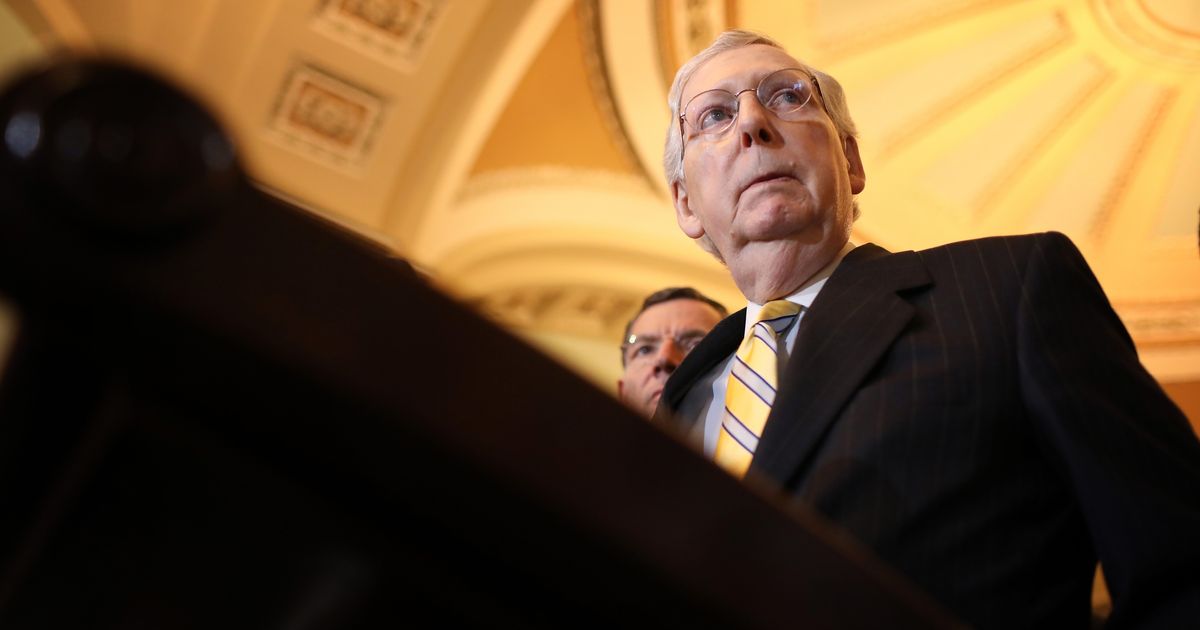
It’s dominating the news and the airwaves, but an event that was once expected to rival the trial of O.J. Simpson seems to be getting caught up in what most government hearings tend to be – boring, bureaucratic and not really captivating viewing for those living outside the beltway. And for some, the reality is the impeachment process seems to be coming with self-fulfilling expectations. Unfortunately, in these hyper-partisan times, the result may likely not be dictated by the facts presented. Despite what compelling evidence is presented by either side, the House will impeach, and the Senate will acquit. That’s how the game will play out. Though procedure will be followed – will it matter? "But in fact, McConnell has repeatedly said he would indeed hold a trial — too many times to reverse himself, in all probability, as the Hill reports: “Under the impeachment rules of the Senate, we’ll take the matter up. The chief justice will be in the chair … We intend to do our constitutional responsibility,” he said. McConnell had previously indicated that he would have “no choice” but to take up impeachment if the House passes articles, though he has also [run] a Facebook ad over the recent two-week recess positioning himself and the GOP-controlled Senate as a roadblock to Trump being removed from office." New York Magazine – November 13 If you’re a reporter covering the impeachment hearings and want to know what to expect, what does matter and how this event will influence politics and government moving forward – then let our experts help. Mark Caleb Smith is the Director of the Center for Political Studies at Cedarville University. Mark is available to speak with media regarding Trump, impeachment and what follows. Simply click on his icon to arrange an interview.

Is there a link between economic stress and opioid abuse? Let our experts help if you are covering
Recent media coverage is pulling back the curtain to reveal another angle on opioid abuse. The facts are startling, and it seems there is a direct relation between those facing economic stress and hardship and abusing opioids. “In 2015, Jennifer Silva, a professor of sociology and anthropology at Bucknell University, began interviewing people in the coal region of northeastern Pennsylvania. She was working on a project, which would become the book We’re Still Here, about how poor and working-class Americans were affected by the collapse of the coal industry—the major job provider in the region. She was curious how the regional decline might have shaped her subjects’ politics. But she quickly noticed a startling trend alongside the growing unemployment: Her subjects and their families were struggling with opioid abuse. At community meetings, doctors and coroners would debate solutions to the problem. Should they be arresting people? Should they be creating support groups? She describes one desperate parent who asked whether Donald Trump’s proposed border wall would keep black tar heroin from getting to Pennsylvania. Silva’s interviewees might have been representative of an awful connection between job loss and opioid abuse, a connection that continues to be bolstered by research. A study published on Monday in the journal JAMA found that counties with automotive assembly plants that closed had, five years after the closure, 85 percent higher rates of opioid-overdose mortality, relative to counties where automotive assembly plants remained open.” January 02 – The Atlantic The opioid epidemic has seen approximately 700,000 Americans dies since 1999. And there are many people who have become victims – rich and poor. However, this recent finding may show a link that public health officials, law makers and addiction experts can further focus on, especially in areas of America facing current or impending economic strife. There are a still lot of questions and that’s where we can help. Dr. Marc Sweeney is the Founding Dean of the School of Pharmacy at Cedarville University and is an expert in the fields of drug abuse, prescription drug abuse and Opioid addiction. Marc is available to speak with media regarding this growing issue. Simply click on his icon to arrange an interview.

The killing of Iranian military leader Maj. Gen. Qassim Suleimani by an American ordered drone strike has put the world is on edge. As leaders call for calm, hundreds of thousands are protesting across the Middle East and war seems almost inevitable. As news broke of the attack late last week, media were scrambling to find experts to lend their perspective, opinions and expertise about what’s next. That’s where the University of Connecticut’s Director of Middle East Studies Jeremy Pressman was able to help. Pressman said it’s “too early to say” what kind of repercussions the killing of Iranian Maj. Gen. Qassim Suleimani will have in Iran, Iraq or in other countries like Saudi Arabia or Lebanon, in part because it’s not known yet how much planning went into the decision. “The Trump administration is an administration that, on foreign policy, has not demonstrated that it usually plans much in advance,” he said. “You want to have thought what ways Iran could respond, and how you are going to defend yourselves in those situations and respond to those situations.” January 03 – Middletown Press If you are a reporter covering this ongoing and progressing situation – the let our experts help with any of your questions or stories moving forward. Jeremy Pressman (MIT, PhD) studies international relations, the Arab-Israeli conflict, Middle East politics, and U.S. foreign policy. He is the Director of Middle East Studies at the University of Connecticut and is available to speak with media, simply click on his icon to arrange an interview today.


There’s no Tour de France for women; it’s time to address the inequity in professional cycling
Since the Passing of Title IX, there have been many improvements in accessibility for girls and women in sports. This trend has not been as strong for some sports, like competitive cycling. “We know that when we look at numbers for licensed riders in the U.S., 15% are women, and that means 85% of competitive cyclists are men,” said Erin Ayala, Ph.D. “Because races are generally run by private organizations, they don’t fall under the Title IX umbrella. It looks very different. They can say that because only 15% of women are in the field, they think they don’t need to add more races so women can participate. This then creates concerns regarding skill development and safety while racing.” As a cyclist who races nationally, Dr. Ayala can attest that women cyclists are treated very differently than men. “I did a large national investigation on the experiences to find out what the factors are that affect participation for women in competitive cycling. A lot of women spoke of importance of creating an encouraging and supportive atmosphere. They'd say, 'If I have people on sidelines cheering me on, that means the world to me.' “Another piece was that race promoters and directors sometimes combine women with master’s men, 50-60-year-old men, to help with field sizes, but that can create a toxic environment because women are racing with older men who may not want them to be there. Women are also paired with younger junior cyclists, which can feel condescending and patronizing because it results in shorter or easier races. “In a lot of races women race shorter distances or durations than the men, which can feel insulting. There’s no Tour de France for Women. It’s a tough atmosphere. Then there are the podium girls, women in high heels and makeup whose job it is to stand next to the male racers to give them their prizes and a kiss on the cheek. The underlying assumption is those women are there to accessorize the male racers. It speaks to the gender dynamics in those sports. “Things that decrease participation are unsupportive environments where women feel they do not belong, inequitable fields, and unequal prize pools; sometimes men are paid more money to win the same race as women. We have good hard data to talk about it. We need to do better, and one of biggest themes that came out of it was ‘Build it and we will come. Invest in us, and we will start to show up more often.’ We are hoping to create some change in communities and nationally to make more room for women in a sport that does not have many women. Are you a journalist covering this topic and looking to book an interview? That’s where we can help. Dr. Erin Ayala is a licensed psychologist and core faculty member in the counseling psychology doctoral program at Saint Mary’s University of Minnesota. She is also an expert in the areas of women’s health and sports psychology. To book an interview with Dr. Ayala – simply click on her icon to arrange a time. Read more on Dr. Ayala's research: https://doi.org/10.18666/JOREL-2020-V12-I1-9912.


Ask our experts - Self-care a necessity for graduate students; what are programs doing to help?
Life doesn’t stop when you’re in a doctoral program. Erin Ayala, Ph.D., has done extensive research into self-care, stress, and quality of life of students, particularly those in human service doctoral programs (like medical students and those in nurse anesthesiology, psychology, and counseling). She knows the recipe for stress and burnout: • These stressful programs tend to attract high achievers. It’s already in their nature to balance several commitments and responsibilities. • These programs and professions have a high level of responsibility. • Students in these programs are frequently at an age where they are also going through significant developmental milestones (marriage, children, purchasing homes). “When you bring all of that together, it can be really difficult to prioritize time for self-care,” she said. “Prevention and health promotion are really important, and it’s not just about mental health. It’s not just about being reactive and addressing distress or burnout when it hits. The question is what can we do on the front end to help prevent negative consequences down the road.” What is self-care? Often, Dr. Ayala said, media romanticizes and glamorizes self-care with advertisements for fizzy bath bombs and manicures. “What we have found is that it is completely personalized,” Dr. Ayala said. “For women, social support is really important. Ultimately, there needs to be time to disconnect, whether it’s doing nothing, or just taking a break from your dissertation. You’ve got to give yourself permission to do that. “Nutrition, exercise, hydration, spiritual life, different people have a different recipe for what their self-care looks like. It ebbs and flows just like any exercise or meditation or spiritual practice. Some weeks we’re doing great and other times we’re not, and that’s part of the process.” Dr. Ayala’s most recent research involves analyzing qualitative data, coming from over 200 students throughout the U.S. in clinical counseling and school psychology, all high achievers in the middle of doctoral programs. She’s investigating what faculty are doing to model or not model the importance of physical and psychological wellness. “Students might know that self-care is important, but it can be hard to act on it if they're in an environment that doesn’t support it,” she said. “The biggest supportive theme that came up was faculty simply encouraging them to do it, asking their students, ‘What did you do this weekend for self-care?’ They take the time to check in with their students and give them permission to take time for themselves. That takes zero effort.” “What can we do to make sure faculty are also able to model self-care for their students? The behaviors students are picking up now pave the foundation for the rest of their career. If faculty are working themselves to the bone, it sets an expectation for their students that they are supposed to do the same. If faculty model self-care and talk about its importance, students may be more likely to do it themselves.” Dr. Ayala said when her team asked students what programs can do to support self-care, answers ranged from formal programming and talking about it in the classroom, to referrals for therapists, discounts for gym memberships, or places to meditate on campus — ways to make self-care easier to access. When students are asked what the biggest barrier to self-care is, the answer wasn’t surprising. The majority of students responded that time was an issue. “That’s a tough one because there’s only so much programs can do to minimize the amount of work required,” Dr. Ayala said. “Students have to balance all these professional responsibilities and don’t know what to give up.” Are you looking to know more about self-care and other similar topics when it comes to high education? Or, are you a journalist covering this topic and looking to book an interview? That’s where we can help. Dr. Erin Ayala is a licensed psychologist and core faculty member in the counseling psychology doctoral program at Saint Mary’s University of Minnesota. To book an interview with Dr. Ayala – simply click on her icon to arrange a time.

Is your social media ready for when the next crisis strikes? Let our experts help!
At the National Institute for Social Media, response plans are the priority. A response plan is the high-level look, or the umbrella overview, that crisis management falls under. Your response plan details how you respond to positive, negative feedback, and any neutral feedback that comes your way. Take a compliment and make the most out of it: Positive feedback feels like you’re off the hook. If feedback is all positive, you feel like you don’t have to do anything. But that’s your opportunity to nurture and strengthen those who are already your supporters. They then become your brand champions. Avoid the neutral zone traps – react and respond accordingly: Questions or posts that aren’t really positive or negative land in neutral space, and that’s really not crisis communication, responding to those is just good customer service. When crisis strikes: If you have a crisis, most people associate it with an isolated event, and sometimes you can plan for it, sometimes you can’t. A few years ago, when Nordstrom’s discontinued Ivanka Trump’s clothing line, they anticipated a negative backlash by those who would accuse them of being politically motivated. They stated sales was the reason, and 100 percent came out neutral, but they could anticipate that particular feedback. Whereas, in the viral video of a passenger being physically dragged off an airplane, the airline couldn’t have anticipated that event. However, with an online response plan, they would have been prepared to respond to the unexpected event. A quick response is important but an informed response is more important than anything else. If it fits the situation, you may buy yourself time to do a little research by commenting that you’ve passed their question on and will respond soon. If you don’t have a strategic plan to fall back on, and you respond quickly but poorly, you run the risk of doing more harm than good. With an online response plan, people understand how to assess a given situation. Respond: To show transparency, we want everyone to see we are responding to customer; we have a planned response where we acknowledge the customer. Take offline: Give them an offline option for sharing additional information. Resolve: This allows the customer to have their issue resolved and be heard but discourages them from sharing ugly details on that highly visible platform. The plan is for a social media manager to have a path when they don’t know what to do. The viral airplane video is one example because by the time their social media people saw it, it was already going viral. They had every indication they should be panicking. Did they have a person to talk to help them make the decision about how it needs to be addressed? For those crises we can’t anticipate, there needs to be a clear path to a leader who can help with this difficult situation. One of my favorite things to tell people is that you don’t have to be victimized online just because you’re a professional organization. You can set up community guidelines. Some businesses think, what if someone starts using racial slurs or inappropriate comments? You can post community guidelines that state these are our expectations of how our customers can participate respectfully, and we reserve the right to delete your content. You can set the expectation that you want people to engage respectfully. You have to get to the heart of what people are really asking or wanting. In the case of Ivanka Trump’s clothing line, nobody was upset because Nordstrom’s wasn’t carrying the clothing line; what they were really upset about was that a large organization could be taking a political stance against the at-that-time republican candidate. Are you looking to know more about how corporations and institutions need to be prepared and how they need to react when bad news goes viral? That’s where we can help. Amy Jauman is social media expert, consultant, writer, and professor at Saint Mary’s University of Minnesota. Dr. Jauman authored a (National Institute for Social Media) NISM textbook for social media strategists and is available to speak to speak with media – simply click on her icon to arrange an interview.

What's Ahead for California's Gig Workers?
A new law is set to take effect in California on January 1 that could significantly shift the landscape for the "gig economy" and freelancers across the state: Assembly Bill 5 (or AB 5) will require businesses to reclassify workers like ridesharing and food app delivery drivers as employees and not contractors, giving them access to minimum wage and benefits such as overtime, workers' compensation and health insurance. Another group that's targeted in the legislation are freelance journalists. (Vox Media, the parent company of sports site SB Nation, has already taken action and laid off hundreds of freelancers before the law goes into effect.) Villanova University professor Cheryl Carleton, PhD, is an expert on labor economics and the workforce who, in conjunction with Mary Kelly, PhD, recently published research on alternative work arrangements and job satisfaction. "By making them regular employees of the company, workers that firms do hire would gain some benefits, and the government may gain some unemployment insurance payments," Dr. Carleton said about California's AB 5 legislation. "Such a law may be great for them. However, other workers will be worse off because they will be losing just what they wanted—the ability to work when and where they want." "Some of these workers may already have needed benefits through a spouse or significant other or through another job," she continued. "Perhaps they are retired and already have access to those benefits. Still, other workers may not be able to take a regular job with its rigid hours, so they will not be able to work at all." Dr. Carleton also noted that there is a larger issue about how benefits are provided in our economy. "Benefits such as medical insurance, pensions and sick and disability leave are provided through one's place of employment. To the extent that these other working arrangements are growing in popularity, the best approach may be for us to rethink how such benefits are offered," she shared. "It may be that more should be offered by the government to citizens, which then would allow them the ability to choose the job(s) they want that fill the needs they have." To speak with Dr. Carleton or Dr. Kelly, please click on the "View Profile" links featured on this page.


