
Experts Matter. Find Yours.
Connect for media, speaking, professional opportunities & more.

MSU researchers develop wood-based material that improves safety and life of lithium-ion batteries
For consumers worried about the risks associated with using lithium-ion batteries — which are used in everything from phones to laptops to electric vehicles — Michigan State University has discovered that a natural material found in wood can improve battery safety while also improving the battery’s life. Chengcheng Fang, assistant professor in the College of Engineering, and Mojgan Nejad, an associate professor in the College of Agriculture and Natural Resources, collaborated to engineer lignin, a natural ingredient of wood that provides support and rigidity, into a thin film separator that can be used inside lithium-ion batteries to prevent short circuits that can cause a fire. “We wanted to build a better battery,” said Fang. “But we also wanted it to be safe, efficient and sustainable.” Inside a battery, the positively charged cathode and negatively charged anode electrodes help the flow of electricity. To keep these electrodes apart, a commercial separator is typically made from polyethylene and polypropylene plastic materials, which can shrink at temperatures near 100 degrees Celsius. Without the protection of the separator, the cathode and anode sides of the battery have the potential to touch, causing an accidental short circuit and possible fire or explosion. In contrast, the lignin-based separators developed remained stable and didn’t become smaller in size up to temperatures of 300 degrees Celsius. Fang and her team tested varying thicknesses of lignin and found that films measuring 25 micrometers, which is thinner than one quarter of a human hair, were the most effective at keeping the inside of the battery stable and keeping the anode and cathode from connecting. Using the lignin film inside the battery had another benefit: the increased stability inside the battery also resulted in an improved cycle life, or how many times the battery can be charged and used. “We were surprised to see that the lignin film also improved the battery’s cycle life,” said Fang. “We increased the battery’s cycle life by 60%.” A third advantage of this research is an environmentally friendly one. The team was able to manufacture the lignin separators using a low-cost dry processing method. This meant that the team was able to produce large quantities of the lignin film, on demand, while avoiding the use of harmful solvents commonly used in traditional separator manufacturing, which can be harmful to the environment. In this case, the researchers were able to use lignin and other materials that provided a 100% raw material conversion to create a film without creating any waste or pollution. “Lignin, particularly lignosulfonate, is naturally abundant and it doesn’t need any further treatment to function in batteries,” said Fang. “This work demonstrates a new design pathway to improve both the safety and manufacturability of battery materials.” This research was published in Advanced Materials, and the technology is patent pending through the MSU Innovation Center.

Aston University’s Dr Amanda Hall co-led the study with Dr Anisa Visram from the University of Manchester Deaf children and those with experience of childhood deafness have identified their top 10 research priorities including education and family relationships The project was funded by the National Deaf Children’s Society Deaf children and people with experience of childhood deafness from across the UK have come together to highlight what matters most to children affected by deafness and hearing loss, as part of a project funded by the National Deaf Children’s Society (NDCS). From 2023 to 2025, a team of parents, young people and health and education professionals set out to compile a list of the ‘Top 10’ most important questions that researchers should be trying to answer about childhood deafness and hearing loss. The project was co-led by Dr Amanda Hall, a senior lecturer in audiology at Aston University, and Dr Anisa Visram from the University of Manchester in conjunction with researchers at Lancaster University. The hope is that it will ultimately lead to more research into childhood deafness, in the specific areas it’s needed most. Children highlighted the potential impact of them missing out on things happening around them when interacting with their peers as their top priority, demonstrating the importance of social development for deaf children. Family relationships and educational needs ranked as high priorities for both adults and children, coming in the top 3 for both groups. Adults ranked educational needs as number 1, highlighting the importance of supporting deaf children in schools, particularly those with additional needs. Other important areas for research included understanding what support is needed for children with mild and unilateral (on one side) deafness, the impact of language deprivation on deaf children and how deaf children can be supported to understand their deafness and become empowered to advocate for themselves as they grow up into deaf adults. Several hundred respondents contributed to the project through a series of online surveys. Children were involved through activity-based focus groups. Respondents submitted over 1,200 ideas for research questions in the initial surveys. These were summarised into a list of 59 unique questions, and a second survey was used to prioritise the questions. The top 21 questions were then taken to two final full-day workshop where participants collaborated to choose their top 10 priorities. The research team used what’s known as a James Lind Alliance (JLA) priority-setting process to ensure the robustness of the project. Participants reported feeling valued as part of the project and satisfied that their feedback is reflected in the final lists. One of the children who took part in the workshop said: “I learnt that my voice matters and I can make a difference for me and other deaf children.” Dr Hall said: “It has been a real privilege to be part of this JLA partnership, working alongside deaf young people, families of deaf children and professionals to identify our two sets of top 10 research questions. We hope this is just the beginning of more research that reflects what matters most to deaf children, their families and professionals, and of more opportunities to work together.” Dr Visram said: “This has been an incredible project to work on with an amazing, committed, and diverse stakeholder group feeding into the process at all stages. We have formed important collaborations with deaf young people, parents of deaf children, and a whole range of professionals working with deaf children. The group plan to keep working together to promote the Top 10 lists and help develop research projects to start to answer these important questions.” Juliet Viney is a parent to a deaf child and has supported the project as a parent partner. She said: “It has been an absolute privilege working as a parent partner developing our Top 10 most important research questions for childhood deafness. This project has brought together and empowered deaf children and young people, parents and professionals from across the UK; using their valuable lived experiences to provide them with a strong voice to guide researchers towards addressing what is most needed to improve deaf children's educational, health, social and emotional outcomes. I am excited to see which questions will be pursued in further research and the positive impacts these will have on the lives of deaf children!” Dr Sian Lickess, Research and Analysis Lead at the National Deaf Children’s Society, said: “We are proud to have supported this important partnership, which has brought together the voices of deaf children, their families and professionals to shape future research priorities. The resulting Top 10 lists represent an important step toward ensuring research is aligned with real-world needs and is meaningful to those most affected. We look forward to the impact this work will have on improving outcomes for deaf children.” The full list of priorities identified can be found at: www.childdeafnessresearch.co.uk. As well as the National Deaf Children’s Society, several other partners have also contributed to the project. These include the Professor Kevin Munro’s National Institute for Health and Care Research (NIHR) Senior Investigator award, NIHR Manchester Biomedical Research Centre, PF Charitable Trust, Research England’s QR Participatory Research Fund to Lancaster University, and UKRI Future Leaders Fellowship MR/X035999/1.


America's literacy emergency continues; experts available with solutions
September is more than back-to-school season. It is also National Literacy Month. This return to the classroom and yearly recognition remind us of the urgent need to ensure every child has the literacy skills to thrive in school and beyond. One such example of this is Delaware. Despite recent gains in statewide test scores, Delaware leaders have warned: a literacy emergency persists. Too many children – especially those from marginalized communities – are still being left behind in reading proficiency. The University of Delaware’s College of Education and Human Development is helping to change that. CEHD’s literacy experts are advancing research, building partnerships, and equipping educators with evidence-based strategies that make an impact. Annastasia Purinton and Steve Amendum work with the WTG Foundation to strengthen school-community partnerships that bring literacy support directly to students who need it most. Stephanie Del Tufo, whose recent essay in The Conversation spotlighted the science of reading, studies how early learning and memory processes shape literacy development. Adrian Pasquarella focuses on multilingual learners, helping educators bridge language learning and literacy growth – an area of growing importance in Delaware’s diverse classrooms. Rebecca Joella and colleagues at the Delaware Institute for Excellence in Early Childhood are leading professional development efforts that equip early educators to foster strong literacy skills from the start. These experts bring research to life – translating what works in the classroom into scalable practices and policies. Their work underscores a powerful truth: literacy is not just an academic milestone, it is the foundation for opportunity, equity and lifelong success. As Delaware and the nation confront the literacy crisis, CEHD stands at the forefront with the evidence, expertise and partnerships to make a lasting difference. To speak to any of these experts, please email mediarelations@udel.edu.


The Fed Just Cut interest Rates - What's Mean for Americans and What Does it Say about the Economy?
For the first time since December interest rates are being cut and all indicators point to even more signaled more cuts coming this year. The reactions so far have been mixed. The markets held steady but made no bold moves. And the opinions on how this will impact housing and home sales was also mixed with President Trump raving that housing will "soar" and others concerned about volatility. The announcement is getting a lot of media attention with reporters looking for angles, answers and what to expect for the future. And to get those answers - they need experts who understand every aspect of the economy. Dr. Jared Pincin's primary research interests explore the intersection of public choice economics with foreign aid as well as issues in sports economics. Pincin has published in popular publications such as The Hill, Real Clear Markets, Foxnews.com, and USA Today and scholarly journals such as Oxford Development Studies, Applied Economic Letters, and the Journal of Sport and Social Issues. View his profile here Dr. Haymond joined the faculty at Cedarville University in 2010 after a 29-year career in the United States Air Force. He taught at the United States Air Force Academy and was an Air Force Fellow at The Brookings Institution. His research has been published in scholarly journals such as the Quarterly Journal of Austrian Economics, Public Choice, the Journal of Public Choice and Public Finance, and Journal of Faith and Economics. His current research interests include economics and religion, as well as monetary theory. View his profile here Looking to know more? We can help. Jared Pincin and Jeff Haymond are both available to speak with media - simply click on either expert's icon to arrange an interview today.

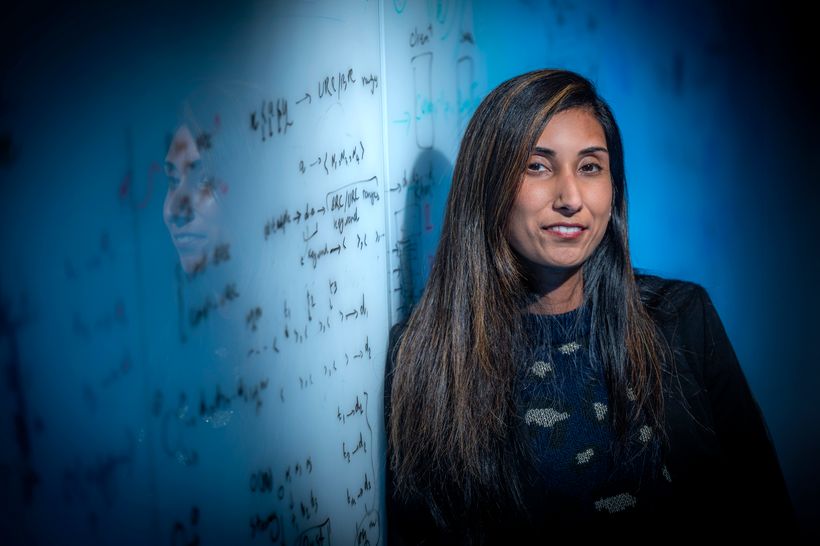
Ask an Expert: Augusta University's Gokila Dorai, PhD, talks Artificial Intelligence
Artificial Intelligence is dominating the news cycle. There's a lot to know, a lot to prepare for and also a lot of misinformation or assumptions that are making their way into the mainstream coverage. Recently, Augusta University's Gokila Dorai, PhD, took some time to answer some of the more important question's she's seeing being asked about Artificial Intelligence. Gokila Dorai, PhD, is an assistant professor in the School of Computer and Cyber Sciences at Augusta University. Dorai’s area of expertise is mobile/IoT forensics research. She is passionate about inventing digital tools to help victims and survivors of various digital crimes. View her profile here Q. What excites you most about your current research in digital forensics and AI? "I am most excited about using artificial intelligence to produce frameworks for practitioners make sense of complex digital evidence more quickly and fairly. My research combines machine learning with natural language processing incorporating a socio-technical framework, so that we don’t just get accurate results, but also understand how and why the system reached those results. This is especially important when dealing with sensitive investigations, where transparency builds trust." Q. How does your work help address today’s challenges around cybersecurity and data privacy? "Everyday life is increasingly digital, our phones, apps, and online accounts contain deeply personal information. My research looks at how we can responsibly analyze this data during investigations without compromising privacy. For example, I work on AI models that can focus only on what is legally relevant, while filtering out unrelated personal information. This balance between security and privacy is one of the biggest challenges today, and my work aims to provide practical solutions." Q. What role do you see artificial intelligence playing in shaping the future of digital investigations? "AI will be a critical partner in digital investigations. The volume of data investigators face is overwhelming, thousands of documents, chat messages, and app logs. AI can help organize and prioritize this information, spotting patterns that a human might miss. At the same time, I believe AI must be designed to be explainable and resilient against manipulation, so investigators and courts can trust its findings. The future isn’t about replacing human judgment, but about giving investigators smarter tools." Q. What is one misconception people often have about cybersecurity or digital forensics? "A common misconception is that digital forensics is like what you see on TV, instant results with a few keystrokes. In reality, it’s a painstaking process that requires both technical skill and ethical responsibility. Another misconception is that cybersecurity is only about protecting large organizations. In truth, individuals face just as many risks, from identity theft to app data leaks, and my research highlights how better tools can protect everyone." Are you a reporter covering Artificial intelligence and looking to know more? If so, then let us help with your stories. Gokila Dorai, PhD, is available for interviews. Simply click on her icon now to arrange a time today.


How to respond when your teen rebels
Why do some rebellious teenagers shun parental warnings about their behavior while others take them to heart? University of Rochester psychologist Judith Smetana has devoted her career to unpacking that question. Her research reveals that parents who live out their values — and take the time to understand the perspective of their teenagers — have the most success at positively shaping adolescent behavior. Smetana’s latest study, published in the Journal of Youth and Adolescence, shows that when parents “walk the walk” and model their values consistently, teens perceive rules and warnings as supportive guidance rather than controlling commands. But that alone won’t stop all risky teenage behavior. What really works, Smetana’s research finds, is “perspective-taking”: when parents try to understand their child’s feelings and the reasons for them. Smetana is widely cited for her expertise on moral development, autonomy, and parent-teen conflict — and how these dynamics shape young people’s lives. Connect with her by clicking on her profile.



Swimming in the deep: MSU research reveals sea lamprey travel patterns in Great Lakes waterways
Why this matters: Invasive sea lampreys prey on most species of large Great Lakes fish such as lake trout, brown trout, lake sturgeon, lake whitefish, ciscoes, burbot, walleye and catfish. These species are crucial to Great Lakes ecosystems and to the region’s fishing industry. Understanding how sea lampreys migrate can inform management and conservation strategies, such as developing methods to catch the invasive fish that don’t involve dams, which reduce river connectivity, or lampricide, a pesticide that some communities and groups prefer not to use. The Great Lakes fishing industry is worth $7 billion and provides 75,000 jobs to the region. Reducing the amount of sea lamprey in waters is crucial for the industry’s well-being and the economic vitality of the Great Lakes. How do you catch an invasive fish that’s solitary, nocturnal and doesn't feed on bait? Researchers in the Michigan State University College of Agriculture and Natural Resources are one step closer to figuring it out. In a study published in the Journal of Experimental Biology and funded by the Great Lakes Fishery Commission, Kandace Griffin, a fisheries and wildlife doctoral student, and Michael Wagner, professor in the MSU Department of Fisheries and Wildlife, found that sea lampreys — a parasitic fish considered an invasive species in the Great Lakes region of the U.S. — follow a clear pattern of staying in the deepest parts of a river. These findings are important for informing sea lamprey management strategies, conservation of fish species native to the Great Lakes and protecting the region’s $7 billion fishing industry and the 75,000 jobs it provides. “We wanted to know how sea lampreys are making their movement decisions when migrating,” Griffin said. “Are they guided by certain environmental cues? Are they moving through areas that are safer? How can we potentially exploit those decisions or maybe manipulate them into going somewhere that they don’t want to go, like pushing them into a trap.” The primary methods used to control sea lamprey are dams that block them from entering waterways and lampricide, a species-specific pesticide that targets lamprey larvae. “Dams create a lot of challenges for conserving river ecosystems: They block all the other fish that are moving up and down in the system. Even though lampricide is proven to be safe and effective, there are communities that are uncomfortable with its use going into the future,” Wagner said. “Figuring out the right way to fish sea lamprey would decrease its population, lower reproduction rates and provide managers with the opportunity to match their control tactics to the community’s needs.” To track lamprey movements, Griffin and Wagner used a method called acoustic telemetry, which involved using sound emitted from a surgically implanted tag to track the movement of 56 sea lampreys in the White River near Whitehall, Michigan. Griffin likened acoustic telemetry to GPS. “There’s a tag that emits sound and has a unique transmission with a unique identification code, so I know exactly which fish is going where,” she said. “The receivers are listening for that sound and then calculating the time it reaches each receiver. We used this information to triangulate the position of the sea lamprey and analyzed it to find out how they’re using the river’s environmental traits to make decisions on where to swim.” Of the 56 lampreys studied, 26 of them (46%), consistently chose the deepest quarter of the river. “For nearly 20 years we have been discovering how sea lampreys migrate along coasts and through rivers. Now, thanks to Kandace’s work, we know where their movement paths come together near a riverbank — the perfect place to install a trap or other fishing device,” Wagner said. “That knowledge can be used to find similar sites across the Great Lakes basin.” Right now, a fishing device designed to catch bottom-swimming, solitary, nonfeeding, nocturnal sea lamprey doesn’t exist. However, Wagner notes there are places around the world — including Indigenous communities in the U.S. — where people have fished migratory lampreys of various species for hundreds of years and could help inform the creation of such a mechanism. “We have recently had a proposal funded to scour the Earth in search of knowledge, both scientific and traditional, about how to capture migrating lampreys and similar fishes,” Wagner said. “We want to talk with the communities of people who have histories fishing these animals and use this information, along with other data we’ve gathered, to conceive a device that could be used to fish sea lampreys.” Griffin views the new intel on lamprey migration patterns as a way to inform fishing practices to complement some of the existing control methods. “Hopefully, we can use this as a supplemental control method to the use of the barriers or dams,” she said. “We have societal pressure to remove barriers to enhance river connectivity, and some barriers are failing. Open water trapping is another way that we could try to still combat the invasive sea lamprey problem here but also promote river connectivity and other conservation goals for other species.” Wagner shares the same perspective. “When a community, or the Great Lakes Fishery Commission, or the governments of Canada and the U.S. come in and say, ‘We’d really rather be able to control this river with something other than lampricide,’ we want to be able to be able to provide 360-degree solutions that specify where to fish, when to fish and how to fish using fully prototyped and tested equipment,” he said. “We want our science to help solve real-world problems.”

First scientific paper on 3I/ATLAS interstellar object
When the news started to spread on July 1, 2025, about a new object that was spotted from outside our solar system, only the third of its kind ever known, astronomers at Michigan State University — along with a team of international researchers — turned their telescopes to capture data on the new celestial sighting. The team rushed to write a scientific paper on what they know so far about the object, now called 3I/ATLAS, after NASA’s Asteroid Terrestrial-impact Last Alert System, or ATLAS. ATLAS consists of four telescopes — two in Hawaii, one in Chile and one in South Africa — which automatically scans the whole sky several times every night looking for moving objects. MSU’s Darryl Seligman, a member of the scientific team and an assistant professor in the College of Natural Science, took the lead on writing the paper. “I heard something about the object before I went to bed, but we didn’t have a lot of information yet,” Seligman said. “By the time I woke up around 1 a.m., my colleagues, Marco Micheli from the European Space Agency and Davide Farnocchia from NASA’s Jet Propulsion Laboratory, were emailing me that this was likely for real. I started sending messages telling everyone to turn their telescopes to look at this object and started writing the paper to document what we know to date. We have data coming in from across the globe about this object.” The discovery Larry Denneau, a member of the ATLAS team reviewed and submitted the observations from the European Southern Observatory's Very Large Telescope in Chile shortly after it was observed on the night of July 1. Denneau said that he was cautiously excited. “We have had false alarms in the past about interesting objects, so we know not to get too excited on the first day. But the incoming observations were all consistent, and late that night it looked like we had the real thing. “It is especially gratifying that we found it in the Milky Way in the direction of the galactic center, which is a very challenging place to survey for asteroids because of all the stars in the background,” Denneau said. “Most other surveys don't look there.” John Tonry, another member of ATLAS and professor at the University of Hawaii, was instrumental in design and construction of ATLAS, the survey that discovered 3I. Tonry said, “It's really gratifying every time our hard work surveying the sky discovers something new, and this comet that has been traveling for millions of years from another star system is particularly interesting.” Once 3I/ATLAS was confirmed, Seligman and Karen Meech, faculty chair for the Institute for Astronomy at the University of Hawaii, both managed the communications flow and worked on getting the data pulled together for submitting the paper. “Once 3I/ATLAS was identified as likely interstellar, we mobilized rapidly,” Meech said. “We activated observing time on major facilities like the Southern Astrophysical Research Telescope and the Gemini Observatory to capture early, high-quality data and build a foundation for detailed follow-up studies.” After confirmation of the interstellar object, institutions from around the world began sharing information about 3I/ATLAS with Seligman. What scientists know about 3I/ATLAS so far Though data is pouring in about the discovery, it’s still so far away from Earth, which leaves many unanswered questions. Here’s what the scientific team knows at this point: It is only the third interstellar (meaning from outside our solar system) object to be detected passing through our solar system. It’s potentially giving off gas like other comets do, but that needs to be confirmed. It’s moving really fast at 60 kilometers per second, or 134,000 miles per hour, relative to the sun. It’s on an orbital path that is shaped like a boomerang or hyperbola. It’s very bright. It’s on a path that will leave our solar system and not return, but scientists will be able to study it for several months before it leaves. The James Webb Space Telescope and the Hubble Space Telescope are expected to reveal more information about its size, composition, spin and how it reacts to being heated over the next few months. “We have these images of 3I/ATLAS where it’s not entirely clear and it looks fuzzier than the other stars in the same image,” said James Wray, a professor at Georgia Tech. “But the object is pretty far away and, so, we just don’t know.” Seligman and his team are specifically interested in 3I/ATLAS’s brightness because it informs us about the evolution of the coma, a cloud of dust and gas. They’ve been tracking it to see if it has been changing over time as the object moves and turns in space. They also want to monitor for sudden outburst events in which the object gets much brighter. “3I/ATLAS likely contains ices, especially below the surface, and those ices may start to activate as it nears the sun,” Seligman said. “But until we detect specific gas emissions, like H₂O, CO or CO₂, we can’t say for sure what kinds of ice or how much are there.” The discovery of 3I/ATLAS is just the beginning. For Tessa Frincke, who came to MSU in late June to begin her career as a doctoral student with Seligman, having the opportunity to analyze data from 3I/ATLAS to predict its future path could lead to her publishing a scientific paper of her own. “I’ve had to learn a lot quickly, and I was shocked at how many people were involved,” said Frincke. “Discoveries like this have a domino effect that inspires novel engineering and mission planning.” For Atsuhiro Yaginuma, a fourth-year undergraduate student on Seligman’s team, this discovery has inspired him to apply his current research to see if it is possible to launch a spacecraft from Earth to get it within hundreds of miles or kilometers to 3I/ATLAS to capture some images and learn more about the object. “The closest approach to Earth will be in December,” said Yaginuma. “It would require a lot of fuel and a lot of rapid mobilization from people here on Earth. But getting close to an interstellar object could be a once-in-a-lifetime opportunity.” “We can’t continue to do this research and experiment with new ideas from Frincke and Yaginuma without federal funding,” said Seligman, who also is a postdoctoral fellow of the National Science Foundation. Seligman and Aster Taylor, who is a former student of Seligman’s and now a doctoral candidate in astronomy and astrophysics and a 2023 Fannie and John Hertz Foundation Fellow, wrote the following: “At a critical moment, given the current congressional discussions on science funding, 3I/ATLAS also reminds us of the broader impact of astronomical research. An example like 3I is particularly important to astronomy — as a science, we are supported almost entirely by government and philanthropic funding. The fact that this science is not funded by commercial enterprise indicates that our field does not provide a financial return on investment, but instead responds to the public’s curiosity about the deep questions of the universe: Where did we come from? Are we alone? What else is out there? The curiosity of the public, as expressed by the will of the U.S. Congress and made manifest in the federal budget, is the reason that astronomy exists.” In addition to MSU, contributors to this research and paper include European Space Agency Near-Earth Objects Coordination Centre (Italy), NASA Jet Propulsion Laboratory/Caltech (USA), University of Hawaii (USA), Auburn University (USA), Universidad de Alicante (Spain), Universitat de Barcelona (Spain), European Southern Observatory (Germany), Villanova University (USA), Lowell Observatory (USA), University of Maryland (USA), Las Cumbres Observatory (USA), University of Belgrade (Serbia), Politecnico di Milano (Italy), University of Michigan (USA), University of Western Ontario (Canada), Georgia Institute of Technology (USA), Universidad Diego Portales, Santiago (Chile) and Boston University (USA).

University of Delaware secures $13.1M grant to transform Alzheimer’s research and prevention
A new five-year $13.1 million grant will greatly expand the ability of University of Delaware researchers to pursue ways to prevent and treat Alzheimer's disease. The gift from the Delaware Community Foundation (DCF) is one of the largest in state history for Alzheimer’s research. UD's Christopher Martens called the grant "transformational," as it will support the expansion of a statewide prevention study, enable the purchase of a state-of-the-art MRI machine and drive discovery of new diagnostic tools and treatments. “It will also help grow the number of researchers in Delaware focused on Alzheimer’s disease, promoting an interdisciplinary approach." said Martens, director of UD's Delaware Center for Cognitive Aging Research (DECCAR) and professor of kinesiology and applied physiology in the College of Health Sciences. Bringing together researchers from multiple fields to collaborate on a critical challenge like Alzheimer’s disease is a key strength of the University of Delaware, said Interim President Laura Carlson. “Every one of us has a family member or friend who has been deeply affected by Alzheimer’s. I’m proud that UD is working better to understand this terrible disease and partnering with others throughout the state to work on its prevention, diagnosis and treatment,” Carlson said. “We are grateful to the Delaware Community Foundation for their support, which allows us to escalate our research and expand our community outreach.” “No one has to look very far afield to witness and understand the tragedy of Alzheimer’s, and the research supported by this grant will help UD researchers come ever-closer to uncovering life-improving and life-saving solutions,” said Stuart Comstock-Gay, President and CEO of the Delaware Community Foundation (DCF). “The grant was provided through the generosity of late Paul H. Boerger, who made a substantial legacy gift to the fund he had established at the DCF in his lifetime, and his foresight will help so many.” The gift is aimed at achieving the following goals: • Tracking Alzheimer’s risk over time – Expanding Delaware’s largest study of brain aging from 100 to 500 participants to uncover who develops dementia and why. • A simple blood test for early detection – Developing a first-of-its-kind test that could diagnose Alzheimer’s years earlier than current methods. • Cutting-edge brain imaging – Installing a $3.2 million MRI machine on UD’s STAR Campus to reveal hidden brain changes linked to memory loss. • Spotting the earliest warning signs – Exploring how subtle shifts in language and menopause-related hormone changes may predict Alzheimer’s risk. • Fueling prevention and cures – Creating powerful data and tools that will accelerate new treatments and bring researchers closer to stopping Alzheimer’s. To reach Martens for an interview, visit his profile and click on the "contact" button. Interviews with DCF officials can be arranged by emailing MediaRelations@udel.edu.
#Expert Research: Incentives Speed Up Operating Room Turnover Procedures
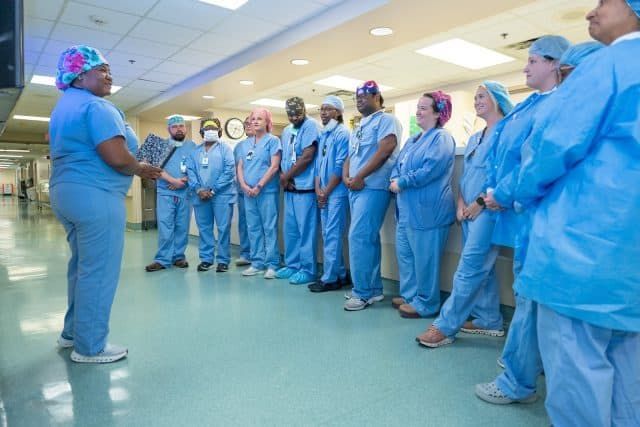
The operating room (OR) is the economic hub of most healthcare systems in the United States today, generating up to 70% of hospital revenue. Ensuring these financial powerhouses run efficiently is a major priority for healthcare providers. But there’s a challenge. Turnovers—cleaning, preparing, and setting up the OR between surgeries—are necessary and unavoidable processes. OR turnovers can incur significant costs in staff time and resources, but at the same time, do not generate revenue. For surgeons, the lag between wheels out and wheels in is idle time. For incoming patients, who may have spent hours fasting in preparation for a procedure, it is also a potential source of frustration and anxiety. Reducing OR turnover time is a priority for many US healthcare providers, but it’s far from simple. For one thing, cutting corners in pursuit of efficiency risks patient safety. Then there’s the makeup of OR teams themselves. As a rule, well-established or stable teams work fastest and best, their efficiency fueled by familiarity and well-oiled interpersonal dynamics. But in hospital settings, staff work in shifts and according to different schedules, which creates a certain fluidity in the way turnover teams amalgamate. These team members may not know each other or have any prior experience working together. For hospital administrators this represents a quandary. How do you cut OR turnover time without compromising patient care or hiring in more staff to build more stable teams? To put that another way: how do you motivate OR workers to maintain standards and drive efficiency—irrespective of the team they work with at any given time? One novel approach instituted by Georgia’s Phoebe Putney Health System is the focus of new research by Asa Griggs Candler Professor of Accounting, Karen Sedatole PhD. Under the stewardship of perioperative medical director and anesthesiologist, Jason Williams MD 02MR 20MBA, and with support from Sedatole and co-authors, Ewelina Forker 23PhD of the University of Wisconsin and Harvard Business School’s Susanna Gallini PhD, staff at Phoebe ran a field experiment incentivizing individual OR workers to ramp up their own performance in turnover processes. What they have found is a simple and cost-effective intervention that reduces the lag between procedures by an average of 6.4 percent. Homing in on the Individual Williams and his team at Phoebe kicked off efforts to reduce OR turnover times by first establishing a benchmark to calculate how long it should take to prepare for different types of procedure or surgery. This can vary significantly, says Williams: while a gallbladder removal should take less than 30 minutes, open-heart surgery might take an hour or longer to prepare. “There’s a lot of variation in predicting how long it should take to get things set up for different procedures. We got there by analyzing three years of data to create a baseline, and from there, having really homed in on that data, we were able to create a set of predictions and then compare those with what we were seeing in our operating rooms—and track discrepancies, over-, and underachievement.” Williams, a Goizueta MBA graduate who also completed his anesthesiology residency at Emory University’s School of Medicine, then enlisted the support of Sedatole and her colleagues to put together a data analysis system that would capture the impact of two distinct mechanisms, both designed to incentivize individual staff members to work faster during turnovers. The first was a set of electronic dashboards programmed to record and display the average OR turnover performance for teams on a weekly basis, and segment these into averages unique to individuals working in each of the core roles within any given OR turnover team. The dashboard displayed weekly scores and ranked them from best to worst on large TV monitors with interactive capabilities—users could filter the data for types of surgery and other dimensions. Broadcasting metrics this way afforded Williams and his team a means of identifying and then publicly recognizing top-performing staff, but that’s not all. The dashboards also provided a mechanism with which to filter out team dynamics, and home in on individual efforts. “If you are put in a room with one team, and they are slower than others, then you are going to be penalized. Your efforts will not shine. Now, say you are put in with a bigger or faster team, your day’s numbers are going to be much higher. So, we had to find a way to accommodate and allow for the team effect, to observe individual effort. The dashboards meant we could do this. Over the period of a week or a month, the effect of other people in the team is washed out. You begin to see the key individuals pop up again and again over time, and you can see those who are far above their peers versus those who, for whatever reason, are not so efficient.” Sharing “relative performance” information has been shown to be highly motivating in many settings. The hope was that it would here, too. Three core roles: Who’s who in the Operating Room turnover team? OR turnover teams consist of three roles: circulating nurse, scrub tech, and anesthetist. While other surgery staff might be present during a turnover, depending on the needs of consecutive procedures, these are the three core roles in the team, and they are not interchangeable in any way: each individual assumes the same responsibilities in every team they join. Typically, turnover tasks will include removing instruments and equipment from the previous surgery and setting up for the next: restocking supplies and restoring the sterile environment. Turnover tasks and activities will vary according to the type of procedure coming next, but these tasks are always performed by the same three roles: nurse, scrub tech, and anesthetist, working within their own area of expertise and specialty. OR turnover teams are assembled based on staff schedules and availability, making them highly fluid. Different nurses will work with different scrub techs and different anesthetists depending on who is free and available at any given time. With dashboards on display across the hospital’s surgery department, Williams decided to trial a second motivational mechanism; this time something more tangible. “We decided to offer a simple $40 Dollar Store gift card to each week’s top performing anesthetist, nurse, or scrub technician to see if it would incentivize people even more. And to keep things interesting, and sustain motivation, we made sure that anyone who’d won the contest two weeks in a row would be ineligible to win the gift card the following week,” says Williams. “It was a bit of a shot in the dark, and we didn’t know if it would work.” Altogether, the dashboards remained in situ over a period of about 33 months while the gift card promotion ran for 73 weeks. It was important to stress the foundational importance of safety and then allow individuals to come up with their own ways to tighten procedures. This was a bottom-up, grassroots experience where the people doing the work came up with their own ways to make their times better, without cutting corners, without cutting quality, and without cutting any safety measures. Jason Williams MD 02MR 20MBA Incentives: Make it Something Special and Unique Crunching all of this data, Sedatole and her colleagues could isolate the effect of each mechanism on performance and turnover times at Phoebe. While the dashboards had “negligible” effect on productivity, the addition of the store gift cards had immediate, significant, and sustained impact on individuals’ efforts. Differences in the effectiveness of the two incentives—the relative performance dashboard and the gift cards—are attributable to team fluidity, says Sedatole. “It’s all down to familiarity. Dashboards are effective if you care about your reputation and your standing with peers. And in fluid team settings, where people don’t really know each other, reputation seems to matter less because these individuals may never work together again. They simply care less about rankings because they are effectively strangers.” Tangible rewards, on the other hand, have what Sedatole calls a “hedonic” value: they can feel more special and unique to the recipient, even if they carry relatively little monetary value. Something like a $40 gift card to Target can be more motivating to individuals even than the same amount in cash. There’s something hedonic about a prize that differentiates it from cash—after all, you will just end up spending that $40 on the electricity bill. Asa Griggs Candler Professor of Accounting, Karen Sedatole “A tangible reward is something special because of its hedonic nature and the way that human beings do mental accounting,” says Sedatole. “It occupies a different place in the brain, so we treat it differently.” In fact, analyzing the results, Sedatole and her colleagues find that the introduction of gift cards at Phoebe equates to an average incremental improvement of 6.4% in OR turnover performance; a finding that does not vary over the 73-week timeframe, she adds. To get the same result by employing more staff to build more stable teams, Sedatole calculates that the hospital would have to increase peer familiarity to the 98th percentile: a very significant financial outlay and a lot of excess capacity if those additional team members are not working 100% of the time. These are key findings for healthcare systems and for administrators and decision-makers in any setting or sector where fluid teams are the norm, says Sedatole: from consultancy to software development to airline ground crews. Wherever diverse professionals come together briefly or sporadically to perform tasks and then disperse, individual motivation can be optimized by simple mechanisms—cost-effective tangible rewards—that give team members a fresh opportunity to earn the incentive in different settings on different occasions—a recurring chance to succeed that keeps the incentive systems engaging and effective over time. For healthcare in particular, this is a win-win-win, says Williams. “In the United States we are faced with lower reimbursements and higher costs, so we have to look for areas where we can gain efficiencies and minimize costs. In the healthcare value model, time and costs are denominators, and quality and service are numerators. Any way we can save on costs and improve efficiencies allows us to take care of more patients, and to be able to do that effectively. “We made some incredible improvements here. We went from just average to best in class, right to the frontier of operative efficiency. And there is so much more opportunity out there to pull more levers and reach new levels, which is truly encouraging.” Looking to know more or connect with Asa Griggs Candler Professor of Accounting, Karen Sedatole? Simply click on her icon now to arrange an interview or time to talk today.

