
Experts Matter. Find Yours.
Connect for media, speaking, professional opportunities & more.

New National UMass Amherst Poll Finds President Trump’s Job Approval Gap Slides 6 Points Since April
Topline results and crosstabs for the poll can be found at www.umass.edu/poll Public approval of Donald Trump’s presidency has dropped by 6 percentage points since April and his approval rating is now 20 points underwater, 38-58, according to a new national University of Massachusetts Amherst Poll of 1,000 respondents conducted July 25-30. “Six months into his second term as president, Donald Trump looks to be on the ropes with the American public,” says Tatishe Nteta, provost professor of political science at UMass Amherst and director of the poll. “Trump’s approval ratings, already historically low for a newly elected president, continue to sink with close to 6-in-10 Americans (58%) expressing disapproval of the job that Trump is doing in office. While Trump remains a popular figure among Republicans and conservatives, Trump’s time in office is viewed more negatively across genders, generations, classes and races, with majorities of each of these groups disapproving of Trump’s performance. With over three years left in the Trump administration, there is still time for him to right the ship and fulfil the promises that catapulted him to the presidency, but the president is not off to the start he or his supporters envisioned.” In the previous UMass Poll, conducted as Trump approached the three-month anniversary of his return to the White House, Trump held a 44-51 approval rating, buoyed by a positive overall approval on his handling of immigration. The new poll, however, has found a significant shift in views on this issue. “Immigration has been central Trump’s political campaigns and his strongest issue in his first few months in office, but the percentage of people who say he is handling it well has dropped substantially from 50% four months ago to just 41% today, a 9-point drop,” explains Raymond La Raja, professor of political science at UMass Amherst and co-director of the poll. “Trump came into the presidency promising change, and he’s made significant alterations in many areas of federal policy,” says Jesse Rhodes, professor of political science at UMass Amherst and co-director of the poll. “He came into office believing that he had limited time to make the changes he promised his most ardent supporters, and moved with unparalleled speed to enact these changes, including sometimes by legally questionable means. Now, it seems, he’s reaping the consequences as a large majority of Americans don’t like these changes. Clear majorities say that Trump has handled his key issues – immigration (54%), inflation (63%), jobs (55%) and tariffs (63%) – not very well or not well at all. With so many Americans grading his handling of public policy poorly, it’s no wonder they disapprove of his presidency.” Rhodes also notes that the president is seeing an erosion in support from one of his most reliable groups of supporters: men. “Trump has cultivated a ‘masculine’ reputation and sought to build support among American men but, strikingly, we find that support for Trump has deteriorated most substantially among members of this group,” says Rhodes. “In April, Trump enjoyed approval from 48% of men, compared with 39% of women. Now, only 39% of men express approval of Trump, compared with 35% of women. “In addition to losing support among men, Trump has seen approval for his presidency crumble among political independents, a critical swing constituency,” Rhodes adds. “While 31% of independents approved of his presidency in April, that number is now down 10 percentage points to 21%. This is really bad news for Trump, and for Republicans who depend on support from independents in close elections.” “Polarization has changed the interpretation of presidential approval ratings,” says Alexander Theodoridis, associate professor of political science at UMass Amherst and co-director of the poll. “Partisans just aren’t willing to evaluate presidents from the other side positively and are reluctant to say negative things about presidents from their own party. So, approval numbers fluctuate within a narrower range. Gone are the days when George H. W. Bush and George W. Bush both achieved approval numbers over 90%. This is certainly true for Trump, who is likely the most polarizing figure in modern American politics. Even in this polarized environment, though, Trump’s approval ratings are low by any standard – he is very close to the practical floor. Especially noteworthy is that nearly half of Americans say they strongly disapprove of Trump and the percentage of Americans who say they strongly approve of Trump has decreased substantially. Even among Republican respondents, only half strongly approve of the president. The GOP should be concerned about these numbers heading into the odd-year elections in 2025 and, especially, the midterm elections in 2026. It is very difficult for a party to win when its leader is this unpopular.” Americans’ views on Epstein and Trump Of all issues surveyed in the latest University of Massachusetts Amherst Poll, one appears to be the greatest drag on Trump’s presidency: Jeffrey Epstein and Trump’s handling of the evidence gathered in the federal investigation of the accused sex-trafficker and his long-time friend. “The Epstein scandal remains a serious vulnerability – indeed, quite possibly, the most serious vulnerability – for Trump right now,” Rhodes says. “Fully 70% of Americans believe he has handled this issue ‘not too well’ or ‘not well at all,’ and nearly two-thirds (63%) believe his administration is hiding information about Epstein. The Epstein scandal is also likely undermining public confidence in Trump more broadly. Indeed, we find that nearly two-thirds of Americans believe that Trump is corrupt and nearly 70% believe he is dishonest. Critically, these numbers mean that many Republicans and conservatives are disappointed with Trump’s handling of the Epstein situation. Republican frustration with Trump’s handling of the Epstein case could erode enthusiasm for his presidency and for Republicans in 2026.” “If Trump and those around him have been wishing the Jeffrey Epstein story would disappear, their wishes have not been granted,” Theodoridis says. “Most Americans (77%) tell us they have heard a lot or some about the Epstein case. In addition to believing that the Trump administration is hiding important Epstein case information, the vast majority of respondents say that a special prosecutor should be appointed to investigate the Trump DOJ’s handling of the Epstein case (59%), that Donald Trump was good friends with Epstein (67%), and that a list of Epstein’s clients exists (70%). Even substantial numbers of Trump voters believe these things. And, when it comes to an Epstein ‘cover-up,’ it seems the buck stops with Trump himself. While a lot of Americans blame Attorney General Pam Bondi (59%), FBI Director Kash Patel (49%), and House Speaker Mike Johnson (47%) for hiding information about the Epstein case, a whopping 81% blame President Trump.” “The controversy over the handling of the Epstein files by the Trump administration has – interestingly – brought Americans together,” Nteta adds. “While on most issues, we see clear and persistent generational, class and racial divisions; on Epstein, Americans across these divides speak with one voice. This controversy has even resulted in agreement across partisan lines as majorities of Democrats and Republicans support a special prosecutor and believe a list of clients exists, and disapproval of Trump’s handling of the whole matter is surprisingly seen among members of Trump’s base, as 43% of Republicans and conservatives indicate that Trump has not handled this issue well.” “Where Trump faces his poorest rating in our poll is on perceived corruption and dishonesty,” adds La Raja. “A clear plurality (49%) sees Trump as ‘very dishonest,’ with an additional 20% saying that he is ‘somewhat dishonest.’ And 45% see him as ‘very corrupt,’ with an additional 20% as ‘somewhat corrupt.’ Only about one-third reject those labels entirely. Trump also gets low ratings on transparency – a majority (52%) say Trump is not at all transparent, his weakest score after dishonesty. Only 23% believe that he’s very transparent. For a candidate who brands himself as a truth-teller and disruptor, this appears to be a credibility gap.” “Strength is Trump’s strongest attribute,” La Raja explains. “Fifty-eight percent see him as very or somewhat strong, indicating appeal among his base and possibly swing voters who value ‘toughness.’ However, views on his competence are split evenly, with 52% saying he’s competent to some degree, while 48% say not at all.” Voter Regret? “Since President Trump took office, a number of reports of regretful Trump voters have been covered in the nation’s leading media outlets,” Nteta says. “From voters upset with Trump’s immigration policies to supporters who take issue with the president’s unwillingness to release the files associated with the Epstein case, there seemed to be a wellspring of regret among Trump’s once loyal base. Our results suggest that while there are, in fact, areas where the president is weak, most notably on his handling of the economy and the Epstein controversy. When asked directly, close to 9-in-10 (86%) would vote for Trump again if given the opportunity to revisit their 2024 presidential vote choice. These results indicate that the number of regretful voters covered in the mainstream press may be overblown, as the overwhelming majority of Trump voters remain in the president’s camp.” “Only 1% of Trump voters say they regret their vote and would choose differently, 2% say they ‘might’ choose differently and 3% say they wish they hadn’t voted at all,” Theodoridis says. “When we simply ask voters how they would vote if they could go back and recast their ballot, 6% of Trump voters tell us they would vote for Harris, while only 2% of Harris voters say they would switch to Trump. There is clearly more erosion in support among Trump voters than among Harris voters and, in what is likely small consolation to Harris and her campaign team, significantly more 2024 non-voters who say they wish they had voted indicate they would now cast a vote for the former vice president. In a relatively close election, shifts of these magnitudes might have been decisive, but there are no ‘take-backs’ in electoral politics, so these numbers are best used to inform choices going forward.” “Our results are not wholly positive for President Trump, and there exist areas of concern for his team moving forward,” Nteta warns. “Since April, the number of Trump voters expressing strong confidence in their vote for Trump has declined by 5 percentage points. Additionally, we find small increases in the number of Trump supporters who have mixed feelings about their vote and who indicate that they would ‘rather not have voted.’ Finally, 14% of Trump voters indicate that they would not vote for Trump if given the chance to revisit, while only 8% of Harris voters express a similar sentiment. Time will tell whether the growing number of disaffected Trump voters are the canaries in the coal mine, indicating a larger problem among the Trump coalition and the MAGA movement more generally.” “We do find a meaningful percentage – 31% – of Trump voters unwilling to say they feel very confident they made the right choice,” Theodoridis adds. “Nineteen percent of Trump voters tell us they are still confident but have concerns, and 6% tell us they have mixed feelings about their vote. Given what we know about the psychological predispositions against admitting to having been wrong, these numbers suggest some softening in support for Trump among the very voters who returned him to the White House last November. This should certainly be alarming for Republican politicians. However, for Democrats or journalists looking for a mass mea culpa from Trump voters, our numbers are, perhaps, sobering.” Methodology This University of Massachusetts Amherst Poll of 1,000 respondents nationally was conducted by YouGov July 25-30. YouGov interviewed 1,057 total respondents who were then matched down to a sample of 1,000 to produce the final dataset. The frame was constructed by stratified sampling from the full 2023 American Community Survey (ACS) one-year sample with selection within strata by weighted sampling with replacements (using the person weights on the public use file). The matched cases were weighted to the sampling frame using propensity scores. The matched cases and the frame were combined, and a logistic regression was estimated for inclusion in the frame. The propensity score function included age, gender, race/ethnicity, years of education, region, and home ownership. The propensity scores were grouped into deciles of the estimated propensity score in the frame and post-stratified according to these deciles. The weights were then post-stratified on 2020 and 2024 presidential vote choice as ranked on gender, age (4-categories), race (4-categories) and education (4-categories), to produce the final weight. The demographic marginals and their interlockings were based on the sample frame. The marginal distribution of 2020 presidential vote choice and its demographic interlockings were based on a politically representative “modeled frame” of US adults, using the 2019 American Community Survey (ACS) public use microdata file, public voter file records, the 2020 Current Population Survey (CPS) Voting and Registration supplements, the 2020 National Election Pool (NEP) exit poll, and the 2020 CES surveys, including demographics and 2020 presidential vote. The marginal distribution of 2024 vote choice was based on official ballot counts compiled by the University of Florida Election Labs and CNN. Demographic interlockings for 2024 vote choice were based on CNN’s 2024 Exit Polls. The margin of error of this poll is 3.5%. Topline results and crosstabs for the poll can be found at www.umass.edu/poll






How AI will transform the economy: Predicting the next breakthroughs
AI is already revolutionizing the world around us. University of Delaware experts are at the forefront of this innovation, researching and inventing new ways to use AI in everyday life. Below are a number of UD experts who can discuss these topics and the breakthroughs being made. AI meets the edge – Weisong Shi, Alumni Distinguished Professor and Chair of Computer and Information Sciences, explains how AI and edge computing will transform everything from self-driving cars to real-time healthcare. AI’s energy appetite – Steven Hegedus, Professor, dives into the massive energy demands of AI, with expertise in photonics and chip-level signal processing. Building AI from the hardware – Sunita Chandrasekaran, Associate Professor and leader of the First State AI Institute, focuses on AI hardware innovations shaping the future of computing. Email mediarelations@udel.edu to speak to any of these experts.


Keep kids reading all summer: Expert tips to make it fun
As July winds down, those summer reading lists might still be sitting – unopened – on nightstands. But it’s not too late to spark a love of reading that lasts well beyond the school year. University of Delaware experts Roberta Michnick Golinkoff and Rebecca Joella specialize in early childhood literacy and know how to make reading feel less like homework and more like play. “We want to make reading fun, instead of a drag or something we have to push kids to do,” says Golinkoff. “Reading with the family totally normalizes it, and if kids think their family is excited about reading, they are more likely to be excited too.” She recommends turning reading into a screen-free family ritual or reading aloud together – even for kids who already know how to read. Joella agrees. "Visiting a local library is an excellent summer activity. Many libraries have summer reading programs for children that encourage reading, so participating in one of those is a lot of fun." Books like "Llama Llama Loves Camping" can lead to a backyard campout – tent, picnic and all. Some summer favorites include "Pete the Cat: Pete at the Beach," "Summer" by Alice Low and "Beach Day" by Karen Roosa – lighthearted stories that celebrate the season and build early literacy skills along the way. Worried about the “summer slide”? Golinkoff notes the impact is often greater for children from under-resourced families. That’s why she helped create Playful Learning Landscapes, transforming everyday public spaces into interactive learning hubs. She’s also leading a global effort to provide free bilingual e-books through the Stories with Clever Hedgehog project – originally launched to support Ukrainian children displaced by war. Golinkoff is available to share insights on early literacy, summer learning and why playful education works.

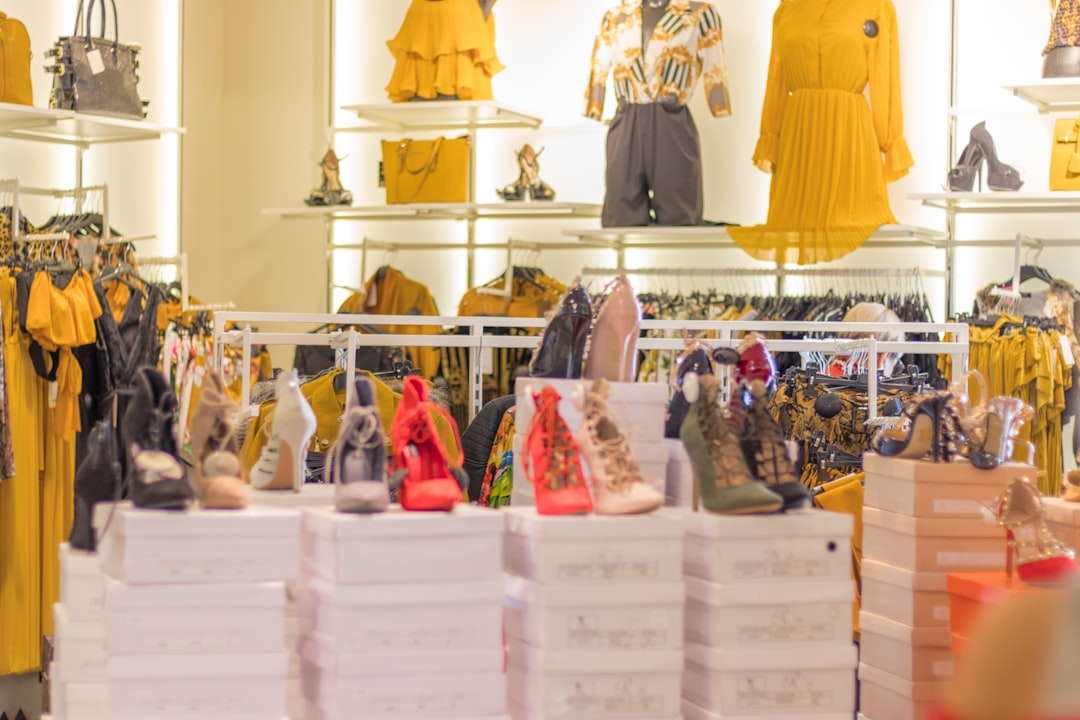
Tariffs fuel global sourcing shakeup for fashion in the U.S.
Be prepared to see more Made in Vietnam or Made in Bangladesh labels on clothing in the coming years. That’s because U.S. fashion companies are rethinking their global sourcing strategies and operations in response to the Trump administration’s trade policies and tariffs, according to new research by the University of Delaware's Sheng Lu. Lu, professor and graduate director in the Department of Fashion and Apparel Studies, partners with the United States Fashion Industry Association (USFIA), on an annual survey of executives at the top 25 U.S. fashion brands, retailers, importers and wholesalers doing business globally. Members include well-known names like Levi’s, Macy’s, Ralph Lauren and Under Armour, among others. The report covers business challenges and outlook, sourcing practices and views on trade policy. “We wear more than just clothes; we wear the global economy, the supply chain and the public policies that jointly make fashion and affordable clothing available to American families,” Lu said. “We want to know where these companies source their products and what factors matter to them the most. It’s a classic question and it evolves each year.” This year’s report, released on July 31, shows tariffs and protectionist policies are the top business challenge for companies, with nearly half reporting declining sales and more than 20% saying they have had to lay off employees. This was followed closely by uncertainty around inflation and the economy, increasing sourcing and production costs, and changes in trade policies from other countries. In response, more than 80% of companies said they will diversify the countries from which they source their products, focusing on vendors in Asian countries such as Vietnam, Bangladesh, Cambodia and Indonesia. Despite the push for “Made in USA” garments, only 17% of respondents plan to increase sourcing from the U.S. Lu shared his findings in the following Q&A: What surprised you about the survey results? Two things surprised me. First, contrary to common perception, the results do not indicate that the tariff policy so far has effectively supported or encouraged more textile and apparel production in the U.S. This actually makes sense. U.S. mills are as uncertain about the tariff rates as our trading partners are. A U.S. company may manufacture the clothes here, but use yarns, fabrics and zippers from other countries. When tariffs drive up the cost of these raw materials, it reduces the price competitiveness of apparel “Made in the USA.” Many domestic factories are in a “wait and see” mode, holding back on making critical investments to expand production due to the lack of a clear policy signal. Second, I was struck by the wide-ranging impact of the tariffs, which has gone far beyond what I originally imagined. Tariffs have not only increased U.S. fashion companies’ sourcing costs but have also affected their product development, shipping and overall supply chain management. Nearly 70% of the survey respondents said they have delayed or canceled some sourcing orders due to tariff hikes. Should consumers be prepared for less variety in clothing or shortages? Later this year, we may see fewer clothing items from our favorite brands on store shelves — especially during the holiday shopping season — and many of those items may come with a higher price tag. That said, fashion companies are doing what they can to avoid passing on tariff costs across the board, as they recognize that consumers are price sensitive. Many surveyed U.S. fashion companies say they intend to strengthen relationships with key vendors as a strategic move, and there is a growing public call for U.S. companies to provide more support and resources to their suppliers in developing countries. Sustainability is a huge issue in the fashion industry, as millions of tons of textiles end up in landfills every year. Companies say they are spending less on sustainability efforts. What would you tell companies about their sustainability efforts? Our survey suggests that sustainability can open up new business opportunities for U.S. fashion companies. Respondents said that when sourcing clothing made from sustainable fibers — like recycled, organic, biodegradable and regenerative materials — they are more likely to rely on a U.S. sourcing base or suppliers in the Western Hemisphere. In other words, even if apparel “Made in the USA” or nearby cannot always compete on price with lower-cost Asian suppliers, there is a better chance to compete on sustainability. Based on what I’ve learned from our Gen Z students — who expect better quality and more sustainable products if they have to pay more, and are critical consumers for many brands and retailers — it is unwise to hold back on investments in sustainability. What do you see as the biggest takeaway from the survey? One key takeaway is that the $4 trillion fashion and apparel business today is truly “made anywhere in the world and sold anywhere in the world.” In such a highly global and interconnected industry, everyone is a stakeholder — meaning there are no real winners in a tariff war. The study is also a powerful reminder that fashion is far more than just creating stylish clothing. Today’s fashion industry is deeply intertwined with sustainability, international relations, trade policy and technology. I hope the findings will be timely, informative and useful to fashion companies, policymakers, suppliers and fellow researchers. I plan to incorporate the insights, as well as the valuable industry connections developed through my long term partnership with USFIA, in my classroom, giving UD students fresh, real-world perspectives on the often “unfashionable” but essential side of the industry. Reporters interested in speaking with Lu can contact him directly by visiting his profile and clicking on the contact button. UD's media relations team can be reached via email.


President’s Discussion of Conspiracy Theories Have “No Parallel in American Politics”
Peter Baker, the chief White House correspondent for The New York Times, interviewed Dr. Meena Bose about conspiracy theories that appear to be consuming the Trump administration. “The president’s repeated discussion of multiple conspiracy theories, most recently about the 2016 election, has no parallel in American politics,” said Dr. Bose. “Presidential allegations that have no factual basis undermine public confidence in the political system and present dangerous challenges to constitutional principles and the rule of law, particularly if they are not subject to checks by other institutions.” Dr. Bose is Hofstra University professor of political science, executive dean of the Public Policy and Public Service program, and director of the Kalikow Center for the Study of the American Presidency.



Hiring Gen Z: What employers keep getting wrong
As with any new generation entering the workforce, Gen Z possesses unique tools and strengths but also experiences challenges trying to land that first job where Millennials, Gen X-ers and Baby Boomers are doing the hiring. University of Delaware career expert Jill Gugino Panté can talk about how employers can address gaps in the hiring process and communication issues as they relate to a generation that prioritizes work with purpose, authentic connections and work-life balance. Panté, director of the Lerner Career Services Center at the University of Delaware, pointed to the following three areas that should be prioritized: • Transparency. Gen Z wants to feel special and appreciates individual attention, Panté said. Employers should make the hiring process transparent and respond to emails. During busy times, they should use an out of office message that states when they will respond. • Clarity. Make details about salary, benefits, flexibility, skill building and career advancement clear. These details should be on a company's careers page so that candidates have a good understanding of what they can expect. Clarity in job postings is also important: It doesn’t make sense that an entry level position requires more than two years of experience. Don’t call it entry level if it’s not entry level. • Communication mistakes. Be transparent with Gen Z candidates about the process and timeline. More importantly, stick to that process. If a change is made, they should communicate it immediately. Also, employers should be authentic in their communication. If the process is taking longer than expected or they haven’t communicated effectively, employers should acknowledge it instead of continuing to ghost applicants. To reach Panté directly and arrange an interview, visit her profile page and click the "contact" button. Interested journalists can also send an email to MediaRelations@udel.edu.


What Sydney Sweeney’s American Eagle ad reveals about beauty standards and cultural expectations
Sydney Sweeney’s latest American Eagle campaign is doing more than selling denim – it’s stirring up a heated cultural conversation. Jaehee Jung, professor of fashion and apparel studies at the University of Delaware, can discuss the ways in which this reaction says a lot about where we are as a society. A leading expert on fashion, body image and consumer behavior, Jung studies how the fashion industry shapes – and is shaped by – our expectations of beauty, identity and representation. The ad in question features Sweeney in relaxed, casual pieces aligned with American Eagle’s classic aesthetic. But online reaction has been anything but chill. While many fans praised the actress’s style and confidence, others criticized the campaign for promoting unrealistic beauty standards and lacking diverse representation. Some even called it “pro-eugenics” – an extreme accusation that points to just how charged the conversation has become. With a background in both psychological and cultural aspects of fashion, Jung is available to discuss why this campaign struck such a nerve — and what it means for the future of women’s fashion and branding. To speak with Professor Jung, visit her ExpertFile profile or contact mediarelations@udel.edu.


Beat the heat: Six expert tips to stay active and safe this summer
Exercising should be a priority year-round, but summer heat and humidity can challenge that commitment and make it harder to meet your daily step goal. Daniel White, associate professor of physical therapy at the University of Delaware, offers some practical tips for reporters working on stories about staying active and safe during the hottest months of the year. 1. Time it right Plan to exercise in the early morning or evening hours when temperatures are cooler. Delaware’s scenic beaches and boardwalks can be the perfect spot to catch a summer breeze or stop to enjoy the scenery while getting your steps in. 2. Prioritize hydration In the heat, people perspire more and need to replenish fluids. Always carry a water bottle with you and sip from it regularly. Dehydration can lead to lightheadedness, balance issues, muscle cramps and even heat stroke. And don’t forget sunscreen — SPF is necessary for any outdoor workout year-round. 3. Reduce the intensity It may not feel like as much of a workout, but the fact that you’re out there pounding the pavement is the most important thing. According to the U.S. Department of Health and Human Services’ Physical Activity Guidelines for Americans, movement is beneficial, and the more, the better. Performing any physical activity at half intensity far outweighs not doing it at all. 4. Opt for the indoors Pickleball has become all the rage, so finding an indoor court or other activities you can enjoy in air conditioning is a great alternative. Walking on a treadmill at the gym or getting in laps at the Christiana Mall are good options too during a heatwave. 5. Dive in Swimming and water aerobics are great ways to stay active and keep cool. Facilities like the YMCA have designated lap-swim-only hours or classes. Simply splashing around can be an easy way for those just starting their fitness journey to incorporate more movement into their days. 6. Walk with purpose The bottom line is the more you walk, the healthier you’ll be. Just 3,000 steps a day is a solid start, according to White’s studies, especially for older adults. Reaching 6,000 steps has been shown to protect against arthritis complications. But when it comes to steps, the sky’s the limit. Walking at a moderate pace, where you’ve built up a sweat, will strengthen your muscles and bones and lower your risk of cardiovascular disease and cancer. To arrange an interview with White, reporters can reach him directly by visiting his profile page and clicking on the contact button.


Charli Carpenter, professor of political science at the University of Massachusetts Amherst and director of the Human Security Lab, is available to discuss a recent survey she led of U.S. military members and veterans that found a real-time drop in their trust in the president’s nuclear launch authority that occurred during the recent Iran crisis. Carpenter and colleagues Grace Bernheart, Joseph Mara and Zahra Marashi recently published an article on the Bulletin of the Atomic Scientists explaining what their findings mean and why they are important, and Carpenter also appeared on the podcast The Fire This Time to discuss the survey. To speak with Carpenter about the survey, contact her via her ExpertFile profile here.


Nibir Dhar, Ph.D., director of the Convergence Lab Initiative and professor in the Department of Electrical and Computer Engineering, was recently appointed to the Virginia Microelectronics Center endowed chair. This position gives Dhar the opportunity to shape future scientists and engineers, as well as pursue breakthrough research at the College of Engineering. “It’s more than an academic role,” said Dhar. “It’s about preparing students for complex problems they’ll solve in industry and defense.” Dhar teaches semiconductor and infrared device courses while researching next-generation materials for real-world applications. He also explores AI’s ability to improve human-machine interactions. With his accomplished background and experience at national defense labs, Dhar bridges classroom theory with practical engineering challenges his students will face in their careers. “It feels incredible to be recognized this way. Virginia Commonwealth University truly values faculty who pour themselves into student success and university growth. What really drives me is knowing I’m helping build the next generation of problem-solvers. That’s where the real satisfaction comes from.” said Dhar. This promotion encourages Dhar to make bigger strides for research development that will transform both teaching methods and how technology advances in military and commercial sectors.

