
Experts Matter. Find Yours.
Connect for media, speaking, professional opportunities & more.

The January U.S. military action in Venezuela is altering political connections and calculations across the Western Hemisphere, with deep implications for Cuba. The long-standing belief in the United States’ strategic patience regarding adversarial and destabilizing governments has been decisively overturned and threatens the Cuban government’s vulnerability to collapse. Georgia Southern University Associate Professor of International Studies Christopher M. Brown, Ph.D., is a recognized expert in the democratization and democratic theory of Latin American countries and the Caribbean Basin. He offers expert analysis on the shifting political landscape in Venezuela and the long-term resilience of the Havana-Caracas axis. Brown is a National Endowment for Humanities Scholar with the José Martí Institute at the University of Tampa and participated in a Faculty Exchange with the University of Havana. He has authored several books focused on the failed democratic systems in Latin America and most recently published a book titled “Responding to the Venezuelan Migration Crisis: Insights for the Caribbean” (with Georgina Chami Ph.D., University of the West Indies, St. Augustine, Trinidad and Tobago, and Nalanda Roy, Ph.D., Georgia Southern University). His monograph, “Failed Democracies in Latin America and the Caribbean” (Palgrave-Macmillan) was published in August 2023 and he is currently completing, “Democratization of Cuba” (Palgrave-Macmillan), which will be published in June 2026. Brown is available in person at the Statesboro Campus or virtually. Simply contact Georgia Southern's Director of Communications Jennifer Wise at jwise@georgiasouthern.edu to arrange an interview today.

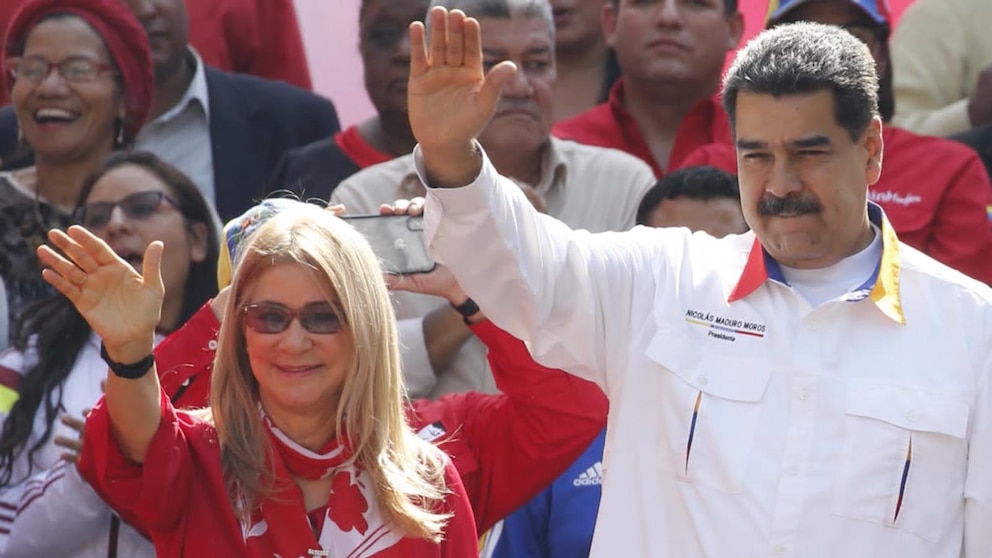
Analyzing Legal Implications of Venezuela Intervention
Hofstra Law Professor James Sample has emerged as a leading legal analyst in national and regional media following the U.S. operation involving Venezuelan President Nicolás Maduro, offering expert commentary on constitutional authority, international law, and criminal procedure. Professor Sample appeared across major television, radio, and digital platforms, including ABC News, CBS New York, MS NOW, and Pacifica Radio, as developments unfolded surrounding the capture and federal prosecution. In multiple ABC News segments, Professor Sample analyzed the legality of the Venezuela operation under international law, characterizing the action as a potential violation of the United Nations Charter, and explained what to expect procedurally at the arraignment of Maduro and his wife on federal charges. His commentary also addressed the broader implications of asserting U.S. jurisdiction over a sitting foreign head of state.


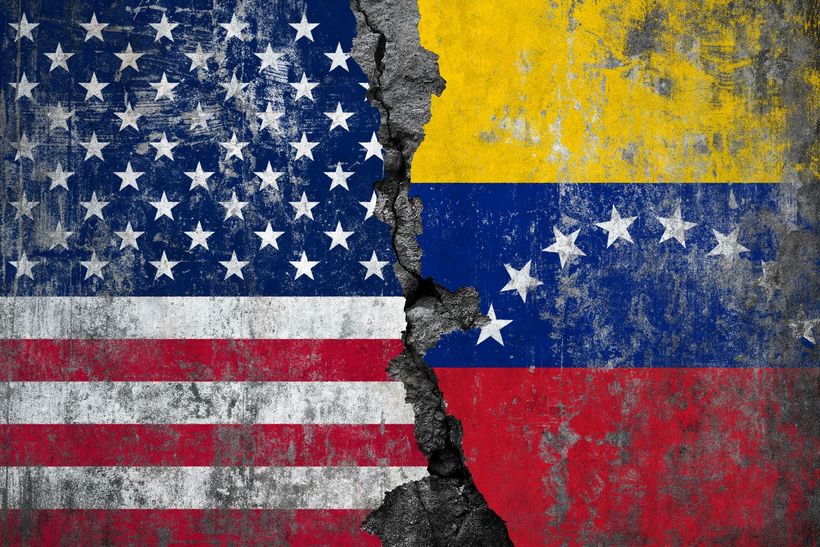
Venezuela: Why Regime Change Is Harder Than Removing A Leader
With global attention on Venezuela following the U.S. removal of Nicolás Maduro, one of the central questions is whether taking out a leader actually changes the political system that put him in power. Two University of Rochester political scientists — Hein Goemans and Gretchen Helmke — study different sides of this issue, and can shed light on why authoritarian regimes often survive even when leaders fall and what the U.S. intervention means for Venezuela and the world order. Goemans specializes in how wars begin and end, regime survival, and why so-called “decapitation strategies” — removing a leader without dismantling the broader power structure — so often fail to produce stable outcomes. His research draws on cases ranging from Iraq and Afghanistan to authoritarian regimes in Latin America. In a recent interview with WXXI Public Media, Goemans warned that removing Maduro does not resolve the underlying system of military and economic control that sustained his rule. Without changes to those institutions, he said, power is likely to remain concentrated among the same elite networks. “The problem isn’t just the leader,” Goemans explained. “It’s the structure that rewards loyalty and punishes defection. If that remains intact, the politics don’t fundamentally change.” Helmke, a leading scholar of democracy and authoritarianism in Latin America, emphasizes that legitimacy, not just force, determines whether democratic transitions take hold. Her research helps explain why democratic breakthroughs so often stall after moments of dramatic change, and why outside interventions can unintentionally weaken domestic opposition movements by shifting power toward regime insiders. “When the institutions and elites remain in place, uncertainty — not democratic transition — often becomes the dominant political reality,” she said. For journalists covering the fast-moving situation, Goemans and Helmke are available to discuss why removing leaders rarely brings the political transformation policymakers expect and what history suggests comes next. They can address: • Why regime-change operations so often backfire, even when dictators are deeply unpopular • What sidelining democratic opposition means for legitimacy • Whether U.S. claims that Maduro is illegitimate hold up under international and U.S. law • How prosecuting a foreign leader in U.S. courts could reshape norms of sovereignty • The risks the U.S. intervention poses to the rules-based international order and NATO • How interventions affect international norms, including sovereignty and the rule of law, and why short-term tactical successes can create long-term strategic risks. • Why treating global politics as a series of “one-off” power plays misunderstands how states actually enforce norms over time • How competing factions inside the U.S. administration may be driving incoherent foreign policy Geomans also brings rare insight into the internal dynamics of U.S. policymaking, having taught and observed Stephen Miller, one of President Donald Trump’s closest aides who is helping shape the administration’s worldview. (Goemans taught Miller at Duke University in 2003.) Click on the profiles for Goemans and Helmke to connect with them.



Power, Politics, and Petroleum: The Story of Venezuela
After gaining independence from Spain in the early 19th century under the leadership of Simón Bolívar, the country spent much of the next century marked by political instability and military rule. Everything changed in the early 20th century with the discovery of vast oil reserves, which rapidly transformed Venezuela into one of the world’s leading petroleum exporters and shifted power toward a centralized state funded almost entirely by oil revenue. By the mid-20th century, oil had become both Venezuela’s greatest asset and its greatest vulnerability. Democratic governments that emerged after 1958 used oil income to expand social programs and infrastructure, but also built an economy dangerously dependent on a single commodity. When oil prices fell in the 1980s and 1990s, economic inequality and public frustration surged, creating the conditions that brought Hugo Chávez to power in 1999. Chávez reoriented the political system around a state-controlled oil sector, using petroleum revenues to fund social initiatives while consolidating political authority and weakening independent institutions. Under Chávez and his successor Nicolás Maduro, oil remained the backbone of the state—but declining production, corruption, and mismanagement hollowed out the industry itself. As oil revenues collapsed, so did public services, democratic norms, and economic stability. Venezuela’s history illustrates a central paradox: immense natural wealth paired with fragile governance. Control of oil has repeatedly shaped political power, domestic policy, and Venezuela’s relationship with the world—making energy inseparable from the country’s political story. Journalists covering Venezuela, Latin American politics, energy markets, or resource-driven economies are encouraged to connect with experts who can provide historical context, explain the role of oil in shaping political outcomes, and assess how Venezuela’s past continues to influence its uncertain future. Our experts can help! Connect with more experts here: www.expertfile.com

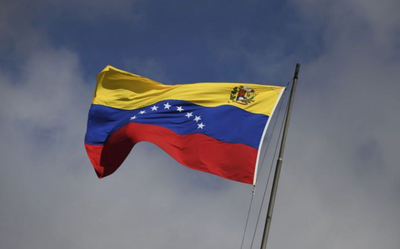
Maduro is gone; expert details potential impact on the Caribbean
Globally, the ousting of Nicolás Maduro in Venezuela has been met with a mix of reactions and cautious optimism. The University of Delaware’s Kalim Shah can discuss how regime change will play across the Caribbean and the spillover effect that will ripple throughout the region – and the world – in the years and decades to come. Shah, professor of energy and environmental policy and an expert on the island nations of the Caribbean, says that although public statements have been muted and restrained, there is a shared understanding. “For small island states that have absorbed the effects of Venezuelan collapse for more than two decades, this moment represents the possible end of a long and destabilizing chapter,” Shah said. Caribbean governments are not celebrating regime change, Shah said. Rather, they are responding to the prospect of reduced systemic risk. “A Venezuela that no longer exports large-scale displacement, opaque energy leverage and permissive criminal governance is objectively preferable for the region.” Shah can discuss several aspects of Venezuela’s political history, how the nation has arrived where it is, where it might be headed and the impact this will have on the Caribbean as a whole. Those include: • Venezuela’s political and economic deterioration during the Chávez–Maduro era and how that has translated directly into pressures felt across the Caribbean in the form of migration, fiscal exposure, security risks and regional uncertainty. • How the nation’s institutional collapse coincided with deepening organized crime activity across the Caribbean basin. Data from the United Nations Office on Drugs and Crime consistently places the region within major cocaine trafficking corridors linking South America with North American and European markets. For Caribbean governments, this meant higher interdiction costs, increased exposure to transnational criminal networks and growing pressure on already limited security institutions. • This moment invites a reassessment of China’s expanding footprint in the Caribbean, Shah says. He can discuss the ways in which Beijing has deepened its presence throughout the region. Shah says that as this transition unfolds, five policy developments will determine whether the cautious optimism proves warranted: • The impact on Venezuelan outward migration to the Caribbean. • Whether Caribbean public systems receive durable support rather than short-term humanitarian fixes. • Organized crime and drug trafficking pressures in the Caribbean basin. • External security engagement in the Caribbean. • Whether the region avoids a return to dependency-driven energy and infrastructure politics. “For the Caribbean, hope today is not naïve. It is conditional. The Chávez–Maduro years imposed real costs on the region. Their end creates an opening…but only if policy follows through,” Shah said. To contact Shah directly for interviews, visit his expert page and click on the "contact" button. Interested reporters can also send an email to mediarelations@udel.edu.


Covering Venezuela? We Can Help.
The situation in Venezuela is fluid, and new details about the operation, its planning and execution, the future of the country and how the world is reacting is all happening in real time. Journalists covering Latin America, global politics, migration, energy, or human rights are encouraged to connect with experts who can provide context on Venezuela’s evolving political landscape, economic indicators, humanitarian conditions, and regional implications. Expert insight is critical for moving beyond headlines and understanding what the next phase of Venezuela’s crisis could mean—for its people and for the region. Looking for an expert to help? Connect with our experts: www.expertfile.com

Expert Q&A - Craig Albert, PhD, talks election interference
Going into the final days of the 2024 election cycle there is a very real concern about election interference from both foreign and domestic actors, and it's something that will continue to be monitored even after the final votes are tallied. Craig Albert, PhD, graduate director of the PhD in Intelligence, Defense, and Cybersecurity Policy and Master of Arts in Intelligence and Security Studies programs at Augusta University, is a leading expert on propaganda, information warfare and national security studies. Albert has answered key questions about who is trying to interfere in the U.S. elections and why it matters. Q: How and when should someone vote and does it protect you more to avoid interference? The access to instantaneous news or events could affect people and their understanding of whom they want to vote for all the way up until the day they vote. Because of this ease of access, this election cycle has especially shown us how cautious we need to be in regards to scams. It's also why I know there has been a big push for early voting and mail-in voting, and it's necessary in some cases, but I prefer to vote on Election Day because you never know what type of news might come out about one of the candidates or parties. If something comes out that proves to be true, it could affect how someone might vote, but if you voted before Election Day, it's too late. At the same time, a very serious deepfake could be released that could manipulate how people choose to vote and it could mislead people, as well. Q: What are the consequences of the optics of an 'unfair' election? What the U.S. needs to be cautious about is preserving and maintaining the legitimacy of the election cycle. After the election, no matter who wins, narratives of interference and how it impacted the election are going to be shared and that's just irresponsible. Unless there's damning information and very clear evidence, you shouldn't mess around with the idea that the election was interfered with, because that could threaten the very structure of the United States. Q: What's the potential for post-election meddling? We have domestic bad actors as well as foreign maligned actors that are going to say the election was delegitimized no matter who wins. They have social media campaigns ready to post no matter which side wins, they're going to circulate false videos of ballot boxes burning or news that not all the the votes were counted and things of that nature. They're going to do all kinds of things because anybody can fake a ballot box being burned or mail in votes not being counted properly on video or something like that. The problem is if it goes out there or becomes viral, so many people will believe it and that sows discord. So, that creates distrust in the public system on a pretty big swath of the American population. Q: Who benefits from post-election doubts and chaos? You have foreign actors that really build on the type of anger that the political candidates and their parties already use through their propaganda and rhetoric. We have already seen Russia amplifying the message that somebody cheated or elections were hacked, and you have China, Iran, Venezuela, ISIS and Al Qaeda doing that, as well. You also have regular cyber criminals that just want to sew discord and distress so they can manipulate people later on and get into our banking systems and things of that nature. You have potentially hundreds, if not thousands of attack vectors coming at the United States between election night and January 20 when the new President will be sworn in. And then afterwards, they will all still be trying to create chaos, rebellion, civil unrest, or in the case of Iran, China and Russia, open civil war in the United States. Looking to know more and covering the election, Augusta University can help. Albert is available to speak with media – simply click on his name to arrange an interview today.


Covering the latest in Venezuela?
The history of Venezuelan politics is a compelling narrative that reflects the dynamic interplay of power, ideology, and social change in Latin America. This topic is particularly newsworthy due to its relevance in understanding current global geopolitical shifts, the rise and fall of political regimes, and the enduring struggle for democracy and human rights. Venezuela's political history offers insights into the impacts of oil wealth, populism, and international interventions, making it a rich subject for journalistic exploration. Key story angles for journalists could include: The Rise of Populism: Exploring the emergence and impact of populist leaders in Venezuelan history, particularly focusing on Hugo Chávez's Bolivarian Revolution. Economic Boom and Bust: Analyzing the role of oil wealth in shaping Venezuela's political landscape, from periods of prosperity to economic crises. Human Rights and Social Movements: Investigating the human rights situation in Venezuela, including the struggles of political dissidents, social activists, and the general population. International Relations and Influence: Examining Venezuela's foreign policy, its alliances, and the impact of international sanctions and interventions on its political stability. Democratic Erosion and Authoritarianism: Tracing the decline of democratic institutions and the rise of authoritarian practices in Venezuela, highlighting key turning points and figures. Future Prospects and Reform: Featuring expert analysis on the potential paths forward for Venezuela, including political reforms, economic recovery plans, and the role of the international community. By delving into these aspects, journalists can provide a comprehensive and nuanced understanding of Venezuelan politics, offering readers diverse perspectives and in-depth coverage of a nation at the crossroads of significant historical and contemporary challenges. Connect with an expert if you need to know more about the History of Venezuelan Politics: To search our full list of experts visit www.expertfile.com Photo credit: Micho