
Experts Matter. Find Yours.
Connect for media, speaking, professional opportunities & more.

An interdisciplinary team from Georgia Southern University was awarded more than $465,000 from the National Academies of Sciences, Engineering, and Medicine to foster the development of scientific and environmental skills that are critical to solving complex issues in the Gulf of Mexico region now and into the future. The award is part of an initiative with the Gulf Research Program (GRP) that awarded $2 million to eight projects that engage children and youth in place-based educational activities. The funded project, “Suwannee Watershed: Assessment and Monitoring of Place to Gain Understanding of Local Flow (SWAMP to GULF),” is led by principal investigator (PI) Lacey Huffling, Ph.D., associate professor of science education, and co-PIs Heather Scott, Ed.D., and Regina McCurdy, Ph.D., both assistant professors of science education. (l-r) College of Education’s Lacey Huffling, Ph.D., Regina McCurdy, Ph.D., and Heather Scott, Ed.D., are part of an interdisciplinary team awarded $465k to train science teachers in the Gulf of Mexico. “I am honored that we were selected to receive funding from the Gulf Research Board,” said Huffling. “Over the past four years, we have developed a strong network of Georgia middle and high school teachers who are dedicated to developing the science and environmental literacy of their students through watershed citizen science, specifically focused on areas of Georgia that flow into the Gulf of Mexico. We are excited to continue to grow this network of teachers in Florida further to foster scientific and environmental literacy of future generations to monitor and advance scientific and community understanding of the Lower Suwannee Watershed.” The group will train and support teachers in Florida to implement place-based learning through citizen science using communities as classrooms to deepen teachers’ and students’ sense of place and connection to local watersheds; research how teachers and students address local issues and solve problems by using and developing their critical environmental agency; and increase participation of rural populations in science, which have historically been underrepresented. This initiative, along with the seven other GRP projects, will help connect young learners across the Gulf of Mexico region with local environmental issues and work toward the betterment of the region at large. “The goal of these grants is to empower young learners through place-based education, an interdisciplinary, student-centered, inquiry-driven teaching and learning practice situated in the local community and environment,” said Karena Mary Mothershed, senior program manager for the GRP’s Board on Gulf Education and Engagement. “These eight projects have a high potential to create long-lasting impacts on underserved students in grades K-8 across the Gulf of Mexico region, enabling them to consider and address environmental challenges impacting their own communities.” Additional SWAMP to GULF project members include Georgia Southern staff and faculty: Mary Thaler, senior administrative assistant for the Center for STEM Education; J. Checo Colón-Gaud, Ph.D., professor of biology and associate dean of the Jack N. Averitt College of Graduate Studies; Shainaz Landge, Ph.D., assistant professor of chemistry, Luke Roberson, coordinator of Community Engagement and Outreach for the Institute of Water and Health; and Asli Aslan, Ph.D., director of the Institute of Water and Health. Interested in learning more? Contact Georgia Southern's Director of Communications Jennifer Wise at jwise@georgiasouthern.edu to arrange an interview today.


One of the most extensive ways humans modify the planet is through agricultural practices. At the University of Delaware, assistant professor Kyle Davis has been conducting research on sustainable agricultural food systems on a global scale for many years, thinking about how these systems, because of their vast impact, can also act as a catalyst for addressing issues related to sustainability. This research, as well as the mentoring of graduate students and the research they are conducting in his lab, earned Davis a 2023 Global Environmental Change Early Career Award from the American Geophysical Union (AGU). Davis, an assistant professor in the Department of Geography and Spatial Sciences and the Department of Plant and Soil Sciences, as well as a resident faculty member with UD’s Data Science Institute, said he was honored and humbled to receive the award and that he feels deeply fortunate to get to do research he loves and to work on new science with students from across the university. “One of the greatest joys of the job is being able to mentor graduate students,” Davis said. “I feel really lucky to get to work with a group of incredibly talented and enthusiastic graduate students who come from all over the world.” Davis said that, in a lot of ways, the research he conducts has grown through working with graduate students, coming up with ideas and exploring those ideas together. “So much of my research is the result of their passion, abilities, drive, and creativity,” Davis said. The Davis Lab conducts research on a global scale and also has a key focus on four main countries: the United States, China, India and Nigeria. The research in those areas takes on different forms and looks at different questions. In the U.S., for instance, the research is primarily focused on addressing questions related to water scarcity and food production in the West. The research in Nigeria concentrates on addressing agricultural data and information needs across the country, while the work in India and China is focused on questions related to crop production, nutrition, farmer livelihoods and water sustainability. “We look at the nutritional supply and climate resilience of different crops and their associated water, energy, fertilizer and pesticide needs and try to find opportunities to improve all of these outcomes simultaneously,” Davis said.


Potential health crisis in the wake of deadly storm and flooding in Derna, Libya
The number of fatalities and missing persons continue to mount after a storm caused massive flooding in the town of Derna, located in the northeast region of Libya. While search and rescue will remain the most urgent priority in the near term, addressing acute health needs will be a major factor in the wake of this disaster, said Jennifer Horney, founder and director of the epidemiology program at the University of Delaware. The collapse of two dams are likely to cause long-term water borne diseases of all types. With little existing health infrastructure in the area, treating and managing health will be extremely difficult. Safe food and water will be scarce. There is a strong possibility of infectious disease outbreaks and the spread of communicable disease. Other experts from UD's Disaster Research Center who can comment on the flooding in Libya: Tricia Wachtendorf: Disaster relief and donations, and alignment post-disaster – i.e., making sure donations that aren't needed don't flood the supply chain. Wachtendorf can also discuss evacuation decision-making, volunteer efforts, disaster response and coordination. Sarah DeYoung: Dealing with unsolicited infant formula donations, and infant and maternal health. Can also discuss pets in emergencies, infant feeding in disasters and decision-making in evacuation. Jennifer Trivedi: Long-term recovery and challenges for people with disabilities during disaster.



Expert explainer - Storm Daniel and the Libya flooding
Expert: Dr Kiran Tota-Maharaj Reader in Civil & Environmental Engineering (Water and Environmental Engineering) College of Engineering and Physical Sciences, Aston University 1/ Do we have any basic measures on the volume of precipitation that triggered the collapse of the two dams that flooded Derna? How much rain over what period of time? Are there adequate records to put that in historical context? Were any records broken? Storm Daniel has the characteristics of a tropical depression, approximately 170 millimetres (6.7 inches) of rainfall occurred fell in Libya. Torrential rains of between 150 - 240 mm caused flash floods in several cities, including Al-Bayda, which recorded the highest rainfall rate of 414.1 mm. 2/ Do we know anything about the dams that failed? Where they old, near the end of their expected lifespan? Were they known to be fragile in any way? To what extent, in other words, might this have been a disaster waiting to happen? Flash floods, which is considered as one of the worst weather-related natural disasters are highly unpredictable following brief spells of heavy rain. This region in Libya is subjected to flash floods, where floods from the mountains causing heavy damage to hydraulic structures and features of Dams. These floods are made up of sudden, unexpected and heavy rains or a strong surge of water, which usually hit the steep sloped mountainous catchments and have inundated many regions in Libya. The sweeping flash floods also led to the death of many residents and great losses of property. Entire neighborhoods in Derna disappeared, along with their residents swept away by water after two ageing dams collapsed making the situation catastrophic and out of control, the city of Derna is surrounded by mountains, so the flash flooding occurred quite rapidly, taking over with surface-water levels rising as high as 3 metres (10 feet). Engineers have previously issued warnings about the risks of these dams bursting and the urgent need to strengthen their defenses, which unfortunately didn’t occur. Early Warning Systems (EWS)- which are effective ways to reduce the risks of flash floods have not been properly implemented. When EWS are issued before a flash flood event, additional time is created to take action and save lives and infrastructure. The unexpected arrival of a flash flood in Libya, combination with its force, limited understanding of the risks and small space-time scales provide explicit challenges for the development and implementation of an EWS system for flash floods. 3/ There is speculation about many thousands of deaths. Is this attributable almost entirely to the failed dams? Or was there massive and deadly flooding beside that? Thousands of people’s lives have been sadly lost after the massive flood ripped through the city of Derna as a result from the heave storm conditions and excessive rainfall. There have been several areas severely affected by widespread flooding, damage to infrastructure, and loss of life. The disastrous flooding event is likely the cause of the two dams’ collapses, making thousands of residents of the valley and the city of Derna, Libya vulnerable as a result of the storm. Entire neighbourhoods of Derna by the bank of the swollen river had been ravaged and washed away. For further details or to interview Dr Tota-Maharaj, contact Nicola Jones Press and Communications Manager, Aston University, Birmingham, UK n.jones6@aston.ac.uk or Mobile: (+44)7825 342091


Immediate and long-term recovery in post-earthquake Morocco
Sunday's earthquake in Morocco – the strongest to hit the center of the country in more than a century – has taken the lives of more than 2,500 people so far and leveled countless homes and businesses. Experts from the University of Delaware's Disaster Research Center can discuss various topics related to the tragedy. Tricia Wachtendorf: Disaster relief and donations, and alignment post-disaster – i.e., making sure donations that aren't needed don't flood the supply chain. Wachtendorf can also discuss evacuation decision-making, volunteer efforts, disaster response and coordination. Rachel Davidson: Can discuss building damage, and conducts research on natural disaster risk modeling and civil infrastructure systems. Davidson looks at lifelines (e.g., electric power, water supply) and risk from a regional perspective during and after earthquakes and other disasters. Jennifer Horney: Environmental impacts of disasters and potential public health impacts for chronic and infectious diseases. Sarah DeYoung: Dealing with unsolicited infant formula donations, and infant and maternal health. Can also discuss pets in emergencies, infant feeding in disasters and decision-making in evacuation. Jennifer Trivedi: Long-term recovery and challenges for people with disabilities during disaster. Click on the profiles below to contact any of these experts and set up an interview.


Record Water Temperatures Testing Resilient Coral Reefs
Coral reefs are some of the most diverse and beautiful ecosystems on the planet. Roughly 25% of the ocean’s fish and over half a billion people depend on these underwater habitats, according to the National Oceanic and Atmospheric Administration (NOAA). But, like most other ecosystems, coral reefs are being threatened by the impacts of global climate change. This summer, record water temperatures stemming from a strong El Niño weather pattern are causing coral bleaching and death events in reefs throughout the world. Lisa Rodrigues, PhD, professor of environmental science, is an expert in coral reef ecosystems and ocean environments. She has been following the reports of coral bleaching when they began surfacing in July. “Coral bleaching often coincides with El Niño years,” she said. “Since water takes much longer to heat than air, July is very early in the year for water temperature to be so high and that is one of the main causes for concern.” Coral bleaching is a stress reaction emanating from high water temperatures, among other causes. When stressed, corals expel the microscopic algae inside of their tissues. The absence of these algae reveals corals’ white skeletons. “In a healthy coral system there is a symbiotic relationship between the coral host (an animal) and the endosymbiotic algae (a plant),” Dr. Rodrigues said. “Corals prefer to live in a fairly narrow range of temperature, which is typically when the symbiotic relationship can be successful. During bleaching, the symbiotic relationship is broken down and the two partners no longer live together.” If corals’ energy stores are low, or if the relationship is compromised for an extended period, corals can die. “This can have long-lasting and negative impacts on ecosystems, as a healthy structure provides a habitat for fish and other organisms,” she said. “For humans that live near the coast, loss of reefs means lost coastal protection, lost economic revenue from fishing and tourism and a lost piece of their natural history.” Reports of coral bleaching and death have stretched across the Americas, and the NOAA is issuing bleaching warnings in southeast Asia. Water temperatures off the coast of Florida this summer have been measured at over 100 degrees in some areas, and temperatures could continue to rise into September. Despite dismal conditions, especially in the Gulf and Caribbean waters, there is still hope for these reefs. “Death doesn’t always happen following bleaching and we also know that recovery from bleaching can occur,” Dr. Rodrigues said. “We have learned a lot from past bleaching events. Over the longer term, following a bleaching event, corals and coral reefs can recover, but the process is slow and dependent on the stressor(s) that caused the event in the first place.” Dr. Rodrigues notes there is a species of coral in Hawai’i that is able to sustain itself during bleaching events and can even reproduce, proving these underwater marvels won’t go down without a fight. “It’s unknown how many species are able to do this, but there is evidence that corals have a wide array of susceptibility and resilience to bleaching associated with high temperatures.”


Optical research illuminates a possible future for computing technology
Nathaniel Kinsey, Ph.D., Engineering Foundation Professor in the Department of Electrical and Computer Engineering (ECE), is leading a group to bring new relevance to a decades-old computing concept called a perceptron. Emulating biological neuron functions of the messenger cells within the body’s central nervous system, perceptrons are an algorithmic model for classifying binary input. When combined within a neural network, perceptrons become a powerful component for machine learning. However, instead of using traditional digital processing, Kinsey seeks to create this system using light with funding from the Air Force Office of Scientific Research. This “nonlinear optical perceptron” is an ambitious undertaking that blends advanced optics, machine learning and nanotechnology. “If you put a black sheet outside on a sunny day, it heats up, causing properties such as its refractive index to change,” Kinsey said. “That’s because the object is absorbing various wavelengths of light. Now, if you design a material that is orders of magnitude more complex than a sheet of black plastic, we can use this change in refractive index to modify the reflection or transmission of individual colors – controlling the flow of light with light.” Refractive index is an expression of a material’s ability to bend light. Researchers can harness those refractive qualities to create a switch similar to the binary 1-0 base of digital silicon chip computing. Kinsey and collaborators from the U.S. National Institute of Standards and Technology, including his former VCU Ph.D. student Dhruv Fomra, are currently working to design a new kind of optically sensitive material. Their goal is to engineer and produce a device combining a unique nonlinear material, called epsilon-near-zero, and a nanostructured surface to offer improved control over transmission and reflection of light. Kinsey’s prior research has demonstrated that epsilon-near-zero materials combine unique features that allow their refractive index to be modified quite radically – from 0.3 to 1.3 under optical illumination – which is roughly equivalent to the difference between a reflective metal and transparent water. While an effective binary switch, the large change in index requires a lot of energy (~1 milli-Joules per square centimeter). By combining epsilon-near-zero with a specifically designed nanostructure exhibiting surface lattice resonance, Kinsey hopes to achieve a reduction in the required energy to activate the response. The unique response of a nanostructure exhibiting surface lattice resonance allows light to effectively be bent 90 degrees, arriving perpendicular to the surface while being split into two waves that travel along the surface. When a large area of the nanostructure is illuminated, the waves traveling along the surface mix, where they interfere constructively or destructively with each other. This interference can produce strong modification to reflection and transmission that is very sensitive to the geometry of the nanostructure, the wavelength of the incident light and the refractive index of the surrounding materials. The mixing of optical signals along the surface can also selectively switch regions of the epsilon-near-zero material thereby performing processing operations. A key aspect of Kinsey’s work is to build nonlinear components, like diodes and transistors, that use optical signals instead of electrical ones. Transistors and other traditional electronic components are nonlinear by default because electrical charges strongly interact with each other (for example, two electrons will tend to repel each other). Creating optical nonlinear components is challenging because photons do not strongly interact, they just pass through each other. To correct for this, Kinsey employs materials whose properties change in response to incident light, but the interaction is weak and thus requires large energies to utilize. Kinsey’s device aims to reduce that energy requirement while simultaneously shaping light to perform useful operations through the use of the nanostructured surface and lightwave interference. The United States Department of Defense sees optical computing as the next step in military imaging. Kinsey’s work, while challenging, has potential to yield an enormous payoff. “Let’s say you want to find a tank within an image,” Kinsey said, “Using a camera to capture the scene, translate that image into an electrical signal and run it through a traditional, silicon-circuit-based computer processor takes a lot of processing power. Especially when you try to detect, transfer, and process higher pixel resolutions. With the nonlinear optical perceptron, we’re trying to discover if we can perform the same kinds of operations purely in the optical domain without having to translate anything into electrical signals.” Linear optical systems, like metasurfaces and photonic integrated circuits, can already process information using only a fraction of the power of traditional tools. Building nonlinear optical systems would expand the functionality of these existing linear systems, making them ideal for remote sensing platforms on drones and satellites. Initially, the resolution would not be as sharp as traditional cameras, but optical processing built into the device would translate an image into a notification of tanks, troops on the move, for example. Kinsey suggests optical-computing surveillance would make an ideal early warning system to supplement traditional technology. “Elimination or minimization of electronics has been a kind of engineering holy grail for a number of years,” Kinsey said, “For situations where information naturally exists in the form of light, why not have an optical-in and optical-out system without electronics in the middle?” Linear optical computing uses minimal power, but is not capable of complex image processing. Kinsey’s research seeks to answer if the additional power requirement of nonlinear optical computing is worthwhile given its ability to handle more complex processing tasks. Nonlinear optical computing could be applied to a number of non-military applications. In driverless cars, optical computing could make better light detection and ranging equipment (better known as LIDAR). Dark field microscopy already uses related optical processing techniques for ‘edge detection’ that allows researchers to directly view details without the electronic processing of an image. Telecommunications could also benefit from optical processing, using optical neural networks to read address labels and send data packets without having to do an optical to electrical conversion. The concept of optical computing is not new, but interest (and funding) in theory and development waned in the 1980s and 1990s when silicon chip processing proved to be more cost effective. Recent years have seen many advancements in computing, but the more recent slowdown in scaling of silicon-based technologies have opened the door to new data processing technologies. “Optical computing could be the next big thing in computing technology,” Kinsey said. “But there are plenty of other contenders — such as quantum computing — for the next new presence in the computational ecosystem. Whatever comes up, I think that photonics and optics are going to be more and more prevalent in these new ways of computation, even if it doesn’t look like a processor that does optical computing.” Kinsey and other researchers working in the field are in the early stages of scientific exploration into these optical computing devices. Consumer applications are still decades away, but with silicon-based systems reaching the limit of their potential, the future for this light-based technology is bright.


Baylor Researcher Seeks to Understand the Drive for the Perfect Tan
Despite being one of the most preventable cancers, the desirability of tanning is often stronger than the dangers of harmful UV exposure. Getty Images With summer on the horizon, the quest for the perfect tan has begun. However, there is no such thing as a healthy tan. Despite being one of the most preventable cancers, skin cancer is the most common cancer in the United States, with more than 5 million cases of skin cancer diagnosed each year, according to the Skin Cancer Foundation. Baylor University researcher Jay Yoo, Ph.D., associate professor of apparel merchandising in Baylor’s Robbins College of Health and Human Sciences, found that the social and cultural influences on the desirability of tanning – which has been associated with good health and an active lifestyle since the 1920s – is often stronger than the dangers of harmful UV exposure. “The appeal of a tan is so strong in U.S. culture, it may be difficult for some people to stop or even reduce the amount of tanning,” Yoo said. In his 2019 study, “Identifying factors that influence individuals’ intentions to quit body tanning: A sociocultural perspective,”, published in the international journal Social Behavior and Personality, Yoo identified what motivates people to seek the “perfect” tan. Yoo surveyed 385 college students to understand how society effects their tanning behaviors and intention to quit tanning. His research found that the greatest influence on reducing risky tanning behavior was the perceived attractiveness from tanning, whereas skin-aging concerns positively influence their intention to quit tanning. FINDINGS Yoo’s findings provide important implications for skin cancer prevention campaigns. Instead of promoting the message of body tanning as an unhealthy behavior, focusing instead on untanned healthy bodies as a positive image can serve as an effective approach to decreasing skin cancer incidence. Using messages that accentuate a healthy body without tanned skin should be promoted to boost a positive body image and to reduce the likelihood of engaging in risky tanning behaviors. ACTIONS To protect yourself and look great, the Skin Cancer Foundation recommends: Avoid tanning entirely: It’s the best way to safeguard against unhealthy, unsightly skin damage. Fake, don’t bake: If you want a golden glow, consider sunless tanning products. There are many options, but remember, when in the sun, you still need sun protection. Tone, don’t tan: Get radiant skin through exercise. Working out feels good and boosts your mood. Hydrate and eat great: Drink lots of water and choose whole, unprocessed foods. You don’t need to tan to look slim and your skin will thank you.


Florida Tech Shark Biologist Stars in National Geographic Program on Shark Attacks
Toby Daly-Engel, the distinguished shark biologist and director of Florida Tech’s Shark Conservation Lab, is a featured expert on “When Sharks Attack…and Why,” an eight-episode program debuting this week as part of National Geographic’s SharkFest 2023. The series debuts July 6 at 9 p.m. Eastern on National Geographic with new episodes airing nightly through July 12. It is also now streaming on Disney+, Hulu and the National Geographic website. The series will air on Nat Geo Wild starting July 26 at 8 p.m. Eastern. As its name suggests, “When Sharks Attack…and Why” investigates shark encounters in America and around the world. “Many attacks are appearing in new and surprising places,” the network notes. Episodes explore incidents in New York, California, Hawaii, Indonesia, Australia and elsewhere. At Florida Tech, Daly-Engel conducts research using a combination of genomics, field ecology and modeling to study shark mating systems and habitat use, and the impacts of climate change on shark populations. On the program, she is our expert guide to anatomical and physiological aspects of sharks, many of which are unique to this species. We first meet Daly-Engel in Episode 1, New York Nightmare. Filmed in her lab, she talks viewers through key parts of a shark’s body using a small dogfish shark. She tells viewers that while a shark’s sense of smell is often touted, these apex predators also have powerful hearing, far better than humans. (In a later episode, she notes a shark’s vision in murky waters is about 10 times stronger than human vision in those conditions.) “I really enjoyed delving into the science behind shark-human interactions,” Daly-Engel said, “and busting the myths that make people afraid of the water.” Daly-Engel is no stranger to SharkFest. Last year she was featured in another SharkFest series, “Shark Attack File,” and she has been on SharkFest and Discovery’s Shark Week programing multiple times, including 2021 when she appeared on three programs across both networks. Looking to know more about shark encounters and attacks? Then let us help with your coverage and questions. Toby Daly-Engel is an assistant professor in the Department of Ocean Engineering and Marine Sciences department at Florida Tech. He's available to speak with media about this topic - simply click on his icon now to arrange an interview today.


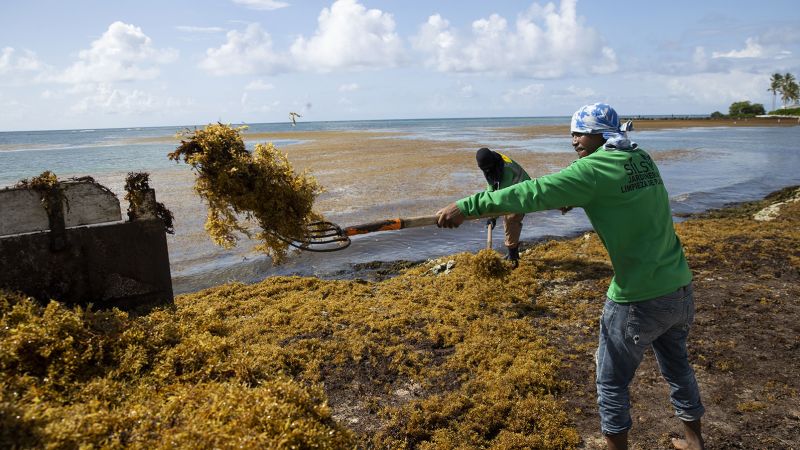
Solving sargassum: Florida Tech researchers exploring ways to make seaweed useful
Sargassum, a type of large brown seaweed, has been in the news lately, with a massive blob that’s visible from space and threatening ocean life. University research funded by the U.S. Environmental Protection Agency could address the issue, while also helping solve another problem in our water. Toufiq Reza, an assistant professor of chemical engineering in the Department of Biomedical and Chemical Engineering and Sciences, along with research students Cadianne Chambers, Swarna Saha, Savannah Grimes and Josh Calhoun, were part of the research paper, “Physical and morphological alteration of Sargassum‐derived ultraporous superactivated hydrochar with remarkable cationic dye adsorption.” The paper was published in the May edition of Springer Nature’s Biomass Conversion and Biorefinery journal. The paper is part of a three-year, nearly $400,000 EPA grant to examine different uses of sargassum. It explains that the team can produce biochar from sargassum that can filter water. Though the team has tested model dye in this paper, they plan to extend their research for other applications including harmful algal bloom remediation and nutrient recovery in the future. While sargassum has been around for centuries (Christopher Columbus is credited with the first written account after he encountered it in 1492), and you’ve probably seen bits of brownish seaweed on the beach – it sometimes smells like rotten eggs – the quantities in the ocean and washing up on shores are a more recent phenomenon. There are multiple reasons behind the increased amount of sargassum, including global warming that intensifies sargassum production and nutrient runoff making its way to ocean water and overfertilizing the seaweed growth. More sargassum is expected to show up on Florida shores in the future, inspiring the team to explore more positive uses of the abundant seaweed. “In the next couple of years, we’ll be seeing much more sargassum coming into our way. It’s not a common practice to utilize sargassum,” Reza said. “We go to a beach and then we see a little bit of sargassum just dried out. That doesn’t bother us that much, but when it started to come as a foot-tall sargassum wave, that’s where it gets more alarming.” Sargassum in the lab is labor intensive. Because it contains salt from the ocean, it is washed with tap water first, then put in a freezer for preservation. Next, it goes through hydrothermal carbonization, a thermochemical process that uses heat and pressure to convert biomass and organic waste (such as the sargassum being used) into solid hydrochar. Lastly, the solid char goes through pyrolysis, where it is heated in a high-temperature, oxygen-free chamber into a biochar that is used to filter water. For Swarna Saha, a first-year doctoral student, her goal as a researcher is to identify an environmental problem and come up with a sustainable solution. Having grown up in Bangladesh around textile factories that generate dyes that pollute the surface water, she was inspired to work on solutions that improved water quality with biochar. “I came in the project when we were experimenting on dye adsorption and saw how a tiny amount of biochar changes the color of the water,” she said. “For me, seeing the results made me the happiest. When we saw that our biochar is effective, that is the biggest achievement for me. That made me happy.” Cadianne Chambers, a second-year doctoral researcher, was motivated by her home country of Jamaica and its massive issues with sargassum. Chambers has heard accounts of fishermen unable to go out to sea because of the sargassum buildup. A popular destination for summer vacation, Jamaica is facing serious environmental and economic problems with waves of sargassum. “A team in Jamaica saw that article and they reached out to us, and they’re trying to cultivate sargassum. They want us to teach them how to make export-quality hydrochar and biochar, which could help solve their environmental problem and generate revenues,” Chambers said. “So, everything is just connecting nicely and I’m hoping to continue our collaboration with them. If it’s something that I can go home and put my PhD research to work and help the community, that would be really satisfying.” Looking to know more about sargassum and the ground-breaking research taking place at Florida Tech? Then let us help with your coverage and questions. Toufiq Reza is an assistant professor in the biomedical and chemical engineering and sciences department at Florida Tech. He's available to speak with media about this topic - simply click on his icon now to arrange an interview today.
