
Experts Matter. Find Yours.
Connect for media, speaking, professional opportunities & more.

Impact of Record-Breaking Floods in Venice
Over the last week, Venice, Italy, has been hit with historic flooding. On Sunday, November 17, water levels topped 1.5 meters for the third time since last Tuesday’s 1.87-meter flood, which marked the worst in more than half a century. Venice’s mayor declared a state of emergency and has estimated the flooding damage at hundreds of millions of euros. The flooding is putting some of Venice’s most historic architecture at risk and threatening some of the city’s cultural marvels and priceless artwork. The situation has also renewed the debates around the underwater barrier system—the MOSE flood defense project—that has been under construction for more than 16 years and is not yet operational despite five billion euros of public funding. Luca Cottini, PhD, an associate professor at Villanova University, is a scholar of Italian culture. He recently discussed some of the issues currently facing Venice. “The flooding in Venice makes visible once again not just the fragility of Italian beauty and the vulnerability of Italy’s geography, but also the inadequacy of Italian politics in the prevention and response to natural disasters,” said Dr. Cottini. Dr. Cottini also addressed the city’s tourism and how tourists view the floods. “The situation also illustrates the cynical nature of modern-day global tourism, observing high waters more as an attraction than a tragic event impacting invaluable monuments and the lives of many peoples,” he said.


A Lego-Like Approach to Improve Nature’s Own Ability to Kill Dangerous Bacteria
The Centers for Disease Control and Prevention considers antibiotic resistance one of the most urgent public health threats, one that affects communities worldwide. The ramifications of bacteria’s ability to become resistant to antibiotics can be seen in hospitals, public places, our food supply, and our water. In their search for solutions, researchers at Rensselaer Polytechnic Institute have been looking to nature. In a paper recently published in Biomacromolecules, the team demonstrated how it could improve upon the ability of nature’s exquisitely selective collection of antimicrobial enzymes to attack bacteria in a way that’s much less likely to cause bacterial resistance. “The idea is that we could take nature’s approach and just make it better,” said Jonathan Dordick, a chaired professor of chemical and biological engineering and a member of the Center for Biotechnology and Interdisciplinary Studies (CBIS). In order for bacteria to grow and live, they naturally produce autolysin enzymes that can break down their own cell walls, allowing those cells to divide and multiply. In attacking one another, bacteria take advantage of a similar process, using an antibacterial protein known as a bacteriocin to kill a bacterium. Bacteria can also be attacked by bacteriophages, which are viruses that infect bacteria. They produce phage endolysin enzymes, which attack the bacterial cell from the inside. All three types of enzymes are broadly known as cell lytic enzymes, as they catalyze the breakdown of the bacterial cell wall. “It’s very difficult for bacteria to become resistant to the action of these enzymes,” Dordick said. “For example, if they became resistant to an autolysin, they wouldn’t divide.” Like building blocks, most cell lytic enzymes are modular. They’re made up of one binding domain which attaches to the cell wall, and a catalytic domain that breaks holes in the cell wall — effectively destroying the targeted bacteria. “The idea was: Could we use a Lego-like approach here? Could we take a binding domain from one enzyme and can we mix it with a binding domain or catalytic domain of another one?” Dordick said. The issue of antibiotic resistant bacteria and disease is a serious one and of great concern to the medical community. If you’re a journalist covering this topic or are looking to know more about the ongoing research into this field – let our experts help. Jonathan S. Dordick is the Howard P. Isermann Professor of Chemical and Biological Engineering at Rensselaer Polytechnic Institute where he is also the Senior Advisor to the President for Strategic Initiatives. Dr. Dordick is available to speak with media regarding this topic - simply click on his icon to arrange an interview.


D. Tyler McQuade, Ph.D., professor in the Department of Chemical and Life Science Engineering at Virginia Commonwealth University College of Engineering, is principal investigator of a multi-university project seeking to use artificial intelligence to help scientists come up with the perfect molecule for everything from a better shampoo to coatings on advanced microchips. The project is one of the first in the U.S. to be selected for $994,433 in funding as part of a new pilot project of the National Science Foundation (NSF) called the Convergence Accelerator (C-Accel). McQuade and his collaborators will pitch their prototype in March 2020 in a bid for additional funding of up to $5 million over five years. Adam Luxon, a Ph.D. student in the Department of Chemical and Life Science Engineering who has been involved from the beginning, explained it this way: “We want to essentially make the Alexa of chemistry.” Just as Amazon, Google and Netflix use data algorithms to suggest customized predictions, the team plans to build a platform and open knowledge network that can combine and help users make sense of molecular sciences data pulled from a wide range of sources including academia, industry and government. The idea is right in line with the goal of the NSF program: to speed up the transition of convergence research into practice in nationally critical areas such as “Harnessing the Data Revolution.” The team itself reflects expertise across several specialties. Working with McQuade are James K. Ferri, Ph.D., professor in the Department of Chemical and Life Science Engineering; Carol A. Parish, Ph.D., professor of chemistry and the Floyd D. and Elisabeth S. Gottwald Chair in the Department of Chemistry at the University of Richmond; and Adrian E. Roitberg, Ph.D., professor in the Department of Chemistry at University of Florida. Two companies are also involved with the project: Two Six Labs, based in Arlington, Virginia, and Fathom Information Design, based in Boston, Massachusetts. Currently, there is no shared network or central portal where molecular scientists and engineers can harness artificial intelligence and data science tools to build models to support their needs. What’s more, while scientists have been able to depict what elements make up a molecule, how the atoms are arranged in space and what the properties of that molecule are (such as its melting point), there is no standard way to represent — or predict — molecular performance. The team aims to fill these gaps by advancing the concept of a “molecular imprint.” The collaborators will create a new system that represents molecules by combining line-drawing, geometry and quantum chemical calculations into a single, machine-learnable format. They will develop a central platform for collecting data, creating these molecular imprints and developing algorithms for mining the data, and will develop machine learning tools to create performance prediction models. Parish said, “The ability to compute molecular properties using computational techniques, and to dovetail that data with experimental measurements, will generate databases that will produce the most comprehensive results in the molecular sciences. “There are many laboratories around the world working in this space; however, there are few organizational structures available that encourage open sharing of these data for the benefit of the community and the common good. We seek to collaborate with others to provide this structure; an open knowledge network or repository where scientists can deposit their molecular-level experimental and computational data in exchange for user-friendly tools to help manage and query the data.” The initial response to their idea has been strong from potential partners. Ferri and the others have already collected more than a dozen letters from major corporations such as Dow and Merck expressing interest in participating. Also on board are Idaho National Laboratory and Argonne National Laboratory, as well as national chemical engineering and chemistry organizations. McQuade said that chemical engineers in major industries including consumer products and oil and gas producers expend a lot of effort running experiments to determine the molecule they want to use, such as finding the best shampoo additive that doesn’t make babies cry. “The ability to design the properties you want is still more art than science.” The team also plans to develop a toolkit for processing and visualizing the data. Roitberg, whose research focuses include advanced visualization, said this could take the form of a virtual reality realm in which a user could find materials that are soluble in water but not oil, for instance, and then be able to browse for similar materials nearby. “We envision a very interactive platform where the user can explore relations between data and desired material properties,” he said.


Pharmaceutical aerosols are painless, fast-acting and less likely to cause side effects than medicines delivered via pills or injections. Yet inhaled therapies are often avoided because of the challenges associated with targeting how aerosol particles are deposited within the lung. “Current inhalers produce fairly large particles, so approximately 90 percent of the medication gets lost in the mouth and throat. It’s swallowed and wasted. This prevents many medications from being delivered through the inhalation route, even though there are a number of advantages to be gained, such as improved efficacy and reduced side effects,” said Worth Longest, Ph.D., the Louis S. and Ruth S. Harris Exceptional Scholar Professor in the Department of Mechanical and Nuclear Engineering in the VCU College of Engineering. Simply making the particles smaller isn’t a solution. “The problem with making the particles smaller is that they go in really well — but they also come straight back out during exhalation,” said Michael Hindle, Ph.D., the Peter R. Byron Distinguished Professor in the VCU School of Pharmacy. With three National Institutes of Health R01 grants totaling more than $7 million, Longest and Hindle are applying a combined engineering and pharmaceutical approach to make inhaled medications more effective and available. In “High-Efficiency Aerosol Delivery Using the Excipient Enhanced Growth Concept: A Human Proof of Concept Study,” Longest and Hindle have created a novel platform that produces particles that are tiny when they enter the lungs — but grow in size as they travel down the warm, humid airways. This platform comprises a device that uses a mixer-heater to produce tiny particles, about one-fifth the size of those from conventional inhalers. With this delivery concept, a pharmaceutical powder or liquid is enhanced with a hygroscopic excipient, essentially a substance that attracts water. “Your lungs are full of water,” Hindle said. “So if you put something inside your lungs that likes water, it’s going to swell and grow in size and not be expelled.” Using sodium chloride — salt — as the hygroscopic excipient, they have tested their system in vitro. The results have been promising. “We’ve flipped the needle,” Longest said. “Previously, only 10 percent of the initial dose would reach the lung, and that 10 percent was poorly targeted within different lung regions. With our approach, you can get 90 percent in and distribute that 90 percent evenly, or target a specific lung region.” The researchers will begin testing their method on adults in two human proof-of-concept trials beginning in late 2019 and early 2020. In two separate, but related, NIH studies, Longest and Hindle are adapting this concept for patients ranging in age from newborn to six. Each project proposes a device approximately the size of a lipstick tube that contains a pediatric formulation (liquid or powder) enhanced with a hygroscopic excipient. There are currently no inhalers on the market specifically designed for children or infants, even though their inhaling patterns and volumes differ from those of adults. Pediatric patients therefore must use adult-sized devices. One study focuses on targeted lung delivery of the antibiotic tobramycin to children with cystic fibrosis, a population prone to respiratory infection because of overproduction of mucus in the lungs. Pediatric cystic fibrosis patients with lung infections usually receive the medication via, 20-minute nebulizer treatments daily, sometimes up to four per day. Longest and Hindle’s proposed alternative is a pediatric dry powder inhaler that is fast and easy to use. Because its particles are engineered to reach the deep lung, it is expected to eradicate infection more efficiently because there is less risk of resistant strains of bacteria forming in undertreated regions of the lung. The other study focuses on delivery of surfactant aerosols to premature infants. Surfactant is a substance found in healthy lungs that keeps the tissue supple enough to expand and contract properly. The respiratory system is among the last to develop in utero, so in newborns and preemies, this substance is sometimes not fully developed — or not present at all. When these infants experience severe respiratory distress, the current protocol is to intubate and administer large doses of liquid surfactant to the lung by way of the throat. This highly invasive and potentially dangerous procedure causes distress and blood pressure fluctuations. In this third NIH-funded study, the researchers are also developing a tiny, small volume nebulizer and a dry powder inhaler for efficient, noninvasive respiratory support for infants.

United Nations Climate Panel Issues Grim Report
The United Nations Climate Panel released a grim report on September 25, with lead author and French climate scientist Valerie Masson-Delmotte warning, "Climate change is already irreversible. Due to the heat uptake in the ocean, we can't go back." She shared (1) that seas are rising 2.5 times faster than the rate from 1900 to 1990, (2) that from 2006 to 2015, the ice melting from Greenland, Antarctica and the world's mountain glaciers has accelerated and they are now losing 720 billion tons of ice a year and (3) that marine animals are likely to decrease 15%, and catches by fisheries in general are expected to decline 21% to 24%, by the end of the century because of climate change. Villanova's Stephen M. Strader, PhD, a hazards geographer and atmospheric scientist, says because the earth is warming faster than previously thought we have to act now to curb global greenhouse gas emissions. "Unfortunately, there is a momentum to the climate system. Even if we 100% curb global greenhouse gas emissions immediately, we have committed to substantial global warming." Dr. Strader adds that an interesting note in the United Nations report is the indication that climate action is inseparable from sustainable development. The report mentions that an important aspect of climate change effects is their disproportionate impact on the poor and most vulnerable regions of the world. "Building more sustainable communities will not only reduce inequality and vulnerability," he says. "It will also help fight global climate change. They are hand in hand." "Climate change is an existential crisis to human beings everywhere, regardless of where you live," says Dr. Strader. "It is affecting and will continue to have consequences related to shelter, food and water—the basic necessities to sustain life. The lack of action by politicians, policy makers and the general public is alarming given the threat all of humanity is facing. The threat is not just 10 or 50 years from now, but today."

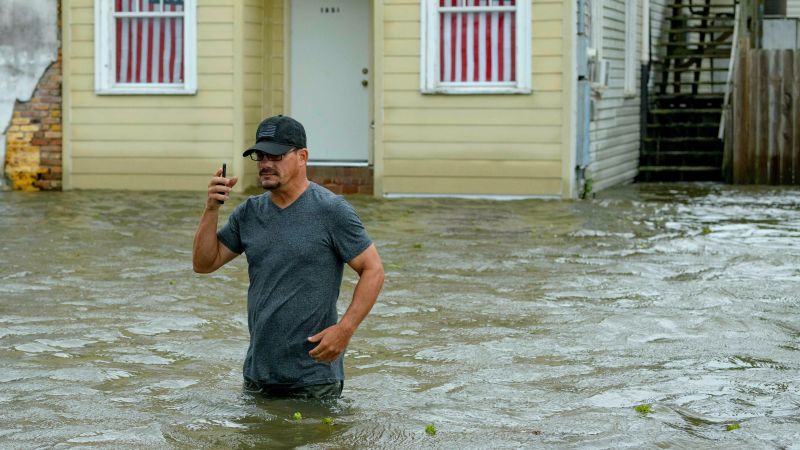
Hurricane season is here – are we ready for another Category 3 like Sandy?
In 2012, America’s East Coast was rocked by Hurricane Sandy. The Category 3 storm left 30 billion dollars in damage in her wake. “Over two million households in the state lost power in the storm, 346,000 homes were damaged or destroyed,[2] and 37 people were killed. Storm surge and flooding affected a large swath of the state. Governor Chris Christie said the losses caused by Sandy were "going to be almost incalculable...The devastation on the Jersey Shore is probably going to be the worst we've ever seen.” Wikipedia Fast forward to today, every season seems to now bring unpredictable weather. Is the Mid-Atlantic region prepared for the worst? What measures have been taken to mitigate mass flooding? Are buildings now better prepared? Have new building codes been implemented and are they effective? And what areas, places or structures are still vulnerable to the fierce winds and massive amounts of water a Category 2 or 3 storm can bring. There are a lot of questions to be answered and if you are a journalist covering this topic – that’s where our experts can help. Rima Taher is an expert in structural technology, stability of structures, architectural cognizance and engineering standards. To get her insights into hurricane preparedness, simply click on the button below to arrange an interview.


Cybersecurity expert aims to protect the power grid by hacking would-be hackers
For hackers, the U.S. energy grid is a treasure trove of classified information with vast potential for profit and mayhem. To be effective, the power grid’s protection system has to be a bit like a hacker: highly intelligent, agile and able to learn rapidly. Milos Manic, Ph.D., professor of computer science and director of VCU’s Cybersecurity Center, along with colleagues at the Idaho National Laboratory (INL), has developed a protection system that improves its own effectiveness as it watches and learns from those trying to break into the grid. The team’s Autonomic Intelligent Cyber Sensor (AICS) received an R&D 100 Award for 2018, a worldwide recognition of the year’s most promising inventions and innovations. “An underground war of many years” Manic calls foreign state actors’ ongoing attempts to infiltrate the power grid — and efforts to thwart them — “an underground war of many years.” These criminals aim to enter critical infrastructures such as energy systems to disrupt or compromise codes, screens login information and other assets for future attacks. The nightmare result would be an infrastructure shutdown in multiple locations, a so-called “Black Sky” event that would erase bank accounts, disable cell phones and devastate the economy. In that scenario, engineers would have less than 72 hours to restore the grid before batteries, food supplies, medicine and water run out. With high stakes and increasingly sophisticated attackers, artificial intelligence and machine learning are key to respond to the challenges of protecting the grid’s interconnected systems, according to Manic. “Hackers are much smarter than in the past. They don’t necessarily look at one particular component of the system,” Manic said. “Often they can fool the system by taking control of the behavior of two different components to mask their attack on a third.” A nervous system for the power grid Using artificial intelligence algorithms, AICS can look holistically at an array of interconnected systems including the electrical grid and adapt continually as attacks are attempted. It is inspired by the body’s autonomic nervous system, the largely unconscious functions that govern breathing, circulation and fight-or-flight responses. Once installed, AICS acts as a similar “nervous system” for a power grid, silently monitoring all of its components for unusual activity — and learning to spot threats that were unknown when it was first installed. To “hack” the hacker, AICS often deploys honeypots, shadow systems that appear to be legitimate parts of the grid but that actually divert, trap and quarantine malicious actors. These honeypots allow asset owners to gather information that can help identify both a threat and a potentially compromised system. “Honeypots can make a hacker think he has broken into a real system,” Manic said. “But if the hacker sees that the ‘system’ is not adequately responding, he knows it’s a honeypot.” For this reason, the system’s honeypots are also intelligently updating themselves. Manic developed AICS with his INL colleagues Todd Vollmer, Ph.D., and Craig Rieger, Ph.D. Vollmer was Manic’s Ph.D. student at the University of Idaho. The AICS team formed eight years ago, and Manic continued to work on the project when he came to VCU in 2014. He holds a joint appointment with INL.


As Europe’s heatwave moves north toward the Arctic…just how worried do we need to be?
There’s no easier way to say it – Europe is baking. Record high temperatures are breaking the mercury in London, France, Germany and elsewhere across the continent. And, that warm air is not pushing north toward the Arctic. Greenland’s ice sheet is feeling the heat and it has some scientists worried. “So far this year, Arctic sea ice extent has hovered at record lows during the melt season. Weather patterns favorable for increased melt have predominated in this region, and an unusually mild summer has also increased melting of the Greenland ice sheet. Unlike with sea ice melt, runoff from the Greenland ice sheet increases sea levels, since it adds new water to the oceans. If the entire ice sheet were to melt, it would raise global average sea levels by 23 feet.” Washington Post, July 26 Are you a reporter covering climate change or weather? If so – we have an expert who can help with your stories. Dr. Pamela Grothe is an assistant professor in the Department of Earth and Environmental Sciences as the University of Mary Washington. She recently completed a Ph.D. in the Paleoclimatology Lab at the Earth and Atmospheric Sciences department at Georgia Institute of Technology. She’s an #expert in climate change and is available to speak with media – simply click on her icon to arrange an interview.



The Hazards of Oil Refineries and Other Industries
The Philadelphia Energy Solutions refinery will shut down as a result of its recent explosions and fires. Scott Jackson, PhD, a visiting professor of chemical engineering at Villanova University, says there are two parts to contamination—surface contamination and contamination of the water underground beneath the oil refinery. The surface contamination can be naturally bioremediated to some extent. At the worst, the surface can be removed and taken to a secure landfill or decontaminated by other means. However, organics like benzene, toluene and xylene (commonly known at BTX) that have reached deep into the underground water table beneath parts of the older parts of the plant can be difficult to remediate. An area of contaminated ground water must be pumped out using wells and treated on the surface using standard wastewater treatment technologies. Remediating this pool of contaminated underground water can take years depending on its area and concentration. Looking ahead, contaminated concrete will need to be removed to a secure landfill, and contaminated topsoil will also need to be removed. Equipment can be sold for scrap metal. Depending on the extent of the ground contamination, the company could either encapsulate it with asphalt or concrete or return the land to a more natural condition with plantings. Refineries aren’t the only operations at risk for hazardous incidents. “All manufacturing operations, including processing of food, the manufacturing of electronic chips, plastics, paints, gasoline, and virtually everything that we use in our daily lives use potentially dangerous operations where risks associated with accidents must be managed. Some of the most dangerous industries might surprise you: Large breweries have recurrent incidents where workers die due to suffocation, caused by carbon dioxide, and dust explosions from the processing of sugar have caused terrible damage and loss of life—a fact that few people understand.” The hazards of a refinery are more apparent than in other industries, so consequently many more people believe refineries are dangerous places, but Jackson notes that, due to decision and risk analysis, refineries should be and generally are no more dangerous than someone driving their car to work.

Recently in Brainerd Lake…one lucky fisherman reeled in quite the catch. What looked like a giant goldfish was in fact a very old and very rare bigmouth buffalo fish. The catch left a lot of people confused – what was it and how did it get there? And that’s where our experts can wade in to help. “We’re starting to study them more, and they’re living far longer than we ever thought possible,” explained Dr. Josh Lallaman, assistant professor of biology at Saint Mary’s University, and large river fish expert. “It shows the importance of not always focusing on popular species; there are other species out there that need to be researched. “It’s often difficult for my students to understand that in fish identification color can be variable. Two individuals of the same species can look very different. That coloration (of the golden bigmouth buffalo) was pretty unique. It’s one of those situations similar to albinism. Every once and a while a rare set of genetic conditions makes species look very different from others. That’s what makes my job really interesting. There are these rare exceptions you don’t know are out there.” Climate change is definitely putting more pressure on fish and wildlife populations. If their habitat changes, then their ability to survive in that habitat changes. It relates to this story in that if there are these unique or old lived species, then climate change is a threat to these unique individuals. “In the end, we are decreasing species diversity within the populations. Climate change increases the temperature of the water, and it may not increase it more than a couple of degrees but how quickly it changes has big impact on food availability. Fish are adapted to very specific seasonal changes. Warmer water, even a couple of degrees, increases their metabolism so they’re hungrier and need more oxygen to survive but warmer water decreases the amount of oxygen in water. So it’s a double hit because they’re less active. It’s synergistic. That stress, but also new and synthetic chemicals being introduced to in the water, as well as flooding and navigation — all of this combines together to harm fish populations a lot more than we realize,” he said. Are you covering climate change and its impact on fish and other wildlife? Do you need to know more about fish populations in rivers and lakes across America? And what does the future look like for species and their ecosystems as the impacts of climate change starts to be seen and felt? There are a lot of questions, and that’s where our experts can help. Dr. Josh Lallaman is an assistant professor of biology at Saint Mary’s University, and large river fish expert. Josh is available to speak with media - simply click on his icon to arrange an interview.
