
Experts Matter. Find Yours.
Connect for media, speaking, professional opportunities & more.

CAA South Central Ontario is excited to announce a partnership with HAAS Alert. The new partnership will send CAA-specific warnings to popular traffic and navigation apps. Through the CAA dispatch system, Safety Cloud© by HAAS Alert will send warning messages of “CAA Rescuer Ahead. Slow Down, Move Over” and “Vehicle Breakdown. Slow Down, Move Over” to the world’s largest navigation apps, including Waze and vehicles covered by the Stellantis Group OEM (Dodge, Jeep, RAM, Chrysler, and Alfa Romeo). The alerts are specific to CAA member rescue calls but will be visible to anyone who uses the alerting platforms. “As longtime advocates for road safety, CAA is always on the lookout for new and innovative ways to enhance safety on our roads. The new partnership with HAAS Alert helps drivers obey the law and provides an extra layer of safety to those who are stranded and to our Roadside Assistance Rescuers,” says Teresa Di Felice, assistant vice president of Government and Community Relations at CAA South Central Ontario. Every year CAA clubs across Canada mark the second Tuesday of May as National Slow Down Move Over Day. This year, National Slow Down Move Over Day is on May 9, 2023. Across North America, nearly 100 tow truck drivers are killed every year after being struck by oncoming traffic while helping stranded motorists with flat tires, breakdowns, and collisions. “As we approach the summer driving season, it is important for drivers to slow down and move over when approaching a roadside emergency rescue. By doing so, we can help protect the lives of those who work on our roads and highways and make our roads safer for everyone,” adds Di Felice. In Ontario, the SDMO law requires drivers to slow down, and if there is space and it's safe, move over one lane when approaching a stopped emergency vehicle, including tow trucks, with flashing lights. Fines could range from $400 to $2,000 and 3 demerit points if convicted and possible suspension of driver's licence for up to 2 years. By partnering with HAAS Alert and using this technology to warn drivers of stranded vehicles and tow trucks on the side of the road, CAA is working to make our roads safer for everyone. For more information about CAA’s advocacy for road safety and the Slow Down Move Over Law, please visit caasco.com/sdmo.



MEDIA RELEASE: CAA Worst Roads Campaign marks 20 Years of Driving Change in Ontario
The annual CAA Worst Roads advocacy campaign is marking its 20th year of influencing change. For the past two decades, the campaign has given decision-makers a snapshot of the roads that the public perceives as not meeting their expectations. “Our research tells us that 85 per cent of Ontarians are concerned about the state of our roads,” says Teresa Di Felice, assistant vice president of government and community relations, CAA SCO. “Due to inflation, consumers are being more mindful of their purchases, and people are opting to hold on to their cars for longer instead of buying a new one. Funding for roadway improvements and proper infrastructure needs to be consistent to ensure that quality and safety are maintained.” CAA’s research also indicates that over half of CAA members (59 per cent) say Ontario’s roads have worsened. Drivers often alter their driving behaviour to accommodate road issues. Many of them – two-thirds (66 per cent) of Ontarians – are slowing down for bad spots on the road or swerving to avoid potholes. We also know that many people are frustrated with Ontario's roads (78 per cent) and often express their dissatisfaction to their loved ones or colleagues instead of government officials. The CAA Worst Roads campaign allows all road users in Ontario to vote for roads that they think need urgent repair. Since 2003, 114 roads in Ontario have appeared on the provincial Top 10 list, of which governments have prioritized some of the roads for repair. In 2022, Barton Street East in Hamilton, Ontario, secured the top spot on the provincial Worst Roads list. Shortly after the 2022 Worst Road reveal, the City of Hamilton announced a multi-year, multi-phase reconstruction of the beleaguered Hamilton route scheduled to begin late last year. Other roads, such as Plank Road in Sarnia, Victoria Road in Prince Edward County, Lauzon Parkway in Windsor, and Bell Farm Road in Barrie, have also undergone significant repairs after appearing on the provincial Top 10 Worst Roads list. “The campaign has demonstrated that decision-makers are paying attention to the results, which has prompted municipal officials to move up infrastructure projects in their communities,” says Di Felice. The CAA Worst Roads campaign calls on all Ontarians to vote for their Worst Road today and join the community of drivers, cyclists, and pedestrians committed to improving Ontario’s roads. Ontarians can vote for their worst road at caaworstroads.com. Watch Teresa Di Felice, Assistant Vice President, Government and Community Relations for CAA SCO answers questions regarding the annual CAA Worst Roads Campaign: https://vimeo.com/user140657252/caawrl2023

#ExpertPerspective: Did the Covid-19 Pandemic Change Perspectives on Inequality?
Did the COVID-19 pandemic have a silver lining? According to Professor Andrea Dittmann and an interdisciplinary team of researchers, the answer is, “Yes.” In 2020, when it became clear that the COVID-19 pandemic would upend daily life, Andrea Dittmann decided the research she’d been doing could wait. Typically, Dittmann, Assistant Professor of Organization & Management, studies the sources of—and solutions to—inequality in the workplace. “The pandemic is a very distressing thing, but from a research standpoint it’s fascinating to study,” Dittmann said. “The pandemic laid bare all of the inequalities that I’ve been studying for years.” Dittmann, along with colleagues Ellen Reinhart and Hazel Rose Markus from the Department of Psychology, Stanford University; Rebecca Carey, Department of Psychology, Princeton University; Nicole Stephens, Management and Organizations, Northwestern’s Kellogg School of Management; and Hannah Birnbaum, Organizational Behavior Area, Olin Business School at Washington University in St. Louis, decided to study how experiencing personal harm as a result of the Covid-19 pandemic influenced people’s attitudes and behaviors towards equality. In their paper, “Personal Harm from the Covid-19 pandemic predicts advocacy for equality,” published in the January 2023 issue of Journal of Experimental Social Psychology, the researchers write that experiencing greater personal harm in the early stages of the pandemic was “associated with increased advocacy for equality one year later.” These findings are noteworthy. For decades, psychologists have studied Americans’ tendency to rationalize existing inequality as a consequence of individual or “internal” attributes (e.g. differences in work ethic) rather than as a product of larger structural, external, and uncontrollable factors such as bad luck, discrimination, or differences in educational opportunities. “Americans tend to explain people’s life outcomes as free from the constraints of history, other people, and social systems. Instead, life outcomes are seen as a product of individuals’ personal preferences, choices, or enduring characteristics,” they write. Lessons from Firsthand Experience While previous studies have shown that increasing a person’s exposure to inequality—for instance, working in an under-served school or participating in a poverty simulation—can increase people’s endorsement of external attributions for inequality, the COVID-19 pandemic presented the researchers with a real life opportunity to test their hypothesis: that an individual’s firsthand experience of personal harm due to an external force beyond his or her control “will be associated with an increase in their advocacy for equality over time,” they write. Firsthand exposure to inequality confronts people with information contrary to the dominant narrative; it demonstrates how forces beyond individuals’ control can shape people’s opportunities. To conduct their study, the authors recruited a balanced sample (in terms of gender and educational level) of approximately 1500 U.S. citizens between the ages of 18-70. Over the course of a year, they surveyed the participants three times—in May 2020, October 2020 and May 2021. Participants were asked whether they had experienced personal harm as a result of the pandemic (such as disruptions to sleep, poor mental health, financial difficulties, contracting the disease, or having a friend/family member die from the disease) and whether or not experiencing such harm was associated with greater endorsement of external attributions for inequality. Increased Advocacy: A Silver Lining To measure attitudinal and behavioral advocacy for equality, the study included questions about whether there should be universal healthcare, whether the government should provide stimulus checks to help people meet basic needs, and whether or not participants had done anything to combat inequality as a result of the personal harm they had experienced. Had they contacted a public official to express support for reducing social or economic inequality? Had they posted or shared content online that related to reducing social or economic inequality? Even when we ran the most conservative statistical tests, we were still seeing this meaningful relationship between experiencing personal harm and changing your attitude towards inequality and being more willing to stand up and do something about inequality. It speaks to the importance of having direct experience with something that has a disproportionate effect on your life. Dittmann doesn’t know if these attitudinal shifts will be permanent, but she believes the results of the study suggest that research interventions, like asking people to think about people they know who are affected by “large, external shocks” such as climate change or a natural disaster, “could be a way, experimentally, to get more people to see the link, to make these external attributions,” she explained. “While it’s of course awful that so many people experienced this harm due to the pandemic, if there is one good thing that came of it, people were able to shift their attitudes towards inequality. And very importantly, as someone who has done a lot of social psychological research, you don’t expect these effects to persist this long over time. They tend to be more transient. But this study suggests that these could be relatively long term effects.” Looking to know more? Then let us help with your media coverage or research. Andrea is an Assistant Professor of Organization & Management at Emory University's Goizueta Business School. She studies diversity and inequality, particularly employees' social class backgrounds, aiming to promote equity and inclusion at work. Andrea is available to speak with media - simply click on her icon now to arrange an interview today.


Preterm Birth and Lifelong Health
November is Prematurity Awareness Month—a month that places a spotlight on the current state of maternal and infant health in the United States and globally. According to the nonprofit March of Dimes, one in 10 babies is born preterm each year in the U.S. But what does that mean, and why do we need to consider gestation period post-birth? We sat down with Michelle Kelly, PhD, CRNP, CNE, FAANP, associate professor of nursing at Villanova University's M. Louise Fitzpatrick College of Nursing, to discuss and explain the importance of preterm education for lifelong health. Q: To begin, what qualifies as preterm birth? Dr. Kelly: A full-term pregnancy lasts 40 weeks. Infants born before the completion of 37 weeks of gestation are preterm. And there are levels of prematurity: Extremely preterm: Infants born before the completion of 25 weeks of gestation. Very preterm: Infants born before the completion of 32 weeks of gestation. Moderately preterm: Infants born between 32-34 weeks of gestation. Late preterm: Infants born between 34-36 weeks of gestation. Q: Why do health practitioners need to be aware of gestation history? DK: Understanding the potential long-term physical and mental health implications is essential to mitigating the risks. Clinicians cannot change the reality that someone was born early. However, clinicians can utilize that information in treatment decisions. Instituting treatment or therapies early can help minimize the expression of that risk and improve future health. Q: What are the health risks for children born prematurely? DK: The earlier an infant is born, the greater the risk to their overall health and development. And while it is much better to be born at 35 weeks instead of 25 weeks, it does not mean that those born closer to term escape all risks. During infancy and childhood, a preterm birth can cause difficulty with breathing, feeding, gaining weight appropriately and achieving important developmental milestones. Research suggests that children and adolescents born at any level of prematurity are at risk for challenges in school, conditions that require physical or behavioral therapy as well as conditions typically associated with immature body systems, such as respiratory issues like asthma. Additionally, long-term follow-up studies indicate that risk continues into adolescence and adulthood. Q: What are some long-term issues that stem from being born preterm? DK: Adolescents and adults born preterm continue to be at risk for reduced lung function, wheezing and asthma. Research findings suggest that there are also cardiovascular risks, particularly an increased incidence of hypertension (high blood pressure). Additionally, an increased incidence of mental health conditions, specifically anxiety and depression, are associated with preterm birth. All these increased risks are modifiable with early recognition and treatment. Q: What recent research has been conducted and what strides have been made to improve the lives of those born preterm? Is the prognosis for those born preterm positive? DK: Today's NICU environment is vastly different from the NICU of the past. Premature babies born in the last 20 years have survival rates that exceed 95 percent for all but the earliest of gestational ages. Increased attention to developmentally supportive care, breastfeeding, kangaroo care and the recognized importance of family presence in the NICU is now the standard of care. Research and advocacy aimed at supporting families touched by prematurity and raising awareness of healthcare providers and K-12 educators are gaining international attention. While being born preterm presents lifelong risks, identifying and communicating one's status with health practitioners early and often allows for effective treatment and positive outcomes.


MEDIA RELEASE: Voting for the CAA Manitoba Worst Roads campaign is now open to all Manitobans
Winnipeg, MB, March 9, 2022 – After a winter of straddling icy ruts, Manitobans will soon be playing ‘dodge the potholes’ this spring. Worried about your safety as a cyclist or pedestrian? Think a roadway is poorly designed? Voting is now open for the annual CAA Worst Roads campaign and CAA Manitoba is giving everyone the opportunity to voice their concerns about the bad roads in their community. “We are very proud to say that this annual advocacy campaign has influenced change for 10 years,” said Heather Mack, Manager, Government and Community Relations at CAA Manitoba. “As we kick off another year of the campaign, we are calling on all Manitobans to vote for their Worst Roads today and join the community of drivers, cyclists, transit riders and pedestrians committed to improving our roads.” The campaign informs all levels of government which roadway improvements are top of mind for Manitobans, and where improvements could be prioritized. Manitobans can vote on issues ranging from congestion, potholes, poor road signs and the timing of traffic lights to pedestrian and cycling safety. In 2021, four of the Top 5 Worst Roads were outside of Winnipeg, including Provincial Roads 307, 250, 450 and Trunk Highway 34. “The key to economic recovery is the investment in roads and supporting infrastructure because when we invest in our roads, we also create jobs,” said Mack. “Throughout the pandemic, our roads have been the arteries used every day to keep essential workers, goods and services flowing. Now more than ever, funding for roadway improvements and proper infrastructure needs to be consistent to ensure that quality and safety is maintained for everyone.” Potholes and poor road conditions are often the most common issues noted by road users and can cost motorists thousands of dollars in repairs when damage to vehicles is caused. The average cost of repairing pothole damage to a vehicle is more than $300, with some fixes topping $6,000 depending on the make and model of the car. According to the 2019 Canadian Infrastructure Report Card Spending, one dollar on pavement preservation may eliminate or delay spending $6-$10 on costly repairs later. “As the inventory of vehicles continues to remain scarce due to the global semiconductor chip shortage, more people are now trying to hold on to their cars for longer. Not only can poor roads cause damage to vehicles but they also heavily contribute to the wear and tear of tires and increased fuel consumption which is why the maintenance and quality of our roadways is even more important than ever.” Success stories over the last 10 years are a result of governments prioritizing infrastructure through multi-year capital investments. Some examples include: Empress Street, Winnipeg Empress Street was long in the top 10 for worst roads in Winnipeg, last appearing in 2019. In 2021, the City of Winnipeg’s improvements for Empress Avenue were completed, including new pedestrian ramps on Portage Avenue and Empress, and a new bi-directional bike path stemming from the Assiniboine River. St. James Coun. Scott Gillingham said he has wanted to see this project completed since he was first elected in 2014, saying “the residents told me many times that roads were the number one issue, specifically around the Polo Park area, so I'm glad to see this project completed.” St. James Street, Winnipeg St. James Street was often referred to as “driving on the moon” thanks to numerous potholes and poor patching jobs that rarely survived a season. Add general congestion due to its proximity to Polo Park, and St. James Street also appeared several times on our list, last appearing as No. 6 in 2019. Since 2017, major rehabilitation of St. James Street has been underway, including complete removal of some sections and intersections to be fully replaced. The work is expected to continue for 2022. Nominations for CAA’s Worst Roads can be cast at caaworstroads.com until April 6. To encourage participants to act on their concerns, they will be entered to win a Grand Prize of a $500 Best Western gift card and $200 Ultimate Dining card; secondary prize of a $500 Olympia Ski and Cycle gift card, along with weekly draws for $50 Ultimate Dining cards. Once voting is closed, CAA will compile a list of the 10 Worst Roads in Manitoba, along with the Worst Roads in regions across the province. The regional top five lists will help shine further light on the state of local roads in municipalities across Manitoba. CAA will present the list of 2022 Worst Roads to local and provincial officials to help inform future funding and planning decisions. The top 10 CAA Worst Roads in Manitoba in 2021 were: 1. Taylor Avenue, Winnipeg 2. Provincial Road 307 3. Provincial road 250 4. Provincial Road 450 5. Trunk Highway 34 6. Saskatchewan Avenue, Winnipeg 7. St. James Street, Winnipeg 8. Sherwin Road, Winnipeg 9. Waller Avenue, Winnipeg 10. Empress Street, Winnipeg

MEDIA RELEASE: Empress Street tops list for second year running
WINNIPEG, May 8, 2019 – The votes are in, and Manitoba’s Worst Road for 2019 is Empress Street in Winnipeg for the second consecutive year. “Manitoba’s Worst Roads campaign is about uniting the public in sharing their views,” says Tim Scott, president of CAA Manitoba. “Even with construction taking place on Empress Street at this moment, voters identified it as the Worst Road once again. Empress is a major arterial road that many Winnipeggers rely on to get where they are going. Properly maintained roads lead to safer travels and a healthy economy, but the public understands that further delay leads to a direct financial impact on them. We’re proud to give a voice to Manitobans who want to pave the way for better roads in the province.” Over 2,700 votes were cast for more than 400 roads. Road users of all types voted for the streets they wanted to focus on. Potholes and crumbling pavement continue to be the most critical issue identified by motorists, followed by traffic congestion. Cyclists pointed to potholes and poor cycling infrastructure as their top gripes, while pedestrians cited inadequate walking infrastructure as their biggest problem. Seven of the top ten Worst Roads are in Winnipeg, while three are rural roads. In second place is Provincial Trunk Highway 34 found in western Manitoba near Austin. Eighth place is Provincial Trunk Highway 23, which passes through numerous communities in southern Manitoba, and tenth is Provincial Trunk Highway 32 by Winkler. Some of the Winnipeg roads that have appeared on the Worst Roads list in previous years include Saskatchewan Avenue, Sherwin Road and St. James Street. Earlier this year, both the federal and provincial governments announced that a combined total of approximately $300 million will be spent to improve 350 kilometers of the highway network across Manitoba, and the City of Winnipeg recently announced that one-time federal gas tax funding will be spent on road repairs, road safety initiatives and the promotion of active transportation. “We know that CAA’s ongoing advocacy efforts are working and that governments are listening,” says Scott. “CAA will continue to bring the voice of Worst Roads voters to government and work with stakeholders on how to create infrastructure and transportation that we can all be proud of.”

25th Anniversary African American Art Song Alliance Conference
25th Anniversary African American Art Song Alliance Conference Organized by Dr. Darryl Taylor October 13 - October 16, 2022 The African American Art Song Alliance, founded by Professor of Music Dr. Darryl Taylor in 1997, is one of the nation’s leading advocacy organizations, representing Black composers of Western classical art songs. Its quinquennial conference is unique and inspirational for scholars and performers of this music. Learn more about the conference and its events on the website at music.arts.uci.edu. Come be part of this community of like-minded supporters! The Alliance remains focused on maintaining accessibility for the audience it serves and the larger population. They have made registration free and open to the public for the conference and its events. To learn more about the African American Art Song Alliance, visit their website at https://artsongalliance.org To speak to Dr. Taylor about the conference, contact Tom Vasich at 1-949-285-6455 or tmvasich@uci.edu.


What happens when the human body gets too hot?
What happens when the human body gets too hot? And what can you do if someone gets too hot? Douglas Casa, professor of kinesiology and chief executive officer of UConn’s Korey Stringer Institute – a leading authority on research, advocacy, and education about exertional heat stroke – explains in this edition of UConn Science in Seconds. The Korey Stringer Institute at UConn was established in honor of the Minnesota Vikings offensive lineman Korey Stringer, who passed away from exertional heat stroke in 2001. Looking to know more? Then let us help with your questions and coverage! Douglas Casa is an expert on athletic training, heat illness, and hydration. Dr. Casa is available to speak with media about this topic. Simply click on his icon now to arrange an interview today.



Expert Opinion: Understanding Whiteness to Understand White Supremacy
In the aftermath of last week's tragic shooting in Buffalo, many have described the violence as representative of a mental health crisis, growing extremism, hatred, and bigotry, likening manifestos left by shooters as the racist rhetoric of radicalized individuals. "But that conclusion is a pleasant fiction," writes Matthew Hughey -- a professor of sociology at UConn and a renowned scholar of racism and racial inequality in identity formation, organizations, media, politics, science, religion, and public advocacy -- in a powerful new essay for Slate. As part of his work as a researcher, Hughey examines the manifestos of white-supremacist shooters as well as their intersection with race, knowledge, media, power, religion, and science. To understand white supremacy and the violence it precipitates, Hughey explains, we need to first understand whiteness: The category of whiteness, like “race,” is a biological fiction with a social function. Whiteness emerged early in American history to rationalize exploitation. Early American colonists were slow to develop racial worldviews. But by the mid-1600s, philosophers and scientists like Bernard Varen, John Ray, and François Bernier began to publish ideas about African savagery and European civilization, which were progressively applied to resolve who should be the rulers versus the ruled. These ideas were codified into our legal system. In 1662, for instance, British statutory law conferred slavery with a biological status: Any child born to an enslaved woman would also be a slave. Over time, through a series of laws and social mores, a hierarchy that conferred legal privileges to “white” men, while stripping Black people and Native Americans of their humanity and standing in the legal and political arenas, was cemented. Put another way, whiteness is not an inherent identity so much as a consolidation of lofty biological, legal, and theological notions that serve to buttress the social and political power of people bearing lighter skin. As W.E.B. Du Bois points out in his 1920 essay “The Souls of White Folk,” whiteness is a modern concept: "The discovery of personal whiteness among the world’s peoples is a very modern thing. … The ancient world would have laughed at such a distinction. … This assumption that of all the hues of God whiteness alone is inherently and obviously better than brownness or tan leads to curious acts. … I am given to understand that whiteness is the ownership of the earth forever and ever, Amen! Now what is the effect on a man or a nation when it comes passionately to believe such an extraordinary dictum as this?" The effect is a Faustian bargain. And as a result, whiteness exists in a state of perpetual social anxiety. White people are taught that their biological, cultural, and/or God-given nature is to be “inherently and obviously better” than people of color and to have “ownership of the earth.” These ideals are, of course, so lofty that they are unachievable. Discontent is inevitable. Whiteness is a deal with the devil. Consequently, white people move neither into nor out of moments of racial anxiety, nor do they—despite the popularity of the cliché—experience flashes of “white fragility.” Whiteness does not wax or wane relative to racial pressures, cracking to expose either reactionary political movements or even the occasional mass shooting. Rather, whiteness is an omnipresent imbroglio; it cannot live up to the greatness it assumes it can naturally realize. Reconciling the peril that results from the inability to fully manifest white power necessitates a scapegoat. And so the crisis of whiteness is continually externalized onto racial “others.” This helps to explain why an increasing number of white people now believe they have been cheated out of their birthright—an inheritance of domination stolen by people of color. White nationalism and supremacy could not function under absolutist apartheid; it is an ideology and practice that requires the presence of people of color to justify its own shortcomings. White peril and white power go hand in hand. Professor Hughey is available for interviews -- click on his icon to contact him today.

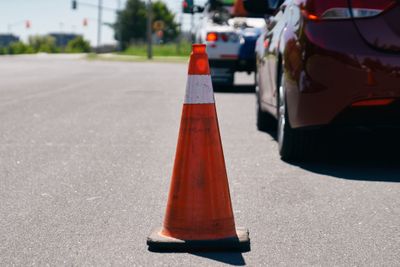
STORY: National Slow Down, Move Over Day: Protect the Protectors
Every year, tow truck operators are injured or killed by passing vehicles. In 2015, CAA advocated for the government to include tow trucks in the Slow Down, Move Over legislation in Ontario. This means that when approaching an emergency vehicle or tow truck with flashing amber lights stopped on the side of the road, drivers must slow down and, where it is safe to do so, change lanes. To raise awareness, CAA National and all clubs across the federation recognizes the second Tuesday of May as National Slow Down, Move Over Day. This day acts as a reminder for drivers to slow down and move over for first responders and stopped tow trucks with flashing amber lights. This year, CAA Club Group has launched a new campaign called, Protect the Protectors. The goal of this campaign is to remind drivers that while tow truck operators are working to protect people stranded at the side of the road, we need to do our part and protect them by slowing down and moving over. Learn more: https://www.caasco.com/advocacy/road-safety/slow-down-move-over
