
Experts Matter. Find Yours.
Connect for media, speaking, professional opportunities & more.

10 tips to adapt to life in Canada
As a newcomer experiencing Canada for the first time, there may be some cultural differences you’re not familiar with. Adjusting to a new environment and culture can be difficult if you have no idea what to expect. In this article, we will share a few tips, resources and advice that will help you to better adapt to life in Canada and avoid culture shocks. 1. Be polite – use the words “please,” “sorry,” and “thank you” frequently Canadians are known to be very polite – the words, ‘please,’ ‘sorry,’ ‘thank you,’ ‘may I,’ and ‘excuse me’ are frequently used in social settings and interactions. Being polite is valued and expected, even with strangers. Note that these common courtesies don’t necessarily signal a desire to be friendly; they’re merely a social standard. Fun Fact: Canadians use the word ‘sorry’ so much that in 2009 they had to pass an Apology Act in Ontario. It means that if any Canadian says ‘sorry’ at the time of a crime or incident, it won’t count as an admission of guilt – just an expression of sympathy. Without this, there’d probably be many apologetic Canadians in prison. 2. Be punctual In Canada, punctuality is a sign of respect – everyone does their best to arrive on time for all personal, professional and social engagements. If you’re late, people will worry that something has happened to you or that you have forgotten about your appointment. It may also come across as being disrespectful. If you anticipate reaching late or if you cannot make it, social protocol dictates that you inform the host or meeting organizer about your change in schedule and remember to do this as much in advance as possible. 3. Network as much as you can Canada is an attractive destination for talent from all across the world. Many candidates have relevant qualifications, compelling track records, and winning personalities. This makes Canada diverse and multicultural, with a competitive job market. Tapping into the hidden job market and gathering valuable referrals are just two of the many benefits that networking offers; it also serves as a way to stand out from the competition and get noticed. The hidden job market refers to positions that are filled without the employer advertising them publicly. As much as 65-85 per cent of the jobs are not posted online, and approximately 40 per cent of positions are filled through a referral. This is why building your network in Canada can be very helpful in finding a job. Tip: When reaching out to a connection to ask for a job referral, establish a “warm” connection first. Start by asking your contact to learn more about their career journey through an informational interview and share your learnings and experiences as well. Resources to help you learn more about networking in Canada: How to build your network in Canada: The basics Where to build your network in Canada How to build your network: The coffee interview Coffee chats: Questions you should ask to network better 8 ways to meet new people and grow your network in Canada 4. Reach out to settlement services when you need help Settlement services and agencies exist in Canada to provide free support to newcomers at every step of the newcomer journey. They are available in both pre- and post-arrival and are funded partially or fully by the Canadian government to promote the comfortable integration of newcomers into Canadian society. Settlement services provide support in various areas, including career, housing, healthcare, immigration, education, and more. When you begin using settlement services in Canada, you may be connected with a settlement worker who will work with you one-on-one to support your settlement process. Tip: You can also visit the Immigration, Refugees and Citizenship Canada (IRCC) website to learn about settlement agencies and newcomer centres in your area that offer free newcomer services near you. Accessing settlement services in pre-arrival can fast-track your transition to Canadian life and help you adapt better. See Pre-arrival settlement services for newcomers to Canada for detailed information on various programs that may be available to you in your home country. 5. Familiarize yourself with cultural differences and keep an open mind Canada is a diverse and multicultural nation – people from different countries, all with their unique values, traditions, faith, languages, food and cultures reside here. An important part of adapting to Canadian life is being open to learning about other cultures and making a conscious effort to live in harmony while acknowledging the differences that exist. Having a positive attitude and keeping an open mind is key to this transition. Remember that in Canada, everyone is treated equally and with respect, irrespective of their gender, occupation, race, religion, or sexual orientation. Therefore, you shouldn’t let any stereotypes, biases or prejudices influence your words and actions while interacting with others. Respect personal space and privacy Canadians value their personal space and privacy. It’s best to stay away from discussing topics related to salary, family life, weight, religion, political views, etc. Disruptive behavior such as cutting in line, speaking out of turn, shouting, talking loudly are frowned upon. And remember to always ask permission before using anything that’s not yours. Allergies and sensitivities are common in Canada Allergies are very common in Canada. It is estimated that one in 13 Canadians have at least one food allergy. Most prevalent food allergies include shellfish, tree nuts, peanuts, milk, fish, egg, wheat, sesame, and soy. Hence, before offering food to someone, it is always advisable to check with them for allergies. Some people also have sensitivities. For instance, strong colognes and perfumes aren’t recommended because many people have sensitivities or allergies to strong scents. 6. Volunteer often Volunteering is an integral part of Canadian culture. Children are encouraged to do it, and high school students must complete mandatory volunteer hours. Adults volunteer their time and skills at charities, non-profit organizations, political parties, religious faith organizations, youth groups, and many other places. According to Statistics Canada, in 2013, 44 per cent of the population, aged 15 years and older, participated in some form of volunteer work. Volunteering involves giving personal time freely for the benefit of another person, group, or cause. It can help you – Build and grow your network: During your initial days or months as a newcomer in Canada, you may not know many people. Volunteering offers a forum to meet other like-minded individuals – newcomers and locals alike – and build your social and professional networks. Gain Canadian experience: Volunteering can help you bridge gaps in your work history while you look for a job and is a good way to gain the much-coveted, Canadian experience. Moreover, you can always ask the company you volunteered with to provide reference letters, which can be useful in your job applications. Volunteering also offers the opportunity to learn new skills and brush up on your English or French language skills. Integrate with Canadian society: Besides offering career-specific benefits, volunteering in non-traditional setups such as at your local religious/faith organization, at your child’s school, or at a park in your neighbourhood will help you broaden your social circle and smoothen your transition to Canadian life. To discover the importance of volunteering in Canada, and learn how to find volunteering opportunities, read The benefits of volunteering as a newcomer in Canada. 7. Tipping for services is ingrained in Canadian life Canada, like many other countries, has a prominent tipping culture. Tipping (also called, leaving gratuity) when receiving any services tells the staff how good you thought their service was. It is not mandatory but in certain situations it is customary and expected. Not tipping for services is considered rude. Why tips matter In Canada, service and hospitality industry workers (such as bartenders, servers, hairdressers, drivers, food delivery persons, etc.) are generally paid only minimum wage. Some provinces have a separate (lower) minimum wage for the hospitality industry: the expectation is that tips earned will make up the difference for these workers. Who should you tip It is common to tip when paying for services in the hospitality industry. This includes but isn’t limited to: restaurant wait staff, food or grocery delivery personnel, bartenders, coat check personnel, hotel staff (like, housekeeping, maids, bellhop, valet, and room service), hair stylists, beauticians and masseurs, taxi drivers and ride-share (Uber/Lyft) drivers. Note: You are not expected to tip for counter service (e.g. at coffee shops and cafes – where you place an order over the counter, food trucks, ice cream shops, bakeries, etc.). You’ll often see tip jars at these places. You can tip if you receive good or exceptional service, but it isn’t expected. Tip: Sometimes the tip may be automatically added to the bill; be sure to check that so you don’t tip twice. Read Tipping in Canada: Things to know as a newcomer to learn how to calculate tips and get information on average tips for varied services. 8. Customize your resume and cover letter to the position you’re applying for Merely having a one-page Canadian-style resume and cover letter isn’t enough. You should customize it to suit the job description and requirements of the position you are applying for. Tailor your work experience, skills, and any additional information to the role. Include keywords from the job posting and always start your sentence with relevant action verbs like spearheaded, achieved, managed, trained, etc. Also, remember to craft a compelling summary for your resume. While working on your resume, avoid including very detailed information for each position you have held; you can share relevant details in the interview instead. Recruiters and hiring managers prefer seeing quantified accomplishments on resumes. The ‘CAR’ approach is a good way to help you structure individual sentences: C = what was the Challenge, A = what Action did you take, and R = what the Result was. For free, downloadable resume templates and more valuable tips on creating a stand-out resume and cover letter see, Canadian resume and cover letter: Format, tips, and templates. 9. Familiarize yourself with Canadian slang You may have heard of the famous Canadian phrase ‘eh’ – some locals append it to the end of almost any sentence. Other popular slangs are: Toque = beanie (winter hat) $1 CAD coin = loonie $2 CAD coin = toonie Kilometre = klick or click 6ix = Toronto Timmies = Tim Hortons (chain of coffee shops) Double-double = a coffee with two milks and two sugars; only used at Tim Hortons Mickey = a 375 ml (26 oz) bottle of liquor Two-four = a case of 24 beers Pop = soda, a soft drink, or any flavored carbonated beverage That’s jokes = something is hilarious or funny Darts = cigarettes Mounties = The Royal Canadian Mounted Police (RCMP) Parkade = a multi-story parking lot Washroom = Canadian term for a bathroom or restroom Beavertail = deep-fried dessert pastry resembling a beaver’s tail 10. Familiarize yourself with ice-breakers and small talk It is very common for Canadians to open any conversation/meeting/coffee chat with small talk. So, don’t be shy to initiate small talk – it’s part of Canadian culture. You can chat about the weather, your hobbies, how you spent your weekend, things you do outside of work, food, fitness, your travel to the meeting location, or sports. Avoid sensitive topics such as politics, religion, physical appearance, or age. As you settle in, common courtesy combined with curiosity will enable you to better understand Canadian culture. When in doubt or if you’re confused, it’s a good idea to ask people around you. Patience, understanding and immersion in local culture will help you to learn and adapt faster. Original article located here, published by Arrive.


Covering the cicadas across America? Let our expert help.
This spring, Americans have been captivated, curious and even bugged out by the trillion cicadas that finally emerged from 17 years underground to enjoy a loud month of mating calls, feverish breeding and egg laying, all before passing into that good night. Brood X, as it is called, emerged this year as one of the largest on record. Scientists estimate their population to be about a trillion – and numbers like that won’t be seen until the next generation re-emerges in another 17 years. The bugs are harmless, and the story behind their behavior is truly unique – and there’s a lot to know about cicadas before they expire by June’s end. What do cicadas do underground for 17 years? Will climate change alter the behavior of the cicadas? Why do they only emerge every decade and a half? Why are they so loud? What characteristics do they display when they emerge? What can scientists learn as each brood surfaces? There’s a lot to ask, and if you’re looking to cover or learn more – then let our experts help. Dr. Josephine Antwi is an entomologist at the University of Mary Washington and is the go-to expert on this buzzing breed and other insects. Dr. Antwi is available to speak with media regarding cicadas, simply click on her icon now to arrange an interview today.


Baylor Consumerism Expert Shares Five Tips to Make the Most of Your Stimulus Check
With President Joe Biden’s $1.9 trillion American Rescue Plan Act, citizens nationwide received a second round of stimulus checks in the form of $1,400 per person and an additional $1,400 per dependent. The Rescue Plan also brought increased child tax credits and unemployment benefits. James Roberts, Ph.D., The Ben H. Williams Professor of Marketing in the Hankamer School of Business, is an internationally recognized expert on consumerism and the author of “Shiny Objects: Why We Spend Money We Don’t Have in Search of Happiness We Can't Buy.” He said the latest round of stimulus funds offer consumers bright opportunities, but he also cautioned against pitfalls in uncertain times. Roberts said that people should first consider building up their emergency savings funds – a step, he said, more Americans seem to be taking during this time of pandemic and economic fluctuation . “Over the last 20 years or so, Americans have not saved much. However, in the first nine months of the pandemic, the U.S. savings rate increased by a whopping 100 percent. By some estimates we are at a national savings rate that hovers around 20 percent – which is incredible,” Roberts said. Roberts shared a few tips on how to get the best value for your stimulus check and prepare for times ahead: 1. Enhance your savings. Save a portion of your stimulus check for the inevitable rainy days ahead. Start with $1,000 to your short-term emergency fund. If possible, every family should have a $2,500 emergency fund. This provides peace of mind and avoids having to borrow from friends or family, or even worse, max out your credit cards or take out a “payday” loan, which I strongly advised against. 2. Invest in experiences. Given that a lot of Americans have significantly increased their savings and lowered their credit card debt, I say people should splurge a little on something for themselves or their families with the remaining $400. Remember, experiences bring more lasting happiness than buying stuff. Good mental health is critical to our well-being. 3. Start early. Don’t forget that the $1,400 stimulus check is only a small part of the money that may come your way. The child tax credits are a great opportunity to save for your children’s college. The earlier you start saving, the better. This is the beauty of compounding interest. 4. Save while unemployed I suggest any extra boost you might get in your unemployment check be saved for the days ahead. Don’t let money burn a hole in your pocket. 5. Plan ahead. Every family’s goal should be to set aside six months in living expenses so if you do lose your job, it doesn’t put you and your family into an immediate financial death spiral. ABOUT DR. JAMES ROBERTS James Roberts, Ph.D., is The Ben H. Williams Professor of Marketing in Baylor University’s Hankamer School of Business. He is a nationally recognized expert on consumer behavior and has been quoted extensively in the media and has appeared on the CBS Early Show, ABC World News Tonight, ABC Good Morning America, NBC The Today Show, Yahoo.com’s “The Daily Ticker,” and has been quoted and/or featured in The New York Times, The Wall Street Journal, National Public Radio, USA TODAY, TIME, FOX News, The Doctors on CBS, US News & World Report, Cosmopolitan, Glamour, and many other media. His books include “Shiny Objects: Why We Spend Money We Don’t Have in Search of Happiness We Can't Buy” and “Too Much of a Good Thing: Are You Addicted to your Smartphone?” ABOUT BAYLOR UNIVERSITY Baylor University is a private Christian University and a nationally ranked research institution. The University provides a vibrant campus community for more than 19,000 students by blending interdisciplinary research with an international reputation for educational excellence and a faculty commitment to teaching and scholarship. Chartered in 1845 by the Republic of Texas through the efforts of Baptist pioneers, Baylor is the oldest continually operating University in Texas. Located in Waco, Baylor welcomes students from all 50 states and more than 90 countries to study a broad range of degrees among its 12 nationally recognized academic divisions. ABOUT HANKAMER SCHOOL OF BUSINESS AT BAYLOR UNIVERSITY At Baylor University’s Hankamer School of Business, top-ranked programs combine rigorous classroom learning, hands-on experience in the real world, a solid foundation in Christian values and a global outlook. Making up approximately 25 percent of the University’s total enrollment, undergraduate students choose from 16 major areas of study. Graduate students choose from full-time, executive or online MBA or other specialized master’s programs, and Ph.D. programs in Information Systems, Entrepreneurship or Health Services Research. The Business School also has campuses located in Austin and Dallas, Texas. Visit baylor.edu/business.


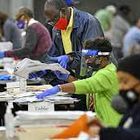
Fourth time a charm? Election audits are getting political in the Peach State
If at first you don’t succeed – try and try again. And Republicans did in Georgia, demanding multiple audits of last November’s presidential election, looking under every ballot box for evidence of election fraud, tampering or other shenanigans that could be used to put the results in doubt. So far, nothing has been found. But that’s not stopping those with an eye on a political future from backing down. In fact, election audits are now a hot topic for those looking to occupy the governor’s mansion in Atlanta. In a bid to bolster former President Donald Trump's lies about widespread fraud in the 2020 election, Trump's Republican allies are now seeking Arizona-style audits in other swing states – including Georgia, where the former President's false claims have set off an intraparty war. A day after Trump said in a statement that Georgia should follow Arizona's lead, former Georgia state Rep. Vernon Jones, a Trump supporter who is challenging incumbent Republican Gov. Brian Kemp in next year's GOP primary, proposed an audit Wednesday. "Georgians still have questions about irregularities found in the 2020 election and they deserve answers," he said in a statement. "We must get to the bottom of all of this and other irregularities to restore trust in our election process. If Mr. Kemp refuses to demand an audit, then I will when I am elected to replace him." Jones' characterization of the election was false: Georgia has already tallied the results to confirm Biden's victory there three times and conducted an audit of absentee ballot signatures. The state found no evidence of fraud, and Kemp and other Republican state officials have backed the findings. May 19 – CNN “This call for yet another ballot review is nothing but political theater," says Dr. Gregg R. Murray, professor of political science at Augusta University. "It’s extremely unlikely it would uncover anything that would overturn the 2020 election or substantial irregularities. It would be a huge waste of taxpayer money.” Despite the findings, this is an issue that won’t likely be going away soon, and if you are covering this topic, then let our expert help with your story. Dr. Gregg R. Murray, is available to talk about the election audit and what it might mean for voters in Georgia and across the country. Murray’s research focuses on political behavior and psychology with specific interests in voter mobilization and turnout. He is also executive director of the Association for Politics and the Life Sciences. Simply click on Murray's icon to arrange an interview today.


Local neighborhood conditions are important for children’s brain development
Growing up in a disadvantaged neighborhood is related to children’s brain structure and neurocognitive performance, according to a study published May 3, 2021 in the journal JAMA Pediatrics. It is associated with the brain’s cortical structure and volume as well as how children pay attention, their executive function, reading, flexible thinking, and other tasks that support learning. These differences could potentially contribute to other inequities during adolescence as well as later in life for these children, though there is no evidence that such neighborhood-related differences are fixed or immutable. Children’s brains exhibit plasticity, meaning that they can change and grow in response to learning and experience. The study’s findings shine a spotlight on the larger population trend and do not serve as a predictor of any individual child’s outcome. “This points to the importance of investing in policies and programs that help improve local neighborhoods and to support and empower communities to promote children’s neurodevelopment and long-term health and well-being,” said Daniel A. Hackman, assistant professor at the USC Suzanne Dworak-Peck School of Social Work and lead author of the study. Researchers from the USC Suzanne Dworak-Peck School of Social Work and the Keck School of Medicine of USC used data from the Adolescent Brain and Cognitive Development (ABCD) Study, collected from October 2016 – 2018. The ABCD Study is the largest long-term study of brain development and child health ever conducted in the United States. “Disadvantaged neighborhoods may lack quality health services, access to nutritional foods, and well-maintained parks and rec facilities,” said Megan Herting, assistant professor in the department of preventive medicine at the Keck School of Medicine at USC and senior author of the study. “They may also expose residents to more pollutants or social stressors.” In addition to Hackman and Herting, study authors include Dora Cserbik, Jiu-Chiuan Chen, and Rob McConnell of the department of preventive medicine at Keck School of Medicine; Bita Minaravesh of the USC Dornsife Spatial Sciences Institute; and Kiros Berhane of the Department of Biostatistics at Columbia University Mailman School of Public Health. Neighborhood disadvantage and the brain The study participants were 8,598 nine- to eleven-year-old children in 21 sites from the ABCD Study, and includes youth from diverse backgrounds, family income levels and neighborhood environments. Using this ABCD data, the multidisciplinary team of researchers tested whether neighborhood disadvantage is associated with neurocognition and brain structure through the National Institute of Health Toolbox Cognition Battery and magnetic resonance imaging (MRI) scans. Neurocognition refers to specific cognitive functions related to particular neural systems, such as executive function, memory, problem-solving and perception. Executive function is the set of cognitive functions that allows people to select behaviors, make efforts to regulate or control their behavior or thinking in given situations, and to focus on goals despite distractions. Brain structure refers to global and regional measures of the brain’s cortex and subcortex, such as volume and surface area. The researchers found that neighborhood disadvantage was associated with worse neurocognitive performance on nearly all tasks and smaller cortical surface area, as well as cortical volumes and subcortical volumes, across the whole brain. The associations remain after adjusting for family socioeconomic status and largely remain after adjusting for perceptions of neighborhood safety. “Our findings aren't specific to the child's home life, as we accounted for socioeconomic factors at each child's home,” Herting said. “But the research suggests neighborhoods may have different levels of social and educational resources and opportunities that can impact a child's neurodevelopment.” Disadvantaged neighborhoods are those in which people generally have lower levels of income, employment and education. Growing up in these conditions can be stressful for children and adults. However, comparing disadvantaged neighborhoods across the country is challenging to social work researchers, who understand that when looking at national samples they may pick up regional differences for which they must account. Neighborhood similarities and differences The impressive scope and scale of the ABCD study made it possible for these researchers to delve into rich local data that enabled them to understand the similarities and differences of disadvantaged neighborhoods within the context of their cities. Hackman, whose research interests include understanding neighborhoods and the context that children and adolescents grow up in, wanted to be able to look at the research question from both the national perspective as well as the local perspective. “This is the first large, national study of neurodevelopment to determine that the role of neighborhood disadvantage is similar across all regions of the country, and we found that what mattered most were the local differences in neighborhood disadvantage within each city, rather than how cities differ from each other overall” Hackman said. “This highlights the broad relevance of neighborhood disadvantage, and the importance of unique local conditions. His interest was even more piqued when he saw a clear narrative emerge from the data. “The consistency of the data was so compelling,” Hackman said. Though disadvantaged neighborhoods may vary from city to city, the researchers found the associations were largely consistent across 21 metropolitan areas within the U.S. For policymakers, a takeaway is that neighborhoods were related to these important aspects of child development everywhere, and that though each city is different, the unique local conditions are important to address. In addition, the global relationship between neighborhood and overall brain structure and neurocognitive performance suggest that intervention approaches may be most successful if they are comprehensive and focused on improving children’s contexts, rather than narrowly targeted to the development of particular cognitive skills. “This research is important as it not only highlights that neighborhoods matter, but it also suggests that promoting neighborhood equity based on the unique local conditions within cities could be important for the short and longer-term health and overall development of children and adolescents,” Hackman said. According to the study, although the magnitudes of association between disadvantaged neighborhoods and neurocognition and brain structure are statistically small, they are potentially meaningful. One reason is because even small effects may have large consequences as they accumulate over time at a population level. Another reason is because these are comparable to, but smaller, than effect sizes for family socioeconomic status in these models. “There is also considerable evidence of resilience,” Hackman noted, as the authors caution that these associations are not predictive at the individual level. In particular, many youth from disadvantaged neighborhoods outperform their peers from more affluent neighborhoods, and also have larger cortical surface area and subcortical volume as well. In other words, living in a disadvantaged neighborhood is not deterministic and does not automatically predict any pattern of neurocognition and brain structure for any individual. Instead, the association uncovered by these researchers points to more reasons why improvements to neighborhoods can bring positive change. “Future research is needed to determine if our findings are, in fact, attributable to differences in community-based resources or differences in quality of schooling,” Herting said. “However, our findings do add to a growing literature suggesting the importance of neighborhoods and how they may contribute to place-based disparities in health and well-being in America.”


A Neuroscientist’s Guide to Managing Post-COVID-19 Anxiety When Returning to Work
With the Centers for Disease Control and Prevention relaxing mask-wearing restrictions and many companies like Google and Goldman Sachs asking employees to return to the office after working remotely since the start of the COVID-19 pandemic, some people are nervous to re-enter society. According to Alicia Walf, a neuroscientist and senior lecturer at Rensselaer Polytechnic Institute, the most effective way to overcome fears about re-engaging with the world may simply be to get back out into it. “Positive human connections are the most powerful tool for reducing stress,” she said in a recent Reader’s Digest article. To control anxiety and improve the health of our brains, Walf also suggests some basic steps like getting sufficient sleep, eating a good diet, and removing distractions to improve focus. Ultimately, a return to normalcy after such a long period of constant stress will be an important step toward restoring brain health. “There can be lasting effects of intense stress on the brain,” Walf said. “Social isolation is an incredibly stressful event associated with increased stress hormone levels and many other long-term negative health consequences. Clinicians are rightfully concerned about the long-term effects of this pandemic on mental health, which may involve these changes in the stress response and brain circuits.” And while feeling anxious may be unpleasant, stressful experiences can be learning experiences. According to Walf, adaptability is an important part of resiliency to stress, and a useful trait to work on us we adjust to our changing world. “Although not wearing masks and returning to work are now major changes in many of our routines, producing feelings of anxiety,” Walf said, “the benefits of social interaction will likely help us return to our routines yet again and reduce the potential for long-lasting negative consequences of stress.” Walf studies the brain mechanisms of stress and reproductive hormones as they relate to behavior and cognition, brain plasticity, and brain health over the lifespan. Specific areas of her expertise are memory, emotions, and social interactions and how these functions not only arise from the brain but change the brain itself.



She was once seen as the rising star of the Republican Party, but for Wyoming Congresswoman Liz Cheney, the tides have shifted, and she now finds herself on the outs with the leadership of the GOP. Cheney’s vote to impeach President Donald Trump gained her national attention and accolades from across the aisle, and consequently, several enemies within her own party. Cheney comes with pedigree, profile and a strong following, but with Republicans boasting a record 35 women in Congress, the ousting of Cheney might not have the impact it once did. “It remains to be seen if this decision is a reflection of the Republicans’ willingness to remove a woman from leadership when they aren’t worried about having a ‘woman problem’ in their delegation,” said Dr. Mary-Kate Lizotte, an expert in gender difference in politics and associate professor of political science at Augusta University. What happened Wednesday may have short- and long-term consequences for the Republican party, including how it shapes itself for mid-term elections and the 2024 presidential election. If you are a journalist covering this topic, then let our experts help. Dr. Mary-Kate Lizotte is an expert in political behavior and the implications of gender differences in public opinion. She is available to talk about discuss gender roles in politics and the upcoming Senate runoffs in Georgia. Click on her name to schedule an interview.


Scarcity expert on gas shortage and panic buying
Kelly Goldsmith, associate professor of marketing, is available for commentary on the gasoline shortage and panic buying/hoarding. Goldsmith is a former Survivor contestant, which influenced her research into consumer behavior in the wake of scarcity. She is an expert in how people think and act when faced with limited availability of what they need and how they perceive competition when it comes to purchasing items that are in limited supply. She can discuss: The types of consumers that tend to buy up and hoard all available stock, therefore leaving none for others How and why consumers become selfish in a situation where access to desired goods is limited Making a plan when it comes to purchasing what you need and how to keep your cool in the demanding, stressful environment



Taking on Super Polluters to Reduce Greenhouse Gases
If just the top five percent of carbon-emitting plants in the U.S. reduced emissions to the average intensity of all plants, overall emissions from the electricity sector would fall 22 percent. A new book co-authored by Wesley Longhofer, associate professor of organization and management at Goizueta Business School, offers new insights into a persistent problem—how to curb carbon emissions from top-polluting power plants around the world. In Super Polluters: Tackling the World’s Largest Sites of Climate-Disrupting Emissions (Columbia University Press), Longhofer and co-authors Don Grant and Andrew Jorgenson argue that reducing pollution from fossil-fueled power plants should start with the dirtiest producers. From data they gathered over eight years on the carbon emissions of every power plant in the world, they found that a small number of plants contribute the lion’s share of pollution. For instance, if just the top five percent of carbon-emitting plants in the U.S. reduced emissions to the average intensity of all plants, overall emissions from the electricity sector would fall 22 percent. The book also questions claims that improvements in technical efficiency will always reduce greenhouse gases. “It’s the paradox of efficiency,” Longhofer says. “Just because a plant produces power more efficiently doesn’t mean they’ll pollute less. It just becomes cheaper to produce.” As sociologists, the authors are the first to put the problem into context, investigating global, organizational, and political conditions that explain super-polluter behavior. They demonstrate energy and climate policies most effective at curbing power-plant pollution and show how mobilized citizen activism shapes those outcomes. “Climate change is fundamentally an organizational problem. Even if you think about the Paris Accords, it’s the power plants and the cars within those states that produce the emissions, not the states themselves,” Longhofer says. “What do we do with what we already know? How do we develop policies to help us achieve our climate goals?” If you’re a journalist looking to speak with Wesley Longhofer about his book or discuss big pollution and how to cut carb emissions - then let us help. Simply click on his icon now to arrange an interview today.



Research Reveals Uptick in Hostility toward Black Americans during Tough Economic Times
Goizueta Experts Encourage Business Leaders to Double Down on Diversity, Equity, and Inclusion Efforts. Do recessions stoke racial tension? When there’s an economic downturn, are White Americans more likely to feel distrust or even animosity towards their Black peers? Researchers have long wondered about the broader societal impact of financial recessions, but until recently their effects on race relations have been unclear. In a recent paper, Emily Bianchi, associate professor of organization and management, Erika Hall, assistant professor of organization and management, and Sarah Lee 19PhD, assistant professor of management, Dominican University of California and visiting professor of organizational behavior, Pepperdine University, find that there is indeed a subtle uptick in hostility towards Black Americans during bad economic times. Their paper, Reexamining the Link Between Economic Downturns and Racial Antipathy, examines publicly available data on attitudes, political trends, and behavioral patterns in the U.S. Sarah Lee 19PhD While businesses tend to cut diversity, equity, and inclusion efforts during economic downturns, Bianchi and Hall underscore that these efforts may be even more critical during these times. To study this phenomenon, the researchers analyzed more than 20 years of data from the American National Election Survey (ANES), a biannual survey capturing political affiliations and perceptions of political candidates from 1964 until 2012. They analyzed how White Americans’ attitudes towards Blacks changed depending on the state of the economy and found that in worse economic times, Whites felt more negatively about Blacks. As Bianchi notes: “we were able to analyze the responses of more than 30,000 individuals who identified as White. And we do find that for decades – between the 1960s and the first part of the 21 century – White Americans feel less warmly about Black Americans during times of financial hardship.” Emily Bianchi, associate professor of organization and management In a second study, Bianchi, Hall, and Lee examined data from Project Implicit, a popular website that allows people to test their own implicit bias and also gauges racial attitudes. Again, the authors found that in worse economic times, White Americans held more negative implicit and explicit attitudes about race. In particular, during the Great Recession, they found that White’s attitudes towards Blacks became substantially more negative in states that were hard hit by the economic crisis compared to states in which the economic downturn was less severe. Having established that economic conditions affected fluctuations in attitudes towards race, the authors then examined whether these emotional shifts translated into actual behavioral outcomes. In other words, if Whites felt more negatively towards Blacks during recessions would this mean that Black professionals were less likely to be successful when the economy floundered? They tested this possibility by looking at two domains of public activity: record sales and voting patterns. First, they examined data from the Billboard Top 10 American songs between 1980 and 2014 and recorded the race of each musician who secured a Billboard hit. They found that in bad economic years, Black musicians were 90% less likely to have a top 10 hit, presumably because White consumers (by far the biggest consumer group during this period) were less likely to support them. Next, they examined the results of more than 8000 elections to the U.S. House of Representatives over the same period. They found that in bad economic times, Black politicians were 21% less likely to win elections. Interestingly, the converse also appears to be true. In good times, Black musicians and politicians fared much better in the polls and the charts – pointing to a certain fluidity in attitudes, says Bianchi. “Across these very different domains, studies, and sample sizes, we find the same consistent pattern: when times are tough, White Americans feel more animosity towards Black Americans and are less likely to support Black musicians or politicians. When things pick up, White Americans have more positive attitudes towards Black Americans and are more likely to endorse Black musicians and Black candidates.” The authors attribute these effects to innate human feelings of fear in the face of threat. Economic threats or shocks tend to evoke uncertainty and fear about what is to come. This translates into greater distrust of others, particularly those perceived as different in some way. And it’s an effect, they argue, that should be very much on the radar of businesses and decision-makers. Erika Hall, assistant professor of organization and management The research cites, “Anecdotally, we know that when times are good, organizations will tend to prioritize their efforts in the area of diversity and inclusion. But while this is critically important at all times, our research suggest that these efforts are probably even more important when times are tough.” All of this points to a need to attend to these issues more acutely when there’s a downturn, says Bianchi. And she cautions that this is likely to be counterintuitive to most leaders, who are likely more inclined to sideline diversity efforts when the economy slides. In terms of the current debate around race relations in the US, however, Bianchi stresses that the economic dimension is just one piece of a “very complicated puzzle.” “What we have seen and are seeing in 2020 and 2021 is a confluence of many major factors: a pandemic that has put a lot of people out of work, and that has put everyone on edge, punctuated by some horrific and well documented instances of violence against Black citizens,” Bianchi says. “So many of these things are in the mixing pot, that it’s hard to pinpoint one specific cause behind the current race crisis in the U.S. So many things coming together at once that have put us in this moment.” Only time will tell how this might play out compared to what we saw in the 80s and 90s, which were economic fluctuations rather than a complete drop off a cliff, she says. It will be more difficult to tease apart the effect of the economy versus the effect of the pandemic versus the effect of police violence on America’s race relations – a situation that Bianchi describes as a “cauldron of mess.” That said, she stresses that for business leaders, now is a good time to double down on efforts to drive diversity and inclusion. “I’d suggest leaders be especially mindful that at times of economic stress such as we are currently experiencing, there is a very real danger of heightened racial animosity.” We’ve attached a full article with even more advice and helpful information from our experts – but if you are looking to learn more or cover this topic, we can help. All of our faculty are available to speak with media, simply click on either expert’s icon now – to book an interview today.

