
Experts Matter. Find Yours.
Connect for media, speaking, professional opportunities & more.
How the Migration Caravan became so large?
Edith Cruz was sitting at home in central Honduras, scanning Facebook on her phone, when she saw the post about the caravan on a community news page. It was Oct. 12. She and her cousin had just opened a small business selling tortillas when they were confronted by a gang, threatened with death if they didn’t hand over half of their profits. She looked at the Facebook post: “An avalanche of Hondurans is preparing to leave in a caravan to the United States. Share this!” Within three hours, her bags were packed. The question of how the migrant caravan began has wound its way to the American midterm elections. President Trump and other Republicans have suggested that Democrats paid migrants to begin the journey. As the group continues to grow, the largest such caravan in recent years, its beginnings are being scrutinized: How did more than 5,000 migrants from across Central America find each other? As the caravan continues to move toward the United States, Dr. Glen Duerr, associate professor of international studies at Cedarville University, has been following the situation and can provide insight into the caravan and its impact on our election and country, in general.


Professor McCarthy presents latest research at Groceryshop Conference
eMeals offers significant financial sustainability advantages over meal kit companies like Blue Apron according to a study presented this week at GroceryShop by Dan McCarthy, Assistant Professor of Marketing at Emory University’s Goizueta Business School. view more


How to Negotiate the Best Retail Price: Baylor Expert Shares 11 Tips
Confidence in retail negotiations can lead to confidence in salary talks as well, management expert says In today’s retail climate, where stores struggle to keep up with online competition and customers can compare prices with the ease of their smartphones, the price tag is just a starting point for negotiations, said a negotiation expert at Baylor University. “No longer do you need to pay sticker price for everything you buy. The customer is now empowered to have a say in pricing, and even hourly retail workers are often empowered to give price discounts when requested,” said Emily Hunter, Ph.D., associate professor of management in Baylor University’s Hankamer School of Business, and an expert in negotiation and conflict management. Hunter said negotiations – whether in a retail setting or in the workplace – require confidence. “Many people are hesitant to negotiate because they don’t know how or they are worried about the other person’s reaction (Will they think I’m greedy?),” she said. “But practice can increase your confidence in your ability to negotiate. Rejection is less common than you fear, and retail stores especially are often willing to work with you.” She offered the following tips to increase the chances of greater deals at the check-out counter. Be nice. First and foremost, always be kind and polite when asking for a discount in retail settings, Hunter said. You are much more likely to be successful if someone wants to help you out, as opposed to demanding a discount or raising your voice to puff up your sense of power. It’s not a power play. Instead, negotiating is a matter of give-and-take. Find defects. It is easier to negotiate an item if you can find something wrong with it. Most stores have a policy in place that allows cashiers and salespeople to offer a moderate discount (typically 10-15 percent), but when they offer it, be persistent and politely try to push them for more. “I’ve negotiated a rug because it was on the sales floor and had frayed edges, a metal cabinet with a dent in the back (Who will ever see that? It’s in the back!), and clothing with a slight stain,” Hunter said. “Point out the defect to the person you are negotiating with and ask for half off.” Look for mark-downs. If an item is marked down or “open-box,” then ask for further discounts, Hunter advised. Remember, the store already acknowledged that the item is worth less than original price and they are likely desperate to be rid of it quickly. “Borrow” a coupon during check-out. When making a purchase, Hunter said she is often asked the question: “Do you have a coupon?” Instead of saying no, she said it might save some money to consider another reply. “Whenever I’m asked this question at check-out, I reply, ‘No, do you have one I could use?’ This works more often than you might think and can result in sweet savings. No clipping required,” she said. Prepare yourself – quickly. When you see an item that could be a good opportunity to negotiate, Hunter said it’s best to prepare quickly with three steps. First, set a strong goal for yourself, usually in the form of a steep discount you will request. Second, set a “redline” price, the highest price you are willing to pay. Third, consider your best alternative – which might be purchasing the same item online for less – if negotiations fail. Find a BATNA. “In negotiation lingo, we call your best alternative your BATNA – Best Alternative to a Negotiated Agreement,” Hunter said. “In retail, it’s extremely important to shop around both at other stores and online to see if the same or a similar item is offered elsewhere for less. This can be your bargaining chip to ask for a discount.” She explained that most big-box stores now have a price-matching policy, but it’s worth trying to go beyond the price match and ask for an additional 10 percent discount, particularly if you agree to purchase at that moment. “Think about it from the store’s perspective,” she said. “They want to keep you from buying from major online retailers, so they might agree to a discount.” Ask for a higher discount than you’re seeking. Let’s say you’re seeking $200 off the price of a refrigerator. Hunter said it’s not wise to start your negotiation by asking for $200 off, because you are almost guaranteed to get less than that. “In negotiations, both sides expect some give-and-take, and the retailer is unlikely to accept your first offer,” she said. “Start by asking for $500 off the fridge and see what they say. Even better, back up your offer by pointing out a defect, a cheaper price online for the same product or evidence of a sale at the same store that just ended.” Pretend you own the business. Think from the seller’s perspective, Hunter advised. Consider what the seller wants from you, the customer. Besides the obvious answer of higher sales and profit, simply offering to write a review online could be very helpful, especially for small businesses. “I once got a great deal on a tool cabinet because I offered to write a positive review on the customer experience survey (you know, the one you get on your receipt that few people fill out?). The manager said that would be wonderful because his store performance is assessed partly based on those customer surveys and he really needed a good review that quarter,” Hunter said. Always negotiate furniture. Hunter said the markup on furniture is often extremely high, as much as 80 percent, and that makes furniture a target for negotiation. “I always negotiate when buying everything from mattresses to sofas to end tables,” she said. “Ask for big discounts at first, as you never know how desperate they are to rotate their stock. And try asking for steeper discounts if you buy multiple pieces, or buying a sofa set and getting the coffee table thrown in for free.” Choose your opponent wisely. When you choose to negotiate, make sure you’re dealing with the people who can make the decisions, Hunter said. Sometimes the clerks on the floor might not be the best option, so jump straight to the cashier or the manager to work with someone who has the authority to make a pricing decision. Remember the ultimate goal. Negotiation is not just about saving a few dollars, Hunter said. Instead, it’s about building negotiating skills. “Negotiating in retail settings can be a helpful practice to build your confidence to negotiate more important items such as salary and work projects,” she said. “While negotiating salary and other relationship-based issues at work differs quite a bit from the strategies described here, the first step is having the confidence to ask.” ABOUT EMILY HUNTER, PH.D. Emily Hunter, Ph.D., associate professor of management in Baylor University's Hankamer School of Business, teaches negotiation and conflict management. Her research on employee work-family issues, workday breaks and deviant behavior has appeared in academic journals such as Journal of Applied Psychology, Journal of Management and Journal of Organizational Behavior. She is also the co-author of "Organized Innovation: A Blueprint for Renewing America's Prosperity." ABOUT BAYLOR UNIVERSITY Baylor University is a private Christian University and a nationally ranked research institution. The University provides a vibrant campus community for more than 17,000 students by blending interdisciplinary research with an international reputation for educational excellence and a faculty commitment to teaching and scholarship. Chartered in 1845 by the Republic of Texas through the efforts of Baptist pioneers, Baylor is the oldest continually operating University in Texas. Located in Waco, Baylor welcomes students from all 50 states and more than 80 countries to study a broad range of degrees among its 12 nationally recognized academic divisions. ABOUT BAYLOR’S HANKAMER SCHOOL OF BUSINESS Baylor University’s Hankamer School of Business provides a rigorous academic experience, consisting of classroom and hands-on learning, guided by Christian commitment and a global perspective. Recognized nationally for several programs, including Entrepreneurship and Accounting, the school offers 24 undergraduate and 13 graduate areas of study. Visit www.baylor.edu/businessand follow on Twitter at twitter.com/Baylor_Business.


Baylor Gerontology Expert: Signs that Your Loved One is Suffering Elder Abuse
Each year, an estimated 5 million older adults are abused, neglected or exploited, according to the Administration for Community Living. Gerontology expert James Ellor, Ph.D., M.Div., professor in Baylor University’s Diana R. Garland School of Social Work, shares what elder abuse looks like and how people can respond if they see the signs. Reports of abuse are most often submitted by family members, hospital staff and law enforcement. But churches and other organizations should also be diligent, Ellor said, adding that clergy are considered mandatory reporters in many states. “No one group of caring persons can solve this problem alone; it takes a community of caring lay and professional leaders to even try to start to make a difference,” Ellor said. “If signs are noticeable, the next steps will depend on the type of abuse. In most cases, counseling support is critical, but often the need for medical help or legal help is also very important.” Elder abuse – intentional or negligent acts by a caregiver or trusted individual – comes in many forms: neglect or isolation, physical abuse, sexual abuse, exploitation or financial abuse, emotional and psychological abuse, verbal abuse and threats. Physical Abuse Like any other form of physical abuse, physical abuse incudes odd bruising, broken bones or contusions that are not easily explained, Ellor said. One sign that quickly raises suspicion is when broken bones or bruises happen repeatedly. Drug overdoses or the withholding of drugs are also challenging. Emotional abuse Ellor said this could include yelling at the senior, humiliating him or her, blaming and/or scapegoating. Sexual abuse “This is contact without consent,” Ellor said. “We see this often between spouses, particularly when one spouse has dementia.” Neglect “Possibly one of the most common categories, it simply means not taking the time to respond to a wide variety of needs when one is the designated caregiver,” Ellor said. Financial exploitation “Laws governing guardianship and power of attorney try to address this, but family members who take money from seniors as cash or property are the most common culprits,” Ellor explained. Fraud This can involve financial exploitation or even heath care fraud, but it generally involves either over-charging, selling unnecessary benefits of something, or it may include trying to sell something that would benefit one’s children, Ellor said. Self-Neglect “Some seniors simply choose to not help themselves, often in the name of leaving money or property to family members,” Ellor said. “Evidence of this could be that they don’t purchase needed medications or other resources.” Report suspected mistreatment to local adult protective services, long-term care ombudsman or law enforcement agencies that can investigate the situation. ALSO READ: "Gerontology Expert: Six Questions You Should Ask Before Choosing a Nursing Home" SEE: Baylor University's Directory of Faculty Experts ABOUT JAMES ELLOR, PH.D. James Ellor, Ph.D., M.Div., is a professor in Baylor University’s Diana R. Garland School of Social Work. Ellor works with older adults around issues of mental and spiritual health. He has served on the executive committee of the Midwestern Geriatric Education Center and provided education, counseling and planning for individuals and groups who work with seniors. His research includes work in entrostomal therapy, hunger, the church as service provider, spiritual assessment and intervention techniques with cognitively impaired older adults. ABOUT BAYLOR UNIVERSITY Baylor University is a private Christian University and a nationally ranked research institution. The University provides a vibrant campus community for more than 17,000 students by blending interdisciplinary research with an international reputation for educational excellence and a faculty commitment to teaching and scholarship. Chartered in 1845 by the Republic of Texas through the efforts of Baptist pioneers, Baylor is the oldest continually operating University in Texas. Located in Waco, Baylor welcomes students from all 50 states and more than 80 countries to study a broad range of degrees among its 12 nationally recognized academic divisions. ABOUT DIANA R. GARLAND SCHOOL OF SOCIAL WORK Baylor University’s Diana R. Garland School of Social Work is home to one of the leading graduate social work programs in the nation with a research agenda focused on the integration of faith and practice. Upholding its mission of preparing social workers in a Christian context for worldwide service and leadership, the School offers a baccalaureate degree (B.S.W.), a Master of Social Work (M.S.W.) degree and three joint-degree options, M.S.W./M.B.A., M.S.W./M.Div. and M.S.W./M.T.S., through a partnership with Baylor’s Hankamer School of Business and George W. Truett Theological Seminary, and a Ph.D. program. Visit www.baylor.edu/social_work to learn more.

Baylors Benjamin Franklin Scholars Bring Light to Complex Figure
Founding Father Benjamin Franklin was a complex man. Among his many roles, he was a businessman, entrepreneur, inventor, journalist, author, printer, editor, politician, postmaster, statesman, ambassador and signer of the Declaration of Independence. And even with a treasure trove of accomplishments, sometimes the Franklin legends are bigger than Franklin the man – and it’s taken an army of historians and scholars throughout the centuries to sort it out. As July 4 Independence Day approaches, Baylor University's two Franklin scholars share different perspectives of Franklin, his faith and his business acumen: Thomas S. Kidd, Ph.D., Distinguished Professor of History and associate director of Baylor’s Institute for Studies of Religion Blaine McCormick, Ph.D., associate professor and chair of the management department in Baylor’s Hankamer School of Business Both have penned Franklin books and both have been featured nationally for their research on the Founding Father. Kidd’s 2017 book, “Benjamin Franklin: The Religious Life of a Founding Father,” has received high marks for its analysis of Franklin’s beliefs. From his Puritan upbringing to deism, skepticism and more, the book explores the influences and evolution of faith throughout Franklin’s life. “In today’s polarized political and religious environment, some pundits seek to remake the Founding Fathers in their own image. Benjamin Franklin’s example reveals that the historical truth is often more complicated,” Kidd wrote in a May 2017 column for The Wall Street Journal. McCormick, who wrote “Ben Franklin: America’s Original Entrepreneur,” discovered a passion to study the Founding Father after listening to an audiobook of Franklin’s autobiography. “Franklin could do things as a statesman, and understand things, and achieve things as a statesman, because he had achieved things in the marketplace first,” he said. “I’ve yet to find a better book for businesspeople to learn about how to run a business in the American Experiment. He wrote the autobiography to help train people in the life of business. Many of the principles are still very robust.” And the way he shared those principles (many of which have been misquoted and made into memes through the decades) is important, McCormick said. “Franklin used sentences no longer than a Tweet to train generations of colonial businesspeople,” he said. “They were short. They were memorable. They were high-impact.” ABOUT THOMAS KIDD, PH.D. Thomas S. Kidd, Ph.D., serves as Distinguished Professor of History and associate director of Baylor University’s Institute for Studies of Religion. His books include “Benjamin Franklin: The Religious Lie of a Founding Father, “American Colonial History: Clashing Cultures and Faiths,” “Baptists in America: A History,” “George Whitefield: America’s Spiritual Founding Father,” “Patrick Henry: First Among Patriots,” “God of Liberty: A Religious History of the American Revolution,” “American Christians and Islam” and “The Great Awakening: The Roots of Evangelical Christianity in Colonial America.” He has written for outlets including The Washington Post and The Wall Street Journal. ABOUT BLAINE MCCORMICK, PH.D. Blaine McCormick, Ph.D., serves as chair of the management department in Baylor’s Hankamer School of Business, is a nationally recognized scholar on the business practices of Benjamin Franklin and Thomas Edison. McCormick is interviewed frequently across all forms of media including Forbes, The New York Times, CNN, public radio, and ABC World News Tonight. He often travels to developing countries to teach business lessons to undereducated entrepreneurs using only a bottle of Coca-Cola as a teaching aid. A native Texan, McCormick grew up working in the cotton fields of West Texas. Before joining the Baylor faculty, he worked in Dallas and Plano for ARCO Oil & Gas Company as a human resource management professional. ABOUT BAYLOR UNIVERSITY Baylor University is a private Christian University and a nationally ranked research institution. The University provides a vibrant campus community for more than 17,000 students by blending interdisciplinary research with an international reputation for educational excellence and a faculty commitment to teaching and scholarship. Chartered in 1845 by the Republic of Texas through the efforts of Baptist pioneers, Baylor is the oldest continually operating University in Texas. Located in Waco, Baylor welcomes students from all 50 states and more than 80 countries to study a broad range of degrees among its 12 nationally recognized academic divisions.

Managers should consider ethics and performance when rewarding employees, Baylor professor says Do you consider yourself more ethical than your coworker? Caution! Your feelings of ethical superiority can cause a chain reaction that is detrimental to you, your coworker and your organization, according to Baylor University management research. A new study published in the Journal of Business Ethics suggests that your feelings of ethical superiority can lead you to have negative emotions toward a “less ethical” coworker. Those negative emotions can be amplified if you also believe you do not perform as well as that coworker. And, furthermore, those negative emotions can lead to your mistreatment and/or ostracism (social exclusion) of that less ethical, higher-performing coworker. “One way to think of this is that it is – and should be – concerning to us to believe that we are more ethical than our coworkers, especially if we do not perform as well as they do,” said lead author Matthew Quade, Ph.D., assistant professor of management in Baylor University’s Hankamer School of Business and an expert on workplace ethics and ostracism. The research, Quade said, can help managers create better atmospheres and improve the bottom line. “The managerial implication is that we need to create environments where ethics and performance are both rewarded,” he said. A total of 741 people, among them 310 employees (“focal employees”) and an equal number of their coworkers (“comparison coworkers”), were surveyed for the study. Focal employees compared themselves with their coworkers based on two areas: perceived ethics and performance. Then they rated their levels of negative emotions (i.e., feelings of contempt, tension or disgust) toward those same comparison coworkers. Results show that employees who believe they are more ethical than similar coworkers (i.e., those that hold similar positions, have similar education background and similar tenure in the organization) feel negative emotions (i.e., contempt, disgust, stress, repulsion) when thinking about those coworkers. These negative emotions about the coworker are amplified when the employees also believe they do not perform as well as those same coworkers. In turn, the comparison coworkers rated how often they experienced social undermining (i.e., insults, spreading of rumors, belittling of ideas) and ostracism (i.e., ignored, avoided, shut out of conversations) from the focal employee. Results also show that the negative emotions that the “more ethical, lower performing” employees experience may result in them behaving in unethical ways directed at their coworkers. Specifically, they become more likely to socially undermine and ostracize those “less ethical, higher performing” coworkers. All the study’s results exist regardless of gender and any positive emotion the employees may experience as a result of believing they are more ethical. Ultimately, such workplace scenarios pose a conundrum for managers, Quade said. On one hand, there is the ethical worker who doesn’t perform as well. On the other hand, there’s the less ethical worker who hits all the goals. Who gets rewarded? “If high performance is the result of questionable or unethical behavior, that combination should not be celebrated,” the researchers wrote. “Instead, organizations should be cautious when rewarding and promoting performance within organizations, ensuring that they also consider the way the job is done from an ethical standpoint.” The ideal situation, the study reveals, is when high ethics and high performance are the norm – and employees are rewarded. “Enhancing the ethical behavior of all employees should be an emphasis to attempt to remove some of the disparity that tends to exist between employees when it comes to their moral behavior at work,” the researchers wrote. ABOUT THE STUDY “’If Only My Coworker Was More Ethical’: When Ethical and Performance Comparisons Lead to Negative Emotions, Social Undermining, and Ostracism,” published in the Journal of Business Ethics, is authored by Matthew Quade, Ph.D., assistant professor of management, Hankamer School of Business, Baylor University; Rebecca Greenbaum, Ph.D., associate professor of management, Spears School of Business, Oklahoma State University; and Mary Mawritz, Ph.D., associate professor of management, LeBow College of Business, Drexel University. ABOUT BAYLOR UNIVERSITY Baylor University is a private Christian University and a nationally ranked research institution. The University provides a vibrant campus community for more than 17,000 students by blending interdisciplinary research with an international reputation for educational excellence and a faculty commitment to teaching and scholarship. Chartered in 1845 by the Republic of Texas through the efforts of Baptist pioneers, Baylor is the oldest continually operating University in Texas. Located in Waco, Baylor welcomes students from all 50 states and more than 80 countries to study a broad range of degrees among its 12 nationally recognized academic divisions. ABOUT HANKAMER SCHOOL OF BUSINESS Baylor University’s Hankamer School of Business provides a rigorous academic experience, consisting of classroom and hands-on learning, guided by Christian commitment and a global perspective. Recognized nationally for several programs, including Entrepreneurship and Accounting, the school offers 24 undergraduate and 13 graduate areas of study. Visit www.baylor.edu/businessand follow on Twitter at twitter.com/Baylor_Business.


Baylor research reveals effects of time, age, education and income on birth mothers’ satisfaction following ‘life-altering’ decision research findings from Baylor University’s Diana R. Garland School of Social Work could change the adoption landscape for birth mothers struggling with the life-altering decision to place their children. There is consensus among adoption researchers that for many birth mothers the experience of placing their children for adoption brings feelings of grief, loss, shame, guilt, remorse and isolation. Any level of satisfaction (or lack thereof) in such a decision varies. But how is that level of satisfaction – that feeling that the right decision was made – affected by time? “Little is known about the interaction of these two variables,” said Elissa Madden, Ph.D., associate professor of social work at Baylor and lead author of the study, "The Relationship Between Time and Birth Mother Satisfaction with Relinquishment." Much of Madden’s research focuses on the birth mother experience in the adoption process – an area, she said, has historically been underrepresented. “This article seeks to address a clear void in the literature,” she said, “and we hope it has some implications for future practices and adoption policies.” The research, published in the journal Families in Society, centers on data from an online survey of 223 birth mothers who had relinquished an infant for adoption during the last 25 years. This time period was selected because it reflects an increased acceptance and emphasis on open adoption arrangements between birth and adoptive parents, according to the study. Of those surveyed, nearly seven out of 10 reported periodic contact with the adopted child; most parents (94 percent) reported only a single child relinquished; a majority (56 percent) parented other children after the relinquishment; and on a scale of 1 to 5, participants reported a mean satisfaction with relinquishment score of 3.11. Among the study’s findings: 1. Satisfaction is not static. While many birth mothers reported satisfaction with their decision, the findings show that the more time that has passed since the birth mothers placed their child, the less overall satisfaction some birth mothers felt. Some prior research suggests birth mothers’ grief and adjustment attenuates with the passage of time. However, the researchers note “the findings of this analysis highlight the importance of not confusing birth mother’s satisfaction with her decision and the feelings of loss that she may feel about the placement.” A birth mother may feel she made the right decision regarding placement and yet still experience ongoing feelings of loss and grief even years later, Madden said. 2. Age had an inverse relationship with satisfaction. “As with time since the relinquishment, age of the respondents predicted an incremental decrease in satisfaction for every year they have aged,” researchers wrote. “It may be that the distance afforded by time, along with the internal resources and perspective that often comes with age, may have provided an opportunity for birth mothers to look back and reflect on what could have been.” 3. Higher education and higher income led to decreased satisfaction. “It is possible that birth mothers who have achieved educational and/or financial success may now feel dissatisfaction with their decision to place their child as they now believe, in retrospect, that they would have been able to acquire sufficient resources necessary to successfully parent their child,” researchers wrote. Additionally, the researchers noted that some birth mothers may feel that educational and financial success may have been achieved “at the expense of their opportunity to parent their child.” 4. Birth mothers who have current contact with their child were more likely to express satisfaction with their decision. “Prior research suggests that for some birth mothers, having contact with the child helps reduce feelings of anxiety about the child’s life and well-being, worries they may be having about the child feeling abandoned, and/or guilt about their decision,” the researchers wrote. 5. Birth mothers who work full-time were more likely to express increased satisfaction. “While the rationale for this finding is not immediately clear,” the researchers wrote, “it is possible that birth mothers who are employed full-time have achieved personal fulfillment or otherwise found success through their employment. It is also possible that for some birth mothers, there is recognition that they have less time or perhaps fewer resources for parenting and thus are more satisfied with their decision to place their child.” What are the implications of this research? Madden said there are long-term consequences for all members of the adoption triad – birth mothers, those seeking to adopt, and adoptees. She said, specifically, that adoption professionals need to be well-versed in the positive and negative repercussions for birth mothers. “Adoption professionals must be especially attuned to the needs and concerns of expectant mothers who seek their counsel, as many lack a full understanding of their options,” Madden said, reflecting on her earlier research. Madden and her fellow researchers believe this study and others like it could lead to changes in the adoption process. They suggest: Annual “grief and loss” training for adoption professionals State and federal policies ensuring birth mothers have access to ongoing post-relinquishment support services Free grief support groups for all birth mothers Adoption of national standards to ensure that expectant mothers and prospective adoptive parents receive standardized information detailing the benefits of ongoing post-adoption contact Stipends for expectant mothers to hire independent legal counsel to represent the mothers at the relinquishment and during sensitive discussion regarding post-adoption contact ABOUT THE STUDY "The Relationship Between Time and Birth Mother Satisfaction with Relinquishment" is published in the journal Families in Society. Authors are Elissa Madden, Ph.D., associate professor, Diana R. Garland School of Social Work, Baylor University; Scott Ryan, Ph.D., professor and dean, School of Social Work, University of Texas at Arlington; Donna M. Aguiniga, Ph.D., associate professor, School of Social Work, University of Alaska – Anchorage; Michael Killian, Ph.D., assistant professor, School of Social Work, University of Texas at Arlington; and Brenda Romanchik, L.C.S.W., independent practitioner. ABOUT BAYLOR UNIVERSITY Baylor University is a private Christian University and a nationally ranked research institution. The University provides a vibrant campus community for more than 17,000 students by blending interdisciplinary research with an international reputation for educational excellence and a faculty commitment to teaching and scholarship. Chartered in 1845 by the Republic of Texas through the efforts of Baptist pioneers, Baylor is the oldest continually operating University in Texas. Located in Waco, Baylor welcomes students from all 50 states and more than 80 countries to study a broad range of degrees among its 12 nationally recognized academic divisions. ABOUT DIANA R. GARLAND SCHOOL OF SOCIAL WORK Baylor University’s Diana R. Garland School of Social Work is home to one of the leading graduate social work programs in the nation with a research agenda focused on the integration of faith and practice. Upholding its mission of preparing social workers in a Christian context for worldwide service and leadership, the School offers a baccalaureate degree (B.S.W.), a Master of Social Work (M.S.W.) degree and three joint-degree options, M.S.W./M.B.A., M.S.W./M.Div. and M.S.W./M.T.S., through a partnership with Baylor’s Hankamer School of Business and George W. Truett Theological Seminary, and a Ph.D. program. Visit www.baylor.edu/social_work to learn more.

Study: Discuss Religion, Spirituality When Treating Young Adults with Severe Mental Illness
Baylor researcher and expert says it’s “critical” that mental health providers be equipped to assess clients’ religion/spirituality A majority of young adults with severe mental illness – bipolar disorder, schizophrenia or major depression – consider religion and spirituality relevant to their mental health, according to a new study from Baylor University’s Diana R. Garland School of Social Work. Holly Oxhandler, Ph.D., associate dean for research and faculty development in the Garland School of Social Work, served as lead author on the study, which was published in the journal Spirituality in Clinical Practice. Researchers examined data from 55 young adults (ages 18-25) with serious mental illness who had used crisis emergency services. Of the 55 young adults interviewed, 34 “mentioned religion or spirituality in the context of talking about their mental health symptoms and service use with little-to-no prompting,” researchers wrote. The sample for the study was racially diverse and gender-balanced. Not all of those interviewed considered themselves religious, as 41 percent answered “other,” “I don’t know” or “none” when asked their religious preference. However, researchers found that religion and spirituality emerged as a unique way in which this sample was able to make sense of their difficult life situations and mental health struggles. “Not only did these young adults struggle with serious mental illness, but they had also experienced extreme adversity – including abuse, poverty, homelessness, addiction, near-death experiences, loss and an overwhelming lack of access to medical and mental health services,” researchers wrote. “Yet, many attempted to explain, make sense of or organize their circumstances through their religious/spiritual perspective and talked about God as a source of comfort and support.” The young adults expressed both positive and negative views of God, prayer and support from religious and spiritual communities. Regardless of their views, the important thing to note, Oxhandler explained, is that they’re talking about these topics – something social workers and counselors traditionally are not often equipped or trained to assess or discuss. “It’s the elephant in the room,” Oxhandler said of discussions of religion and spirituality. “If we continue to ignore it, we’re ignoring a huge component of peoples’ lives that may be tied to the clinical issue.” Oxhandler, who has researched this area extensively, said such discussions can help drive subsequent treatment options. “As mental health care providers discern what mental health services to provide or coping strategies to recommend, it’s especially important they understand the role of religion/spirituality in the lives of the vulnerable young adults they serve,” she said. Researchers also found that those surveyed described using positive religious coping, negative religious coping or experiences, discussed their relationship with God/Higher Power and unpacked the role of their support systems and faith. Positive religious coping included prayer, reading religious texts, support from their religious and spiritual communities and identifying religious and spiritual meaning in difficult situations. Negative religious coping or experiences included having a negative experience with a religious organization not being supportive or receiving hurtful messages from the religious community. “Those who discussed their relationship with God or a higher power discussed God providing a sense of comfort or protection, accepting them for who they are or positively intervening in their lives,” Oxhandler said. “Among those who unpacked the role of their support systems and faith, they often described family and friends referencing religion or God for support, and some even offered recommendations for others struggling with mental illness that involve religion and spirituality.” Some of those interviewed shared that they found the mention of God or religion by family and friends less than helpful. For example, a 22-year-old white female with no religious identification mentioned in her interview that a family member “tries to tell me that going to church will be better for me because it will help me find peace, and it really does quite the opposite.” Interestingly, researchers noted that nearly all participants who reported negative experiences with religion and spirituality also reported utilizing positive religious and spiritual coping or having a positive relationship with God. Oxhandler said such complexity highlights the importance of including religion and spirituality during the initial assessment with a client. “It’s critical that mental health care providers be well equipped and trained to assess for the complex role of religion and spirituality in the lives of young adults with serious mental illness, recognizing that it could appear to be a tremendous source of support and resilience and/or a source of pain and discomfort, if even a part of their lives at all,” she said. ABOUT THE STUDY “Religion and Spirituality Among Young Adults With Severe Mental Illness,” published in the journal Spirituality in Clinical Practice, is authored by Holly K. Oxhandler, Ph.D., L.M.S.W., assistant professor and associate dean for research and faculty development, Diana R. Garland School of Social Work, Baylor University; Sarah C. Narendorf, Ph.D., L.C.S.W., assistant professor, Graduate College of Social Work, University of Houston; and Kelsey M. Moffatt, M.S.W., Diana R. Garland School of Social Work, Baylor University. ABOUT BAYLOR UNIVERSITY Baylor University is a private Christian University and a nationally ranked research institution. The University provides a vibrant campus community for more than 17,000 students by blending interdisciplinary research with an international reputation for educational excellence and a faculty commitment to teaching and scholarship. Chartered in 1845 by the Republic of Texas through the efforts of Baptist pioneers, Baylor is the oldest continually operating University in Texas. Located in Waco, Baylor welcomes students from all 50 states and more than 80 countries to study a broad range of degrees among its 12 nationally recognized academic divisions. ABOUT DIANA R. GARLAND SCHOOL OF SOCIAL WORK Baylor University’s Diana R. Garland School of Social Work is home to one of the leading graduate social work programs in the nation with a research agenda focused on the integration of faith and practice. Upholding its mission of preparing social workers in a Christian context for worldwide service and leadership, the School offers a baccalaureate degree (B.S.W.), a Master of Social Work (M.S.W.) degree and three joint-degree options, M.S.W./M.B.A., M.S.W./M.Div. and M.S.W./M.T.S., through a partnership with Baylor’s Hankamer School of Business and George W. Truett Theological Seminary, and a Ph.D. program. Visit www.baylor.edu/social_work to learn more.


When Religiosity Competes with Materialism, Charitable Giving Takes a Hit, Baylor Study Shows
Baylor researchers suggest fundraisers can use study results to boost giving Religious people tend to be more charitable than their nonreligious counterparts, but they’ll think twice about opening their wallets if it prolongs their next big purchase, according to new research from Baylor University’s Hankamer School of Business. Baylor researchers James A. Roberts, Ph.D., professor of marketing, and Meredith David, Ph.D., assistant professor of marketing, partnered on a study that examined the relationship between religiosity and charitable giving, and what drives the latter. They found that religiosity – the way people live out their lives based on their faith – can drive donors to give. But when materialism – that self-serving want for more money or material possessions – enters the equation, giving decreases. “At once, we want to help others, but at the same time, we desire the money and possessions that we all cherish to a greater or lesser degree,” the researchers wrote. “It is the result of such give-and-take between opposing values that drives our behavior as donors to charitable causes.” A total of 180 adults participated in the study, which is published in International Journal of Nonprofit and Voluntary Sector Marketing. Roberts and David looked specifically at religiosity’s effect on peoples’ attitudes toward helping others (AHO) and attitudes toward charitable organizations (ACO). Religiosity, they explained, is different from religious affiliation; it “is something that individuals experience outside of their place of worship and constitutes a way of viewing and experiencing the world that is different from their less religious (or nonreligious) counterparts.” They said they approached the study with the idea that helping others is a common rule among major religions. In general, the research showed that those expressing higher levels of religiosity were found to possess more favorable attitudes toward helping others and to charitable organizations. And those with stronger attitudes toward helping others also expressed a greater breadth in their giving. But higher levels of religiosity do not guarantee open wallets, David said. “We can’t always assume that religiosity ensures charitable giving,” she said. “Our study results suggest that increasing materialism lessened the positive effect of AHO on the breadth of giving.” Roberts, a nationally recognized expert on consumerism, said he and David, a nationally recognized expert on consumer behavior and well-being, weren’t too surprised by the study’s findings, given a basic understanding of human nature and the self-centeredness that accompanies materialism. However, they believe that understanding these dynamics can benefit charitable organizations as they identify potential donors and prepare for “the ask.” “Although materialism was found to reduce the breadth and likelihood of charitable giving in the present study, it could spur charitable giving if it is driven by self-serving motivations,” they wrote in the “managerial implications” section of the study. In other words, appeal to the donors’ inclination to give and their desire for public acknowledgment. “Large donations that come with naming rights, spur news coverage or exceed the donations of other prominent individuals are all examples of how materialism can be used to drive charitable donations,” they wrote. ABOUT THE STUDY “Holier than thou: Investigating the relationship between religiosity and charitable giving,” published in the June 2018 issue of International Journal of Nonprofit and Voluntary Sector Marketing, is authored by James A. Roberts, Ph.D., The Ben H. Williams Professor of Marketing, Hankamer School of Business, Baylor University, and Meredith David, Ph.D., assistant professor of marketing, Hankamer School of Business, Baylor University. ABOUT BAYLOR UNIVERSITY Baylor University is a private Christian University and a nationally ranked research institution. The University provides a vibrant campus community for more than 17,000 students by blending interdisciplinary research with an international reputation for educational excellence and a faculty commitment to teaching and scholarship. Chartered in 1845 by the Republic of Texas through the efforts of Baptist pioneers, Baylor is the oldest continually operating University in Texas. Located in Waco, Baylor welcomes students from all 50 states and more than 80 countries to study a broad range of degrees among its 12 nationally recognized academic divisions. ABOUT HANKAMER SCHOOL OF BUSINESS Baylor University’s Hankamer School of Business provides a rigorous academic experience, consisting of classroom and hands-on learning, guided by Christian commitment and a global perspective. Recognized nationally for several programs, including Entrepreneurship and Accounting, the school offers 24 undergraduate and 13 graduate areas of study. Visit www.baylor.edu/businessand follow on Twitter at twitter.com/Baylor_Business.


Baylor Researchers Awarded Grant to Develop Diabetes Mobile Health App for Use in India
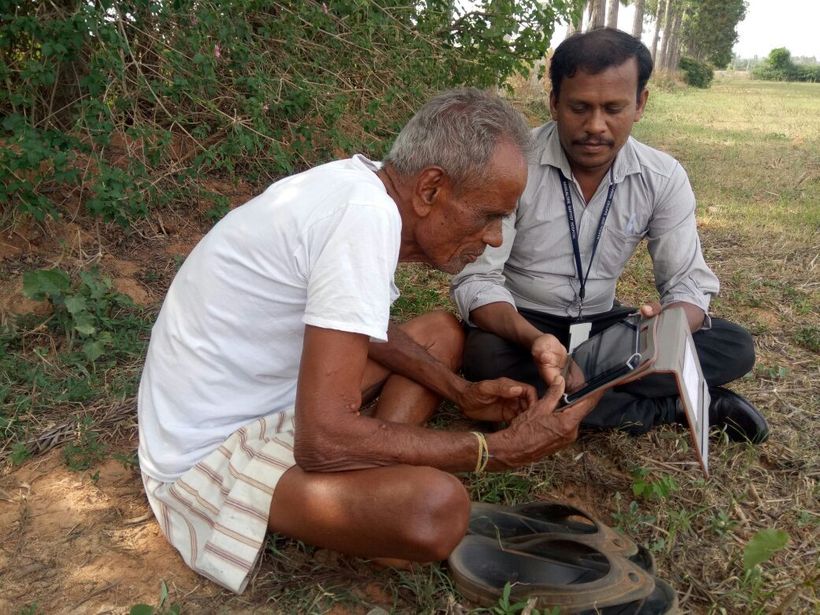
An interdisciplinary team of Baylor University researchers – from nursing and business information systems to art and video game design – and physicians from Bangalore Baptist Hospital in Bengaluru, India, were awarded a 21st Century Knowledge Initiative Grant from the U.S. India Education Foundation (USIEF) to develop a diabetes mobile health app to boost awareness and educate those in India who are most at risk for diabetes. The team is led by Shelby Garner, Ph.D., R.N., assistant professor in Baylor’s Louise Herrington School of Nursing, who has worked in India over the past six years to develop technological health resources. She cited statistics from the World Health Organization that show life expectancy in India is among the lowest in the South East Asian Region and is largely attributed to growing rates of non-communicable diseases, such as diabetes. Contextualized health education is one key to help raise awareness in the country, she said. “There is a need for culturally appropriate health education materials in India,” Garner said. “Our early research showed that technology, such as smartphones and internet accessibility, are widely available in India among health providers, but most technological educational resources were developed in the West and do not effectively translate to the Indian context.” Physicians from Bangalore Baptist Hospital will provide cultural context and help identify important medical content to be included in the app. “Our diabetes app will feature an interactive 3D animated video with gaming features to help educate patients at risk for diabetes,” Garner said. “Answers to questions addressed in the app include: What is diabetes? What happens if I have diabetes? How do I prevent and treat diabetes? What do I do now?” The app also serves as a data collection tool to help researchers determine if the video is improving participants’ knowledge on diabetes. Community health workers employed by Bangalore Baptist Hospital will use the app as they visit with people in rural villages and urban slums during door-to-door health education visits, Garner said. The research team will compare the app’s effectiveness with standard health educational resources previously used. Garner said the USIEF grant was awarded, in large part, due to the success of an earlier project that led to the development of a hypertension app. “Earlier this year, we tested the hypertension app among 346 people in one of the largest slums in Bengaluru, India, and in several rural villages surrounding Bengaluru,” she said. “The app was significantly effective in improving knowledge among participants. We used these results to justify the need to design more resources and applied for funding from the U.S. India Education Foundation.” From previous experience developing and employing the hypertension app, Garner said she knew this new project would require input from a variety of perspectives. “I’ve realized some of the ‘big picture’ challenges in health education, and it will take a team of experts to make this happen,” she said. Team members are: • Shelby Garner, Ph.D., R.N., assistant professor in Baylor’s Louise Herrington School of Nursing • Dr. Carol Elizabeth George, community health physician, Bangalore Baptist Hospital • Dr. Gift Norman, community health physician, Bangalore Baptist Hospital • Dr. Kingsly Victor, internal medicine physician, Bangalore Baptist Hospital • Hope Koch, Ph.D., associate professor of business information systems, Baylor’s Hankamer School of Business • Phil Young, Ph.D., assistant clinical professor of business information systems, Baylor’s Hankamer School of Business • Julia Hitchcock, M.F.A., associate professor of art, Baylor’s College of Arts & Sciences • Matthew Fendt, Ph.D., lecturer in computer science, Baylor’s School of Engineering and Computer Science The grant also will fund exchange teams of researchers and faculty from India to come to the U.S. and for Baylor team members to go to India to collaborate on the research for the next two years. The first team from India is due in late October. “We are really excited about the work we will do together with our Indian partners over the next two years,” Garner said. ABOUT BAYLOR UNIVERSITY Baylor University is a private Christian University and a nationally ranked research institution. The University provides a vibrant campus community for more than 17,000 students by blending interdisciplinary research with an international reputation for educational excellence and a faculty commitment to teaching and scholarship. Chartered in 1845 by the Republic of Texas through the efforts of Baptist pioneers, Baylor is the oldest continually operating University in Texas. Located in Waco, Baylor welcomes students from all 50 states and more than 80 countries to study a broad range of degrees among its 12 nationally recognized academic divisions. ABOUT LOUISE HERRINGTON SCHOOL OF NURSING The Baylor University Louise Herrington School of Nursing (LHSON) located in Dallas was established in 1909 as a diploma program within Baylor Hospital in Dallas, which is now Baylor University Medical Center, and in 1950 became one of the six degree-granting schools of Baylor University. The first Baccalaureate degrees were granted in 1950 establishing the school among the earliest baccalaureate nursing programs in the United States. In 1999, the School was renamed the Baylor University Louise Herrington School of Nursing after Louise Herrington Ornelas, a 1992 Baylor Alumna Honoris Causa, who made an endowment gift to the school. Accredited by the Commission on Collegiate Nursing, LHSON offers Bachelor of Science in Nursing (B.S.N.) degrees through a traditional program and FastBacc (one-year accelerated program). LHSON also offers an online Master of Science in Nursing (M.S.N.) Leadership and Innovation program, as well as Doctor of Nursing Practice (D.N.P.) programs to include Family Nurse Practitioner (F.N.P.), Nurse-Midwife (C.N.M.) and Neonatal Nurse Practitioner (N.N.P.). LHSON was featured in U.S. News & World Reportfor the 2018Best Graduate Schools ranking the D.N.P.program in the top 50 U.S.nursing schools at No. 46. The Baylor M.S.N.program is ranked at No. 56and the Nurse Midwifery Program ranked No. 10. Baylor’s M.S.N. in Nursing Leadership andInnovation Online Program ranked No. 39 in the 2018U.S. News Best Online Graduate Programs. For more information, www.baylor.edu/nursing.