Experts Matter. Find Yours.
Connect for media, speaking, professional opportunities & more.

The project is a collaboration between Aston University, the University of Sheffield and The Resolution Foundation The project aims to leverage new, big data to help understand regional economic disparities It is funded by the Economic and Social Research Council (ESRC). Aston University, in collaboration with the University of Sheffield and The Resolution Foundation, has launched a significant research project to understand regional productivity and wage disparities in the UK. The project has received £300,000 in funding from the Economic and Social Research Council (ESRC) to uncover the factors driving economic imbalances using recent, big data. The research will analyse how various factors such as workers' education, location choices, business types and sizes and regional infrastructure contribute to wage and productivity differences over the past 20 years. The aim is to understand these differences and suggest practical solutions for national and local governments. Researchers will explore potential drivers of regional productivity gaps, including the clustering of highly skilled workers, regional industrial structures, and local endowments like transport links and housing availability. The findings will help identify effective policy measures to reduce these imbalances. This project also aims to demonstrate how data analysis can help understand regional economic disparities. By reducing start-up costs for future research, it will build a community focused on tackling spatial economic imbalances. Dr Anastasios Kitsos, a senior lecturer in economics at Aston Business School and principal investigator (PI) on the project, said: “This project will analyse the relative importance of productivity drivers using novel, granular data from linked administrative datasets covering workers, firms and localities in England since the 2000s. “This analysis will shed light into how much spatial productivity gaps can be explained by the characteristics of people, firms and places over time, and identify intrinsically more productive locations. “Understanding and addressing the root causes of the UK's severe spatial disparities in economic performance is crucial for fostering inclusive, regionally balanced growth and enhancing national productivity. This project aims to provide actionable insights and build a foundation for future research and policy development in this critical area. “The results will be shared in a comprehensive report detailing these influences over the past 20 years and offering policy recommendations for governments on skills, innovation, infrastructure, and local development strategies.”


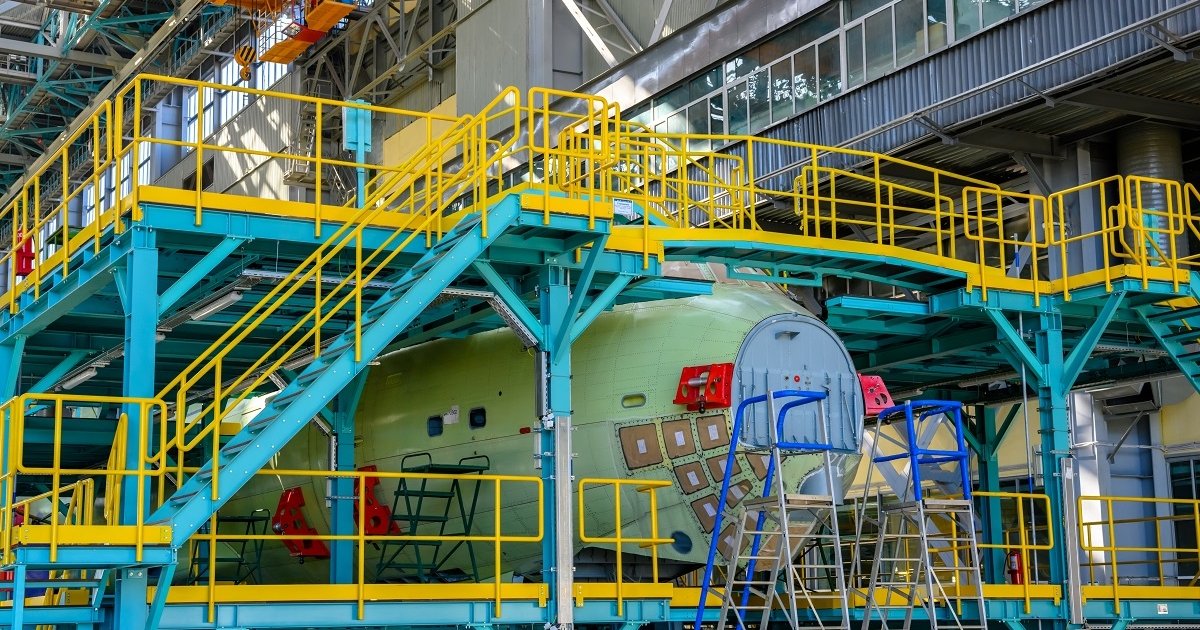
West Sanctions Russian Aviation, But Moscow Decides to Keep Planes Flying Despite Risks When the U.S. and its allies slapped sanctions on Russia for its full-scale invasion of Ukraine, severing aviation links was at the top of the list. Direct flights vanished and Russian airlines lost access to spare parts for their foreign airplanes. In retaliation, Vladimir Putin’s regime impounded foreign aircraft and shut off the world’s largest air space to countries imposing sanctions. Not since the early 1980s—when the U.S. suspended routes to the USSR over the Soviet invasion of Afghanistan, repression in Poland and downing of a Korean Air Lines plane—have aviation ties between the two countries dipped so low. Aviation sanctions today are having an impact but come with a major risk. If the fatal crash of a jetliner killing hundreds is linked to the lack of spare parts, Putin will blame sanctions and the West. The stakes are high as Russia seeks to use any issue from cluster bombs to soccer to widen cracks in Western unity over Ukraine. To get ahead of this, U.S. policymakers and their allies need to better explain the effects of sanctions, why they’re worth the risk and why the Russian state, not the West, is ultimately responsible for any fatal crash. U.S. government assessments place Russian aviation among sectors negatively impacted by sanctions. A closer look shows widening success in degrading this increasingly weak link in Russia’s political economy. By late 2021, foreign aircraft comprised 70% of Russia’s fleet of 801 passenger airplanes, which included 298 Airbuses, 236 Boeings, and 23 other foreign aircraft such as Embraers. In addition, 95% of Russian airline flights were on foreign-made aircraft. Consequently, sanctions aimed at depriving spare parts for foreign airplanes have caused many disruptions such as fare increases to cover higher costs of repairs. Some of Russia’s 53 airlines have periodically suspended or stopped flying some of their foreign planes. Reports of Russian airlines’ cannibalization of foreign aircraft similarly underscore a dire situation. Less well known is how sanctions hurt Russian manufacturing since Western technology is critical to aircraft such as the Sukhoi Superjet 100, which uses a French-Russian engine (though Russians are working on a substitution). Production of the Yakovlev design bureau’s MC-21 passenger airplane faces significant delays due to sanctions that force substitution of its Western-made parts. Sanctions even helped push Russia out of a joint venture with China to produce the CR929 widebody aircraft. While China is happy to help Russia thwart sanctions, this plane needs Western systems that sanctions complicate. In response, Russia has adapted to and thwarted some aviation sanctions, which I predicted would happen because Putin’s regime is reproducing a state-centered aviation sector rooted in the Soviet past. The war has accelerated the state’s growing control over this vital economic sector, which began before Russia’s 2014 invasion of Ukraine. Examples include the state’s 51% ownership of Aeroflot since 1994, the merger of two smaller, state-run airlines in 2003 and the consolidation of aircraft manufacturing in the state-owned United Aircraft Corporation (UAC), which was created in 2006. More recently, the Russian state has helped the country’s airlines weather sanctions by facilitating the illegal confiscation of foreign aircraft. Russian airlines have also proven resourceful by purchasing spare parts through brokers in the United Arab Emirates and Turkey. Better known for supplying Russia with drones, Iran also agreed to provide Russian airlines with spare parts and has been fixing an Aeroflot Airbus for months. Many foreign airlines continue to fly to Russia, and Putin’s regime rewards friendly countries with overflight rights. But the longer sanctions remain, the harder it’s getting for Russia. To regain profitable foreign routes, its airlines are receiving government assistance to legitimately purchase the Western aircraft they illegally seized, although recent holdups in allocating such funds are causing doubts. In a throwback to the Soviet era, Putin’s regime boasts that Russia doesn’t need the West’s airplanes anyway since its one manufacturer, the UAC, will pick up the slack. Such import substitution is unlikely to succeed, as multiple delays suggest. More likely, Russia’s aviation sector will grow more reliant on the state, if not actually part of it like the UAC. This will make Russian aviation less efficient, less innovative and more expensive. Iranian airlines, which have long suffered under foreign sanctions despite some success circumventing them, present their Russian counterparts with a grim vision of the future such as being shut out of lucrative air travel markets and falling behind in emerging aviation technology. How does this shape safety in Russia’s skies? The short answer is that it’s not as bad as headlines suggest and the impact of sanctions is ambiguous at best. Click bait stories paint a dire picture but often conflate commercial, military and general aviation into alarming numbers that do not accurately capture what ordinary passengers face. Some accounts, such as one claiming 120 accidents occurred in 2023, provide few details or sources. Annual safety reports from Russia’s Interstate Aviation Committee (IAC) allow for comparison over time but often obscure Russia’s situation by combining data from each post-Soviet state it monitors. Its 2019 report is mysteriously missing and its decision not to investigate the fatal crash of Yevgeny Prigozhin’s Embraer Legacy 600 plane suggests meddling from above. That said, the IAC source base is the most systematic we have. Keeping in mind the potential for the politicization of its conclusions, what does a critical reading of its data alongside other sources suggest? First, fatal crashes in commercial and general aviation actually decreased in Russia from 18 in 2021 to 13 in 2022, and related deaths decreased from 70 to 24. Data for the first half of 2023 points in the same direction, with six fatal crashes and nine deaths. This trend was likely helped by the 14% decline in traffic after February 2022. While so many fatal crashes sound substantial, all but three in 2021 and all but one in 2022 involved small aircraft under 5,700 kilograms, not the jetliners we associate with most commercial flying. Absolute figures on crashes and deaths capture headlines but they don’t say much about safety without considering their relation to passengers flown or departures. According to the IAC, the rate of aviation accidents and the rate of fatal crashes per one million departures both increased from 2020 to 2021 but then decreased in 2022. The IAC does not single out Russia from other post-Soviet states for this metric. But since Russia has the largest aviation sector among those countries, these data suggest that its aviation safety has not dramatically worsened since early 2022. Indeed, even critics who argue that Russian airlines are less safe partly because of sanctions conclude that “2022 and 2023 were also good years for airline safety [in Russia] compared to 2021.” Comparisons with the U.S. similarly suggest that passenger aviation is not as disastrous as some headlines suggest. The IAC data indicates that Russia and other post-Soviet states are usually but not always behind the U.S. in passenger aviation safety. In 2018, for example, IAC countries reported a 0.8 rate of fatal crashes per 1 million departures of passenger aircraft above 5,700 kilograms. Comparable statistics from the National Transportation Safety Board showed a 0.11 rate for that year for scheduled U.S. carrier flights. In 2019, the rates were 2.3 (IAC) and 0.10 (U.S.), but in 2020, both IAC countries and the U.S. enjoyed a 0.0 rate of fatal crashes. The following year, however, IAC countries reported a 1.9 rate of fatal crashes, whereas the NTSB reported a 0.0 rate.1 Against this background of Russian airline safety, let’s now turn to the impact of sanctions. While some commentators emphasize that no fatal crashes have been tied to sanctions, others claim they make Russian airlines unsafe and that it’s only a matter of time before such a fatal crash happens. Some even argue that life-threatening dangers prove aviation sanctions are effective and could help turn Russians against Putin. To reassure the public, Russian aviation officials insist the country’s airlines are safe despite sanctions, as do Russian business media and aviation journalists. This plays to Putin’s claims to legitimacy based in part on withstanding anything the West throws at him. In sharp contrast, Ukrainian media tells Russians their airlines are a disaster waiting to happen precisely because of sanctions. Independent Russian journalists banished by Putin concur, raising alarms about efforts to cover up the impact of sanctions and about the many ways Russian airlines cut corners on safety. In short, an information war exists around the morbid question of whether a Russian jetliner will crash and the role sanctions could play. Fears of a fatal crash were validated by the emergency landing of a Ural Airlines A320 in September, apparently caused by malfunctioning hydraulics tied to sanctions. But a closer examination by a Russian aviation journalist suggests the pilots played a more important role by pressing on to an airport for which there wasn’t enough fuel. Recent Russian state assessments of aviation safety similarly point to pilot error and poor training as the chief causes of aviation incidents. More generally, airplane disasters are usually caused by a convergence of factors—bad weather, a manageable mechanical failure and pilot error—not just one problem. In public discussions, however, pinpointing sanctions’ role tracks more with the politics of the war than technical expertise. At the end of the day, Russian airlines and aviation authorities are solely responsible for putting planes in the sky and Russians’ lives at risk. They continue to claim that everything is fine. But if a fatal crash of a Boeing or Airbus flown by a Russian airline kills hundreds, I predict this narrative will quickly change. Putin will blame the West as he does for everything else affecting his legitimacy, from Russia’s economic problems and his diplomatic failures to protests against his regime and even the war he started in Ukraine. Such a scenario will be a serious test for policymakers who argue that punishing Russia with sanctions is still worth it. To prepare for this, they need to take a page from the Biden administration’s release of intelligence on Russia’s military buildup before the full-scale invasion: publicize as much intelligence as possible on sanctions and their impact, as well as Russia’s aviation sector and what it does or doesn’t do to ensure safety. As Putin’s regime falls back on Soviet-era secrecy about airline safety, sharing such intelligence will be a powerful tool. This will also contribute to broader Western efforts at combatting Russia’s better known disinformation campaigns such as those denying its human rights abuses in Ukraine.


Expert Perspective: UMW's Steven E. Harris lends his opinion to The Russia File
The following piece was written by Steven E. Harris published by the Wilson Center in April 2024 Sanctions Are Spoiling Russia’s Plans to Make Its Own Airplanes Putin’s regime is feeling confident these days. Advances on the battlefield in Ukraine, expansions in armaments production, and the dithering of Republicans in the U.S. Congress show the war has turned in Russia’s favor. A well-orchestrated presidential election and some real public support buoy the regime. Political opponents are either dead, in prison, or in exile. Putin’s regime has also declared victory in blunting Western sanctions and now plans to permanently thwart them with programs of import substitution. Nowhere is this better seen than in aviation, where the state proclaims it will produce over a thousand new airplanes to replace the foreign aircraft its airlines have long flown. But this bold vision for aviation autarky has little chance of succeeding. Russia’s Short-Term Success in Blunting Aviation Sanctions Thus far, Putin’s regime has weathered aviation sanctions through a two-pronged strategy. First, Russian airlines illegally kept about 400 foreign airplanes—primarily Airbuses and Boeings—owned by foreign leasing companies. Second, the state bankrolled settlement claims in order to purchase some of these airplanes so that airlines could fly them abroad without risk of repossession and reduce their foreign debt. To date, approximately 170 foreign airplanes have been legally acquired in this fashion, and the Ministry of Transportation recently asked for more cash to continue settling claims on the remaining 230 foreign planes. The next question is how long Russian airlines, from the state-owned flag carrier Aeroflot to private companies such as S7 and Ural Air Lines, can continue flying their foreign planes. As I wrote in late October, safety has been degraded far less than predicted. But in the absence of spare parts, software updates, and thorough maintenance by foreign providers, Russian airlines have about two years before they will have to ground Boeings and Airbuses for major repairs performed using third-party spare parts. Anticipating the eventual retirement of foreign planes, Putin’s regime has embarked on a massive program to make all-Russian airplanes. This program promises independence from Western technology and leasing companies but reveals the success of sanctions and fundamental weaknesses in state capacity. The 2030 Aviation Manufacturing Plan Announced in June 2022, the program calls for the state-owned industrial conglomerate Rostec to manufacture 1,036 airplanes with only Russian parts by 2030. In January 2024, the state allocated 283 billion rubles (U.S. $3.1 billion) to help finance the production of 609 airplanes and prioritize medium-haul aircraft in the overall manufacturing plan. Before sanctions, Russian manufacturers produced a small number of narrow body, medium-haul airplanes such as the MC-21 and the Superjet-100 (SSJ-100) with Western components. Twelve SSJ-100s were manufactured in 2021 and ten the following year. Among the aircraft slated to replace Boeings and Airbuses, the plan called for production in 2023 of three medium-haul Tupolev-214 (Tu-214) airplanes and two Superjet-NEW planes (Superjet-100s with all-Russian parts). None of these were built. In fact, the state-owned United Aircraft Corporation (UAC) failed to manufacture a single passenger airplane in 2023. More recently, the UAC conceded further delays of up to two years for rollout of the MC-21, SSJ-NEW, and Tu-214, as well as of smaller, short-haul aircraft such as the Ilyushin-114 (Il-114) and the “Baikal.” The transition to total import substitution is proving difficult, making it impossible to fulfill early targets of the manufacturing plan. By withdrawing access to Western technology critical for manufacturing, sanctions have successfully shut down production. Russian manufacturers will produce at best inferior aircraft that fly shorter routes using more fuel. At its current rate, the UAC is unlikely to manufacture more than a dozen or so showcase narrow body airplanes before 2030. The manufacturer may have better luck producing simpler planes, such as the Baikal, but the state’s injection of 283 billion rubles doesn’t target its production or that of two other short-haul airplanes. Since the UAC will likely not meet the plan’s annual targets any time soon, Russia’s airlines will have to make do with their aging foreign airplanes and acquire spare parts from third parties. Putin admitted as much at his call-in event in December 2023, during which he praised the import-substitution plan but added that the government would continue to purchase illegally held foreign planes. What Will Russia’s Aviation Manufacturing Plan Actually Produce? Rather than produce new aircraft, the immediate purpose of the state’s manufacturing plan is political theater. The infusion of 283 billion rubles was meant to show the public, before the presidential elections, that Putin’s regime is serious about securing commercial aviation and to generate a sense of normalcy in the midst of war. In the long run, the manufacturing plan is more likely to produce further distortions in Russia’s political economy. These include corruption, secrecy, technologically backward aircraft, and even more state control over commercial aviation. The 283 billion rubles will help Rostec keep state-run subsidiaries such as the United Engine Corporation operating with soft budget constraints and favorable contracts that now lack any competition from Western firms. Executives will siphon off their share of the funds, while Putin’s regime will turn a blind eye as long as everyone remains loyal. If the manufacturing plan continues to falter, state-owned manufacturers will have more incentive to keep their failures secret. In 2023, for example, the Ural Civil Aviation Factory kept hidden cost overruns for the Baikal. When news of a 48 percent increase was finally publicized, Putin’s point man for the Far East region, Yuri Trutnev, was incensed and proclaimed, “Our people are like that: they don’t like to share information.” For now, Putin’s regime allows the Russian business media to report fairly openly about the country’s aviation industry on issues such as spare parts and safety, state subsidies, and shortfalls in production. But if commercial flying becomes more precarious and the manufacturing plan remains unfulfilled, the government will likely limit what the public knows about its airlines and long-term plans to maintain them. As the economic historian Mark Harrison shows in his recent book, Secret Leviathan, secrecy in the Soviet era significantly degraded state capacity in many areas, including production. Post-Soviet autocrats face a similar “secrecy/capacity tradeoff,” while newer techniques of disinformation further erode capacity. In attempting to revive the Soviet Union’s autarkic aviation industry, Putin’s regime will find it hard to avoid similar reductions in capacity. Insofar as Russia’s commercial aviation industry is concerned, the lesson for the West is that it pays to play the long game. Russia has effective tools for blunting sanctions in the short run, but in the long run it faces structural obstacles and the absence of Western technology, both of which will degrade this economic sector. The main question remains whether the United States and its allies can keep up the pressure by enforcing sanctions.

Gold medal-worthy experts for Olympic Summer Games coverage
The University of Delaware boasts several experts who can comment on health-related topics such as injuries and training and business-focused areas like marketing and team behavior as they relate to the 2024 Olympic Games in Paris. Matt Robinson Professor, sport management Relevant expertise: Will be in Paris and can discuss the Olympics from an onsite perspective; can give the backstory on The International Coaching Enrichment Certificate Program (ICECP) and what’s new in the Paris Olympics. Link to profile and contact Tom Kaminski Professor, kinesiology and applied physiology Relevant expertise: Can comment on the impact of heading in Olympic soccer and has studied the risks of concussions in sports for nearly three decades. Link to profile and contact Karin Silbernagel Professor, physical therapy Relevant expertise: Research aims to advance the understanding of tendon and ligament injuries and repair. Can also discuss sailing. Link to profile and contact Tim DeSchriver Associate professor, sport management Relevant expertise: Sport finance, economics and marketing Link to profile and contact Other experts: INJURIES: Tom Buckley Associate professor, kinesiology and applied physiology Relevant expertise: Head impacts from boxing. Stephanie Cone Assistant professor, biomedical engineering Relevant expertise: Studies the structure-function relationship that exists in tendons and ligaments with a special interest in changes in this relationship during growth and following injury. Mike Eckrich Clinical instructor, physical therapy Relevant expertise: Weightlifting; can talk about the difference between men’s and women’s injuries and form in the sport. Donald Ford Physical therapy Relevant expertise: Shoulder injuries/rehab expert Jeffrey Schneider Senior instructor, kinesiology and applied physiology Relevant expertise: Athletic training and injury prevention, with a particular interest in ice skating injuries. Worked with athletes competing in Winter Olympics (2002, 2006) as a strength and conditioning coach and athletic trainer. EVENTS: Jocelyn Hafer Assistant professor, kinesiology and applied physiology Relevant expertise: Race Walk events and how biomarkers are used in walking studies. Airelle Giordano Associate professor, physical therapy Relevant expertise: Gymnastics; she was a collegiate gymnast Kiersten McCartney Doctoral student Relevant expertise: Can chat about Paralympic Triathlon (running, hand cycling, swimming). Steve Goodwin Associate professor, health behavior and nutrition sciences Relevant expertise: He is also in Paris leading a study abroad cohort. He has been to multiple Olympics, and can also speak to on-site experience, differences in games, etc. George Edelman Adjunct professor, physical therapy Relevant expertise: How the "underwaters” technique gives Olympians an edge. BUSINESS: John Allgood II Instructor, sport management Relevant expertise: Sport business management, event management SCIENCE: Joshua Cashaback Assistant professor, biomedical engineering Relevant expertise: Specializes in neuromechanics and control of human movement. His research falls under two major themes: The neuroplasticity and adaptation research line tests how reinforcement feedback can subserve our ability to acquire new motor skills.


Can the Olympics Help Americans Forget Politics (at Least for 16 Days)?
Americans are divided on a multitude of different issues, but could the Olympic Games unite the country – at least for the duration of an Olympiad? A Baylor University sports marketing and branding expert says yes, the Olympics can help bring people together even when it’s hard for them to agree about anything else. In his latest Forbes Sports Money column, Baylor University sports marketing and branding expert Kirk Wakefield, Ph.D., executive director of the Curb Center for Sales Strategy in Sports and Entertainment (S3E) program at Baylor’s Hankamer School of Business, analyzed a July 8 national population poll that asked Americans questions about politics but also included the Steen Happiness Index (SHI). The 20-item happiness index provides a series of statements for participants to read and choose the one from each group that describes their state at that moment. Happiness items focus on three types of happy lives: the pleasant life (experiencing and savoring pleasures), the engaged life (losing the self in engaging activities) and the meaningful life (participating in meaningful activities). Are people happier when watching the Olympics? “Happy people follow the Olympics and people who follow the Olympics are happy people,” Wakefield wrote. The higher people scored on the happiness index, the more likely they are to: Watch at least some of the Olympics (49.75%) Root for the U.S. to win (31.8%) Follow the results of the Olympics (28.1%) Read stories about athletes in the Olympics (19.6%) Will talk with others about the Olympics events (18.7%) “Controlling for age, gender, income, education, race and marital status, Americans who follow the Olympics in one, two, or three of these ways are somewhat more happy people (+4% on the SHI). But those who follow the Olympics in four or all five of these ways are significantly happier people (+10% on the SHI),” Wakefield wrote. Who is happiest when the Olympics are on? The happiest? Those would be the Americans who love to talk about the Olympics with others while also cheering for U.S. athletes to win. In fact, they are about 14% happier than those who don’t follow the Olympics, according to the SHI. “Perhaps best of all, people of all political leaning and presidential preferences are equally likely to follow the Olympics. No matter the party, people can party together in unity following the Olympics,” Wakefield wrote. “Maybe we can’t forget politics. But we can give it a break to watch the Olympics.” ABOUT KIRK WAKEFIELD, PH.D. Kirk Wakefield, Ph.D., is The Edwin W. Streetman Professor of Retail Marketing at Baylor University, where he is the Executive Director of the Curb Center for Sales Strategy in Sports and Entertainment (S3E) program in the Hankamer School of Business. The author of Team Sports Marketing and founder of Wakefield Research Partners, Wakefield has conducted fan research on partnerships, pricing, promotions, sportscape, service, and anything else that explains why fans do what they do in nearly every venue in sports, including the NBA, NFL, MLB, MLS, NHL and NASCAR. His scholarly works appear in a breadth of journals: Journal of Marketing, Journal of Consumer Research, Journal of the Academy of Marketing Science, Journal of Service Research, Journal of Retailing, Journal of Advertising, Journal of Advertising Research and Journal of Sport Management, among others. Wakefield is a regular contributor to Sports Money on Forbes.com. ABOUT THE CURB CENTER FOR SALES STRATEGY IN SPORTS AND ENTERTAINMENT (S3E) The Center for Sales Strategy in Sports and Entertainment (S3E) at Baylor University is the only program in the U.S. focused on generating revenue for sports. S3E graduates have career opportunities in sales, digital marketing or business analytics for major league teams, university athletics, corporations and agencies. Baylor is the only university combining learning with practice in partnership with the Athletics Department to prepare graduates for careers in the business of sports. The S3E program is unique in vision, values, mission and culture to transform the business of sports and entertainment. Consistent with the Christian mission and purpose of Baylor University, we prepare passionate servant leaders to positively influence lives in places people go to play or watch others play.


Goizueta Professors on Olympic Fandom, Viewership, Economics of the Games
As we countdown to the July 26 opening of the Olympic Games in Paris, we have two Goizueta Business School experts who can discuss the Olympics, including fandom, viewership, and the economics of the Paris Games. Professor Mike Lewis studies fandom and has spent many years tracking how sports can stay relevant and lucrative across generations. “While the Olympics is presented as a pure sports competition, it’s actually a unique sports entertainment event that leverages underpaid athletes and national identities to create one of the foremost sports-based advertising platforms.” His research on this year’s Olympics finds: Viewership skews to an older audience - with Baby Boomers showing the biggest fandom. The Games have an ongoing challenge to attract a younger audience. The Olympic broadcast will have to work hard to gain the attention of Gen Z and Millennials. Olympic fans are pretty even between genders, which is very different from typical sports fans that are more than 50% male. Check out his latest research: And his latest podcast on the Games: Professor Tom Smith studies the economics of sports. He can discuss: The economic impact of the Games for Paris during what is usually a high tourist season. The economics of decisions by city leaders to repurpose current facilities, landscape and architecture for the Paris games. What other cities can learn from the Paris games. Both Tom and Mike are available to speak with media about the upcoming Olympic Games - simply click on either expert's icon now to arrange an interview today.




It Has to Matter Who Wins: Futurecasting the MLB All-Star Game
Globe Life Field in Arlington, home of the 2023 World Series champion Texas Rangers, will play host to the 94th edition of the Major League Baseball All-Star Game on July 16, marking the second time in franchise history the Rangers will host the Midsummer Classic. MLB’s All-Star game – which matches up the best players from the American League and National League as selected by fans, managers and players – is considered one of best all-star contests among professional sports, said Kirk Wakefield, Ph.D., executive director of the Curb Center for Sales Strategy in Sports and Entertainment (S3E) program at Baylor University’s Hankamer School of Business. However, the game faces continued headwinds, Wakefield said, ranging from lagging viewership to fan voting to a game that is more an exhibition than a meaningful game. Wakefield Weighs In: Five Thoughts on MLB's All-Star Game Is the MLB All-Star game the best All-Star contest of all major leagues? Wakefield: Yes, it’s the only one where players seem to try their best. The NBA and NFL – who have practically given up – have declining viewership since 2011. Unfortunately, MLB All-Star game is on the same downhill skid. (According to Statista, viewership has declined from 22 million in 1993 to seven million in 2023.) The reason why is it doesn’t really matter who wins. If the players don’t care who wins, neither will fans. Further, fans aren’t particularly a fan of only one league so that it really matters if one league has bragging rights. That was less the case years ago before interleague play. How could viewership improve in any of the All-Star games? Wakefield: It has to matter who wins. MLB tried this with home field advantage for the World Series. They gave that up. The current approach in baseball is truly an exhibition because every player gets to play, so it’s like three players at every position playing three innings. That’s not how a manager would play it if trying to win. And it’s not like it used to be when the starters (who were more likely to be the best at their positions) played longer. One suggestion I’ve heard is to make the payoff big enough for the winners so that the players gave it their best. Get a sponsor to put up the money so the winners each make seven figures and could be the players and managers will play more like a team trying to win. Does Monday’s prelude, the hugely popular Homerun Derby, enhance Tuesday’s game? Wakefield: The Homerun Derby is popular because fans do follow individual players. It matters more who wins. That said, the HR derby’s viewership has still lagged. Bottom line: Fans are loyal to teams more than to leagues or individual players. Fan voting… Need we say more? Wakefield: Major market teams with huge fan bases will dominate, but what about the Kansas City Royals, who at one point in the season were on pace for the biggest year-over-year improvement in wins and losses? Given the way fan voting has become essentially a promotion game to get more fans to vote more often, it’s hardly representative of anything other than largest markets with the best promoters. The good news is that the MLB All-Star game will be quite the occasion in Arlington, Texas, with a bevy of game-related activities and events July 13-16. Wakefield: Arlington is an optimal location central to the U.S. with plenty of space to blow out the occasion. It’s like the Texas State Fair came to baseball, where all the rides and attractions are baseball-happy. ABOUT KIRK WAKEFIELD, PH.D. Kirk Wakefield, Ph.D., is The Edwin W. Streetman Professor of Retail Marketing at Baylor University, where he is the Executive Director of the Curb Center for Sales Strategy in Sports and Entertainment (S3E) program in the Hankamer School of Business at Baylor University. The author of Team Sports Marketing and founder of Wakefield Research Partners, Wakefield has conducted fan research on partnerships, pricing, promotions, sportscape, service, and anything else that explains why fans do what they do in nearly every venue in sports, including the NBA, NFL, MLB, MLS, NHL and NASCAR. His scholarly works appear in a breadth of journals: Journal of Marketing, Journal of Consumer Research, Journal of the Academy of Marketing Science, Journal of Service Research, Journal of Retailing, Journal of Advertising, Journal of Advertising Research and Journal of Sport Management, among others. Wakefield is a regular contributor to Sports Money on Forbes.com. ABOUT THE CURB CENTER FOR SALES STRATEGY IN SPORTS AND ENTERTAINMENT (S3E) The Center for Sales Strategy in Sports and Entertainment (S3E) at Baylor University is the only program in the U.S. focused on generating revenue for sports. S3E graduates have career opportunities in sales, digital marketing or business analytics for major league teams, university athletics, corporations and agencies. Baylor is the only university combining learning with practice in partnership with the Athletics Department to prepare graduates for careers in the business of sports. The S3E program is unique in vision, values, mission and culture to transform the business of sports and entertainment. Consistent with the Christian mission and purpose of Baylor University, we prepare passionate servant leaders to positively influence lives in places people go to play or watch others play.

In today's rapidly evolving digital landscape, cybersecurity has emerged as an indispensable aspect of business operations. Automated infrastructures, which include endpoint devices, cloud services, and IoT systems, have made companies more vulnerable to cyber threats. These threats can disrupt operations, lead to financial losses, and compromise sensitive data. Therefore, understanding and implementing robust cybersecurity measures is non-negotiable for modern enterprises seeking resilience and stability. Dr. Walter Schilling, professor and cybersecurity expert at Milwaukee School of Engineering, is available to discuss what companies should consider when designing their cyber defense strategy. To protect their automated infrastructure, businesses must: integrate cybersecurity deeply into their overall strategy adopt a proactive approach to identifying and mitigating risks conduct regular security assessments deploy advanced threat detection systems enforce strong access control policies train employees on cybersecurity best practices foster a culture of vigilance is equally important.



Ethical Implications of AI in Business: Balancing Innovation with Responsibility
Artificial Intelligence (AI) has revolutionized the business landscape, driving innovation and reshaping industries. From automating routine tasks to enhancing customer experiences, AI's applications are vast and rapidly expanding. As businesses stand on the brink of unprecedented technological advancement, they must also navigate the complex web of ethical implications associated with AI deployment. This delicate balance between innovation and responsibility sets the stage for an ongoing dialogue that is crucial for sustainable growth and societal well-being. Dr. Jeremy Kedziora, associate professor and the PieperPower Endowed Chair in Artificial Intelligence at Milwaukee School of Engineering (and former CIA chief methodologist), is available to discuss how these new technologies are enhancing business operations along with their ethical implications: Automating tasks using AI Using large language models like ChatGPT Algorithmic bias in AI systems Transparency in AI decision-making processes Steps needed to create fair and equitable AI solutions


Higher education, biotech and innovation - will the future be part of the 2024 campaign?
As the RNC brings national attention to Milwaukee, discussions are expected to cover pivotal topics such as biotechnology, innovation, and higher education. And as the Republican National Convention 2024 begins, journalists from across the nation and the world will converge on Milwaukee, not only to cover the political spectacle but also to dig deeper on the key issues that may decide the election. To help visiting journalists navigate and understand these issues and how and where the Republican policies are taking on these topics our MSOE experts are available to offer insights. Dr. Wujie Zhang, Dr. Jung Lee, Dr. Eric Baumgartner, Dr. Candela Marini, and Dr. John Walz are leading voices nationally on these important subjects and are ready to assist with any stories during the convention. Dr. John Walz President Expertise: Thought leadership on higher education, relevancy and value of higher ed View Profile “Engineering is not a very diverse field,” Walz said. “I want to continue to push those boundaries and make our programs open, to see more and more under-represented students come here and succeed here, and do well here.” MSOE president John Walz works to make 'hidden gem' not so hidden. Milwaukee Journal Sentinel May 17, 2023 Dr. Wujie Zhang Professor, Chemical and Biomolecular Engineering Expertise: Biomaterials; Regenerative Medicine and Tissue Engineering; Micro/Nano-technology; Drug Delivery; Stem Cell Research; Cancer Treatment; Cryobiology; Food Science and Engineering (Fluent in Chinese and English) View Profile “We accidentally noticed that we can make the hydrogel particle red blood cell shaped,” he explains. “We started then to make artificial red blood cells to mimic pretty much all aspects of red blood cells.” You're Somebody's Type MKE Lifestyle January 24, 2020 Dr. Jung Lee Professor, Chemical and Biomolecular Engineering Expertise: Bioinformatics, drug design and molecular modeling. View Profile Dr. Eric Baumgartner Executive Vice President of Academics Expertise: Thought leadership on higher education, relevancy and value of higher ed, role of A.I. in future degrees and workforce development. View Profile MSOE serves as an educational resource to Wisconsin companies is building an A.I.-ready workforce. In 2018 MSOE was the first in the nation to launch a B.S. in Computer Science with a sole focus on A.I. and machine learning. Wisconsin Governor’s Task Force on Workforce and Artificial Intelligence December, 2023 Dr. Candela Marini Assistant Professor Expertise: Latin American Studies and Visual Culture View Profile “Contrary to stereotypical images of Native Americans trying to stop ‘progress’ by fighting against mines and pipelines projects, the Menominees’ sustainable forestry stands out as a clear example of resource management that actually thinks about, and works for, the future,” said Marini. The MSOE Mindset visits the Menominee Indian Reservation MSOE Online April 11, 2019 . . . Media Relations Contact To schedule an interview or for more information, please contact: JoEllen Burdue Senior Director of Communications and Media Relations Phone: (414) 839-0906 Email: burdue@msoe.edu . . . About Milwaukee School of Engineering (MSOE) Milwaukee School of Engineering is the university of choice for those seeking an inclusive community of experiential learners driven to solve the complex challenges of today and tomorrow. The independent, non-profit university has about 2,800 students and was founded in 1903. MSOE offers bachelor's and master's degrees in engineering, business and nursing. Faculty are student-focused experts who bring real-world experience into the classroom. This approach to learning makes students ready now as well as prepared for the future. Longstanding partnerships with business and industry leaders enable students to learn alongside professional mentors, and challenge them to go beyond what's possible. MSOE graduates are leaders of character, responsible professionals, passionate learners and value creators.