
Experts Matter. Find Yours.
Connect for media, speaking, professional opportunities & more.

Research: Add space salad to the risks astronauts face
University of Delaware researchers grew lettuce under conditions that imitated the weightless environment aboard the International Space Station and found those plants were actually more prone to infections from Salmonella. It’s been more than three years since the National Aeronautics and Space Administration made space-grown lettuce an item on the menu for astronauts aboard the International Space Station. Alongside their space diet staples of flour tortillas and powdered coffee, astronauts can munch on a salad, grown from control chambers aboard the ISS that account for the ideal temperature, amount of water and light that plants need to mature. But as the UD researchers discovered, there is a problem. The International Space Station has a lot of pathogenic bacteria and fungi. Many of these disease-causing microbes at the ISS are very aggressive and can easily colonize the tissue of lettuce and other plants. Once people eat lettuce that’s been overrun by E. coli or Salmonella, they can get sick. With billions of dollars poured into space exploration each year by NASA and private companies like SpaceX, some researchers are concerned that a foodborne illness outbreak aboard the International Space Station could derail a mission. In the new study by UD's team, published in Scientific Reports and in npj Microgravity, researchers grew lettuce in a weightless environment similar to that found at the International Space Station. Plants are masters of sensing gravity, and they use roots to find it. The plants grown at UD were exposed to simulated microgravity by rotation. The researchers found those plants under the manufactured microgravity were actually more prone to infections from Salmonella, a human pathogen. Stomata, the tiny pores in leaves and stems that plants use to breathe, normally close to defend a plant when it senses a stressor, like bacteria, nearby, said Noah Totsline, an alumnus of UD’s Department of Plant and Soil Sciences who finished his graduate program in December. When the researchers added bacteria to lettuce under their microgravity simulation, they found the leafy greens opened their stomata wide instead of closing them. “The fact that they were remaining open when we were presenting them with what would appear to be a stress was really unexpected,” Totsline said. Totsline, the lead author of both papers, worked with plant biology professor Harsh Bais as well as microbial food safety professor Kali Kniel and Chandran Sabanayagam of the Delaware Biotechnology Institute. The research team used a device called a clinostat to rotate plants at the speed of a rotisserie chicken on a spinner. “In effect, the plant would not know which way was up or down,” Totsline said. “We were kind of confusing their response to gravity.” Additionally, Bais and other UD researchers have shown the usage of a helper bacteria called B. subtilis UD1022 in promoting plant growth and fitness against pathogens or other stressors such as drought. They added the UD1022 to the microgravity simulation that on Earth can protect plants against Salmonella, thinking it might help the plants fend off Salmonella in microgravity. Instead, they found the bacterium actually failed to protect plants in space-like conditions, which could stem from the bacteria’s inability to trigger a biochemical response that would force a plant to close its stomata. “The failure of UD1022 to close stomata under simulated microgravity is both surprising and interesting and opens another can of worms,” Bais said. “I suspect the ability of UD1022 to negate the stomata closure under microgravity simulation may overwhelm the plant and make the plant and UD1022 unable to communicate with each other, helping Salmonella invade a plant.” To contact researchers from the team, visit the profiles for Bais or Kniel and click on the contact button.


The Power of Teacher Noticing: A Key to Understanding Engagement in Secondary Mathematics Lessons
Math can be a tough subject for students in K-12, particularly as the years go by. Educators at University of Delaware are working to see how to both identify this trend and potentially find solutions. Amanda Jansen, professor in the School of Education at UD, recently published a paper detailing teacher noticing –– how teachers observe, recognize, and make sense of what's happening in their classrooms. Jansen and others investigated what high school mathematics teachers and their students noticed about students’ mathematical engagement to develop a framework for teachers’ and students’ noticing of mathematical engagement. "We conjecture that researchers can use this framework as an analytic tool to support the field's understanding of student engagement and teachers’ efforts to engage students," the paper notes. Jansen is available for interviews on this topic. She has been quoted in publications like Education Week and recently celebrated as a 2023 Excellence in Scholarly Community Engagement Award recipient. Click the "View Profile" page to contact her.


Big shift coming to the EV industry
Already a pioneer in the industry, the University of Delaware has once again played a key role in taking electric vehicles to the next level. Researchers there helped bring about new automotive standards that will drive lower-cost charging and vehicle-to-grid (V2G) integration and standardize Tesla’s connector so that future U.S.-made EVs will have this technology on it. The two newest standards for electric cars, both approved this month by standards committees of SAE International (formerly the Society of Automotive Engineers), should bring EV drivers great joy, according to Willett Kempton, professor at the University of Delaware’s Center for Transportation Electrification on UD’s Science, Technology and Advanced Research (STAR) Campus. Center director Rodney McGee was chairman of the two SAE committees, while postdoctoral researcher Garrett Ejzak, Kempton and administrative assistant Becky Cox played key roles in the engineering, research and policy work undergirding the new EV standards. “These developments mark a big shift for the EV industry,” said Kempton, who is affiliated with research centers in both the College of Earth, Ocean and Environment and the College of Engineering at UD. “Drivers will gain access to more charging stations and lower-cost charging. They will have new options for using their EV to help fight climate change and even make money when plugged in. These changes are likely to spur even greater adoption of EVs for clean, affordable transportation.” The so-called “V2G standard” (SAE J3068) provides the missing link for widespread use of vehicle-to-grid (V2G) technology, which Kempton and his colleagues invented at UD more than two decades ago. “We’ve been doing V2G for 20 years here at the University of Delaware, wondering when the rest of the world would catch on,” Kempton said. “One key missing piece has been a complete standard for controlling and managing V2G, which now exists within SAE J3068.” V2G allows you to plug your EV into an electrical outlet and send power from the car battery back to your local energy utility, making a little income while helping the nation’s power grid. This is becoming increasingly more important as more renewable sources of energy come online. When the sun isn’t shining or the wind isn’t blowing, EV owners can plug in and “perform important energy-balancing services,” according to Kempton. The savings from V2G can add up. “Our V2G demonstrations show an EV can earn between $100 a year and $1,500 a year. The wide variation is due to different markets and to regulations in different utilities. It also depends on the EV’s capabilities,” Kempton explained. Current EVs need a substantial update or retrofit to be able to do V2G, while new EVs equipped with the signaling technology are expected to be available by 2025. This standard also will make it possible to use your EV as backup power for your house. As extreme weather increases with climate change, that’s a good energy reserve to have when the lights go out. It takes one-and-a-half kilowatts to power the average house, Kempton said. Your electric car can produce 80 kilowatts of power, enough to run a whole house and more. “So, your EV can both help fight climate change and keep your house going when extreme storms happen,” Kempton said. With SAE J3400 now approved, the connector system Tesla developed for EV charging will now be standardized and can be included on future EVs of any brand. The first non-Tesla cars with this technology, also known as the North American Standard Connector, are expected to hit the market in 2025. “This will eliminate Tesla’s monopoly on their charging stations, making them available for use by any new EV,” Kempton said. According to Statista, the U.S. had more than 53,000 public EV charging stations and over 138,000 public charging outlets in May 2023. Visit Kempton's profile and click on the contact button to arrange an interview.


Small island states forging climate legacy
Comprising nations that are often overshadowed by larger counterparts on the economic stage, the Alliance of Small Island States (AOSIS) has become a formidable presence in shaping the discourse around climate change. Despite their limited economic clout, the AOSIS group wields influence by virtue of their vulnerability to the frontlines of climate impacts, making them pioneers in advocating for climate justice. Now at the heart of global climate negotiations, the AOSIS group has successfully spearheaded the establishment of a breakthrough in climate justice: A dedicated fund geared towards assisting less developed nations in bolstering their adaptation and resilience efforts. Kalim Shah, associate professor of energy and environmental policy at the University of Delaware, can comment on AOSIS and its role at The United Nations Framework Convention on Climate Change (also known as UNFCCC). He makes the following points: The AOSIS group, which is the negotiating body for small island developing states (SIDS) in The United Nations Framework Convention on Climate Change (UNFCCC), has emerged over the last decade as a major force in the global negotiations (even though the group comprises of small island nations which are typically not significant economic powerhouses=). They continue to lead on a number of key components of the UNFCCC climate agreement and wield this power largely because small islands are on the frontlines of climate impacts like seal level rise and are among the first to be impacted, even as they hold "no responsibility" for global warming. Small island states have now successfully led the negotiations for and approval of acknowledgement of "loss and damage" and a specific new loss and damage fund. This fund is dedicated to helping less developed countries with their adaptation and resilience building needs. “Loss and damage” is a general term used in UN climate negotiations to refer to the consequences of climate change that go beyond what people can adapt to, or when options exist but a community doesn’t have the resources to access or utilize them. This could be a turning point for the Alliance of Small Island States, since over 70% of climate funds to date have been allocated or distributed to climate mitigation efforts and very little to the SIDS. Since SIDS do not account for massive amounts of Greenhouse gas emissions, this was of little real help to them. But now the global consensus is understanding that the 1.5 degrees threshold of the Paris Accord will be passed and more efforts on the adaptation side must be available for the most vulnerable, such as SIDS to cope with climate impacts that are inevitable. To set up an interview with Professor Shah, visit his profile and click on the "contact" button.


ChristianaCare Earns National Recognition for Support of Life-Saving Organ and Tissue Donation
ChristianaCare has earned the highest level of national recognition from the U.S. Health Resources and Services Administration (HRSA) for its outstanding support of organ and tissue donation. HRSA grants the Platinum Award, its top honor, to health systems that promote donation in their workplace and community through a national campaign known as DoNation. This campaign focuses on raising awareness of the critical need for organ and tissue donors. “This recognition belongs to all the ChristianaCare caregivers, especially the critical care nurses and physicians who help with compassion and generosity in supporting the gift of life to those in need of a transplant,” said Jason Rolls, M.D., FACS, chief and surgical director of the Kidney Transplant Program at ChristianaCare. “This recognition also is a testament to the generosity of our communities, who have said ‘yes’ to organ donation.” Delaware’s Only Kidney Transplant Program Based at Christiana Hospital, ChristianaCare’s Kidney Transplant Program is the only adult transplant center in Delaware and the only one between Philadelphia and Baltimore. Since opening in 2006, the program has performed more than 400 transplants. The program also helps more than 1,000 patients each year by providing services for kidney transplant, living donation evaluation and waitlist management, as well as post-donation and post-transplant care. The program is approved by Medicare and the Organ Procurement and Transplantation Network. “The sooner we can provide kidney transplants to patients on dialysis, the better the chances to improve both the extent and the quality of their lives,” Rolls said. “Along with our clinical teams at ChristianaCare, we also are grateful to HRSA and the Gift of Life Donor Program in Philadelphia for their commitment to healing lives through the support of organ transplantation.” ChristianaCare works closely with Gift of Life Donor Program, the region’s nonprofit organ procurement organization, to support donation. ChristianaCare’s engagement and advocacy includes monthly donation council meetings, tabling events and educational sessions for its health care team. In addition, ChristianaCare holds an annual flag-raising ceremony each April as part of National Donate Life Month. “ChristianaCare and our hospital partners are vital to our life-saving mission,” said Rick Hasz, president and CEO of Gift of Life Donor Program. “In fact, ChristianaCare is one of the leading hospitals for donation in our region; its Newark and Wilmington campuses have combined to provide compassionate care and support for 50 donor heroes and their families, resulting in 120 life-saving organs for transplant for waiting patients during the first eleven months of 2023. We thank the ChristianaCare team for its outstanding commitment to saving lives through donation and caring for the health of our community.” In the United States, more than 90% of adults support organ donation, but only 60% have signed up to become donors. With a new person added to the national transplant waiting list every 10 minutes, more organ and tissue donors are needed to help save lives. Visit www.organdonor.gov to learn more about organ and tissue donation, and sign up as a donor at www.donors1.org/register.



(WILMINGTON, Del. – December 1, 2023) ChristianaCare is investing $1 million in local nonprofit organizations to improve health for communities in Delaware, Pennsylvania and Maryland. Announced during a special event Thursday at Ezion Fair Baptist Church in Wilmington’s Southbridge neighborhood, the funding was given to 19 nonprofits through ChristianaCare’s Community Investment Fund. The fund supports partnerships to build the collective capacity of communities to address social, behavioral and environmental factors that impact health. “In order to improve health equity and accelerate progress in addressing the social drivers of health, we need partners,” said Bettina Tweardy Riveros, chief public affairs officer and chief health equity officer at ChristianaCare. “While ChristianaCare provides excellent health care, we also understand that we are not the experts on every social driver of health. And that’s why we are committed to strengthening these organizations and enhancing their ability to make a positive impact. Together, we are creating health in the neighborhoods and communities we serve.” As an anchor institution in the community, ChristianaCare invests in community health improvement programs as a core component of its community benefit activities. To date, ChristianaCare has provided more than $4 million to 52 community organizations through its Community Investment Fund, which was established in 2019. This year’s awardees received funding to support community health improvement initiatives in high-need communities to address a diverse array of health-related needs, including safe housing, access to nutritious food – and even climate change, which the White House recently highlighted as a social driver of health. One of the organizations that received a grant is Delaware Humanities, which provides educational and cultural opportunities to help Delawareans gain a deeper understanding of human identity. The Wilmington, Del.-headquartered nonprofit will use its grant to develop environmental justice toolkits designed to inspire, facilitate and guide conversations about the importance of environmental issues in Delaware. “Major focus areas at our organization include health and environment, which impact human behavior and our collective sense of well-being,” said Michele Anstine, executive director of Delaware Humanities. “ChristianaCare’s grant will help us empower our communities so they can more truly understand the deep connection between health and their environment and its profound impact on the human experience.” Good Neighbors Home Repair, headquartered in Kennett Square, Pennsylvania, received a grant to expand its free home repair services to houses for low-income households, making their homes safer, healthier and more livable. “Many of the houses that we repair belong to people who are coming home after a hospital discharge,” said Brad Dunn, advancement director for Good Neighbors Home Repair. “They often are returning to homes with broken handrails and misshapen steps but are unable to pay for repairs because they live on fixed incomes. We are deeply appreciative that ChristianaCare is supporting our efforts to provide services that keep our clients safe, healthy and at home.” Recipients were selected based on the quality of their proposals and implementation plans, and on the alignment of their proposals with the key priorities of ChristianaCare’s Community Health Needs Assessment and Community Health Implementation Plan. The funded initiatives will be implemented throughout the upcoming year. The 19 latest Community Investment Fund recipients are: AIDS Delaware. Bayside Community Network, Inc. Children & Families First. Cornerstone West CDC. Deep Roots, Inc. Delaware 211. Delaware Center for Justice. Delaware Coalition Against Domestic Violence. Delaware Humanities. Delaware Interfaith Power & Light. Good Neighbors Home Repair. Green Beret Project. Healthy Food for Healthy Kids. Project New Start. Saint Patrick'’s Center. Sussex County Habitat for Humanity. The Resurrection Center. YMCA of Delaware. YWCA Delaware.


Unveiling the Emotional and Psychological Rewards of Gift-Giving
During the holiday season, the spirit of giving resonates with joy and warmth, extending beyond mere material exchange. Philip Gable, a professor of psychological and brain sciences at the University of Delaware, asserts that there's a science behind gift-giving, encompassing emotional nuances applicable to charitable work. Gable emphasizes that the significance of a gift contributes to the happiness derived from giving, taking various forms, from a personal investment of time to a budget-conscious monetary contribution. It transcends mere obligation, aiming to create a resonant impact. The professor has expertise in emotion and motivational science and can discuss this nuance, especially as we enter the winter holiday season. He can be reached by clicking his "View Profile" button.


Three strategies for dealing with toxic positivity in the workplace
Every workplace needs its cheerleaders who work lift their teammates up when the chips are down. But sometimes things really are that bad, and according to UD career expert Jill Gugino Panté, if that’s not acknowledged and dealt with, the situation will go further south. Panté, director of the Lerner Career Services Center at the University of Delaware, offered three tips for dealing with what is known as “toxic positivity.” Don’t force it. One example of toxic positivity in the workplace is always having to display and present positive emotions even when you might be feeling the opposite. So, feelings of frustration, anger or sadness are not acceptable on any given day. Forcing this type of toxic positivity can actually do the opposite and create feelings of resentment and burnout. Share with your supervisor. As an employee in this environment where toxic positivity runs rampant, you may want to have a one-on-one conversation with your supervisor to discuss the culture and ramifications of not being able to display authentic emotions. Perhaps letting your supervisor know that there are negative feelings festering under the “positive outside” that should be addressed. If you don’t feel comfortable going to your supervisor, find an advocate within the organization. And if you feel brave enough, try playing devil’s advocate in a meeting and state that discussing all angles could be helpful in problem solving. Be proactive with direct reports. Another example of toxic positivity is that everything, no matter the situation, is going to be alright. Sometimes situations are not going to turn out for the better. Sometimes situations are awful and horrible and people need to be allowed to feel that way. This constant “look on the bright side” can diminish a person’s experiences and feelings. It silences those who want to be able to express outrage, anger or sadness and doesn’t provide a supportive workplace. Eliminating this behavior starts at the top with creating an environment where people feel safe to express dissenting opinions or feelings. Panté is available for interviews. To set one up, simply click on her profile.
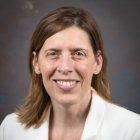

University of Delaware researcher one of 500 contributors to Fifth National Climate Assessment
A.R. Siders, core faculty with the University of Delaware's Disaster Research Center, is one of 500-plus experts who developed the Fifth National Climate Assessment (NCA5), the preeminent source of authoritative information on the risks, impacts and responses to climate change in the United States. Leaders and practitioners highlighted the findings and raised awareness of climate impacts and solutions at a release event on Nov. 14. White House and climate leaders from across the country elevated the key themes of NCA5 and further highlight the Biden Administration’s whole-of-government approach to mitigating and adapting to climate change. Siders focuses on managed retreat, which is the purposeful movement of people, buildings and other assets from areas vulnerable to hazards. She also specializes in climate change adaptation decision-making and evaluation in general: how and why communities decide when, where, and how to adapt to the effects of climate change and how these decisions affect risk reduction and equity outcomes. Joining Siders on the NCA5 were Jing Gao, Assistant Professor of Geospatial Data Science, and Kimberly Oremus, assistant professor of marine science and policy. Siders is available for interviews. Click on her profile to connect.


How Diverse Crop Mixes Can Help Solve the Water Scarcity Crisis
How exactly can alternative crop mixes come to our rescue in this water scarcity crisis? Different crops have different water needs in order to grow without stress. And it is often the case that the thirstiest crops are grown in places where little water is available. Shifting crop mixes to crops that require less water but still ensure farmer profits is a promising way to reduce the amount of water needed to irrigate crops and to avoid conditions of water scarcity. Kyle Davis, assistant professor in Geography and Spatial Sciences at the University of Delaware, can offer commentary on this. He is an expert in food systems, sustainability, global environmental change and geospatial data science among other things. Diverse crop mixes can save water, maintain economic output, and provide for the needs of aquatic ecosystems. Davis and others recently released a study that looks at issue. "These findings demonstrate strong opportunities for economic, food security and environmental co-benefits in irrigated agriculture and provide both hope and direction to regions struggling with water scarcity around the world," the study notes. Davis has been featured in publications such as Earth.com and Phys.org and was recently awarded an Early Career Award for pioneering global research in sustainable agricultural food systems. He can be contacted by clicking the "View Profile" button.
