
Experts Matter. Find Yours.
Connect for media, speaking, professional opportunities & more.
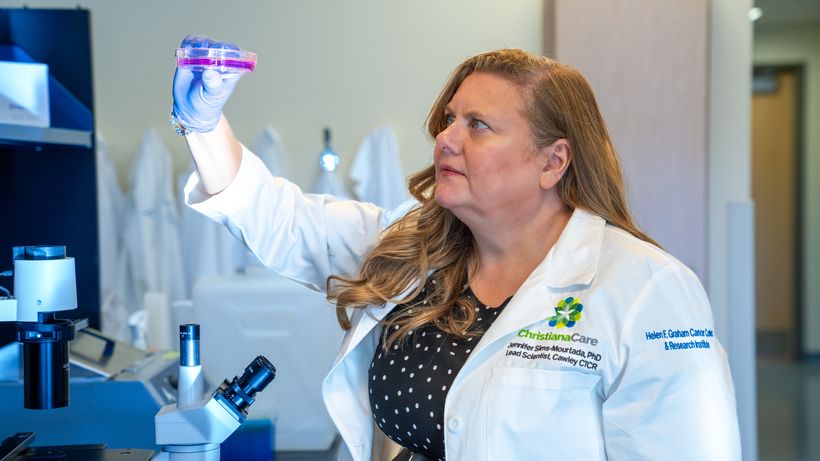
The National Cancer Institute (NCI) has renewed the Cancer Center Support Grant (CCSG) for The Wistar Institute and ChristianaCare’s Helen F. Graham Cancer Center & Research Institute, awarding $16.3 million over the next five years. The renewal received an “exceptional” rating — the highest possible — recognizing the strength and impact of a partnership that combines world-class basic science with leading community-based cancer care. A One-of-a-Kind National Model This collaboration is the only one of its kind in the nation, joining Wistar, an NCI-Designated Basic Cancer Center, with ChristianaCare, one of the country’s premier academic community cancer centers and a National Cancer Institute Community Oncology Research Program. Together, they focus on driving advances against some of the most challenging cancers, including pancreatic, melanoma, breast, lung and ovarian cancers. The grant supports shared infrastructure, scientific resources and programs that enable researchers and clinicians to work seamlessly across both institutions. By connecting laboratory breakthroughs at Wistar with ChristianaCare’s ability to rapidly apply new approaches in a diverse patient population, the partnership accelerates the path from discovery to care. NCI highlighted the collaboration’s effectiveness, noting that “the ongoing alliance with the Helen F. Graham Cancer Center & Research Institute is where most clinical translation into active oncology trials is occurring, supported by productive collaboration between Wistar investigators and Graham Cancer Center oncologists.” Impact on Patients and Community “At ChristianaCare, we are committed to bringing innovation directly to the people we serve. Our collaboration with Wistar connects the best of basic science with the realities of patient care,” said Thomas Schwaab, M.D., Ph.D., Bank of America Endowed Medical Director of the Helen F. Graham Cancer Center & Research Institute. “The NCI’s exceptional score recognizes the promise of this work and the progress we are making together. It is a powerful affirmation that our patients are benefiting from research at the highest level.” “This renewal from the NCI is proof that we are building a model for how cancer research and community care can come together,” said Nicholas J. Petrelli, M.D., director of the Cawley Center for Translational Cancer Research at the Helen F. Graham Cancer Center & Research Institute and associate director of Translational Research at The Wistar Institute Cancer Center. “Through our partnership with Wistar, patients in Delaware and beyond are gaining access to cutting-edge research and therapies for some of the toughest cancers we face.” Dario Altieri, M.D., president and CEO of The Wistar Institute and director of its Ellen and Ronald Caplan Cancer Center, added: “An exceptional rating from the NCI is a reflection of the scientific excellence and real-world impact of this partnership. What makes this collaboration unique is its ability to take discoveries in areas such as melanoma and ovarian cancer and bring them rapidly into clinical practice through ChristianaCare.” NCI underscored the alliance’s reach, noting that “the partnership with the Graham Cancer Center brought cutting-edge cancer research to the community and advanced groundbreaking discoveries to first-in-human oncology clinical trials.” A Pipeline of Research Advancing Faster Than Ever Research achievements supported by the Wistar—ChristianaCare partnership include: Advancing multiple Wistar discoveries into investigator-initiated, first-in-human oncology clinical trials, including studies in pancreatic, melanoma, lung, breast and ovarian cancers. Launching joint research programs across several cancer types, with expanding efforts in cancer risk and population health. Increasing access to high-quality biospecimens — including tumor tissue, biopsies and blood samples — that fuel translational research. Strengthening shared scientific infrastructure supporting immunotherapy research, organoid development, xenograft models and molecular profiling. The Wistar—ChristianaCare partnership, established in 2011, has grown into a nationally recognized alliance that bridges science and medicine. With this CCSG renewal, the collaboration will expand research in pancreatic, melanoma, breast, lung and ovarian cancers and continue advancing prevention, early detection and training programs for the next generation of physician—scientists. The Helen F. Graham Cancer Center & Research Institute depends on grants and community support to keep this work moving forward. To learn more or make a gift, visit Support the Helen F. Graham Cancer Center & Research Institute.

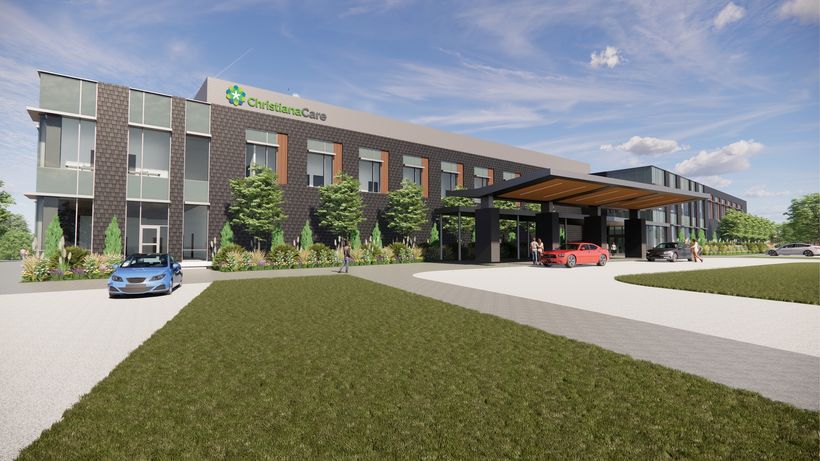
Expanding Comprehensive Cancer Services to Middletown, Delaware
ChristianaCare’s Helen F. Graham Cancer Center & Research Institute is expanding access to high-quality, comprehensive cancer care for residents in Middletown and nearby communities. These services will be offered at the new Middletown Health Center, now under construction and expected to open in May 2027. “Our vision is to expand and grow our services throughout the region so that more patients can access high-quality cancer care close to home,” said Thomas Schwaab, M.D., Ph.D., Bank of America Endowed Medical Director of the Helen F. Graham Cancer Center & Research Institute. “By bringing our full cancer-care team and advanced technology to Middletown, we can provide highly precise, coordinated treatment while maintaining the same high standard of care our patients expect.” The cancer care services offered at the Middletown Health Center will reflect the same high-quality, comprehensive care provided at ChristianaCare’s Helen F. Graham Cancer Center & Research Institute in Newark. Patients will have access to specialists across all major cancer types, supported by the Graham Cancer Center’s participation in the National Cancer Institute Community Oncology Research Program (NCORP), which brings advanced treatments and clinical trials directly to the community. In Middletown, this means coordinated multidisciplinary treatment planning, advanced radiation therapy, infusion services, consultations with oncologists and surgeons, nurse navigation, supportive care, clinical trial participation and both in-person and virtual visit options. Advanced Technology Enhances Precision and Comfort When services open in Middletown, patients will have access to advanced radiation therapy using the Varian TrueBeam linear accelerator, one of the most sophisticated radiation therapy systems available. TrueBeam delivers highly precise, image-guided treatments for a wide range of cancers, allowing physicians to target tumors more accurately while minimizing radiation to healthy tissue. “The TrueBeam system represents a major step forward in how we deliver radiation therapy,” said Adam Raben, M.D., chair of Radiation Oncology at ChristianaCare. “Treatments that once took 30 minutes can now be completed in just a few minutes, with real-time imaging ensuring precision. This means better tumor control, fewer side effects and a more comfortable experience for patients.” A Growing Community with Expanding Health Care Needs Middletown is one of Delaware’s fastest-growing communities, with its population projected to rise 8% by 2029, nearly twice the statewide rate, according to the US Census Bureau. Since 1990, the town’s population has grown more than 550%, and the number of residents age 65 and older has increased 24% since 2020, driving demand for accessible, high-quality health care. With continued growth and an aging population, cancer service demand in Middletown is expected to increase by 11% over the next decade, according to health care forecasts from Sg2, a Vizient company, underscoring the need for expanded local care options. Expanding Access to Meet Future Cancer Care Demand By expanding services in Middletown, ChristianaCare is responding to both the region’s population growth and the increasing need for cancer care. The new site will help patients receive timely diagnosis and treatment while reducing travel time and improving coordination with the full Graham Cancer Center team. “As our community grows, so too does the need for locally accessible, state-of-the-art cancer services,” said Schwaab. “This expansion represents a pivotal investment in the health of the Middletown—Odessa—Townsend corridor and beyond.” $92 Million Investment in Middletown’s Health The $92.3 million Middletown Health Center reflects a deep investment in the health and vitality of the state. It is part of ChristianaCare’s larger plan, announced in July 2025, to invest more than $865 million in Delaware over the next three years. In addition to cancer care, the Middletown Health Center will offer a full range of services, including primary and specialty care, women’s health, behavioral health, cardiovascular care, pediatrics, neurology, imaging, diagnostics and lab testing. The center’s healing environment will also include walking trails and abundant natural light, making high-quality, convenient and coordinated care more accessible and welcoming for patients and families. The 87,000-square-foot Health Center will be located at 621 Middletown Odessa Road, next to ChristianaCare’s existing freestanding emergency department.

Experts share practical guidance for a healthier, happier holiday season
The holiday season is a time of tradition, connection and celebration – but it also brings its own set of challenges, from food safety concerns to emotional stress. University of Delaware experts are available to speak with reporters and provide practical, research-backed guidance to help audiences make the most of the season. Avoid common food safety mistakes Holiday meals are a centerpiece of celebration, but preparing them safely is essential. Diane Oliver, UD Health and Well-being Extension agent, has identified the top five mistakes people make when handling and preparing turkey – and how to avoid them. She can offer timely food safety tips to ensure families enjoy their meals without risk. Protect your mental well-being The holidays can stir up complex emotions as families come together. UD psychology professors Franssy Zablah and Zachary Meehan can provide expert insight into how to maintain mental wellness, manage stress, and set healthy boundaries during holiday gatherings. Find genuine holiday joy Beyond checklists and shopping, how do people actually experience lasting happiness during the holidays? Assistant professor Amit Kumar can share research-backed strategies on pursuing meaningful, authentic joy rather than fleeting holiday pressure. Preserve your decorations for years to come Family ornaments and decorations often carry sentimental value. Art conservation expert Debra Hess Norris can explain how to properly store and care for holiday decorations so they remain vibrant and intact year after year. Connect with these experts All of these University of Delaware experts are available for media interviews and commentary. Reporters and editors interested in speaking with them can reach out to mediarelations@udel.edu for a quick response and support.



ChristianaCare Launches Organoid Core to Personalize Cancer Treatment
ChristianaCare’s Cawley Center for Translational Cancer Research has unveiled a first-of-its-kind organoid core in a community cancer center program. The new laboratory facility within the Helen F. Graham Cancer Center & Research Institute grows and tests living, patient-derived tumor models, giving doctors and researchers a faster, more precise way to identify the therapies most likely to work for each patient. This innovation could change how cancer is treated in Delaware and serve as a model for community centers nationwide. There are only a handful of organoid core centers, or “tumor-on-a-chip” programs, in the United States, and ChristianaCare’s is the first within a community cancer center setting. What the Organoid Core Does Tumor organoids are tiny, three-dimensional cultures grown from a patient’s tumor tissue. They preserve the genetic and molecular traits of the original tumor, making them far more accurate than traditional cell lines. “These mini-tumors enable researchers to screen drugs faster, identify new biomarkers and discover which treatments are most likely to work for each patient,” said Thomas Schwaab, M.D., Ph.D., Bank of America Endowed Medical Director of ChristianaCare’s Helen F. Graham Cancer Center and Research Institute. “This core is a bridge between the lab and the clinic. By growing living tumor models from cells of individual patients, we can test real-world drug responses and tailor treatments for them in ways that were not possible before.” How It Advances Patient Care The organoid core strengthens the Cawley Center's research capabilities by enabling drug screening and biomarker discovery. It will bank organoids representing the wide variety of tumors seen in the community, giving scientists a realistic system for testing therapies. ChristianaCare treats more than 70 percent of cancer patients in Delaware, giving researchers unique access to treatment-naïve samples. These are tumor tissues that have not yet been exposed to chemotherapy or other therapies. Studying them provides a more accurate picture of how cancer behaves naturally and how it might respond to new treatments. Bringing a new cancer drug to patients is expensive and risky. Estimates show it can cost $1.3 to $2.8 billion, with up to a third spent on preclinical development, and only about one in 10 compounds ever reach human trials. Traditional mouse models often fail to fully mimic human tumors, making early testing less reliable. By using organoid screening, the Cawley Center can test therapies more accurately, reduce costs and failure rates and move promising treatments into clinical trials faster. Combined with existing tissue collection programs, clinical trial infrastructure and community partnerships, these resources create a direct pathway to bring lab discoveries to patients faster. Turning Point in Translational Research “Our goal is to shorten the distance between discovery and treatment,” said Nicholas J. Petrelli, M.D., director of the Cawley Center. “Too many promising drugs fail because early models do not capture the complexity of real tumors. The organoid core helps solve that problem. We can now test therapies in models that reflect the patients we actually serve.” “This is a turning point for translational research in community health,” said Jennifer Sims Mourtada, Ph.D., associate director at the Cawley Center. “Organoid technology lets us study cancer in a way that feels personal. We are not just looking at data points. We are studying living models of a patient’s tumor, which can reveal how that person’s cancer might behave or respond to treatment. This approach brings science closer to the people it is meant to help.” Looking Ahead In the coming months, the organoid core will focus on building a diverse biobank of tumors common in Delaware. Plans include collaborations with academic institutions, shared access for external researchers, and development of immune-tumor co-culture models. By combining advanced technology, strong community partnerships and direct patient access, ChristianaCare and the Cawley Center are showing how translational cancer research can thrive in a community setting, making breakthroughs not only in the lab but also in patients’ lives.

UD physicists track one of the most powerful solar flares in nearly two decades
A massive solar flare – possibly the strongest recorded in nearly 20 years – has unleashed a wave of charged particles toward Earth, sparking radio blackouts across parts of Africa and Europe and triggering measurable increases in radiation levels worldwide. At the University of Delaware, physicists Pierre-Simon Mangeard and John Clem are closely monitoring the event through UD’s neutron monitor network, a global system that tracks cosmic radiation from observatories in Newark, Greenland, Canada, Antarctica and Hawaii. “This is a significant event, still in progress,” said Mangeard. The physicists are seeing a roughly 65% increase in ground-level radiation, which is possibly the largest since 2006. These elevated readings are known as a Ground Level Enhancement (GLE) – a rare occurrence caused by high-energy particles accelerated by solar flares that penetrate Earth’s magnetic field and reach the surface. The data being collected now will help researchers better understand how such bursts of solar activity impact Earth’s atmosphere, communications systems and even aviation safety. Clem and Mangeard’s work at UD’s Bartol Research Institute and Department of Physics and Astronomy contributes to global efforts to monitor and predict space weather events, including solar storms and coronal mass ejections. The team’s continuous, real-time data help scientists worldwide assess potential disruptions to satellites, power grids and high-altitude flights. As analysis of this flare continues, UD’s neutron monitor network will remain a key resource for understanding how space weather events ripple through our planet’s systems. Experts available for interviews: • Pierre-Simon Mangeard, research associate, Department of Physics and Astronomy • John Clem, associate professor, Department of Physics and Astronomy To contact Mangeard or Clem, email mediarelations@udel.edu.

Acing AI interviews: Career expert on strategies for job seekers
AI-conducted interviews are becoming a standard step in the hiring process, but many job seekers still aren’t sure how to handle them. University of Delaware career expert Jill Gugino Panté says candidates should treat these algorithm-driven interviews with the same seriousness as traditional ones and details how this can be done. Panté, director of UD’s Lerner College Career Services Center, can discuss what today’s AI interview platforms really measure – from confidence and tone to eye contact and facial expressions – and how job seekers can stand out. She can also explain what recruiters are looking for in the AI-generated summaries that often determine who moves to the next round. Panté’s expert tips include: • Check equipment to make sure everything is working and the software is updated; turn off all notifications to avoid distractions and set up the space with good lighting, a neutral background. • Smile and maintain your energy, as some AI software will assess your tone and engagement. • Prepare as you would for any other interview - review the job description, research the organization, use the STAR method (Situation, Task, Action, Result) when providing examples. • Be sure to look at the camera and not the screen. It might feel awkward but that’s technically where the "eye contact" will be. • Some platforms will allow you to review your recording before submitting. Use this opportunity to take notes about your body language, pacing and clarity. To contact Panté directly and arrange an interview, visit her profile and click on the connect button. Interested journalists can also send an email to MediaRelations@udel.edu.

From classrooms to communities: Rethinking civic engagement in K–12 education
When national headlines focus on school board battles and political polarization, James Bridgeforth, assistant professor of educational leadership at the University of Delaware, is focused on what’s possible instead: building a more inclusive, participatory model of democracy through public education. His research in UD's College of Education and Human Development explores how community voice, equity and local leadership intersect to shape education policy – and how school boards can serve as vital engines for rebuilding public trust in government. "Despite the often sensationalized stories of chaotic school board meetings and the influence of more national "culture war" issues, I still believe that it's possible for people from different backgrounds, experiences, and points of view to come together to figure out how to best serve the needs of all of our children." – Bridgeforth Bridgeforth’s work centers on education governance, policy and leadership, with particular attention to how racism and anti-Blackness manifest in schools and policymaking spaces. His scholarship highlights the importance of inclusive decision-making, arguing that effective education policy must be representative of the diverse communities it serves. He recently published the report "Navigating Democracy in Divided Times" with co-authors on this topic. As part of his work with the Getting Down to Facts III project at Stanford University, Bridgeforth collaborates with researchers studying how to improve California’s TK–12 system and inform the next governor’s education policy agenda. His work documents the complex realities faced by local school board members – often minimally paid community leaders navigating contentious public discourse, social media pressure and limited resources. He notes that this research can be applied to school boards around the country. The next frontier: Youth civic engagement Over the next several years, Bridgeforth aims to deepen understanding of how schools can nurture young people’s civic skills and leadership capacity through participation in governance. One proposed project – "Strengthening Opportunities for Youth Civic Engagement and Student Voice in Educational Governance" – uses participatory action research to explore how student board member policies and engagement practices foster civic agency and democratic mindsets. This collaborative work brings together youth-led community organizations and education researchers to study how these experiences shape long-term civic behavior – from voting to public service. Why it matters Bridgeforth’s research arrives at a pivotal time for American democracy. As trust in public institutions erodes, local school boards remain one of the spaces where citizens can directly shape policy. His work points to a hopeful truth: democracy’s renewal may begin in classrooms, communities and the local school board meetings shaping them. For journalists covering education, race or civic engagement, Bridgeforth offers data-driven insight, lived experience and policy expertise – helping make sense of one of the most pressing questions of our time: How can we build systems that truly serve all students and communities? This work collectively demonstrates a number of promising opportunities to foster more inclusive, community-connected forms of governance, particularly in a time of eroding trust in government institutions." – Bridgeforth ABOUT JAMES BRIDGEFORTH Assistant Professor, College of Education and Human Development James Bridgeforth is an educator, researcher and policy advocate whose work focuses on community voice in education policy and the politics of educational leadership. His scholarship has appeared in top journals including Journal of School Leadership, Education Policy Analysis Archives, Educational Evaluation and Policy Analysis and Educational Administration Quarterly, and he has contributed to Education Week and The Washington Post. A recipient of the National Academy of Education/Spencer Foundation Dissertation Fellowship, Bridgeforth holds a Ph.D. in Urban Education Policy from the University of Southern California, an M.Ed. in Educational Administration and Policy from the University of Georgia, and a B.A. in Political Science and Sociology from Georgia College & State University. Expert available for: Interviews on K–12 school governance, education policy and democracy Commentary on community voice and equity in education decision-making Analysis of youth civic engagement and participatory leadership To contact Bridgeforth, email mediarelations@udel.edu.

In the news: Chronicle features University of Delaware's Career Center
At the University of Delaware, career-development officials believe in teaching students how networking exists all around them, in both curricular and co-curricular realms, by taking career readiness outside the Career Center and infusing networking principles and practices into academic courses, social activities and alumni events. UD's Career Center was highlighted in a recent Chronicle of Higher Education article for innovative and exemplary networking practices and teachings. “If we get students to not think about networking as this static skill I have to build, and it’s more of a natural part of who I am, and it’s in my toolbox, it becomes less arduous, less scary, and easier to do," Rachel Coppola, UD’s Director of Life Design and Career Integration, said in the featured video. Reporters wishing to speak to career experts can reach out to mediarelations@udel.edu.

Everyone from farmers to Fortune 500 companies are now feeling the impact of Trump administration tariffs aimed primarily at reducing the trade deficit and reviving domestic manufacturing. University of Delaware experts offer insight into the economic, political and social impacts of these tariffs and what the future of U.S. trade policy may hold. Experts available: Alice Ba, associate professor, International Relations and Comparative Politics – Topic: Economic implications of tariffs on domestic industries and global supply chains. Dan Green, associate professor, International Relations and Political Theory – Topic: Political dynamics of U.S. trade policy and congressional responses. Dan Kinderman, professor, Comparative Politics and International Relations – Topic: Impacts on international business relationships and corporate strategy. Robert Denemark, professor, International Relations – Global geopolitical implications and international relations perspectives. Stuart Kaufman, professor, Political Science and International Relations – Historical context and comparative analysis of past U.S. trade policies. Journalists who would like to speak with these experts can click on their profiles or email mediarelations@udel.edu.


Pumpkins have become a ubiquitous part of the autumn landscape. How exactly did that happen? Cindy Ott, associate professor of history at the University of Delaware and author of Pumpkin: The Curious History of an American Icon, has been featured twice on NPR this fall to discuss just that. On Morning Edition, she explored the evolution of the jack-o’-lantern – from Celtic folklore to the playful, child-friendly Halloween decorations of today – highlighting how pumpkins became symbols of rural life and harvest traditions. On All Things Considered, Ott traced the word “pumpkin” and the plant itself from Indigenous cultivation in the Americas to its status as a beloved autumn icon, showing how pumpkin imagery and nostalgia help sustain small family farms. Journalists covering food history, cultural traditions, seasonal trends or rural life will find Ott’s insights compelling, blending rigorous research with engaging storytelling. She can speak on pumpkins, jack-o’-lanterns, the cultural power of seasonal foods and how historical symbolism continues to shape modern American practices. Ott can be reached by emailing mediarelations@udel.edu.