
Experts Matter. Find Yours.
Connect for media, speaking, professional opportunities & more.
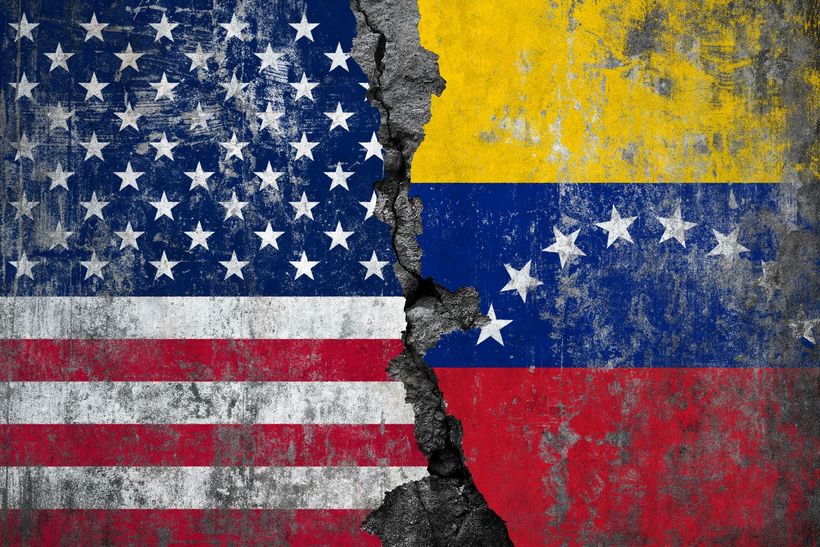
Venezuela: Why Regime Change Is Harder Than Removing A Leader
With global attention on Venezuela following the U.S. removal of Nicolás Maduro, one of the central questions is whether taking out a leader actually changes the political system that put him in power. Two University of Rochester political scientists — Hein Goemans and Gretchen Helmke — study different sides of this issue, and can shed light on why authoritarian regimes often survive even when leaders fall and what the U.S. intervention means for Venezuela and the world order. Goemans specializes in how wars begin and end, regime survival, and why so-called “decapitation strategies” — removing a leader without dismantling the broader power structure — so often fail to produce stable outcomes. His research draws on cases ranging from Iraq and Afghanistan to authoritarian regimes in Latin America. In a recent interview with WXXI Public Media, Goemans warned that removing Maduro does not resolve the underlying system of military and economic control that sustained his rule. Without changes to those institutions, he said, power is likely to remain concentrated among the same elite networks. “The problem isn’t just the leader,” Goemans explained. “It’s the structure that rewards loyalty and punishes defection. If that remains intact, the politics don’t fundamentally change.” Helmke, a leading scholar of democracy and authoritarianism in Latin America, emphasizes that legitimacy, not just force, determines whether democratic transitions take hold. Her research helps explain why democratic breakthroughs so often stall after moments of dramatic change, and why outside interventions can unintentionally weaken domestic opposition movements by shifting power toward regime insiders. “When the institutions and elites remain in place, uncertainty — not democratic transition — often becomes the dominant political reality,” she said. For journalists covering the fast-moving situation, Goemans and Helmke are available to discuss why removing leaders rarely brings the political transformation policymakers expect and what history suggests comes next. They can address: • Why regime-change operations so often backfire, even when dictators are deeply unpopular • What sidelining democratic opposition means for legitimacy • Whether U.S. claims that Maduro is illegitimate hold up under international and U.S. law • How prosecuting a foreign leader in U.S. courts could reshape norms of sovereignty • The risks the U.S. intervention poses to the rules-based international order and NATO • How interventions affect international norms, including sovereignty and the rule of law, and why short-term tactical successes can create long-term strategic risks. • Why treating global politics as a series of “one-off” power plays misunderstands how states actually enforce norms over time • How competing factions inside the U.S. administration may be driving incoherent foreign policy Geomans also brings rare insight into the internal dynamics of U.S. policymaking, having taught and observed Stephen Miller, one of President Donald Trump’s closest aides who is helping shape the administration’s worldview. (Goemans taught Miller at Duke University in 2003.) Click on the profiles for Goemans and Helmke to connect with them.




Lighting the Fires of Memory: The History, Meaning and Modern Significance of Memorial Observances
In the United States, United Kingdom and Canada, special annual days of remembrance bring into focus a simple yet profound truth: societies mark the sacrifice of those who died in military service so that past and future generations will not forget. These observances are layered with history, symbolism and evolving practice. Origins & Historical Development United States – Memorial Day Memorial Day began in the aftermath of the American Civil War. One of the earliest national observances took place on May 30, 1868, when John A. Logan, Commander-in-Chief of the Grand Army of the Republic, proclaimed “Decoration Day” to honour the Union dead by decorating their graves. The date was chosen because spring flowers would be in bloom across much of the country. Over time, as the United States engaged in further conflicts, Decoration Day evolved into a broader day of honouring all U.S. military personnel who died in service. In 1971, Congress made Memorial Day a federal holiday observed on the last Monday of May. United Kingdom and the Commonwealth – Remembrance Day Remembrance Day, also known as Armistice Day, originated from the end of the First World War and is observed on November 11. It commemorates the armistice signed at the 11th hour of the 11th day of the 11th month in 1918. In Britain and the Commonwealth, the red poppy became the enduring symbol of remembrance, inspired by the poppies of Flanders fields and popularized in the years following the war. Canada – Remembrance Day Canada also observes Remembrance Day on November 11. The observance dates back to post-WWI traditions and was officially adopted by Parliament in 1931. It honours the more than 118,000 Canadians who have made the ultimate sacrifice among the 2.3 million who have served in uniform. Meaning and Symbolism At their core, Memorial Day and Remembrance Day are about memory, sacrifice, duty, and gratitude. They serve as communal rituals: visiting cemeteries and memorials, placing flowers or wreaths, holding moments of silence, and wearing symbols like the poppy. In the United States, the act of decorating graves carried not only personal remembrance but also civic pride—honouring those who laid down their lives for their country. In the United Kingdom and Canada, the poppy remains a powerful visual reminder of both the human cost of war and the enduring hope for peace. Modern Significance These observances offer societies a chance to pause, reflect, and connect past sacrifice with present freedoms and responsibilities. In the United States, Memorial Day has also come to mark the unofficial start of summer. Still, national initiatives such as the National Moment of Remembrance invite Americans to refocus on solemn reflection. In Canada and the United Kingdom, Remembrance Day remains deeply ceremonial, marked by two-minute silences, wreath-layings, and public education about the sacrifices of war. For all three nations, these days foster inter-generational understanding—educating younger people about service, sacrifice, and the peace that followed—while reminding governments and citizens alike of ongoing obligations to veterans. Why It Matters to U.S., British, and Canadian Peoples For Americans, Memorial Day symbolizes how unity, freedom, and democracy have been defended and preserved at great cost. For Britons and Canadians, Remembrance Day binds their shared histories of service in global conflicts, linking national identity with sacrifice and resilience. In Canada especially, the day has evolved into a moment not just of military remembrance, but of reflection on what it means to serve a country and commit to peace. Across all three nations, these observances allow public acknowledgment of loss and courage, while anchoring civic values of duty, freedom, and gratitude. Key Themes and Story Angles Continuity and Change: From Decoration Day to Memorial Day, from Armistice Day to Remembrance Day—how the meaning endures through time. Symbols and Rituals: Poppies, wreaths, silences, and ceremonies as expressions of collective memory. Commercialization vs. Solemnity: Balancing commemoration with modern traditions such as travel and leisure. Generational Awareness: Passing remembrance to younger audiences through schools, media, and veterans’ stories. Veterans and Contemporary Service: Linking remembrance with ongoing commitments to those who serve. Community Connection: How towns and cities mark remembrance through local parades, services, and shared stories. Memorial Day and Remembrance Day are more than calendar observances—they are living rituals of collective gratitude. They invite reflection on what has been given and what must be preserved. For the United States, the United Kingdom, and Canada, these days stand as enduring reminders of courage, unity, and the price of peace. Connect with our experts about the history, meaning and modern significance of memorial observances: Check out our experts here : www.expertfile.com


From classrooms to communities: Rethinking civic engagement in K–12 education
When national headlines focus on school board battles and political polarization, James Bridgeforth, assistant professor of educational leadership at the University of Delaware, is focused on what’s possible instead: building a more inclusive, participatory model of democracy through public education. His research in UD's College of Education and Human Development explores how community voice, equity and local leadership intersect to shape education policy – and how school boards can serve as vital engines for rebuilding public trust in government. "Despite the often sensationalized stories of chaotic school board meetings and the influence of more national "culture war" issues, I still believe that it's possible for people from different backgrounds, experiences, and points of view to come together to figure out how to best serve the needs of all of our children." – Bridgeforth Bridgeforth’s work centers on education governance, policy and leadership, with particular attention to how racism and anti-Blackness manifest in schools and policymaking spaces. His scholarship highlights the importance of inclusive decision-making, arguing that effective education policy must be representative of the diverse communities it serves. He recently published the report "Navigating Democracy in Divided Times" with co-authors on this topic. As part of his work with the Getting Down to Facts III project at Stanford University, Bridgeforth collaborates with researchers studying how to improve California’s TK–12 system and inform the next governor’s education policy agenda. His work documents the complex realities faced by local school board members – often minimally paid community leaders navigating contentious public discourse, social media pressure and limited resources. He notes that this research can be applied to school boards around the country. The next frontier: Youth civic engagement Over the next several years, Bridgeforth aims to deepen understanding of how schools can nurture young people’s civic skills and leadership capacity through participation in governance. One proposed project – "Strengthening Opportunities for Youth Civic Engagement and Student Voice in Educational Governance" – uses participatory action research to explore how student board member policies and engagement practices foster civic agency and democratic mindsets. This collaborative work brings together youth-led community organizations and education researchers to study how these experiences shape long-term civic behavior – from voting to public service. Why it matters Bridgeforth’s research arrives at a pivotal time for American democracy. As trust in public institutions erodes, local school boards remain one of the spaces where citizens can directly shape policy. His work points to a hopeful truth: democracy’s renewal may begin in classrooms, communities and the local school board meetings shaping them. For journalists covering education, race or civic engagement, Bridgeforth offers data-driven insight, lived experience and policy expertise – helping make sense of one of the most pressing questions of our time: How can we build systems that truly serve all students and communities? This work collectively demonstrates a number of promising opportunities to foster more inclusive, community-connected forms of governance, particularly in a time of eroding trust in government institutions." – Bridgeforth ABOUT JAMES BRIDGEFORTH Assistant Professor, College of Education and Human Development James Bridgeforth is an educator, researcher and policy advocate whose work focuses on community voice in education policy and the politics of educational leadership. His scholarship has appeared in top journals including Journal of School Leadership, Education Policy Analysis Archives, Educational Evaluation and Policy Analysis and Educational Administration Quarterly, and he has contributed to Education Week and The Washington Post. A recipient of the National Academy of Education/Spencer Foundation Dissertation Fellowship, Bridgeforth holds a Ph.D. in Urban Education Policy from the University of Southern California, an M.Ed. in Educational Administration and Policy from the University of Georgia, and a B.A. in Political Science and Sociology from Georgia College & State University. Expert available for: Interviews on K–12 school governance, education policy and democracy Commentary on community voice and equity in education decision-making Analysis of youth civic engagement and participatory leadership To contact Bridgeforth, email mediarelations@udel.edu.


On Sunday, October 19, at 9:34 a.m., four masked individuals surged into the Louvre’s Galerie d’Apollon from a severed, second-floor window. Hurriedly, they smashed open two display cases, seized eight pieces of jewelry, then shimmied down a ladder and sped off on motorbikes toward Lyons. In seven minutes’ time, in broad daylight, they absconded with an estimated $102 million in valuables from the world’s most famous museum. This past Saturday, October 25, French authorities announced the first arrests in connection with the daring heist. However, despite the police’s progress, the country continues to litigate the matter—embroiled in discussions of heritage, history and national identity. Recently, Roderick Cooke, PhD, director of French and Francophone Studies at Villanova University, shared his perspective on the situation as well as the artifacts lost. Q: The Louvre heist has been described as “brazen,” “shocking” and a “terrible failure” on security’s part. Is there any sort of precedent for this event in the museum’s history? Dr. Cooke: Nothing on this scale has ever happened to the Louvre since its founding as a museum during the Revolution. The closest equivalent is the 1911 theft of the Mona Lisa by a former employee who claimed it should be returned to Italy. However, that was one painting, the heist was not committed by organized crime, and the Mona Lisa did not have the renown it enjoys today. The impact of the theft was thus lower, although it did cause major outrage and a sweeping law-enforcement response at the time. Ironically, that theft is often credited with making da Vinci’s painting the global icon it continues to be. Q: What has the reaction to this event been among the French people? DC: It’s harder to get a sense of reactions across French society, because so much of the aftermath has focused on the intellectual milieux’s opinions. And in those realms, it has immediately become a political football. Individuals positioning themselves as anti-elite or anti-status quo, such as Jordan Bardella of the National Rally party, have called the theft a “humiliation,” immediately tying it to French national prestige. Former President François Hollande has conversely and vainly called for the event to be de-polemicized, citing national solidarity. This is happening because the Louvre is one of the most visible manifestations of French soft power—the most-visited museum anywhere on Earth. As such, anything attacking its integrity becomes an attack on the nation, and how individual French citizens feel about the theft is closely tied to their broader view of the nation. Q: Several of the items stolen from the Louvre once belonged to Empress Eugénie. Could you share a bit of information on her story? DC: Eugénie de Montijo was a Spanish aristocrat who married the Emperor of the French, who ruled as Napoleon III between 1852 and 1870. It was a time of authoritarian repression and sham democracy—Napoleon III installed the Empire through a coup. Its clearest legacy is that Paris looks the way it does today largely because of the thorough modernizations overseen by Napoleon III’s appointee Baron Haussmann. So, Eugénie and her now-lost jewels represent a complex point in French history, when culture and the economy developed quickly, but did so in a climate of fear for any French person who opposed the regime too loudly (like Victor Hugo, who went into exile on the Channel Islands and wrote poems savaging Napoleon III and his deeds). Some accused the Empress of being responsible for the more hardline and conservative stances taken by her husband’s government. On a different note, she was a diligent patron of the arts and arguably the most significant figure in the contemporary fashion world, famous for setting trends such as the bustle that radiated across Europe. This explains the mix of anger and admiration that followed her depending on the sphere she was operating in. A new English-language biography argues that far from being a traditionalist, she was a pioneering feminist by the standards of the time. It looks like her historical importance will continue to be debated. Q: Interior Minister Laurent Nuñez described the stolen items as “of immeasurable heritage value.” How significant of a cultural loss do you consider this theft? DC: These jewels are referred to in French as “les Joyaux de la Couronne” (the Crown Jewels), but of course that phrase lands very differently in republican France than it does across the water in the United Kingdom. The items actually represent several different dynasties of French rulers, some of whom came to power through direct conflict with others. The now-ransacked display at the Louvre smoothed over these historical divisions, for which many French people died over the centuries. President Macron referred to the stolen items as embodying “our history,” which is emblematic of the French state’s work to create a conceptual present-day unity out of the clashes of the past. At a time when France is arguably more divided than at any point since World War II, any unitary symbol of identity takes on greater significance. Q: Do you have any closing thoughts on the artifacts taken and what they represent? DC: I’d reemphasize the previous point about the smoothing effect of the museum display on the violent history that made it possible. Much of the reporting on the stolen jewels lists off the different queens and empresses who owned them, without giving readers a sense of the complicated succession of regime changes and ideologies that put those women in power in the first place. The relative stability of the last 60-odd years is an anomaly in modern French history. This set of jewels and the names of their original owners may seem far removed from the concerns of an ordinary French citizen today, but just beneath their surface is a legacy of changing governments and tensions between social classes that survives in new forms in 2025.


The First Amendment: Foundations, Freedoms, and Why It Still Matters
The First Amendment is more than just words on paper — it’s a bedrock of American democracy. Adopted in 1791 as part of the Bill of Rights, it protects fundamental freedoms: speech, religion, press, assembly, and petition. Its influence ripples through every aspect of civic life, shaping what citizens can say, believe, hear, and demand from government. How It Started In the wake of the Revolutionary War and under the new Constitution, many Americans worried that the federal government could become too powerful — especially over individual rights. To allay those concerns, the Bill of Rights was proposed. The First Amendment was among those first protections ratified in December 1791, explicitly forbidding Congress from making laws that establish religion, restrain free speech or press, or curb the rights of people to assemble and petition their government. Over time, this compact set of protections has been tested, expanded, and clarified. Landmark court decisions and historical crises—from the Sedition Act era in the 1790s, World Wars, civil rights struggles, to modern debates—have shaped how these freedoms are understood in practice. What It Means Today For citizens, the First Amendment offers more than legal guarantees: it gives voice. It underpins political debate, dissent, journalism, artistic expression, religious diversity, protests—and it enables citizens to hold power accountable. At school, at work, on social media, in place of worship, or in the press, these freedoms allow Americans to share ideas, critique policy, and petition for change. But First Amendment rights are not unlimited. Legal doctrine has evolved to balance free speech with other social interests—such as national security, public safety, protection from defamation, or decency norms. The courts continue to adjudicate what constitutes protected speech, what kinds of regulations are permissible, and how emerging issues—like the internet, social media, and new forms of communication—fit into long-standing legal principles. Why This Matters The First Amendment remains essential because it shapes both the rights and responsibilities of citizenship. Without it, political dissent—vital to healthy democracy—can be stifled. Without free press, government actions may go unchecked. Without freedom of religion and conscience, personal beliefs may be coerced or marginalized. As society changes—through technology, demographic shifts, and cultural dialogues—these freedoms are continually negotiated. Understanding the First Amendment helps individuals understand their power and limits. It shows why protests matter, why journalism matters, why speaking up matters. It also frames why legal protection matters in areas such as whistleblowing, religious diversity, and minority rights. Connect with our experts about the history, protections, and current significance of the First Amendment for all Americans: Check out our experts here : www.expertfile.com

This article is republished from The Conversation under a Creative Commons license. Read the original article here. The oil-rich states of Qatar, Saudi Arabia and the United Arab Emirates have a lot going for them: wealth, domestic stability and growing global influence. In recent months, these Gulf kingdoms also appear closer to something they have long sought: reliable U.S. support that has become stronger and more uncritical than ever, just as Iranian power in the region has significantly degraded. In Donald Trump, the nonelected Gulf Arab monarchs have an ally in Washington who has largely shed previous American concerns for democracy and human rights. That the American president made his first scheduled international trip of his second term to Saudi Arabia, Qatar and the UAE only underscores their international clout. Additionally, the popular overthrow of the Assad government in Syria and Israel’s war against Iran and its allies in Lebanon and Yemen have served to greatly weaken Tehran’s perceived threat to Gulf Arab interests. Yet, as an expert on Middle Eastern politics, I believe Gulf Arab countries must still navigate a regional political tightrope. And as the Israeli targeting of senior Hamas leaders in Qatar on Sept. 9, 2025, shows, events by other Middle Eastern actors have a nasty habit of derailing Gulf leaders’ plans. How these countries manage four particular uncertainties will have a significant effect on their hopes for stability and growth. 1. Managing a post-civil war Syria In Syria, years of civil war that had exacerbated splits among ethnic and religious groups finally ended in December 2024. Since then, Arab Gulf countries, which once opposed the Iranian-allied government of Bashar Assad, have been pivotal in supporting new Syrian President Ahmed al-Sharaa. They successfully lobbied the U.S. to drop sanctions. In addition to sharing mutual regional interests with Sharaa, the leaders of Gulf Arab states want a Syrian state that is free from internal war and can absorb the millions of refugees that fled the conflict to other countries in the Middle East. Gulf states can support postwar Syria diplomatically and financially. However, they can’t wish away the legacy of long war and sectarian strife. Israeli attacks on Syrian soil since Assad’s fall, as well as recent outbreaks of fighting in the Sweida region of southern Syria, underscore the ongoing fragility of the Syrian government and concerns over its ability to contain violence and migration outside of its borders. 2. The challenge of regional politics Syria illustrates a broader policy challenge for Gulf states. As their wealth, military strength and influence have grown, these countries have become dominant in the Arab world. As a result, Qatar, Saudi Arabia and the UAE have invested billions of dollars in efforts to influence governments and groups across the world. This includes the mostly authoritarian governments in the Middle East and North Africa, such as Egypt’s. But here, Gulf states are torn politically. If democratic systems form elsewhere in the Arab world, this could encourage Gulf citizens to push for elected government at home. Yet overly coercive Arab governments outside of the Gulf can be prone to popular unrest and even civil war. Propping up unpopular regional governments risks backfiring on Gulf Arab leaders in one of two ways. First, it can entice Gulf states into protracted and damaging wars, such as was the case with Saudi Arabia and the UAE’s failed military intervention in Yemen against the Houthis. Second, it can drive a wedge between Gulf states, as is seen with the current conflict in Sudan, in which the Saudis and Emiratis are backing rival factions. 3. Watching which way Iran will turn Always looming behind complicated Middle Eastern politics is Iran, the historically powerful, populous, non-Arab country whose governing Shiite Islam ideology has been the chief antagonist to the Sunni-led Gulf Arab states since the Iranian Revolution in 1979. Opposing Gulf Arab and American strategic interests, Iran has for years intervened aggressively in Middle Eastern politics by funding and encouraging militant Shiite groups in Iraq, Lebanon, Yemen and elsewhere. An assertive Iran has been especially a thorn in the side of Saudi Arabia, which strives to be the dominant Muslim majority power in the region. Dealing with Iran has required careful balancing from Qatar and the UAE, which are more directly exposed to Tehran geographically and have maintained relatively stronger relations. Given this, Gulf countries may silently welcome the decrease in Iran’s military power in the wake of Israel’s recent war against Iran and its allies, such as Hezbollah in Lebanon, while also fearing further Iranian-Israeli conflict. At the same time, a less powerful Iran runs two types of new potential dangers for Gulf states. Should Iran become more unstable, the resulting turmoil could be felt across the region. In addition, should Iran’s military, policy and economic turmoil lead to a new political system, it could disturb Gulf countries. Neither a Muslim majority democratic government nor a more hard-line nationalist variant in Iran would sit well with nearby Gulf monarchs. Conversely, concerns that the Israeli and U.S. bombing of Iran may actually lead to increased Iranian determination to pursue a nuclear program also worry Gulf leaders. 4. Living with Israel’s military assertiveness Israel, the unquestioned military power and sole nuclear weapons state in the region, has long posed particularly deep political dilemmas to Gulf Arab states. The current challenge is how to balance the immense global unpopularity of the Israeli government’s war in Gaza – including among Gulf Arab citizens – with common strategic interests the Gulf states hold with Israel. Gulf Arab leaders face domestic and regional pressure to show solidarity for Palestinians and their aspirations for statehood. Yet Gulf rulers also share strategic goals with Israel. Along with opposition to Iranian influence, Gulf states maintain strong military links to the U.S, like Israel. They also appreciate the economic and other security value of Israel’s high-tech products, including software used for espionage and cybersecurity. This helps explain the UAE’s 2019 decision to join the short list of Arab states with full diplomatic relations with Israel. Hamas attacked Israel in 2023 in part to stop Saudi Arabia from following suit – something that might have further sidelined Palestinians’ bargaining power. Indeed, moves toward open Saudi diplomatic recognition of Israel were stopped by Hamas’ attack and the global backlash that followed Israel’s ongoing devastation of Gaza. Gulf leaders may still believe that normalized ties with Israel would be good for the long-term economic prospects of the region. And Bahrain and the UAE – the two Gulf Arab states with diplomatic relations with Israel – have not backed away from their official relationship. Yet expanding open relations with Israel further, and taking in other Gulf states, is unlikely without a real reversal in Israel’s policy toward Palestinians in both Gaza and the West Bank. All this is more true in the immediate aftermath of Israel’s attack in Qatar – the first time Israel has launched a direct strike within a Gulf Arab state. That action, even if ostensibly directed at Hamas, is likely to exacerbate tensions not only with Qatar but place increasing stress on the calculus allied Gulf Arab countries make in their dealings with Israel. Tricky way forward for Gulf Arab states These challenges underscore an inescapable truth for Gulf leaders: They are hostage to events beyond their control. Insulating them from that reality takes regional unity. The Gulf Cooperation Council, nearly 45 years old, was established precisely for this purpose. While it remains the most successful regional organization in the Middle East, the GCC has not always prevented major rifts, such as in 2017 when a coalition of Arab states led by Saudi Arabia cut ties with and blockaded Qatar. The conflict was resolved in 2021. Since then, the six members of the GCC have worked together more closely. No doubt, rivalries and disagreements still exist. Yet Arab Gulf leaders have learned that cooperation is useful in the face of major challenges. This can be seen in the recent collaborative diplomatic approaches toward Syria and the U.S. A second lesson comes from the broader Middle East. Key issues are often interdependent, particularly the status of Palestinians. Hamas’ attack on Israel, and the resulting destruction of much of Gaza, resurfaced the deep popularity across the region of addressing Palestinian needs and rights. The monarchs of the Arab Gulf would like to maintain their unchallenged domestic political status while expanding their influence in the Middle East and beyond. However, even when Gulf leaders wish to be done with the region’s challenges, those challenges are not always done with them. Isabella Ishanyan, a UMass Amherst undergraduate, provided research assistance for this article.


Emil Bove’s appeals court nomination echoes earlier controversies, but with a key difference
This article is republished from The Conversation under a Creative Commons license. Read the original article here. President Donald Trump’s nomination of his former criminal defense attorney, Emil Bove, to be a judge on the United States Court of Appeals for the 3rd Circuit, has been mired in controversy. On June 24, 2025, Erez Reuveni, a former Department of Justice attorney who worked with Bove, released an extensive, 27-page whistleblower report. Reuveni claimed that Bove, as the Trump administration’s acting deputy attorney general, said “that it might become necessary to tell a court ‘fuck you’” and ignore court orders related to the administration’s immigration policies. Bove’s acting role ended on March 6 when he resumed his current position of principal associate deputy attorney general. When asked about this statement at his June 25 Senate confirmation hearing, Bove said, “I don’t recall.” And on July 15, 80 former federal and state judges signed a letter opposing Bove’s nomination. The letter argued that “Mr. Bove’s egregious record of mistreating law enforcement officers, abusing power, and disregarding the law itself disqualifies him for this position.” A day later, more than 900 former Department of Justice attorneys submitted their own letter opposing Bove’s confirmation. The attorneys argued that “Few actions could undermine the rule of law more than a senior executive branch official flouting another branch’s authority. But that is exactly what Mr. Bove allegedly did through his involvement in DOJ’s defiance of court orders.” On July 17, Democrats walked out of the Senate Judiciary Committee vote, in protest of the refusal by Chairman Chuck Grassley, a Republican from Iowa, to allow further investigation and debate on the nomination. Republicans on the committee then unanimously voted to move the nomination forward for a full Senate vote. As a scholar of the courts, I know that most federal court appointments are not as controversial as Bove’s nomination. But highly contentious nominations do arise from time to time. Here’s how three controversial nominations turned out – and how Bove’s nomination is different in a crucial way. Robert Bork Bork is the only federal court nominee whose name became a verb. “Borking” is “to attack or defeat (a nominee or candidate for public office) unfairly through an organized campaign of harsh public criticism or vilification,” according to Merriam-Webster. This refers to Republican President Ronald Reagan’s 1987 appointment of Bork to the Supreme Court. Reagan called Bork “one of the finest judges in America’s history.” Democrats viewed Bork, a federal appeals court judge, as an ideologically extreme conservative, with their opposition based largely on his extensive scholarly work and opinions on the U.S. Court of Appeals for the District of Columbia Circuit. In opposing the Bork nomination, Sen. Ted Kennedy of Massachusetts took the Senate floor and gave a fiery speech: “Robert Bork’s America is a land in which women would be forced into back-alley abortions, blacks would sit at segregated lunch counters, rogue police could break down citizens’ doors in midnight raids, schoolchildren could not be taught about evolution, writers and artists could be censored at the whim of government, and the doors of the federal courts would be shut on the fingers of millions of citizens for whom the judiciary is often the only protector of the individual rights that are the heart of our democracy.” Ultimately, Bork’s nomination failed by a 58-42 vote in the Senate, with 52 Democrats and six Republicans rejecting the nomination. Ronnie White In 1997, Democratic President Bill Clinton nominated White to the United States District Court for the Eastern District of Missouri. White was the first Black judge on the Missouri Supreme Court. Republican Sen. John Ashcroft, from White’s home state of Missouri, led the fight against the nomination. Ashcroft alleged that White’s confirmation would “push the law in a pro-criminal direction.” Ashcroft based this claim on White’s comparatively liberal record in death penalty cases as a judge on the Missouri Supreme Court. However, there was limited evidence to support this assertion. This led some to believe that Ashcroft’s attack on the nomination was motivated by stereotypes that African Americans, like White, are soft on crime. Even Clinton implied that race may be a factor in the attacks on White: “By voting down the first African-American judge to serve on the Missouri Supreme Court, the Republicans have deprived both the judiciary and the people of Missouri of an excellent, fair, and impartial Federal judge.” White’s nomination was defeated in the Senate by a 54-45 party-line vote. In 2014, White was renominated to the same judgeship by President Barack Obama and confirmed by largely party-line 53-44 vote, garnering the support of a single Republican, Susan Collins of Maine. Miguel Estrada Republican President George W. Bush nominated Estrada to the Court of Appeals for the District of Columbia Circuit in 2001. Estrada, who had earned a unanimous “well-qualified” rating from the American Bar Association, faced deep opposition from Senate Democrats, who believed he was a conservative ideologue. They also worried that, if confirmed, he would later be appointed to the Supreme Court. However, unlike Bork – who had an extensive paper trail as an academic and judge – Estrada’s written record was very thin. Democrats sought to use his confirmation hearing to probe his beliefs. But they didn’t get very far, as Estrada dodged many of the senators’ questions, including ones about Supreme Court cases he disagreed with and judges he admired. Democrats were particularly troubled by allegations that Estrada, when he was screening candidates for Justice Anthony Kennedy, disqualified applicants for Supreme Court clerkships based on their ideology. According to one attorney: “Miguel told me his job was to prevent liberal clerks from being hired. He told me he was screening out liberals because a liberal clerk had influenced Justice Kennedy to side with the majority and write a pro-gay-rights decision in a case known as Romer v. Evans, which struck down a Colorado statute that discriminated against gays and lesbians.” When asked about this at his confirmation hearing, Estrada initially denied it but later backpedaled. Estrada said, “There is a set of circumstances in which I would consider ideology if I think that the person has some extreme view that he would not be willing to set aside in service to Justice Kennedy.” Unlike the Bork nomination, Democrats didn’t have the numbers to vote Estrada’s nomination down. Instead, they successfully filibustered the nomination, knowing that Republicans couldn’t muster the required 60 votes to end the filibuster. This marked the first time in Senate history that a court of appeals nomination was filibustered. Estrada would never serve as a judge. Bove stands out As the examples of Bork, Estrada and White make clear, contentious nominations to the federal courts often involve ideological concerns. This is also true for Bove, who is opposed in part because of the perception that he is a conservative ideologue. But the main concerns about Bove are related to a belief that he is a Trump loyalist who shows little respect for the rule of law or the judicial branch. This makes Bove stand out among contentious federal court nominations.


James Sample Writes Op-Ed for Verdict
Hofstra Law Professor James Sample penned the op-ed “Bribery Enters its Golden Age,” published recently on the website Verdict. Verdict publishes legal analysis and commentary from Justia.com Excerpt: In a more rational time, the transfer of millions of meme-coin laundered dollars to political leaders’ personal coffers would be an existential scandal. The same would be true of political leaders extracting policy support in exchange for abandoning unrelated criminal prosecutions. Likewise, for “gratuities” paid to government officials by government contractors. Each individual instance is a serious concern. Yet collectively, even more is at stake. When such patently transactional approaches to the rule of law become standard practice, democracy stands to lose more than individual cases. It stands to lose the cause itself.


Defining Oligarchy: The Fusion of Wealth and Power in American Democracy
Oligarchy is being thrown around a lot these days. But what does the term mean? Is America an oligarchy? And how does oligarchy help explain American democracy today? Political rhetoric scholar Luke Winslow, Ph.D., associate professor of communication at Baylor University and author of “Oligarchy in America: Power, Justice, and the Rule of the Few,” has traced the evolution of oligarchy in the United States to shed light on how modern oligarchy is reshaping America through the increasing fusion of economic power and political influence. Winslow’s research focuses on how the influence of oligarchy has impacted American political rhetoric, as well as how it is showing up in modern politics and political communications. Defining Oligarchy Oligarchy is a term that most people associate with other countries, but it “is not something that just happens in Russia. It's something that happens everywhere, and it always has,” Winslow said. In the simplest of terms, oligarchy attempts to explain the convergence of economic and political power. Winslow offered four key distinctions on oligarchy: Oligarchy is exclusive. It represents a form of governance focused on preserving the political and economic influence of the wealthy by securing the approval of the rest of the population. “It assumes not everyone is qualified to deliberate, participate and legislate,” Winslow said. When it comes to oligarchy, there is a belief that extreme wealth is equated to intellectual fitness across all domains, including governance. Wealth vs. income. It is important to distinguish between wealth and income. Income covers daily expenses, whereas wealth is more easily used to exert political power. “What truly sets an oligarch apart is the political power their wealth can command,” Winslow said. Understated and subtle. Modern oligarchy operates through persuasion by “enticing rather than commanding citizens and maintaining what seems like an absence from political authority,” Winslow said. It is in this absence that oligarchs can influence indirect political actions, especially since they are not (typically) elected officials and cannot be removed from office. Legal Immunity. Oligarchs have no fear of legal consequences because oligarchy itself is not against the law, Winslow said. The First Amendment protects the right “to petition the Government for a redress of grievances,” legitimizing lobbying and campaign donations. A robust system of campaign contributions and political lobbying – both of which are perfectly legal – can shape media narratives and put pressure on state and local governments. While wealth and politics have always coexisted, oligarchy is about how these forces merge to create a system where the ultra-rich exert undue influence over democratic institutions, Winslow said. “This convergence has long existed in history but is now unfolding in the U.S. more visibly – and perhaps more accepted – than ever before,” he said. Communication of Oligarchy Winslow’s research shows that American society has come to view billionaires as transcendent figures – individuals whose success in business qualifies them to lead in politics – a mindset that is not new. The Gilded Age of the late 19th century saw figures like Andrew Carnegie and John D. Rockefeller wield enormous economic and political power, shaping legislation to favor their interests. Winslow’s research traces this historical precedent, suggesting that today’s tech titans are the latest iteration of a long-standing trend. Perhaps the most intriguing question Winslow raises is not just how oligarchy and its fusion of wealth and governance has taken root, but why the American public has been so willing to accept it as natural – perhaps even beneficial. “The arguments being made in public discourse encourage us to go along with it,” he said. “We’re being told, implicitly, that this is just how things work now.” Yet, these practices also reveal how the government serves the narrow interests of the ultra-wealthy, diverting resources from productive economic opportunities for the majority toward political wins that benefit a small, affluent minority, Winslow said. “What's so interesting about oligarchy now is that the cover has been ripped off, the veil has been thrown open and we’re not even hiding the fact that money gets you more influence,” he said. Ultimately, Winslow hopes his work will get people to be curious as to why Americans are now accepting oligarchy in the U.S. “The ways that the extremely wealthy are yielded political power is seemingly acceptable now, and that is a question that we all should be asking,” Winslow said. Looking to know more? Then let us help. To connect with Luke Winslow, simply contact Shelby Cefaratti-Bertin, M.A, Assistant Director of Media and Public Relations now to arrange an interview today.


The History and Significance of Taiwan
Taiwan’s history is a rich and complex tapestry of indigenous cultures, colonial influences, and evolving sovereignty, making it a critical subject for understanding regional and global geopolitics. From its indigenous roots to its modern status as a thriving democracy and global tech leader, Taiwan plays a pivotal role in shaping international conversations about identity, governance, and economic innovation. This topic matters to the public because of Taiwan's strategic importance in global trade, its cultural vibrancy, and its position in ongoing geopolitical tensions. Key story angles that may interest a broad audience include: The indigenous heritage of Taiwan: Exploring the rich traditions, languages, and contributions of Taiwan’s indigenous communities. Colonial and post-colonial history: Examining Taiwan’s transformation under Dutch, Spanish, Chinese, and Japanese rule and its modern implications. Taiwan’s role in global technology: Highlighting its leadership in semiconductor manufacturing and contributions to the global tech supply chain. Geopolitical significance: Analyzing Taiwan’s relationship with China, the United States, and the international community in the context of cross-strait relations. Taiwan as a democratic model in Asia: Discussing its political evolution, vibrant civil society, and significance in promoting human rights. Cultural preservation and innovation: Showcasing how Taiwan balances its traditional arts, cuisine, and festivals with contemporary innovation and creativity. Connect with an expert about Taiwan: To search our full list of experts visit www.expertfile.com