
Experts Matter. Find Yours.
Connect for media, speaking, professional opportunities & more.

With days to go, will politicians force a deal or face a federal shutdown?
Once again, the federal government is facing a shutdown, and it could threaten crucial federal workers and programs. If a new funding agreement is not reached by Sept. 30, numerous agencies could close and many would be forced to work without pay until the funds are appropriated. William Hatcher, PhD, chair of the Department of Social Sciences in Augusta University's Pamplin College of Arts, Humanities, and Social Sciences, said a shutdown would affect all of us. This includes important reviews being done by the federal government, such as the Food and Drug Administration, down to national museums and parks being closed. It would affect a large portion of the population. With the deadline looming, the White House specifically mentioned the numerous agencies that could have services curtailed, and they did this for strategic reasons, according to Hatcher. “They are doing a public service by pointing out all that will be affected via a shutdown,” said Hatcher. “Scholars have said Americans are often theoretical conservatives about the size of government, but when it comes to practice, we support public programs, and many who may say they oppose government, when you start asking them about individual programs, they have a high level of support.” Hatcher added this is partisanship at play. “One party is actually historically the most likely to push these shutdowns, even going back to the federal shutdowns in the mid-1990s. And it has often caused political damage to the party because people really realize how much a shutdown affects them when these things happen,” said Hatcher. He added this hurts the effectiveness of the public sector, our trust in government and the overall condition of our democracy when basic work doesn’t happen. While putting temporary spending plans in place can solve some problems, having a long-term deal in place is ideal. “We should be passing budgets for at least an entire fiscal year, not stopgap measures for weeks or even days. However, there is a logic to this happening. The incentives in the Republican Party reward members of Congress, especially those in the House, from making deals and support the necessity of this government spending, which makes it difficult for agreements to come together.” It's going to be an interesting week, and if you're a journalist covering the looming shutdown, then let us help with your stories. Hatcher is a professor of political science and chair of Augusta University’s Department of Social Sciences. He is an expert in the areas of public administration and social, economic and political institutions. Hatcher is available to speak with media regarding this topic. To arrange an interview today, simply click on his icon now.


Murdoch's shocking retirement: Expert predicts minimal change in Fox's stance or approach
Despite the fact that he was 92, Rupert Murdoch's retirement as chairman of Fox Corp. and News Corp. came as a shock. Many observers see the passing of the torch from right-wing Rupert to more right-wing son Lachlan as a potentially seismic shift in the media landscape. Danilo Yanich, professor of public policy and administration at the University of Delaware, can discuss the changing of the guard at Fox, which he believes won't alter the network's approach all that much. Yanich doesn't think anything will change from the media side of the equation – coverage won't be any more right wing than it was before. "Lachlan has been running the day-to-day activities for some time now." Also, Yanich said, whether Rupert is "retired" or not does not take him out of the picture. "He still owns the company." Yanich noted that there has been commentary regarding the implications his retirement has for the power arrangements within the company. "That is probably true, but I do not see any change in how Fox approaches its media activities." Yanich's research centers on the media and its intersection with citizenship, public policy and crime, as well as media ownership. He directs the Local Television News Media Project, which examines the role of the news media in democracy and public policy. Yanich was awarded presidential fellowships at two Salzberg Seminars (Salzburg, Austria), both focused on ethics and the news media. To set up an interview with Yanich, simply click on this profile below.


Southeast Asia's strategic balancing act amid U.S.-China rivalry
In the bustling geopolitical arena of Southeast Asia, the rivalry between the United States and China often takes center stage. This region, where great powers converge, has become a pivotal battleground for influence and control. But the reality is that this contest involves more than just these two giants. It's a multi-dimensional chessboard, and Southeast Asian nations aren't just passive pieces; they are active players with their own agendas. In a new analysis of the ongoing contest between these superpowers, University of Delaware professor Alice Ba discussed the ways in which Southeast Asian countries are not only impacted by the struggles over economic influence and military expansion but also can and will play a major role in the outcome. She can also address the following topics: The expansion of U.S.-China tensions into additional economic realms, especially the politicization of supply chains, and how that broadens the impact on Southeast Asia. For all Southeast Asian states, economics is regarded as the foundation for legitimacy and regime stability and thus, unlike the South China Sea, U.S. and Chinese economic policies are felt more widely across the region. The U.S.-China rivalry's destabilizing integration trends of the last four decades and the foundations on which Southeast Asian states have achieved highly prized degrees of regional stability, economic prosperity, diplomatic standing and regime legitimacy. Ba can talk about how Southeast Asian states can respond to this destabilization and new policies they can adopt to address the surging rivalry. The viewpoint that the United States has not taken sufficient advantage of Southeast Asian interest in greater economic and diplomatic engagement — a perception that for some states is also reinforced by Washington’s normative democracy agenda. Ba is available for interviews and can be contacted by clicking on her profile below.


Concerns Persist Over the State of Ecuadorian Democracy
On August 9, 2023, Ecuadorian presidential candidate Fernando Villavicencio was ambushed and killed following a campaign rally in Quito. The Alausí-born journalist-turned-assemblyman had long been a proponent of social and governmental reform, framing his election bid as a crusade against the drug traffickers, corrupt corporate interests and “political mafia” besetting his country. His assassination has, in turn, sparked concerns and discussion over the current state of democracy in Ecuador. Lowell Gustafson, PhD, is an expert on Latin American affairs and a professor of political science in Villanova University’s College of Liberal Arts and Sciences. From his perspective, Villavicencio’s murder stands as the latest chapter in a saga of malfeasance, intimidation and violence in the region. “This is not new in Latin American political history,” said Dr. Gustafson. “The role of private armies funded by economic sectors beyond state control has been an issue often for the national period. It has taken a stark turn with the riches pouring in from illegal drugs.” In Ecuador, “narco-capitalism” has emerged as a particularly corrosive force. According to Dr. Gustafson, Albanian, Mexican and South American criminal outfits established themselves within the nation by the early 2010s, drawn by the country’s vast network of ports and its proximity to coca-rich Colombia and Peru. “That became a problem for stability in 2016, when the government of Colombia signed a peace agreement with the Revolutionary Armed Forces of Colombia [or FARC],” he stated. “FARC had long controlled cocaine trafficking routes from southern Colombia to Ecuador’s ports on the Pacific Ocean. With their dominance gone, other cartels began to compete for control.” Since the opening of this power vacuum, the situation in Ecuador has grown increasingly volatile, with the governmental response ham-fisted at best and faciliatory at worst. Under the presidential administrations of Rafael Correa, Lenín Moreno and Guillermo Lasso, the cartels succeeded in infiltrating the country’s privatized ports and airports, seizing control of the nation’s prison system and contributing to an ever-growing wave of crime. “Violence against public officials and by vigilante groups have steadily increased since 2018,” Dr. Gustafson said. “With the familiar choice between bribes and cooperation or violence, it is no wonder that cartel influence throughout the Ecuadorian state and military is widely discussed.” While Dr. Gustafson acknowledges the Ecuadorian government’s culpability for this disastrous situation and its escalation, he also cites another factor: the United States’ “war on drugs.” According to the professor, the longstanding U.S. policy has only served to prop up criminal enterprises south of the border, fueling a market for illicit substances. “After a half-century of the war and over a trillion dollars spent on it, coca cultivation in Colombia in 2020 was at an all-time high,” he shared. “The war on drugs has led to the continued power of illegal drug cartels in many countries, now including Ecuador.” In Dr. Gustafson’s estimation, the recent murder of Villavicencio only brings greater attention to this unfortunate state of affairs—a state of affairs common throughout Latin America. “With his consistent and outspoken critique of the cartels’ influence in Ecuador, Villavicencio courageously knew he faced the threat of violence,” he concluded. “The assassination of a presidential candidate brings all of this to a higher level within Ecuador, but the likely reason for [his murder] plagues Mexico, El Salvador and other Latin American nations.”


Russia historian on legacy of Mikhail Gorbachev
Kathryn David, Mellon Assistant Professor of Russian and East European Studies, is available for media commentary on the legacy of Russian and Soviet leader Mikhail Gorbachev. Kathryn specializes in the history of Ukraine and Russia, with research interests including connections between religious and national belonging and the aftermath of World War II in the Soviet Union. In particular, she can speak to Gorbachev's mixed legacy in Ukraine. Her initial thoughts: "On the one hand, Gorbachev made the case for Russia and Eastern Europe to be closer to the West and built on a foundation of democratic values, goals that Ukraine is fighting for today. But on the other hand, as much as Gorbachev wanted deep reforms, he still wanted the USSR to stay together. While he was willing to let the countries of Eastern Europe go their own way, he tried desperately to keep Russia, Ukraine and other republics together, reluctant to let Moscow's empire break apart. For many in Ukraine, Gorbachev represents a figure that remains common in Russian society today: one who believes in liberal values, but still clings to the idea of empire."


UCI experts available to discuss Roe v. Wade ruling
With the Supreme Court set to rule on Roe v. Wade, UCI would like to provide experts you can reach out to for comment: • Michele Goodwin, Chancellor of Law at UCI’s School of Law, focuses on constitutional law, torts, health law, and feminist jurisprudence. An internationally renowned pioneer and pathbreaker, She has spoken often to media about reproductive rights issues and the Roe vs. Wade issue. Goodwin has helped to establish the field of health law and subspecialties in law and medicine, including biotechnology and biosciences and the law, as well as race and bioethics. Her scholarship has been cited by courts, congress, civil society organizations, and news media worldwide. If you are interested in speaking with Michele, you can reach her directly at (773) 543- 6160 or mgoodwin@law.uci.edu. • Aziza Ahmed, UCI professor of law, examines the intersection of law, politics, and science in the fields of constitutional law, criminal law, health law, and family law. Her work advances multiple scholarly conversations including those related to law and social movements, race and the law, and feminist legal theory. You can reach Aziza on her mobile at (510) 778-3031 or coordinate with our team for an interview. • Charles Anthony “Tony” Smith, UCI professor of political science and law, received his PhD from the University of California-San Diego and his JD from the University of Florida. His research is grounded in the American judiciary but encompasses work in both comparative and international frameworks using a variety of methodologies. The unifying theme of his research is how institutions, and the strategic interactions of political actors relate to the contestation over rights, law & courts, and democracy. He has published seven books and more than 30 articles on the history and politics of the Supreme Court. You can reach Tony via email casmith@uci.edu. • David Meyer, professor of sociology, political science, and planning, policy & design, can discuss the effect of the decision on political mobilization, especially the anti-abortion and abortion rights movements. He can also talk about those movements and the courts more generally. You can reach David via emaildmeyer@uci.edu.


Levity Aside, the 2022 White House Correspondents Dinner Reminded Us of Our Mission
As expected, Trevor Noah, host of Comedy Central’s “The Daily Show” did a fantastic job presiding over last Saturday night’s White House Correspondents’ Association dinner. True to form, Noah didn’t hold back, delivering some clever comedy that poked fun at everyone - both on the right and left. No one, including President Biden, was spared. What’s notable is that it’s been a long time since the WHCA event was attended by the President. Six years to be exact. And while it provided a great platform to lighten the mood and share some laughs, it was the message on the role that a free press plays in a civil society that Noah spoke to that stood out. His speech also reminded us of the important role our university and corporate clients have in helping national and local media find and connect with credible experts for their stories. Here are some highlights of the speech: Noah reminded us just how fortunate we are to live in a society where the media plays a critical role in our democracy. “So as we sit in this room tonight, I really hope we all remember what the real purpose of this evening is. Yes, it’s fun. Yes, we dress nice. Yes, the people eat, they drink, and have fun. But the reason we are here is to honor and celebrate the Fourth Estate and what you stand for — an additional check and balance that holds power to account. And gives voice to those who otherwise wouldn’t have one." Noah went on to focus on the importance of local media: "I’m not just talking about CNN or Fox or any of the other major organizations. I’m talking about everyone.” “Every single one of you, whether you like it or not, is a bastion of democracy,” Then, Noah went on to underscore the importance of a free press by addressing the Ukrainian invasion and the way Russia has violently suppressed its media outlets and free speech. Noah said: “If you ever begin to doubt your responsibilities — how meaningful it is — look no further than what’s happening in Ukraine. Journalists are risking and even losing their lives to show the world what’s really happening. In America, you have the right to seek the truth and speak the truth even if it makes people in power uncomfortable. Even if it makes your viewers or your readers uncomfortable. You understand how amazing that is? I stood here tonight and I made fun of the president of the United States and I’m going to be fine. Do you really understand what a blessing it is? Maybe it’s happened for so long, it might slip your mind. It’s a blessing.” Noah then reminded us that we all have responsibilities by asking everyone in the room this important question: “Ask yourself this question. If Russian journalists who are losing their livelihoods and their freedom for daring to report on what their own government is doing — if they had the freedom to write any words, to show any stories, or to ask any questions, if they had basically what you have, would they be using it in the same that you do? Ask yourself that question every day because you have one of the most important roles in the world.” It was a very fitting end to an event that has in a lighthearted way since 1920 allowed us to laugh at our differences and come together across the aisle. I hope as you begin your week, you will remember that while the news is a business, our role in educating the public, countering mis/disinformation and speaking truth to power is something we can’t take for granted. President Biden in his WHCD remarks said it best: “I mean this from the bottom of my heart, that you, the free press, matter more than you ever did in the last century,” he said. “You are the guardians of the truth.” A link to the full broadcast of Trevor Noah’s remarks at the 2022 White House Correspondents Association is here:



Aston University to host event for new incoming students aimed at ‘building better democracy’
University experts have developed a unique online system which combines evidence and values to create effective decision-making The Deliberative Practice Network (DPN) has been used for creative teaching over the past three years and is now being looked at as a tool for online democracy The event will create a unique learning experience for new students and others using in-depth deliberation to consider a topical social issue. Aston University will host an event at the end of Welcome Week 2021 aimed at creating a unique learning experience for new students and others using in-depth deliberation to consider a topical social issue. Experts from the University have developed a unique online system called the Deliberative Practice Network (DPN) which combines evidence and values to create effective decision-making. Their system has been used for creative teaching over the past three years and is now being looked at as a tool for online democracy. As part of this pilot project, a ‘deliberative event’ will be held in the Wright Lecture Theatre on Saturday 25 September, at the end of Induction Week, open to everyone interested in 'building better democracy'. At the start of the day the newsworthy issue of ‘mandatory vaccination against Covid’ will be presented; complemented by talks: ‘Vaccination 101’, ‘Available Data’ and ‘Vaccine passport and live music events’. Voting and commenting on a controversial proposal will be encouraged via the DPN, and results will be instantly available. Speakers will then put the case for and against the proposal and delegates will be encouraged to debate in groups, and online. David Seedhouse, professor of Deliberative Practice at Aston Pharmacy School, said: “The event is open to all who wish to explore inclusive democracy, informed debate, and online decision-making. It will interest delegates from a wide range of backgrounds. “It can be difficult for citizens to have a say about decisions which affect us so we want to provide an example of a more inclusive form of democracy, based on detailed consideration over time, rather than a one-off show of hands.” Dr Patrycja Rozbicka, senior lecturer in politics and international relations at the School of Sciences and Humanities at Aston University, said: “This event will be an opportunity for new students to get engaged with what we do at Aston University and to have a bit of fun, before classes kick in. “Over a week there will be more information and discussion, culminating in a second vote on the original proposal." Dr Killian Mullan, lecturer in sociology and policy at Aston University, said: “This event is a fantastic opportunity for students to engage in critical, open, and informed debate on a crucial topic affecting society, helping students develop skills in evaluating competing arguments.” You can sign up to attend the free event HERE.


Victory for Kim Leadbeater, relief for Keir Starmer. Peter Byrne/PA Images/Alamy Stock Photo Parveen Akhtar, Lecturer in Political Science, Aston Centre for Europe at Aston University, dissects the close vote. The Batley and Spen by-election was a close contest that went right down to the wire with few commentators risking calling the result before it was announced. At 5:25am it was declared. Kim Leadbeater was the new Labour MP for Batley and Spen, beating her nearest rival, the Conservative candidate Ryan Stephenson, by 323 votes. It was close but a clear victory for Labour. Leadbeater’s acceptance speech was always going to be poignant. This was the seat held by her older sister, Jo Cox, at the time of her murder in 2016. Cox, who won the seat for Labour in 2015, was killed by a terrorist who held extreme right-wing views and targeted Cox because of her work with refugees. But what was striking – if also sobering and shocking in equal measure given the context – was that Leadbeater also had recourse to thank West Yorkshire police for their protection of her during the campaign. “Sadly”, she said, “I have needed them more than ever.” In fact, even before her victory had been declared, she released a statement pointing to the “intimidation and violence of those who had convened in the constituency with the sole aim of sowing division”. Discord, division and dirty tricks A total of 16 candidates put their hats in the ring for the race in Batley and Spen – a number of whom represented far-right political parties. But it was the presence of George Galloway standing as an independent for the Workers Party which seriously threatened to undermine Labour’s chances of retaining the seat it had held since 1997. Galloway was determined to woo traditional Labour supporters, including the significant Muslim constituent in Batley and Spen. Capitalising on escalating tensions in the Middle East, Galloway sought to paint the Labour leader Sir Keir Starmer as anti-Muslim. His intention was to set up the vote as a referendum on Starmer’s leadership, to split the Labour vote and ultimately force Starmer out of office. To this end, he also attempted to attract white working-class voters by building a narrative of the Labour leader as “woke” rather than for the working class. In the run-up to July 1 there were deeply disturbing reports coming out of Batley and Spen detailing the intimidation and abuse of candidates. There were accusations of dog-whistle racism and homophobia, fake leaflets and foul play. The campaign descended into one of the most bitter and divisive by-elections of recent years. Tracy Brabin, who had won the seat after the murder of Cox and whose win in the West Yorkshire mayoral election triggered the by-election, described witnessing her group of canvassers “being egged, pushed and forced to the ground and kicked in the head”. It was by no means the only time such disturbing strategies have been exploited. In fact, similar divisions were present in the 2015 general election in Bradford West, an election in which Galloway was again present, this time fighting to retain his seat. At a hustings at the university, the then conservative candidate, George Grant, captured the “wild west” nature of the campaign by likening it to a 19th-century rotten borough rather than a 21st-century parliamentary democracy. That election too descended into discrediting individuals and delving into their private lives rather than concentrating on the issues faced by people on the ground. Changing nature of campaigns Electioneering is by its very nature divisive, effectively asking the electorate to vote for party or candidate A and not party or candidate B. But dirty tricks or underhand tactics used to discredit opponents are by no means inevitable. And yet, while the notion of a sense of fair play and decency may be engraved in the nation’s idea of itself, the 2019 general election demonstrated how easy it is to resort to electioneering in bad faith in the age of social media. From faking fact checks to manipulating videos, the 2019 election threw up a whole catalogue of ways in which to unduly undermine political opponents. Indeed, divisive and personal campaigns may become more prevalent in an era of online campaigning. Something not unique to the UK, of course. The 2020 US presidential election was also divisive in nature as were the state elections in India’s West Bengal earlier this year. In Batley and Spen, in the end, as the Leadbeater pointed out in her speech, the people voted for hope not hate. Yet the constituency is deeply divided and will take much work to bring together. Leadbeater was the only major candidate on the ballot box who was local to the area. While the others leave, she remains, in her words, “the best person” to get on with the job of reconciliation.
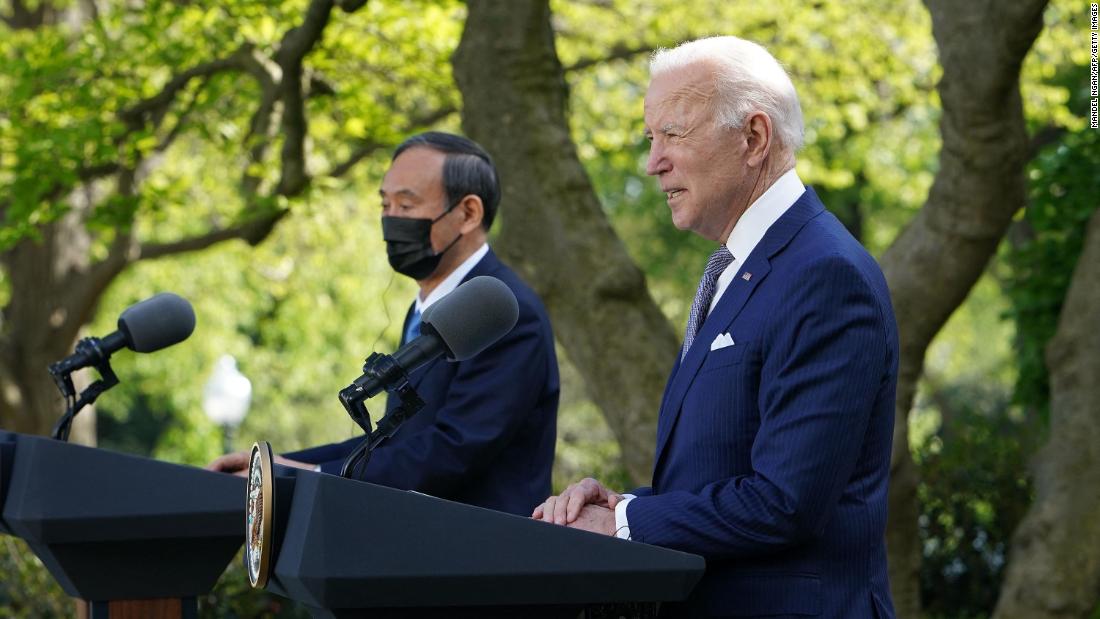
Are America and Japan forming a strong western front when it comes to China?
Friday saw President Joe Biden host a foreign leader for the first time since being elected, with Japan’s Prime Minister Yoshihide Suga coming to the White House to discuss Asian policies, primarily, concerns about China. Biden and Suga said they both aimed to tighten the relationship between the two countries during the daylong visit, and China was one of the biggest focuses of the day's meetings. "We committed to working together to take on the challenges from China and on issues like the East China Sea, the South China Sea, as well as North Korea, to ensure the future of a free and open Indo-Pacific," Biden said during remarks in the Rose Garden of the White House on Friday. Suga said he and Biden had "serious talks on China's influence over the peace and prosperity of the Indo-Pacific, and the world at large." "We agreed to oppose any attempts to change the status quo by force or coercion in the East and South China Seas and intimidation of others in the region," Suga said. "At the same time, we agreed on the necessity for each of us to engage in frank dialogue with China, and in so doing, to pursue stability of international relations, while upholding universal values." China sent 25 warplanes into Taiwan's air defense identification zone on Monday, which was the largest breach of that space since the island began regularly reporting such activity in September, Taiwan's Defense Ministry said. The fact that Suga was the first foreign leader to pay a visit to the White House showed the importance of the relationship between the two countries in promoting democracy in the region, Biden said earlier in the day. April 16 – CNN As China continues to flex its military and economic muscle in the region, the world is watching, and every move may have a global impact. If you are a journalist covering Asia and the political issues that are brewing in the region, then let us help with your coverage. Dr. Elizabeth Larus is an expert in the politics of China. She is available to speak to media, simply click on her icon to arrange an interview today.

