
Experts Matter. Find Yours.
Connect for media, speaking, professional opportunities & more.

Aston University invests £18 million to support doctoral research
Funding to recruit and nurture tomorrow’s researchers Investment will support University’s vision to be a leading university of science, technology and enterprise Investment in research at the interfaces of science, health and technology. Aston University is announcing investment of £18 million in doctoral research funding to recruit and nurture the research leaders of tomorrow. The investment supports the University’s vision to be a leading university of science, technology and enterprise. It will fund research at the interfaces of science, health, technology and enterprise, socio-economic transformations driven by digitalisation, and pressing economic, social and other challenges addressed by researchers in Aston University’s colleges and research institutes. Successful candidates will be recruited for the studentships on the basis of excellence and provided with the support they need to excel as doctoral researchers. They will drive forward their own research projects and make significant contributions to existing innovative research projects and teams. A range of support will be available, including full studentships covering the cost of UK fees and student stipend paid at rates equivalent to UKRI-funded studentships, as well as a fund for research expenses. Professor Phil Mizen, Associate Pro-Vice-Chancellor Researcher Development at Aston University, said: “This investment represents the University’s strategic commitment to supporting inclusive, entrepreneurial and translational research with a clear transformational impact so that the people, businesses and communities it serves can thrive economically, socially and culturally. “I am delighted that, through these studentships, we are able to provide more opportunities for doctoral researchers to gain essential skills and to foster excellence in research and innovation.”


Casting Light on the Dark Universe, Euclid's Mission Shows Promise
On December 7, 1968, the National Aeronautics and Space Administration (NASA) successfully launched the first functional space telescope into orbit. In the 55 years since, dozens of these crafts have embarked on missions of discovery, advancing and transforming our understanding of the cosmos. Among the latest is Euclid, a wide-angle space telescope developed by the European Space Agency (ESA). Equipped to chart portions of the universe that are not directly observable and currently shrouded in mystery, Euclid is working to generate a three-dimensional map unlike any other, surveying billions of galaxies out to 10 billion light-years. This past month, the first images from its journey were released. Joey Neilsen, PhD, is a world-renowned astrophysicist, a frequent collaborator with NASA and an assistant professor in Villanova University’s College of Liberal Arts and Sciences. From his perspective, Euclid’s early returns evidence its voyage’s incredible potential. “In Euclid’s first image of the Perseus cluster, the sheer number of galaxies is really astonishing,” said Dr. Neilsen. “We talk a lot about how the universe is mostly empty space—and it is!—but it’s also enormous, and it’s really stunning that there’s room for so many galaxies in just a small patch of sky. There are 1,000 galaxies here huddled together in this cluster and over 100,000 in the background. “I also note some pale purple patches in the image of NGC 6822. These are planetary nebulae, the layers of gas and dust blasted off by stars at the ends of their lives. It’s amazing to be able to see these so clearly in images that show the entire galaxy and its environment at the same time.” According to Dr. Neilsen, Euclid’s remarkable visuals are the product of a calculated tradeoff. The ESA craft sacrifices the fine resolution of images taken by other observatories, like NASA’s James Webb Space Telescope, to capture cosmic phenomena in greater breadth. By collecting these visuals, Euclid aims to spark breakthroughs on subjects as of yet understudied—breakthroughs that could benefit Dr. Neilsen’s field of research. “Euclid’s mission is to understand the evolution of the dark components of the universe: the invisible dark matter whose gravity holds large structures like galaxies and galaxy clusters together and the dark energy responsible for the accelerating expansion of the universe,” he explained. “Much of my research focuses on a different aspect of the dark universe (black holes), but there is a puzzle that might connect: observations of very distant galaxies show there were very massive black holes very early on. How did these behemoths grow so big so fast? If would be neat if Euclid helped us to better understand the early universe in a way that informed our understanding of the growth of black holes.” In tracking and investigating the dark entities that compose and mold the cosmos, Euclid could very well offer insights into the history and development of over 95% of all energy and matter—and perhaps into the very fabric of existence itself. It is reasonable to wonder whether, when its mission is complete in six years’ time, the telescope could provide us with answers to questions that have gone unaddressed for six billion years. “For me, the best-case scenario would be that Euclid would show clear evidence of something that’s hard to explain with our current models,” said Dr. Neilsen. “For example, right now, we have ‘Hubble tension,’ a discrepancy between measurements of the expansion of the universe from when it was young and from the current era… The moments when things don’t add up are the ones where we learn the most about how the universe works. So, I’ll keep my fingers crossed for a surprise and for more to learn over the next six billion years.”


Georgia Southern University launches ‘Together We Soar’ Campaign
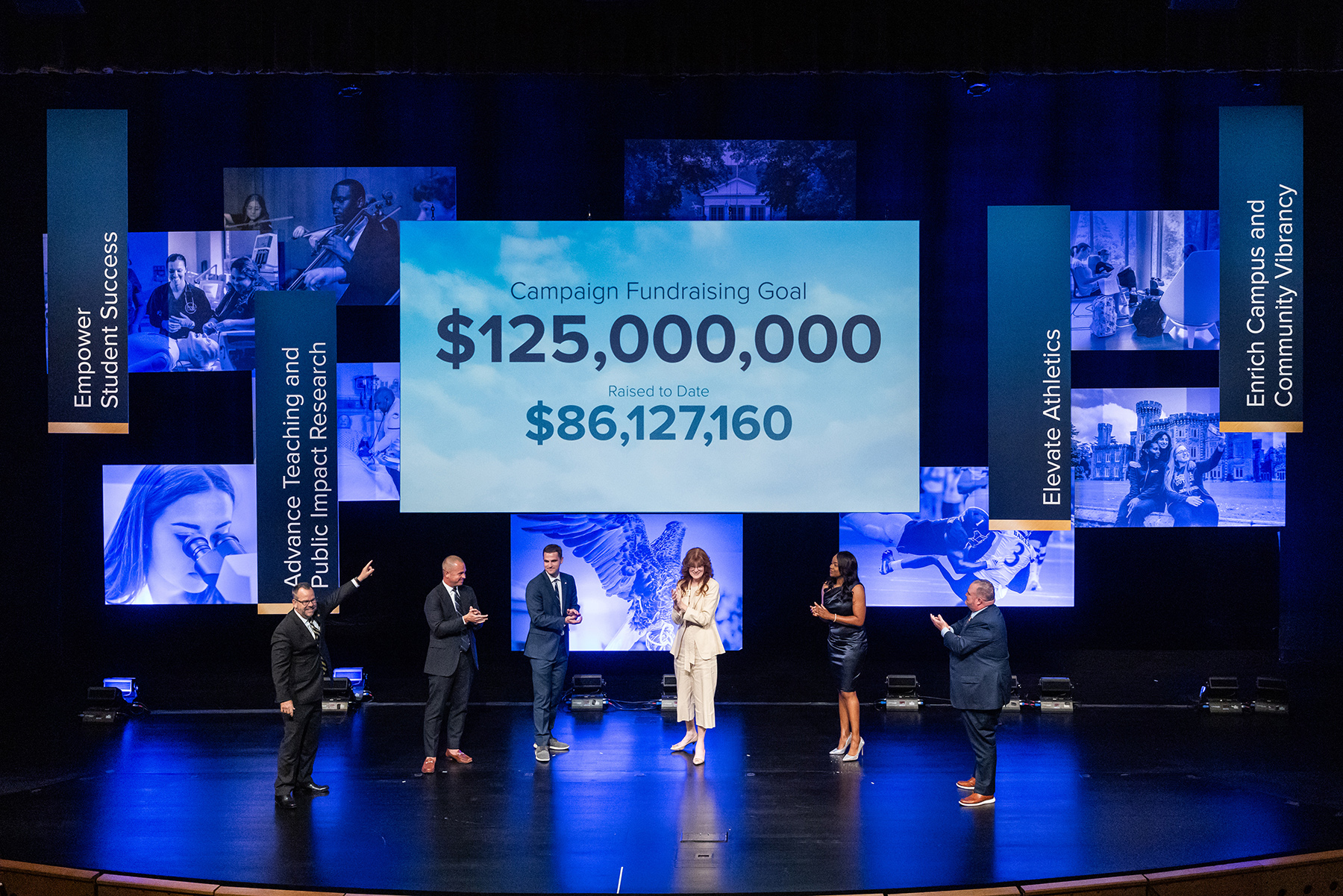
Georgia Southern University proudly announces the launch of its comprehensive campaign, “Together We Soar: The Campaign for Georgia Southern University.” This transformative initiative aims to elevate the University’s impact on students, faculty, research, athletics, and the communities it serves. Georgia Southern, renowned for its majestic campuses adorned with southern live oaks and towering pines, symbolizes not just American freedom but also the promise, achievement and boundless potential of its students. The University’s trajectory is on the rise, reaching for greater heights in education and community impact. Central to this momentum is the unwavering support from alumni, friends and the community. Publicly launched last Friday evening, Together We Soar: The Campaign for Georgia Southern University aims to raise $125 million by 2026. More than $86 million has already been secured. Dr. Kyle Marrero, President of Georgia Southern, expressed his gratitude and vision for the University. “Georgia Southern is on the move, in motion, and soaring to new heights. The ‘Together We Soar’ campaign—fueled by the generous support of our alumni, friends, and partners—will ensure our ability to drive innovation, develop talent, transform lives, and propel the economic development of a growing region.” (L-R) Georgia Southern President Kyle Marrero, Vice President for University Advancement Trip Addison, Deputy Athletics Director of Development Davis Hendrickson, Executive Director of Development Julie Gerbsch, Director of Alumni Relations Ava Edwards, and University Campaign Co-chair Leonard Bevill on stage at the Oct. 20 launch event for Together We Soar: The Campaign for Georgia Southern University. The campaign has identified four primary objectives: Empower Student Success: The campaign aims to stimulate learning by recruiting high-achieving students, increasing student access, and promoting inclusive excellence and career readiness. Advance Teaching and Public Impact Research: The focus is on meeting regional economic needs, increasing faculty expertise, and enhancing research capacity. Elevate Athletics: The campaign seeks to attract and retain elite student-athletes, provide top-notch facilities, and boost the Competitive Excellence Fund. Enrich Campuses and Community Vibrancy: The goal is to improve the communities surrounding the campuses and teach about local wildlife, among other initiatives. Campaign co-chairs Mike Sanders and Leonard Bevill shared their excitement for the campaign and what it will mean for Georgia Southern. “I could not be more excited about Georgia Southern and its possibilities. Opportunities abound for our University and the Together We Soar Campaign is the catalyst. It is time to do ‘more with more.’” - Mike Sanders “‘Together We Soar’ is spot on. From across campus to athletics and throughout our community, we’re perfectly aligned and equipped to launch to historic heights. I’m very blessed and excited to be involved.” Leonard Bevill The campaign also highlights the significant economic impact of Georgia Southern, with a regional economic contribution of $1.1 billion in fiscal year 2022. The University plays a critical role in the economic growth and transformation of Southeast Georgia. Marrero said Georgia Southern invites all its supporters, alumni and the community to join this transformative journey. With collective support, there’s no limit to how high Georgia Southern can soar. For more information or to contribute to the “Together We Soar” campaign, visit GeorgiaSouthern.edu/TogetherWeSoar.

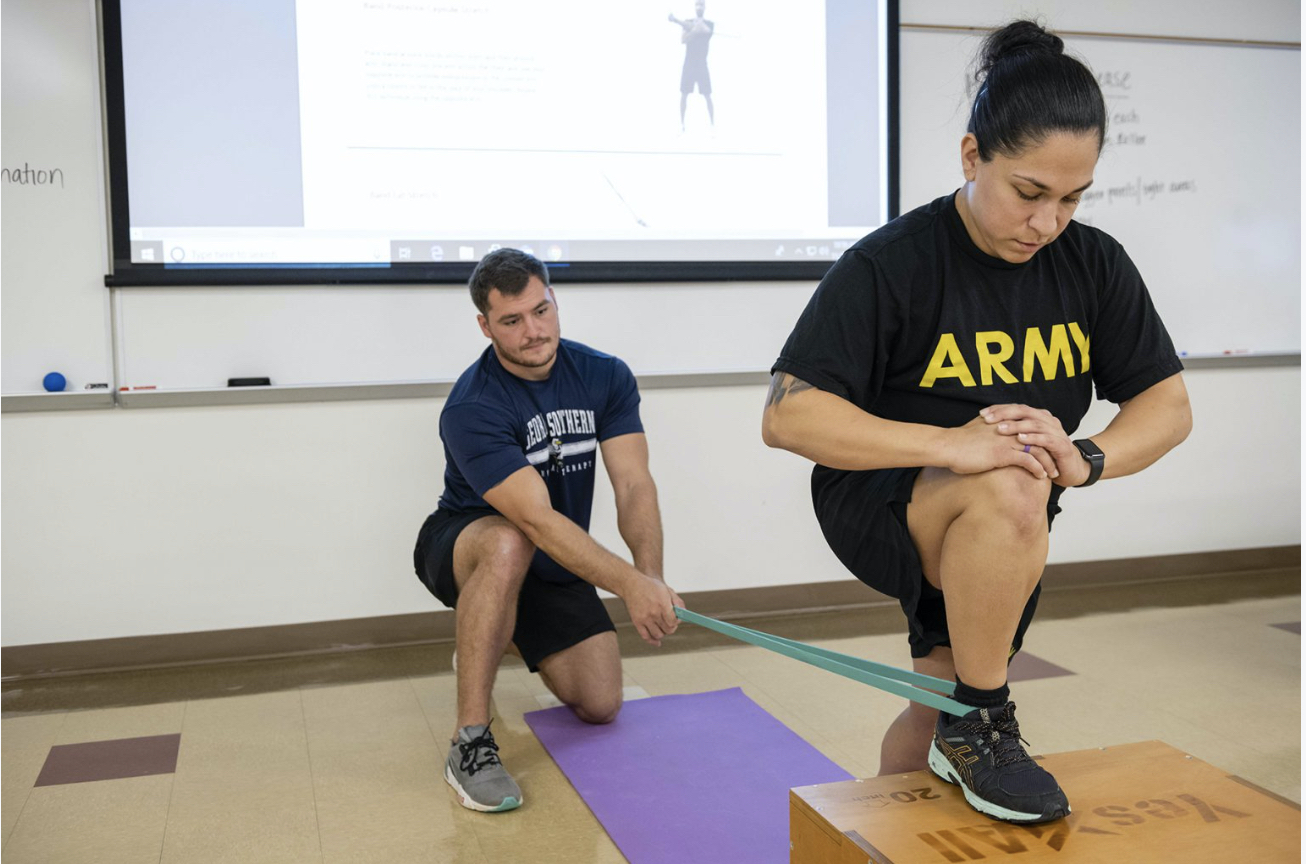
The Georgia Southern University Soldier Performance and Readiness (SPAR) program received a $1.5 million, two-year grant from the Department of Defense’s U.S. Army Medical Research and Development Command (USAMRDC). The grant will expand Georgia’s Southern research and programming capacity in injury prevention techniques that ensure force readiness for the Army. “Through this large-scale research study, Georgia Southern doctoral students have opportunities to be involved in the research process and work directly with soldiers,” said Nancy Henderson, Ph.D., assistant professor in the Doctor of Physical Therapy (DPT) program. “Additionally, the grant will fund graduate assistant positions in the Doctor of Physical Therapy program.” USAMRDC’s mission is to provide solutions to medical problems for American service members at home and abroad, as well as to the public at large. The scope of this effort and the priorities attached to specific projects are influenced by changes in military and civilian medical science and technology, operational requirements, military threat assessments and national defense strategies. Extramural research and development programs play a vital role in the fulfillment of the objectives established by the organization. Research and development funded through this are intended to benefit both military and civilian medical practices. “The grant investigates different physical training programs to identify those practices that best prevent non-combat injuries,” said Henderson. “Faculty on the research team will seek to advance the body of literature by determining the best educational models to educate soldiers on injury-prevention topics.” This is the first time that Georgia Southern will act as lead investigator on a collaborative research project with an Army research institute. However, SPAR has long been involved in multiple branches of research with community impact. “Georgia Southern has several initiatives underway to help improve the health, fitness and performance of military service members, law enforcement personnel and firefighting and rescue personnel,” said Joseph Kardouni, Ph.D., director of the Tactical Performance Group. “The Tactical Athlete Certificate (TAC) program is one of these initiatives that teaches service members exercise fundamentals to help mitigate training-related injuries. The funding coming through Medical Research and Development Command will improve evidence-based teaching methods and inform similar efforts to teach service members within this field. Leaders from health and human performance programs within the Army understand the importance of leveraging partnerships with academic institutions to work toward improving the quality of life, health and occupational performance of soldiers.” Faculty and students in the DPT program have educated soldiers on injury prevention topics since 2016 and this grant further provides students with the opportunity to assess effectiveness while learning how to improve educational methods with military service members. “This research is an important next step in delivering on the promise of the SPAR program and Georgia Southern’s close working relationship with Army research partners,” said Interim Vice President for Research and Economic Development Christopher Curtis, Ph.D. Curtis also noted that funding was made possible by the advocacy of U.S. Rep. Buddy Carter and the strong support of Georgia’s legislative delegation in Washington D.C. Interested in learning more or looking to talk with Nancy Henderson? Simply click on her icon now or Contact Georgia Southern's Director of Communications Jennifer Wise at jwise@georgiasouthern.edu to arrange an interview today.


Georgia Southern launches new merchandise line to benefit ‘Freedom’ and the Wildlife Center
“Freedom” merchandise is now available for purchase at Southern Exchange in Statesboro. Items will be available soon at the University Store on the University’s Armstrong and Statesboro campuses and in the gift shop at the Center for Wildlife Education located on the Statesboro Campus. Proceeds will benefit the Wildlife Center and Freedom’s care. Georgia Southern University is launching a new brand and merchandise line that will benefit and honor Freedom, the University’s live bald eagle mascot that flies before each home game in what many call the “most exciting 30 seconds in college football.” Unable to survive on his own because of an injury to his beak as a newborn, Freedom came to Georgia Southern in 2004 and now lives at the University’s Center for Wildlife Education in Statesboro alongside other eagles, raptors, reptiles and waterfowl. He will celebrate his 20th birthday this December. As an ambassador for Georgia Southern and symbol of our nation, Freedom has inspired thousands annually at the Center for Wildlife Education, Georgia Southern football games, the St. Patrick’s Day parade in Savannah, commencements, community events and other appearances, such as at the Charles Swab Classic PGA tour event earlier this year in Texas. To support Freedom and the Wildlife Center, University Communications and Marketing, Georgia Southern’s office of Athlete Brand Management and Licensing, the Wildlife Center and the university’s retail partners are collaborating to launch a new line of merchandise featuring Freedom. One shirt includes “Freedom’s Ride,” and depicts Freedom perched in the back of a 1977 International Scout often seen around town as it’s owned and driven by handler and Wildlife Center Executive Director Steve Hein. “Freedom belongs to Georgia Southern students, faculty, the Statesboro community and all those he encounters” Hein said. “It’s natural to want to express a unique relationship spanning 20 years and what better way to do this than by making his image available for people to wear and promote. I’m excited about this program, honored to be his plus-one, and greatly appreciate everyone’s support for Freedom, his care and his future.” The Freedom merchandise is designed to be both inspirational and stylish. Items are in development, but initial offerings could include: Hats T-Shirts Hoodies Posters Postcards Proceeds will benefit the Wildlife Center and Freedom’s care. Items will be available starting this week at Southern Exchange near the Georgia Southern campus in Statesboro and will be available soon at the University Store on the University’s Armstrong and Statesboro campuses and in the gift shop at the Wildlife Center located on the Statesboro Campus. Interested in learning more or looking to talk with Wildlife Center Executive Director Steve Hein? Simply click on his icon now or Contact Georgia Southern's Director of Communications Jennifer Wise at jwise@georgiasouthern.edu to arrange an interview today.


An interdisciplinary team from Georgia Southern University was awarded more than $465,000 from the National Academies of Sciences, Engineering, and Medicine to foster the development of scientific and environmental skills that are critical to solving complex issues in the Gulf of Mexico region now and into the future. The award is part of an initiative with the Gulf Research Program (GRP) that awarded $2 million to eight projects that engage children and youth in place-based educational activities. The funded project, “Suwannee Watershed: Assessment and Monitoring of Place to Gain Understanding of Local Flow (SWAMP to GULF),” is led by principal investigator (PI) Lacey Huffling, Ph.D., associate professor of science education, and co-PIs Heather Scott, Ed.D., and Regina McCurdy, Ph.D., both assistant professors of science education. (l-r) College of Education’s Lacey Huffling, Ph.D., Regina McCurdy, Ph.D., and Heather Scott, Ed.D., are part of an interdisciplinary team awarded $465k to train science teachers in the Gulf of Mexico. “I am honored that we were selected to receive funding from the Gulf Research Board,” said Huffling. “Over the past four years, we have developed a strong network of Georgia middle and high school teachers who are dedicated to developing the science and environmental literacy of their students through watershed citizen science, specifically focused on areas of Georgia that flow into the Gulf of Mexico. We are excited to continue to grow this network of teachers in Florida further to foster scientific and environmental literacy of future generations to monitor and advance scientific and community understanding of the Lower Suwannee Watershed.” The group will train and support teachers in Florida to implement place-based learning through citizen science using communities as classrooms to deepen teachers’ and students’ sense of place and connection to local watersheds; research how teachers and students address local issues and solve problems by using and developing their critical environmental agency; and increase participation of rural populations in science, which have historically been underrepresented. This initiative, along with the seven other GRP projects, will help connect young learners across the Gulf of Mexico region with local environmental issues and work toward the betterment of the region at large. “The goal of these grants is to empower young learners through place-based education, an interdisciplinary, student-centered, inquiry-driven teaching and learning practice situated in the local community and environment,” said Karena Mary Mothershed, senior program manager for the GRP’s Board on Gulf Education and Engagement. “These eight projects have a high potential to create long-lasting impacts on underserved students in grades K-8 across the Gulf of Mexico region, enabling them to consider and address environmental challenges impacting their own communities.” Additional SWAMP to GULF project members include Georgia Southern staff and faculty: Mary Thaler, senior administrative assistant for the Center for STEM Education; J. Checo Colón-Gaud, Ph.D., professor of biology and associate dean of the Jack N. Averitt College of Graduate Studies; Shainaz Landge, Ph.D., assistant professor of chemistry, Luke Roberson, coordinator of Community Engagement and Outreach for the Institute of Water and Health; and Asli Aslan, Ph.D., director of the Institute of Water and Health. Interested in learning more? Contact Georgia Southern's Director of Communications Jennifer Wise at jwise@georgiasouthern.edu to arrange an interview today.

Highlighting the Impacts of Insufficient WIC Funding on Low-Income Families
Since the beginning of the COVID-19 pandemic, the cost of food has risen 25%, and many are struggling to provide enough nutritious food to their families. Federal safety net programs – like the Special Supplemental Nutrition Program for Women, Infants, and Children (WIC) for example – are intended to provide needed support for healthy foods during hard times, serving millions each year. The WIC program, however, is not guaranteed to all that might need it. Instead it relies on budget appropriations, which for the first time in the history of the program may not be enough to cover those in need. There is a chance that as many as 600,000 young children, pregnant and new mothers who qualify for WIC will not be able to receive benefits in the upcoming year. Allison Karpyn is Co-Director of the Center for Research in Education and Social Policy (CRESP) and Professor in the Department of the Human Development and Family Sciences at the University of Delaware. She is able to speak holistically about WIC and other federal food programs and what this funding can accomplish. "Federal Nutrition and related programs also need to address issues of stigma," Karpyn says. Recent frameworks developed by Dr. Karpyn and colleague suggest that more needs to be done to adequately understand and support families to use the benefits intended for them. Research is clear that food and nutrition security are closely tied to our health, she notes. Karpyn is able to speak about this and more. If you would like to speak to her, click her "View Profile" link.



Expert reaction to the UK AI Safety Summit
Today the UK government announced a "world first agreement" on how to manage the riskiest forms of AI. It focuses on so-called "frontier AI" - what ministers consider highly advanced forms of the tech - with as-yet unknown capabilities. The agreement, signed by countries including the US, the EU and China, was announced at the UK's AI Safety Summit. Dr Alina Patelli, Senior Lecturer in Computer Science, Aston University, comments: “A summit on AI safety is long overdue. As is the case with all groundbreaking technologies, AI’s transformative potential for public good is only matched by its risks, which are unlikely to be successfully avoided, if AI tech design and deployment are left unregulated and therefore open to misuse, either intentionally or accidentally. The scope of the summit is appropriate, reflective of Government’s cautious approach to managing interactions with AI safety experts from multiple nations and disciplines: the summit focus is kept narrow, to five objectives only, and the number of participants is wisely limited to 100, to keep the conversation productive.” What is likely to come out of this summit? “The summit’s main output will most likely be a bare-bones regulatory document comprising (1) a shared understanding of AI (i.e., a generally accepted definition of the term reflective of all summit participants’ views, not just those of tech experts), (2) a list of major risks associated to AI misuse, both in terms of potential damage as well as likelihood of becoming a reality, and (3) a policy draft outlining the core elements that a yet-to-be-developed governance framework should include.” What AI safety could/should look like? “Although it would be premature to venture a definition of AI safety ahead of the summit, one thing that is certain is that a comprehensive, therefore effective, AI regulatory framework would encompass more than just laws. Non-legally binding codes of conduct, tech design and development processes that are bound by moral and ethical values, both in the commercial ecosystem, as well as when it comes to individual entrepreneurs, revised open-access licenses under which AI should be used in the public domain, etc. are equally important pieces. The best way to integrate all these in a cohesive, overarching governance plan is perhaps a topic to explore in one of the post-summit events.” What are the potential practicalities for a route forward towards safe AI? “The practical way to systematically regulate AI is incremental. Initially, the development and application of those AI tools deemed to be high-risk will most likely be restricted to controlled environments, where the potential benefits justify the risks and where sound mitigation procedures can be quickly and effectively enforced to mitigate those risks. As regulations become better prescribed, AI’s (safe and legal) application space will gradually expand, making its benefits available to larger groups of people without any of the downsides.” To interview Dr Alina Patelli or request further details contact Nicola Jones, Press and Communications Manager, on (+44) 7825 342091 or email: n.jones6@aston.ac.uk
/cloudfront-us-east-1.images.arcpublishing.com/gray/AYBAAIIRXNAI7DF4F3YUO6E3XM.jpg)
Georgia Southern Libraries celebrates grand opening for Patent and Trademark Resource Center
Patenting an invention and trademarking a product name can be challenging, yet protecting intellectual property is vital. To that end, Georgia Southern University Libraries celebrated the grand opening of its Patent and Trademark Resource Center (PTRC) with ribbon-cutting events at the Armstrong Center in Savannah this past September. The PTRC is part of a nationwide network of 84 public, state and academic libraries designated by the United States Patent and Trademark Office (USPTO) to support the public with trademark and patent assistance. Georgia Southern Libraries is one of two designated PTRCs in Georgia. “With the recent economic development of Hyundai’s Motor Group Metaplant America, associated suppliers and regional commerce, our PTRC cultivates a culture of innovation and entrepreneurship,” stated Georgia Southern’s PTRC librarian representative John Schlipp. “Innovators and creative colleagues utilizing the PTRC service at Georgia Southern University Libraries will be able to determine the potential for their patent applications and federal registration for a trademark on their inventions, products or services.” Georgia Southern’s PTRC partners with the University’s Business Innovation Group (BIG) and other regional, like-minded organizations to foster innovation and creativity. Dignitaries from the USPTO, including Deputy Under Secretary of Commerce for Intellectual Property and Deputy Director Derrick Brent, and Georgia Southern President Kyle Marrero attended the ribbon-cutting in Savannah. Both events acted as workshops for inventors, entrepreneurs and business startups. The PTRC at Georgia Southern can assist patrons in conducting their own free patent and trademark searches on specialized USPTO databases. Additionally, patrons can receive one-on-one instruction on the application process, improve awareness of a product field, determine application feasibility and prepare for consulting with an attorney. Interested in learning more? Contact Georgia Southern's Director of Communications Jennifer Wise at jwise@georgiasouthern.edu to arrange an interview today.

• Rice straw could be a fuel of the future in rural Philippines • Across Asia 300 million tonnes of rice straw go up in smoke every year • New proposals includes scaling up harvesting system with straw removal, biogas-powered rice drying and storage and efficient milling. An Aston University bioenergy researcher has been explaining how rice straw could be a fuel of the future in rural Philippines. Dr Mirjam Roeder who is based at the University’s Energy & Bioproducts Research Institute (EBRI) is collaborating with the UK company Straw Innovations Ltd, Southeast Asian Regional Center for Graduate Study and Research in Agriculture (SEARCA) and Koolmill Systems Ltd to showcase their research. The Food and Agriculture Organisation (FAO) states that rice is the number one food crop globally and 91% of it is produced and consumed in Asia. As a crop it is responsible for 48% of global crop emissions and for every kilogram of rice, a kilo of straw is produced. Across Asia 300 million tonnes of rice straw go up in smoke every year when burnt after harvest, releasing emissions and air pollutants that triple risks of increased respiratory diseases and accelerate climate change. To raise awareness of sustainable uses for rice straw Dr Roeder has travelled to the sixth International Rice Congress in Manila, Philippines to explain the potential of the emerging technology. Rice straw is an underdeveloped feedstock and can be collected and digested to produce biogas, unlocking sustainable straw management options and renewable energy for farmers using anaerobic digestion (AD) from rice straw. Dr Roeder has been working with Straw Innovations on their UK Innovate project demonstration facility in the Philippines, the Rice Straw Biogas Hub, which is scaling up a complete harvesting system with straw removal, biogas-powered rice drying and storage, together with efficient milling. Craig Jamieson, Straw Innovations said: “The International Rice Congress is only held every four years and is a key event for coordinating and tracking progress in rice research. “Our partnership with Aston University and SEARCA adds independent, scientific rigour to the work we do and amplifies our message to government policy makers. We are grateful to Innovate UK for their ongoing support through the Energy Catalyst Programme, which is accelerating our development.” At the conference Dr Roeder has been explaining how independent environmental and social research can increase farmer incomes, equality of opportunity, food security and decarbonisation benefits. She said: “Engaging with stakeholders and working in partnership across organisations is vital to the successful adoption of new technologies. I am delighted to have had the opportunity to host an event with our project partners at this prestigious conference, bringing the cutting-edge research of using rice straw for clean energy to the forefront of the rice research community and supporting the pathway to net zero.” Dr Glenn B Gregorio, Center Director of SEARCA, added: "We are gaining insights into the environmental impact of rice straw utilisation and implementing policies to unleash its potential to empower us to make informed decisions that are instrumental to climate change mitigation and decarbonisation," Professor Rex Demafelis, University of the Philippines, is also working with SEARCA and is leading the project on life cycle analyses and measurements of rice straw greenhouse gas emissions. He said: “Rice straw is a valuable resource, and we are grateful to be part of this team which seeks to harness its full potential and promote circularity, which would ultimately contribute to our goal of reducing our greenhouse gas emissions.” ENDS The Supergen Bioenergy Hub works with academia, industry, government and societal stakeholders to develop sustainable bioenergy systems that support the UK’s transition to an affordable, resilient, low-carbon energy future. The Hub is funded jointly by the Engineering and Physical Sciences Research Council (EPSRC) and the Biotechnology and Biological Sciences Research Council (BBSRC) and is part of the wider Supergen Programme. For further information contact Rebecca Fothergill and Catriona Heaton supergen-bioenergy@aston.ac.uk Follow us on Twitter @SuperBioHub Visit our website at supergen-bioenergy.net Visit our YouTube Channel to watch the video on Carbon Balance FAO: RICE PRODUCTION IN THE ASIA-PACIFIC REGION: ISSUES AND PERSPECTIVES - M.K. Papademetriou* (fao.org) https://www.fao.org/3/x6905e/x6905e04.htm About Aston University For over a century, Aston University’s enduring purpose has been to make our world a better place through education, research and innovation, by enabling our students to succeed in work and life, and by supporting our communities to thrive economically, socially and culturally. Aston University’s history has been intertwined with the history of Birmingham, a remarkable city that once was the heartland of the Industrial Revolution and the manufacturing powerhouse of the world. Born out of the First Industrial Revolution, Aston University has a proud and distinct heritage dating back to our formation as the School of Metallurgy in 1875, the first UK College of Technology in 1951, gaining university status by Royal Charter in 1966, and becoming The Guardian University of the Year in 2020. Building on our outstanding past, we are now defining our place and role in the Fourth Industrial Revolution (and beyond) within a rapidly changing world. For media inquiries in relation to this release, contact Nicola Jones, Press and Communications Manager, on (+44) 7825 342091 or email: n.jones6@aston.ac.uk
