
Experts Matter. Find Yours.
Connect for media, speaking, professional opportunities & more.

Aston University establishes new independent investment company
Aston University is part of a group of eight universities which has established a new investment company Midlands Mindforge will accelerate the commercialisation of university research It aims to raise up to £250 million from investors. Aston University is one of eight research intensive universities in the Midlands to establish a new investment company to accelerate the commercialisation of university spinouts and early-stage IP rich businesses in the region. Midlands Mindforge Limited has been co-founded by Aston University, University of Birmingham, Cranfield University, Keele University, University of Leicester, Loughborough University, University of Nottingham and University of Warwick, collectively Midlands Innovation. This ambitious, patent capital investment company plans to raise up to £250 million from strategic corporate partners, institutional investors and qualifying individuals. It aims to transform ground-breaking science and technology into successful businesses with real-world impact. Midlands Mindforge will help to address the significant funding deficit for early-stage technology businesses in the region. Through the combination of additional capital and company-building skills, Midlands Mindforge will lay the foundations of a more vibrant ecosystem for emerging science-backed companies in areas such as Clean Technology, AI and Computational Science, Life Sciences and Health Tech. Professor Aleks Subic, Vice-Chancellor of Aston University, said: "Aston University has a strong track record in bringing together industry and academia to solve real world problems and drive innovation through applied and translational research. Â Investment raised through Midlands Mindforge will enable a step change that will ensure we get the very best outcomes for our research. "The impact of increased investment in research translation will be felt widely, with Midlands Mindforge supporting the growth of high value added businesses and jobs in the region and creating the right conditions to build future global companies. This is a hugely exciting time for Aston University and the wider Midlands Innovation group of universities, and I look forward to seeing the benefits that this strategic development will bring." Collectively, the eight founding universities have the most postgraduate students, the highest levels of annual income, more research disclosures and patents generated per unit of research spend in the last three years, in comparison to any other UK university grouping. Minister of State for Science, Research & Innovation George Freeman MP said: "Commercialising UK science & technology for global industrial adoption has never been more urgent for both the UK economy and the global resource challenges facing us. The Midlands Innovation universities are driving a new era of innovation from robotics and advanced manufacturing to life science and autonomous vehicles and much more. "As we in Government increase UK public R&D to a record £20 billion a year, the key is private finance backing spinouts and scale-ups. The Midlands is rapidly becoming a world class UK cluster of excellence and Midlands Mindforge will play a key role in bringing global investors to help back world class companies." Chairman of the Midlands Engine Partnership, Sir John Peace, said: "The Midlands has always been associated with exceptional invention and creativity, but has long experienced significant underinvestment and consequently productivity levels have lagged behind the rest of the UK. "This bold and ambitious initiative led by the Midlands Innovation universities has the potential to help close the investment gap, supporting our region to reach its true potential for sustainable economic growth. Midlands Mindforge will help to further fast-track commercialisation of research ideas, creating a more resilient economy and playing an important role in levelling up the Midlands." Andy Street, Mayor of the West Midlands, said: "A key part of my mayoral mission is to drive our regional recovery forward and help generate the high-quality jobs of the future in order to improve quality of life for local people. This exciting new investment vehicle will very much support that mission planting the seeds for long-term sustainable economic growth here in the West Midlands. "Many brilliant ideas and top businesses have spun out from Midlands universities and this new venture will help us to advance that agenda and retain more of our innovative success stories within our region. "Together we can better nurture the enterprising talent on our doorstep and this new endeavour creates a wonderful opportunity to do just that." For more information about Midlands Mindforge visit www.midlandsmindforge.com


Ask an Expert: Is the "AI Moratorium" too far reaching?
Recent responses to chatGPT have featured eminent technologists calling for a six-month moratorium on the development of “AI systems more powerful than GPT-4.” Dr. Jeremy Kedziora, PieperPower Endowed Chair in Artificial Intelligence at Milwaukee School of Engineering, supports a middle ground approach between unregulated development and a pause. He says, "I do not agree with a moratorium, but I would call for government action to develop regulatory guidelines for AI use, particularly for endowing AIs with actions." Dr. Kedziora is available as a subject matter expert on the recent "AI moratorium" that was issued by tech leaders. According to Dr. Kedziora: There are good reasons to call for additional oversight of AI creation: Large deep or reinforcement learning systems encode complicated relationships that are difficult for users to predict and understand. Integrating them into daily use by billions of people implies some sort of complex adaptive system in which it is even more difficult for planners to anticipate, predict, and plan. This is likely fertile ground for unintended – and bad – outcomes. Rather than outright replacement, a very real possibility is that AI-enabled workers will have sufficiently high productivity that we’ll need less workers to accomplish tasks. The implication is that there won’t be enough jobs for those who want them. This means that governments will need to seriously consider proposals for UBI and work to limit economic displacement, work which will require time and political bargaining. I do not think it is controversial that we would not want a research group at MIT or CalTech, or anywhere developing an unregulated nuclear weapon. Given the difficulty in predicting its impact, AI may well be in the same category of powerful, suggesting that its creation should be subject to the democratic process. At the same time, there are some important things to keep in mind regarding chatGPT-like AI systems that suggest there are inherent limits to their impact: Though chatGPT may appear–at times–to pass the famous Turing test, this does not imply these systems ’think,’ or are ’self-aware,’ or are ’alive.’ The Turing test aims to avoid answering these questions altogether by simply asking if a machine can be distinguished from a human by another human. At the end of the day, chatGPT is nothing more than a bunch of weights! Contemporary AIs–chatGPT included–have very limited levers to pull. They simply can’t take many actions. Indeed, chatGPT’s only action is to create text in response to a prompt. It cannot do anything independently. Its effects, for now, are limited to passing through the hands of humans and to the social changes it could thereby create. The call for a moratorium emphasizes ‘control’ over AI. It is worth asking just what this control means. Take chatGPT as an example–can its makers control responses to prompts? Probably only in a limited fashion at best, with less and less ability as more people use it. There simply aren’t resources to police its responses. Can chatGPT’s makers ‘flip the off switch?’ Absolutely – restricting access to the API would effectively turn chatGPT off. In that sense, it is certainly under the same kind of control humans subjected to government are. Keep in mind that there are coordination problems – just because there is an AI moratorium in the US does not mean that other countries–particularly US adversaries– will stop development. And as others have said: “as long as AI systems have objectives set by humans, most ethics concerns related to artificial intelligence come from the ethics of the countries wielding them.” There are definitional problems with this sort of moratorium – who would be subject to it? Industry actors? Academics? The criterion those who call for the moratorium use is “AI systems more powerful than GPT-4.” What does “powerful” mean? Enforcement requires drawing boundaries around which AI development is subject to a moratorium – without those boundaries how would such a policy be enforced? It might already be too late – some already claim that they’ve recreated chatGPT. There are two major groups to think about when looking for develop regulatory solutions for AI: academia and industry. There may already be good vehicles for regulating academic research, for example oversight of grant funding. Oversight of AI development in industry is an area that requires attention and application of expertise. If you're a journalist covering Artificial Intelligence, then let us help. Dr. Kedziora is a respected expert in Data Science, Machine Learning, Statistical Modeling, Bayesian Inference, Game Theory and things AI. He's available to speak with the media - simply click on the icon now to arrange an interview today.



Aston University and asbestos consultancy to use AI to improve social housing maintenance
• Aston University and Thames Laboratories enter 30-month Knowledge Transfer Partnership • Will use machine-learning and AI to create a maintenance prioritisation system • Collaboration will reduce costs, emissions, enhance productivity and improve residents' satisfaction. Aston University is teaming up with asbestos consultancy, Thames Laboratories (TL) to improve efficiency of social housing repairs. There are over 1,600 registered social housing providers in England, managing in excess of 4.4 million homes. Each of these properties requires statutory inspections to check gas, asbestos and water hygiene, in addition to general upkeep. However, there is not currently a scheduling system available that offers integration between key maintenance and safety contractors, resulting in additional site visits and increased travel costs and re-work. Aston University computer scientists will use machine-learning and AI to create a maintenance prioritisation system that will centralise job requests and automatically allocate them to the relevant contractors. The collaboration is through a Knowledge Transfer Partnership (KTP) - a collaboration between a business, an academic partner and a highly-qualified researcher, known as a KTP associate. This partnership builds on the outcomes of TL’s first collaboration with Aston University, by expanding the system developed for the company’s in-house use - which directs its field staff to jobs. The project team will improve the system developed during the current KTP to enable it to interact with client and contractor systems, by combining an input data processing unit, enhanced optimisation algorithms, customer enhancements and third-party add-ons into a single dynamic system. The Aston University team will be led by Aniko Ekart, professor of artificial intelligence. She said: “It is a privilege to be involved in the creation of this system, which will select the best contractor for each job based on their skill set, availability and location and be reactive to changing priorities of jobs." TL, based in Fenstanton, just outside Cambridge, provides asbestos consultancy, project management and training to businesses, local authorities, social housing and education facilities, using a fleet of mobile engineers across the UK. John Richards, managing director at Thames Laboratories, said: “This partnership will allow us to adopt the latest research and expertise from a world-leading academic institute to develop an original solution to improving the efficiency of social housing repairs, maintenance and improvements to better meet the needs of social housing residents.” Professor Ekart will be joined by Dr Alina Patelli as academic supervisor. Dr Patelli brings experience of software development in the commercial sector as well as expertise in applying optimisation techniques with focus on urban systems. She said: “This is a great opportunity to enhance state-of-the-art optimisation and machine learning in order to fit the needs of the commercial sector and deliver meaningful impact to Thames Laboratories.”

ChristianaCare Named one of Mogul’s Top 100 Companies with Inclusive Benefits
Recognition affirms ChristianaCare’s deep commitment to inclusion and diversity ChristianaCare has been recognized as one of the Top 100 Companies with Inclusive Benefits by Mogul, a diversity recruitment platform that partners with the world’s fastest-growing companies to attract and advance top diverse talent. ChristianaCare was recognized for both its “diverse hiring practices” and “progressive workplace resources.” “At ChristianaCare, we embrace diversity and show respect to everyone, and we reinforce these behaviors through purposeful actions that enable all our caregivers to serve our neighbors with love and excellence,” said Neil Jasani, M.D., MBA, FACEP, chief people officer at ChristianaCare. “By offering a wide array of inclusive benefits, we more fully support our caregivers in their commitment to being exceptional today and even better tomorrow.” The honor by Mogul is the latest recognition for ChristianaCare’s commitment to inclusion and diversity. ChristianaCare, Delaware’s largest private employer, has committed to being an anti-racism organization and works to ensure that this commitment is reflected through the organization’s policies, programs and practices. (Read more about ChristianaCare’s anti-racism commitment here.) ChristianaCare President and CEO Janice E. Nevin, M.D., MPH, has signed the CEO Action for Diversity & Inclusion Pledge. This pledge outlines a specific set of actions the signatory CEOs will take to cultivate a trusting environment where all ideas are welcomed and employees are empowered to have discussions about diversity and inclusion. More than 3,100 of ChristianaCare’s caregivers also have signed the pledge. ChristianaCare’s inclusion and diversity efforts feature 11 employee resource groups, which connect caregivers who have a common identity or bond with one another. Formed by employees across all demographics – including disability, race, military status, national origin and gender identity – these voluntary, grassroots groups work to improve inclusion and diversity at ChristianaCare. More than 1,350 caregivers participate. ChristianaCare has developed LeadershipDNA, a leadership development program that is specifically targeted to underrepresented caregivers early in their careers. ChristianaCare’s deep commitment to inclusion and diversity also includes: Providing $500,000 in scholarships to 10 high school students in Delaware who plan to pursue degrees in health care. Supporting Project Search, which is a nationally recognized program dedicated to providing education and training to young adults with intellectual and developmental disabilities. Participation in Project Hope, a partnership with external agencies that provides support to individuals who were involved with the criminal justice system. This program creates pathways to meaningful and sustainable employment within ChristianaCare. Participation in Project Veteran through career fairs that target veterans. Elimination of bias in hiring through biannual education for all hiring managers, along with leader demographic scorecards to support building a diverse workforce. Parental leave of 12 weeks for the bonding, care and wellbeing of a newborn, adopted children or foster care children. This policy applies to both birthing and non-birthing caregivers. Behavioral health services for employees that include access to professionals who specialize in mental health care and substance use disorder. A work life employee assistance program that provides free and confidential resources designed specifically for caregivers and their families. Coverage in employee health plans for gender affirmation surgery, which consists of medical and surgical treatments that change primary sex characteristics for individuals diagnosed with gender dysphoria. Autism spectrum disorders benefits – such as diagnostic assessment and treatment – to the children of caregivers who are under 21 years of age. “Our commitment to inclusion and diversity touches all areas of our organization – including our benefits packages,” said Natalie Torres, director of Inclusion & Diversity at ChristianaCare. “We know that when we offer an inclusive benefits package that anticipates the needs of our caregivers, they can better support their families and provide better care to our community.”


Infant seating devices may reduce language exposure
When a parent needs to cook dinner or take a shower, often they will place their baby in a bouncy seat, swing, exersaucer, or similar seating device intended to protect the baby and grant a degree of independence to both the parent and infant. For many parents, these devices represent a helpful extra set of hands; for babies, the freedom to safely explore their immediate surroundings. As useful as these devices are to both parents and infants, they may present trade-offs regarding their effect on infants’ exposure to adult language, which is critical for language development. That’s according to a new study by researchers at the Stress and Early Adversity Lab at Vanderbilt Peabody College of education and human development. Within infants’ natural environments and daily routines, the study explored interactions between their exposure to adult language and their placement in seating devices, which support posture and promote the infant’s ability to play with objects or observe their surroundings without direct support from a caregiver. The researchers found that infants were exposed to fewer words when spending time in seating devices compared to when spending time in other placements. They also found that infants who spent the most time in seating devices heard nearly 40 percent fewer daily words compared to infants who spent the least amount of time in seating devices. Infants with more, compared to less, seating device use also had less consistent exposure to adult language throughout the day. Sixty mothers and their 4- to 6-month-old infants participated in this study. For three days, a Language Environment Analysis audio recording device (i.e. “talk pedometer”) captured language exposure. The mothers inserted the audio recorder into the pocket of a vest their babies wore. Automated software estimated from the recordings the total number of adult words spoken to or near the infant over the course of a day. To record real-time behaviors of infant placement, the mothers responded to 12 brief surveys per day about their infant’s current location and use of seating devices. Caregiver reports of their child’s placement in seating devices accounted for 10 percent of an infant’s daily exposure to adult words, which the researchers say is a striking finding due to the complex nature of language exposure and how many other factors may influence children’s exposure to speech (e.g. caregiver’s talkativeness, presence of other siblings). Kathryn Humphreys, assistant professor of psychology and human development and expert in infant and early childhood mental health, is the senior author of the study. She notes that infant seating devices can provide a convenient way to keep infants safely contained while caregivers attend to other tasks. However, given the potential for frequent and prolonged use of these devices, she says that parents may want to be intentional about interactive opportunities while the infant explores their surroundings as well as consider wearing or otherwise carrying their infant on their body as much as possible to create more opportunities for engagement through speech. “While we need more research to be certain that seating devices reduce the richness of infants’ language environments, these findings are influencing my own decisions about intentional placement with my 6-month-old." - Kathryn Humphreys Kathryn Humphreys She suggests that safe and convenient places are a boon for both infants and their caregivers, but that there is a risk for reduced levels of interactions when infants are stationary and not moving to where their caregivers are active.


• Institute of Health and Neurodevelopment to host children’s activities at Birmingham’s science museum Thinktank on Saturday 18 March • British Science Week is a ten-day celebration of science, technology, engineering and maths • Brain Awareness Week highlighted with research showcased in glass box exhibition space on University campus. Aston Institute of Health and Neurodevelopment (IHN) is celebrating British Science Week (10-19 March) and Brain Awareness Week (13-19 March) by hosting an activities day for children at the Birmingham science museum Thinktank, alongside a social media campaign to help educate and inform the public on its latest research. Each year, the British Science Association runs a ten-day celebration of science, technology, engineering and maths called British Science Week. It is closely followed by Brain Awareness Week, a yearly global campaign to increase public awareness of brain research. The week-long celebration is organised by the Dana Alliance with a goal to educate and highlight the importance of research in developing new treatments, preventions and possible cures for brain diseases. Both campaigns align closely with the work of the Aston Institute of Health and Neurodevelopment, with the Institute’s researchers keen to use the week to host activities and share their research and information about the brain health with the public. Activities to highlight both British Science Week and Brain Awareness week include a social media campaign sharing research updates from members and surprising brain facts on Twitter (@Aston_IHN), a brain research exhibition in the glass box space in the Aston University main entrance, as well as an activity session at the Birmingham science museum Thinktank in Millennium Point. The meet and greet with IHN researchers will take place on Saturday 18 March between 11.00 and 16.00. Children and families can speak to researchers about their work and take part in interactive activities, such as memory games and eye-tracking experiments. Professor Jackie Blissett, co-director of IHN said: “British Science week and Brain Awareness week are really important campaigns for us. Brain Awareness week is the perfect time to showcase our research and engage with the public on what we do here at IHN. “We work in close collaboration with the NHS to help research potential treatments for children who experience a range of brain related conditions. We put children at the heart of what we do, with the aim of unlocking the potential of research to support children’s health and development as well as answering the questions that matter to children, their families and the services that support them.” Visitors to the exhibition on the Aston University campus are encouraged to share their thoughts about the exhibition and their pictures on Twitter, tagging @Aston_IHN. For more information about Aston Institute of Health and Neurodevelopment visit its website and for more information about studying psychology and neuroscience at Aston University visit our course pages.


Aston University professor elected Fellow of Royal Microscopical Society
Professor Igor Meglinski is a physicist, scientist and biomedical engineer He pioneered the application of circularly polarised light for cancer detection His research is at the interface of physics, optics and imaging modalities. Igor Meglinski, professor of mechanical, biomedical and design engineering in the College of Engineering and Physical Sciences at Aston University, has been elected as a Fellow of the Royal Microscopical Society (RMS). Professor Meglinski is a physicist, scientist, and biomedical engineer whose research interests are at the interface between modern physics, optics and imaging modalities, focusing on the exploration of novel photonics-based phenomena and their implementation to practical applications in medicine, biology, life sciences and health care industries. Among other achievements, Professor Meglinski pioneered the application of circularly polarised light for cancer detection. best known for his development of fundamental studies and translation research dedicated to imaging of cells and biological tissues utilising polarised light, dynamic light scattering and computational imitation of light propagation within complex tissue-like scattering medium. His current research projects include the application of coherent polarised light for cancer diagnosis, functional imaging of blood and lymph flows, neuroimaging and brain malformation studies. He is also exploring human visual perception of polarised light and helical wave fronts, the fundamentals of shaped light with orbital angular momentum and quantum entanglements transfer in turbid tissue-like scattering medium, screening of cells, cell’s organelles and cells interaction. He has authored and co-authored more than 400 scientific papers and presented over 800 presentations at major international conferences in the field, including over 200 keynote and plenary talks and invited lectures. The Royal Microscopical Society is a learned society dedicated to the promotion and development of microscopy and imaging. Its members come from a wide range of backgrounds, including undergraduates, research students, users of microscopy in industry and academia, microscopy manufacturers and suppliers and research leaders in their various fields within the biological and physical sciences. Professor Igor Meglinski said: “I was delighted to be invited to become a Fellow of the Royal Microscopical Society. “It is always a pleasure to be recognised for your work, such as my recent research which could provide a more accurate method of blood flow diagnosis in skin to help people with diabetes.”
Public lecture: Be kind - effective design of software with and for real people
Public lecture: Be kind - effective design of software with and for real people Professor Jo Lumsden to give inaugural lecture on 9 March Will discuss need to approach software design with basic kindness. How software can be designed with kindness at its core is to be explored in a public lecture at Aston University. Professor Jo Lumsden is to give her inaugural lecture Be kind - effective design of software with and for real people on 9 March, which will be open to the public. Professor Lumsden said: “The approach to software development, however admirable, is often dominated by either the domain expert or the engineer who builds the software. “All too often, the voices of the real people who are destined to use the software are overlooked, or age-old techniques are adopted that do not support inclusive design or evaluation of such technologies.” Professor Lumsden will reflect on a wide range of examples which demonstrate novelty, or innovation. These could be in terms of designing with and interaction for end users, and evaluation to ensure feasibility and usability of technology that will be acceptable to end users. Professor Lumsden added: “Technology should be developed to help solve our problems or to improve our lives. “I am passionate about the fundamental need to approach software design with basic kindness. “I hope that the examples I will share in my lecture will inspire others to embrace empathetic approaches to future software design, so that collectively we can realise an effective and acceptable technological future.” Jo Lumsden is professor of human computer interaction in the College of Engineering & Physical Sciences at Aston University where she is also pro vice-chancellor (research integrity), head of the Computer Science Department and director of the Aston Interactive Media Lab. She has worked in research for more than 25 years and her recent work has centred on design and development of mobile assistive technologies which enhance the quality of life of those with special, typically healthcare-related, needs. Her multidisciplinary research brings together technologists, domain experts, and most importantly end users, to co-design technology, empowering end users to ensure their needs are met via the introduction of technology. The free event will be taking place on 9 March from 6 pm to 8 pm and will be followed by a drinks reception. To sign up for a place visit https://www.eventbrite.co.uk/e/an-inaugural-lecture-by-professor-jo-lumsden-tickets-530625183207

Specsavers hearing clinic officially opened at Aston University on World Hearing Day
• Hearing clinic celebrates official opening to students, staff and NHS referrals on Friday 3 March • Training of audiology students is supported by on-site clinic • Free hearing tests made available in partnership with Specsavers. A new hearing clinic in partnership with Specsavers at Aston University celebrated World Hearing Day (Friday 3 March) with an official opening and drinks reception at its new clinic. Staff from both Specsavers and Aston University’s audiology department met to officially open the clinic and look around the facilities based in the School of Optometry. Both parties discussed the benefits of having a hearing clinic on campus and reflected on the positive impact the clinic is having on students and patients. The clinic, which is situated on the ground floor in the Optometry building on the University campus in Birmingham city centre, is run in partnership with Specsavers and offers hearing tests for free to students, staff and members of the public, while supporting the training of Aston University audiology students. As well as providing hearing tests, the clinic can dispense hearing aids and offer counselling and advice alongside a full aftercare package. The team also advises people on personalised noise protection and ear plugs for swimming. Specsavers is a key partner of Aston University, with graduates from both audiology and optometry going on to work for them. Last year, 62% of students who were placed in Specsavers clinics for support and training applied for jobs on graduation and got to interview. Of those interviewed, 61% are now employed by Specsavers. Claire Wilkes, audiology programme director at Aston University, said: “We cannot wait to see what comes next in this wonderful journey. So far the clinic has had a lot of interest and uptake of hearing appointments. We are delighted to be working alongside Specsavers. “Many of our students undertake work placements with the company, so we are very happy we’ve been able to grow our partnership further by opening this clinic on campus.” Humah Zaheer, Specsavers audiology director, who runs the clinic added: “I’m delighted to be involved in this initiative. As an Aston University audiology graduate from 2014 it feels like I’ve come full circle. Being able to offer students an insight into the ‘real’ world of audiology, as well as Specsavers, is a fantastic experience for their career development. “We’ve also been bowled over with the response from the public and are looking to expand the number of days we open the clinic from next year.” The hearing clinic on campus enables students to practice their clinical and communication skills in preparation for long term work placements off campus. The skills lab equipment mimics equipment in the NHS, helping students better prepare for placements. To find out more or book an appointment visit our website.

Aston University turns red to highlight World Encephalitis Day
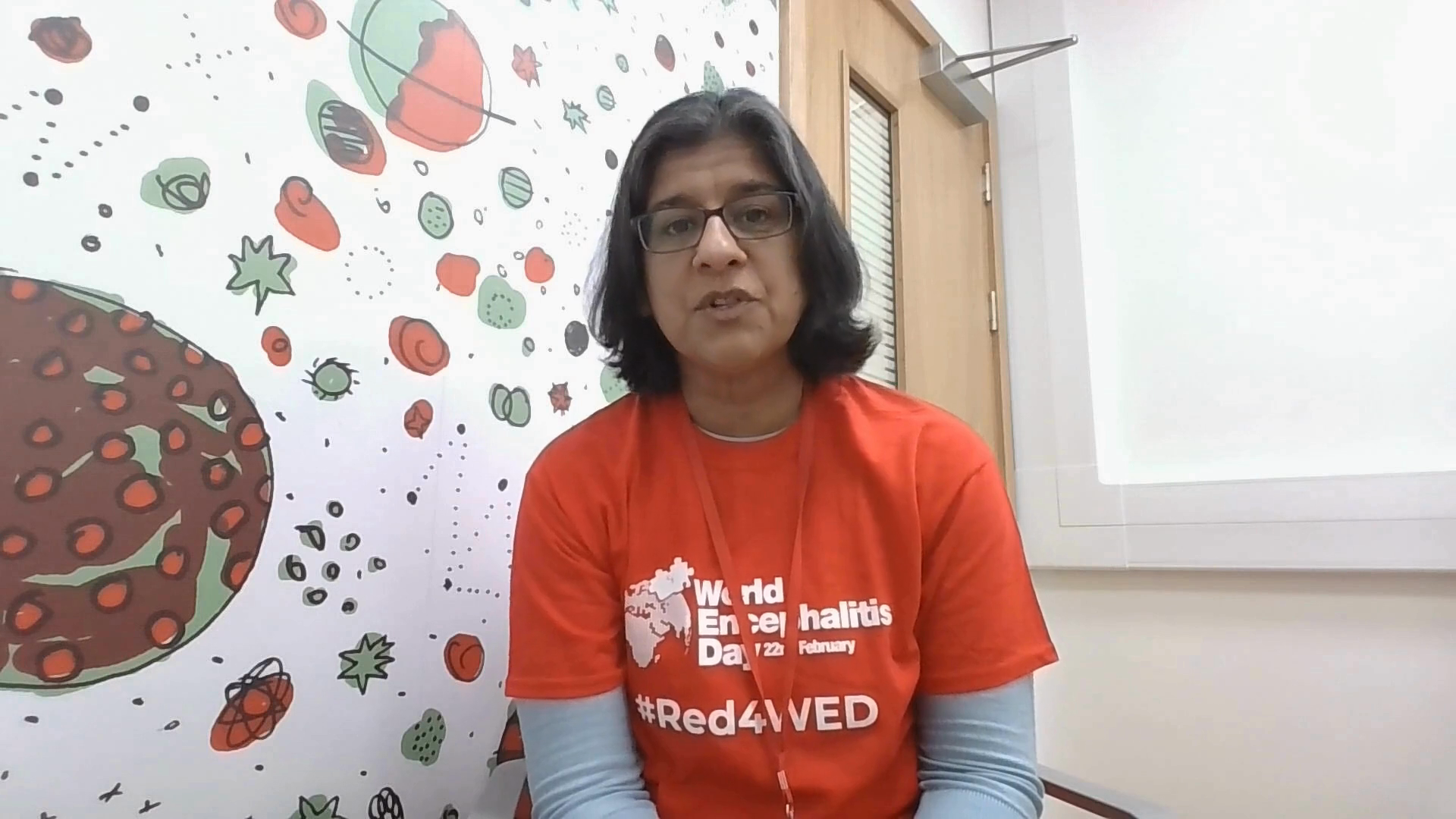
• Aston Institute of Health and Neurodevelopment (IHN) researchers support World Encephalitis Day on 22 February • Aston University library will be lit up in red – the official campaign colour • Staff and students are encouraged to wear red and tweet their photos in support of the campaign Researchers and staff at Aston Institute of Health and Neurodevelopment (IHN) are marking World Encephalitis Day (22 February) by lighting up the Aston University library on its campus near Birmingham city centre. The library will be lit up in red – the official colour of the campaign - to support and raise awareness of encephalitis and all those affected by the condition. The global awareness campaign, introduced by the charity the Encephalitis Society, is based on the theme of Code Red – an emergency alert code used in hospitals. Encephalitis is inflammation of the brain. It is caused either by an infection invading the brain or through the immune system attacking the brain in error. According to the Encephalitis Society, anyone at any age can develop the condition, with up to 6,000 cases in the UK each year and potentially hundreds of thousands worldwide. In the USA there were approximately 250,000 patients admitted to hospital with a diagnosis of encephalitis in the last decade. Researchers at Aston Institute of Health and Neurodevelopment are working closely with patients affected by the disease through their child-focused research programme. Dr Sukhvir Wright, honorary consultant neurologist at Birmingham Children's Hospital, and Wellcome Trust clinical research career development fellow at IHN, said: “IHN researchers know first-hand what children and families affected by encephalitis go through on a daily basis. That’s why we are fighting to answer the questions that matter most to this community through our work. “Our research includes, developing disease models to help try and improve treatments. We do brain imaging to identify biomarkers that might help predict outcomes and at the bedside of our patients we contribute up-to-date practical information and support for children and their families. This work is carried out closely in partnership with the Encephalitis Society.” As part of the awareness campaign IHN researchers are calling upon staff and students to show their support by wearing red on Wednesday 22 February - and share their pictures on social media. Please use the hashtags #Red4WED #WorldEncephalitisDay #TeamAston and remember to tag @Aston_IHN. For more information about Aston Institute of Health and Neurodevelopment (IHN) please visit our website.