
Experts Matter. Find Yours.
Connect for media, speaking, professional opportunities & more.

Birmingham City Council Cabinet Member Cllr Majid Mahmood met with sustainability experts from across Aston University Cllr Mahmood is responsible for the city’s sustainable waste strategy Knowledge exchange projects between the city council and Aston University were discussed. Birmingham City Council’s Cabinet Member for Environment visited Aston University on 30 November to meet with academics working on sustainability challenges. Cllr Majid Mahmood is responsible for developing a financially and environmentally sustainable waste strategy for the city and engaging in citywide and national policy development to tackle the causes and consequences of climate change, among other accountabilities. Cllr Mahmood’s visit included seeing the chemical engineering and applied chemistry labs run by Dr Jiawei Wang and Dr Matthew Derry who are investigating methods for generating energy from waste and creating new, more sustainable materials. He also met with Professor Patricia Thornley, director of the Energy Bioproducts Research Institute (EBRI) along with other colleagues including Dr Katie Chong, who showcased EBRI’s world-leading research into bioenergy and bioproducts and heard from Dr Luciano Batista on the work he is leading at the Centre for Circular Economy and Advanced Sustainability which provides practical answers to tackle world-critical sustainability challenges. During the visit, Cllr Mahmood was able to share some of the challenges and opportunities facing Birmingham City Council, particularly around sustainability, the environment and waste management. He discussed with academics how Aston University’s research could feed into Birmingham City Council’s future waste and energy management plans and how the lived experience of the city should shape the direction of research. A number of knowledge exchange opportunities were also discussed, including using the city council’s experience to develop undergraduate student projects and academics being invited to visit Birmingham’s waste management depots. Cllr Majid Mahmood said: “It has been brilliant to visit Aston University today and to learn about the innovative ways that different academics are tackling the sustainability challenges facing the world. “As the largest metropolitan local authority in the UK, Birmingham is uniquely placed to develop sector leading waste and energy management processes. Working closely with universities like Aston University will help us to achieve this. “I look forward to developing our working relationship and combining our practical experience and research excellence to drive innovation in the sector.”



Aston University to help power Indonesia with affordable energy made from rice straw
Project to convert unwanted rice straw into cheap energy on a commercial scale Most rice straw in Indonesia is burned causing pollution and health problems Project will almost double affordable energy captured from waste. Scientists at the Energy and Bioproducts Institute at Aston University are to start a project to convert Indonesia’s unwanted rice straw into low-cost energy on a commercial scale. Each year the country produces 100 million tonnes of the rice waste, of which 60% is burned in open fields, causing air pollution and has even been linked to lung cancer. The amount burned is equivalent to approximately 85 Terawatts of electricity, which is enough to power Indonesia’s households 10 times over. A consortium which includes Aston University aims to develop processes to capture more affordable energy from rice straw than ever before - and demonstrate that it can be done on a commercial scale. Part of the process involves a biomass conversion technology called pyrolysis. This involves heating organic waste materials to high temperatures of around 500 °C to break them down, producing vapour and solid products. Some of the vapour may be condensed into a liquid product called pyrolysis oil or pyrolysis bio-oil. Both the pyrolysis vapour and liquid bio-oil can be converted to electricity. Current methods convert just 35% of the thermal energy of rice straw to affordable electricity. However, a newly patented combustion engine designed by consortium member, UK-based Carnot Limited, could see that doubled to 70%. Energy extracted this way could help low and middle-income countries create their own locally generated energy, contribute to net zero by 2050, create new jobs and improve the health of locals. The project will help develop a business model which could support companies and local authorities to produce local, cheap energy in Indonesia, and other countries with biomass capacity. Three academic experts from different disciplines at Aston University are involved in this initial project, which focuses on Indonesia’s Lombok Island. Dr Jude Onwudili, Dr Muhammad Imran and Dr Mirjam Roeder are based at Aston University’s Energy and Bioproducts Research Institute (EBRI). Dr Jude Onwudili who is leading the team said: “This project has huge potential - commercialisation of this combined technology will have significant economic benefits for the people of Indonesia through direct and indirect job creation, including the feedstock supply chain and electricity distribution and sales. “About one million Indonesian homes lack access to energy and Indonesia's 6,000 inhabited islands make sustainable infrastructure development challenging in areas such as Lombok Island. “The new techniques being explored could reduce environmental pollution, contribute to net zero and most importantly, provide access to affordable energy from sustainable local agricultural waste. “Aston University is a global leader in bioenergy and energy systems, and I am delighted we received funding to explore this area.” Over a power plant’s life, the project team have calculated that biomass produces cheaper electricity (approx. $4.3$/kWh) compared to solar (approx. $6.6/kWh), geothermal (approx. $6.9/kWh), coal (approx.$7.1/kWh), wind (approx. $8/kWh) and subsidised gas (approx.$8.4ckWh). The project will start in April 2023 with a total of £1.5 million funding for the four partners from Innovate UK. Alongside Carnot Limited, the Aston University scientists will be working with two other UK-based businesses to deliver the project, PyroGenesys and Straw Innovations. PyroGenesys specialises in PyroChemy technology which will convert 70% of the rice straw into vapour or bio-oil for electricity production, with the remainder converted into nutrient-rich biochar, which can be sold back for use as fertiliser on the rice farms. Straw Innovations will contribute their rice straw harvesting and collection expertise, with their many years of similar operations in Asia.

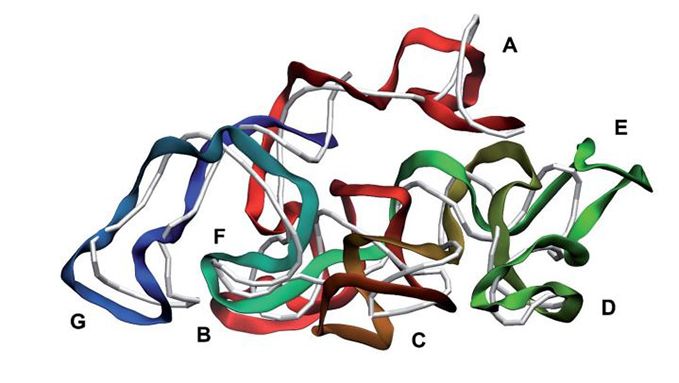
First ever computer reconstruction of a virus, including its complete native genome Will open way for investigating biological processes which can’t currently be fully examined because the genome is missing Could lead the way to research into an alternative to antibiotics. An Aston University researcher has created the first ever computer reconstruction of a virus, including its complete native genome. Although other researchers have created similar reconstructions, this is the first to replicate the exact chemical and 3D structure of a ‘live’ virus. The breakthrough could lead the way to research into an alternative to antibiotics, reducing the threat of anti-bacterial resistance. The research Reconstruction and validation of entire virus model with complete genome from mixed resolution cryo-EM density by Dr Dmitry Nerukh, from the Department of Mathematics in the College of Engineering and Physical Sciences at Aston University is published in the journal Faraday Discussions. The research was conducted using existing data of virus structures measured via cryo-Electron Microscopy (cryo-EM), and computational modelling which took almost three years despite using supercomputers in the UK and Japan. The breakthrough will open the way for biologists to investigate biological processes which can’t currently be fully examined because the genome is missing in the virus model. This includes finding out how a bacteriophage, which is a type of virus that infects bacteria, kills a specific disease-causing bacterium. At the moment it is not known how this happens, but this new method of creating more accurate models will open up further research into using bacteriophage to kill specific life-threatening bacteria. This could lead to more targeted treatment of illnesses which are currently treated by antibiotics, and therefore help to tackle the increasing threat to humans of antibiotic resistance. Dr Nerukh said: “Up till now no one else had been able to build a native genome model of an entire virus at such detailed (atomistic) level. “The ability to study the genome within a virus more clearly is incredibly important. Without the genome it has been impossible to know exactly how a bacteriophage infects a bacterium. “This development will now allow help virologists answer questions which previously they couldn’t answer. “This could lead to targeted treatments to kill bacteria which are dangerous to humans, and to reduce the global problem of antibiotic-resistant bacteria which are over time becoming more and more serious.” The team’s approach to the modelling has many other potential applications. One of these is creating computational reconstructions to assist cryo-Electron Microscopy – a technique used to examine life-forms cooled to an extreme temperature.

Georgia Southern University’s Staff Council Professional Development Committee, in coordination with the Office of Military and Veteran Services, will offer Green Zone Training to faculty and staff on the Statesboro and the Armstrong campuses in February. “This training will highlight our military-connected student population, military culture and experiences, and help participants recognize obstacles these students face in higher education,” said Georgia Southern Director of Military and Veteran Services George Fredrick, Ed.D. “In addition to the Georgia Southern Military Resource Center, Green Zone Training will assist in identifying other campus resources that are available for students, staff and faculty.” Georgia Southern currently has more than 3,500 military-affiliated students across its three campuses in Statesboro, Savannah and Hinesville. Jodi Middleton Kennedy, director of the Office of Leadership and Community Engagement, benefitted from last year’s session. “Green Zone Training is an amazing opportunity for staff to learn not only how we can support military-connected students, but also some of the unique obstacles they face as students navigating their educational journeys,” she stated. “It is clear that George Fredrick and his team in Military and Veteran Services are passionate about their roles, and it was amazing to be able to connect with a panel of students and hear about their personal experiences as Georgia Southern students.” University Academic Success Coach Lydia Hinkle also thought it was advantageous to participate in Green Zone Training for multiple reasons. “It is important to be aware of the different types of students we serve and what their needs are so that we can better assist them as staff members,” said Hinkle. “As staff members, we should want to do these kinds of training opportunities so that we can support these students as best as we can. Not only does it increase your value as an employee to be able to understand your students better, but it increases our appeal as a university if we, as a whole, are known to be extremely knowledgeable and supportive of this student population. “I did learn a lot about what our students from this population need and would like to see happen, and brought some information back to my department on how we can better assist these students.” During the Green Zone Training in Savannah, recipients of three Military Spouse Scholarships totaling $10,000 will also be recognized. Green Zone Training will take place on the Statesboro Campus on Thursday, Feb. 2, in the Williams Center and on the Armstrong Campus in Savannah on Feb. 9 in the Ogeechee Theatre. Both events take place from 9:30 to 11:00 a.m. For more information about Green Zone Training or to arrange an interview with Georgia Southern's Director of Military and Veteran Services George Fredrick - simply reach out to Georgia Southern Director of Communications Jennifer Wise at jwise@georgiasouthern.edu to arrange an interview today.


Georgia Southern University building ethical skills in military leaders
Georgia Southern University’s Department of Philosophy and Religious Studies recently partnered with key leaders of the U.S. Army‘s 188th Infantry Brigade from Fort Stewart for a Leadership and Professional Development session in Jenkins Hall Theater at the Armstrong Campus. Professor Leisa Schwab, a part-time member of the department and former military judge advocate, presented “Introduction to Moral Theory” to the unit’s officers and senior non-commissioned officers. The session focused on ethical leadership and communication techniques in the military. “Military leaders are people entrusted with authority in a really broad range of areas and they have difficult decisions to make,” Schwab said. “Whether in the heat of the moment or as an after-the- fact analysis, these ethical frameworks can be helpful for making sense of these decisions.” The members of the audience were introduced to three different ethical theories, which were then discussed in relation to difficult situations that leaders may encounter in the military. Schwab’s session focused on how an understanding of philosophical ethics could help leaders both make better decisions and communicate more effectively. The military is made up of countless personalities and backgrounds. Just like any other group, company or society, the leadership must find ways for everyone to work together effectively. “You may have two soldiers who have wildly different cultural backgrounds and they have deep disagreements about what is right or wrong in a certain situation,” Schwab said. “Being able to help them communicate effectively about that can help maintain that kind of functional sense of community. That’s so important.” Schwab said this was a fun opportunity to mix her love of teaching philosophy with her military background. Georgia Southern University’s Department of Philosophy and Religious Studies recently partnered with key leaders of the U.S. Army‘s 188th Infantry Brigade from Fort Stewart for a Leadership and Professional Development session in Jenkins Hall Theater at the Armstrong campus. Looking to know more - then let us help. Professor Leisa Schwab is available to speak to reporters about this important project. For more information or to arrange an interview - simply reach out to Georgia Southern Director of Communications Jennifer Wise at jwise@georgiasouthern.edu to arrange an interview today.

Georgia Southern University’s College of Science and Mathematics has been awarded a six-year grant of $493,065 from the Howard Hughes Medical Institute (HHMI) Inclusive Excellence 3 (IE3) initiative. Georgia Southern is among a select group of 104 schools that have received an HHMI IE3 grant to support diversity, equity and inclusion. “Science is about building, witnessing and collaborating with each other, which is why Georgia Southern is so proud to receive this grant,” said Georgia Southern Provost and Vice President of Academic Affairs Carl Reiber, Ph.D. “Our inclusive initiatives are breaking down the walls that have separated science from interested students.” The HHMI IE3 initiative challenges U.S. colleges and universities to increase student participation in sciences, focusing especially on populations who have been historically underrepresented in the field. The Georgia Southern IE3 leadership team includes: Karelle Aiken, Ph.D, (program director), Tricia Muldoon Brown, Ph.D., (co-director) Sara Gremillion, Ph.D., (co-director), Checo Colón-Gaud, Ph.D., Issac Taylor and Delana Schartner, Ph.D. “The IE3 initiative is tapping into the transformative power of collaboration; the ability of a critical mass to drive cultural change. As such, an ingenious mandate of this grant is that its 104 institutional awardees work on their goals in teams of Learning Community Clusters (LCC),” said Aiken. Georgia Southern’s IE3 LCC hub, LCC4, includes 13 other institutions from across the U.S., all of whom are seeking to answer a specific challenge: How can an institution evaluate effective inclusive teaching, and then use the evaluation in the rewards system including faculty promotion and tenure? The IE3 initiative has been rolled out in two phases. The most recent award marks the beginning of the second phase and so, the work of the Georgia Southern team and their LCC4 colleagues is ongoing. At Georgia Southern, over the next six years the IE3 initiative will support training for faculty and student-leaders centered on inclusive teaching strategies and the effective evaluation of those strategies; an annual COSM IE3 Spring Speaker Series (established in 2022); the continued development of a new faculty mentorship program piloted in 2022 by Inclusive Excellence Faculty Fellows; student- and faculty-led initiatives geared toward cultivating inclusive learning environments; and more. Looking to know more - then let us help. For more information or to arrange an interview with Carl Reiber or anyone from the Georgia Southern IE3 leadership team - simply reach out to Georgia Southern Director of Communications Jennifer Wise at jwise@georgiasouthern.edu to arrange an interview today.

Researchers use computer models and simulations to predict satellite resilience
Computational physics is a field of nuance and detail. Using mathematics, researchers build computer models and simulations to test hypotheses within a digital environment. These numerical experiments are often used when practical testing is not feasible like when, for example, you must ascertain the durability of materials in a nuclear explosion. Gennady Miloshevsky, Ph.D., is an associate professor of mechanical and nuclear engineering who specializes in computational physics with an emphasis on plasma, lasers and particle beams. He works to predict the behavior and state of materials when under extreme pressure, temperature and radiation. With funding from the Defense Threat Reduction Agency (DTRA), an agency of the U.S. Department of Defense (DoD), Miloshevsky is studying the effect weapons of mass destruction have on satellites within Earth’s orbit. His work requires a distinct familiarity with our physical world and how different forms of energy interact with and within matter. “Any satellite close to the detonation point would be destroyed,” says Miloshevsky, “However, beyond that initial area, surviving satellites could be subject to X-ray induced blow-off, thermo-mechanical shock and warm dense plasma formation take place on material surfaces. This causes damage to exposed optics, sensors and solar cells on satellites. Particularly dense surface plasmas can couple the solar cells to each other in gaps between unshielded active elements and to dielectric structures causing them to be destroyed. It would all depend on the distance from the detonation point and the orientation of the satellite.” Part of Miloshevsky’s research involves developing methods to computationally simulate temperature, pressure and radiation in order to study the state known as “warm dense plasma,” which occurs between the solid and classical plasma states and exhibits the characteristics of both. A better understanding of this state of matter is a stepping stone to building more resilient materials. “Warm dense plasma is highly transient and short lived,” says Miloshevsky. “The state occurs in several nanoseconds, so isolating it in a laboratory setting in order to characterize it is very complicated. A nuclear burst irradiates materials with high-intensity X-rays, resulting in the transition to warm dense plasma. Our DTRA research seeks to understand the fundamental physics of warm dense plasma, including its physical and electrical properties. It’s currently unclear how this may affect the choice of future materials for satellite components.” A ban on nuclear testing means research into the effects of nuclear weapons is only possible through the use of computer codes to either model or simulate the many physics phenomena generated by a nuclear detonation. Miloshevsky’s first research area includes quantifying and reducing the uncertainty of computer model material properties, such as diamond, under the conditions of a nuclear blast using REODP (Radiative Emissivity and Opacity of Dense Plasmas) computer code he developed. This code is used to investigate the ionization state and ion abundances for equilibrium and transient-dense plasmas. It helps predict the equations of state, transport and optical properties of materials in the category of warm dense plasma. In a second research area, Miloshevsky works to understand and predict the interaction between X-rays and satellite surface materials (like silicon, germanium and other materials used to make solar panels) during a nuclear detonation in space. This uses MIRDIC (Modeling Ionizing Radiation Deep Insulator Charging) code developed in collaboration with NASA’s Marshall Space Flight Center for its Europa Lander project. This code helps anticipate charge production by blackbody X-rays in dielectrics and insulators of DoD space systems. It can also predict electrostatic material breakdown. Also part of the second research area is work to understand X-ray-induced shock generation, material ablation and blow-off (when material is literally “blown off” the satellite in reaction to another force) within the vacuum of space. This is studied using MSM-LAMMPS (Momentum Scaling Model implemented within the Large-scale Atomic/Molecular Massively Parallel Simulator software package) code. It predicts material behavior at an atomic level within extreme environments, the nature and behavior of materials in highly non-equilibrium states, microscopic mechanisms of disintegration, blow-off, melting, ionization and warm dense plasma states. Practical experiments in a lab use lasers to replicate the heat and pressure generated by X-ray radiation, shock and other physical effects of a nuclear detonation. Miloshevsky’s colleagues at the John Hopkins Extreme Materials Institute heat carbide diamond and silica materials typically found in solar panels to temperatures between 11,600 and 1,160,000 Kelvin using lasers at the University of Rochester and Pacific Northwest National Laboratory to observe this momentary transformation into warm dense plasma. Researchers use shadowgraphy, spectroscopy and other visual analytical methods to quantify the result. They can also investigate the depth, size and shape of the crater created by the laser within the material surface. “Experimental and computational research are closely interconnected and complement each other,” says Miloshevsky. “The laser-material interaction is a complicated process that occurs on multiple space (nanometers to millimeters) and time (femtoseconds to milliseconds) scales with evolving and changing physics. Data measured in these experiments usually need physics insights from a computer model to be correctly interpreted and understood. Models can provide fine details of physics processes that cannot be revealed in the practical experiments due to the incredibly minute space and time scales. Conversely, data from physical experimentation can feed into a computer model so it can be further developed and refined to enhance the understanding of the experiment’s measured data.” Miloshevsky’s recent topical review paper, Ultrafast laser matter interactions: modeling approaches, challenges, and prospects, details some of these advances in computational modeling and simulation development for laser-pulse interactions with solids and plasma.



Aston University appoints new pro-vice-chancellor and executive dean of business and social sciences
Professor Zoe Radnor has been appointed as Pro-Vice-Chancellor and Executive Dean of the College of Business and Social Sciences She has had a successful career in higher education for over 25 years Professor Radnor will be joining Aston University in Spring 2023. Aston University has appointed Professor Zoe Radnor as the new Pro-Vice-Chancellor and Executive Dean of the College of Business and Social Sciences. Professor Radnor will succeed Professor George Feiger, who will be standing down after 10 years of leadership of Aston Business School and the College of Business and Social Sciences. With a successful career in higher education spanning over 25 years, Professor Radnor will be joining Aston University from The University of Law (ULaw), where she is currently Provost and Deputy Vice-Chancellor, specifically focused on leading the diversification of the academic portfolio, including building an academic model for the provision of high quality, innovative teaching and thought leadership. In addition, she is leading the TEF submission at the institution Prior to her executive role at ULaw, she was Vice-President for Strategy and Planning; Equality, Diversity and Inclusion and Professor of Service Operations Management at City, University of London, leading the development of the University EDI strategy. In this role she also led the creation of the new enabling Civic Strategy and established the new institution-wide Change Support Unit. Before City, Professor Radnor was the founding Dean of the School of Business at the University of Leicester, and prior to that, as Associate Dean Teaching and Learning, she led the development of new curriculum offerings for the Loughborough University campus in London. Professor Zoe Radnor is a Fellow of the Academy of Social Sciences (FAcSS) and the British Academy of Management (FBAM). She is also a member of the Athena Swan Governance Committee for Advance HE. Her main research interests are in performance, process improvement and service value within public sector organisations. She has led research projects for a number of Government and healthcare organisations, evaluating the use of ‘lean’ and associated techniques and continues to maintain a strong ongoing research profile. Professor Aleks Subic, Vice-Chancellor and Chief Executive of Aston University, said: “I am looking forward to welcoming Professor Radnor to the Executive Team at what is a hugely exciting period of development for the University and to working with her as we shape our Aston University 2030 Strategy. Zoe brings significant leadership experience to the team and ambition in line with our bold vision. “I would also like to take this opportunity to acknowledge the significant contribution made by Professor George Feiger during his leadership of Aston Business School and the College of Business and Social Sciences over the last 10 years.” Professor Radnor said: “I am delighted to be joining such a prestigious and forward-thinking University and College. “The reputations of the College of Business and Social Sciences and of Aston University generally and the strategic vision of the new Vice-Chancellor and University leadership are what attracted me to this exciting role. I can’t wait to get started working with so many talented and innovative new colleagues.” Professor Radnor will be taking up her post in Spring 2023.

Aston University research to support SMEs and mid-sized companies to be ‘future ready’
‘Future readiness’ is defined as a set of capabilities and orientations that enable companies to thrive in the future Researchers say SMEs and mid-sized companies’ leadership should focus on bridging their resilience gap and exploiting their high level of agility The report found circular economy can combat environment and social impact without sacrificing economic performance. A new report from Aston University has highlighted opportunities for small and medium sized enterprises (SMEs) and mid-sized companies to develop strategies and pathways to increase their future readiness. The report defines future readiness as “a set of capabilities and orientations that enable companies to thrive in the future”. For SMEs and mid-sized businesses to be future-ready, they must be successful on the three pillars of long-term growth, societal impact and adaptive capacity. Experts say they must be able to generate lasting financial strength driven by innovative business models, products and/or services, to affect society positively in line with environmental, social and governance (ESG) goals and to develop high levels of resilience and agility, which enables them to bounce back in difficult times and to identify and seize opportunities as they emerge, creating disruption in business models for the future. The report aims to support leadership teams and the wider ecosystem in understanding how they can help increase the capacity for smaller companies to thrive and positively impact the economy and environment, as well as aid the recovery from the pandemic. Experts also say that circular economy adoption, where the ‘make, use and throw away’ supply chain is converted to ‘take, make, distribute, use and recycle’, in SMEs and mid-sized companies creates a win-win situation for every supply chain stakeholder through sustainability measures to achieve economic, environment and social performance. The World Economic Forum will use the insights generated in this report to further support SMEs and mid-sized companies in their future readiness journey. This will be done through the creation of additional resources, including the continuous development of the Forum’s self-assessment and benchmarking tool on future readiness, the creation of a platform for informal peer-to-peer learning between companies and meet ups with key experts. Prasanta Kumar Dey, professor in operations and information management at Aston Business School and lead author of the report, said: “The post-COVID-19 era is significantly more challenging than most people had initially hoped. Heightened geopolitical tensions, the energy crisis, supply chain disruptions, hyperinflation and extreme weather events are just a few of the difficulties that will make the next decade a demanding one. “SMEs and mid-sized companies’ leadership should try to focus on bridging their resilience gap and exploiting their high level of agility, afforded by their smaller size, as a competitive advantage. “Future readiness capability building should not be developed as ad-hoc initiatives but should be embedded into key corporate strategies and decision-making processes, ideally from the beginning, so that it becomes part of the fundamental building blocks of the company. “While smaller companies can go a long way in building their future readiness, it is important to recognise the direct and important impact that their wider policy environment has on their ability to thrive. It is therefore crucial for policymakers, investors and other stakeholders to do what is in their capabilities to contribute to building the future readiness of this segment of the economy. “One of the high-impact areas of intervention at the system levels revolves around digital trade and includes implementing targeted measures to harmonize and drive trade data interoperability across borders and supply chains. This would greatly contribute to making it easier for smaller companies to trade internationally.” You can find out more about the report findings here.

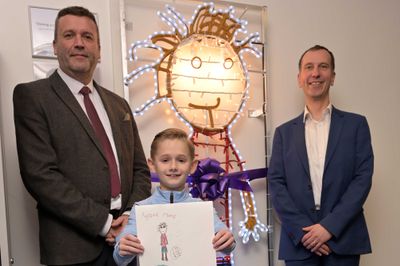
‘Shining a light on Colour Blindness’ competition winner unveils light sculpture at Aston University Winner 10-year-old Leo Evans helped unveil the feature of footballer Tyrone Mings The competition helped highlight the challenges of colour blindness - particularly in sport. A light sculpture named after the Aston Villa footballer Tyrone Mings has been unveiled at Aston University as part of a campaign to help raise awareness of colour blindness. In the UK there are approximately 3 million colour blind people (about 4.5% of the entire population), most of whom are male. Worldwide, there are estimated to be about 300 million people with colour blindness. The competition, ‘Shining a Light on Colour Blindness’, was launched by non-profit organisation Colour Blind Awareness and supported by various football club charities - including the Aston Villa Foundation. Young supporters were asked to take part by drawing a colourful picture of their favourite footballer. The winning entry was then made into a light feature. The winning artwork, which came from the Aston Villa Foundation, was transformed into a light feature and was selected to go on display inside the Aston University Vision Sciences building in the paediatrics bay, as part of the ongoing partnership between the Aston Villa Foundation and Aston University. Colour Blind Awareness is a non-profit organisation designed to highlight the relevance and impact of colour vision deficiency amongst those that live with it - including the challenges in sport. The organisation is part of an EU-funded project, Tackling Colour Blindness in Sport. Competition winner, 10-year-old Leo Evans from Erdington, helped unveil the light sculpture alongside Professor Anthony Hilton, pro-vice-chancellor & executive dean of the College of Health and Life Sciences. Professor Hilton said: “We are delighted for Leo, his winning drawing of Tyrone Mings looks fantastic as a light sculpture and we are proud to host it in our Vision Sciences building for our students, staff and visitors to enjoy, whilst raising awareness about colour blindness.” Commenting on his winning drawing, Leo said: “I am very proud that my picture won the competition and that Tyrone Mings liked it. I now better understand what being colour blind means and I hope my picture has helped someone else.” Cheryl Evans, Leo's Mum, said: “I couldn't be prouder of Leo and the fact that his drawing is of his favourite player Tyrone Mings makes it even more special. This competition has meant that as a family we have had many conversations about colour blindness and it has educated us all more on this topic. Well done Leo!” Kathryn Albany-Ward, CEO at Colour Blind Awareness CIC, said: “Aston Villa Foundation’s entry from Leo charmed the judges and who were delighted to award it first prize. We’re very grateful to Aston University for hosting the light feature and can’t wait to see it displayed. We hope its location in the Vision Sciences Department will help raise more awareness of a condition which affects 8% of boys and 0.5% of girls worldwide, impacting on their education and ability to perform to their best in sport if left unsupported.” Leo was met and congratulated by the head of the Aston Villa Foundation, Guy Rippon, and foundation manager, Ross Alexander. Ross said: “The Aston Villa Foundation would like to say a big congratulations to Leo for his amazing achievement! This is a really proud moment for Leo and we are thrilled that he was inspired by his favourite Aston Villa player. “It has also been a pleasure to have supported Colour Blind Awareness, who have done some great work in highlighting such an important and relevant topic during our coaching team’s workforce development. The support has culminated in a competition that was won by Leo, a participant in one of our Football in the Community holiday sessions. “The stunning light feature of Tyrone Mings will now be housed at Aston University for all to see and we are grateful for the University’s ongoing support with the Club.”
