
Experts Matter. Find Yours.
Connect for media, speaking, professional opportunities & more.

Optical research illuminates a possible future for computing technology
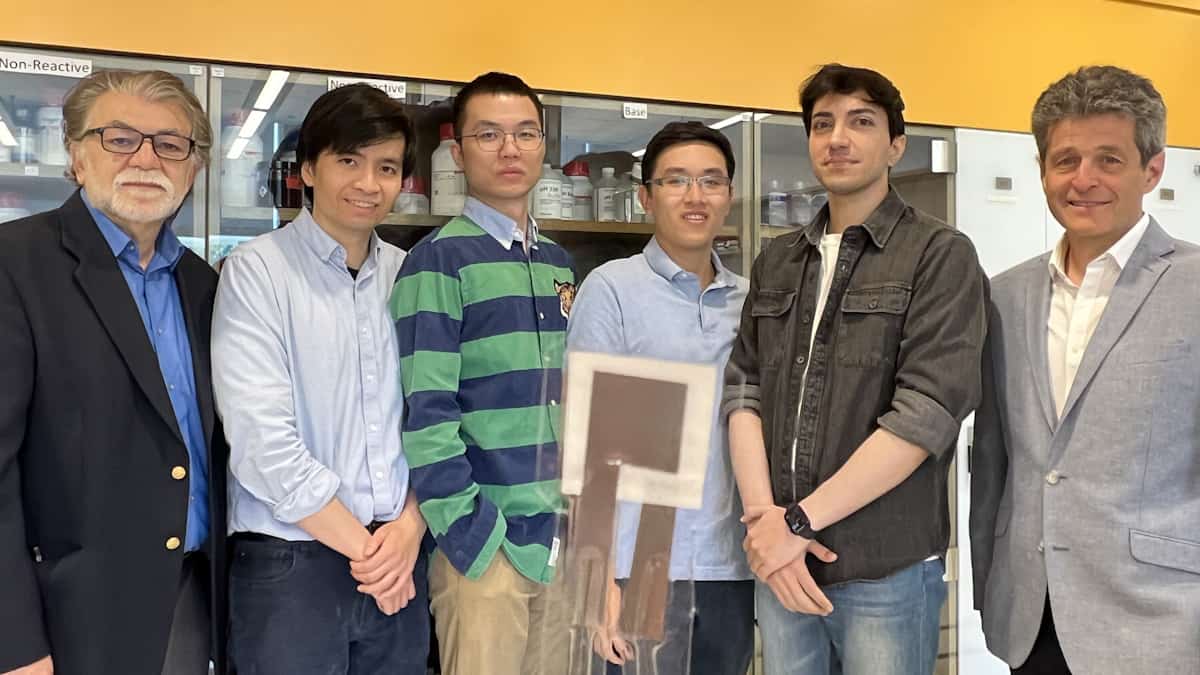
Nathaniel Kinsey, Ph.D., Engineering Foundation Professor in the Department of Electrical and Computer Engineering (ECE), is leading a group to bring new relevance to a decades-old computing concept called a perceptron. Emulating biological neuron functions of the messenger cells within the body’s central nervous system, perceptrons are an algorithmic model for classifying binary input. When combined within a neural network, perceptrons become a powerful component for machine learning. However, instead of using traditional digital processing, Kinsey seeks to create this system using light with funding from the Air Force Office of Scientific Research. This “nonlinear optical perceptron” is an ambitious undertaking that blends advanced optics, machine learning and nanotechnology. “If you put a black sheet outside on a sunny day, it heats up, causing properties such as its refractive index to change,” Kinsey said. “That’s because the object is absorbing various wavelengths of light. Now, if you design a material that is orders of magnitude more complex than a sheet of black plastic, we can use this change in refractive index to modify the reflection or transmission of individual colors – controlling the flow of light with light.” Refractive index is an expression of a material’s ability to bend light. Researchers can harness those refractive qualities to create a switch similar to the binary 1-0 base of digital silicon chip computing. Kinsey and collaborators from the U.S. National Institute of Standards and Technology, including his former VCU Ph.D. student Dhruv Fomra, are currently working to design a new kind of optically sensitive material. Their goal is to engineer and produce a device combining a unique nonlinear material, called epsilon-near-zero, and a nanostructured surface to offer improved control over transmission and reflection of light. Kinsey’s prior research has demonstrated that epsilon-near-zero materials combine unique features that allow their refractive index to be modified quite radically – from 0.3 to 1.3 under optical illumination – which is roughly equivalent to the difference between a reflective metal and transparent water. While an effective binary switch, the large change in index requires a lot of energy (~1 milli-Joules per square centimeter). By combining epsilon-near-zero with a specifically designed nanostructure exhibiting surface lattice resonance, Kinsey hopes to achieve a reduction in the required energy to activate the response. The unique response of a nanostructure exhibiting surface lattice resonance allows light to effectively be bent 90 degrees, arriving perpendicular to the surface while being split into two waves that travel along the surface. When a large area of the nanostructure is illuminated, the waves traveling along the surface mix, where they interfere constructively or destructively with each other. This interference can produce strong modification to reflection and transmission that is very sensitive to the geometry of the nanostructure, the wavelength of the incident light and the refractive index of the surrounding materials. The mixing of optical signals along the surface can also selectively switch regions of the epsilon-near-zero material thereby performing processing operations. A key aspect of Kinsey’s work is to build nonlinear components, like diodes and transistors, that use optical signals instead of electrical ones. Transistors and other traditional electronic components are nonlinear by default because electrical charges strongly interact with each other (for example, two electrons will tend to repel each other). Creating optical nonlinear components is challenging because photons do not strongly interact, they just pass through each other. To correct for this, Kinsey employs materials whose properties change in response to incident light, but the interaction is weak and thus requires large energies to utilize. Kinsey’s device aims to reduce that energy requirement while simultaneously shaping light to perform useful operations through the use of the nanostructured surface and lightwave interference. The United States Department of Defense sees optical computing as the next step in military imaging. Kinsey’s work, while challenging, has potential to yield an enormous payoff. “Let’s say you want to find a tank within an image,” Kinsey said, “Using a camera to capture the scene, translate that image into an electrical signal and run it through a traditional, silicon-circuit-based computer processor takes a lot of processing power. Especially when you try to detect, transfer, and process higher pixel resolutions. With the nonlinear optical perceptron, we’re trying to discover if we can perform the same kinds of operations purely in the optical domain without having to translate anything into electrical signals.” Linear optical systems, like metasurfaces and photonic integrated circuits, can already process information using only a fraction of the power of traditional tools. Building nonlinear optical systems would expand the functionality of these existing linear systems, making them ideal for remote sensing platforms on drones and satellites. Initially, the resolution would not be as sharp as traditional cameras, but optical processing built into the device would translate an image into a notification of tanks, troops on the move, for example. Kinsey suggests optical-computing surveillance would make an ideal early warning system to supplement traditional technology. “Elimination or minimization of electronics has been a kind of engineering holy grail for a number of years,” Kinsey said, “For situations where information naturally exists in the form of light, why not have an optical-in and optical-out system without electronics in the middle?” Linear optical computing uses minimal power, but is not capable of complex image processing. Kinsey’s research seeks to answer if the additional power requirement of nonlinear optical computing is worthwhile given its ability to handle more complex processing tasks. Nonlinear optical computing could be applied to a number of non-military applications. In driverless cars, optical computing could make better light detection and ranging equipment (better known as LIDAR). Dark field microscopy already uses related optical processing techniques for ‘edge detection’ that allows researchers to directly view details without the electronic processing of an image. Telecommunications could also benefit from optical processing, using optical neural networks to read address labels and send data packets without having to do an optical to electrical conversion. The concept of optical computing is not new, but interest (and funding) in theory and development waned in the 1980s and 1990s when silicon chip processing proved to be more cost effective. Recent years have seen many advancements in computing, but the more recent slowdown in scaling of silicon-based technologies have opened the door to new data processing technologies. “Optical computing could be the next big thing in computing technology,” Kinsey said. “But there are plenty of other contenders — such as quantum computing — for the next new presence in the computational ecosystem. Whatever comes up, I think that photonics and optics are going to be more and more prevalent in these new ways of computation, even if it doesn’t look like a processor that does optical computing.” Kinsey and other researchers working in the field are in the early stages of scientific exploration into these optical computing devices. Consumer applications are still decades away, but with silicon-based systems reaching the limit of their potential, the future for this light-based technology is bright.


A recent survey conducted on behalf of CAA Insurance Company has found that a growing number of Ontarians have significant concerns about vehicle theft. The findings indicate that almost half of respondents (47 per cent) are very concerned about auto theft. That number increases to 57 per cent for those living in Toronto and the Greater Toronto Area (GTA). In contrast, those who live in either Northern (14 per cent) or Southwestern Ontario (10 per cent) were less worried about auto theft. "As an organization, we are deeply concerned about the rising trend of auto theft in Ontario and across the country. The survey results highlight the urgency of taking comprehensive action to protect our communities," says Elliott Silverstein, director of government relations CAA Insurance Company. Many Ontarians have a false sense of security. While many of those surveyed are concerned about the increase in vehicle theft, far fewer (30 per cent) are worried that their vehicle is at risk of getting stolen. This discrepancy suggests that many Ontarians may have a false sense of security when trusting that their cars are not at risk of being stolen. In most cases, basic auto theft prevention does not go far enough. According to the Solicitor General of Ontario, a car is stolen every 48 minutes. From 2014 to 2021, there was a 72 per cent increase in auto theft across the province, with a 14 per cent increase in the last year alone. While many people are diligent about locking their doors, basic auto theft prevention does not go far enough. Eighty-two per cent of drivers are ensuring their vehicle is always locked. Seventy-seven per cent of drivers ensure valuables are out of sight. Nearly 50 per cent of drivers park their cars in locked garages. Six per cent of drivers use a steering wheel lock, and only 8 per cent use a Faraday box to block the transmission of RFID signals. "Auto theft can happen to anyone, and drivers need to do more than just lock their doors to make their vehicle difficult to steal. We are urging Ontarians to take additional preventive measures to safeguard their vehicles, making them less appealing targets for thieves," adds Silverstein. Tips that can help deter vehicle theft As car-related thefts in Ontario have risen dramatically. Here are tips that can help deter vehicle theft: Secure your parked vehicle with an anti-theft deterrent such as a steering wheel lock, brake pedal lock or wheel & tire lock device like "The Club" Store your key fob in a Faraday box/pouch to block its signal from being hacked Lock your doors, and if you have a garage, park your vehicle inside If you have multiple vehicles, park the less expensive one closest to the street Install motion sensors on your driveway and a camera to capture any activity Cover the VIN (Vehicle Identification Number) so that it’s not visible on the dashboard Store an Air Tag in your vehicle to track your vehicle should it be stolen Ensure items are out of sight, and do not leave valuables in your vehicle at all Never leave your vehicle running Share any suspicious activity with law enforcement CAA Insurance believes that to combat auto theft properly; it will require collaboration with the government, insurers, vehicle manufacturers, and others, including Canada Border Services Agency. About This Survey The survey conducted for CAA Insurance Company is a representative sample of 2,000 Ontarians balanced and weighted on age, gender, and region. Comparative margin of error = +/-3.1%


#Expert Research: Biodegradable ultrasound implant could improve brain tumour treatments
One of the challenges in treating certain types of brain cancer is the way that the blood-brain barrier prevents chemotherapy drugs from reaching the tumors they're meant to target. UConn's Thanh Nguyen, a biomedical and mechanical engineer, is developing new technology that could improve how we are able to treat brain tumors. He recently spoke with Physics World about this groundbreaking research: A new type of biodegradable ultrasound implant based on piezoelectric nanofibres could improve outcomes for patients with brain cancer. Researchers led by Thanh Nguyen from the the University of Connecticut’s department of mechanical engineering fabricated the devices from crystals of glycine, an amino acid found in the human body. Glycine is not only non-toxic and biodegradable, it is also highly piezoelectric, enabling the creation of a powerful ultrasound transducer that could help treat brain tumours. Brain tumours are particularly difficult to treat because the chemotherapy drugs that would be effective in tackling them are blocked from entering the brain by the blood–brain barrier (BBB). This barrier is a very tight junction of cells lining the blood vessel walls that prevents particles and large molecules from making their way through and damaging the brain. However, ultrasound can be safely used to temporarily alter the shape of the barrier cells such that chemotherapy drugs circulating in the bloodstream can pass through to the brain tissues. Currently, to achieve such BBB opening requires the use of multiple ultrasound transducers located outside the body, together with very high intensity ultrasound to enable penetration through the thick human skull bone. “That strong ultrasound can easily damage brain tissues and is not practical for multiple-time applications which are required to repeatedly deliver chemotherapeutics,” Nguyen tells Physics World. By contrast, the team’s new device would be implanted during the tumour removal surgery, and “can generate a powerful acoustic wave deep inside the brain tissues under a small supplied voltage to open the BBB”. The ultrasound would be triggered repeatedly as required to deliver the chemotherapy that kills off the residual cancer cells at tumour sites. After a set period of time following treatment the implant biodegrades, thereby eliminating the need for surgery to remove it. The research, reported in Science Advances, demonstrated that the team’s device used in conjunction with the chemotherapy drug paclitaxel significantly extended the lifetime of mice with glioblastomas (the most aggressive form of brain tumour) compared with mice receiving the drugs but no ultrasound treatment. This is fascinating research and if you are interesting in covering this topic, then let us help. Professor Nguyen focuses on biointegrated materials and devices at nano- and micro-scales for applications in biomedicine, and he's available to speak to media about his research. Simply click on his icon now to arrange an interview today.



Smartphones push consumers to prefer a customizable purchasing experience
In a world where purchasing is only a click away, studies have shown that smartphones complicate the most preferred items. Aner Sela, a professor in UF’s Warrington College of Business conducted a new study that discovered consumers who are captivated by their phones gravitate towards specialized, custom products. Compared to large computers or borrowing someone’s phone, an individual’s phone sparks privatized feelings that allow stronger self-expression and strengthens our unconscious preference for a customized consumer journey. Working alongside Camilla Song, an assistant professor at City University of Hong Kong, Sela published their findings in the Journal of Marketing Research in early August. “When you use your phone, your authentic self is being expressed to a greater extent. That affects the options you seek and the attitudes you express,” said Sela, one of the authors of the study. The researchers suspected that smartphones encourage people to reflect on their inner identity, calling on the psychological state of private self-focus that affects all kinds of behaviors. “People with high levels of private self-focus tend to be more independent in the attitudes that they express. They conform less,” the UF professor said. “When they make choices, they tend to choose based on privately or deeply held beliefs, preferences or tastes, and they’re less influenced by social contexts.” Sela and Song chose to test if smartphones have the capability to promote enough private self-focus that it changes behavioral patterns, so they performed five experiments with undergraduates and online respondents. The study found that smartphone users were more likely to choose unique, tailored products rather than large ones than if the user hopped on a large computer. These results vanished if the user was given another phone from the same brand, suggesting that companies should alter their consumer suggestions based on the device they are using. The professor and her former doctoral student found the self-expression mindset likely to cause behavioral changes can be activated by the use of a smartphone. “With a borrowed phone, it doesn’t feel like you’re in your own little bubble. What we find is the use of smartphones and its activation of private self-focus is really unique to a personal device,” Sela said. By Halle Burton



Expert Insight: The Voice of Alexa: How Speech Characteristics Impact Consumer Decisions
In the 2020 film “Superintelligence,” an all-powerful artificial intelligence attempts to take over the world, and it studies an average person, played by Melissa McCarthy, to decide if humanity is worth saving. The AI is voiced by James Corden—a voice it chooses because it knows it’s one McCarthy’s character will engage with. Rajiv Garg, associate professor of Information Systems & Operations Management at Emory’s Goizueta Business School, shows the “Superintelligence” trailer before his research presentations to set the tone. Garg conducts research that explores the impact of artificial intelligence voices on consumer behavior and purchase intent, along with Haris Krijestorac, a professor at HEC Paris, and Vijay Mahajan, a professor from The University of Texas at Austin. Garg’s research began when Amazon launched celebrity voices for its Alexa device in 2019. From Samuel L. Jackson to Shaquille O’Neal, users can now get their news and entertainment, while interacting with their favorite superstars. “I questioned if certain voices could get more engagement or more purchases from consumers,” Garg says. If Alexa starts talking to you in Samuel L. Jackson’s voice, will you continue the conversation? What could Samuel L. Jackson’s voice sell you that you would buy? Garg and his team began their research by collecting more than 300 celebrity voice samples, which they analyzed based on their sound characteristics, such as amplitude, frequency, and entropy. They looked at 20 sound characteristics and identified that all the voices could be segmented into six clusters: ostentatious, colloquial, friendly, authoritative, seductive, and suave. The team then created advertisements for select products using computer generated voices for each of the six clusters, opting for artificial intelligence-created speech instead of celebrity deep fakes due to permission legalities. They chose a shoe and an office chair as their products, and created two different advertisements for each product. One ad was simple, denoting the shoe as comfortable for all-day wear and the office chair as comfortable for sitting in for extended time periods. The other ad was hedonic, denoting the shoe as crafted with Italian leather and the office chair equipped with several massage features. They recorded the four advertisements using both a female and male voice for all six voice clusters. Study participants listened to each of the four advertisements in one of the 12 voices, which was randomly selected. After the advertisement was played, participants were asked if they wanted more information, and later, if they wanted to buy the product (omitting the price as to not add another factor to their decision making). Influencing Consumer Behavior For simple, utilitarian products, they found no significant effect of voice on information seeking behavior. Garg says once participants hear this type of advertisement, they simply decide to purchase or move on. Participants do, however, engage more in information seeking behavior for hedonic products when the voice is ostentatious, seductive, or authoritative. The team also found men were more likely than women to engage with ostentatious or seductive voices, and women were more likely to engage with friendly or colloquial voices. Overall, they found participants did not seek information with male voices. For information seeking, men and women only engage if the voices are female, which is somewhat intuitive. The industry is doing this—Alexa, Google, and Siri all have a female voice. In terms of purchase intention, they found ostentatious voices have higher yields for utilitarian products. Men, especially, were more likely than women to purchase a utilitarian product advertised in an ostentatious voice. Think about advertising a stapler. It’s a stapler—it staples paper—but you advertise it in a French accent to make it sound interesting. Conversely, for hedonic products, an ostentatious voice has a negative effect on purchase intent because Garg says it can make the product sound gimmicky. Their research shows colloquial voices do the best here because people focus more on the advertisement’s content. Across the board, they found seductive voices have a negative effect on purchase intent, but more so on utilitarian products compared to hedonic ones. Men were more likely than women to respond positively to seductive and suave voices. Applying the results Voices are another way smart device companies can personalize their customers’ experiences. Garg says these companies should be aware that there may be a certain voice that will garner the best engagement. Their findings are not isolated to business, but may apply to other industries, such as the media. Garg says, for example, if publications intend to increase reader curiosity and engagement, they should use a female colloquial voice on “click to listen” features. Although not yet tested, Garg says he wouldn’t be surprised if their results extend to real-world settings with real human voices as well. During their research, Garg’s team asked participants if they had heard the advertisement voices before, and about 15 percent of respondents says they had. "These were voices we’d created for the first time,” Garg says. “If they say they’ve heard the voice before, that means they were thinking of them as human voices. Although we didn’t study it that way, I do believe what we’re seeing will be relevant for actual human being’s voices and interactions.” Having researched this for years, Garg says every time he listens to a voice, whether a customer service representative or podcast host, he questions whether or not it is impacting his behavior. A lot of times when I’m making a decision, I know that I’m making that decision passively because of the voice. “I’m acting 50 percent based on the rational information in the voice, but the other 50 percent I just want to listen more. There is an inherent desire for a certain voice.” Garg says his favorite part of the research are those “aha moments,” whether they be the influence of voice in his own life or in the industry—such as large companies using female voices in their products to draw engagement. He says he hopes to continue doing this kind of research to help startups and other companies perform better, as AI-powered voices continue to change the way people interact with technology and consume information. “We’re finding these interesting phenomena that can help create new products that are more effective,” Garg says. “I am trying to increase the economic surplus, in some ways to improve society, and this technology presents numerous opportunities.” Looking to know more? Rajiv Garg from Emory’s Goizueta Business School is available to speak with media – simply click on his icon now to arrange an interview today.



Comment: UK Government alert text message test
The UK government recently conducted a nationwide test of their emergency alert system by sending out text messages to all mobile phone users in the country. The test has sparked a range of reactions from the public, including concerns about the effectiveness of the system and the potential for false alarms. What did we learn from Sunday's test? Is it a concern that it apparently didn't work for everybody? As we would expect, not everything went to plan. However, that is the point of preparing and doing this kind of test – to find out what parts of the system works before it is relied upon. The implementation of a new system rarely works perfectly. Sunday’s test was useful to show people what to expect from the alarm system and to identify any aspects that need to be corrected and improved to make the system more effective. It is not so much a concern that the test didn’t work for everyone; it is only of concern if we don’t know how to fix the problem and/or don’t take identified steps to fix it. Is there a risk that public confidence has been undermined here? Is there also a risk of false alarms? The government needs to manage its public awareness campaign – swiftly and fully. Public confidence need not be undermined as identifying the faults in the system was exactly what this kind of test was meant to do. However, public confidence will be undermined if the government doesn’t explain that to the public and isn’t completely transparent about what happened and what has been done to improve. False alarms are always a possibility, but the benefits outweigh the risks. Having the right information at the right time can help a lot of people in complicated circumstances. Additionally, the government needs to ensure that the message is worded appropriately. The government should continue to keep messages short and simple so that there is no unnecessary worries or panic for the public. What are the key challenges? There are also issues related to people with anxiety or similar who may be overwhelmed by the noise the alarm makes and/or feel extra anxious from the threat of an emergency, even if it is simply a test alert. There are also those who suffer from domestic violence and may have secret phones so more communications on how to protect these vulnerable groups are required. Anyone without a mobile phone device may have been side-lined – senior citizens, vulnerable people, children – anyone without a command of English and/or isn’t really technologically minded enough to have a mobile device is at risk of not receiving these messages. Why do we need a system like this in place anyway? Preparedness is fundamental to mitigate the impact of any negative situation. The UK government is trying to leverage technology available to the public to get them crucial information when facing a crisis. The value of the system is to make people aware of a major danger and provide information about the best course of action which can be key for their protection. Alert systems are a great way to warn people of an impending situation, but equally important is that there are measures in place to handle an emergency such as evacuation procedures and rehearsals. It is the absence of a plan, contingency or knowing what to do in an emergency that transforms an emergency or disaster into a crisis. As such, we need a system like this because it aids in preparedness measures. The Aston Crisis Management Centre is focused on preparedness – whether it is for a business crisis or a natural hazard as we know that preparing for a crisis or disaster will help reduce the impact and may even help prevent some aspects of the disaster from happening. Not only is there a human cost in an emergency but also economic cost. It is important that preparing for crises reduces the impact of both. It is also important to be aware that in times of crisis and emergency it is important to have unified response and this system is the start of that important process. This article was written by David Cantliff, David Carrington, Oscar Rodriguez-Espindola & Lauren Traczykowski of Aston Crisis Management Centre


As technology continues to advance, so do the methods that hackers use to steal personal information. One such method that even the FBI has taken notice of is juice jacking, a technique where hackers use public charging stations to install malware onto your device or steal your personal information. The specific danger is very real, experts say. Steve Weldon, director of the Cyber Institute at Augusta University’s School of Computer and Cyber Sciences, said people need to understand there is risk when plugging a phone into a USB port at a public charging station. “USB uses pins for data and power. When we plug devices in to charge, the data pins are also connected,” said Weldon. “No big deal if we’re in an environment we trust. However, do we trust the public charging stations to have access to our data pins and being able to make data transfers? Probably not and that’s the gist of the recent warning.” There are ways to avoid the risk. “The best advice is to bring your own cables and adaptors. Then we can plug directly into power outlets,” Weldon said. If you must use a public charging station, he suggests using a data blocking USB cable. These cables only allow power to flow through, preventing any data transfer between the charging station and your device. Also, be aware if you are using your phone while charging it. “When using public charging stations we should, at a minimum, watch for strange behaviors, weird popups, and being asked questions about trusting the device or drive we’re connected to. Those are danger signs, and we’d want to disconnect quickly,” added Weldon. Another option to protect your phone from juice jacking is to use a wireless charger. These chargers do not require a physical connection between your device and the charging station. While wireless charging is typically slower than using a cable, it is a safe alternative when you’re on the go and need to charge your device. Keeping your personal information safe is crucial in today’s digital age. Protecting your phone from juice jacking is just one way to prevent hackers from accessing your sensitive data. Looking to know more? Connect with our expert today. Steven Weldon is the Director of Cyber Institute at the School of Computer and Cyber Sciences at Augusta University and is an expert in the areas of cellular and mobile technology, ethics in computer science, scripting and scripting and automation. Steve is available to speak with media - simply click on his icon now to arrange an interview today.


Cyber threats have become one of the leading issues for corporations, governments, and public institutions across America. With ransomware attacks, hackers, and other nefarious threats, the issue is becoming a daily occurrence and leading news story. Rensselaer Polytechnic Institute’s James Hendler, director of the Future of Computing Institute, Tetherless World Professor of Computer, Web, and Cognitive Sciences, and director of the RPI-IBM Artificial Intelligence Research Collaboration, weighs in on what we should all know about cybersecurity. Overview Think about cybersecurity the way you think about home security – the more valuables you have, the more security you need. A normal user needs the equivalent of a lock on the door, which most of our computers provide out of the box. However, a user with a fair amount of personal information, who keeps financial records or runs a small business, probably wants a firewall or other additional protection. We used to tell people to protect their computers with firewalls, malware detectors, and the like, but now it is much more important to protect your web access, be wary of external sites, and keep your passwords secure and not easily guessed. Use of a password manager program can be really helpful for people who use a lot of different accounts. Threats The biggest threat facing individuals is identity theft caused by someone getting into an account that you don’t control. Most malware or password stealing comes via a phishing attack (a fake email that convinces you to click a bad link), so if you see an offer that looks too good to be true, don’t believe it. Never give out a password or personal information without confirming that it is legitimate. We also recommend not using major accounts (like Google, Facebook, etc.) to log in to new apps where you aren’t completely sure of the reliability – you’re safer if you use a separate password. It’s also worth noting that these kinds of attacks are now happening on cell phones – if you get a text saying your Amazon, Netflix, or other services have been shut off, be very careful. These companies almost never send out such messages, and if they do, they come via email, not text. For businesses, ransomware is becoming an increasing challenge. Frequent backups and dual authentication are absolute musts for small businesses. Large businesses, and especially those with cyber-physical connections such as a manufacturing device, must have someone on the team who understands internet technology. Outside audits done annually, at least, are also highly recommended. The biggest danger in cybersecurity is that people, especially in businesses, think that the software industry will fix things and that they don’t have to worry. That’s like expecting auto manufacturers to stop car theft, or the government to prevent all crime – these organizations certainly need to help, but they cannot be perfect. So while there definitely needs to be a role for manufacturers and government, people need to understand that the threats are now coming from social interactions such as phishing, or serious criminal enterprises such as ransomware attackers, and not just maladjusted teenagers. They must be ready to pay for some security if they have things on their network that need protection. The Cloud Cloud-based services are a major boon to cybersecurity for individuals and small businesses if, and only if, people protect their access. If a breach is reported to you by a company, don’t ignore it, change your password, and, whenever possible, use dual authentication. The cloud companies can afford to spend more on security than you can and thus your information stored in these services tends to be quite secure. However, people need to be careful in using the cloud. Just as you may trust a bank with your money, you want to be sure not to be robbed on your way there. Future Computing Systems and Cybersecurity New technologies, such as artificial intelligence (AI), are arising all the time in today’s fast-moving cyber world. As these technologies arise, they can create new opportunities for cybersecurity, but can also create new challenges. Cybercrime will never disappear, and each new capability comes with a price. Increased education and awareness of emerging computing technologies (blockchain, quantum, etc.) are important not just for the expert, but also for the general public. It is important to stay informed and pay attention to what is being reported. Just as buying a new appliance can be a great advantage at home (I love my new air-fryer), you also have to be sure to be using it appropriately (used wrong, it can cause fires). Looking to learn more or connect with an expert for your questions and coverage? James Hendler is the director of the Rensselaer Future of Computing Institute, Tetherless World Professor of Computer, Web, and Cognitive Sciences, and director of the RPI-IBM Artificial Intelligence Research Collaboration. Hendler has authored over 400 books, technical papers, and articles in the areas of Semantic Web, artificial intelligence, cybersecurity, and high-performance processing. Hendler is available to speak with media - simply click on his icon now to arrange an interview today.



Infant seating devices may reduce language exposure
When a parent needs to cook dinner or take a shower, often they will place their baby in a bouncy seat, swing, exersaucer, or similar seating device intended to protect the baby and grant a degree of independence to both the parent and infant. For many parents, these devices represent a helpful extra set of hands; for babies, the freedom to safely explore their immediate surroundings. As useful as these devices are to both parents and infants, they may present trade-offs regarding their effect on infants’ exposure to adult language, which is critical for language development. That’s according to a new study by researchers at the Stress and Early Adversity Lab at Vanderbilt Peabody College of education and human development. Within infants’ natural environments and daily routines, the study explored interactions between their exposure to adult language and their placement in seating devices, which support posture and promote the infant’s ability to play with objects or observe their surroundings without direct support from a caregiver. The researchers found that infants were exposed to fewer words when spending time in seating devices compared to when spending time in other placements. They also found that infants who spent the most time in seating devices heard nearly 40 percent fewer daily words compared to infants who spent the least amount of time in seating devices. Infants with more, compared to less, seating device use also had less consistent exposure to adult language throughout the day. Sixty mothers and their 4- to 6-month-old infants participated in this study. For three days, a Language Environment Analysis audio recording device (i.e. “talk pedometer”) captured language exposure. The mothers inserted the audio recorder into the pocket of a vest their babies wore. Automated software estimated from the recordings the total number of adult words spoken to or near the infant over the course of a day. To record real-time behaviors of infant placement, the mothers responded to 12 brief surveys per day about their infant’s current location and use of seating devices. Caregiver reports of their child’s placement in seating devices accounted for 10 percent of an infant’s daily exposure to adult words, which the researchers say is a striking finding due to the complex nature of language exposure and how many other factors may influence children’s exposure to speech (e.g. caregiver’s talkativeness, presence of other siblings). Kathryn Humphreys, assistant professor of psychology and human development and expert in infant and early childhood mental health, is the senior author of the study. She notes that infant seating devices can provide a convenient way to keep infants safely contained while caregivers attend to other tasks. However, given the potential for frequent and prolonged use of these devices, she says that parents may want to be intentional about interactive opportunities while the infant explores their surroundings as well as consider wearing or otherwise carrying their infant on their body as much as possible to create more opportunities for engagement through speech. “While we need more research to be certain that seating devices reduce the richness of infants’ language environments, these findings are influencing my own decisions about intentional placement with my 6-month-old." - Kathryn Humphreys Kathryn Humphreys She suggests that safe and convenient places are a boon for both infants and their caregivers, but that there is a risk for reduced levels of interactions when infants are stationary and not moving to where their caregivers are active.


Innovative virtual practice offers continuous, coordinated and connected care ChristianaCare has launched Virtual Primary Care, a new health solution that offers the benefits of a long-term relationship with your primary care team, with the convenience of virtual care that can be accessed at home, at work or on the go, using a smartphone, tablet or other digital device. The practice is an offering of ChristianaCare’s Center for Virtual Health. “Virtual primary care in most markets does not establish an ongoing relationship between the patient and the provider — it’s on-demand care with the next available provider,” said Sarah Schenck, M.D., medical director of Virtualist Medicine at ChristianaCare. “ChristianaCare Virtual Primary Care is different. We offer a personalized approach in which patients have the attention of their care team who are all focused on their specific needs and health goals. Each care team knows their patients and is actively working to help them reach their personal health goals. And when patients need specialized care or services, our providers have access to ChristianaCare’s network and the ability to refer to the trusted services and specialists a patient might need outside of primary care.” The practice is accessible to residents of Delaware, Pennsylvania, Maryland and New Jersey, New York and Florida and available by monthly, quarterly or yearly subscription. Plans are available for people ages 5 and older and start as low as $35 per month. The subscription provides full access to virtual primary care services — with no additional fees or copays — including same-day appointments, extended hours on nights and weekends, secure text-messaging and the convenience of always-on care. Services that are not a part of primary care, such as emergency room visits, lab tests, diagnostic imaging and specialist referrals, are not included in the subscription and would be subject to the patient’s existing health insurance coverage. “At ChristianaCare we are reimagining health care by making it radically convenient and accessible, and by creating a unique and personal experience,” said Sharon Anderson, MS, RN, FACHE, ChristianaCare’s chief virtual health officer and president of ChristianaCare’s Center for Virtual Health. “The Virtual Primary Care practice goes beyond simply offering video visits to patients. We’ve transformed care so it no longer revolves around waiting for an appointment — it’s immediate, coordinated, continuous. Patients can now access virtual primary care 24/7 as well as a host of other health services — all through their computer, tablet or smartphone.” When individuals sign up, they’ll choose their care team of experts including a primary care provider, nurse and a patient digital ambassador (PDA). The patient digital ambassador serves as a personal health guide to assist individuals with registration and technology set-up for their virtual visits. As a care team member, the PDA is available as a personal health guide, while the primary care provider supports patients with their clinical care needs. Once enrolled, individuals will receive a welcome kit tailored to their needs with tools to assist in their care, such as monitoring blood pressure, weight and temperature. Benefits of ChristianaCare Virtual Primary Care: Schedule a virtual checkup, communicate using video, send photos through secure text messaging and discuss health concerns and treatment options. Schedule same-day appointments and enjoy extended hours on weekends. Get quick referrals to specialists. Create a personalized Working on Wellness Plan (also known as WOW plan) to help achieve healthy goals around stress management, exercise, nutrition, sleep and more. For more information, visit the ChristianaCare Center for Virtual Health or call 302-428-2400.
