
Experts Matter. Find Yours.
Connect for media, speaking, professional opportunities & more.

Tokyo International Conference on African Development
Aston University co-hosted parts of the eighth Tokyo International Conference on African Development (TICAD8). There was a total of six talks hosted by the University, five of which are available to catch up on below. TICAD8 is the eighth event of TICAD, having been initiated by Japan in 1932. The conference brings together international organisations and business representatives from African countries and Japan to promote the digitalisation of African nations to keep pace with other leading economies. Cyber security and data privacy were two of the main topics up for discussion as well as central bank digital currencies (CBDC). CBDC is a government-issued fiat currency, that is, a currency not backed by a commodity such as gold. The use of an ideal CBDC will eliminate over 100,000 armoured cars carrying cash for ATM machines all over the world, reducing CO² emissions. Experts say transitioning to fiat currency requires the highest level of cyber security. The digitalisation of the healthcare sector in Africa Professor Georg Holländer of Oxford University speaks with Aston University visiting professor - and GVE founder - Koji Fusa. The discussion focuses on the benefits of an electronic health record for both an individual and the health care provider but will also relate these benefits to issues of public health and research. The technical challenges of providing the conventional infrastructure to establish health care records will be touched on with a focus placed on data security. Reasons will be pointed out that impede the uptake of electronic health records, especially in low and middle income countries, and possible solutions are presented to overcome this problem. CBDC and private sector digital currency will facilitate the digitalisation of nations of African countries CBDC will require the highest security and privacy protection. Professor Koji Fusa, Cyber Security Innovation Centre, Aston University, CEO of GVE Ltd discusses the benefits of a comprehensive digitalisation of fiat currency. This will become a powerful digital infrastructure which could expand into other areas like healthcare. The cyber security issue pointed by the US NIST in 2016 could be solved by having a different set of systems which could reduce the risks being presented by international hacking groups having quantum computers in the future. The World Bank's support for digitalisation of Africa Takashi Miyahara, the Executive Director of the World Bank Group, presents this talk in his personal capacity. Mr. Miyahara introduces the World Bank’s contribution to date, and Japan’s collaboration with the Bank, for digital development of Africa. Mr. Miyahara worked for the Ministry of Finance of Japan since 1986 before he took the current position in January 2021. Vaccine and climate transition in Africa René Karsenti, senior adviser and honorary president of the International Capital Market Association (ICMA), former board chair of the International Finance Facility for Immunisation (IFFIm), honorary director general of the European Investment Bank (EIB) and member of the Global Advisory Board of GVE Ltd, talks to Aston University's Koji Fusa about vaccine and climate transition in Africa: two major challenges, lessons from innovative ESG financing and future endeavours. Health and vaccine finance, climate transition and sustainable finance have sparked a revolution in thinking about innovative solutions leading to implementing successfully new humanitarian finance such as IFFIm, financing GAVI, the Vaccine Alliance, as well as other new ESG investments to achieve a positive impact. He says: "Needs remain huge in Africa. "We are now at a decisive moment in such ESG investments. We have evolved in a few years from a situation where investors knew - and cared - little about what their investments were supporting, to one where purpose matters more than ever. "But only by recognizing the urgency for action particularly in Africa and the power of ESG investment, collaboration, technology and innovation would get us there." Cyber security, financial integrity and developments Professor George Feiger is the executive dean of the College of Business and Social Sciences at Aston University. He suggests truly secure data transfer has the capability to transform more than medicine and finance in the efficiency sense and also holds out the promise of helping to clean up the even more consequential problem of looting of the state.


Aston University welcomes new Vice-Chancellor and Chief Executive
• Professor Aleks Subic has taken up the role of Vice-Chancellor and Chief Executive, joining Aston University from RMIT in Australia • Professor Subic is a recognised global leader in technology and innovation. Aston University has welcomed Professor Aleks Subic as its new Vice-Chancellor and Chief Executive. He has joined Aston University from RMIT in Australia where he was Deputy Vice-Chancellor of the College of Science, Engineering and Health and Vice President for Digital Innovation. Prior to that, he was Deputy Vice-Chancellor (Research and Enterprise) at Swinburne University of Technology. Professor Subic is a recognised global leader in technology and innovation in higher education, leading on Industry 4.0 strategy and digital transformations across the university sector and with industry and governments both in Australia and internationally. He has received a number of prestigious awards for his work, including the Australian Business Innovation Award and the Victorian Manufacturing Hall of Fame Award. He is a passionate and lifelong advocate for multiculturalism, equality, diversity and inclusion, leading through clear actions and strategic initiatives at enterprise level. These include creating and appointing the first Dean of STEMM Diversity & Inclusion in Australia, establishing Women in STEMM Fellowships and mentoring scheme, Indigenous Research Fellowships, scholarships and internships programs, and creating an innovation precinct with start-up accelerators and industry incubators focused on founders from diverse backgrounds and access. On joining Aston University, Professor Subic said: “I am arriving at a pivotal time in the University’s history, to build on the strong foundations established by its leaders and staff, past and present, and to develop and lead our new bold strategy. Our next stage of development will be ambitious, aiming to achieve our full potential within a rapidly changing world. “I can see huge potential for creating a globally relevant university, a leader in science, technology and enterprise – by transcending academic disciplines, applying the knowledge we create and driving innovation, to improve the lives and livelihoods of those with whom we work. “Building on our collective expertise, experience and professional networks, I look forward to supporting our students, industries and communities in Birmingham and the West Midlands region, as well as our strategic partners nationally and internationally.” Professor Subic is married to Tatjana, and they have three children: Sandra, Katarina and Stefan.

Sharing photos of your kids online? Here's what you should consider.
By Emma Richards Today’s parents are the first to raise children alongside social media and in this era of likes, comments and shares, they must also decide when to post images of their children online and when to hold off to protect their privacy. The practice of “sharenting” – parents posting images of their children on social media platforms — has drawn attention to the intersection between the rights of parents and the rights of their children in the online world. Stacey Steinberg, a professor in UF’s Levin College of Law, author and mother of three, says parents need to weigh the right to post their child’s milestones and accomplishments online against the right of a child to dictate their own digital footprint and maintain their privacy. Steinberg, like many parents, avidly posted photographs of her children online to document their childhoods. When she left her job as a child welfare attorney to become a professor, Steinberg also began writing about her motherhood experiences. She also began rethinking posting about her children online, realizing that it could be doing more harm than good. And yet, there was little guidance for parents on to consider when posting images and how to do so with their children’s safety in mind. Among the problematic issues: Machine learning and artificial intelligence allow for the collection of information about people from online posts but there is little control over or understanding of how that stored information is being used or how it will future impact on the next generation. According to Steinberg, a Barclays study found that by the year 2030, nearly two-thirds of all identity theft cases will be related to sharenting. There are also concerns pedophiles may collect and save photographs of children shared online. For example, one article she reviewed reported that 50% of pedophile image-sharing sites had originated on family blogs and on social media. Steinberg says parents should model appropriate social media behavior for their children, such as asking permission before taking and posting an image and staying present in the moment rather than living life through a lens or being fixated with what’s online. “I think it’s a danger that we’re not staying in the moment, that we’re escaping to our newsfeed or that we’re constantly posting and seeing who’s liked our images and liked what we’ve said instead of focusing on real connections with the people in front of us,” Steinberg said in an episode of the From Florida Podcast. While parents serve as the primary gatekeepers for children’s access to the online world, tech companies and policymakers also have roles to play in setting parameters and adopting law that protect children’s safety. Numerous European countries have already moved in this direction with such concepts as the “right to be forgotten,” which allows people to get information that is no longer relevant or is inaccurate removed to protect their name or reputation on platforms such as Google. “The United States really would have a hard time creating a right to be forgotten because we have really strong free speech protections and we really value parental autonomy Steinberg said. Google has, however, created a form that allows older kids to request that old photographs and content about them be removed from the internet, which Steinberg says is a promising step. Steinberg would love to see other mechanisms adopted to minimize the amount of data that is collected about children and ensure artificial intelligence is used responsibly and ethically when collecting online data. In the meantime, parents can proactively make online privacy issues a topic of discussion with their children and take proactive steps to limit their digital footprints, such as deleting old childhood photos. “One thing that I really want to encourage families to do is not to fear the technology, but to try to learn about it,” Steinberg said.


What the Roe V. Wade Reversal Means for Data Privacy
Following the US Supreme Court decision to overturn Roe V Wade on the 26th June 2022, abortion laws are now changing across states on an almost daily basis. The landmark decision and huge signifier for the rights of women in the United States and across the world of 1973, is now nothing but history. In 13 states with “trigger laws”, abortion laws will take immediate effect, with others being implemented about a month after the ruling. While ‘the patchwork of state laws and barrage of court filings mean that for half the country', the legal status of abortion remains ambiguous, a month on, one thing remains certain - concerns regarding tech companies and the protection of user privacy in regards to abortion cases are only growing. New questions have been raised and existing debates regarding data privacy have been reignited. Debates center on the extent to which tech companies should protect the information of users seeking abortions and the steps that both consumers and companies can take in line with current laws. While many large corporations, including tech companies Microsoft, Apple, Meta, Disney, Uber, Netflix and Amazon have announced they will provide travel expenses for abortions if they are not available in the state, the role of tech companies in protecting private users' information remains unclear. What are the concerns? Location Tracking On Tuesday May 24th, 42 Democratic lawmakers urged Google SEO Sundar Pirchai to stop collecting and keeping unnecessary or non-aggregated location data which could be used against people seeking abortions. Before the overruling, the lawmakers wrote “if abortion is made illegal…it is inevitable that right-wing prosecutors will obtain legal warrants to hunt down, prosecute and jail women for obtaining critical and reproductive health care.” In comparison to Apple, which has demonstrated that smartphone companies do not need to retain customer location data, Google ‘has created a new digital divide’, which makes ‘privacy and security a luxury’. Ultimately, privacy for Americans who cannot afford an iPhone is at greater risk. While Google sent a company-wide email stating they would cover out-of-state travel expenses for abortion, they have still made no statement in response to the Democratic lawmaker's request on customer location data since the rollback of Roe V Wade. Period-Tracking Apps Alongside concerns about location tracking data with companies such as Google, one of the newer sources of anxiety in terms of data privacy is the use of cycle tracking apps. Since the draft decision was leaked in early May, there have been widespread concerns over the use of period-tracking apps and calls for American women to delete them to avoid their data being used against them in court. Danielle Citron, Professor of Law at the University of Virginia School of Law expresses her concern that using such tracking apps could help build a legal case against a woman who has had an abortion. She states "you got your period on X date, you missed your period, then let's say, for example, 20 weeks later you got your period again, and that in that time period your location shows that you went to a clinic either in the state or out of the state — that in so many respects is the circumstantial evidence that a prosecutor needs.” Tech policy researcher Eva Blum-Dumontet tells Insider that if people find period-tracking apps genuinely useful they shouldn’t feel they have to get rid of them ‘because the risk of data being handed to law enforcement is low’. But at the same time, ‘it is not impossible.' One of the main period tracking apps, Flo, has issued a statement in response to Roe V Wade which reads ‘we will do everything in our power to protect the data and privacy of our users', with an additional feature to existing security measures including “anonymous mode”, which allows users to remove their personal identity from their Flo account. Flo has stated that more clarity will be given in the coming weeks and months. Limiting Online Discussion of Abortion Pills and Aid Since the Supreme Court’s verdict, online memes, statuses and posts have exploded, sharing resources and thoughts on the decision. Facebook and Instagram have started removing posts related to abortion pills, following the rise in the discussion of access to them and offers to mail them across the US. Media intelligence firm Zignal Labs records that general mentions of abortion pills, as well as posts mentioning specific versions such as mifepristone and misoprostol, suddenly spiked on Friday morning across Twitter, Facebook, Reddit and TV Broadcasts. Following the release of a screenshot obtained by the Associated Press of an Instagram post from a woman who offered to buy and send abortion pills through the mail, being taken down within a few minutes by Instagram, AP decided to test out how Meta would respond to a similar post on Facebook. On Monday, the AP reporter wrote “If you send me your address, I will mail you abortion pills.” The post was removed in under one minute. Interestingly, when the AP reporter made the same post but ‘swapped out the words “abortion pills” for “a gun”, the post remained untouched.’ Can past cases inform the future? While the response of tech companies in protecting public data regarding the concerns raised above is still relatively ambiguous, we can refer to past cases where smartphone data was used as evidence in cases against women. In 2018, Lattice Fisher was charged with second-degree murder after she experienced a ‘stillbirth at home and a state medical examiner claimed the baby had been born alive and died of asphyxiation, according to Oktibbeha County court records.’ Fisher’s mobile data records allegedly contained a search for “buy abortion pills”, and mifepristone and misoprostol, the two main forms of self-managed abortion medications. Although Fisher got out of jail later in 2018, Laurie Bertram Roberts, co-founder of the Mississippi Reproductive Freedom Fund and the executive director of Yellow Hammer Fund, who had been heavily involved with Fisher’s bail, said that the impact will forever taint Fisher’s life. “Anytime someone Googles her for a job that mugshot with a story of her being indicted for a second-degree murder will always be there.” In 2015, Purvi Patel was prosecuted in Indiana under the state’s feticide law after she took safe, well-known abortion medication. Prosecutors had claimed that the baby was born alive and did not survive. In this case, Patel’s text messages mentioning the abortion pills were the main evidence used against her. She was sentenced to 20 years in prison, but her conviction was overturned and she was released after serving 18 months. Many people had wondered how the case had happened when abortion was a protected right under the constitution. With the right to abortion in the US now only marking a historical moment, the role of tech companies in the protection of user data will only become increasingly pivotal in a post-Roe world.


ChristianaCare is out to revolutionize health care. One of the country’s most dynamic health care systems, ChristianaCare is partnering with two leaders in medical and therapy services to provide comprehensive, integrated virtual health services 24/7 to colleges, universities and other institutions of higher education. Together with PursueCare and SimpleTherapy, ChristianaCare created a bundled health care product that combines general medical services from ChristianaCare’s Center for Virtual Health, mental health and addiction treatment programs from PursueCare and hyper-personalized musculoskeletal care from SimpleTherapy. ‘The future of health care is virtual’ “At ChristianaCare, we know that the future of health care is virtual,” said Sharon Anderson, MS, RN, FACHE, ChristianaCare’s chief virtual health officer and president of ChristianaCare’s Center for Virtual Health. “When college students are able to access medical, behavioral health and musculoskeletal services through their phone or laptop, from their dorm room or a private space on campus, they’ll be more likely to get help when they need it. This is about delivering care to students on their terms, so that they can be healthy and supported with high-quality care throughout their college experience.” Personalized virtual health solutions will be available to students at participating higher education institutions through a customized portal accessible from any computer or mobile device. Students will be able to access assessments, resources and virtual treatment via modules or telemedicine sessions with licensed providers. The offering provides students with unlimited, on-demand care from a multidisciplinary team solving for a multitude of conditions. “For college and university student health services and administrators, this partnership offers a powerful new way to provide comprehensive, affordable health solutions that benefit students,” Anderson said. “In a highly competitive recruiting environment, these solutions are easy to implement and can add tremendous value. We are excited to partner with colleges and universities to strengthen their student health programs by creating a comprehensive virtual care solution to meet their student’s health care needs.” Through a single digital portal, participating students can access internal and family medicine providers from ChristianaCare’s Center for Virtual Health. PursueCare’s Joint Commission-accredited mental health, psychiatric and medication-assisted treatment providers, and SimpleTherapy’s licensed physical therapists specializing in musculoskeletal care, acute or chronic pain management, and strength and mobility training can all be accessed through the portal. Students will also have the option of using PursueCareRx for their pharmacy needs. PursueCareRx is a competitively priced full-service pharmacy that accepts most major insurance and delivers directly to customers. “Young adults face an escalating mental health and substance use crisis,” said Nick Mercadante, founder, and CEO of PursueCare. “Colleges and universities are frequently unable to comprehensively serve the increased need, and research suggests substance use, mental health and suicide carry a significant social stigma. Our goal is to work collaboratively with campus health resources to bring a low-barrier solution students can access privately, any time, on their terms. Additionally, partnering with a world-class health system like ChristianaCare means we can help support whole-person care needs.” “Chronic musculoskeletal disorders have never been more prevalent and traditional care pathways are often ineffective and costly,” said Arpit Khemka, co-founder and CEO of SimpleTherapy. "SimpleTherapy removes barriers for students allowing them to take control of their musculoskeletal health, reducing their need for high-cost, high-risk services, such as surgery and opioids, to manage pain. This results in higher compliance rates and more successful outcomes." Customized and co-branded product The product is designed for colleges, universities and all other higher education institutions. For a flat fee, a school will be able to offer care that is customized and co-branded with school-specific content to be an extension of existing campus health services. It provides curated resources for rapid pre-assessment, on-demand chat and discreet, personalized access to care for students on or off-campus. The innovative patient portal aims to improve and strengthen how schools offer health care solutions to their student population while reducing any potential interruptions of academic and athletic pursuits by making it possible for students to conveniently access care from anywhere. In addition, the offering eliminates social stigma and other access obstacles for students who are at-risk or potentially at-risk, making it more likely that students will avail themselves of treatment options and remain in school. These services are currently licensed to operate in Delaware, New Jersey, Pennsylvania and Maryland. Applications for licenses are underway in other states. ChristianaCare has long been a trailblazer in virtual health. Among its achievements, during the COVID-19 pandemic, ChristianaCare developed a COVID-19 virtual monitoring program that helped 37 companies in 14 states safely reopen with daily symptom monitoring, testing and connections to care for more than 10,000 employees. It’s Center for Virtual Health makes receiving care radically convenient, offering a full continuum of virtual care delivery programs. These programs include virtual primary care, specialty care programs and a Hospital Care at Home Program bringing hospital level of care to a patient’s home. The Center for Virtual Health cares for thousands of patients using state-of-the-art virtual care capabilities supporting patients in receiving care anytime, anyplace, including in the comfort of their own homes. For more information about the program, visit StudentCareSolutions.com.


Expert Says Financial Technologies Can Help Address Climate Change
“Financial technologies offer great promise to tackle climate change and provide pathways for developing sustainable economies and lifestyles,” says Aparna Gupta, a professor of quantitative finance at Rensselaer Polytechnic Institute and co-director of the Center for Research toward Advancing Financial Technologies (CRAFT), the first-ever fintech research center backed by the National Science Foundation. CRAFT brings together industry partners and policy makers to conduct research that is relevant for industry and has potential for commercialization. Dr. Gupta says that blockchain technologies combined with smart contracts and Internet of Things (IoT) devices are set to transform property and casualty insurance that is subject to increasing threats from climate change. Similarly, distributed ledger technologies can be utilized for issuing innovative climate finance securities, such as green bonds and climate derivatives, by facilitating traceable, transparent, and standardized transactions. Regulatory readiness to support blockchain-enabled green bonds and other climate finance securities issuance is underway across the globe. Climate fintech is also set to play a pivotal role in increasing renewable power generation and accelerating the transition to clean energy, according to Dr. Gupta. Digital lending platforms use crowdsourcing models to provide debt financing for residential solar energy systems. Climate-conscious consumers can make spending decisions that minimize their carbon footprint through solutions such as using a credit card that allows them to round up their purchases and use the change for planting trees. In the investment management and advisory space, there is a growing recognition of the need for environmentally sustainable investing. Responding to this need, fintech startups are offering platforms for clean energy investments and enabling investors to construct low-carbon-impact financial portfolios. “Financial technologies innovations are poised to transform almost all aspects of financial services, and in doing so, offer great opportunities to address climate change challenges,” Dr. Gupta says. In addition to her leadership in fintech, Dr. Gupta is at the helm of a team of financial and renewable energy experts developing risk management tools to incorporate renewable energy into the energy market. They will set and standardize risk factors to make it easier for this critical industry to be both productive for investors and creators and systematized for users, similar to the rating system created for the bond market. Dr. Gupta also serves on the Climate Risk Working Group of the Financial Risk Manager Advisory Committee for the Global Association of Risk Professionals tasked with identifying the important climate issues for the training of future global risk professionals. Dr. Gupta is among the many experts and researchers at Rensselaer available to speak on this topic.


Beyond the Media Pitch: How to Secure Better Coverage in Today’s Noisy Market
At our webinar earlier this month, we were joined by Wilf Dinnick, a communications and media professional with more than 25 years of global experience as a journalist working in national broadcast, digital and early-stage startups. Wilf has covered major stories for news networks including ABC News, CNN, CBC News and Al Jazeera and is a past winner of the prestigious Edward R. Murrow Award. This vast experience on both sides of the camera has given him a keen understanding of what it takes to secure media coverage in today’s environment. Here are 3 key takeaways you missed: #1 The Odds of your Media Pitch Resulting in Coverage are Disappointingly Low - And the Trend is Not Good Wilf Dinnick discussed the sobering stats from a study of over 400,000 pitches conducted by Propel media that reveal that only ⅓ of emails sent to journalists are opened. But equally disappointing is the fact that only 3% of pitches result in coverage and this trend appears to be continuing. What Dinnick went on to explain is that “journalists see many pitches as an interruption as most fail to clearly demonstrate relevance to the stories they want to publish for their audience. #2 Journalists are Busier than Ever. So You Need to Connect with Them In Places they are Going for Story Ideas and Expert Sources Dinnick also shared some important data that reveals how journalists are spending their time. Where they get their story ideas and how they search for experts. This helps explain the diminishing rate of return on traditional media pitches. For instance, Twitter remains dominant as a platform used by journalists to quickly discover trending stories. So making your story ideas more discoverable with appropriate hashtags on social is an important way to promote your experts in the flow of the conversation as a story is breaking or emerging. Wilf also highlighted the importance of dialling into the daily news cycle by looking in the same areas journalists are going for their ideas. The latest research reveals that journalists find newspapers and magazines most valuable. Why? Sites such as the Washington Post, CNN, BBC, New York Times and Axios are well funded and resourced to develop the longer format, well-researched stories. They often focus on exclusive stories and break important news that is echoed through other outlets. And they set the pace of the news cycle as it echos through regional news outlets where journalists look to localize the story for their audiences. Closely monitoring these sites allows you to be in touch with the key stories and offer clear value to journalists, by offering your experts who can help explain key developments in the context of their research or localize the story for a regional audience. #3 There are Ways to Beat the Odds and Improve your Media Coverage by Following Proven Best Practices When Pitching Despite the poor odds when pitching journalists, there is hope for media relations and PR pros. Dinnick unpacked a number of important best practices that can substantially improve your odds. Drawing on research from a number of media organizations that track journalist engagement, he laid out a number of guidelines that you should be following when putting together your media pitches. Some of these included: Timing Your Pitch Journalists are more receptive to pitches early in the day between the hours of 5am and 11am. This is when the stories are breaking and work is being assigned - and journalists are looking for expert sources. Also, there is evidence that pitching earlier in the week on a Monday or Tuesday yields better results. Keeping it Brief The research Dinnick presented on the profound changes that have been happening in Newsrooms and the overload that journalists are experiencing underscores the importance of being to the point with journalists. That begins with understanding how journalists are spending their day - glued to mobile devices. “This impacts how you need to write subject lines that generate curiosity and fit into mobile devices, given the limited set of characters they can display,” said Dinnick. He also shared stressed research that shows the body copy of a pitch should be under 200 words. Mind the Links Loading a journalist up with lots of links to research, videos, and media coverage in the body copy of your pitch may seem like a good idea to help them evaluative a story idea But this is a no-no. It creates unnecessary clutter and detracts from the key messages you want them to focus on. Instead, journalists report they want as few links as possible. Wilf Dinnick recommends 1-2 links max. It’s important to note that this will present a challenge if you don’t have your content organized into comprehensive expert profiles which include important information that journalists want to see such as past media and speaking appearances, research, publications, education/credentials, affiliations etc. There was a lot to take away from this session which was jam-packed with research and best practices for media relations and PR pros. However, perhaps the most important lesson was how to ”flip” the traditional approach to pitching 180 degrees - starting the pitch process by first developing “owned” content that gets published to your website. As Wilf Dinnick stated, “you have to think like a journalist” as you approach the story ideas you want to pitch. Start with owned content and publish stories that focus on your experts which clearly show them to be relevant and credible while making their work more engaging and human through visual media helps “set the table for the journalist.” If it’s well structured and engaging, it gives journalists the added context they need to immediately understand how your pitch is relatable to their audience. What’s most powerful about this approach is that it helps media relations and PR pros avoid the “earned media trap.” Instead of being overly focused on coverage, we can think more strategically about the value we bring to the organization as storytellers to create quality “owned” content that boosts search engine (SEO) authority and PageRank as well as site engagement with visitors to boost reputation, relationships and revenues. It was clear from the many examples shared by healthcare organizations, universities and associations that this approach is where the real gains can be made. And how media relations and PR pros can show more tangible value to their organizations. Stay tuned for more on this topic of owned content and how it helps improve your media coverage as we explore this in our next post. To see the entire webinar, make sure to sign up for BrightTalk to watch the full webinar here.


Unattainably Perfect: Idealized Images of Influencers Negatively Affect Users’ Mental Health
Filters, Adobe Photoshop, and other digital tools are commonly used by social media “influencers.” These celebrities or individuals have a large follower base and “influence” or hold sway over online audiences. This digital enhancement of images is well-documented anecdotally. Instagram, in particular, has come under growing scrutiny by the media in recent years for promoting and popularizing unattainably perfect or unrealistic representations of its influencers. What’s less understood is the appeal and the actual effect that these digitally enhanced images have on followers–particularly in terms of people’s feelings of self-worth and their mental wellbeing. A ground-breaking study by Goizueta Business School’s David Schweidel and Morgan Ward sheds new light on the real-world impact of digital enhancement, and what they find should be cause for significant concern. Downstream Consequences: Impressions Have Lasting Impact Across a series of five studies with a broad sample of participants and using AI-powered deep learning data analysis to parse individuals’ responses, Schweidel and Ward have unearthed a series of insights around the lure of these kinds of idealized images, and the negative “downstream consequences” that they have on other users’ self-esteem. “Going into the research, we hypothesized that micro-influencers who digitally manipulate their images, offering unrealistic versions of themselves, would be more successful at engaging with other users–getting more follows, likes, and comments from them. And we do find this to be the case, but that’s not all,” says Schweidel. He and Ward also discover that when users are exposed to these kinds of images, they make comparisons between themselves and the enhanced influencers; comparisons that leave them feeling lacking, envious, and often inadequate in some way. In terms of mental health and wellbeing, this is alarming, says Ward. Our research shows unequivocally that when followers consume idealized versions of popular figures on social media there is a social comparison process that results in these users experiencing negative feelings and a substantial decline in their state of self-esteem. On the basis of these insights, is Meta–the owner of Facebook and Instagram–likely to take action to limit the use of digital enhancement on its platforms and apps any time soon? Unlikely, say Schweidel and Ward. “Meta seems to be fully aware of the deleterious effects that Instagram has on its users. However, the success of Instagram–and that of the brands and influencers that appear on the app–is fueled by increased consumer engagement: the very engagement that this kind of digital enhancement of images drives. So the incentive is there to maintain the practices that keep users engaged, even if there’s a trade-off in their emotional and mental health.” This is a fascinating and important topic - and if you're a reporter looking to know, then let us help. David A. Schweidel is professor of marketing at Emory University’s Goizueta Business School. He is an expert in the areas of customer relationship management and social media analytics. Morgan Ward is an assistant professor of marketing at Emory University’s Goizueta Business School and is an expert in consumer behavior. Both experts are available to speak with media - simply click on an icon to arrange a discussion today.



Has your cell phone data ever inexplicably slowed down? Worse still, perhaps you’ve had a mobile bill come in way higher than you expected. Keeping track of your data usage can be tough, especially when the billing mechanisms routinely deployed by digital service providers are often more complex than they seem. Things like three-part tariffs bundle a certain amount of “free” data or services into a fixed monthly fee, with an excess charge payable whenever you go over your allocation. These packages are usually marketed to consumers as being simple as well as attractive (who after all doesn’t love the sound of “free data?”) but in reality, they can be hard for people to manage—and failing to do so, punitive. Exceed your allotted data and you end up with subpar services or unwanted costs. Underutilize your allocation and you’re leaving money on the table. Meanwhile, in a world where we use digital services to do any number of things—from scrolling to streaming to storing and beyond—how can we accurately track just how much of our allowance we’re getting through? To address this, service providers are increasingly sending usage notifications to customers at different points of the billing cycle. These nudges are designed to help us to act in our own best interest: to take stock and modify our usage accordingly. But do they work? It depends, says Anandhi Bharadwaj, Vice-Dean for Faculty and Research at Goizueta. She and her colleagues have published a study that looks at the impact of these nudges, and they’ve found that they do help all customers adjust their behavior to stay within their allowance, irrespective of how attentive or inattentive they might be to their consumption speed in general. But there are provisos. First off, these consumption nudges seem to be significantly more effective with customers who have purchased higher data allowance than those who opt for low-capped packages. Then, the timing of nudges matters. When notifications arrive later in the billing cycle—right before a bill is due, say—they have significantly more impact across the board, says Bharadwaj. Companies should take note. “Ours is the first study to really unpack the efficacy of nudges in the digital services space, and it shows that who and when are important factors that service providers will need to take into account if they want to improve customer experiences.” Interested in knowing more - let us help. Anandhi Bharadwaj is an information systems expert bringing a wide range of development and executive training experience to the classroom. Her research examines the adoption, use, and impact patterns associated with technological change. Anandhi is available to speak with reporters - simply click on her icon now to arrange an interview today.

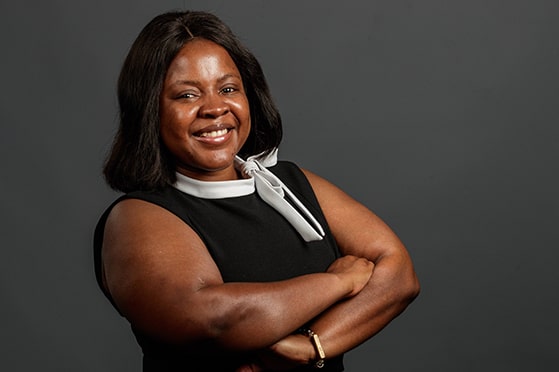
‘Rising star’ graduate: Sylvia Ofori’s journey from Ghana to Georgia Southern to Harvard
On her first flight from Ghana to the United States, Sylvia Ofori arrived in Atlanta, Georgia, at 1 a.m. By 4 o’clock the next afternoon, Ofori was in her first American classroom in Georgia Southern University’s Jiann-Ping Hsu College of Public Health on the Statesboro Campus. Jet-lagged and attempting to absorb a foreign campus and classroom procedures, Ofori was out of sorts when her professor, Isaac Chun-Hai Fung, Ph.D., encouraged her to apply for a student research position following class introductions. Within days, she’d interviewed and earned the spot, supported by funding from the Centers for Disease Control and Prevention. In their first meeting, Fung challenged Ofori to publish 10 papers by the end of her public health doctoral program. “I wasn’t familiar with publications, but he threw that challenge at me from the beginning,” Ofori remembered. “Wow. His plan was for me to start working on dissertation-related projects immediately.” Ofori’s first project was a scoping review on the use of digital technology to improve and monitor handwashing in children. Following a presentation of her review at the University’s 2019 Research Symposium, her work was published in an academic journal, and many more followed as co-author with Fung and another mentor, Kamalich Muniz-Rodriguez, DrPH. By the end of her doctoral training, Sylvia had published 11 papers with Fung, and three more manuscripts will be submitted. On May 13, Ofori earned a DrPH in public health with a concentration in epidemiology as she crossed the stage in one of two Savannah commencement ceremonies. In June, she’ll begin as a Postdoctoral Fellow in the Department of Epidemiology at Harvard University to continue global public health research she began at Georgia Southern. There's a full article detailing Sylvia's amazing story - and her success to date. It's attached here: If you're a reporter looking to know more about Sylvia's story, or how Georgia Southern has students from around 100 countries across the world currently studying on both the Statesboro Campus and the Armstrong Campus in Savannah. Simply reach out to Georgia Southern Director of Communications Jennifer Wise at jwise@georgiasouthern.edu to arrange an interview today.
